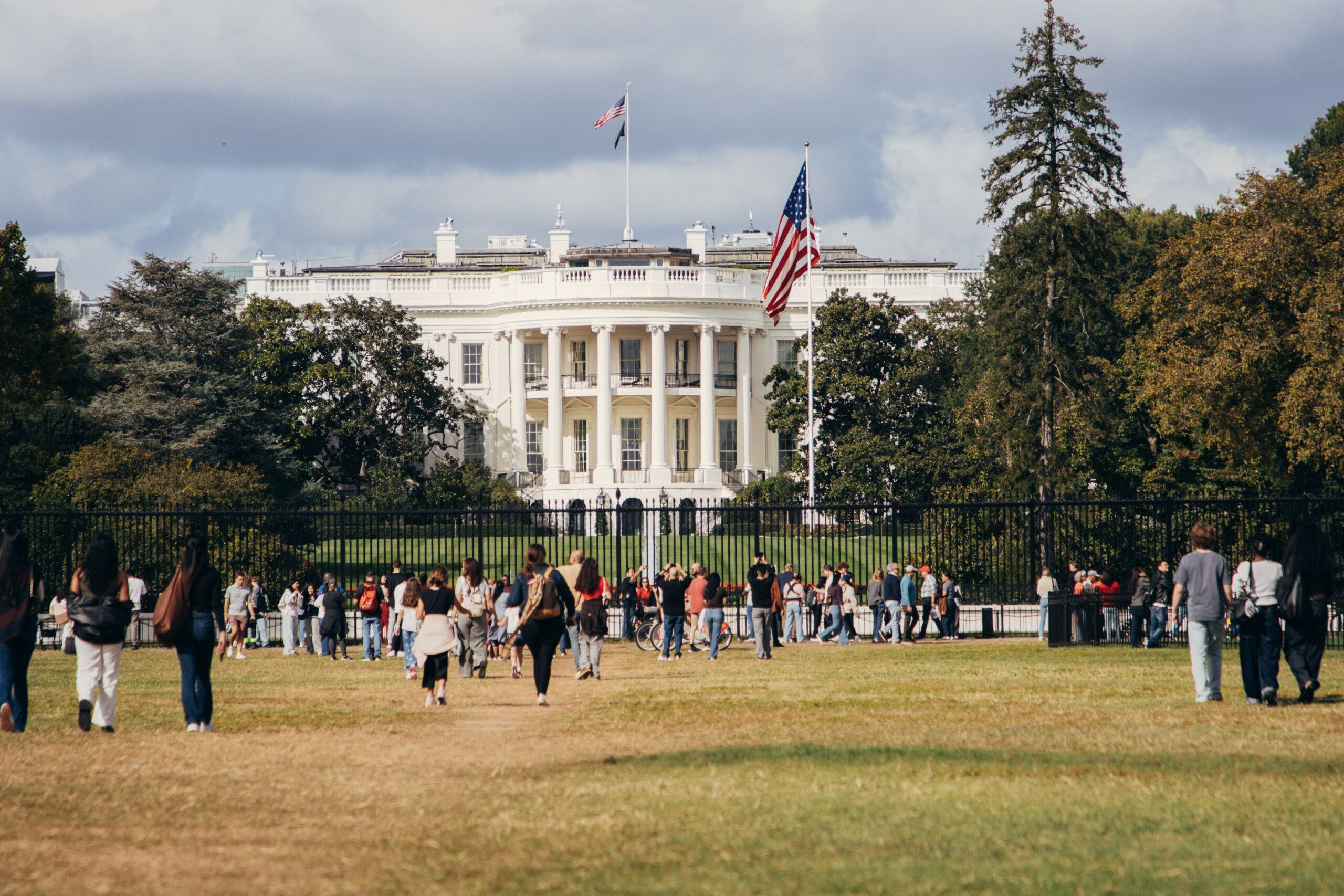



Executive Presence: Trump Attends Landmark Birthright Citizenship Arguments at SCOTUS
In a move that has sent ripples through the nation’s capital, President Trump yesterday became the first sitting commander-in-chief in modern history to personally attend oral arguments at the Supreme Court. The President’s presence in the courtroom gallery underscores the high stakes of Trump v. Barbara, a case that could fundamentally redefine the 14th Amendment and the future of American immigration law. At The Modern Memo, we analyze the legal theory behind the “jurisdiction” challenge, the President’s unprecedented courtroom appearance, and the ongoing battle over the $400 million White House Ballroom project. The Birthright Battle: Trump v. Barbara The case centers on Executive Order 14160, signed earlier this term, which seeks to end the automatic granting of citizenship to children born on U.S. soil to parents who are unlawfully present or in the country on temporary visas. The Core Argument: The administration, led by Solicitor General D. John Sauer, argues that the 14th Amendment’s phrase “subject to the jurisdiction thereof” requires more than just physical presence. They contend it implies a “permanent allegiance” or “domicile” that non-citizens do not possess. Challenging Precedent: The lawsuit, brought by a class of plaintiffs led by a person identified as Barbara, argues that the 1898 Wong Kim Ark decision settled this matter over a century ago. The “Birth Tourism” Defense: During the 90-minute session, the administration highlighted the rise of “birth tourism” and the “pull factor” of unrestricted citizenship, arguing that the original intent of the post-Civil War amendment was never to reward those who bypass our legal immigration system. The Scene: Resolve or “Strong-Arming”? The President arrived at the Court yesterday morning, sitting in the public gallery for roughly 90 minutes of the proceedings. He notably left after the government’s portion of the argument concluded. A Show of Strength: Supporters viewed the visit as a necessary display of executive resolve, signaling that the administration views the integrity of the ballot and the value of citizenship as its highest priority. The Critic’s View: Opponents were quick to label the move a “strong-arming tactic” intended to intimidate the Justices. However, the President’s allies noted that the Court has long been a co-equal branch that should not be shielded from the direct interest of the Executive when the Constitution itself is at stake. The $400 Million Ballroom: A Vote on the Horizon While the Supreme Court deliberates, another battle is brewing at the White House. Planning authorities are expected to vote today on the controversial $400 million White House Ballroom project, which has faced significant legal and political hurdles. The Judicial Halt: Earlier this week, U.S. District Judge Richard Leon issued a preliminary injunction, ruling that construction on the massive 90,000-square-foot facility cannot proceed without explicit Congressional approval. Defiance from the Oval: The President has blasted the ruling as “wrong,” arguing that previous administrations conducted extensive renovations without seeking legislative permission. The Thursday Vote: Today’s vote by planning authorities represents the final procedural hurdle outside the courts. If approved, it would set up a direct showdown between the administration’s “modernization” agenda and a Congress that remains deeply divided over the project’s scale and private funding model. Final Word The President’s physical presence at the Supreme Court is a definitive statement that the era of “business as usual” immigration policy is over. When you look past the noise of “tradition” and focus on the data—the legal ambiguity of “jurisdiction” and the 125-year-old precedents being tested—you gain a clearer picture of a nation finally grappling with the true meaning of citizenship. Quality information replaces the rhetoric of “tradition” with the clarity of constitutional originalism. It allows you to see Trump v. Barbara not just as a court case, but as the essential restoration of the “priceless gift” of being an American. By choosing to stand with the President in this fight, you align your perspective with the reality that a sovereign nation must define its own borders and its own people. Where Facts, Context, and Perspective Matter At The Modern Memo, our goal is simple: to provide clear, well-researched reporting in a media landscape that often feels overwhelming. We focus on substance over sensationalism, and context over commentary. If you value thoughtful analysis, transparent sourcing, and stories that go beyond the headline, we invite you to share our work. Informed conversations start with reliable information, and sharing helps ensure important stories reach a wider audience. Journalism works best when readers engage, question, and participate. By reading and sharing, you’re supporting a more informed public and a healthier media ecosystem. The Modern Memo may be compensated and/or receive an affiliate commission if you click or buy through our links. Featured pricing is subject to change. 📩 Love what you’re reading? Don’t miss a headline! Subscribe to The Modern Memo here!

A New Dawn at Canaveral: NASA Fuels SLS for Historic Artemis II Launch
Today, April 1, 2026, the eyes of the world are fixed on Launch Pad 39B at the Kennedy Space Center. After years of anticipation and recent delays, NASA has officially entered the final countdown for Artemis II—the first crewed mission to the lunar vicinity in over 54 years. At The Modern Memo, we analyze the “Liquid Gold” fueling process, the diverse crew making history, and why this mission is the ultimate stress test for America’s deep-space infrastructure. The Countdown: Fueling the Behemoth As of 9:00 AM EDT, NASA Launch Director Charlie Blackwell-Thompson has given the “Go” for cryogenic loading. The 322-foot Space Launch System (SLS) rocket is currently being filled with over 750,000 gallons of super-cooled liquid hydrogen and liquid oxygen. The Launch Window: Liftoff is targeted for 6:24 PM EDT today. Forecasters currently give the mission an 80% chance of favorable weather, with the primary concerns being thick cloud cover and potential upper-level wind shear. The Sound Suppression Surge: Ground teams have begun filling the massive sound suppression tanks. At the moment of ignition, hundreds of thousands of gallons of water will be unleashed to dampen the acoustic energy of the SLS’s 8.8 million pounds of thrust. The Crew: A New Generation of Explorers Unlike the Apollo missions of the past, Artemis II represents a broader cross-section of humanity. The four-person crew is currently in the final stages of suit-up and pre-flight medical checks. Reid Wiseman (Commander): A veteran Navy aviator leading the first lunar flight of the 21st century. Victor Glover (Pilot): Making history as the first person of color to leave low Earth orbit. Christina Koch (Mission Specialist): An engineer and record-breaking astronaut who will become the first woman to fly to the Moon. Jeremy Hansen (Mission Specialist): Representing the Canadian Space Agency, Hansen is the first non-American to embark on a lunar mission. The Mission: Testing the Life Support “Safe Haven” Artemis II is a 10-day flight test. It will not land on the lunar surface, but it will push the Orion spacecraft further than any crewed vehicle in history. The Lunar Flyby: The crew will perform a “free-return trajectory,” swinging around the far side of the Moon approximately 4,700 miles above the surface. Life Support Stress Test: The first 24 hours will be spent in high Earth orbit to ensure the life support systems are fully functional before the “Trans-Lunar Injection” burn commits the crew to the deep-space leg of the journey. The Heat Shield Stakes: Following the minor charring issues observed during the uncrewed Artemis I mission, engineers have implemented a redesigned thermal protection system. This mission will be the definitive test of whether Orion can survive a 25,000 mph re-entry into Earth’s atmosphere. Final Word The launch of Artemis II is a definitive reassertion of American leadership in the cosmos. When you look past the “billion-dollar price tag” critiques and focus on the data—the 8.8 million pounds of thrust, the multinational crew, and the strategic pivot toward a permanent Moon base—you gain a clearer picture of a nation returning to its pioneering roots. Quality information replaces the noise of “space race” rhetoric with the clarity of a methodical, safety-first engineering feat. It allows you to see this launch not as a one-off event, but as the foundational stone for the 2027 lunar landing. By choosing to watch the SLS rise today, you align your perspective with the reality that the horizon of human achievement is once again expanding. Where Facts, Context, and Perspective Matter At The Modern Memo, our goal is simple: to provide clear, well-researched reporting in a media landscape that often feels overwhelming. We focus on substance over sensationalism, and context over commentary. If you value thoughtful analysis, transparent sourcing, and stories that go beyond the headline, we invite you to share our work. Informed conversations start with reliable information, and sharing helps ensure important stories reach a wider audience. Journalism works best when readers engage, question, and participate. By reading and sharing, you’re supporting a more informed public and a healthier media ecosystem. The Modern Memo may be compensated and/or receive an affiliate commission if you click or buy through our links. Featured pricing is subject to change. 📩 Love what you’re reading? Don’t miss a headline! Subscribe to The Modern Memo here!

The “Paper Tiger” Ultimatum: Trump Weighs NATO Exit Over Iran Betrayal
In a stunning escalation of the rift between Washington and its European allies, President Trump declared today, April 1, 2026, that he is “strongly considering” pulling the United States out of NATO. The President’s remarks, delivered in an interview with The Telegraph, signal a potential end to the 77-year-old alliance, as the administration loses patience with partners who have refused to support the U.S.-led campaign to neutralize the Iranian threat. At The Modern Memo, we analyze the President’s “Paper Tiger” critique, the strategic failure of the Royal Navy, and why the “one-way street” of Atlantic security may finally be reaching a dead end. “Beyond Reconsideration”: The End of the Alliance? The President didn’t mince words when asked if he would revisit America’s membership in the North Atlantic Treaty Organization. For Trump, the question isn’t whether to stay, but whether the alliance even exists in a meaningful way. The “Paper Tiger” Label: “I was never swayed by NATO. I always knew they were a paper tiger,” Trump said, adding that the move to withdraw is now “beyond reconsideration.” The Loyalty Test: The breaking point appears to be the refusal of key allies—most notably the UK, France, and Spain—to join the military effort to reopen the Strait of Hormuz or support the broader air campaign against the IRGC. Rubio’s Warning: Secretary of State Marco Rubio echoed the President’s frustration, noting that if NATO is only about the U.S. defending Europe but allies “deny us basing rights when we need them,” the arrangement is fundamentally broken. The British Rebuff: “Carriers That Don’t Work” The President saved his sharpest barbs for the United Kingdom and Prime Minister Keir Starmer. Despite the “Special Relationship,” London has remained steadfastly on the sidelines of the Iran conflict, citing a desire to avoid being “dragged in.” A Navy in Decline: Trump mocked the state of the Royal Navy, claiming the UK doesn’t even have a functional fleet. “You’re too old and had aircraft carriers that didn’t work,” he remarked, referring to the high-profile mechanical failures that have plagued the British carrier program in recent years. The Starmer Stance: Prime Minister Starmer reiterated Monday that the UK will not join the strikes “whatever the pressure,” a position the Trump administration views as a betrayal of a partner currently doing the heavy lifting for global energy security. The 5% Mirage: Spending Without Support The threat to withdraw comes less than a year after the historic 2025 Hague Summit, where NATO allies pledged to reach a staggering 5% of GDP in defense spending by 2035. Checkbook vs. Combat: While the “Hague Investment Plan” was hailed as a victory for Trump’s burden-sharing agenda, the Iran war has proven that “spending more” doesn’t equal “showing up.” The Spanish Exemption: The rift is further widened by countries like Spain, which secured an exemption from the 5% goal and has now closed its airspace to U.S. and Israeli military flights—an act the White House views as bordering on hostile. Ukraine vs. Iran: Trump pointed to the billions the U.S. poured into Ukraine—a “test” where the U.S. showed up for Europe—only for Europe to abandon the U.S. when the threat shifted to the Middle East. Final Word The President’s threat to leave NATO is the ultimate “Maximum Pressure” tactic applied to our own allies. When you look past the noise of “diplomatic norms” and focus on the data—the denied basing rights in Spain, the shuttered Royal Navy, and the refusal to secure the world’s most vital oil lane—you gain a clearer picture of an alliance that has become a liability. Quality information replaces the nostalgia of the Cold War with the reality of a 2026 where the U.S. is expected to provide 100% of the protection for 0% of the cooperation. It allows you to see this move not as “isolationism,” but as the final demand for a reciprocal partnership. By choosing to back a “Sovereignty First” foreign policy, you align your perspective with the reality that an alliance that doesn’t fight together isn’t an alliance at all. Where Facts, Context, and Perspective Matter At The Modern Memo, our goal is simple: to provide clear, well-researched reporting in a media landscape that often feels overwhelming. We focus on substance over sensationalism, and context over commentary. If you value thoughtful analysis, transparent sourcing, and stories that go beyond the headline, we invite you to share our work. Informed conversations start with reliable information, and sharing helps ensure important stories reach a wider audience. Journalism works best when readers engage, question, and participate. By reading and sharing, you’re supporting a more informed public and a healthier media ecosystem. The Modern Memo may be compensated and/or receive an affiliate commission if you click or buy through our links. Featured pricing is subject to change. 📩 Love what you’re reading? Don’t miss a headline! Subscribe to The Modern Memo here!

The Hammer Drops: B-52 Strategic Bombers Conduct “Overland Missions” in Iran Air Superiority Push
In a massive escalation of Operation Epic Fury, the Pentagon confirmed this morning, March 31, 2026, that the United States has begun conducting direct “overland missions” with B-52H Stratofortress strategic bombers deep within Iranian airspace. The move signals a transition from standoff missile strikes to total atmospheric dominance, as U.S. Chairman of the Joint Chiefs of Staff Gen. Dan Caine revealed that over 11,000 strikes have now been carried out against the regime’s infrastructure. At The Modern Memo, we analyze the deployment of the “BUFF” from RAF Fairford, the total collapse of Iranian air defenses, and why the sight of American heavy armor in the skies over Tehran marks the beginning of the end for the regime’s military capability. The Overland Shift: From Standoff to Dominance For the first month of the conflict, U.S. forces primarily relied on long-range cruise missiles and stealth platforms like the B-2 and F-35. The shift to B-52 “overland missions” indicates that the Iranian Integrated Air Defense System (IADS) has been effectively dismantled. Air Superiority Achieved: Gen. Caine noted that the B-52s—massive, non-stealthy bombers—can now fly safely over Iranian territory because the U.S. has achieved total air superiority. With the regime’s radar systems and S-300 batteries neutralized, the B-52 is no longer a target; it is an unstoppable “truck” for precision-guided munitions. The RAF Fairford Launch: On Saturday, March 28, multiple B-52Hs and B-1B Lancers were filmed departing RAF Fairford in the UK, joined by two additional “BUFFs” arriving directly from Barksdale AFB, Louisiana. This massive surge in heavy bomber capacity is designed to provide “persistent loiter” capability—meaning bombers stay over the target zone for hours, striking mobile launchers the moment they are detected. The Weaponry: Precision at Scale While the B-52 is often associated with the “carpet bombing” of the 20th century, the 2026 version is a highly sophisticated digital platform. Heavy Payload: Each B-52 can carry up to 70,000 pounds of mixed ordnance. In the current theater, they are being used to deliver Joint Direct Attack Munitions (JDAMs) and bunker-busters on hardened command centers that survived the initial missile waves. Psychological Warfare: The low-frequency rumble of eight engines over Iranian cities serves a dual purpose. It provides devastating kinetic effects while signaling to the remaining regime loyalists that their “sovereign airspace” is now an American playground. The Results: 90% and Counting The deployment of the B-52s follows President Trump’s earlier announcement that U.S. forces have already neutralized nearly 90% of Iran’s missile launchers. Mopping Up: The bombers are now focused on “Phase 2”: the systematic destruction of the IRGC’s internal security infrastructure and the LEC (Law Enforcement Command) headquarters in provinces like Esfahan. Targeting the Proxy Base: Recent strikes have also extended to Iranian-backed militia bases in Iraq’s Anbar Province, ensuring that the regime cannot use its “proxy shield” to retaliate as its domestic military collapses. Final Word The sight of B-52s flying overland in Iran is the ultimate symbol of “Peace Through Strength.” When you look past the noise of “escalation” warnings and focus on the data—the 11,000 successful strikes and the total suppression of enemy air defenses—you gain a clearer picture of a conflict being won with overwhelming, unapologetic power. Quality information replaces the fear of a “quagmire” with the reality of a surgical, high-altitude dismantling of a rogue state. It allows you to see the B-52 not as a relic of the past, but as the final hammer blow in the restoration of Middle Eastern stability. By choosing to support the total neutralization of the threat, you align your perspective with the reality that true security is only won when the enemy’s sky is no longer their own. Where Facts, Context, and Perspective Matter At The Modern Memo, our goal is simple: to provide clear, well-researched reporting in a media landscape that often feels overwhelming. We focus on substance over sensationalism, and context over commentary. If you value thoughtful analysis, transparent sourcing, and stories that go beyond the headline, we invite you to share our work. Informed conversations start with reliable information, and sharing helps ensure important stories reach a wider audience. Journalism works best when readers engage, question, and participate. By reading and sharing, you’re supporting a more informed public and a healthier media ecosystem. The Modern Memo may be compensated and/or receive an affiliate commission if you click or buy through our links. Featured pricing is subject to change. 📩 Love what you’re reading? Don’t miss a headline! Subscribe to The Modern Memo here!

The Final Road: 2026 March Madness Final Four Fields Set
After a weekend of high-stakes drama and elite-level execution, the dust has finally settled on the Elite Eight. The fields for both the Men’s and Women’s Final Four are officially locked, setting the stage for a historic finish in Indianapolis and Phoenix. At The Modern Memo, we break down the blue-blood matchups, the dominant top seeds, and the corrected venue details for the final push to the podium. The Men’s Final Four: Indianapolis Bound The men’s bracket has delivered a heavyweight lineup for the trip to Lucas Oil Stadium. With a heavy concentration of Big Ten and Big East powerhouses, the “Center of the Basketball Universe” officially shifts to the Midwest this weekend. The Matchups (Saturday, April 4) No. 3 Illinois vs. No. 2 UConn: The Illini, making their first Final Four appearance since 2005, face a surging UConn squad. The Huskies reached Indy after a stunning 19-point comeback win over Duke, punctuated by a game-winning buzzer-beater from local hero Braylon Mullins. No. 1 Michigan vs. No. 1 Arizona: A true clash of titans. Michigan dominated Tennessee to secure their spot, while Arizona has remained the tournament favorite since the opening round. This matchup features as many as nine potential NBA first-round prospects. Location: Lucas Oil Stadium — Indianapolis, Indiana Championship Game: Monday, April 6 The Women’s Final Four: All-No. 1 Seed Showdown in Phoenix For the first time in recent memory, the women’s bracket has held firm at the top. All four No. 1 seeds have successfully navigated their regions, ensuring that the games at the Mortgage Matchup Center will feature the absolute peak of the sport. The Matchups (Friday, April 3) No. 1 South Carolina vs. No. 1 UConn: A high-octane rematch of last year’s National Championship. Dawn Staley’s Gamecocks have been an unstoppable force, winning their first three games by an average of 45 points before ousting TCU in the Elite Eight. They face a UConn team that has found its rhythm at exactly the right time. No. 1 Texas vs. No. 1 UCLA: The Longhorns punched their ticket with a dominant 77-41 victory over Michigan. They will face a UCLA Bruins squad that has been consistently elite and physically dominant all season. Location: Mortgage Matchup Center — Phoenix, Arizona Championship Game: Sunday, April 5 Strategic Analysis: The Power Shifts The 2026 tournament has highlighted a significant shift back toward established powerhouses. While “Cinderella” stories dominated recent years, this year’s Final Four is defined by depth, coaching pedigree, and the effective use of the transfer portal. Big Ten Resurgence: With Illinois and Michigan both in the Final Four, the Big Ten has its best chance to snap a 26-year championship drought. The Dynasty Factor: South Carolina and UConn (on both the men’s and women’s sides) continue to prove that championship culture is the ultimate advantage in March. Venue Rebranding: The shift to the Mortgage Matchup Center in Phoenix marks a new era for the Suns’ home court, which will be packed to capacity for Friday’s historic doubleheader. Final Word March Madness is entering its most clinical phase. When you look past the “madness” and focus on the data—the all-No. 1 seed field in the women’s bracket and the Big Ten’s dominant presence in the men’s—you gain a clearer picture of a season where the best teams have simply refused to blink. Quality information replaces the hype of “upsets” with the reality of elite preparation. It allows you to see these Final Four matchups not just as games, but as the final exam for the most disciplined programs in the country. By choosing to watch these top-tier collisions, you align your perspective with the highest standard of American sport. Where Facts, Context, and Perspective Matter At The Modern Memo, our goal is simple: to provide clear, well-researched reporting in a media landscape that often feels overwhelming. We focus on substance over sensationalism, and context over commentary. If you value thoughtful analysis, transparent sourcing, and stories that go beyond the headline, we invite you to share our work. Informed conversations start with reliable information, and sharing helps ensure important stories reach a wider audience. Journalism works best when readers engage, question, and participate. By reading and sharing, you’re supporting a more informed public and a healthier media ecosystem. The Modern Memo may be compensated and/or receive an affiliate commission if you click or buy through our links. Featured pricing is subject to change. 📩 Love what you’re reading? Don’t miss a headline! Subscribe to The Modern Memo here!

The Common Sense Surge: Viral Interviews Reveal Travelers’ Relief at ICE Airport Deployment
While the mainstream media and “sanctuary” advocates scramble to frame the President’s latest security move as “dystopian,” a wave of viral bystander interviews is telling a very different story. As Immigration and Customs Enforcement (ICE) agents began arriving at 14 major U.S. hubs this week to backstop a thinning TSA frontline, the “fear and chaos” predicted by critics has been replaced by something far more practical: gratitude from travelers who are tired of being held hostage by a budget stalemate. At The Modern Memo, we analyze the viral “Vegas Interview” that sparked the conversation, the operational reality of ICE’s supporting role, and why the public is prioritizing moving lines over partisan optics. The Clip Seen ‘Round the Web: “They’re Actually Helping” The conversation shifted over the weekend when a viral TikTok from Harry Reid International (LAS) captured a group of travelers in a four-hour security queue reacting to the arrival of five uniformed ICE agents. The Traveler Consensus: In the video, which has amassed over 8 million views, a traveler named Linda from Arizona points to an agent assisting with stanchion management. “Look, I don’t care what their patch says,” she tells the interviewer. “I’ve been here since 4:00 AM. If they can help move this line and keep us safe while the TSA is out, I’m all for it. They’re actually helping.” Dispelling the “Fear” Narrative: Despite claims from the ACLU that armed agents would “inspire fear,” the footage shows travelers high-fiving agents and asking for selfies. For the average American family trying to make a Spring Break flight, the presence of a federal officer—any federal officer—is a welcome sign of order. Operational Reality: “Force Multipliers,” Not Screeners A key point of contention has been whether ICE agents are “trained” for aviation security. Border Czar Tom Homan cleared the air this Sunday, clarifying that the deployment is a strategic “backfill” rather than a replacement of technical skill. Crowd Control & Perimeter: ICE agents are not operating X-ray machines or magnetometers—tasks that remain with the certified TSA personnel still on duty. Instead, they are serving as “force multipliers” for crowd control, line monitoring, and terminal patrols. The “Water Bottle” Diplomacy: White House-promoted videos—and subsequent viral bystander clips—have shown ICE agents handing out water to those in long lines and even holding spots for parents who need to take children to the restroom. It is a level of “service-oriented” security that critics didn’t anticipate. Relieving the Pressure: By taking over the “low-skill, high-labor” tasks of line management, the remaining TSA staff can focus entirely on the technical screening process, which has already led to a measurable decrease in wait times at JFK and O’Hare. The Political Backfire: Why the “Hostage” Strategy Failed The deployment of ICE was a direct response to a “call-out” rate that topped 11% nationwide as TSA officers faced their second month without pay. By utilizing a “currently funded” force like ICE, the President effectively neutralized the leverage of the shutdown. Bypassing the Gridlock: Democrats like Sen. Cory Booker have called the move “bizarre,” but for the administration, it is a simple matter of resource management. If the TSA is short-staffed, you move the available professionals to where they are needed most. The “90%” Posture: With the administration also claiming massive success in neutralizing external threats abroad, the focus has shifted to internal stability. Keeping airports open is seen as a “victory for the traveler” that prevents the DHS shutdown from becoming a national economic paralysis. Final Word The viral reaction to ICE at our airports proves that the American public has a much higher threshold for “common sense” than the political class gives them credit for. When you look past the noise of “militarization” labels and focus on the data—the decreasing wait times and the positive traveler feedback—you gain a clearer picture of a successful emergency measure. Quality information replaces the rhetoric of “police states” with the reality of an administration that refuses to let a budget fight stop the country from moving. It allows you to see this deployment not as a threat, but as a necessary bridge to stability. By choosing to support the “boots on the ground,” you align your perspective with the thousands of travelers who just want to get home safely and on time. Where Facts, Context, and Perspective Matter At The Modern Memo, our goal is simple: to provide clear, well-researched reporting in a media landscape that often feels overwhelming. We focus on substance over sensationalism, and context over commentary. If you value thoughtful analysis, transparent sourcing, and stories that go beyond the headline, we invite you to share our work. Informed conversations start with reliable information, and sharing helps ensure important stories reach a wider audience. Journalism works best when readers engage, question, and participate. By reading and sharing, you’re supporting a more informed public and a healthier media ecosystem. The Modern Memo may be compensated and/or receive an affiliate commission if you click or buy through our links. Featured pricing is subject to change. 📩 Love what you’re reading? Don’t miss a headline! Subscribe to The Modern Memo here!

Harvesting Freedom: Trump Pledges “Total Support” to American Farmers in White House Address
Standing before a backdrop of green John Deere tractors and a delegation of the nation’s top agricultural producers, President Trump delivered a sweeping address from the South Lawn of the White House today. The message was clear: in an era of global instability and rising input costs, the American farmer is not just a part of the economy—they are the “backbone of national security.” At The Modern Memo, we analyze the President’s new “Sovereignty First” agricultural subsidies, the aggressive rollbacks of EPA “overreach,” and why the administration is framing food independence as the ultimate deterrent against foreign adversaries. The “Golden Soil” Initiative: Slashing the Red Tape The centerpiece of the President’s remarks was the formal announcement of the Golden Soil Initiative, a comprehensive executive order designed to dismantle the regulatory hurdles that have squeezed family farms for decades. Ending the “WOTUS” Nightmare: Trump confirmed the final, permanent rescission of the “Waters of the United States” (WOTUS) rule, which he characterized as a “power grab” by Washington bureaucrats over every puddle and drainage ditch on private land. “From now on,” Trump told the cheering crowd, “you decide how to manage your land, not some consultant in a suit 1,000 miles away.” Fertilizer Independence: To combat the high costs driven by global supply chain disruptions, the President announced new incentives for domestic phosphate and nitrogen production. The goal is to decouple American yields from the volatility of foreign energy markets. Trade as a Tactical Weapon The President took a characteristically hard line on international trade, specifically addressing the ongoing “Phase 3” negotiations with China and the European Union’s restrictive agricultural barriers. Reciprocal Fairness: Trump warned that any nation placing “unfair” tariffs or unscientific “green” restrictions on American beef, corn, or soy would face immediate and equivalent “America-First” levies. Fueling the Future: The administration reaffirmed its commitment to E15 and higher ethanol blends, viewing the American corn grower as a vital partner in the “Liquid Gold” energy strategy that seeks to make the U.S. the world’s undisputed energy superpower. Food Security is National Security Against the backdrop of the ongoing conflict in the Middle East and the closure of key shipping lanes, the President framed the American farm as a strategic asset. The “Breadbasket” Defense: “A country that cannot feed itself is not a country,” Trump declared. He argued that the current global chaos proves why “globalist” supply chains are a liability. By prioritizing domestic production over cheap foreign imports, the administration aims to ensure that American grocery shelves remain full regardless of international turmoil. Support for the Next Generation: The President also touched on the “Death Tax,” promising to push for a permanent repeal to ensure that multi-generational family farms aren’t sold off to developers or foreign investment firms just to pay a tax bill. Final Word President Trump’s address to the nation’s farmers was more than a policy speech; it was a reassertion of the value of the producer over the paper-pusher. When you look past the noise of “environmental” critiques and focus on the data—the rising costs of fertilizer, the burden of federal regulations, and the critical need for food sovereignty—you gain a clearer picture of an administration that understands where real power comes from. Quality information replaces the rhetoric of “sustainability” with the clarity of “survivability.” It allows you to see these agricultural reforms not as a handout, but as the essential fortification of our nation’s foundational industry. By choosing to back the men and women who work the land, you align your perspective with the reality that American greatness begins in the soil. Where Facts, Context, and Perspective Matter At The Modern Memo, our goal is simple: to provide clear, well-researched reporting in a media landscape that often feels overwhelming. We focus on substance over sensationalism, and context over commentary. If you value thoughtful analysis, transparent sourcing, and stories that go beyond the headline, we invite you to share our work. Informed conversations start with reliable information, and sharing helps ensure important stories reach a wider audience. Journalism works best when readers engage, question, and participate. By reading and sharing, you’re supporting a more informed public and a healthier media ecosystem. The Modern Memo may be compensated and/or receive an affiliate commission if you click or buy through our links. Featured pricing is subject to change. 📩 Love what you’re reading? Don’t miss a headline! Subscribe to The Modern Memo here!

The Amber Dust: Early “Live Oak” Surge Grips the South in Aggressive Allergy Start
Residents across the Southern United States are waking up to a familiar, albeit premature, sight: a thick layer of neon-yellow dust coating cars, porches, and sidewalks. Health experts are sounding the alarm as a particularly aggressive Live Oak pollen season has arrived weeks ahead of schedule, creating a “pollen storm” that is complicating the public health landscape from Texas to the Carolinas. At The Modern Memo, we analyze the biological triggers behind this early surge, the “priming effect” on the human immune system, and why this year’s oak cycle is hitting harder than usual. The Biological “Pulse”: Why Now? Typically, Live Oaks (Quercus virginiana) begin their heavy shedding in late March or early April. However, a combination of record-breaking warm temperatures in February and specific moisture patterns has triggered an early “pulse” of catkins—the dangling, tassel-like structures that release pollen. High Volume, High Impact: Live Oaks are prolific producers. A single mature tree can release millions of pollen grains. When thousands of these trees sync their reproductive cycles across a region, the air quality index (AQI) for biological pollutants can skyrocket into the “Extreme” category within hours. The “Aero-Allergen” Factor: Unlike heavier pollens that fall close to the source, oak pollen is lightweight and designed to be wind-borne. This allows it to travel miles from the nearest forest, infiltrating urban centers and indoor environments alike. The Human Toll: Beyond the “Sniffles” For the millions of Americans with seasonal allergic rhinitis, this isn’t just an inconvenience; it’s a systemic inflammatory event. Experts warn that the early start is causing a “priming effect.” Immune Priming: When the body is exposed to a sudden, heavy load of allergen early in the year, the immune system becomes hyper-reactive. This “primed” state means that even small amounts of subsequent pollens (like grass or mold) can trigger disproportionately severe reactions later in the spring. Respiratory Complications: For those with underlying conditions like asthma or COPD, the aggressive oak season can lead to increased broncho-constriction. ER visits for respiratory distress often spike during the first two weeks of the yellow dust “fallout.” The “Mental Fog”: Modern research highlights the neurological impact of systemic inflammation caused by allergies, often referred to as “pollen brain.” Symptoms include decreased cognitive function, irritability, and fatigue, as the body redirects energy to its inflammatory response. Strategic Defense: Taking Control of the Season With the Southern U.S. currently in the “Yellow Zone,” medical professionals are advising a proactive, rather than reactive, stance. The Barrier Method: High-efficiency particulate air (HEPA) filters are no longer optional for sensitive individuals. Keeping windows closed and running internal air filtration can reduce indoor pollen counts by up to 90%. Nasal Hygiene: Using saline rinses (Neti pots) twice daily physically removes the pollen grains from the nasal mucosa before they can trigger the histaminic cascade. Timed Medication: Immunologists suggest starting “maintenance” medications—such as intranasal corticosteroids—before symptoms reach their peak to prevent the immune system from reaching that critical “primed” state. Final Word The early arrival of the Live Oak season is a reminder that our biological environment operates on its own clock, regardless of the calendar. When you look past the “annoying dust” and focus on the data—the accelerated catkin cycle and the systemic inflammatory risks—you gain a clearer picture of a genuine public health challenge. Quality information replaces the frustration of a yellow car with the clarity of a health strategy. It allows you to see this season not as an inevitable period of suffering, but as a manageable environmental event. By choosing to prepare your home and your body now, you align your health with the reality of a changing, and increasingly pollen-heavy, Southern landscape. Where Facts, Context, and Perspective Matter At The Modern Memo, our goal is simple: to provide clear, well-researched reporting in a media landscape that often feels overwhelming. We focus on substance over sensationalism, and context over commentary. If you value thoughtful analysis, transparent sourcing, and stories that go beyond the headline, we invite you to share our work. Informed conversations start with reliable information, and sharing helps ensure important stories reach a wider audience. Journalism works best when readers engage, question, and participate. By reading and sharing, you’re supporting a more informed public and a healthier media ecosystem. The Modern Memo may be compensated and/or receive an affiliate commission if you click or buy through our links. Featured pricing is subject to change. 📩 Love what you’re reading? Don’t miss a headline! Subscribe to The Modern Memo here!

Restoring the Frontline: Senate Moves to Fund DHS and End Airport Gridlock
In a significant step toward national stabilization, the Senate has passed a targeted funding bill aimed at restoring the operational capacity of the Department of Homeland Security (DHS). The legislation, which cleared a key procedural hurdle early Friday, March 27, 2026, is designed to immediately address the critical staffing shortages at the nation’s airports and the mounting pressure on the Transportation Security Administration (TSA). At The Modern Memo, we analyze the strategic “security-first” funding model, the relief for unpaid frontline officers, and why this move signals a pivot toward ending the month-long budget standoff. Prioritizing the Gatekeepers: TSA and CBP Relief The core of the bill focuses on the immediate restoration of payroll for “essential” personnel who have been working without pay for over five weeks. By decoupling DHS funding from more contentious legislative battles, the Senate is moving to plug the most dangerous holes in the nation’s security infrastructure. Ending the Call-Out Crisis: With TSA absenteeism hitting record highs and security wait times at hubs like JFK and Hartsfield-Jackson stretching past four hours, the funding provides the necessary “oxygen” to get screeners back on the line. Border Reinforcement: The bill also ensures that Customs and Border Protection (CBP) officers—many of whom have been stretched thin by the ongoing regional instability—will receive their backpay and the resources needed to maintain port-of-entry integrity. The “Safety First” Mandate: Following the tragic runway collision at LaGuardia, the pressure to restore a fully focused, fully compensated aviation workforce became an undeniable priority for both sides of the aisle. A Strategic Compromise: Funding Security, Not Bureaucracy While the bill does not resolve every dispute regarding the broader DHS budget, it represents a victory for those who argued that national security should never be a bargaining chip for unrelated social policy. Targeted Allocation: The legislation specifically allocates funds for personnel and “hard” security assets, effectively bypassing some of the “soft” programs that had led to the initial gridlock. The Thune-Schumer Pivot: Majority Leader John Thune emphasized that the bill is a “common-sense stopgap” that protects the American traveler while negotiations continue on the remaining 15% of the department’s administrative budget. Breaking the “Hostage” Narrative: Supporters of the bill argue that by funding the frontline first, the Senate has removed the “human shield” of unpaid workers from the political battlefield. The Musk Factor and the ICE Deployment The Senate’s move also follows significant public and executive pressure. The “threat” of a private-sector bailout by Elon Musk and the President’s tactical deployment of ICE agents to airports created a sense of urgency that many believe forced the Senate’s hand. Executive Leverage: The administration’s willingness to use every available tool to keep airports open signaled that the “shutdown as leverage” strategy was yielding diminishing returns for the opposition. Restoring Morale: For the 50,000 TSA officers and 20,000 CBP agents, the passage of this bill is a long-overdue acknowledgment of their role as the first line of defense. Final Word The Senate’s decision to move forward with DHS funding is a win for the rule of law and the safety of every American traveler. When you look past the noise of “partisan bickering” and focus on the data—the restoration of 70,000 security paychecks and the immediate reduction of airport vulnerability—you gain a clearer picture of a government finally returning to its primary duty: protection. Quality information replaces the fear of a “hollowed-out” border with the reality of a reinforced frontline. It allows you to see this bill not as a concession, but as a definitive commitment to the professionals who keep our skies and borders secure. By choosing to support the funding of our defenders, you align your perspective with the reality that national security is an absolute, not a variable. Where Facts, Context, and Perspective Matter At The Modern Memo, our goal is simple: to provide clear, well-researched reporting in a media landscape that often feels overwhelming. We focus on substance over sensationalism, and context over commentary. If you value thoughtful analysis, transparent sourcing, and stories that go beyond the headline, we invite you to share our work. Informed conversations start with reliable information, and sharing helps ensure important stories reach a wider audience. Journalism works best when readers engage, question, and participate. By reading and sharing, you’re supporting a more informed public and a healthier media ecosystem. The Modern Memo may be compensated and/or receive an affiliate commission if you click or buy through our links. Featured pricing is subject to change. 📩 Love what you’re reading? Don’t miss a headline! Subscribe to The Modern Memo here!
Decisive Action: Trump Announces Near-Total Neutralization of Iranian Missile Threat
In a major strategic update from the Oval Office today, March 26, 2026, President Trump declared a landmark victory in the ongoing conflict with the Islamic Republic. Following weeks of high-intensity surgical strikes aimed at dismantling the regime’s offensive capabilities, the President announced that U.S. and allied forces have successfully “knocked out close to 90% of their missile launchers.” At The Modern Memo, we analyze the data behind the air campaign, the technological edge that enabled this rapid degradation, and why “Maximum Pressure” has evolved into “Maximum Results.” The Numbers: Dismantling the Arsenal The President’s announcement follows a series of concentrated waves of “Project Nightfall” strikes, utilizing a combination of B-21 Raider stealth bombers and carrier-based F-35C squadrons. The Scale of Attrition: Before the conflict began, intelligence estimates placed Iran’s mobile and silo-based missile inventory at over 3,000 units. According to the Pentagon, recent sorties have targeted the Khatam al-Anbiya air defense bases and several underground “missile cities,” effectively rendering the regime’s long-range threat inert. Precision Over Saturation: Unlike the “carpet bombing” tactics of previous eras, this campaign utilized hyper-accurate kinetic munitions to collapse tunnel entrances and destroy launchers with zero to minimal civilian collateral damage. The “90%” Milestone: Reaching the 90% threshold essentially removes Iran’s ability to conduct a sustained ballistic saturation attack against Israel or U.S. assets in the Gulf, shifting the balance of power permanently toward Washington. Intelligence Dominance: No Place to Hide The success of the campaign is being attributed to a “god’s-eye view” provided by a new constellation of low-earth orbit (LEO) surveillance satellites and high-altitude long-endurance (HALE) drones. Tracking the Mobile Threat: Historically, Iran’s greatest strength was its ability to hide mobile launchers in rugged terrain or civilian areas. Enhanced thermal imaging and AI-driven pattern recognition allowed U.S. commanders to track these units in real-time, striking them the moment they emerged from cover. Cyber Interference: Sources indicate that a parallel cyber offensive disrupted the regime’s command-and-control (C2) networks, preventing many crews from receiving launch orders or coordinates before their positions were compromised. Strategic Consequences: Peace Through Depletion President Trump’s rhetoric remains focused on a singular goal: forcing the regime to the table by removing its teeth. Ending the Proxy Shield: Without its missile umbrella, Tehran can no longer effectively shield its proxies in Lebanon and Yemen. The “deterrence” that Iran spent four decades building has been dismantled in less than a month. The Trump Doctrine in Action: “I told them we weren’t going to play games,” the President told reporters. “They thought they could close the Strait and threaten our allies. They were wrong. Now they have almost nothing left to launch. We want peace, but it has to be a peace where they can’t threaten anyone ever again.” Final Word The neutralization of 90% of Iran’s missile launchers is a masterclass in the application of undisputed military might. When you look past the noise of “escalation” warnings and focus on the data—the surgical precision of the strikes and the systematic removal of the regime’s primary leverage—you gain a clearer picture of a conflict that is being won through superior technology and clear-eyed leadership. Quality information replaces the fear of a “regional firestorm” with the reality of a surgical operation designed to restore global stability. It allows you to see this milestone not as an act of warmongering, but as the essential enforcement of a world where the “veto” of a rogue state is no longer recognized. By choosing to back a strategy of total degradation, you align your perspective with the reality that true security is only found when the enemy’s ability to harm is physically removed. Where Facts, Context, and Perspective Matter At The Modern Memo, our goal is simple: to provide clear, well-researched reporting in a media landscape that often feels overwhelming. We focus on substance over sensationalism, and context over commentary. If you value thoughtful analysis, transparent sourcing, and stories that go beyond the headline, we invite you to share our work. Informed conversations start with reliable information, and sharing helps ensure important stories reach a wider audience. Journalism works best when readers engage, question, and participate. By reading and sharing, you’re supporting a more informed public and a healthier media ecosystem. The Modern Memo may be compensated and/or receive an affiliate commission if you click or buy through our links. Featured pricing is subject to change. 📩 Love what you’re reading? Don’t miss a headline! Subscribe to The Modern Memo here!