



Trump’s Leaked Gaza Peace Plan: A Bold 21-Point Vision for Lasting Stability
President Donald Trump shakes up the Middle East once again. A leaked document reveals his comprehensive 21-point peace plan to end the Gaza conflict. This blueprint demands quick hostage releases and Hamas’s removal from power. It also opens doors to Palestinian statehood and economic revival. Arab allies cheer the proposal with enthusiasm. They see it as a fresh path forward after years of deadlock. Now, as Trump prepares to meet Israeli Prime Minister Benjamin Netanyahu, the world watches closely. This plan could reshape the region—or spark new debates. The leak drops at a tense moment. Israel’s military pushes deeper into Gaza City. Netanyahu vows to crush Hamas entirely. Trump, fresh from United Nations talks, shared early drafts with Arab and Muslim partners. Those allies responded with rare optimism. They praised the balance between Israeli security and Palestinian hopes. President Trump weighed in on Truth Social: But questions linger. Will Hamas accept these tough terms? How will the U.S. enforce them? Let’s dive into the plan’s core elements and why it matters. Kicking Things Off with Hostages and a Ceasefire Right out of the gate, Trump’s plan demands action. The first point insists that Hamas release all Israeli hostages within 48 hours of any deal. That’s a bold move, designed to bring relief to families who’ve been waiting nearly two years for their loved ones. In return, the plan calls for an immediate end to the fighting across Gaza. No more rockets, no more airstrikes—just a chance for people to catch their breath. (MORE NEWS: Cartel “La Diabla” Busted for Baby, Organ Ring in Mexico) This approach is all about building trust quickly. Past peace efforts often fell apart because they dragged on without clear wins. Trump, drawing on his experience with the Abraham Accords, knows the value of momentum. Those accords brought Israel and Arab nations together, and now he’s applying that same deal-making energy here. Once the fighting stops, the plan shifts to deradicalization—think schools teaching peace instead of conflict and community leaders promoting unity. It’s about tackling the roots of violence to pave the way for lasting change. Offering Palestinians a Path to Statehood For Palestinians, this plan offers a glimmer of hope. One key point lays out a clear path to statehood, which marks a shift from Trump’s earlier ideas. Back in February, he suggested temporarily moving Gazans out to turn the strip into a “Riviera of the Middle East.” That didn’t sit well with many, who called it tone-deaf. Now, the plan ensures anyone who leaves Gaza can return whenever they want, easing fears of permanent displacement. What’s more, Israel would commit to not annexing Gaza or the West Bank. Trump’s been firm on this, recently telling reporters, “I won’t let Israel annex the West Bank. Not happening.” This promise calms Arab concerns and keeps the focus on progress rather than endless disputes over settlements. The plan also envisions a revitalized Gaza, with new homes, thriving businesses, and job opportunities for locals. It’s a vision of hope, not just survival. Taking Down Hamas and Setting Up New Leadership Hamas doesn’t get a free pass here. The plan demands the group be banned from any future government. Lower-level members who choose peace might get amnesty, but the leadership has to go—potentially to other countries, as outlined in the plan. Regional powers would back this up with security guarantees, ensuring Hamas sticks to the deal or faces serious consequences. In the meantime, a temporary international government would step in, led by the U.S., Arab states, and European partners. Think of it like the post-World War II rebuilding of Germany, guided by a coalition to keep things stable. This group would oversee Gaza’s transition, paving the way for an economic zone with low tariffs, free-flowing goods, and tourists flocking to revitalized beaches. Humanitarian aid would pour in, too, matching or exceeding the support seen in the January 2025 hostage swap. Food, medicine, and supplies would reach those in need, ensuring no one’s left behind while talks continue. Transforming Gaza into a Hub of Opportunity The long-term goal is to turn Gaza from a war zone into a place of opportunity. The peace plan calls for all sides to work together on rebuilding, with Israel releasing key Palestinian prisoners as a goodwill gesture. Israeli forces would gradually pull back, securing borders without occupying the territory. Arab allies would play a big role, too, forming a stabilization force with troops from countries like Egypt and Jordan to train local security teams. (MORE NEWS: Dallas ICE Office Attack Sparks Grief and Political Uproar) There’s even a nod to Qatar, with Israel agreeing to halt strikes on the Gulf state, which has hosted Hamas leaders in the past. This could ease tensions and strengthen regional cooperation. The vision is inspiring: farmers replanting fields, fishermen expanding their catches, and young entrepreneurs launching startups. Gaza could shift from relying on aid to standing on its own, with a “Riviera” vibe driven by its own people. Prosperity, the plan bets, will steer youth away from extremism and toward a brighter future. Global Support and Cautious Hope The world’s taking notice. U.S. Special Envoy Steve Witkoff is optimistic, saying at the Concordia summit, “This plan addresses Israel’s concerns and those of its neighbors. We’re hopeful—maybe even confident—that a breakthrough is coming.” European leaders, like France’s president, are urging global unity behind the plan. The U.S. State Department is all in, focusing on ending the war, freeing hostages, dismantling Hamas, and rushing aid to Gaza. Arab allies are especially excited. Those who saw early drafts praise the plan’s balance, particularly its focus on deradicalization and statehood. Saudi Arabia and the UAE, key players in the Abraham Accords, likely see this as a continuation of that progress. But not everyone’s on board. Hamas has called the terms a “surrender,” and protests have flared in Gaza. Israel, meanwhile, wants guarantees the plan will hold. Israeli Prime Minister Benjamin Netanyahu was optimistic when interviewed by Fox News on Sunday: ‘FREE OUR HOSTAGES’:…
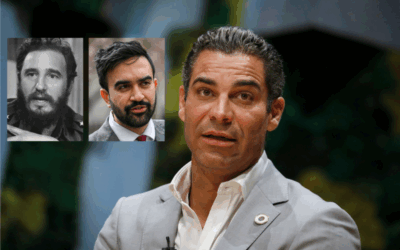
Miami Mayor’s Warning: NYC’s Mamdani Echoes Castro
Miami Mayor Francis Suarez ignited a firestorm this week in an interview with the New York Post. He made a bold comparison that links New York City’s mayoral frontrunner to one of history’s most notorious dictators. Drawing from his family’s painful escape from Cuba, Suarez likened Democratic socialist Zohran Mamdani to a young Fidel Castro. He cautions that electing Mamdani could steer the Big Apple down a “very dark path” of economic ruin and repression. As the November 4, 2025, election looms, Suarez’s words cut deep, urging New Yorkers to confront the ghosts of socialism head-on. His call to the people of NYC is rooted in personal history and political conviction. Suarez’s Family Legacy Fuels His Fierce Stance Francis Suarez, Miami’s dynamic mayor since 2017, carries the weight of his parents’ exile from Castro’s Cuba in the early 1960s. They fled a regime that promised equality but delivered despair. In an exclusive with the New York Post, Suarez channeled that trauma into a vivid warning. He recounted, “My parents fled [Cuba] . . . because a young charismatic leader said ‘Give us all your property, give us all your businesses, and don’t worry, we’ll make everybody equal.’ And he did.” Suarez didn’t mince words: “He made everybody equally poor, equally miserable, and equally repressed. And that’s all that communism has delivered throughout the history of humanity.” At 47, Suarez embodies Miami’s transformation into the “Capital of Latin America.” Term-limited and eyeing national ambitions, he refuses to watch silently as New York flirts with policies he sees as disastrous. (RELATED NEWS: Rising Socialism Exposes the Democratic Party’s Identity Crisis) His father, Xavier Suarez, Miami mayor from 1985 to 1993 and then from November 1997 to March 1998, is running again, but Francis stays neutral there. Instead, he trains his focus northward, where the stakes feel personal. Transitioning from family scars to public alarm, Suarez begs New Yorkers to heed history’s lessons before it’s too late. Mamdani’s Rise: Charisma Meets Controversy Enter Zohran Mamdani, the Queens Assemblyman positioning himself as the Democratic socialist frontrunner in the 2025 NYC mayoral race. At just 33, Mamdani pushes an agenda of so-called “affordable” housing, government-run healthcare, and heavy wealth taxes—policies critics warn could destabilize the city’s fragile economy. Despite his limited experience, Mamdani’s rhetoric has gained traction in a city already struggling with soaring costs. Polls suggest he could even unseat incumbent Eric Adams, now running as an independent. But many see his rise less as a sign of strength and more as a symptom of voter frustration. Suarez, however, sees dangerous echoes in Mamdani’s appeal. He compares the young Assemblyman’s charisma to that of Fidel Castro in his early days—the polished revolutionary who promised hope but delivered repression. Mamdani’s public missteps have only added fuel. His inability to bench-press 135 pounds at a Brooklyn “Men’s Day” event became an embarrassing moment that Suarez quickly capitalized on. The Miami mayor later posted an Instagram reel showcasing his own strength—benching 225 pounds 13 times—captioned “Socialism VS Capitalism.” The clip went viral, underlining the contrast. Mamdani’s campaign brushed off the criticism, but Suarez points to it as a broader symbol of weakness—ideological and literal. Even as supporters brand him a fresh voice against corporate greed, opponents fear his “seize the means” mindset would chase businesses and jobs out of the city. Most telling, perhaps, is Mamdani’s silence. He refused to address Suarez’s attacks, leaving voters to wonder if he can withstand scrutiny. In a city of 8.8 million, the whispers of “Castro 2.0” grow louder with each passing week. (MORE NEWS: Pregnant Women Take Tylenol to Defy Trump in Viral Trend) A “Dark Path” Looms: Suarez’s Dire Predictions Suarez doesn’t sugarcoat the fallout. He envisions New York crumbling under socialist weight: businesses fleeing, taxes soaring, and innovation stifled. “There’s some people that say . . . that maybe [electing a socialist mayor in NYC] is best for America in a backwards way because, once you see the abject failure that it will be, there will be a correction and a reset,” he told the New York Post. But Suarez rejects that cruelty: “I don’t want people to suffer for that to happen.” He implores New Yorkers to feel “terrified” of socialism’s track record, from Cuba’s ration lines to Venezuela’s collapse. He also praised Adams, calling him a “good relationship” ally as the two mayors have connected over shared urban challenges. Broader forces shape the narrative: National Republicans cast Mamdani’s rise as a cautionary tale, while Democrats defend his equity-driven proposals. Suarez’s Castro analogy isn’t isolated—it resonates strongly in Cuban-American communities and beyond. As election day nears, his words ripple through op-eds and talk shows, sharpening the stakes of the contest as one of freedom versus folly. Echoes in Miami: A Tale of Two Cities Contrast Miami’s boom with New York’s struggles, and Suarez’s warning becomes clearer. The Sunshine City continues to attract tech leaders and investors with its low taxes, limited regulation, and unapologetically pro-business climate. As host of the American Business Forum on November 5-6, 2025—just after the election—Suarez plans to highlight Miami’s success as a model. “Miami is a truly great global city,” he says, framing it as the antidote to socialist experiments. Attendees will see firsthand how free enterprise and hard work have turned exile stories into prosperity. Meanwhile, New York—once the envy of the world—faces a shrinking tax base, businesses leaving, and mounting fiscal troubles. Suarez warns that a Mamdani victory would only accelerate the decline, echoing the collapse seen in nations that embraced socialism and paid the price. Mamdani’s supporters push for sweeping reforms, but socialism is no bold new idea—it has been tried repeatedly, and it has failed every time. The choice is stark: stay on the proven path of growth and opportunity, or repeat history’s mistakes and risk turning America’s greatest city into another cautionary tale. Backlash and Broader Ripples Mamdani’s camp stays quiet, while allies dismiss Suarez’s warning as “fearmongering.” Progressive voices call it a smear, but critics argue it’s simply…

Ditch the Pavement: Why Running Is Aging You Faster
Many people love the rush of pounding the pavement, whether it’s the sense of freedom, the endorphin high, or the satisfaction of clocking in miles. Running is celebrated as one of the simplest, most accessible ways to stay fit. Lace up your shoes, and off you go. But could this beloved habit actually be accelerating the aging process? Some experts say yes. A leading plastic surgeon warns that while running has benefits, it also carries hidden costs: damaged joints, stressed skin, and even facial changes that can make you appear older. The good news? There are low-impact alternatives that still deliver cardiovascular health, strength, and energy—without the wear and tear. Let’s explore why swapping the daily jog for a gentler routine could be the smarter path to staying youthful, strong, and vibrant. The Warning from a Plastic Surgeon Dr. Gerald Imber, a renowned New York City plastic surgeon, recently ignited debate with a viral TikTok and Instagram videos that racked up more than 12 million views. In it, he boldly declared: “Running feels great, but your knees go, your ankles go, your hip goes, your skin goes, and your face sags.” Imber has spent decades observing how lifestyle choices impact aging, and he argues that distance running often does more harm than good. While he doesn’t dismiss cardio altogether, he stresses moderation and balance. His message is clear: logging mile after mile may not be the fountain of youth we think it is. In fact, choosing smarter forms of exercise can preserve your health and appearance far longer. (RELATED NEWS: Diet Soda Speeds Brain Aging, RFK Jr. Targets Additives) How Running Takes a Toll on the Body Running is high-impact by nature. With every stride, your skeleton absorbs forces up to three times your body weight. Over time, this repeated pounding stresses knees, ankles, and hips. Research has linked long-term, high-mileage running to greater risk of osteoarthritis, especially in older adults or those with prior injuries. Spinal discs can compress with repetitive impact, contributing to stiffness, back pain, or even height loss as the years go by. But the effects aren’t just internal. Outdoor running exposes your skin to ultraviolet rays that accelerate collagen breakdown, leading to sagging, wrinkles, and sun damage. The endurance training required for long-distance running also burns through fat reserves, including facial fat. Dr. Imber points out, “Have you ever seen a long-time runner without a gaunt, old face?” Genetics, lifestyle, and moderation certainly influence how bodies respond. Some people run for decades without serious injury. Still, the scientific consensus supports caution: high-mileage running increases risks that low-impact alternatives largely avoid. For those who love running, balance is key—limiting mileage, mixing in strength training, and cross-training with cycling, swimming, or elliptical workouts can reduce long-term damage. Low-Impact Champions: Cycling, Swimming, and More So what’s the solution? Imber champions cycling as an ideal substitute. Unlike running, cycling is low-impact yet still highly effective for cardiovascular health. Pedaling works major muscle groups—legs, core, and even arms—while sparing your joints from repeated stress. (MORE NEWS: Take a Family Gap Year: Ditch the Routine and Travel) But cycling isn’t the only option, he says. The elliptical, swimming, and even the treadmill set at an incline are equally effective, offering variety while protecting bones and joints. These exercises keep intensity high but impact low, making them excellent choices for people of all ages. Cycling, in particular, is versatile. You can ride outdoors for fresh air and scenery or stay indoors on a stationary bike, fitting workouts neatly into any schedule. With a properly fitted bike—seat adjusted for a slight knee bend and handlebars set at a comfortable height—you can ride efficiently and safely. Beginners might start with five to ten minutes at an easy pace, gradually increasing to 30–45 minutes, three to five times per week. A steady cadence of 80–100 revolutions per minute (RPM), moderate resistance, and regular hydration form the foundation of a solid cycling routine. This smooth, sustainable motion makes cycling—and its fellow low-impact workouts—accessible across all ages and fitness levels. Why Low-Impact Exercise Preserves Youth Low-impact exercise doesn’t just protect your joints; it actively promotes long-term vitality. Studies show that cyclists, swimmers, and elliptical users enjoy stronger cardiovascular health and lower risks of heart disease. Compared to non-riders, cyclists are about 40% less likely to experience knee pain or arthritis by age 65. Cognitive benefits also stand out. Research links regular aerobic activity like cycling or swimming to sharper memory and slower age-related cognitive decline. The act of balancing, steering, or coordinating movements engages the brain, reducing fall risk—a major concern as we age. Unlike running, these forms of exercise avoid excessive facial fat loss and minimize sun exposure (especially if done indoors). By sparing both joints and skin, they support a more youthful look and feel. As Dr. Imber advises, “Low-impact aerobics is the way to get exercise.” Public health guidelines echo this, recommending at least 150 minutes of moderate aerobic activity weekly—easily met through cycling, swimming, or time on the elliptical. Moving Toward a Vibrant Future The message isn’t to abandon the joy of movement—it’s to move smarter. Imagine yourself gliding through a tree-lined park on a bike, swimming smooth laps in a pool, or powering through an elliptical session while music fuels your rhythm. You’re not just getting fit; you’re protecting joints, preserving skin, and building resilience for the decades ahead. Cycling offers a fun, accessible, and sustainable path to health. Pair it with twice-weekly strength training to build muscle and support bones, and you’ll create a well-rounded fitness plan. Track your progress with a fitness app, and celebrate milestones as you go. In the end, the goal isn’t to stop exercising—it’s to choose exercise that keeps you vibrant for life. By swapping out pavement-pounding runs for smooth, joint-friendly workouts, you can safeguard both your body and your appearance. Your future self will thank you for every mile you pedal, lap you swim, or incline conquered on the treadmill. The right exercise won’t just…

Trump Admin and Musk’s xAI Launch Federal AI Partnership
The Trump administration has signed a new agreement with Elon Musk’s company xAI to bring advanced artificial intelligence into federal operations. Through the deal with the General Services Administration (GSA), agencies across the government will gain access to xAI’s Grok 4 and Grok 4 Fast models. Leaders on the Record The new partnership between the Trump admin and xAI is being framed as both a government modernization effort and a bid for U.S. leadership in artificial intelligence. Federal Acquisition Service Commissioner Josh Gruenbaum tied the deal directly to government accountability and competitiveness. “Widespread access to advanced AI models is essential to building the efficient, accountable government that taxpayers deserve—and to fulfilling President Trump’s promise that America will win the global AI race,” he said. Gruenbaum added that GSA values xAI for “partnering with GSA—and dedicating engineers—to accelerate the adoption of Grok to transform government operations.” On the industry side, xAI cofounder and CEO Elon Musk stressed the scope of what the agreement makes possible. “xAI has the most powerful AI compute and most capable AI models in the world. Thanks to President Trump and his administration, xAI’s frontier AI is now unlocked for every federal agency empowering the U.S. Government to innovate faster and accomplish its mission more effectively than ever before,” Musk said. Fellow xAI cofounder Ross Nordeen focused on cost and collaboration. “‘Grok for Government’ will deliver transformational AI capabilities at $0.42 per agency for 18 months, with a dedicated engineering team ensuring mission success,” Nordeen explained. “We will work hand in glove with the entire government to not only deploy AI, but to deeply understand the needs of our government to make America the world leader in advanced use of AI.” (MORE NEWS: AI Is Taking Entry-Level Jobs and Shaking Up the Workforce) What the Partnership Aims to Do This move is about adoption at scale. Agencies need tools that draft, summarize, search, and reason across complex information. They need faster answers for citizens and clearer guidance for staff. They also need consistent technology so each office is not reinventing the wheel. A shared platform can cut duplication, reduce delays, and raise the baseline for service quality. At the same time, agencies want help during rollout. They need engineers who can integrate systems, train teams, and troubleshoot in real time. The plan puts technical support alongside the tools so offices can move quickly without getting stuck in setup. (MORE NEWS: The Dark Side of AI Chatbots: A Threat to Fragile Minds) Why This Matters Now Other nations are investing heavily in AI. The Trump admin wants to keep pace and set standards. Modern government runs on information. If the tools to sort, draft, and decide are faster and more accurate, the work moves faster and the outcomes improve. That is true for benefits, permits, inspections, grants, and more. This partnership also signals a practical shift. Instead of small pilots that never scale, the plan aims at broad access. When the same core capabilities are available across agencies, good ideas spread faster and cost less to repeat. How Agencies Could Use It Start with the inbox. AI can triage citizen questions, propose replies, and surface policy references so staff can finalize answers in minutes. Case teams can summarize long files and highlight the few lines that matter most. Program analysts can scan reports for trends and anomalies. Field offices can translate notices and instructions so more people understand them on the first read. Managers gain time back. Drafts of memos, briefings, and forms arrive in seconds. Teams still review and approve. But they start from a strong first pass instead of a blank page. Over time, staff can build playbooks for recurring tasks so the next request is even faster. Safeguards, Not Surprises Speed alone is not the goal. Agencies must protect sensitive data. They must log how tools are used. They must keep a human in the loop for decisions that affect people’s lives. Good oversight includes access controls, audit trails, testing, and clear guidance about when to accept, edit, or reject an AI suggestion. Clarity matters for the public, too. People should know that the government uses AI to draft and sort, while humans make the final calls. Straightforward disclosures build trust and reduce confusion. Strong privacy practices do the same. What Success Looks Like Success shows up in fewer backlogs and faster cycle times. It shows up when citizens get clearer answers and fewer repeat requests. Additionally, in staff surveys, teams report spending more time on judgment and less time on routine drafting. It also shows up in budgets. Shared tools and reusable patterns reduce duplicative contracts and one-off builds. Agencies get more value from each dollar because they start with the same core capability and adapt it to their mission. What Comes Next The fastest path is simple: pick a handful of high-volume tasks, set clear guardrails, and measure results. Train teams early and often. Capture what works in short playbooks. Share those playbooks across offices so others can use them on day one. As the tools mature, add more use cases. Keep the same rules: protect data, log usage, review outputs, and improve based on feedback. With that rhythm, agencies can move quickly and still maintain control. The Bottom Line This deal is more than a contract. It changes how the federal government approaches artificial intelligence. By putting advanced models directly into agency workflows, the administration is trying to modernize operations, reduce waste, and position the U.S. to lead in a fast-moving global race. Whether the plan succeeds will depend on execution: securing sensitive data, training employees, and integrating new tools with old systems. If agencies can balance speed with safeguards, they stand to deliver faster, clearer, and more reliable services to the public. If not, the effort risks becoming another big promise weighed down by bureaucracy. Either way, the partnership signals that Washington is serious about AI — and that the government wants to set the pace rather than follow it. Unmask the…

Should You Refinance Your Mortgage After Fed Rate Cuts?
With recent rate cuts and the likelihood of more to come, many homeowners are asking: Should I refinance my home? Refinancing can lower monthly payments, reduce interest over time, or help you pay off your mortgage sooner. However, the decision isn’t always simple. Here are the key points to consider, how to decide, and steps to get the best deal. Does Refinancing Make Sense? Recent interest rate cuts have created favorable conditions for refinancing. The Federal Reserve approved a widely anticipated rate cut. It indicated that two more cuts could be coming before the end of the year, according to CNBC. In an 11-to-1 vote, the Federal Open Market Committee lowered its benchmark overnight lending rate by a quarter percentage point, putting the overnight funds rate in a range between 4.00% and 4.25%. This is far from the best we’ve seen in the last decade, but with additional cuts, the rate could soon be closer to historic lows, creating an ideal window for homeowners to refinance. (RELATED NEWS: Protect Your Home Like Family: Smart Budgeting Tips) Homeowners who previously locked in higher rates could save significantly by refinancing today. Short-term and long-term mortgage rates may vary, but lenders often offer especially attractive terms for fixed-rate refinances. If your credit has improved or your home has increased in value, you might now qualify for better refinancing offers than in the past. Is There an Advantage to Staying with Your Current Lender? For many, staying with their current mortgage lender seems the easiest option. Convenience is a strong advantage. You already know the paperwork, process, and the people. You may avoid setting up new escrow accounts or dealing with new underwriters. Many lenders also offer retention incentives such as special rates, waived fees, or loyalty discounts to keep you as a customer. Refinancing with your existing lender can also be a faster process. Since they already hold your mortgage, internal transfers of information may reduce the documentation and verification steps required. As a result, your refinance could close more quickly than if you switched lenders. Potential Drawbacks of Not Shopping Around Convenience can come at a cost. Your current lender might not offer the lowest rate or best terms. They may assume you prefer to stay and therefore may not be as aggressive as new lenders who are trying to win your business. Additionally, fees and closing costs may still apply. Some lenders charge extra fees for new refinances, and sticking with your current lender could mean accepting higher costs or less favorable loan terms. Even small differences in rates or terms can add up to thousands of dollars over the life of your mortgage. Failing to compare offers could cost you more than the effort saved. Key Steps to Make the Best Refinance Decision Gather multiple offers: Get at least three quotes from different lenders to compare interest rates, closing costs, points, fees, and loan terms. Check your credit score and finances: A higher credit score or lower debt could qualify you for better rates. Stable income and solid home equity will strengthen your application. Compare loan terms: Shorter-term loans often have lower rates but higher monthly payments, while longer terms lower monthly payments but may cost more in interest over time. Calculate the break-even point: Determine how long it will take for the savings from a lower rate to outweigh the costs of refinancing. If you plan to move before then, refinancing may not be worth it. (RELATED NEWS: Gen Z Credit Scores Drop, But Future Looks Bright) Negotiate with your current lender: Show them competing offers. Lenders often match or beat better rates to retain existing customers, sometimes lowering fees or offering perks. Making a Lender Decision By the time you’ve gathered quotes and compared terms, the choice often becomes clear. If your current lender offers a competitive rate and low fees, the simpler process might tip the scales in their favor. If another lender’s offer means real long-term savings or better terms, switching is worth the extra paperwork. Focus on which option saves you the most money over time and fits your financial goals. Final Thoughts: Lock In or Wait With the Federal Reserve cutting rates and signaling more reductions ahead, homeowners face an important decision. Refinancing now could lock in lower payments and protect against future rate increases. Some borrowers may benefit from acting immediately, especially if a lender offers terms that align with long-term goals and meaningful savings compared to their current loan. Others might wait, as the Fed’s anticipated cuts later this year could push rates even lower. Waiting is an option if your current rate is manageable and you can tolerate some uncertainty. Remember, mortgage rates don’t always move in step with the Fed. Global events, bond market demand, and inflation trends can all influence rates. The best approach is to be prepared: gather quotes, know your break-even point, and keep your finances ready. Whether you refinance now, switch lenders, or wait for potential lower rates, choose the option that fits your budget, timeline, and financial goals. Expose the Spin. Shatter the Narrative. Speak the Truth. At The Modern Memo, we don’t cover politics to play referee — we swing a machete through the spin, the double-speak, and the partisan theater. While the media protects the powerful and buries the backlash, we dig it up and drag it into the light. If you’re tired of rigged narratives, selective outrage, and leaders who serve themselves, not you — then share this. Expose the corruption. Challenge the agenda. Because if we don’t fight for the truth, no one will. And that fight starts with you.
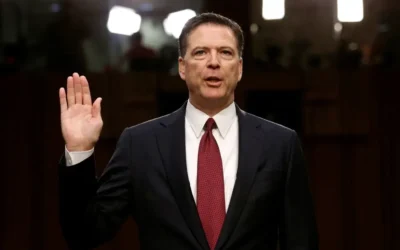
James Comey Indicted for False Statements, Obstruction
Former FBI Director James Comey has been indicted on two serious charges. A grand jury brought counts of making false statements to Congress and obstruction of a congressional proceeding. These charges focus on his testimony in 2020 about the FBI’s Russia-related investigation known as “Crossfire Hurricane.” Known to many as Russiagate, this case now brings fresh attention to Comey’s past leadership at the bureau. Details of the Charges According to the indictment, Comey lied during his September 2020 testimony. Prosecutors allege he falsely denied authorizing an FBI employee to serve as an anonymous source. In addition, the obstruction charge claims he interfered with a congressional investigation into sensitive information leaks. Both charges carry potential fines and prison time if he is convicted. Importance of Timing The indictment comes at the last possible moment under the statute of limitations. Federal prosecutors had exactly five years to act, and they filed just before that deadline. The U.S. Attorney’s Office for the Eastern District of Virginia is leading the case. This timing adds to the drama and shows the investigation had been active behind the scenes for years. Strong Reactions from Leaders Attorney General Pam Bondi responded quickly. She said that no one, regardless of status or past power, stands above the law. She explained that the Department of Justice has a duty to act when powerful people mislead Americans. No one is above the law. Today’s indictment reflects this Department of Justice’s commitment to holding those who abuse positions of power accountable for misleading the American people. We will follow the facts in this case. — Attorney General Pamela Bondi (@AGPamBondi) September 25, 2025 FBI Director Kash Patel also issued a statement. He said the FBI must hold itself accountable. According to Patel, restoring trust requires that even former leaders face consequences if they break the rules. Today, your FBI took another step in its promise of full accountability. For far too long, previous corrupt leadership and their enablers weaponized federal law enforcement, damaging once proud institutions and severely eroding public trust. Every day, we continue the fight to… — FBI Director Kash Patel (@FBIDirectorKash) September 25, 2025 President Donald Trump reacted strongly as well. He labeled Comey one of the worst figures ever to serve in government. Trump added that the indictment represents the beginning of long-delayed accountability. (RELATED NEWS: Ryan Routh Attempts To Stab Himself After Guilty Verdict For Trump Assassination Plot) Government Spying on Trump The case also ties into confirmed surveillance of Donald Trump’s campaign during the 2016 election. Under James Comey’s leadership, the FBI secured secret warrants from the Foreign Intelligence Surveillance Court (FISA) to monitor Trump campaign adviser Carter Page. Later investigations revealed that the FBI relied heavily on the Steele dossier, which contained unverified and false claims. A Justice Department inspector general’s report found that the FBI made serious errors and omitted key facts in its FISA applications. Those mistakes misled the court and enabled improper spying on a presidential campaign. These findings confirmed that the government spied on Trump’s campaign through flawed surveillance methods. This abuse of power eroded public trust and showed how political motives can corrupt law enforcement. The surveillance scandal now serves as a backdrop to Comey’s indictment. It highlights a pattern of misconduct under his leadership that continues to raise questions about the FBI’s role in politics and justice. The Background of Crossfire Hurricane The controversy reaches back to 2016, when the FBI opened its Russia election interference investigation. Inside the bureau, officials referred to the effort as “Crossfire Hurricane.” James Comey oversaw this probe while serving as FBI Director. Later, special counsel Robert Mueller took over. In 2019, Mueller’s report concluded there was not enough evidence to prove criminal conspiracy between the Trump campaign and Russian operatives. Soon afterward, another special counsel, John Durham, began reviewing how the FBI launched the investigation in the first place. Durham’s report criticized the bureau, saying it ignored warning signs and allowed itself to be influenced by political pressure. These findings added weight to claims that FBI leadership mishandled the case. Legal Stakes for Comey If convicted, James Comey could face years in prison as well as steep fines. For making false statements to Congress, the maximum penalty is up to five years in prison and significant fines. For obstruction of a congressional proceeding, the penalty is also up to five years. Combined, Comey could face as much as 10 years in prison, though sentencing would depend on the court. His defense team is expected to argue that he did not knowingly mislead Congress. They may claim memory lapses or confusion rather than deliberate lies. Lawyers could also argue that congressional testimony often leaves room for interpretation. The burden of proof lies with prosecutors, who must show deliberate deception beyond a reasonable doubt. What Happens Next The indictment is only the beginning. The case will move to federal court, where a judge will oversee pretrial motions and hearings. Both sides will exchange evidence during discovery. After that, the court will determine whether to proceed to trial. (MORE NEWS: AOC Slams Charlie Kirk with Scathing House Floor Comments) Media attention will remain intense throughout the process. Because Comey once held one of the most powerful positions in law enforcement, every development will be closely examined. Political leaders from both parties are already weighing in, ensuring that the trial will shape public debates. Why This Case Matters The James Comey indictment matters for several reasons. It tests the principle that no government official is above the law. If prosecutors succeed, it will send a message that accountability reaches the highest levels of power. In addition, this case raises concerns about public trust in institutions. The FBI has faced criticism from across the political spectrum. By charging a former director, the Department of Justice signals that even the bureau’s top leaders must answer to the public. The Comey trial could set a powerful precedent for how cases involving Congress are handled. Lying to Congress is rarely prosecuted…

Cartel “La Diabla” Busted for Baby, Organ Ring in Mexico
Martha Alicia Mendez Aguilar, better known as “La Diabla,” thought she could hide in Juárez, Mexico. But earlier this month, she was captured in a joint U.S.–Mexico operation. The charges against her aren’t about drugs or weapons. They’re darker. She’s accused of running a cartel baby-trafficking and organ-harvesting ring—an operation so disturbing that even seasoned investigators were stunned. Her arrest is a big win for law enforcement, but the story behind it reveals something bigger. Cartels aren’t just about drugs anymore. They’re moving into crimes most people never thought possible. And that makes this case one of the most chilling in years. Who Exactly Is “La Diabla”? Aguilar isn’t just another cartel name. She worked with the Jalisco New Generation Cartel, one of Mexico’s most violent groups. Her nickname, “La Diabla,” which means “She-Devil,” says it all. She earned a reputation for being ruthless. According to investigators, she targeted poor, vulnerable women—many of them already pregnant. She promised them help, sometimes money, sometimes medical care. Once she had them in her grip, she lured them to hidden clinics. (MORE NEWS: U.S. Strike on Venezuelan Drug Cartel Boat Signals New Era) That’s where the horror began. Unregulated cesarean operations were performed under dangerous conditions. Some mothers didn’t survive. Their newborns were taken and sold. Reports say babies went for as much as $14,000 each. On top of that, the mothers’ organs were harvested and sold on the black market. Think about that for a moment. Babies sold like merchandise. Mothers treated as disposable. It’s the kind of cruelty that earns a person the name “La Diabla.” How She Got Caught Her downfall came on September 2. Authorities tracked her to Juárez, right across the border from El Paso, Texas. Mexican officials worked side by side with U.S. agencies to pull off the arrest. The U.S. National Counterterrorism Center had been involved for months. Its director, Joe Kent, said her capture was crucial to saving innocent lives. He also pointed out something many people don’t want to hear: cartels are diversifying. Drugs aren’t the only game anymore. They’re moving into new areas—human trafficking, organ sales, cybercrime—anything that brings in cash. That’s why the U.S. recently designated groups like the CJNG as foreign terrorist organizations. The goal is to give law enforcement more tools to shut them down. Aguilar’s arrest is proof that approach can work. Thanks to @POTUS, cartels are finally being treated as terrorists. @ODNIgov‘s NCTC recently provided intel to Mexican law enforcement partners that led to the arrest of Martha Alicia Mendez Aguilar, known as ‘La Diabla’ — a CJNG cartel-affiliated baby trafficker, in Juarez,… pic.twitter.com/CRNgJWVHkV — NCTC Director Joe Kent (@NCTCKent) September 24, 2025 The Office of the Director of National Intelligence, Tulsi Gabbard released a statement praising the multi-country, multi-agency operation that led to Aguilar’s arrest: Why Cartels Do This With cartels, the answer is always about money—and opportunity. Drug trafficking is risky. Border security is tougher, and competition between cartels is brutal. By branching out into other crimes, they spread the risk and increase their profits. Babies and organs fetch high prices. At the same time, poor women are easy targets. Many live in places where health care is scarce and oversight is weak. Cartels know they can operate in those shadows. And unlike drug shipments, which face heavy surveillance, these crimes are easier to hide. In short, it’s a perfect storm: desperate victims, weak systems, and greedy criminals. What Happens Next Authorities are now trying to map out Aguilar’s network. Who helped her? Were doctors involved? How far did the trafficking chain stretch? Those questions will take time to answer. There are also big legal challenges. These crimes cross borders, which means multiple countries have to work together. It’s messy, and cartels count on that. Still, her arrest sends a loud message: no one is untouchable. At the same time, this case shows prevention is just as important as prosecution. Vulnerable women need more protection. They need safe hospitals, real economic options, and information that helps them spot dangers before it’s too late. Without that, criminals like Aguilar will always find victims. Why This Story Hits Hard Cartels have always been ruthless. But this feels different. For years, people thought of cartels as drug dealers and smugglers. Now we see they’ll exploit life itself as a commodity. Babies sold to the highest bidder. Women discarded for parts. It’s a level of cruelty that forces everyone to pay attention. And it’s not just about Mexico. When babies are sold across borders and organs are trafficked into international markets, the whole world is involved—whether it wants to be or not. A Wake-Up Call The capture of “La Diabla” is a defining moment in the war on cartels. They are evolving, adapting, and looking for new ways to make money. Law enforcement can strike back when nations work together. But the bigger fight is still ahead. Networks like Aguilar’s don’t die with one arrest. They regroup, they shift, and they keep going. That’s why governments need to move fast, not just to punish criminals but to protect the people most at risk. “La Diabla” may now be in custody, but her crimes remind us of something chilling: as long as desperation exists, cartels will exploit it. Her arrest is a victory—but also a warning that the darkest chapters of cartel violence may not be behind us. Cut through the noise. Drown out the spin. Deliver the truth. At The Modern Memo, we’re not here to soften the blow — we’re here to land it. The media plays defense for the powerful. We don’t. If you’re done with censorship, half-truths, and gaslighting headlines, pass this on. Expose the stories they bury. This isn’t just news — it’s a fight for reality. And it doesn’t work without you.

Dallas ICE Office Attack Sparks Grief and Political Uproar
Dallas woke up to tragedy on September 24, 2025. A gunman climbed onto a rooftop and opened fire on the U.S. Immigration and Customs Enforcement (ICE) field office. Three detainees were hit, and at least one died. The shooter then turned the gun on himself and didn’t survive. Investigators say this wasn’t random. They believe the attack was planned and directed at ICE officers. Now, federal, state, and local officials are digging for answers, trying to figure out why this happened and whether anyone else was involved. Who Was Behind the Gun? Authorities identified the shooter as 29-year-old Joshua Jahn. He didn’t just lash out in the heat of the moment. Police say he etched anti-ICE slogans onto his bullets, making his motive clear. That’s why investigators are treating this as more than just another crime — it looks like an ideologically driven attack. Officers searched two homes tied to Jahn — one in Fairview, Texas, and another in Durant, Oklahoma. They’re going through computers, phones, and personal records to learn what pushed him to do this and if he had help. How the Attack Happened Officials say Jahn fired “indiscriminately” from the roof. He hit the ICE building, broke through windows and lobby walls, and fired into a van transporting detainees. One of those detainees lost their life. Two more are fighting to recover in the hospital. Acting ICE Director Todd Lyons said this was more than an attack on detainees — it was a direct strike on law enforcement itself. He warned that bullets could have hit lawyers, visitors, or even drivers on Interstate 35, which runs close to the facility. (MORE NEWS: Utah Arrests: Explosive Device Found Under Fox News Vehicle) Lyons spoke with Fox News’ Martha MacCallum: Acting ICE Director Todd Lyons: “The ICE facility itself was a target… He was just firing at ICE vehicles… It wasn’t directed at the detainees.. wasn’t directed at civilians on the street. It was a definite attack on law enforcement. He was there to attack that building.”… pic.twitter.com/nhPiQcp2wt — RedWave Press (@RedWave_Press) September 24, 2025 Political Firestorm The shooting immediately sparked political reaction. Homeland Security Secretary Kristi Noem said the attack was “deliberate” and warned that heated rhetoric aimed at ICE officers is dangerous. She called out comparisons that paint ICE agents as secret police, saying that kind of language makes them targets. For months, we’ve been warning politicians and the media to tone down their rhetoric about ICE law enforcement before someone was killed. These horrendous killings must serve as a wake-up call to the far-left that their rhetoric about ICE has consequences. Comparing ICE Day-in… — Secretary Kristi Noem (@Sec_Noem) September 24, 2025 President Trump went even further. He blamed “Radical Left Democrats” for fueling anti-ICE hatred and promised an executive order to crack down on domestic terrorism groups. He pointed to the messages written on Jahn’s bullets as proof the shooting was politically charged. Texas Senator Ted Cruz agreed, saying this is the third shooting in Texas directed at ICE or CBP: This needs to stop. Politicians using rhetoric that demonizes ICE and CBP need to stop. pic.twitter.com/NlcePjtD4Q — Ted Cruz (@tedcruz) September 24, 2025 Dallas Responds Closer to home, Dallas Mayor Eric Johnson urged the city to pray for our nation and for the city of Dallas. He said that believes in the power of prayer and that prayer changes things. Republican Mayor of Dallas Eric Johnson opened the press conference on the ICE facility shooting with a powerful call to prayer. In a moment when Democrats are demonizing faith, he doubled down. “Let me just start off by saying that I’m a person who believes very, very strongly… pic.twitter.com/Wm3wupTCHk — Vigilant Fox 🦊 (@VigilantFox) September 24, 2025 Police sealed off streets around the U.S. Immigration and Customs Enforcement building and worked with federal agents to sweep the area for evidence. Tensions ran high, but local leaders stressed the need for level heads and cooperation. (MORE NEWS: Kilmar Abrego Garcia and the Deep Immigration Divide) Bigger Pattern of Violence Sadly, this isn’t the first time ICE has faced violence. Over the last year, threats against immigration facilities and border agents have been on the rise. Experts warn that when public debate turns toxic, it can encourage unstable individuals to lash out. Border Czar Tom Homan weighs in on the Charlie Kirk Show: .@RealTomHoman: This morning, a gunman was targeting an ICE facility in Dallas, Texas… it’s the third shooting that’s occurred in Texas against immigration officials… This is clearly a targeted attack against ICE. pic.twitter.com/c0aQ2EsHAr — Rapid Response 47 (@RapidResponse47) September 24, 2025 The Dallas field office wasn’t built for long-term detention. It’s mainly a holding and processing center. ICE rules say detainees should not be kept there for more than 12 hours. But its busy role, combined with its location near major roads, makes it especially vulnerable. It isn’t just agents at risk. Civilians, lawyers, and visitors are all exposed if someone decides to attack. What Happens Next Investigators now have several big questions to answer. They’re combing through Jahn’s digital trail to see what groups he followed or talked to online. They’re reviewing his travel, finances, and social connections. And they’re asking whether he radicalized quickly or if this had been building for years. At the same time, ICE and DHS are looking hard at their security. Do facilities need better barriers? More surveillance? Stronger partnerships with local police? Those decisions could come soon. The political side won’t cool off either. Republicans are pressing for stronger protections for ICE officers. Democrats are trying to strike a balance, condemning violence while still debating immigration policy. What everyone agrees on is this: nobody wants to see another day like this. A Community Left to Heal Dallas is now dealing with both grief and fear. Families of the victims are facing unimaginable loss. ICE employees are shaken, knowing they were directly in the crosshairs. And an already divided nation is once again reminded of how dangerous…

Pregnant Women Take Tylenol to Defy Trump in Viral Trend
We have reached a new low. Pregnant liberal women are now posting videos of themselves swallowing Tylenol pills on camera, claiming they are doing it to “own Trump.” This strange new stunt comes in response to President Trump’s recent warning about the possible risks of acetaminophen use during pregnancy. Instead of sparking a thoughtful conversation, it has triggered a wave of performative defiance on social media. Trump’s Warning on Tylenol and Pregnancy President Trump, joined by health officials, spoke about studies suggesting a link between heavy acetaminophen use during pregnancy and rising autism rates. He stressed that pregnant women should be cautious and only use the drug when truly necessary, such as to control a high fever. The president pointed out that some groups who avoid pills altogether report lower autism rates. He made it clear that women should consult with their doctors before taking any medication while pregnant. Trump did not call for a ban. He did not say women could never take Tylenol. He simply urged caution, which is not unreasonable given the sensitive nature of pregnancy. His message was about protecting babies and making decisions with medical guidance. (RELATED NEWS: Autism Hope Grows With Promising Developments) Social Media Stunts: “Taking Tylenol to Own Trump” Instead of treating this like a serious issue, some women decided to make it a political spectacle. Videos popped up online showing visibly pregnant women holding up Tylenol pills and swallowing them on camera. Their captions read things like, “I trust science, not Trump,” or, “I’m a pregnant woman and I’ll take Tylenol if I want.” This kind of behavior isn’t empowering or brave. It is reckless performance designed to score political points. What is accomplished by risking your child’s health for likes, views, and applause from strangers online? The answer is nothing—except fueling more division and cheap political theater. Doctors were speaking out online, including Dr. Nicole Saphier: Pregnant women popping Tylenol like Tic Tacs just to stick it to Trump — please stop. Don’t weaponize your pregnancy for a political point. Consider acetaminophen only when absolutely necessary, for the shortest duration and lowest dose, even the makers of Tylenol say this. — Nicole Saphier, MD (@NBSaphierMD) September 23, 2025 Accusations of an “Attack on Women” Some activists went even further, claiming Trump’s warning amounted to an “attack on women.” They tried to frame his remarks as an attempt to control female bodies. In reality, the warning was about protecting unborn children from potential risks. The notion that caution equals oppression is absurd. Every doctor gives pregnant women advice on what to eat, drink, or avoid during those nine months. No sushi, no alcohol, limited caffeine—these are all common guidelines. Nobody calls that an “attack on women.” Yet when the warning comes from Trump, activists twist it into a political weapon. A Biden-Era Warning and the Scientific Debate During the Biden administration, a Salon article highlighted how the science around acetaminophen and developmental risk has long been contested. The article pointed to the SAME STUDIES used by the Trump administration and lawsuits alleging that prenatal exposure to acetaminophen (the active ingredient in Tylenol) could increase risks of autism, ADHD, and other developmental disorders. But as the article stresses, the science is not settled. One key study, published in JAMA Psychiatry in 2019, found that acetaminophen was “associated with increased risk of attention-deficit/hyperactivity disorder and autism spectrum disorder in children.” Meanwhile, a 2021 review in Nature Reviews Endocrinology argued that “prenatal exposure to APAP [acetaminophen] might alter fetal development, which could increase the risks of some neurodevelopmental, reproductive and urogenital disorders.” That same review called for more research and for “precautionary action.” In the Salon story, Matthew Rozsa writes: “The period of fetal development is a very vulnerable stage,” Hugh S. Taylor, chair of Obstetrics, Gynecology and Reproductive Sciences at the Yale School of Medicine, told Yale News regarding his support of a 2021 statement urging pregnant women to exercise caution before taking acetaminophen products. “Things are moving, changing quickly. The changes that occur during that time period are then programmed for the rest of our lives. Things that don’t affect adults may affect these crucial developmental windows.” A 2018 study in the American Journal of Epidemiology cautioned that although “acetaminophen use during pregnancy is associated with an increased risk for ADHD, ASD, and hyperactivity symptoms,” the findings “should be interpreted with caution given that the available evidence consists of observational studies and is susceptible to several potential sources of bias.” In short: under the Biden administration, the narrative around acetaminophen in pregnancy was already tangled. The science shows potential signals. Political Symbolism Over Common Sense The real issue here is not Tylenol—it is symbolism. For some, taking a pill on camera became a way to show loyalty to their political tribe. What should have been a sober conversation about pregnancy and health turned into a circus act of defiance. This is what happens when politics consumes every part of life. A medical question becomes a test of party loyalty. A pain reliever becomes a culture war weapon. The baby in the womb becomes an afterthought while the spotlight shines on the mother’s political performance. Why This Matters At the heart of this mess is a deeper problem. Our culture rewards outrage and stunts more than responsibility and truth. Social media encourages people to seek attention by going to extremes. And when it comes to pregnancy, that is dangerous. Women should not be pressured into ignoring medical advice just to make a political point. Babies should not be put at risk so their mothers can rack up views on TikTok. Leaders should not be vilified for offering health warnings simply because of their political party. This story matters because it reveals how broken our discourse has become. When everything is viewed through the lens of politics, even a warning about a common over-the-counter drug becomes a battlefield. The Takeaway Trump’s point was simple: if risks exist, why not err on the side of…

Ryan Routh Attempts To Stab Himself After Guilty Verdict For Trump Assassination Plot
OPINION Ryan Wesley Routh has been found guilty of attempting to assassinate President Trump. A jury in Florida delivered the verdict after weeks of testimony and evidence. The 59-year-old now faces a possible life sentence. The conviction includes multiple felony counts. These charges range from attempted assassination of a presidential candidate to weapons offenses and assaulting a federal officer. Prosecutors argued that his actions were deliberate and dangerous, while the jury agreed the evidence proved intent beyond a reasonable doubt. How the Plot Unfolded The case stems from an incident in September 2024. Routh hid in the bushes near Trump International Golf Club in West Palm Beach, Florida. Armed with an SKS-style rifle, he aimed through a fence in the direction of Trump’s security detail. Secret Service agents spotted Routh 12 hours later. One agent opened fire, causing Routh to drop his weapon and run. He was quickly arrested after fleeing the scene. Investigators later revealed that Routh had been preparing for weeks. They found burner phones, notes tracking Trump’s movements, and detailed plans to avoid detection. Prosecutors stated that this demonstrated a high level of planning and intent. Drama Inside the Courtroom The trial reached its most dramatic moment when the guilty verdict was read. Routh suddenly grabbed a pen and tried to stab himself in the neck. Courtroom marshals immediately rushed forward, tackling him and pulling him out of the room. (MORE NEWS: Rising Socialism Exposes the Democratic Party’s Identity Crisis) As officers restrained him, his daughter, Sara Routh, screamed through tears: “Dad, I love you. Don’t do anything. I’ll get you out. He didn’t hurt anybody!” Her desperate words echoed through the courtroom as marshals dragged him away. Routh was later brought back in shackles to hear the remainder of the proceedings. The tense exchange underscored just how volatile the case had become, both for the defendant and his family. The Stakes at Sentencing Routh is scheduled to be sentenced on December 18, 2025. If the court applies the maximum penalties, he could spend the rest of his life in prison. Federal officials say the conviction sends a clear message. Political violence will not be tolerated, and attempts on the lives of public officials will be met with the harshest consequences. President Trump also responded after the verdict with a lengthy statement. He praised prosecutors and law enforcement, saying: His remarks underscored the gravity of the crime while also crediting the teamwork and vigilance that led to Routh’s capture. For Trump, the conviction represented not only justice for himself but also a reminder of the importance of security and accountability in American democracy. A Growing Concern Over Political Violence The conviction adds to growing concern about rising political violence in America. It comes just months after a separate attempt on Trump’s life in Pennsylvania in July 2024, when a gunman opened fire at a campaign rally. That earlier attempt left one person dead and another seriously injured. (RELATED NEWS: AOC Slams Charlie Kirk with Scathing House Floor Comments) Security experts warn that heated rhetoric and division can inspire dangerous actions. The Routh case demonstrates how quickly words and hostility can turn into serious threats. Law enforcement agencies are now reassessing protective measures for candidates and officials in an increasingly polarized environment. Defense Arguments and What Comes Next Routh attempted to defend himself by claiming he never intended to pull the trigger. He argued that since the gun was never fired, the government had failed to prove assassination intent. The jury rejected that argument, citing his careful planning and the position he had put himself in. His legal team may still file appeals. They could argue over how intent was defined or whether some evidence should have been excluded. However, given the jury’s unanimous verdict and the mountain of evidence, legal experts believe an appeal is unlikely to change the outcome. Why This Case Matters This conviction is not only about one man’s actions. It reflects a broader issue facing the nation: the danger of escalating political hostility. When violent plots move from threats to real attempts, the stability of the system is at risk. Routh’s sentencing in December will be closely watched. A life sentence would be a strong statement from the justice system. It would underscore that attempts to silence political leaders through violence will never succeed. At the same time, the case forces Americans to reckon with the reality of modern politics. Security for candidates must be stronger than ever. Media outlets, celebrities, and even legislators must also consider how their rhetoric and division contribute to the rise of dangerous individuals willing to act on extreme beliefs. The Takeaway The conviction of Ryan Wesley Routh marks one of the most serious legal cases in recent political history. He carefully planned, armed himself, and positioned himself to strike at President Trump. The jury’s decision shows that intent and preparation can carry the same weight as action when it comes to protecting leaders and preserving democracy. In the wake of several high-profile assassinations — including the murder of Charlie Kirk and two attempts on President Trump’s life — the time is now to turn down the temperature. But that will not happen as long as figures on the left, like former Vice President Kamala Harris, continue giving interviews where they call Trump a tyrant and compare him to a communist dictator. That kind of rhetoric only fuels hostility and division. Kamala Harris calling President Trump a “tyrant” is a masterclass in projection. Under the previous administration: – Raided political opponent’s home – Fired military members over the COVID shot – Targeted Catholics – Spied on school parents – Censored free speech pic.twitter.com/uxHv3dKOLf — Christian Collins (@CollinsforTX) September 23, 2025 The conviction of Ryan Routh speaks for itself. The reckless propaganda needs to end. Until then, we will not stay silent about it. Cut through the noise. Drown out the spin. Deliver the truth. At The Modern Memo, we’re not here to soften the blow — we’re here…