



Retirement 2025: America’s Safest and Wealthiest Towns to Call Home
Retirement today means more than warm weather or low taxes. You want safety and community. You want financial peace of mind. A recent analysis from GoBankingRates highlights towns that deliver on all three. These destinations pair low crime with financial strength and strong livability scores. As a result, they offer a smart path to a secure and enjoyable next chapter. How the Rankings Were Built The study focused on towns with a large 65+ population. Then it compared several factors that matter to retirees. The goal was simple: find places that are both safe and prosperous. Crime rates: violent and property crime per 1,000 residents. Retirement income: average income among residents age 65 and older. Home values: median values that suggest long-term stability. Livability: access to amenities, healthcare, and affordability. Put together, these metrics reveal towns where you can live with confidence and comfort. (MORE NEWS: Smart Tips for Medicare Open Enrollment Success) Key Insights and Trends California Leads the Pack California places a remarkable number of towns in the top tier. Communities like Rancho Palos Verdes, Walnut Creek, and Laguna Woods pair scenic settings with strong healthcare networks. Consequently, they appeal to retirees who want both beauty and practical support. The Southwest and South Shine Arizona, Texas, and North Carolina continue to rise. These states blend pleasant climates, active lifestyles, and relative affordability. Towns such as Oro Valley and Georgetown show how a friendly tax environment and outdoor amenities can boost quality of life. A Surprising Absence Florida remains a popular retirement state. Yet it does not appear in this particular top 30 ranking. This clarifies the need to go beyond stereotypes and look closely at data when you choose a retirement town. Why These Towns Stand Out 1) Safety Comes First Peace of mind matters. Lower crime supports daily comfort, social engagement, and overall well-being. In these towns, neighborhoods are well cared for, and residents feel secure. 2) Wealth Signals Stability Stronger retirement incomes and solid home values point to resilient local economies. Wealth often correlates with better public services, improved infrastructure, and more recreation options. Over time, that stability helps you age in place with confidence. 3) Quality of Life Is the Real Luxury Livability goes beyond numbers. It includes parks and trails. It includes community events, fitness programs, and easy access to care. Towns like Bella Vista and Pinehurst offer social connection and everyday convenience without sacrificing value. (MORE NEWS: Emotional Well-Being and Aging: How Older Adults Can Thrive) How to Choose Your Ideal Retirement Town Use this quick checklist to narrow your options and align your decision with your goals. Review demographics: places with larger 65+ populations often provide senior-friendly services. Check local crime data: compare violent and property crime trends over several years. Evaluate affordability: weigh housing costs, property taxes, insurance, and healthcare. Test the lifestyle: visit for a week; try the trails, clinics, markets, and community centers. Plan for the long term: confirm access to hospitals, specialists, and transportation. What This Means for Your Retirement Retirement is your chance to choose a lifestyle that supports comfort and peace of mind. The data behind these rankings shows that towns with low crime, stable incomes, and strong communities give retirees a real sense of freedom. Living in a safe area reduces stress and helps you enjoy daily life without worry — whether that’s walking in the park, joining a local club, or meeting friends downtown. Economic stability also plays a big role. When a community is financially healthy, services run smoothly, neighborhoods stay well-kept, and healthcare is easier to access. These factors quietly shape a higher quality of life, giving residents the confidence that their town will remain dependable for years to come. If you’re planning your retirement, consider safety and wealth as long-term investments in your happiness. Visit a few of these towns, talk with locals, and see how it feels to live there. Finding the right fit is about more than statistics — it’s about choosing a place where you’ll feel secure, connected, and content. The Takeaway The GoBankingRates study highlights something simple but powerful: where you live in retirement matters. The right community can support your health, protect your finances, and bring joy to everyday life. These towns earned their spots because they offer that balance — solid infrastructure, strong home values, and a true sense of belonging. As you narrow your options, think beyond climate or cost. Consider how each town invests in its residents, maintains safety, and builds a welcoming environment. Those details will shape your retirement experience far more than the weather or the nearest golf course (unless, of course, you live to golf!). In the end, the best retirement towns give you peace of mind and room to enjoy life on your terms. They’re places where you can feel safe, stay active, and make meaningful connections. That’s what a rewarding retirement is really about. Forget the narrative. Reject the script. Share what matters. At The Modern Memo, we call it like it is — no filter, no apology, no corporate leash. If you’re tired of being lied to, manipulated, or ignored, amplify the truth. One share at a time, we dismantle the media machine — with facts, boldness, and zero fear. Stand with us. Speak louder. Because silence helps them win.

Trump Ally Donates $130M to Cover Military Pay Amid Shutdown
An anonymous ally of Donald Trump quietly stepped in to donate $130 million to the Department of War with the intention of covering U.S. troops’ paychecks during the current government shutdown. The gift came as military service members faced potential delays or interruptions in their paycheck issuance. The donation raises important legal and constitutional questions — and also highlights how the shutdown is affecting critical federal operations. (RELATED NEWS: Trump Orders Military Pay Amid Government Shutdown) What We Know So Far Pentagon spokesman Sean Parnell said in a statement to Fox News Digital: “On October 23, 2025, the Department of War accepted an anonymous donation of $130 million under its general gift acceptance authority. The donation was made on the condition that it be used to offset the cost of Service members’ salaries and benefits. We are grateful for this donor’s assistance after Democrats opted to withhold pay from troops.” Trump himself said the individual had contacted him, saying: “I’d like to contribute personally, because I love the military and I love the country.” He added that he believed the donor did not want recognition and that he would not identify the person unless given permission. Trump says a donor friend wrote him a check today for $130 MILLION to help pay the military during the Schumer shutdown. “He doesn’t want the recognition. THAT is what I call a patriot!” Amazing 🇺🇸 pic.twitter.com/Bs8yeUR3e7 — Sara Rose 🇺🇸🌹 (@saras76) October 23, 2025 The Legal and Constitutional Snag Despite the generous contribution, significant legal barriers remain. According to experts, only Congress holds the power under Article I of the U.S. Constitution to appropriate funds for federal employee salaries — including those in the military. In other words, while the funds were accepted, their actual use to cover troops’ pay may require further congressional action. The Department of War can accept donations for certain purposes, such as scholarships, museums, memorials, or assistance for wounded service members, but it may not unilaterally redirect donated funds toward covering salaries under current law. The only way around this restriction would be for Congress to reclassify troops’ pay as mandatory spending, which doesn’t require annual appropriations, or otherwise change the law. Why This Matters This situation signals how deeply the shutdown is impacting critical functions. The fact that a private individual felt compelled to intervene for troops’ pay underscores how close to the edge some military financial operations are. It raises broader questions about the role of private donations in funding government operations. If an individual can donate hundreds of millions to cover military pay, what precedent does that set? Moreover, how will oversight, transparency, and accountability work in such cases? It reminds us that even generous acts may hit institutional and legal walls. Without congressional authorization, the donor’s intent may not translate into actual disbursement. That gap creates uncertainty for service members who are counting on timely pay and benefits. (MORE NEWS: Trump’s East Wing Demolition and Ballroom Plan Explained) What Comes Next Congress must act if the funds are to be used for their intended purpose. If lawmakers do not move quickly, service members risk continued delays even with the donation in hand. Meanwhile, the Department of War must track the donation, confirm legal eligibility, and coordinate with the Treasury and other federal entities to ensure compliance. Additionally, this episode may prompt calls for reform around how the military and other federal agencies handle shutdowns, pay disruptions, and private funding. Some in Congress may see this as a push to ensure troop pay remains protected regardless of political stalemate. Final Word The anonymous $130 million donation to pay U.S. troops in the face of a government shutdown is a remarkable gesture. At the same time, it highlights the limitations of executive and private-sector actions when legal authority resides with Congress. Without legislative approval, the funds cannot guarantee the intended paycheck coverage. Nevertheless, this act shines a light on the deep sense of patriotism many Americans still hold. Even in times of political division and financial uncertainty, individuals are willing to step up and sacrifice for the men and women who defend the nation. The mystery donor’s generosity shows that support for the military transcends politics — it is rooted in gratitude and national pride. Ultimately, this episode may serve as both a warning and an inspiration: a warning about how political stalemates can threaten those who serve, and an inspiration reminding us that patriotic Americans will always find ways to honor and protect their troops. Expose the Spin. Shatter the Narrative. Speak the Truth. At The Modern Memo, we don’t cover politics to play referee — we swing a machete through the spin, the double-speak, and the partisan theater. While the media protects the powerful and buries the backlash, we dig it up and drag it into the light. If you’re tired of rigged narratives, selective outrage, and leaders who serve themselves, not you — then share this. Expose the corruption. Challenge the agenda. Because if we don’t fight for the truth, no one will. And that fight starts with you.

Trump Ends Canada Trade Talks Over Reagan Ad
President Donald Trump has abruptly ended trade talks with Canada after condemning a controversial Ontario government ad that featured a fake version of Ronald Reagan’s voice. The ad used edited audio from a 1987 Reagan speech, which Trump called “egregious” and “misleading.” He accused Canada of using deception to influence U.S. policy and said the country has long taken advantage of American farmers through unfair tariffs. As a result, he announced that all trade discussions with Canada were officially over. 🚨 WOW! Canada used a fake Ronald Reagan quote to run advertisements against President Trump’s tariffs — so 47 just terminated ALL trade negotiations. Massive FAFO. “The ad was for $75,000,000. They only did this to interfere with the decision of the U.S. Supreme Court, and… pic.twitter.com/kyBiXcMKNq — Eric Daugherty (@EricLDaugh) October 24, 2025 Why It Matters This decision affects more than political posturing—it has real trade, economic and diplomatic implications. Because Canada is one of the U.S.’s largest trading partners, ending talks could ripple through supply chains, sector relationships, and broader North American trade dynamics. Moreover, the use of a historical presidential audio clip in a modern ad campaign raises serious questions about how political messaging, trade policy, and media tactics intersect. Finally, the move signals Trump’s outlook: He views tariffs not just as economic tools but as matters of national security. That suggests a more aggressive posture toward Canada and possibly other trade partners. The Ad Itself: What Was the Issue? The Reagan Foundation said that the Ontario government did not request permission to use and edit Reagan’s remarks. They also described the use of “selective audio” as misrepresenting what he originally said. The dispute is not only about trade policy—it’s about authenticity, intellectual property, and the boundaries of political advertising. Since the foundation is reviewing its legal options, the case may proceed into courts or at least become part of future regulatory scrutiny. Listen to President Reagan’s unedited remarks here: https://t.co/1gQUcbR4eZ pic.twitter.com/iqmjSuypp0 — Ronald Reagan Presidential Foundation & Institute (@RonaldReagan) October 24, 2025 What This Means for U.S.–Canada Trade With talks now terminated, uncertainty looms over several fronts: U.S. exporters may face less favorable conditions if Canada responds by tightening its own policies or renegotiations stall. Canadian imports into the U.S. could see additional scrutiny or higher tariffs, especially if Trump follows through on his broader tariff rhetoric. The broader North American trade posture may shift: allies might rethink how they approach trade talks with the U.S., knowing that domestic messaging can trigger abrupt policy changes. In short, this isn’t just a PR skirmish—it could set off a chain of trade policy shifts. The Bigger Picture: Messaging, Trust, and Trade This situation illustrates how trade policy can hinge on trust and messaging just as much as economics. (MORE NEWS: Thieves Steal Napoleon’s Jewels in Daring Daylight Heist) When a powerful trade partner believes it has been misrepresented or disrespected—whether via an ad or otherwise—it may pull back or explode into full-scale policy retaliation. For the U.S., it highlights a willingness to link cultural or communication issues directly to trade decisions. For Canada (and other partners), the message is clear: even long-standing alliances are vulnerable if perceived misconduct occurs. Next Steps and What to Watch Going forward, keep an eye on several developments: Legal outcomes: Will the Reagan Foundation file suit or reach settlement regarding the ad? Canadian reaction: Will Canada counter-respond with trade measures, or seek diplomatic channels to de-escalate? U.S. policy shifts: Does Trump’s move signal a broader pivot away from cooperation with Canada in favor of unilateral action? Market effects: How do businesses that rely on U.S.–Canada trade respond? Supply chains may adjust, costing time and money. Precedent setting: Will this episode change how trade partners view honoring past figures’ legacies or using historical material in modern trade-campaign contexts? Final Word This decision marks a serious setback for North American trade relations. By ending talks, Trump signaled that the U.S. will not tolerate actions it views as deceptive or disrespectful. The controversy over the Reagan ad has cast doubt on Canada’s credibility, making it appear less committed to good-faith negotiations. It would be in Canada’s best interest to issue an immediate apology and demonstrate a genuine desire to move forward after this misstep. For now, trade cooperation between the two nations remains uncertain — and rebuilding trust may prove far more difficult than restarting talks. Cut Through the Noise. Slice Through the Lies. Share the Truth. At The Modern Memo, we don’t tiptoe around the narrative—we swing a machete through it. The mainstream won’t say it, so we will. If you’re tired of spin, censorship, and sugar-coated headlines, help us rip the cover off stories that matter. Share this article. Wake people up. Give a voice to the truth the powerful want buried. This fight isn’t just ours—it’s yours. Join us in exposing what they won’t tell you. America needs bold truth-tellers, and that means you.
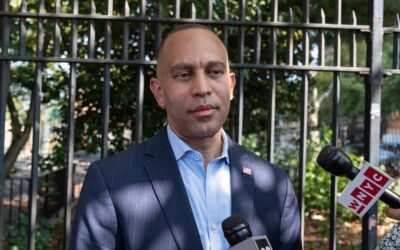
Rebuttal to Hakeem Jeffries: When Your Own Words Go Too Far
OPINION Democrats are once again accusing Republicans of dangerous rhetoric. House Minority Leader Hakeem Jeffries warned that Speaker Mike Johnson’s comment calling Democrats “legislative terrorists” would “get someone killed.” Rep. Hakeem Jeffries (D-NY) has a mental breakdown again, this time because Speaker Johnson correctly said Democrats are acting like terrorists by keeping the government shut down in order to try to get free healthcare for illegals.pic.twitter.com/N6XmiAKQeI — Paul A. Szypula 🇺🇸 (@Bubblebathgirl) October 23, 2025 That accusation rings hollow. For years, left-wing politicians and activists have used far more violent, dehumanizing language. They’ve called conservatives “Nazis,” “dictators,” and “racists.” They’ve labeled Donald Trump “Hitler.” They’ve threatened Supreme Court justices, cheered confrontations, and justified harassment. When that’s the language in the air, it only takes one unstable listener to turn words into bullets. (MORE NEWS: 2025 Elections: Five Key Races to Watch) Words Have Consequences Republicans have seen where this kind of talk leads: Charlie Kirk — Conservative activist shot and killed while speaking at Utah Valley University last month. Corey Comperatore — A citizen attending a rally in Butler, PA, was killed, and two others were injured during an assassination attempt on President Trump in July 2024. President Donald Trump — Shot and survived two assassination attempts. Justice Brett Kavanaugh — Narrowly escaped being murdered at his home after a would-be assassin traveled from California with weapons in 2022. Rep. Steve Scalise — Almost killed, along with four others injured, when a gunman opened fire at a congressional baseball practice in 2017. These attacks didn’t come from nowhere. They grew out of years of constant demonization — the left painting the right as monsters who must be “stopped” at all costs. When Democrats Spoke in Violence Hakeem Jeffries says Johnson’s phrase might provoke violence. But here are the Democrats’ own words — all on record, all public, all normalized by the media. How could anyone interpret these any differently? All it takes is one unhinged person to hear these words as a call to action. Sen. Chuck Schumer (2020): “You have released the whirlwind, and you will pay the price. You won’t know what hit you if you go forward with these awful decisions.” Two years later, Nicholas Roske traveled from California to Justice Kavanaugh’s home armed with a gun and knife, planning to assassinate him before surrendering. 🤔pic.twitter.com/0yK0YrloJC — Charlie Kirk (@charliekirk11) March 4, 2020 Sen. Chuck Schumer (2025): “There’s going to be a big protest on the 18th… He wants to be king. The American people have to rise up in every way!” More unhinged rhetoric from Democrat Chuck Schumer calling for Americans to “rise up” against President Trump: “We have to fight this in every way…” “There’s going to be a big protest on the 18th… He wants to be king. The American people have to rise up in every way!” pic.twitter.com/Wl7FuUyjaS — NRCC (@NRCC) September 24, 2025 Rep. Maxine Waters (2018): “If you see anybody from that Cabinet in a restaurant, in a department store, at a gasoline station, you get out and you create a crowd. You push back on them.” FLASHBACK: Maxine Waters tells Democrats to target Republicans: “If you see anybody from that Cabinet in a restaurant…you get out and you create a crowd. And you push back on them. And you tell them they’re not welcome anymore, anywhere” pic.twitter.com/5iRHcB2JjI — NRCC (@NRCC) September 13, 2025 Sen. Cory Booker (2018): “Get up in the face of some congresspeople.” Eric Holder (2018): “When they go low, we kick them.” Joe Biden (2016 campaign trail): “If we were in high school, I’d take him behind the gym and beat the hell out of him.” Kamala Harris: Repeatedly said, “Trump is a threat to our democracy and fundamental freedoms,” even after an attempt on his life. President Biden: “It’s time to put Trump in a bullseye.” (Later claimed it was “figurative.”) Rep. Dan Goldman: “It is destructive to our democracy, and he, President Trump, has to be eliminated.” Rep Dan Goldman (D-NY) calling for Trump to be “eliminated!” This is their wicked M.O. pic.twitter.com/uvnpKLA4Oo — 🇺🇸ProudArmyBrat (@leslibless) July 14, 2024 Del. Stacey Plaskett: “[Trump] needs to be shot.” (She later said she misspoke. Freudian slip?) Jay Jones (Nominee for Virginia Attorney General): Texted that if he had two bullets, he’d shoot a rival “two times in the head,” calling the man’s kids “little fascists” who he hoped would die in their mother’s arms. When Democrats Spoke in Violence — and Against ICE The same politicians now accusing Republicans of “dangerous rhetoric” have spent years vilifying America’s immigration enforcement officers. The White House statement titled “Democrats’ Unhinged Crusade Against ICE Fuels Bloodshed” documented dozens of examples: Gov. Tim Walz called ICE the “modern-day Gestapo.” Gov. Gavin Newsom likened ICE to “secret police” and said people have a “right to push back. Gov. JB Pritzker claimed America is becoming “Nazi Germany” because ICE “grabs people off the street.” 🚨 BREAKING: Gov. JB Pritzker COMPARES President Trump’s deportations to the HOLOCAUST by Hitler and the Nazis. This is absolutely inviting violence. “People’s rights started getting taken away—Right before the Holocaust really took place!”pic.twitter.com/HldwVRFLqN — The Patriot Oasis™ (@ThePatriotOasis) October 22, 2025 Rep. Robin Kelly smeared ICE as “the Gestapo” and a “betrayal.” Rep. Jasmine Crockett compared ICE to “slave patrols.” Rep. Sylvia Garcia called ICE agents “thugs.” Rep. Delia Ramirez labeled ICE “a terror force.” Rep. Pramila Jayapal said ICE agents are “deranged,” accused them of “kidnapping,” and claimed “resistance” is “inspiring.” Rep. Rashida Tlaib said ICE is “terrorizing our communities” and a “rogue agency.” Rep. Ayanna Pressley repeated that ICE is “terrorizing our communities.” Rep. Max Frost compared ICE to “some of the worst horrors and crimes against humanity.” Rep. John Larson called ICE “the SS” and “the Gestapo.” Rep. LaMonica McIver told people to “shut down the city” because “we are at war.” She pleaded not guilty to charges alleging she assaulted law enforcement officers outside of an immigration detention facility. That case is ongoing. Rep. Stephen Lynch called…

U.S. Imposes Major Sanctions on Russian Oil Giants to Cut War Funding
The Trump administration has taken one of its boldest foreign policy steps yet—issuing sweeping sanctions against Russia’s top two oil companies, Rosneft and Lukoil. The move aims to choke off the energy revenue that fuels Moscow’s war in Ukraine and to pressure Russian President Vladimir Putin into agreeing to a ceasefire. In announcing the decision, President Donald Trump emphasized the power and scale of the new measures. He expressed confidence that the measures will bite. The administration is leaning on economic strength—rather than direct military force—to confront foreign aggression and change behavior. “I think that they’ll certainly have an impact there. They’re massive sanctions and sanctions on oil. The two biggest oil companies, among the biggest in the world,” Trump said. .@POTUS: “These are tremendous sanctions. These are very big against their two big oil companies — and we hope that they won’t be on for long. We hope that the war will be settled.” https://t.co/6vbswraYmV pic.twitter.com/FONI7ECFAw — Rapid Response 47 (@RapidResponse47) October 22, 2025 A Clear Message: End the War, Stop the Killing Treasury Secretary Scott Bessent, in an interview with Fox Business, underscored the humanitarian and strategic purpose behind the move: “Now is the time to stop the killing and for an immediate ceasefire. Given President [Vladimir] Putin’s refusal to end this senseless war, the Treasury is sanctioning Russia’s two largest oil companies that fund the Kremlin’s war machine. The Treasury is prepared to take further action if necessary to support President Trump’s effort to end yet another war. We encourage our allies to join us in and adhere to these sanctions.” His remarks make the intent clear: apply economic pressure to push Russia toward peace talks and halt its aggression in Ukraine. Scott Bessent on a new round of Russian sanctions. pic.twitter.com/inNmFKbt9x — Praying Medic (@prayingmedic) October 22, 2025 Why the Sanctions Target Energy The sanctions focus on the lifeblood of the Russian economy: oil. Rosneft and Lukoil account for a large share of Russia’s crude output. That production funds the state budget and, by extension, the war effort. By freezing U.S. assets and barring Americans from doing business with these firms, the Treasury seeks to undercut Russia’s war chest. The measures also reach subsidiaries involved in exploration, refining, shipping, and trading to close common loopholes. (MORE NEWS: Government Shutdown Stalls Real Estate in 5 States) Global Reaction and Rising Oil Prices Global markets reacted quickly. Oil benchmarks moved higher as traders priced in potential supply disruptions. Energy equities rose in anticipation of stronger margins for non-Russian producers. However, higher energy prices can ripple through the economy. Transportation costs can climb. Inflation can pick up. European countries still adjusting away from Russian barrels may face supply-chain headaches and higher import bills. (MORE NEWS: Trump’s East Wing Demolition and Ballroom Plan Explained) Allies Urged to Join the Effort Bessent’s Fox Business interview included a direct appeal to partners to amplify the pressure. Coordinated action matters. When allies mirror sanctions and tighten rules on shipping, insurance, and financing, Russia has fewer paths to reroute oil. That unity also reduces the risk that third parties will undermine the policy by offering easy workarounds. Economic Pressure as a Path to Peace The strategy relies on financial tools to achieve diplomatic ends. Rather than deploying troops, the United States is betting that a sustained cutoff of oil income will strain the Kremlin’s calculus. Bessent made clear that the Treasury stands ready to escalate if Moscow refuses to change course. Future steps could include broader actions on tankers, service providers, and institutions that help move or insure sanctioned barrels. What This Means for Americans For U.S. households, the immediate concern is fuel costs. Prices at the pump may rise as markets digest tighter supply. Shipping and heating bills can also increase. Even so, officials argue that confronting aggression now can prevent larger conflicts and higher costs later. Meanwhile, U.S. energy producers may benefit from greater demand for reliable, non-Russian supply, supporting jobs and investment in oil and gas regions. Conclusion: A Defining Moment for U.S. Policy The sanctions on Rosneft and Lukoil mark a forceful use of economic power. By targeting Russia’s largest oil revenue sources, Washington seeks to constrict the funding of war and to drive momentum toward a ceasefire. As President Trump put it, these are massive sanctions aimed squarely at the energy sector. And as Secretary Bessent told Fox Business, now is the time to stop the killing and press for peace. The coming weeks will reveal whether coordinated economic pressure can help end a senseless conflict and restore stability. Expose the Spin. Shatter the Narrative. Speak the Truth. At The Modern Memo, we don’t cover politics to play referee — we swing a machete through the spin, the double-speak, and the partisan theater. While the media protects the powerful and buries the backlash, we dig it up and drag it into the light. If you’re tired of rigged narratives, selective outrage, and leaders who serve themselves, not you — then share this. Expose the corruption. Challenge the agenda. Because if we don’t fight for the truth, no one will. And that fight starts with you.

Trump’s East Wing Demolition and Ballroom Plan Explained
A Major Change at the White House President Donald Trump has begun tearing down the East Wing of the White House to make room for a new 90,000-square-foot ballroom. The project has already started, and demolition crews are clearing parts of the historic structure. The move has raised questions about preservation laws, federal permits, and who actually has the authority to approve such a major project. No Permit Required for the Project The White House sits on federal property managed directly by the Executive Office of the President (EOP). Because of that, the President can authorize construction or demolition without going through outside agencies. Unlike most federal buildings, the White House is not managed by the General Services Administration or the District of Columbia’s permit office. The President’s office acts as both property owner and regulator because he is the head of the Executive Branch of government. That means the work can move forward without outside permits or reviews. Why the National Park Service Isn’t Involved Many assume the National Park Service (NPS) oversees all White House changes because it manages nearby landmarks such as Lafayette Square and the Ellipse. However, NPS only becomes involved when federal funds are used. (MORE NEWS: FBI Probes Hunting Stand Near Trump’s Air Force One Area) In this case, the ballroom construction is privately funded, removing the NPS from the process entirely, although the President has been consulting with them since the beginning, per their statement. The President and private donors are covering the cost, so no federal money is being spent. That distinction keeps the project outside the reach of most preservation and environmental-review laws. Exemptions Under the National Historic Preservation Act The National Historic Preservation Act of 1966 (NHPA) normally protects historic properties by requiring federal agencies to review projects that could affect the National Register of Historic Places. But here’s the key detail: the White House, the U.S. Capitol, the Supreme Court, and all their related buildings and grounds are exempt from that review process. Congress carved out these constitutional buildings decades ago, leaving them free from the NHPA’s Section 106 requirements. So while the White House is one of America’s most iconic historic sites, it’s legally exempt from the standard preservation process that governs most federal properties. The Role of the NCPC Even though no permit is required, one agency still plays a small part — the National Capital Planning Commission (NCPC). This body oversees federal development in Washington, D.C. The NCPC must review and approve new construction, but it does not oversee demolition. NCPC Chair Will Scharf said about the project: “It is in fact the case that this commission does not have jurisdiction — and it has long denied that it has jurisdiction — over demolition and site preparation work for federal buildings on federal property. What we deal with is essentially construction — vertical build.” That means Trump’s team can legally demolish the East Wing before submitting final designs for the new ballroom. Once the building plans are complete, they will be reviewed by the NCPC. Most commissioners were appointed by Trump, so approval is expected to move quickly. What the New Ballroom Will Look Like The proposed ballroom is expected to be the largest indoor space ever built within the White House complex. According to the White House Statement, “theme and architectural heritage will be almost identical” to the White House itself. Concept renderings show a grand event hall with marble floors, gold trim, and chandeliers imported from Italy. (MORE NEWS: John Bolton Pleads Not Guilty to Classified Documents Charges) Officials say the space will be used for state dinners, receptions, and formal events. The President describes it as a “modernization,” not an expansion. A Long History of White House Changes The East Wing demolition is only the latest in a long line of White House transformations. Over more than a century, presidents have shaped and reshaped the building to fit their needs. Theodore Roosevelt oversaw the construction of the West Wing in 1902, separating the family residence from the offices. William Howard Taft added the first Oval Office in 1909, modeled after the Blue Room’s graceful oval shape. Calvin Coolidge renovated the third floor and replaced the roof with a new steel-framed attic story in 1927. Franklin D. Roosevelt built the East Wing in 1942 and installed an indoor swimming pool in 1933 to treat his polio. Harry S. Truman completely gutted and rebuilt the White House interior between 1948 and 1952 because it was structurally unsound. He also installed the first bowling alley in 1947, a small two-lane setup in the basement. Richard Nixon added another bowling alley in 1969 under the North Portico, creating the one still used today. Gerald Ford built an outdoor swimming pool on the South Grounds in 1975 for family use. Barack Obama converted the tennis court into a full basketball court in 2009. Also, made $376 million in renovations on the taxpayer’s dime. Each administration has left a visible mark on the property, blending function, symbolism, and personal style. A CNN report from 2010: $376 million White House renovation during the Obama Administration. Where was the Democrat outrage then? pic.twitter.com/MvLVDFcTru — Christian Collins (@CollinsforTX) October 22, 2025 What Happens Next Demolition is expected to continue through winter, with construction on the new ballroom starting soon after. The full project could take up to three years. Tours of the East Wing are suspended, and sections of the South Grounds are closed to staff and the public. Meanwhile, daily operations continue inside the main residence and West Wing. Officials insist that safety standards are being met and that the new structure will complement the White House’s classic style. Final Thoughts The East Wing demolition marks an exciting new chapter for the White House. The addition of a state-of-the-art ballroom will enhance the Executive Residence’s ability to host world leaders, dignitaries, and major diplomatic events with unmatched elegance. Designed to reflect the building’s historic character while embracing modern functionality, the new space…

Boost Your Metabolism Naturally with This Easy 30-Minute Daily Habit
Your metabolism matters because it converts nutrients into energy that fuels your body. Age, gender, muscle mass, and genetics all influence how quickly it works. But now, research shows that making one small daily change can give your metabolic health a meaningful lift. The Study: Move a Bit More, Sit a Bit Less A new six-month study out of Finland, led by post-doctoral researcher Taru Garthwaite of the University of Turku, found that when sedentary adults cut sitting time by just 30 minutes a day, their metabolism improved. In the study, 64 adults who were largely inactive reduced sedentary behavior by standing more frequently or doing light-intensity activity like short walks or phone-calls from a stand-up position. “Our results suggest encouragingly that reducing sedentary behaviour and increasing even light daily physical activity – for example, standing up for a phone call or taking short walks – can support metabolic health and potentially help prevent lifestyle diseases in risk groups,” says Garthwaite. As revealed by the study, people who cut their sitting time by 30 minutes or more showed better metabolic outcomes than those who remained inactive: “Those participants who successfully reduced sedentary time by at least half an hour showed improvements in metabolic flexibility and fat burning during light-intensity exercise compared to those who remained highly sedentary. In addition, the more the participant increased their standing time, the more their metabolic flexibility improved.” However, the researchers noted a caveat: benefits were stronger in participants who were already at elevated risk for metabolic diseases and who were physically inactive. (MORE NEWS: Health Insurance Open Enrollment: What to Know Before Jan 15) Importantly, the study emphasized that while this small change helps, meeting the guideline of 150 minutes of moderate-intensity activity per week still leads to even greater benefit. Why This Works Reducing sedentary time matters because long periods of sitting burn fewer calories and impair the body’s metabolic processes. When you stand up, shift your posture, or take a short walk, you invite your muscles and metabolic system back into action. According to other research, even light activity triggers changes in how your body handles carbohydrates and fats. Thus, the simple habit of breaking up your sitting time can support your metabolism in meaningful ways. What You Can Do – Easy Steps Since the change is modest, you don’t need to overhaul your life. Here are easy ways to implement it: Set a timer to stand or move every 30 minutes. Use a standing desk for part of the day. Take phone calls while standing or pacing instead of sitting. Walk for 5-10 minutes after a meal or after long sitting stretches. Change your posture: shift your weight, stretch your arms and legs, or do light leg lifts. Add longer bouts of activity when possible—aiming gradually toward the 150-minute weekly goal. Who Benefits Most? If you have a largely sedentary job or lifestyle, this change could make a key difference. The study showed stronger effects for individuals with excess weight or elevated risk of lifestyle diseases such as Type 2 diabetes and heart disease. Nonetheless, even for those who are already somewhat active, breaking up sitting time can add an extra health boost rather than replace other movement. Why It Matters in the Bigger Picture Over a quarter of American adults are physically inactive, meaning they do little to no exercise outside of their regular job. Given that statistic, the idea of “move just 30 more minutes a day” may feel attainable where major exercise goals feel overwhelming. By making small tweaks to your daily routine, you unlock cumulative metabolic gains that support energy, weight management, and long-term health. (MORE NEWS: Biotech Breakthrough Could End the Need for Liver Transplants) Don’t Mistake It for the Whole Answer While this habit is helpful, it does not replace the value of structured exercise. The study’s authors emphasize that the greatest metabolic benefits will come from meeting the full physical-activity recommendation of 150 minutes of moderate intensity per week and muscle-strengthening activities. Therefore, view this as an additional strategy—especially useful for breaking up sedentary time—not as a standalone solution. Putting It All Together In short: You can support your metabolism by changing your daily patterns even a little. By reducing sitting time by roughly 30 minutes a day through light activity or standing, you engage your body’s energy systems more often and help improve metabolic markers. Start with a simple goal: stand up, walk a bit, shift your posture—just 30 minutes more movement scattered through your day. Then build toward more intentional exercise when you can. Over time, these consistent small changes add up. Ultimately, your body—and your metabolism—will thank you for it. Cut through the noise. Drown out the spin. Deliver the truth. At The Modern Memo, we’re not here to soften the blow — we’re here to land it. The media plays defense for the powerful. We don’t. If you’re done with censorship, half-truths, and gaslighting headlines, pass this on. Expose the stories they bury. This isn’t just news — it’s a fight for reality. And it doesn’t work without you.

Biotech Breakthrough Could End the Need for Liver Transplants
Every year, thousands of people wait sadly for a liver transplant. Many never get one in time. Now, a biotech company is working hard to change that. Their goal: make liver transplants unnecessary. The Scale of the Crisis According to the National Institutes of Health (NIH), “more than 11,000 people are on the liver transplant list each year in the United States. Nearly 3,000 of those never happen.” Some become too ill, and others die before a transplant arrives. Meanwhile, chronic liver disease remains a major killer — about 50,000 Americans die annually from it. In short, demand far outpaces supply, and the gap only seems to widen. The Company Aiming for Change Meet Ochre Bio, a UK-based biotech firm with labs in the United Kingdom, Taiwan, and New York City. Their mission is to develop therapies that repair and regenerate damaged livers so transplants become a thing of the past. The liver is the only human organ capable of regenerating and repairing itself. (MORE NEWS: Health Insurance Open Enrollment: What to Know Before Jan 15) Their technique is cutting-edge. They keep donated human livers alive in a lab, studying how to stop cell death, reverse scarring, and regenerate liver tissue. In their New York lab, they take livers donated for research and maintain them under life-support conditions. That lets them test therapies on real human organs before moving into human trials. Their CEO, Quin Wills, tells the New York Post it’s “running the clinical trial before the clinical trial.” Ochre Bio hopes human trials will begin in about two years. How Their Approach Works Ochre Bio’s scientists work with donated human livers that cannot be transplanted but can still be studied in a lab. These organs are kept alive for several days so researchers can observe how different treatments affect their function and recovery. “We have technologists, we have scientists,” Wills told The Post. “We have surgeons keeping these human livers alive so we can study how to repair them and regenerate them.” In addition to studying full livers, the team creates miniature liver models from biopsy samples. These “mini livers” allow scientists to test a wide range of therapies in controlled lab settings and see how each treatment supports cell repair. (MORE NEWS: The Man Who Defied Alzheimer’s and Stumped Scientists) The biotech company’s main goal is to stop liver cell death and reverse fibrosis, the scarring that builds up with chronic liver disease. By protecting cells and reducing inflammation, they hope to restore the liver’s natural ability to heal itself. Once these therapies prove effective in the lab, the next step will be human testing. If successful, these treatments could make liver transplant surgery unnecessary for many patients. Why This Matters Given the shortage of donor livers, finding a way to treat liver disease without a transplant would be a game-changer. It could reduce the number of people who die waiting. It could lower the cost and complexity of transplants. And it could broaden access to treatment, especially for patients who are not good transplant candidates. Moreover, because chronic liver disease is rising — driven by issues such as fat accumulation in the liver and alcohol-related damage — the need for better alternatives is urgent. Challenges and Next Steps Of course, there are hurdles. Laboratory success doesn’t always translate to human therapy. The therapy must be safe, effective, and affordable. Regulatory approval will take time — two years is optimistic for moving into human trials. Scaling production and distribution of such therapies will require investment and infrastructure. Yet, Ochre’s approach is bold and hopeful. They are pushing the boundaries of regenerative medicine and organ therapy. A Look at the Bigger Picture This innovator joins other efforts aimed at improving transplant outcomes and organ availability. For example, new technologies are extending how long donor livers can remain viable outside the body, helping increase usable organs. Policy reforms aim to reduce waiting list deaths and improve equity of access. Living-donor liver transplants are also improving outcomes for high-risk patients. But each of these still depends on some form of transplant. What makes this biotech company’s strategy different is the goal of eliminating the need for transplants entirely for many patients. What This Means for Patients For patients with chronic liver disease, this research offers real hope. If therapies can restore liver function before the disease becomes terminal, then: You may avoid being placed on a transplant waitlist. You may avoid the risks and recovery associated with major surgery. Your outcomes might improve, and your quality of life may be better. While the therapy is still in development, patients and caregivers can stay informed and continue following medical advice on liver health — early detection and treatment remain key. The Takeaway In summary, the shortage of donor livers has left many patients waiting — and too many dying — while the solution has been out of reach. Now, with the work from Ochre Bio and breakthroughs in organ science, that may be changing. Their goal is nothing less than to end the need for liver transplants for many people. If they succeed, it will rewrite the future of liver disease treatment. Until then, the breakthroughs in lab and regenerative medicine mark a critical step forward. For patients living with liver disease, the message is this: a major shift may be on the horizon — one in which waiting for a transplant could become the exception, not the rule. Forget the narrative. Reject the script. Share what matters. At The Modern Memo, we call it like it is — no filter, no apology, no corporate leash. If you’re tired of being lied to, manipulated, or ignored, amplify the truth. One share at a time, we dismantle the media machine — with facts, boldness, and zero fear. Stand with us. Speak louder. Because silence helps them win.

Thieves Steal Napoleon’s Jewels in Daring Daylight Heist
In a stunning daylight robbery, a commando-style team of thieves broke into the Louvre Museum in Paris and stole crown jewels tied to Emperor Napoleon Bonaparte and Empress Eugénie. The theft shocked France and the wider world. It also raised urgent questions about security at the planet’s most visited museum. The Heist Unfolds On Sunday morning, around 9:30 a.m., four masked men targeted the Apollo Gallery, home to France’s imperial jewels. They reached a second-floor balcony with a furniture hoist known as a monte-meuble. Then they breached a window and moved fast. Video shows one thief cutting into a display with a handheld saw. Others smashed a second case. Within minutes, the crew grabbed several pieces, including a tiara, a necklace, a brooch, and emerald earrings linked to Empress Eugénie. They fled to waiting scooters and vanished into city streets. Later, investigators found a damaged crown near the gallery, suggesting a dropped or abandoned item during the rush to escape. (MORE NEWS: FBI Probes Hunting Stand Near Trump’s Air Force One Area) A Commando Team of Four Police now describe the suspects as a coordinated unit. They wore construction gear to blend in with renovation activity. Two entered the gallery. Two stayed outside as lookouts and drivers. Their timing looked deliberate and precise. They struck as the museum transitioned to opening hours, a moment when attention divides between staff duties and incoming visitors. Moreover, the thieves brought the right tools: a lift, cutting equipment, and likely glass-rated blades. Their plan hinted at advance scouting and knowledge of the floor plan. Consequently, investigators are examining prior access, contractor movements, and any unusual activity near the Apollo Gallery in the days before the heist. Why This Theft Matters The Louvre draws millions each year. Yet these jewels carry weight beyond tourism. They are national symbols. They link modern France to the Second Empire and the legacy of Napoleon III and Empress Eugénie. Because the pieces are highly recognizable, experts fear the thieves could melt settings or re-cut stones. If that happens, the trail grows cold. The historic objects become raw materials. Heritage turns into anonymous bullion. Therefore, the race to recover the jewels is on. Security Questions for a Global Icon Security at the Louvre has faced scrutiny before. Staff have warned about crowding and staffing pressures. Now, this daylight breach magnifies those concerns. Did the thieves exploit maintenance routines? Did equipment left on-site ease access? And did alarm responses meet the challenge of power tools and determined intruders? In response, museum leaders and cultural officials are reviewing protocols. Expect tighter controls around construction zones, more checks on contractor gear, and faster response playbooks for tool-based attacks. In addition, other major museums will reassess their own vulnerabilities, especially for small, portable, high-value objects. Political and Public Reactions National leaders condemned the crime as a humiliation and a shock to cultural identity. Opposition figures pointed to a broader decline in public order. Meanwhile, the Louvre closed for forensic work and an immediate inventory. Technicians collected prints, fiber, and tool marks. They also pulled footage from museum cameras and nearby streets, hoping to map every step of the crew’s approach and escape. The Historical Stakes The missing pieces are not merely luxury. They are artifacts of statecraft, ceremony, and image-making under the Second Empire. Empress Eugénie’s jewels embodied power and elegance. They told a story of ambition—artfully cut in diamonds, emeralds, and gold. Their loss is a cultural wound. It weakens the public’s direct connection to a pivotal chapter of French history. The Investigation So Far Authorities launched a nationwide manhunt and alerted Interpol. Customs posts and borders received warnings about distinctive gemstones and imperial designs. Detectives are reviewing bike, traffic, and street cameras across likely routes. They also monitor resale channels, both physical and online. Above all, they know time matters. Experts say the first 48 hours often determine whether intact jewels can be found before stones are removed or metal is melted. (MORE NEWS: George Santos a Free Man After Trump Commutes His Sentence) How Museums Can Respond Globally, museums face a tough balance: access and awe versus armor and alarms. This heist tips the scale. Expect more human patrols, smarter sensors, and rapid-lockdown procedures. Expect, too, fresh attention to insider risk, contractor vetting, and after-hours equipment control. Because thieves innovate, defenders must adapt—fast and continuously. What Happens Next The Louvre is expected to reopen soon, but rebuilding trust will take time. Visitors will want proof that its treasures are secure. Donors will question whether protections truly match the value of what’s inside. And the public will be watching for arrests, confessions, and, hopefully, the return of the stolen jewels. In the meantime, vigilance matters. Jewelers, auction houses, and collectors should keep an eye out for anything suspicious. Investigators will follow leads and monitor trade networks. Recovering the pieces would mean more than solving a crime — it would show that France can still defend its history. Final Thoughts The Louvre robbery is a reminder of how fragile history can be, even in the world’s most secure museums. The thieves relied on speed and precision; investigators now counter with patience and determination. With some luck — and relentless pressure — the jewels might find their way home. Whatever the outcome, this heist shows that protecting the past takes more than alarms and glass cases — it takes constant vigilance. Cut through the noise. Drown out the spin. Deliver the truth. At The Modern Memo, we’re not here to soften the blow — we’re here to land it. The media plays defense for the powerful. We don’t. If you’re done with censorship, half-truths, and gaslighting headlines, pass this on. Expose the stories they bury. This isn’t just news — it’s a fight for reality. And it doesn’t work without you.

2025 Elections: Five Key Races to Watch
With just two weeks until 2025 Elections, five major races are drawing national attention. These contests go beyond local politics: they have significant implications for party momentum, national strategies, and the balance of power. As each campaign intensifies, voters will be watching closely. Virginia Governor’s Contest: Turbulence on the Trail In Virginia, the gubernatorial race between Democrat Abigail Spanberger and Republican Winsome Earle-Sears is undergoing turbulence. The Republican nominee has seized on a scandal involving Democratic attorney-general nominee Jay Jones to bring pressure on Spanberger. Spanberger’s lead appeared sizable in earlier polling, yet the controversy has stirred questions and could shift dynamics. (RELATED NEWS: Democrats Rally Behind Jay Jones Despite Disturbing Texts) As a result, the race in Virginia is now more uncertain than it seemed. Sears is closing the gap. The outcome of this one is drawing serious attention, given the state’s competitive nature and national focus on statewide offices. New Jersey Governor’s Race: A Photo Finish? In New Jersey, the contest for governor between Republican Jack Ciattarelli and Democrat Mikie Sherrill has tightened dramatically. While Sherrill held a roughly five-point lead in the latest Fox News poll, that advantage has shrunk from earlier in the year. New Jersey remains a largely Democratic-registered state, yet Republican governors have succeeded here before. Sherrill has also faced growing scrutiny over questions about her transparency and past conduct at the Naval Academy, which have fueled voter doubts about her credibility. The result in New Jersey will serve not only as a state result but as an indicator of broader party strength heading toward the midterms. Ciattarelli just might pull this one out. One thing is for certain — this race will be a nail-biter until the very end. New York City Mayoral Election: Big Spotlight, Big Implications In New York City, the mayoral race is shaping up as one of the most-watched campaigns of the year. The Democratic nominee, Zohran Mamdani — a 33-year-old state lawmaker — stands out as a possible first Muslim and first millennial mayor of the city. He faces a crowded field, including former governor Andrew Cuomo, running as an independent, and Republican Curtis Sliwa. Current mayor, Eric Adams, dropped out of the race in September. Mamdani, a democratic socialist, has sparked controversy over his past associations and statements — including refusing to directly condemn Hamas and meeting with controversial figures. Meanwhile, many critics and prominent figures are urging Sliwa to drop out because of his weak polling numbers — a move that would boost Cuomo’s chances in a direct two-way race — but Sliwa has so far refused to withdraw. Mamdani will be almost impossible to beat as long as Sliwa remains. Given New York’s size and influence, the mayoral outcome will ripple outward. It may affect how national strategists view urban elections, how policy priorities are framed, and how parties attempt to reach key demographic groups. California’s Proposition 50 & Redistricting Battle In California, voters will decide a ballot measure known as Proposition 50. This proposal would turn redistricting power over to the state legislature. This would alter how congressional districts are drawn for the next three election cycles. Supporters argue it gives accountability to elected officials; opponents warn it undermines independent maps. Polls suggest a majority might support it. (MORE NEWS: Viral 2019 Debate Clip Shows Democrats Back Healthcare for Illegal Immigrants) Given California’s size and its congressional delegation, the vote has national significance: it could shift how many seats lean Democratic or Republican in future U.S. House battles. Analysts say the new maps could create as many as five additional Democratic congressional seats. This would effectively answer the five new seats Texas lawmakers are attempting to add with a newly drawn congressional map. Pennsylvania Supreme Court Retention Elections: Quiet but Critical In Pennsylvania — a major battleground state — three justices on the state Supreme Court face retention elections this year. Democrats currently hold a 5-2 majority on the court. Though these races don’t get as much attention as governor or mayor contests, their impact is substantial. The composition of the court can influence rulings on cases regarding elections and abortion. So while the spotlight may be lower, the stakes remain very high. These judicial outcomes could influence legal decisions for years and shape the balance of power across state government. Why These Races Matter — Across the Board Taken together, these five races illustrate a larger trend: parties are fighting not just for seats but for narratives, momentum, and control of key levers of power. Democrats are attempting a rebound after setbacks in recent national elections; they point to special-election wins as evidence of momentum. At the same time, Republicans are pushing back by highlighting major challenges facing Democrats, including low approval ratings and voter losses. Furthermore, these contests serve as early tests ahead of the 2026 midterms — giving both sides data on what works, where voters are shifting, and how campaigns should operate. What to Watch the Next Few Weeks Voter turnout: With less attention than presidential years, mobilizing voters in these five races will be key. Campaign messaging: How candidates frame issues like the economy and public safety will matter. External endorsements and funding: Big money and national players are already involved, especially in states like Pennsylvania and New Jersey where outside spending has soared. Polling movement: Shifts of even a few points can signal momentum — as seen in New Jersey where the lead narrowed. Local issue resonance: Issues specific to each region — such as redistricting in California or taxes in New Jersey — may sway undecided voters. Conclusion In short, these five races — in New Jersey, Virginia, New York City, California, and Pennsylvania — are far more than just elections. They are barometers of national political energy, tests of party strategies, and indicators of the shape of American politics heading into 2026. As we count down to Election Day, every campaign move, every polling shift, and every turnout effort will carry outsized weight. These last few…