

Alaska
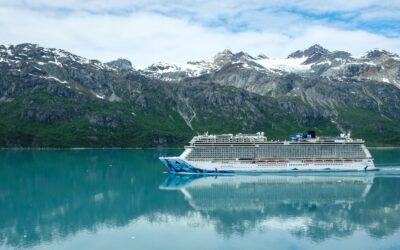
Outbreak On Board: Alaska Cruise Ship Hit with Third Stomach Illness Sweep in Two Months as CDC Review Underway
What was intended to be an intimate, bucket-list voyage through the pristine wilderness of Alaska has turned into a recurring medical nightmare for passengers aboard an expedition cruise vessel. Federal public health authorities have confirmed that the National Geographic Sea Bird—a specialized 62-passenger vessel operated by Lindblad Expeditions—has been struck by its third major gastrointestinal outbreak in less than two months. The latest outbreak, occurring during a five-day voyage between Sitka and Juneau, sickened nearly a third of all guests on board. The repeating pattern of severe illness has triggered a comprehensive review by the U.S. Centers for Disease Control and Prevention (CDC), raising sharp questions from maritime health watchdogs over whether the ship’s sanitation and quarantine protocols are sufficient to stop the virus. At The Modern Memo, we break down the operational profile of the three consecutive outbreaks, the physical environment making small ships uniquely vulnerable, and the regulatory pressure mounting on federal health inspectors to intervene. The Outbreak Timeline: A Summer of Recurring Sickness The primary concern for public health inspectors is not merely a single isolated event, but a persistent, multi-week cycle of infection that has plagued the vessel throughout its summer 2026 deployment. Voyage 1 (Late May): The initial outbreak was logged during a May 26–May 31 itinerary, sickening 9 of 66 passengers and 3 crew members. Stool sample testing conducted by the CDC confirmed the causative agent as norovirus. Voyage 2 (Late June): Less than four weeks later, during a June 25–June 30 trip between Juneau and Ketchikan, the ship was hit again. A second wave sickened 20 out of 95 total passengers and crew, with norovirus once again verified as the culprit. Voyage 3 (Mid-July): The most recent crisis struck the July 10–July 15 sailing. According to official CDC Vessel Sanitation Program (VSP) logs, 18 of the 62 passengers (29%) fell violently ill with severe abdominal cramps and projectile vomiting. While the specific pathogen for the third wave remains under laboratory evaluation, the clinical symptoms match the prior norovirus sweeps. The Transmission Trap: Why Expedition Ships Face Unique Risks While large mega-ships make headlines when hundreds fall ill, small expedition vessels face a different, highly acute set of operational challenges when dealing with contagious stomach bugs. The Math of Small Numbers: Because the Sea Bird carries only 62 passengers, it takes just two or three sick individuals to hit the CDC’s 3% mandatory outbreak threshold. When 18 passengers fall ill at once, it represents nearly one out of every three guests on board, severely straining the ship’s limited medical resources. The Disinfection Gap: Norovirus is a non-enveloped virus, meaning it possesses an extraordinarily tough outer shell. It is largely immune to standard alcohol-based hand sanitizers and can survive on hard surfaces—such as cabinet handles, buffet utensils, and Zodiac boat railings—for weeks unless non-stop, industrial-grade chlorine deep cleaning is applied between voyages. Regulatory Pressure: Will the CDC Issue a No-Sail Order? The frequency of the outbreaks on a single vessel has sparked intense debate among maritime legal experts and public health advocates regarding the limits of voluntary cruise line sanitation plans. Regulatory Step Standard Outbreak Protocol Escalated Multi-Outbreak Action Cleaning Procedures Increase crew wiping of high-touch surfaces with EPA-approved disinfectants. Terminal deep-cleansing using electrostatic fogging and total crew isolation. Passenger Protocols In-cabin isolation for symptomatic guests until 48 hours symptom-free. Mandatory pre-boarding health screenings and stool sample tracking. CDC Intervention Remote tracking via the Vessel Sanitation Program (VSP). Field Response / No-Sail Order: Sending inspectors on board or grounding the ship. Under VSP guidelines, Lindblad Expeditions reported that crews responded by isolating sick passengers, collecting clinical specimens, and executing enhanced cleaning protocols. However, maritime law experts point out that when a single ship suffers three documented outbreaks across a span of seven weeks, standard cleaning during rapid port turnarounds is clearly failing to break the chain of infection. Calls are growing from consumer advocacy groups for the CDC to deploy a full field team to inspect the ship’s water, ventilation, and food-handling networks—or temporarily pull the vessel out of service until a total, uninterrupted sanitization cycle can be verified. Final Word The recurring wave of gastrointestinal illness aboard the National Geographic Sea Bird is the definitive proof that once a virulent stomach bug gets a foothold inside a ship’s tight quarters, standard surface wiping is simply not enough. When you look past the standard corporate press statements about “enhanced sanitation protocols” and analyze the hard data—three separate CDC-tracked outbreaks on a single small vessel in seven weeks, nearly 30% of passengers on the latest voyage struck with severe vomiting, and norovirus repeatedly defying turnaround cleanings—you gain an unvarnished view of an active public health risk. Quality information replaces travel marketing promises with the cold, unvarnished reality of maritime hygiene challenges. Lindblad Expeditions and federal health regulators face an immediate responsibility: either fully halt operations to execute an uncompromised, ground-zero decontamination of the ship, or risk sending yet another wave of paying passengers straight into a floating infirmary.

Alaska Hosts Historic Summit Between Trump and Putin
Alaska Hosts Historic Summit Between Presidents Trump and Putin Next Friday, Alaska will serve as the backdrop for a historic summit between Presidents Donald Trump and Vladimir Putin. The meeting, focused on the future of the ongoing war in Ukraine, comes at a time of heightened geopolitical tensions. (MORE NEWS: Trump’s EPA Pushes Green New Deal Into Political Obscurity) Alaska’s Strategic Role Alaska Governor Mike Dunleavy expressed his support for the summit, emphasizing the state’s unique strategic position: “Alaska is the most strategic location in the world, sitting at the crossroads of North America and Asia, with the Arctic to our north and the Pacific to our south.” With just two miles separating Russia from Alaska, Governor Dunleavy highlighted the region’s crucial role in U.S. national defense, energy security, and Arctic leadership. I welcome the upcoming meeting between President Donald J. Trump and Russia’s President Putin being held here in the great state of Alaska. Alaska is the most strategic location in the world, sitting at the crossroads of North America and Asia, with the Arctic to our north and… — Governor Mike Dunleavy (@GovDunleavy) August 8, 2025 U.S. Legislative Reaction The announcement of the summit took many by surprise, particularly members of the three-member congressional delegation. Rep. Nick Begich III, who Trump endorsed during last year’s U.S. House elections, expressed cautious optimism. He stated: “The pursuit of peace requires open dialogue. And it’s encouraging that the dialogue will be occurring at the highest levels here in Alaska, where Russia and America share a historic relationship and geographic proximity.” The pursuit of peace requires open dialogue. And it’s encouraging that the dialogue will be occurring at the highest levels here in Alaska, where Russia and America share a historic relationship and geographic proximity. My prayer is that the conversations are productive and… pic.twitter.com/0HiaHngpnb — Congressman Nick Begich (@RepNickBegich) August 8, 2025 Putin’s Visit: No Risk of Arrest The United States remains a safe venue for President Putin, as the U.S. does not recognize the jurisdiction of the International Criminal Court, which has issued a warrant for Putin’s arrest for war crimes. This is the first time the two leaders have met since their 2019 summit in Osaka, Japan. It remains unclear whether Ukrainian President Volodymyr Zelensky will attend the summit. Historical Context: Alaska’s Russian Roots Alaska’s history adds another layer of significance to this meeting. Once part of the Russian Empire, Alaska was sold to the U.S. for $7.2 million in 1867 under President Andrew Johnson. The decision was largely motivated by Russia’s struggle to defend the region and fears of a potential British takeover, as Canada was under British rule at the time. Since the sale, no Russian leader has visited Alaska, although international meetings have taken place there twice before: President Richard Nixon met with Japanese Emperor Hirohito in Anchorage in 1971, and President Ronald Reagan met with Pope John Paul II in Fairbanks in 1984. Trump’s Controversial Proposal The summit’s timing is noteworthy, coming just hours after President Trump suggested that Ukraine might need to cede some territory to end the war. At a press conference, Trump remarked: “You’re looking at territory that’s been fought over for three and a half years, a lot of Russians have died. A lot of Ukrainians have died. It’s very complicated. We’re going to get some back, we’re going to get some switched. There will be some swapping of territories, to the betterment of both.” JUST IN: President Trump says Russia and Ukraine are looking at “some swapping of territories to the betterment of both” as part of peace negotiations pic.twitter.com/dbbSYVV2K2 — Fox News (@FoxNews) August 8, 2025 Diplomatic Backchannels and Offers According to CBS News, the White House is attempting to garner European support for a plan that would involve Russia taking control of the entire Donbas region, while Ukraine would cede the partially occupied Kherson and Zaporizhzhia regions. The Wall Street Journal reports that Putin presented a similar proposal during a meeting with Trump’s Envoy, Steve Witkoff, in Moscow. The plan would end the war if Russia could claim the eastern Donetsk region, including the annexed Crimean Peninsula. On Saturday night, several European leaders issued a joint statement on Trump’s meeting with Putin: “We welcome President Trump’s work to stop the killing in Ukraine, end the Russian Federation’s war of aggression, and achieve just and lasting peace and security for Ukraine… Ukraine has the freedom of choice over its own destiny. Meaningful negotiations can only take place in the context of a ceasefire or reduction of hostilities. The path to peace in Ukraine cannot be decided without Ukraine. We remain committed to the principle that international borders must not be changed by force.” (RELATED: The Trade Deal That Changed Everything: U.S.–EU Breakthrough) Zelensky’s Stance Ukrainian President Zelensky has steadfastly rejected any territorial concessions. In a statement on Telegram, Zelensky reaffirmed his commitment to Ukraine’s territorial integrity: “We will not reward Russia for what it perpetrated. The answer to the Ukrainian territorial issue is already in the Constitution of Ukraine.” He further stated: “Any solutions that are against us, any solutions that are without Ukraine, are at the same time solutions against peace.” He emphasized that Ukraine is ready for “real solutions” that can bring lasting peace, working alongside President Trump and other partners to achieve this goal. The Toll of War and the Need for Peace The ongoing Russia-Ukraine war has taken a devastating toll, with over a million lives lost and billions of U.S. taxpayer dollars spent. Despite the immense cost, little progress has been made toward ending the conflict. Both Presidents Putin and Zelensky continue to hold steadfast to their demands for peace, but neither side has achieved the necessary conditions for a resolution. Trump’s Track Record as a Peace Broker President Trump has a proven history of negotiating peace deals in seemingly impossible situations. Some of his notable successes include: Azerbaijan and Armenia Cambodia and Thailand Israel and Iran Rwanda and the Democratic Republic of the…