
Cartel
Shadow of the Syndicate: Mexican Senator Slams Sheinbaum for Protecting ‘Narco-Politicians’ Following US Indictments
A political firestorm has erupted in Mexico City, as the fallout from a massive U.S. Department of Justice indictment reaches the highest levels of the Mexican government. Following the unsealing of charges against ten current and former officials for allegedly partnering with the Sinaloa Cartel, a prominent opposition senator has accused President Claudia Sheinbaum of actively shielding “narco-politicians” within her own administration. At The Modern Memo, we analyze the “indictment heard ’round the world,” the names fueling the scandal, and why the Trump administration is signaling that “sovereignty” will no longer be a shield for cartel collaborators. The Indictment: Ten Officials in the Crosshairs The U.S. indictment, unsealed late yesterday in the Eastern District of New York, names ten individuals accused of facilitating the shipment of thousands of tons of fentanyl and cocaine into the United States. The Partners: The list includes three current state-level officials and seven former high-ranking members of the security apparatus. They are accused of providing “protection, intelligence, and safe passage” to the Sinaloa Cartel in exchange for millions in bribes. The Sinaloa Connection: Federal prosecutors allege these officials functioned as a “government wing” of the cartel, using state resources to eliminate rival traffickers and ensure the syndicate’s dominance. Extradition Demands: The U.S. has reportedly issued immediate extradition requests for all ten individuals, setting up a direct confrontation with the Sheinbaum administration. The Accusation: Sheinbaum’s ‘Shield’ During a heated session of the Mexican Senate this morning, Senator Lilly Téllez delivered a blistering critique of the President’s response to the scandal. “Protecting the Guilty”: Téllez accused President Sheinbaum of refusing to cooperate with U.S. authorities to protect her political allies. “The President talks about sovereignty, but she is really talking about impunity,” Téllez declared. “She is shielding narco-politicians because their fall would bring down her entire project.” The “Hugs, Not Bullets” Legacy: Critics argue that Sheinbaum is continuing the failed policies of her predecessor, allowing cartel influence to seep into the very foundations of the state under the guise of “social peace.” The Silence from Los Pinos: While Sheinbaum has officially stated that Mexico will “review the evidence” before taking action, her refusal to immediately suspend the current officials named in the indictment has sparked national outrage. The Trump Doctrine: “Clean House or We Will” The timing of the indictments is being viewed as a strategic move by the Trump administration to force Mexico’s hand on border security and cartel influence. Designation Warnings: Sources within the U.S. State Department suggest that if the Sheinbaum administration continues to block extraditions, the U.S. is prepared to designate several Mexican states as “narco-controlled zones,” which would trigger a range of economic sanctions and travel bans. Unilateral Action: The President has signaled that the U.S. will “no longer wait for permission” to take out cartel leadership if the Mexican government remains compromised. The recent “Operation Epic Fury” in the Gulf has already shown the administration’s willingness to use overwhelming force against hostile actors. Final Word The Sinaloa indictment has pulled back the curtain on the “Narco-State” reality that has plagued Mexico for decades. When you look past the noise of “sovereignty” and focus on the data—the ten indicted officials and the billions of dollars in cartel revenue flowing through government hands—you gain a clearer picture of a neighbor in crisis. Quality information replaces the narrative of “cooperation” with the reality of a Mexican administration that is facing a choice: purge the criminals within its ranks or face the full economic and military weight of a United States that has run out of patience. By choosing to shield these “narco-politicians,” Sheinbaum may be signing the death warrant for her own administration’s credibility. Where Facts, Context, and Perspective Matter At The Modern Memo, our goal is simple: to provide clear, well-researched reporting in a media landscape that often feels overwhelming. We focus on substance over sensationalism, and context over commentary. If you value thoughtful analysis, transparent sourcing, and stories that go beyond the headline, we invite you to share our work. Informed conversations start with reliable information, and sharing helps ensure important stories reach a wider audience. Journalism works best when readers engage, question, and participate. By reading and sharing, you’re supporting a more informed public and a healthier media ecosystem. The Modern Memo may be compensated and/or receive an affiliate commission if you click or buy through our links. Featured pricing is subject to change. 📩 Love what you’re reading? Don’t miss a headline! Subscribe to The Modern Memo here!
Cartels ‘Without Fear’: State Department Issues Dire Travel Warning for Mexican Border Cities
The U.S. State Department has issued a harrowing new travel advisory today, April 28, 2026, urging American citizens to avoid several Mexican cities located directly across the Texas border. The warning paints a grim picture of a region where the rule of law has been effectively supplanted by the rule of the gun, with federal officials cautioning that armed criminal groups now patrol these areas “without fear of punishment.” At The Modern Memo, we examine the breakdown of security in cities like Nuevo Laredo and Matamoros, the Biden-era legacy of border instability, and why the “Level 4: Do Not Travel” designation is a stark reminder of the chaos currently brewing just yards from American soil. The ‘Do Not Travel’ List: Border Cities in Crisis The latest advisory specifically targets cities in the state of Tamaulipas, long a flashpoint for cartel warfare, but emphasizes a dangerous new reality: these groups are no longer hiding in the shadows. Open Patrols: According to the State Department, heavily armed members of criminal organizations are frequently observed patrolling the streets in armored “monstruos” and convoys. Impunity on Display: The warning notes that these groups act with “total impunity,” often outgunning and outmaneuvering local Mexican law enforcement, which possesses “limited capacity” to respond to the rampant kidnappings and carjackings. Targeted Cities: Nuevo Laredo (across from Laredo, TX), Matamoros (across from Brownsville, TX), and Reynosa (across from McAllen, TX) remain under the strictest “Do Not Travel” category due to the pervasive risk of being caught in the crossfire of “territorial disputes.” Kidnapping and Extortion: A Growing Threat to Americans While the cartels primarily fight each other for control of narco-trafficking and human smuggling routes, American citizens have increasingly become collateral damage or specific targets for financial gain. The Ransom Economy: The advisory highlights a surge in kidnappings where U.S. citizens and lawful permanent residents are held for ransom. These incidents often occur on federal highways or immediately after crossing the international bridge. Highway Hijackings: Travelers are warned that criminal groups frequently set up illegal roadblocks, using “cloned” police vehicles or heavy machinery to stop traffic and extort passengers. The Consular Constraint: Because these areas are so dangerous, U.S. government employees are strictly prohibited from traveling there, meaning “emergency services” for Americans who find themselves in trouble are virtually non-existent. The Policy Fallout: Sovereignty vs. Spreading Chaos Critics of the current border situation argue that the State Department’s warning is a late admission of a failure to secure the southern frontier. Terrorist Designations: The warning follows growing calls from Republican leadership to officially designate these cartels as Foreign Terrorist Organizations (FTOs). Analysts argue that when a group patrols a border city “without fear,” they have moved from being a criminal gang to a de facto insurgent force. The “Spillover” Concern: For Texans living in border communities, the State Department’s admission of a “security vacuum” just across the river is a cause for immediate concern. As the cartels solidify control over the Mexican side of the bridges, the risk of violence spilling onto U.S. soil remains a persistent threat. Final Word The State Department’s warning for the Texas-Mexico border is the definitive proof of a “failed state” dynamic occurring on our doorstep. When you look past the noise of “diplomatic cooperation” and focus on the data—the Level 4 travel bans and the official recognition of armed patrols—you gain a clearer picture of a region that has been surrendered to the cartels. Quality information replaces the narrative of a “safe and orderly” border with the reality of a war zone that is literally within eyesight of American families. It allows you to see that “Do Not Travel” isn’t just an advisory; it’s a surrender of sovereignty in the face of organized terror. By choosing to warn Americans away, the government is acknowledging a reality that can no longer be ignored: the neighbor to our south is currently being governed by the highest bidder. Where Facts, Context, and Perspective Matter At The Modern Memo, our goal is simple: to provide clear, well-researched reporting in a media landscape that often feels overwhelming. We focus on substance over sensationalism, and context over commentary. If you value thoughtful analysis, transparent sourcing, and stories that go beyond the headline, we invite you to share our work. Informed conversations start with reliable information, and sharing helps ensure important stories reach a wider audience. Journalism works best when readers engage, question, and participate. By reading and sharing, you’re supporting a more informed public and a healthier media ecosystem. The Modern Memo may be compensated and/or receive an affiliate commission if you click or buy through our links. Featured pricing is subject to change. 📩 Love what you’re reading? Don’t miss a headline! Subscribe to The Modern Memo here!
Cartel “La Diabla” Busted for Baby, Organ Ring in Mexico
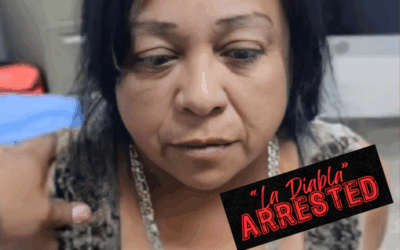
Martha Alicia Mendez Aguilar, better known as “La Diabla,” thought she could hide in Juárez, Mexico. But earlier this month, she was captured in a joint U.S.–Mexico operation. The charges against her aren’t about drugs or weapons. They’re darker. She’s accused of running a cartel baby-trafficking and organ-harvesting ring—an operation so disturbing that even seasoned investigators were stunned. Her arrest is a big win for law enforcement, but the story behind it reveals something bigger. Cartels aren’t just about drugs anymore. They’re moving into crimes most people never thought possible. And that makes this case one of the most chilling in years. Who Exactly Is “La Diabla”? Aguilar isn’t just another cartel name. She worked with the Jalisco New Generation Cartel, one of Mexico’s most violent groups. Her nickname, “La Diabla,” which means “She-Devil,” says it all. She earned a reputation for being ruthless. According to investigators, she targeted poor, vulnerable women—many of them already pregnant. She promised them help, sometimes money, sometimes medical care. Once she had them in her grip, she lured them to hidden clinics. (MORE NEWS: U.S. Strike on Venezuelan Drug Cartel Boat Signals New Era) That’s where the horror began. Unregulated cesarean operations were performed under dangerous conditions. Some mothers didn’t survive. Their newborns were taken and sold. Reports say babies went for as much as $14,000 each. On top of that, the mothers’ organs were harvested and sold on the black market. Think about that for a moment. Babies sold like merchandise. Mothers treated as disposable. It’s the kind of cruelty that earns a person the name “La Diabla.” How She Got Caught Her downfall came on September 2. Authorities tracked her to Juárez, right across the border from El Paso, Texas. Mexican officials worked side by side with U.S. agencies to pull off the arrest. The U.S. National Counterterrorism Center had been involved for months. Its director, Joe Kent, said her capture was crucial to saving innocent lives. He also pointed out something many people don’t want to hear: cartels are diversifying. Drugs aren’t the only game anymore. They’re moving into new areas—human trafficking, organ sales, cybercrime—anything that brings in cash. That’s why the U.S. recently designated groups like the CJNG as foreign terrorist organizations. The goal is to give law enforcement more tools to shut them down. Aguilar’s arrest is proof that approach can work. Thanks to @POTUS, cartels are finally being treated as terrorists. @ODNIgov‘s NCTC recently provided intel to Mexican law enforcement partners that led to the arrest of Martha Alicia Mendez Aguilar, known as ‘La Diabla’ — a CJNG cartel-affiliated baby trafficker, in Juarez,… pic.twitter.com/CRNgJWVHkV — NCTC Director Joe Kent (@NCTCKent) September 24, 2025 The Office of the Director of National Intelligence, Tulsi Gabbard released a statement praising the multi-country, multi-agency operation that led to Aguilar’s arrest: Why Cartels Do This With cartels, the answer is always about money—and opportunity. Drug trafficking is risky. Border security is tougher, and competition between cartels is brutal. By branching out into other crimes, they spread the risk and increase their profits. Babies and organs fetch high prices. At the same time, poor women are easy targets. Many live in places where health care is scarce and oversight is weak. Cartels know they can operate in those shadows. And unlike drug shipments, which face heavy surveillance, these crimes are easier to hide. In short, it’s a perfect storm: desperate victims, weak systems, and greedy criminals. What Happens Next Authorities are now trying to map out Aguilar’s network. Who helped her? Were doctors involved? How far did the trafficking chain stretch? Those questions will take time to answer. There are also big legal challenges. These crimes cross borders, which means multiple countries have to work together. It’s messy, and cartels count on that. Still, her arrest sends a loud message: no one is untouchable. At the same time, this case shows prevention is just as important as prosecution. Vulnerable women need more protection. They need safe hospitals, real economic options, and information that helps them spot dangers before it’s too late. Without that, criminals like Aguilar will always find victims. Why This Story Hits Hard Cartels have always been ruthless. But this feels different. For years, people thought of cartels as drug dealers and smugglers. Now we see they’ll exploit life itself as a commodity. Babies sold to the highest bidder. Women discarded for parts. It’s a level of cruelty that forces everyone to pay attention. And it’s not just about Mexico. When babies are sold across borders and organs are trafficked into international markets, the whole world is involved—whether it wants to be or not. A Wake-Up Call The capture of “La Diabla” is a defining moment in the war on cartels. They are evolving, adapting, and looking for new ways to make money. Law enforcement can strike back when nations work together. But the bigger fight is still ahead. Networks like Aguilar’s don’t die with one arrest. They regroup, they shift, and they keep going. That’s why governments need to move fast, not just to punish criminals but to protect the people most at risk. “La Diabla” may now be in custody, but her crimes remind us of something chilling: as long as desperation exists, cartels will exploit it. Her arrest is a victory—but also a warning that the darkest chapters of cartel violence may not be behind us. Cut through the noise. Drown out the spin. Deliver the truth. At The Modern Memo, we’re not here to soften the blow — we’re here to land it. The media plays defense for the powerful. We don’t. If you’re done with censorship, half-truths, and gaslighting headlines, pass this on. Expose the stories they bury. This isn’t just news — it’s a fight for reality. And it doesn’t work without you.