

Central Park
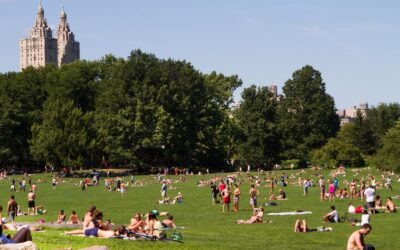
The Central Park Vapor: NYC Issues Emergency Alert to Park Visitors as Upper East Side Legionnaires’ Outbreak Swells
A localized public health emergency has expanded dramatically on Manhattan’s Upper East Side, forcing city health officials to issue a sweeping weekend warning to locals and tourists visiting New York’s iconic Central Park. Just days after the New York City Department of Health and Mental Hygiene (DOHMH) first sounded the alarm on an isolated community cluster consisting of just two confirmed cases, the outbreak has rapidly multiplied. Health officials confirmed that 14 individuals have now tested positive for Legionnaires’ disease—a severe, potentially fatal form of pneumonia caused by waterborne bacteria. The geographical footprint of the cluster has spread across three affluent Upper East Side ZIP codes (10028, 10128, and 10075), encompassing neighborhoods like Yorkville and Carnegie Hill. Crucially, because the investigative zone directly borders Central Park, the city has issued an emergency alert urging anyone who has spent time along the eastern edge of the park between East 76th and East 97th Streets to aggressively monitor themselves for respiratory distress. At The Modern Memo, we break down the operational data driving the 14-case Upper East Side cluster, the science of rooftop cooling tower transmission, and the city’s immediate surveillance measures to isolate the toxic vapor. The Data Inversion: From Two Cases to an Active Grid The speed with which the health department expanded its alert system underscores the localized density of the active bacterial plume. The Quick Multiplication: On Thursday, epidemiologists flagged a baseline anomaly when two distinct individuals in Yorkville contracted the rare respiratory infection. By Sunday evening, comprehensive clinical tracking data forced the health department to revise its metrics to 14 confirmed cases, establishing a high-volume community cluster. The Central Park Warning Track: The decision to issue an unprecedented alert for Central Park visitors stems from tracking patient footprints. Officials confirmed that at least one of the sickened individuals lives, works, or recently spent extensive time in the 10075 area—a sector flanking the park’s world-famous running paths and stone walls. The High-Risk Profiles: While DOHMH Commissioner Dr. Alister F. Martin stressed that the general public faces a relatively low statistical probability of contracting the disease, the agency has hoisted a firm red flag for high-risk demographics, including adults aged 50 or older, active smokers or vapers, individuals with chronic lung diseases, and the immunocompromised. The Vector Mechanics: How Rooftop Towers Weaponize the Plume To understand why park-goers are at risk from an outbreak originating in Upper East Side residential blocks, one must look at the mechanical engineering behind modern urban climate systems. The Investigation Matrix: City health inspectors have moved past interior residential plumbing checks, launching a 100% saturation testing sweep of all registered commercial and residential rooftop cooling towers across the affected ZIP codes. The Safe Zones: To prevent widespread urban panic, Mayor Zohran Mamdani issued a stabilizing directive confirming that the current outbreak is entirely external. The city’s domestic drinking water supply, tap water grid, and indoor window air conditioning units remain completely safe and uncompromised. Residents are explicitly clear to continue showering, bathing, and cooking as normal. Clinical Recognition: Differentiating Pneumonia from Summer Flu Because the onset of Legionnaires’ disease heavily mirrors standard respiratory bugs or a late-summer bout of COVID-19, municipal health authorities are distributing strict diagnostic parameters to triages and emergency rooms across Manhattan. Core Symptoms of Legionnaires’ Disease High-Risk Complications (If Untreated) High Fever & Chills Respiratory Failure / Oxygen Deprivation Dry, Persistent Cough Septic Shock & Systemic Organ Failure Severe Muscle Aches & Fatigue Acute Kidney Injury Headache & Confusion / Diarrhea Fatal Pulmonary Consolidations Medical teams emphasize that if an individual who visited the East Side of Central Park since late June experiences these markers, they must seek immediate medical attention rather than relying on over-the-counter flu remedies. When caught early, the Legionella bacterium is easily neutralized by standard, aggressive courses of intravenous or oral antibiotics. Left unchecked, however, the disease retains an alarming 10% mortality rate among the general populace, a metric that climbs significantly higher inside senior living communities. Final Word The rapid scaling of the Upper East Side Legionnaires’ cluster from 2 to 14 cases is the definitive proof that dense metropolitan infrastructures require continuous, aggressive environmental surveillance. When you look past the clinical deflections and focus entirely on the hard data—14 infected New Yorkers clustered along three specific neighborhood grids, an active airborne warning field blanketing 21 blocks of Central Park’s perimeter, and a specialized team of city epidemiologists racing to test hundreds of rooftop towers—you gain an unvarnished view of a city managing an active biological hazard. Quality information replaces urban myth with the cold reality of public health metrics. As inspectors flood the rooftops of Yorkville and Carnegie Hill to identify the rogue cooling unit, New York has been handed an unyielding reminder: in a concrete jungle, even an innocent stroll through a park can turn hazardous if the very air we breathe is compromised by bureaucratic oversight.