China

Shadow Alliance: U.S. Intel on “High Alert” as China and Russia Eye Resupply of Embattled Iranian Regime
The high-stakes chess match in the Persian Gulf has entered a dangerous new phase. As of April 21, 2026, U.S. intelligence agencies have moved to a state of “high alert” following credible reports that China and Russia are actively exploring ways to bypass the “Absolute Anchor” blockade to resupply the Islamic Republic with advanced military equipment. At The Modern Memo, we analyze the emerging “Axis of Evasion,” the specific hardware Tehran is desperate to acquire, and why the Trump administration is signaling that a secondary blockade of “third-party” suppliers is no longer off the table. The “High Alert” Trigger: Signal Intelligence and Satellite Data The shift in intelligence posture follows a series of “anomalous” maritime and aerial movements detected by U.S. Cyber Command and the National Reconnaissance Office (NRO) over the last 72 hours. The Russian Cargo Surge: U.S. intel has tracked an uptick in Russian heavy-lift transport aircraft moving toward regional hubs in Central Asia, potentially carrying S-400 missile components or electronic warfare suites designed to jam U.S. naval assets. The “Dual-Use” Chinese Pipeline: Despite President Xi’s recent “letter of assurance” to the White House, analysts warn that Chinese state-linked firms are preparing shipments of “civilian” drone components and high-end semiconductors that can be rapidly repurposed for Iranian “suicide” drone swarms. The Intelligence Consensus: “We are seeing the early stages of a coordinated resupply effort,” a senior intelligence official remarked. “Moscow and Beijing realize that if Iran collapses under this blockade, their primary ‘spoiler’ in the Middle East is gone.” Desperation in Tehran: The Hardware Shopping List After nearly a month of surgical U.S. strikes and a crushing naval blockade, the Iranian military’s “offensive teeth” are nearing a breaking point. To survive, the regime is reportedly begging its northern and eastern “partners” for specific gear. Anti-Ship Missiles: Tehran is desperate for Russian Yakhont or Chinese YJ-series supersonic missiles to counter the U.S. destroyers currently “policing” the Strait of Hormuz. Air Defense Reconstitution: With their domestic air defenses largely neutralized during the initial “kinetic” phase of the conflict, the mullahs are seeking immediate replacements to protect what remains of their nuclear infrastructure. The “Shadow” Resupply: Intelligence suggests the regime is attempting to use “third-party” shell companies in Southeast Asia to mask the origin of these shipments—a tactic the Trump administration has vowed to meet with immediate sanctions. The Washington Response: Secondary Blockades and 50% Tariffs The President has been clear: any nation that fuels the Iranian fire will get burned by American economic and military might. Expanding the Blockade: The Pentagon is reportedly drafting contingency plans to intercept any vessel—regardless of flag—suspected of carrying contraband military cargo to Iran. This would represent a significant expansion of the “Absolute Anchor” mission. The Tariff Hammer: The White House has reiterated that the 50% “Conflict Tariff” remains a “loaded gun” on the desk. If China is caught red-handed supplying the IRGC, the economic fallout for Beijing would dwarf anything seen in the 2018 trade wars. Final Word The “High Alert” status of our intelligence community is a necessary response to a world where our adversaries only respect strength. When you look past the noise of “diplomatic cooperation” and focus on the data—the satellite tracking of Russian transports and the desperate Iranian shopping list—you gain a clearer picture of a regime that is only still breathing because it hopes for a foreign lifeline. Quality information replaces the hope of a “peaceful resolution” with the reality of a strategic struggle that requires total American vigilance. It allows you to see that the blockade isn’t just about ships in the water; it’s about holding the line against a global alliance of radicals. By choosing to stay on “High Alert,” the U.S. is ensuring that if China or Russia try to break the anchor, they’ll be the ones who end up sinking. Where Facts, Context, and Perspective Matter At The Modern Memo, our goal is simple: to provide clear, well-researched reporting in a media landscape that often feels overwhelming. We focus on substance over sensationalism, and context over commentary. If you value thoughtful analysis, transparent sourcing, and stories that go beyond the headline, we invite you to share our work. Informed conversations start with reliable information, and sharing helps ensure important stories reach a wider audience. Journalism works best when readers engage, question, and participate. By reading and sharing, you’re supporting a more informed public and a healthier media ecosystem. The Modern Memo may be compensated and/or receive an affiliate commission if you click or buy through our links. Featured pricing is subject to change. 📩 Love what you’re reading? Don’t miss a headline! Subscribe to The Modern Memo here!
Direct Diplomacy: Trump Secures Weapons Vow from Xi as U.S. Tightens Iranian Blockade
In a high-stakes exchange of private correspondence, President Trump revealed today, April 15, 2026, that he has secured a personal assurance from Chinese President Xi Jinping that Beijing is not supplying weapons to the Islamic Republic. The revelation comes as the U.S. military reports the “full implementation” of its naval blockade, effectively cutting off Iran’s maritime trade routes and forcing the regime into a corner. At The Modern Memo, we analyze the 50% tariff ultimatum that forced the letter, the President’s “Big, Fat Hug” prediction for his upcoming Beijing summit, and why the reopening of the Strait of Hormuz is the ultimate leverage. The Letter: “Essentially, He’s Not Doing It” During an interview with Fox Business Network’s Mornings with Maria, President Trump confirmed he initiated the exchange after reports surfaced over the weekend that a shipment of dual-use technologies and component parts was making its way from China to Iran. The Demand: “I wrote him a letter asking him not to do that,” Trump said, referring to the potential arming of the Iranian regime during the current conflict. The Response: According to the President, Xi responded with a letter stating that China was not supplying Tehran. “He wrote me a letter saying that, essentially, he’s not doing that,” Trump noted, characterizing the exchange as a win for American deterrence. The Tariff Stick: The diplomatic outreach was backed by a massive threat issued last week: any country caught supplying Iran with weapons faces an immediate 50% tariff on all exports to the United States. The Blockade: Strategic Suffocation While the letters suggest a diplomatic thaw, the reality on the water remains a “maximum pressure” environment. The U.S. naval blockade of Iranian ports is now fully operational, successfully halting the “dark transits” that previously provided the regime with vital cash. Trade Halted: U.S. Central Command confirmed on Wednesday that trade in and out of Iran by sea has been completely neutralized. The Strait of Hormuz: In a follow-up post on Truth Social, the President claimed he is “permanently opening” the Strait of Hormuz, a move he says “China is very happy about.” Energy Leverage: “He’s somebody that needs oil. We don’t,” Trump remarked, highlighting that the U.S. position of energy independence allows it to dictate terms in the Gulf that Beijing is forced to accept. Looking Toward May: The Beijing Summit The exchange of letters is seen as the groundwork for a critical face-to-face meeting between Trump and Xi scheduled for May 14–15 in Beijing. The Relationship Factor: Despite the tensions over Iran, the President maintained his optimistic tone regarding his Chinese counterpart. “President Xi will give me a big, fat, hug when I get there in a few weeks,” Trump posted, suggesting that China recognizes the U.S. as the primary stabilizer in the Middle East. The Goal: The administration’s objective for the May summit is reportedly to formalize China’s “constructive role” in ending the war, ensuring that Tehran has no remaining global lifelines. Final Word The Trump-Xi correspondence is the definitive proof that the “America First” strategy of tariffs and blockades is producing results. When you look past the noise of “diplomatic concerns” and focus on the data—the full implementation of the naval blockade and the weapons-freeze vow from Beijing—you gain a clearer picture of an administration that has successfully pulled China off the sidelines and onto the side of stability. Quality information replaces the fear of a “Great Power conflict” with the reality of a superpower that understands how to use its market and military might to secure peace. It allows you to see this letter not as a polite request, but as a recognition of a new global reality: the era of rogue states being propped up by secret shipments is over. By choosing to stand firm, the U.S. has ensured that the road to peace in the Middle East now runs through Washington. Where Facts, Context, and Perspective Matter At The Modern Memo, our goal is simple: to provide clear, well-researched reporting in a media landscape that often feels overwhelming. We focus on substance over sensationalism, and context over commentary. If you value thoughtful analysis, transparent sourcing, and stories that go beyond the headline, we invite you to share our work. Informed conversations start with reliable information, and sharing helps ensure important stories reach a wider audience. Journalism works best when readers engage, question, and participate. By reading and sharing, you’re supporting a more informed public and a healthier media ecosystem. The Modern Memo may be compensated and/or receive an affiliate commission if you click or buy through our links. Featured pricing is subject to change. 📩 Love what you’re reading? Don’t miss a headline! Subscribe to The Modern Memo here!
China’s Rare Earth Clampdown Threatens U.S. Tech, Defense
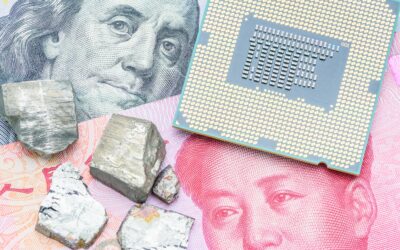
China has recently threatened to tighten control over rare earth exports mark a bold shift in global supply dynamics. While Beijing frames the move as a matter of national security, the ripple effects could wreak havoc on U.S. tech giants, defense contractors, and global supply chains. What Are Rare Earths — and Why They Matter Rare earth elements are not actually rare in the earth’s crust. But they are difficult and costly to mine and refine. These elements power high-precision magnets, chips, sensors, and advanced military hardware. Industries ranging from smartphones and electric vehicles to guided missiles and stealth aircraft depend heavily on them. China dominates global rare earth processing. It controls much of the refining, magnet manufacturing, and export of these materials. That dominance gives Beijing a powerful economic weapon. Analysts estimate that China handles about 90% of the world’s rare earth refinement and magnet production, according to Reuters. By threatening to clamp down on exports, China is showing its willingness to use that leverage as a geopolitical tool. (MORE NEWS: Silver Prices Hit Record High as Demand Surges and Supplies Tighten) What China’s New Controls Look Like The new export curbs extend beyond raw ores. Under these rules, foreign firms must apply for licenses even if their products contain only trace amounts of Chinese rare earths. Exports of processing technologies and magnet materials now face tighter reviews. China also plans to scrutinize or reject exports tied to defense and semiconductor applications. Because the licensing process is discretionary, Beijing can slow or block shipments without imposing a full ban. This creates uncertainty for companies around the world and gives China flexibility to apply pressure when it chooses. Risks to U.S. Tech and Defense Firms China’s rare earth restrictions threaten to shake the foundation of America’s technology and defense sectors. Many of the nation’s most advanced companies depend on steady supplies of these critical materials, and even small disruptions can create major setbacks. Key risks include: Supply chain disruptions: U.S. tech firms and defense contractors rely on predictable supply lines. Sudden export delays or denials from China could leave manufacturers scrambling for alternatives. Even short delays could halt production of essential equipment. Impact on defense programs: Fighter jets, missile systems, radar arrays, and unmanned vehicles all depend on rare earth magnets and components. If China limits supply, the U.S. military could face higher costs, missed deadlines, and shortages in key technologies. Rising costs and price spikes: Tighter export rules usually drive up prices. Companies may face cost increases from raw materials to finished products. These surges could shrink profit margins and push prices higher for both consumers and government contracts. Strategic vulnerability: China’s control goes far beyond mining. It dominates the refining and magnet manufacturing processes needed for advanced components. Even firms sourcing raw materials elsewhere often depend on Chinese processing, giving Beijing powerful leverage over critical sectors of the U.S. economy. Broader Economic and Geopolitical Fallout China’s export threats reach far beyond defense and semiconductors. Electric vehicles, renewable energy systems, consumer electronics, and even medical devices depend on rare earth materials. Any disruption or surge in prices could slow innovation, increase production costs, and make high-tech goods more expensive for consumers worldwide. These industries also power the global clean-energy transition. A long-term shortage or price spike could delay progress toward climate goals, forcing nations to choose between sustainability and supply security. The result could be slower adoption of green technology just as the world pushes to reduce emissions. In response, the United States and its allies are racing to diversify supply chains. The European Union and other partners are working to reduce reliance on China by expanding domestic mining, refining, and magnet manufacturing. New international partnerships are forming to develop alternative sources and share technology. At the same time, Washington is preparing stronger countermeasures, including new tariffs and tighter export controls. President Donald Trump addressed China’s escalating trade actions in a public statement, saying: The statement underscores how seriously Washington views Beijing’s actions — as both an economic threat and a challenge to international trade norms. If both sides follow through on these measures, the result could be a full-scale trade confrontation that reshapes global supply chains for years to come. What the U.S. Must Do To protect its economy and security, the United States must take bold steps to reduce its dependence on China for rare earth materials. America is rich in critical minerals buried within its own borders, and it must be able to responsibly mine and process them. Developing these resources is essential not only to compete with China, but also to secure national independence and strengthen long-term security. President Trump and his administration are working to rebuild America’s rare earth supply chain and bring production back home. However, progress faces many obstacles, including lawsuits, environmental restrictions, and slow permitting processes that block new mining and processing projects. Overcoming these challenges will be vital for America to regain control of its resources, stabilize supply chains, and protect the industries that drive innovation and defense. (MORE NEWS: Melania Trump Helps Reunite Ukrainian Children Amid War) By combining responsible mining, smart policy, and close coordination between government and private industry, the U.S. can create a reliable domestic supply of rare earth elements. This will safeguard the nation’s economic strength, ensure technological leadership, and reduce the risk of foreign influence over critical materials. The Takeaway China’s tightening control over rare earth exports is just one piece of a much larger challenge. For decades, the United States has allowed itself to become economically entangled with a nation that openly seeks global dominance. From electronics and pharmaceuticals to energy and manufacturing, too many American industries still rely on Chinese production. The lesson is clear: true security begins with independence. Decoupling from China is not about isolation — it is about protecting America’s future. By rebuilding domestic production, securing vital resources, and supporting innovation at home, the U.S. can reduce its vulnerabilities and strengthen its position in the world. The path forward will…
TikTok: Trump Announces Deal With China
President Donald Trump says a deal has been reached with China over TikTok, with only final details left to lock in. According to Trump, he will speak directly with Chinese President Xi Jinping on Friday to seal the agreement. This move marks a turning point in the long-running battle over TikTok’s future in the United States. At the heart of the issue has always been the app’s most valuable asset—its recommendation algorithm—and now, after months of uncertainty, a path forward seems to be in place. NOW – Trump: “We have a deal on TikTok. I’ve reached a deal with China.” pic.twitter.com/GPlS4UJuQZ — Disclose.tv (@disclosetv) September 16, 2025 Why the Tiktok Algorithm Became the Flashpoint TikTok’s success comes down to its algorithm, the technology that drives the For You page. This is what keeps users hooked and what makes TikTok such a powerful platform. For years, U.S. officials worried that the algorithm, owned by TikTok’s parent company ByteDance in China, could be used to push certain narratives or collect sensitive data on American users. China, however, has been unwilling to give up one of its most prized technologies. That’s why this fight has never just been about a social media app—it’s been about national security, intellectual property, and global power. What the TikTok Deal Includes While we await details, the agreement Trump is expected to announce offers a compromise. Rather than stripping ByteDance of ownership altogether, the deal would allow the algorithm to be licensed to a U.S.-based entity. That means the technology would still belong to ByteDance, but it would operate under new safeguards inside the United States. American officials would have oversight of U.S. user data, and a third party could be put in place to manage the most sensitive parts of the system. This setup would give the U.S. more control over how TikTok runs here, while still letting China hold on to its intellectual property. (MORE NEWS: AI Is Taking Entry-Level Jobs and Shaking Up the Workforce) Why It’s Happening Now There’s urgency behind the timing. U.S. law set a deadline requiring TikTok to divest from Chinese control or face a potential ban. That deadline is fast approaching, and without an agreement, TikTok could vanish from American app stores. By announcing the deal now, Trump is signaling that the standoff is over. The planned phone call with Xi Jinping on Friday is expected to finalize the details and remove any last roadblocks. Both leaders want to avoid escalation, but both also want to show they are defending their nations’ interests. Treasury Secretary Scott Bessent weighed in: Under President Trump, America is back. Talks with China are respectful and results-driven. @POTUS was ready to let TikTok go dark and made clear that we will never trade away national security. Thanks to his tough negotiating, a framework for a deal is in place, and China is… pic.twitter.com/3QdD4iro5U — Treasury Secretary Scott Bessent (@SecScottBessent) September 16, 2025 Questions That Still Remain Even with a deal on the table, some big questions linger. Will American oversight of the algorithm be strong enough to satisfy critics? How much transparency will be built into the system so users can trust it? And will Congress sign off on the final arrangement, or push for even tougher conditions? On the Chinese side, export-control rules could also complicate how the licensing arrangement is structured. If Beijing insists on tighter restrictions, parts of the deal could face delays. Why This Agreement Matters Beyond TikTok If the deal is finalized Friday, it won’t just impact TikTok. It will set the stage for how countries around the world handle foreign-owned apps and technologies. Nations everywhere are wrestling with the same issues: data security, content influence, and who ultimately controls the technology behind powerful platforms. This agreement could become the blueprint for managing those challenges. It also feeds into broader U.S.-China relations, which remain strained over tariffs, trade restrictions, and technology policy. A successful deal here could cool tensions and open the door to cooperation in other areas. What Happens Next After the call between Trump and Xi, the next step will be writing the legal framework. That means spelling out who has authority over data, how licensing will work, and what safeguards will protect U.S. users. (MORE NEWS: AI Stethoscope Spots Deadly Heart Conditions 15 Seconds) If all goes as planned, TikTok’s millions of American users will be able to keep scrolling without interruption. But if the deal hits a snag, the threat of restrictions or even a ban still hangs in the balance. The Bigger Picture This announcement highlights how much bigger the TikTok story has become. It’s not just about a social media app anymore—it’s about technology, influence, and the balance of power between the world’s two largest economies. By stepping in and announcing a deal, Trump is moving the debate from endless speculation to concrete action. Friday’s call with Xi will be the real test, but for now, TikTok looks closer than ever to having its future in the U.S. secured. Cut Through the Noise. Slice Through the Lies. Share the Truth. At The Modern Memo, we don’t tiptoe around the narrative—we swing a machete through it. The mainstream won’t say it, so we will. If you’re tired of spin, censorship, and sugar-coated headlines, help us rip the cover off stories that matter. Share this article. Wake people up. Give a voice to the truth the powerful want buried. This fight isn’t just ours—it’s yours. Join us in exposing what they won’t tell you. America needs bold truth-tellers, and that means you.
USAID Quietly Sent Thousands Of Viruses To Chinese Military-Linked Biolab (DCNF Exclusive)
By Daily Caller News Foundation investigative reporter Emily Kopp The U.S. Agency for International Development (USAID) shipped thousands of viral samples to a lab in Wuhan over the course of a 10-year program even though it had no formal agreement with the lab in place, according to previously unreported documents. The documents show that USAID funded the exportation of 11,000 samples from Yunnan Province, where some of the closest relatives of the COVID-19 virus circulate, to Wuhan, the epicenter of the pandemic, with no apparent plan for ensuring the samples were not misdirected to bioweapons and remained accessible to the U.S. government. Something Out Of A Horror Movie A $210 million USAID public health program called PREDICT, steered by the University of California-Davis, collected viral samples in countries throughout the globe but lacked long-term storage when funding dried up, according to rudimentary plans in 2019. USAID’s sample dispensation plan for China is sparse: “No need [sic] information from Yunnan. They were never an official lab partner for PREDICT. All samples they helped collected [sic] are sent to, tested, and stored in Wuhan.” The “lab” refers to the Wuhan Institute of Virology (WIV). WIV was a close partner of USAID contractor EcoHealth Alliance and a slated partner for a PREDICT-like program supported by the State Department. The lab has poor biosafety practices and ties to the People’s Liberation Army (PLA). COVID-19 Included One of the closest known relatives of the COVID virus is among the viruses sampled with USAID funding. “Investigations involving USAID’s former funding of global health awards remain active and ongoing,” a senior State Department official said in a statement to the Daily Caller News Foundation. “The American people can rest assured knowing that under the Trump Administration we will not be funding these controversial programs.” (RELATED: COVID-19 mRNA Shots Linked To Higher Death Toll Amongst Cancer Patients) The internal documents were obtained through a FOIA lawsuit brought by U.S. Right to Know, a nonprofit newsroom and public health research group. The shuttering of USAID – which was officially completed Tuesday – has ignited a debate about its net impact on global health. A study in The Lancet projected an association between a dropoff in USAID funding and 14 million deaths based on an epidemiological model. Undermining American Interests Secretary of State Marco Rubio said in a statement Tuesday that USAID spending has often undermined rather than strengthened American interests. “Beyond creating a globe-spanning NGO industrial complex at taxpayer expense, USAID has little to show since the end of the Cold War,” Rubio said. “Development objectives have rarely been met, instability has often worsened, and anti-American sentiment has only grown.” The now-defunct agency’s connection to the Wuhan lab complicates its global health legacy. (RELATED: China Continues Stealth Invasion Of US With More Biological Warfare) “The USAID $210 million contract for PREDICT should have included contractual terms that required all samples, or at least copies of all samples, be transferred to and stored by a US government facility,” said Rutgers University molecular biologist Richard Ebright told the DCNF. “The PREDICT grift did none of this.” UC Davis did not respond to a request for comment. The State Department did not respond to a request for comment. Did USAID Fund COVID’s Ancestor? Many of the viruses stored at the lab in Wuhan may have been sampled with U.S. funding yet remain out of reach for U.S. government entities investigating the origins of COVID. The samples were set to be preserved for testing – with human samples preserved for 10 years – the documents show. But the documents suggest that requirement was never incorporated into a formal contract with USAID. The two scientists supervising the samples were: Ben Hu, a virologist at the WIV, who reportedly became sick with COVID-like symptoms in 2019; and Peter Daszak, a scientist who was debarred from federal funding after the U.S. government deemed him a threat to public safety for inadequate oversight of the research in Wuhan. Hu and Daszak did not reply to requests for comment. The documents show PREDICT contractors discussing viral samples taken from wildlife and stored in India, Liberia, Malaysia, the Republic of Congo and China. Some of the samples were stored in virus-transport media (VTM), which allows researchers to store live viruses for later use in the lab. (RELATED: Adverse Effects Of COVID-19 Vaccination Observed In Women’s Reproductive Cycle) “It’s not rocket science to require a contract and supporting paperwork which establishes a relationship, testing protocol, and chain of custody, when one is sending out lab samples,” said Reuben Guttman, a partner at Guttman, Buschner & Brooks PLLC who specializes in ensuring the integrity of government programs, in an interview with the DCNF. “In any scientific endeavor, you need confidence in your results. That requires paperwork to prove your methodology is sound.” TMM Analysis Honestly, Emily hit it out of the park on this one. Our biggest concern is that a huge amount of our money goes to the government every year, and we are still not sure what it all gets spent on. Do you know where your tax dollars go?

China Continues Stealth Invasion Of US With More Biological Warfare
At least three Chinese-linked individuals have been arrested in recent weeks in relation to separate incidents involving the alleged smuggling of biological material into the U.S. The Department of Justice (DOJ) announced Monday that a Chinese citizen was recently charged with smuggling packages containing concealed biological materials related to roundworms into the country, according to Just The News. The individual, Chengxuan Han, was arrested at Detroit Metropolitan Airport after making false statements to Customs and Border Patrol (CBP) regarding packages she brought into the country. Han is said to be getting her doctorate from the College of Live Science and Technology at Huazhong University of Science and Technology in Wuhan. Yes — the same Wuhan where the COVID-19 disease was manufactured and spread amongst the global population. What Is Roundworm And Why Is It Dangerous? Roundworms are a type of parasite that infect humans with an infection called ascariasis. Symptoms of the infection from roundworm larvae are similar to pneumonia, including wheezing, coughing, shortness of breath and a fever, according to the Cleveland Clinic. A female roundworm can lay up to 200,000 eggs a day in the human body. Adult worms can remain in the intestines, causing severe abdominal pain, swelling, nausea and vomiting, unexplained weight loss, insomnia, loss of appetite and other dangerous symptoms, particularly for children, the elderly, and people with comorbidities. (RELATED: Anti-Trump DIA Employee Arrested For Allegedly Leaking Top Secret Intel to Foreign Government) Yesterday, @FBIDetroit arrested a second Chinese national on charges of smuggling biological materials into the U.S. and lying to federal agents. This individual is Chengxuan Han, a citizen of the People’s Republic of China and a Ph.D. student in Wuhan, China. Han is the third… pic.twitter.com/TE4tJgtJQi — FBI Director Kash Patel (@FBIDirectorKash) June 9, 2025 Similarly to COVID-19, antiparasitic medications work best to treat roundworm, including Ivermectin and Albendazole. While some people can “wait out” infection, it takes up to two years for the worms to leave your system (through your poop). Chinese Researchers Try To Go Full ‘Last Of Us’ The DOJ charged two other reported Chinese nationals in June with attempting to smuggle a fungus called “Fusarium graminearum” into the U.S. The fungus is a “a potential agroterrorism weapon,” Just The News detailed in another report. The researchers, 33-year-old Yunqing Jian and 34-year-old Zunyong Liu, allegedly received funding from the Chinese Community Party (CCP). “The alleged actions of these Chinese nationals — including a loyal member of the Chinese Communist Party — are of the gravest national security concerns,” U.S. Attorney Jerome Gorgan said in a statement following the arrest. “These two aliens have been charged with smuggling a fungus that has been described as a ‘potential agroterrorism weapon’ into in the heartland of America, where they apparently intended to use a University of Michigan laboratory to further their scheme.” What Does Fusarium Graminearum Do? The fungus would allow the researchers to allegedly propagate live Fusarium graminearum, which causes “head blight” in biological materials, CNN reported. The fungus is filled with toxins that devastate core crops such as wheat, barley, maize and rice. America would not survive if these crops failed, even just for a single season. When consumed, the fungus causes liver damage, reproductive defects in humans and livestock, and can lead to symptoms like vomiting, skin irritation, digestive issues, while long-term exposure can cause neurological disorders and immunosuppression. (RELATED: Kennedy Removes COVID-19 Vaccine From Recommended Childhood, Pregnancy Schedule) Though the U.S. loses crops to this and other fungi every year, the potential risk of a targeted attack could starve the nation. Some studies have found that Fusarium graminearum is becoming “increasingly resistant” to fungicides. 🇺🇸🇨🇳CHINESE COUPLE CAUGHT SNEAKING CROP-KILLING FUNGUS INTO MICHIGAN LAB?! 2 Chinese nationals tried smuggling a deadly fungus into the U.S. that can destroy crops and poison food. Prosecutors say Zunyong Liu flew it into Detroit for his girlfriend Yunqing Jian, who works at a… pic.twitter.com/JXnu9dIMd2 — Mario Nawfal (@MarioNawfal) June 3, 2025 FBI Response “This case is a sobering reminder that the Chinese Communist Party continues to deploy operatives and researchers to infiltrate our institutions and target our food supply, an act that could cripple our economy and endanger American lives,” FBI director Kash Patel told Fox News. “Smuggling a known agroterrorism agent into the U.S. is not just a violation of law, it’s a direct threat to national security. I commend the FBI Detroit Division and our partners at CBP for stopping this biological threat before it could do real damage.” TMM Analysis At no point in human history has the Chinese Communist Party or their actors been a benefit for their people or the rest of the world. The stealth invasion of the CCP into the U.S. is part of an ongoing takeover of the planet. Many people wrongly presume that China needs America to survive as a nation because of our purchasing power. China doesn’t care about America at all. The only goal of the CCP is for the entire world to be Chinese. It is cheaper and easier for China to slowly kill us over the course of a few generations rather than stage an all-out war. The best thing you can do today is limit your dependency on Chinese-related products and practices. Most of what we use in America has some type of touch point with China, even if it’s just using plastic packaging from the Asian nation. But it doesn’t have to be this way. You can tell your lawmakers to detach all dependency on China by returning power to We The People. Tell your lawmakers that your vote and support depends on them fighting back against the stealth invasion of America by China: join Million Voices for access to the ONLY guaranteed way to get your elected officials to listen to you.
EXCLUSIVE: Cash Flowing Into Anti-ICE Group’s Coffers Came From Chinese Gov’t-Linked Sources
by Jason Hopkins and Philip Lenczycki (INVESTIGATIVE GROUP) Numerous Chinese government-linked entities have bankrolled a nonprofit accused of offering tips on how to evade federal immigration authorities, a Daily Caller News Foundation investigation found. House Republicans recently launched an investigation into the Chinese-American Planning Council (CPC) — a New York-based nonprofit that’s been awarded over $1.4 million in tax-payer dollars since 2022 — after an undercover video surfaced purportedly showing CPC staff coaching illegal immigrants on how to avoid Immigration and Customs Enforcement (ICE) apprehension. A review of CPC’s financial records discovered Chinese government-linked sources have been pouring hundreds of thousands of dollars into the nonprofit in recent years, raising concerns of potential foreign obstruction of U.S. immigration enforcement. “I’m deeply concerned that Americans’ hard-earned taxpayer dollars were potentially used by an NGO [non-governmental organization] to help illegal aliens subvert our nation’s laws,” Homeland Security Committee Chairman Mark Green, a Republican from Tennessee, told the DCNF. “Even more troubling is the Chinese-American Planning Council’s alleged ties to the [CCP] — a regime we know is committed to undermining U.S. sovereignty,” Green continued. “This Committee will continue investigating suspicious activities by NGOs to protect taxpayer dollars from supporting those who make a mockery of our laws.” (MORE NEWS: Complicit? California Democrats Send Another Child Sex Trafficking Bill Into Oblivion – LGBTQ Concerns Raised) CPC has received as much as $445,969 in donations from sources with ties to the Chinese government since 2018, according to financial records reviewed by the DCNF. State-run enterprises such as Industrial and Commercial Bank of China (ICBC) and Bank of China as well as other entities connected to the Chinese Community Party (CCP) have provided financial assistance to CPC in recent years, records show. Additionally, CPC also appears to have significant financial and personnel links to a New York-based nonprofit, which, in turn, has extensive ties to Beijing and a CCP influence and intelligence arm. CPC did not respond to multiple requests for comment. ‘If ICE Comes To The Door…’ Founded in 1965, CPC serves to promote the interests of Chinese-American, immigrant and low income communities across New York City, according to its website. The organization bills itself as the country’s largest Asian American social services group and claims to provide more than 50 “high-quality” programs at numerous sites across Manhattan, Brooklyn and Queens. The House Homeland Security Committee announced on April 16 that it would begin investigating CPC for potentially using federal funds to facilitate illegal immigration. In an April letter first obtained by the DCNF, Green and Oklahoma GOP Rep. Josh Brecheen demanded CPC president Wayne Ho hand over documentation related to his group’s immigration seminars, funding grants and other related material. The investigation is in response to undercover footage obtained by Muckraker.com, which allegedly shows CPC’s chief policy and public affairs officer, Carlyn Cower, and other staff directing audience members on best practices to avoid ICE apprehension during a March 8th CPC seminar in New York City. (MORE NEWS: ‘Will Be Punished’: Consequences Arrive Early For Canadian Voters After Doubling Down On Wokeism) To avoid ICE, Cowen recommended “hardening your physical space,” “identifying a list of individuals authorized to respond if ICE comes to the door” and “training everybody who’s going to be involved,” footage shows. Another speaker at the event directed individuals to “not open the door at all.” While state and local officials are not required to assist ICE with its mission, individuals are prohibited by law from getting in the way or otherwise impeding immigration enforcement actions. Immediately upon being sworn into office, Attorney General Pam Bondi ordered funding to be pulled from sanctuary cities — and called for the Department of Justice to investigate NGOs receiving federal grant money. The Trump administration has made clear it will not tolerate any obstruction of justice, and followed through on this position with the recent arrest and indictment of a Wisconsin judge for allegedly helping an illegal migrant in her courtroom evade an ICE agent. A main concern for House Republicans is whether CPC has been facilitating illegal immigration all while raking in thousands of dollars in federal grants. Around 55% of CPC’s total revenue comes from federal and state government grants, according to the House Homeland Security Committee. The New York City-based group has been awarded more than $1.4 million in direct federal grants from the Department of Health and Human Services since 2022, and may have received more federal funding awarded through New York State. The CCP Orbit’ A review of CPC’s annual reports show it not only received U.S. federal tax dollars, but also large sums of cash from Chinese government sources. The Bank of China, a state-owned banking corporation based in Beijing, gave CPC as much as $9,999 in 2020 and up to that same amount in 2024, the nonprofit’s annual reports show. CPC also received donations from Chinese state-run Industrial and Commercial Bank of China (ICBC) in 2018, 2019 and 2023, amounting to as much as $19,997, the nonprofit’s annual reports show. The Hong Kong-based Bank of East Asia has also donated to CPC every year since at least 2018, having possibly doled out as much as $45,000, according to CPC’s financial records. Top executives for the bank, such as co-chief executives Adrian David Li Man-kiu and Brian David Li Man Bun, have both served as delegates to the Chinese People’s Political Consultative Conference (CPPCC) at either regional or national levels, according to their English language profiles on the bank’s website. CPPCC “delegates attend a high-profile annual meeting to receive direction from the CCP regarding the ways its policies should be characterized” and “serve as proxies for CCP interests,” according to the U.S.-China Economic and Security Review Commission. The Charles B. Wang Community Health Center, a NYC-based health services provider catering to the local Asian-American community, has likewise donated large sums to CPC in recent years, according to a review of CPC’s annual reports. Since 2018, the health center contributed as much as $229,993 in donations to CPC, its records show. However, Charles B. Wang — a Chinese-American billionaire and major donor to the health center — frequently met with CCP influence and intel leaders in China, state-run media reports reveal. A DCNF translation of Chinese government records reveal Wang served as an “executive…