

Democrats

Hegseth Pushes Back on “Completely Misrepresented” Reports as Senate Democrats Demand Answers on Carrier Conditions
Defense Secretary Pete Hegseth forcefully rejected reports of deteriorating conditions aboard the USS Abraham Lincoln this week, calling accounts of low morale and mental health struggles among the carrier’s roughly 5,000 sailors “completely misrepresented” — even as Senate Democrats press for a formal, bipartisan oversight visit to the ship following its ninth consecutive month at sea supporting the war effort against Iran. What’s Being Reported The Abraham Lincoln left San Diego in November for what was originally planned as a Pacific deployment before being redirected to the Middle East in January to support operations against Iran. The ship was originally scheduled to return home in May; more than 250 consecutive days later, there is still no publicly announced return date. According to CNN, a sailor went overboard from the carrier earlier this month, wearing a life vest, and was rescued within an hour by an air wing search-and-rescue helicopter before being medically evaluated. One official described the Navy’s assessment of the incident as a mental health episode rather than an accident. Sen. Richard Blumenthal, D-Conn., a member of the Senate Armed Services Committee, wrote to Hegseth and acting Navy Secretary Hung Cao this week expressing what he called “serious concern” about the carrier’s extended deployment, citing reports of supply shortages, water contamination, deck safety issues, and disruptions to the mail system that have left care packages lost in transit for months. Sen. Elizabeth Warren has also pressed for answers, and Sen. Ruben Gallego, D-Ariz., is calling for an official, bipartisan visit to the ship, posting on social media that “Congress needs to do its job and hold this administration accountable.” The Pentagon’s Response Hegseth, speaking with Newsmax while traveling in Panama, didn’t directly address the specific reports of supply shortages or mental health struggles, but was emphatic in defending the Navy’s care for its sailors. “We make sure that every ship, every crew, every captain has everything we can provide them at every single moment,” Hegseth said. “Some deployments are longer than others, and I have more respect and gratitude for those sailors than anybody. What they do in those high seas and those austere conditions with less port calls, it’s incredible.” He added that he wants service members home “as soon as everybody else does,” and said his commanders, service secretaries, and President Trump all share that goal. A Navy official pushed back more directly on the specific mental health concerns in a statement to CBS News: “Based on information available to the command, we have not identified an increase in reported suicidal ideation or suicide attempts aboard the ship,” the official said, adding that the Lincoln provides a comprehensive support network including onboard deployment-resilience counselors, chaplains, Fleet and Family Support Center services, and medical professionals. U.S. Central Command, which oversees Middle East operations, stated separately that no service members aboard the carrier have died during the deployment. A Pattern Officials Have Denied Before This is not the first round of concerns about conditions aboard the Lincoln. Complaints first surfaced publicly back in April, which the Navy denied at the time and which Hegseth then dismissed as “fake news.” Sen. Blumenthal noted this week that the Lincoln’s situation reflects what he sees as a broader pattern rather than an isolated case, pointing to the carrier USS Gerald Ford, which recently returned to the U.S. after 326 days supporting operations in Venezuela and then the Iran conflict. Blumenthal has asked directly whether the ongoing Iran war is pushing carrier deployments well beyond what the Navy had originally planned and budgeted for. The Broader Strategic Backdrop The Lincoln’s extended deployment is directly tied to the ongoing conflict with Iran, which by some accounts has now stretched the ship’s crew through at least 40 days of continuous combat operations layered on top of an already lengthy deployment. Supporters of the administration’s overall approach to the war argue that sustained naval presence in the region is a necessary and unavoidable cost of the broader strategic pressure campaign against Tehran, and that criticizing deployment conditions risks being used as a political cudgel against the war effort itself rather than a genuine, good-faith concern about sailor welfare. From that vantage point, addressing legitimate supply and morale issues on individual ships is a matter of routine military logistics and support, not evidence of a broader policy failure. Critics, including the Democratic senators pressing for answers, argue that repeated extensions of major deployments without clear return timelines reflect a Navy and Pentagon leadership stretched thin by an open-ended conflict that Congress never formally authorized, and that families of deployed sailors deserve transparency about conditions rather than blanket denials from senior officials who aren’t the ones living aboard the ship for nine straight months. What’s Next It remains unclear whether the Pentagon will grant the bipartisan oversight visit Gallego and other senators have requested, or when the Abraham Lincoln will ultimately return to the United States. Given the ongoing nature of the Iran conflict and the lack of a publicly announced end date for either the war or the carrier’s deployment, the tension between the administration’s insistence that sailors are well-supported and lawmakers’ demands for independent verification appears likely to persist in the weeks ahead. This story is developing. If you or someone you know is struggling with thoughts of suicide or a mental health crisis, help is available by calling or texting 988, the Suicide and Crisis Lifeline.

Democrats Nominate Progressive Firebrand El-Sayed in Michigan, Setting Up Fall Clash With GOP’s Mike Rogers
Michigan Democrats have chosen progressive activist Abdul El-Sayed as their nominee for the state’s open U.S. Senate seat, rejecting the party establishment’s preferred candidate in favor of a further-left alternative — a result Republicans are already framing as a gift heading into what both parties agree is one of the most critical Senate races of the 2026 midterms. A Bruising, Narrow Win El-Sayed narrowly defeated Rep. Haley Stevens, D-Mich., in Tuesday’s primary, winning by roughly one percentage point after the race remained too close to call into Wednesday morning. The former Wayne County health director will now face Republican and former Rep. Mike Rogers in the general election for the seat being vacated by retiring Sen. Gary Peters — a race both parties view as essential to determining control of the chamber next year. El-Sayed’s win came despite a massive financial disadvantage. Stevens and her allies outspent El-Sayed and his supporters by nearly nine to one on advertising, according to ad-tracking firm AdImpact, with more than $30 million of that spending coming from the United Democracy Project, a super PAC affiliated with the American Israel Public Affairs Committee. Michigan Gov. Gretchen Whitmer also endorsed Stevens late in the race in what was widely seen as a last-ditch effort by the party establishment to block El-Sayed’s rise. The Most Progressive Wing Ascendant El-Sayed ran as an outspoken critic of both the Israeli government’s conduct in Gaza and continued U.S. military aid to Israel, positions that put him well to the left of most sitting Senate Democrats and drew sustained attacks from AIPAC-aligned groups throughout the campaign. “If you believe like me that rather than fund the genocide perpetrated by a foreign government, we better build schools right here in Grand Rapids, then we better put ourselves in democracy,” El-Sayed said at a recent campaign stop — rhetoric Republicans are already previewing as a preview of general-election attack ads to come. His win wasn’t an isolated data point. Michigan Democrats also nominated state Rep. Donavan McKinney, a self-described democratic socialist, over sitting Rep. Shri Thanedar in a competitive House primary the same night — suggesting Tuesday’s results reflect a broader leftward shift among Michigan’s Democratic primary electorate, not simply one unusually strong candidate. A Warning Sign for Democrats in a Swing State Michigan is a state Democrats effectively must hold to have any realistic path to a Senate majority in 2026, and Trump carried the state by roughly one point in the last presidential election, underscoring just how competitive the general electorate remains. Stevens, for her part, had attempted to cast El-Sayed as an extremist who would make things easier for Republicans, warning voters directly that the GOP was “propping up” his candidacy — a message that ultimately failed to overcome El-Sayed’s grassroots momentum and his argument that a nearly $65 million spending advantage represented exactly the kind of establishment influence voters were rejecting. Republicans see an opening. Rogers, who ran unopposed for the GOP nomination, now gets to run a general election campaign against a candidate who spent the primary sparring over U.S. aid to Israel and courting the most progressive wing of his party — a considerably different opponent than the more centrist, auto-industry-focused Stevens would have been. President Trump wasted little time weighing in publicly on the outcome, criticizing El-Sayed’s candidacy following the results. Democrats Try to Project Unity For his part, El-Sayed moved quickly to project a message of party unity following his narrow win, downplaying the closeness of the margin and telling supporters “we cannot wait to come together and win in November.” He also praised Stevens as a committed public servant, and Stevens herself offered her support to the nominee following the result, with Democratic Party leadership broadly coalescing behind him in the race’s immediate aftermath. Whether that unity holds through November remains to be seen. The race is expected to be one of the most closely watched and heavily funded Senate contests in the country, testing whether a candidate who won a Democratic primary by running to the left on foreign policy and criticizing his own party’s fundraising apparatus can still assemble a broad enough coalition to win a genuine swing state in a midterm year — a question that will likely shape how national Democrats think about candidate selection in competitive states well beyond this single race. This story is developing.

Blanche Vows DOJ Will Work to “Make Dobbs Permanent” in Every State, Drawing Praise From Pro-Life Groups and Fire From Democrats
Acting Attorney General Todd Blanche privately assured a group of anti-abortion activists this week that the Justice Department is working to ensure the Supreme Court’s Dobbs decision becomes a lasting, nationwide reality — a pledge that thrilled pro-life advocates who’ve grown impatient with the pace of federal action since Roe v. Wade was overturned, even as it drew immediate pushback from Democrats and some abortion-rights groups. What Blanche Told the Group Blanche made the comments on a call hosted by the White House Faith Office with Intercessors for America, a Christian advocacy organization, in a recording the group later posted publicly. “We’re working, hand in hand with HHS and the FDA and the White House and President Trump’s team, to get permanent solutions, so that the Dobbs decision becomes permanent in every single state,” Blanche told the group. He went on to project confidence about the ultimate outcome: “We don’t have complete victory yet, but we will have victory, and victory will be soon, and it will be permanent.” Blanche also signaled that the administration is preparing new restrictions on the prescription and mail delivery of abortion pills such as mifepristone, specifically targeting states that have adopted “shield laws” allowing doctors to prescribe abortion medication to patients living in other states. That approach isn’t new — Blanche had already committed to addressing mail-order abortion pill access during his own confirmation hearing, after being pressed on the issue by Sen. Katie Britt, R-Ala. A Win Pro-Life Advocates Have Been Waiting For For supporters of the pro-life movement, Blanche’s comments represent exactly the kind of sustained federal commitment they’d hoped to see following the Dobbs ruling, and confirmation that the administration intends to use the tools available to the Justice Department — not just leave the matter entirely to individual states — to protect unborn life nationwide. Advocates have grown frustrated in recent years watching abortion pill access expand dramatically through telehealth and mail-order prescriptions, which now account for the majority of abortions performed in the country; a DOJ-led effort to close that avenue, working alongside HHS and the FDA, is precisely the kind of coordinated executive action many pro-life leaders have been pushing for since Roe fell. Democrats and Some Republicans Push Back The comments landed differently on the other side of the aisle. Sen. Patty Murray, D-Wash., seized on the remarks ahead of Blanche’s Senate confirmation vote, telling colleagues that a vote for Blanche was effectively a vote for an attorney general who would “attack abortion rights in every state” — repeating Blanche’s own “every single state” language back at him. Sen. Tina Smith, D-Minn., made a similar argument, saying the private call revealed Blanche’s true intentions more clearly than his public confirmation testimony had. Notably, the pushback wasn’t confined entirely to Democrats. Sen. Susan Collins, R-Maine, a longtime supporter of abortion rights within the GOP conference, announced she would oppose Blanche’s nomination, citing both his private assurances to anti-abortion groups and a separate controversy over an IRS audit shield for the Trump family. Collins’ defection illustrates that Blanche’s posture on abortion pushes further than some in his own party are comfortable going, even within a Republican-controlled Senate broadly supportive of his nomination. The Larger Legal Strategy Reporting on the episode suggests the administration’s approach centers heavily on regulatory and legal action rather than legislation — a strategy that avoids the difficulty of passing a nationwide abortion law through a closely divided Congress. Anti-abortion groups have spent months pushing to resolve Louisiana v. FDA, a case that could restrict the mail-order mifepristone system through the courts rather than through a congressional vote. Supporters argue this is simply smart, available use of existing federal authority; critics argue it’s an attempt to achieve through executive and regulatory action what couldn’t be achieved through the ordinary legislative process — though of course, that critique cuts both ways depending on which policy area and which administration one is examining. Where Things Stand Blanche’s confirmation vote in the full Senate is expected soon after clearing the Judiciary Committee earlier this week by a 12-10 vote. Given the Republican majority in the chamber, he is likely to be confirmed even with Collins’ opposition, positioning him to begin implementing the policy priorities he outlined to Intercessors for America almost immediately upon taking the job on a permanent basis. Advocates on both sides of the abortion debate are likely to be watching closely for the administration’s next moves on mifepristone access and the shield-law states in the weeks following his confirmation. This story is developing.

Hegseth Fires Back at Democrats Over War Funding in Fiery Senate Showdown
Sen. Gary Peters accused Hegseth of lacking a plan to win the war as the $1.5 trillion budget request faces scrutiny Defense Secretary Pete Hegseth refused to play defense Tuesday, turning a hostile Senate hearing into a forceful counterattack against Democrats he accused of undermining the troops through partisan obstruction — even as senators pressed him on the administration’s handling of the ongoing war with Iran. The hearing, which was meant to focus on the Pentagon’s record $1.5 trillion budget request for fiscal year 2027, instead became a heated back-and-forth over military leadership and the trajectory of the Iran conflict, now well past the 60 days President Trump initially suggested it would take to resolve. Peters Presses, Hegseth Pushes Back Sen. Gary Peters, D-Mich., opened the confrontation by pressing Hegseth on whether the administration actually has a strategy to bring the war to a close, arguing the country was in a worse position than when the conflict began. “You — you don’t have a strategy, you don’t have a long-term plan to actually win this war,” Peters said, raising his voice. “Win the war! The men and women are going to be able to do it, but they need leadership. When will you show leadership?” Hegseth didn’t back down. He turned the attack back on Democrats, arguing that their hesitance on the administration’s border enforcement policies has bled into hesitance on funding the military itself. “When will you show leadership and stand up to your fellow Democrats who won’t fund the troops, who play partisan politics while you don’t give us the money?” Hegseth shot back. “You want to stand up here and talk about the troops? You won’t show any political courage to actually fund our department because you have Trump derangement syndrome and you won’t commit to anything meaningful. So, I put this on you, senator.” Blaming the Last Administration Hegseth also used the hearing to draw a contrast with what he described as years of neglect under his predecessor, former Defense Secretary Lloyd Austin, pointing to the Biden administration’s failure to invest in hypersonic missile technology — a capability China first fielded in 2019. “They just decided to pretend like that technology didn’t exist and we shouldn’t invest in it,” Hegseth said. “I don’t know what Lloyd Austin did for four years. I really don’t. The amount of neglect, the amount of stale thinking and bureaucracy; it was staggering when we took over.” A Bind for Democrats The exchange highlighted a broader challenge facing Democrats on the Armed Services and Appropriations panels: criticizing Hegseth’s leadership without appearing to withhold support from service members currently in harm’s way. Lawmakers on the panel have voiced reservations about the administration’s Iran strategy while also stressing their support for troops in the field — a balancing act Hegseth was quick to exploit in front of the cameras. The war itself remains unresolved. The conflict began February 28 with joint U.S.-Israeli strikes that killed Iran’s supreme leader, and despite the administration’s early promises of a swift resolution, American forces remain engaged in a standoff with Tehran over control of the Strait of Hormuz, a critical chokepoint for global oil shipping. The Budget Fight Looms Large The clash unfolded against the backdrop of the Pentagon’s request for $1.5 trillion in defense spending for 2027 — a sizable jump from the roughly $900 billion Congress approved for the current fiscal year. Republicans have largely rallied behind the funding request and Hegseth’s leadership, framing it as essential to reversing what they describe as years of underinvestment and mismanagement at the Pentagon. Democrats have raised concerns about the price tag and pressed for greater accountability on the war’s objectives and cost, which has already climbed past $80 billion — more than double initial estimates given to Congress. This story is developing.
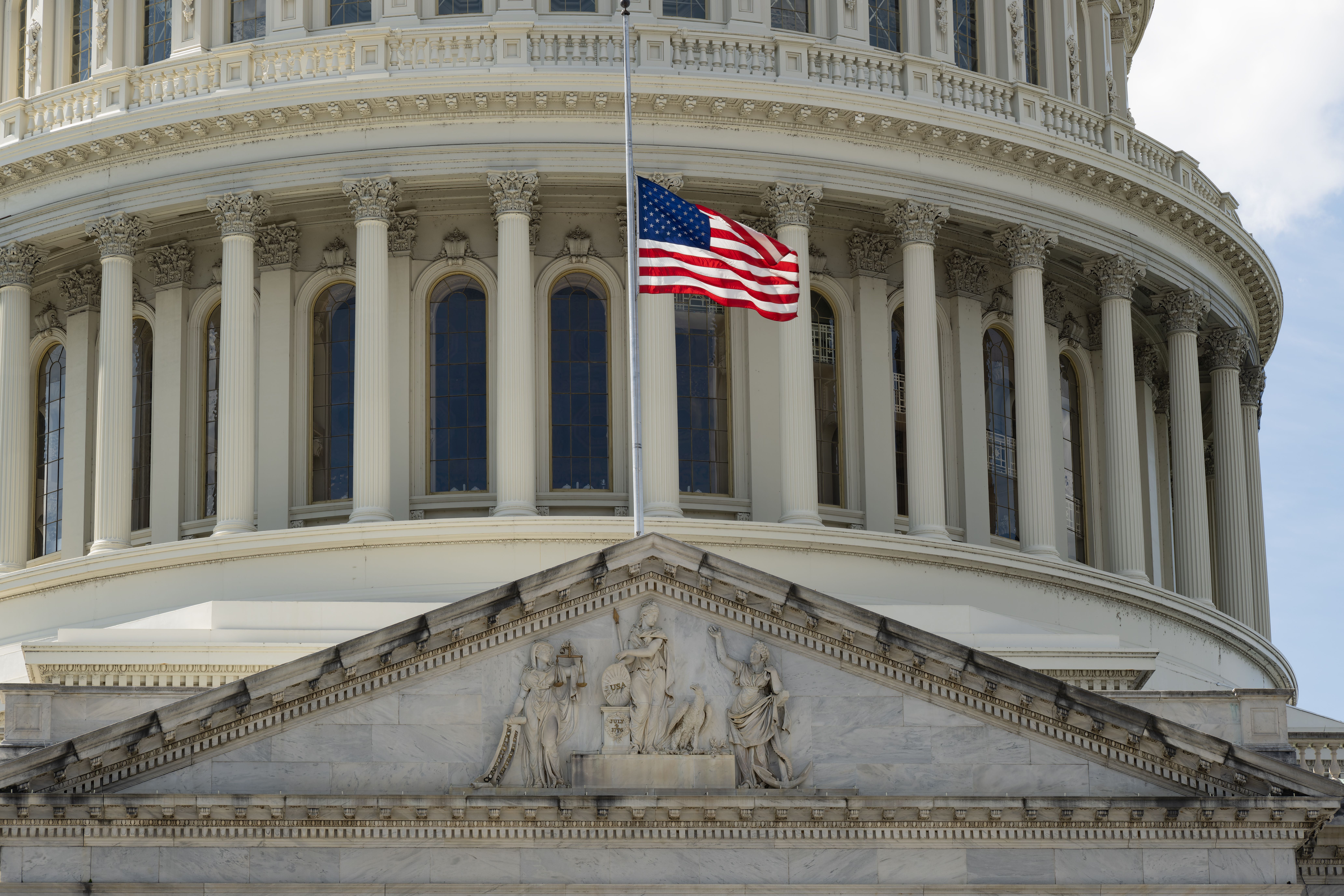
Johnson Scores Commanding Victory in Fight to Advance SAVE America Act Through Democrat Opposition
The $95B budget reconciliation framework includes $10B for states to implement election integrity measures from the SAVE America Act House Speaker Mike Johnson notched a major procedural win this week, steering his plan to advance the SAVE America Act through unified Democrat opposition and a bruising internal battle with fiscal hawks in his own conference. The House Rules Committee cleared Johnson’s budget reconciliation framework Monday, setting up a chamber-wide vote that would tee up passage of one of President Trump’s top legislative priorities — without a single Democrat vote required. Bypassing the Blockade Democrats have refused to support the SAVE America Act, which would require states to verify voter citizenship and mandate photo ID at the polls — commonsense election integrity measures that polling shows are backed by the overwhelming majority of Americans. Rather than let that obstruction stand in the way, Johnson moved to fold key elements of the SAVE America Act into a sweeping budget reconciliation package, a maneuver that lowers the Senate’s threshold for passage from 60 votes to a simple majority, cutting Democrats out of the equation entirely. “Safeguarding American elections and strengthening our national defense are the most basic responsibilities of Congress and are supported by an overwhelming majority of Americans,” Johnson said. The strategy is not without hurdles. Reconciliation rules require legislation to be tied directly to federal spending and revenue, meaning the full text of the SAVE America Act cannot simply be inserted wholesale — the Senate parliamentarian will ultimately decide which election-related provisions can survive under the chamber’s Byrd Rule. To clear that bar, House Republicans structured the package to direct $10 billion to the House Administration Committee specifically to help states implement SAVE America Act-style requirements, such as citizenship verification and voter ID. What’s in the Package The broader $95 billion framework goes well beyond election integrity. It also directs: $60 billion to the Armed Services Committee for military funding, including support amid the ongoing conflict with Iran $13 billion to the Intelligence Committee for defense and Iran-related spending $12 billion to the Agriculture Committee for farm aid, providing relief to American farmers $10 billion to the House Administration Committee for state election integrity grants tied to the SAVE America Act Republicans are framing the package as a three-pronged America First priority: secure the border and the ballot box, rebuild military readiness, and support the farmers who keep the country fed. Overcoming a GOP Revolt Johnson’s win came only after he beat back a revolt from fiscal hawks within his own conference, who balked at nearly $100 billion in new spending with no offsets elsewhere in the budget. President Trump personally intervened to press wavering House Republicans to fall in line, and Johnson has continued working closely with Vice President JD Vance to shore up support. Following a meeting with Vance and House Republicans, Johnson made clear there would be no retreat: “We’re going to pass the SAVE America Act into law, as much of that as possible.” The House Budget Committee advanced the framework Thursday on a 20-14 vote, and Monday’s Rules Committee action clears the way for a full House floor vote before lawmakers depart for their August recess. What Comes Next Passage of the budget framework is only the first step. It directs the relevant House committees to draft the detailed reconciliation text and submit it by September 11, after which the full package must still pass both chambers before reaching the president’s desk. Senate Republicans, including Sen. Mike Lee of Utah — the SAVE America Act’s lead Senate sponsor — have cautioned that the final scope of what survives reconciliation will depend heavily on how the legislative text is drafted and what the parliamentarian allows. Still, Johnson’s ability to unify his conference around a path forward, after Democrats made clear they would offer zero cooperation, marks a significant early win in Republicans’ third use of reconciliation this Congress — and keeps alive Trump’s push to get citizenship verification and voter ID protections written into federal law before the midterms. This story is developing.

“Why Do Convicts Matter More Than My Daughter?” Slain Loyola Student’s Parents Torpedo Democrats’ Sanctuary Policies on Capitol Hill
A devastating, emotionally raw congressional hearing has laid bare the human cost of the nation’s ongoing border security crisis. Jessica and Thomas Gorman, the grieving parents of 18-year-old Loyola University freshman Sheridan Gorman, appeared before a House Judiciary subcommittee on Tuesday to deliver a furious indictment of the municipal sanctuary city policies they blame for their daughter’s “preventable murder.” Sheridan, an vibrant first-year student from Yorktown, New York, was shot and killed in the back on March 19, 2026, while walking with friends along a beach pier in Chicago’s Rogers Park neighborhood. Her accused killer, Jose Medina, is a Venezuelan migrant who illegally crossed the southern border in 2023. Despite a subsequent arrest for theft, local sanctuary policies prevented immigration authorities from detaining him, keeping him on the streets until the fatal encounter. The Gormans’ testimony transformed into an explosive political showdown as Jessica Gorman fiercely torched Democratic lawmakers for displaying what she described as total indifference and “disrespectful” deflections toward the safety of American children. At The Modern Memo, we break down the operational failures that allowed an illegal immigrant to evade deportation, the emotional highlights of the Gormans’ Capitol Hill testimony, and the escalating legislative fight to impose strict legal liabilities on sanctuary cities. The Prevention Failure: How Sanctuary Memos Shielded a Killer The core of the Gormans’ congressional grievances rests on a clear sequence of law enforcement gaps that critics argue represent the structural failure of Chicago’s current municipal sanctuary protocols. The Border Entry: According to Cook County prosecutorial data, Jose Medina entered the United States illegally through Texas in 2023, immediately surrendering to Border Patrol. He was processed and subsequently released into the interior of the country under a heavily utilized humanitarian parole pipeline. The Shoplifting Safe Haven: Months before the murder, Medina was arrested by local law enforcement in the Chicago metropolitan area for retail theft and shoplifting. Under standard federal immigration enforcement guidelines, Immigration and Customs Enforcement (ICE) routinely issues detainer requests to local jails, asking them to hold deportable non-citizens until federal agents can assume custody. The Sanctuary Wall: However, because Chicago and Cook County strictly enforce local sanctuary ordinances, municipal authorities are legally prohibited from honoring ICE detainers for non-violent misdemeanors. Medina was promptly released back into the public without federal notification—a bureaucratic disconnect that left him free to acquire an illegal .40-caliber handgun. The Testimony: “Look Me in the Eye and Explain” Appearing before the House subcommittee hearing titled “Sanctuary Policies: Victims’ Perspectives,” Jessica Gorman delivered a tearful, blistering address that silenced the chamber and put minority lawmakers on the defensive. The Buddy Bench Memory: Gorman began by painting a picture of her daughter’s gentle nature, describing her as the little girl who would deliberately sit on her grade school’s “buddy bench” to ensure no lonely child was left without a friend. The Ultimate Question: Gripping the microphone, Gorman directly challenged the Democratic members of the committee. “I challenge you all to sit down with me, take my hand, look me in the eye, and then explain to me because I just don’t understand,” Gorman pleaded. “Explain why people here illegally matter more than your American citizens. Explain why sanctuary policies matter more than my Sheridan’s life.” Torching the Indifference: The hearing took a remarkably tense turn when a Democratic lawmaker sought to contextualize the crime within broader urban gun violence statistics rather than immigration policy. Gorman reacted with unyielding fury, accusing the opposition of dismissing her daughter’s specific cause of death to protect an abstract political position. In an emotional, sarcastic rebuke that instantly went viral online, Gorman remarked that she supposed she should be “thankful that my daughter was murdered, not raped,” signaling her complete disgust with politicians downplaying the illegal status of the shooter. The November Mandate: Lawler Pushes the Sanctuary Liability Act The Gormans’ public testimony has injected massive, late-summer momentum into a coordinated legislative counter-offensive led by House Republicans to dismantle urban sanctuary protections across the country. The Lawler Mandate: Following the hearing, Congressman Mike Lawler (R-NY), who represents the Gormans’ home district, issued a fierce public statement directly aligned with the grieving parents. “No mother should ever have to bury her daughter because politicians chose open borders and sanctuary policies over public safety,” Lawler stated. “To every Democrat who shrugged off this hearing and continues to support these dangerous policies: the blood of Sheridan Gorman is on your hands.” The Sanctuary Liability Act: Capitalizing on the public outrage, House populists are aggressively advancing the Sanctuary Liability Act. The proposed statute would strip cities like Chicago, New York, and San Francisco of their sovereign immunity, allowing the families of victims to directly sue municipal governments for financial damages if a crime is committed by an illegal alien who was shielded from an ICE detainer. The Call to the Ballot Box: As the hearing concluded, Thomas and Jessica Gorman issued a direct, non-partisan appeal to parents across the United States, urging them to remember their daughter’s face when entering the voting booth this November. The parents emphasized that voters face a definitive, structural choice: support leaders who will actively fortify the borders and cooperate with federal law enforcement, or continue electing officials who prioritize sanctuary maps over the lives of American children. Final Word The heartbreaking testimony of Thomas and Jessica Gorman is the definitive proof that sanctuary city ordinances are not compassionate, abstract social experiments—they are structural vulnerabilities that leave innocent citizens exposed to preventable violence. When you look past the cold, defensive statistics deployed by minority lawmakers and focus entirely on the hard data—an 18-year-old freshman shot in the back on a college beach, a repeat offender migrant shielded from an ICE detainer by Chicago city codes, and a grieving mother forcing Congress to look her in the eye—you gain an unvarnished view of a catastrophic governance failure. Quality information replaces the progressive narrative of “protecting vulnerable immigrant communities” with the reality of an administrative state protecting criminal aliens at the expense of its…

Minnesota’s Flag War: Democrats Push Bill to Defund Cities That Refuse to Fly New ‘Somali-Style’ Design
The radical transformation of Minnesota’s identity has entered a punitive new phase. St. Paul Democrats are doubling down on their crusade to erase the state’s history, introducing a controversial new bill that would strip state aid from any city or county that continues to fly the original Minnesota state flag. At The Modern Memo, we analyze this latest “comply or starve” tactic, the growing backlash against a design many say looks more like a foreign ensign than a Midwestern symbol, and why local leaders are calling this a direct assault on community sovereignty. The Financial Hammer: “Follow the New Flag or Lose the Funds” The proposed legislation, backed by the same progressive coalition that forced through the new flag design in early 2024, aims to ensure total aesthetic conformity across the Gopher State. The Threat: Under the bill, local municipalities that display the 1893 (original) state flag on public property would see a significant reduction or total elimination of Local Government Aid (LGA). For many small, rural towns, this state funding is the lifeblood for police, fire services, and road maintenance. The “Erasure” Mandate: Critics argue that the bill isn’t about “modernization” but about the forced erasure of the state’s heritage. “They aren’t just changing the flag; they are threatening to bankrupt your town if you don’t help them bury our history,” one local mayor told reporters. The Design Dispute: A Midwestern “Somalia”? The new flag—which officially replaced the original on May 11, 2024—remains a flashpoint for Minnesotans who feel the design was rushed and politically motivated. Foreign Aesthetics: The design, featuring a simplified North Star and a dark blue shape representing the state’s silhouette, has been widely criticized for its resemblance to the national flag of Somalia. A Loss of Heritage: The original flag featured a pioneer and a Native American on horseback—a scene that progressives claimed was offensive, but that many Minnesotans viewed as a historic tribute to the state’s complex founding. The “Globalist” Pivot: To many on the Right, the new flag represents a shift away from Minnesota’s unique frontier identity toward a generic, “globalized” aesthetic that reflects the political priorities of the Twin Cities’ elite rather than the values of the “Iron Range” or the southern farmlands. Rural Resistance: “Our Flag, Our Choice” The push to defund “rebel” cities has ignited a firestorm of resistance in Greater Minnesota, where many local boards have already passed resolutions to keep the original flag flying. Sovereignty vs. St. Paul: Local leaders argue that the state should not be using taxpayer-funded aid as a political weapon to enforce cultural shifts. The Legal Challenge: Constitutional experts suggest that the bill may face immediate legal hurdles, as it could be seen as “compelled speech” or an unconstitutional condition on the receipt of public funds. Final Word The Minnesota flag battle is a perfect microcosm of the modern Left’s approach to governance: if you can’t win the argument, use the checkbook. When you look past the noise of “inclusive design” and focus on the data—the threatened cuts to essential local services and the imposition of a foreign-looking symbol—you gain a clearer picture of a state government that has lost touch with its people. Quality information replaces the “modernization” narrative with the reality of a political class that views tradition as a threat. It allows you to see that the new flag isn’t just a piece of fabric; it’s a litmus test for obedience. By choosing to hold local funding hostage, St. Paul Democrats have proven that their “inclusive” future has no room for the people who built the state’s past. Where Facts, Context, and Perspective Matter At The Modern Memo, our goal is simple: to provide clear, well-researched reporting in a media landscape that often feels overwhelming. We focus on substance over sensationalism, and context over commentary. If you value thoughtful analysis, transparent sourcing, and stories that go beyond the headline, we invite you to share our work. Informed conversations start with reliable information, and sharing helps ensure important stories reach a wider audience. Journalism works best when readers engage, question, and participate. By reading and sharing, you’re supporting a more informed public and a healthier media ecosystem. The Modern Memo may be compensated and/or receive an affiliate commission if you click or buy through our links. Featured pricing is subject to change. 📩 Love what you’re reading? Don’t miss a headline! Subscribe to The Modern Memo here!

The $9 Billion Question: Minnesota Democrats Block Impeachment Push Over Alleged Medicaid Fraud
A high-stakes showdown at the Minnesota State Capitol reached a boiling point yesterday, April 15, 2026, as a Republican-led effort to impeach Governor Tim Walz and Attorney General Keith Ellison hit a partisan wall. In a vote that mirrored the deep ideological fractures of the state, the measure failed with an 8-8 tie along party lines, effectively stalling—for now—a push for accountability regarding what critics label the largest financial scandal in state history. At The Modern Memo, we break down the $9 billion fraud allegations, the “party-first” protectionism of the Twin Cities establishment, and why the “Medicaid Meltdown” is just beginning to haunt the Walz administration. The Allegations: A $9 Billion Hole in the Safety Net The impeachment articles centered on a staggering figure: $9 billion. Republican lawmakers, led by state conservatives who have spent months poring over audit data, allege that the Walz-Ellison administration oversaw a catastrophic failure of oversight within the state’s Medicaid program. Systemic Fraud: The GOP case argues that “gross negligence” allowed billions in taxpayer funds to be funneled to ineligible recipients and fraudulent providers. The Ellison Connection: Attorney General Keith Ellison faced specific scrutiny for a perceived failure to aggressively prosecute the bad actors within the system, with critics suggesting a “revolving door” of political interests hindered justice. The “Feeding Our Future” Echo: Many observers see this as a massive escalation of the 2022 fraud scandals, suggesting that the “culture of complacency” in St. Paul has only grown more expensive for the Minnesota taxpayer. The Partisan Shield: 8-8 and No Accountability Despite the astronomical dollar amounts involved, the vote followed a predictable script. Every Democrat on the panel voted to dismiss the articles, while every Republican voted to move forward. Party over Public Trust: “Eight billion or nine billion—it doesn’t seem to matter to the Democrats as long as their guy is in the governor’s mansion,” remarked one Republican state representative following the vote. The Defense’s Narrative: Supporters of Walz and Ellison dismissed the impeachment push as “political theater” and a “baseless distraction” intended to derail the Governor’s 2026 legislative agenda. They argued that the errors were administrative and are already being corrected. The Standoff: Because a tie-vote fails to move the measure forward, the administration effectively dodged a formal trial, leaving the $9 billion question unanswered in any court of law. The Political Fallout: A State in “Financial Limbo” While the impeachment effort failed to clear the committee, the political damage is far from over. The standoff has left the state’s fiscal reputation in tatters just as the midterms loom. Taxpayer Outrage: Across Greater Minnesota, the “8-8” vote is being seen as a slap in the face to working families who are struggling with inflation while the state “loses” billions in the Medicaid system. A Campaign Issue: National GOP strategists are already eyeing the Minnesota Medicaid scandal as a blueprint for the 2026 cycle, using it to highlight the dangers of “unchecked progressive governance” in the Midwest. Final Word The 8-8 standoff in St. Paul is a classic example of the “Blue Wall” protecting its own. When you look past the noise of “administrative errors” and focus on the data—the $9 billion in missing or mismanaged funds and the refusal of a single Democrat to demand an investigation—you gain a clearer picture of a state government that has prioritized its survival over its solvency. Quality information replaces the “procedural” excuses with the reality of a massive breach of the public trust. It allows you to see that while the impeachment may have died in committee, the debt remains on the shoulders of every Minnesotan. By choosing to block the truth today, the St. Paul establishment has only guaranteed a louder reckoning tomorrow. Where Facts, Context, and Perspective Matter At The Modern Memo, our goal is simple: to provide clear, well-researched reporting in a media landscape that often feels overwhelming. We focus on substance over sensationalism, and context over commentary. If you value thoughtful analysis, transparent sourcing, and stories that go beyond the headline, we invite you to share our work. Informed conversations start with reliable information, and sharing helps ensure important stories reach a wider audience. Journalism works best when readers engage, question, and participate. By reading and sharing, you’re supporting a more informed public and a healthier media ecosystem. The Modern Memo may be compensated and/or receive an affiliate commission if you click or buy through our links. Featured pricing is subject to change. 📩 Love what you’re reading? Don’t miss a headline! Subscribe to The Modern Memo here!

Blue Stronghold Crumbles: Virginia GOP Flips County Seat After Democrat’s Social Media Scandal
In a stunning upset that has sent shockwaves through the Commonwealth’s political establishment, Republican challenger Marcus Thornton has successfully flipped a deep-blue county seat in the heart of Northern Virginia. The victory comes after a chaotic special election cycle that saw the Democratic incumbent, Julian Vance, implode following the release of resurfaced racist and inflammatory social media posts. At The Modern Memo, we break down how a double-digit Democratic advantage vanished overnight and what this bellwether win says about the limits of identity politics in 2026. The Scandal That Sank the Campaign Just two weeks before the polls opened, a series of posts from Vance’s private archives—dating back to the mid-2010s—began circulating on X (formerly Twitter) and local community forums. The content, which included derogatory racial slurs and disparaging remarks about minority communities in Virginia, stood in stark contrast to the “progressive champion” image Vance had spent years cultivating. The Response: Vance initially dismissed the posts as “youthful indiscretions” and “out-of-context screenshots,” but as more evidence emerged, his support among key constituencies evaporated. The Fallout: Prominent Democratic leaders, including Governor Abigail Spanberger, were forced to distance themselves from the embattled candidate, leaving Vance’s campaign in a tailspin during the critical final days of early voting. Thornton’s “Kitchen Table” Surge While the Democratic camp was mired in damage control, Marcus Thornton focused his campaign on a disciplined, “back-to-basics” message. Focus on Policy: Thornton leaned heavily into concerns over the rising cost of living in Northern Virginia and the local impact of federal spending. The “Character” Contrast: Without making the Vance scandal his only talking point, Thornton effectively framed himself as a steady, transparent alternative. “Voters are tired of being lectured by people who don’t live up to their own standards,” Thornton said during his victory speech. “Tonight, this county chose common sense over performative politics.” A Warning Shot for 2026 Midterms This flip is being viewed by national strategists as a significant warning sign for Democrats heading into the 2026 midterm elections. Suburban Shift: The precinct-level data shows that Thornton didn’t just win by turning out the GOP base; he made massive inroads with independent suburban voters who traditionally skew blue. The Vetting Crisis: The Vance scandal has reignited a debate within the Democratic Party about the vetting process for local candidates in an era where digital footprints are permanent and increasingly scrutinized by a vigilant public. Final Word The GOP’s victory in this Virginia stronghold is a textbook example of how a candidate’s hidden history can override even the strongest partisan advantage. When you look past the campaign slogans and focus on the data—the cratering of Vance’s support and the surge of independent voters toward Thornton—you gain a clearer picture of an electorate that values authenticity over rhetoric. Quality information replaces the noise of partisan spin with the clarity of election results and verified digital evidence. It allows you to see this flip not as a fluke, but as a demand for higher standards in public service. By choosing to analyze these shifts through the lens of voter behavior rather than just party loyalty, you align your perspective with the evolving reality of Virginia’s political landscape. Where Facts, Context, and Perspective Matter At The Modern Memo, our goal is simple: to provide clear, well-researched reporting in a media landscape that often feels overwhelming. We focus on substance over sensationalism, and context over commentary. If you value thoughtful analysis, transparent sourcing, and stories that go beyond the headline, we invite you to share our work. Informed conversations start with reliable information, and sharing helps ensure important stories reach a wider audience. Journalism works best when readers engage, question, and participate. By reading and sharing, you’re supporting a more informed public and a healthier media ecosystem. The Modern Memo may be compensated and/or receive an affiliate commission if you click or buy through our links. Featured pricing is subject to change. 📩 Love what you’re reading? Don’t miss a headline! Subscribe to The Modern Memo here!

Standing Firm: DHS Shutdown Looms as Democrats Reject White House Enforcement Offer
The clock is ticking toward a partial shutdown of the Department of Homeland Security (DHS), with funding set to expire at midnight on Friday, February 13, 2026. Despite a significant legislative offer sent by the White House overnight—which administration officials describe as a “serious, good-faith effort” to address recent tragedies—Senate Minority Leader Chuck Schumer has issued a “firm no,” pushing the government to the precipice of a funding lapse. At The Modern Memo, we analyze the administration’s offer, the Democratic rejection, and the high stakes of this “Valentine’s Day” deadline. The White House Offer: Concessions or “Hollow” Vows? In an effort to avoid the shutdown, the Trump administration transmitted a detailed counterproposal late Monday night. Administration sources highlight several key concessions intended to bridge the gap with the minority: Accelerated Body Cameras: The White House proposed an enforceable timeline to ensure 100% of ICE and CBP agents are equipped with body-worn cameras by the end of 2026. Enhanced Use-of-Force Training: The offer included a permanent funding increase for the Federal Law Enforcement Training Centers (FLETC) to implement mandatory de-escalation certification for all agents in the field. Targeted Enforcement Pledges: The administration offered to codify internal memos that prioritize high-threat criminal aliens, a move aimed at addressing concerns about “indiscriminate” arrests. However, the administration remained firm on several “non-starters,” including the Democratic demand for judicial warrants for all residential enforcement, arguing it would grind the legal system to a halt and allow dangerous criminals to evade capture. Schumer’s “Firm No” and the Minneapolis Crisis Senate Minority Leader Chuck Schumer was quick to dismiss the offer as “incomplete and insufficient.” The impasse is rooted in the political fallout from two fatal shootings in Minneapolis last month involving federal agents—the deaths of Alex Pretti, an ICU nurse, and Renee Good, a mother of three. Demanding “Binding” Reforms: Schumer and House Minority Leader Hakeem Jeffries are insisting on a list of 10 formal demands, including a ban on agents wearing masks, a requirement for visible badge numbers, and the preservation of state power to investigate federal agents. The Leveraging of Funding: Schumer told reporters on Wednesday, “If they don’t add things that will rein in ICE, they are not getting our votes. Plain and simple.” The Counter-Narrative: While Democrats cite the Minneapolis incidents as proof of “lawless conduct,” Republicans have pointed out that agents often wear masks to prevent “doxing” by radical activists and that the fatal incidents are still under investigation. The Shutdown Reality: Who Actually Stops Working? As the Friday midnight deadline approaches, the practical impact of a DHS shutdown is more nuanced than typical government closures. Essential Personnel: Over 90% of DHS employees, including Border Patrol agents, ICE officers, TSA screeners, and Coast Guard personnel, are considered “essential” and would continue to work without pay until a deal is reached. The $75 Billion Cushion: Under the massive funding bill passed late last year, ICE maintains a $75 billion “enforcement fund” that does not lapse with the annual budget. This means mass deportation operations and border security functions will largely continue uninterrupted, even during a formal shutdown. The Furloughs: Roughly 10,000 to 15,000 “non-essential” administrative and support staff would be sent home, potentially causing delays in visa processing and E-Verify services. GOP Strategy: “Security is Not a Bargaining Chip” House Speaker Mike Johnson and Senate Majority Leader John Thune have signaled they are prepared to weather a short-term DHS-only shutdown rather than agree to what they call “radical” restrictions on law enforcement. Protecting Agents: “We will not unmask the men and women who put their lives on the line to protect our borders,” Speaker Johnson stated. “The Democrats are holding the safety of American citizens hostage to protect people who have no legal right to be here.” The Next Move: The Senate is expected to hold a procedural vote today on a full-year funding bill, though it is almost certain to be blocked by the Democratic filibuster, setting the stage for a Valentine’s Day lapse. Final Word Staying informed on the DHS shutdown deadline isn’t just about watching a political standoff—it plays a powerful role in your understanding of the “checks and balances” currently testing the federal government. When you look past the drama of a “firm no” and focus on the data of the $75 billion enforcement cushion and the specific policy disagreements over “judicial warrants,” you gain a clearer picture of the stakes for national security and the rule of law. Quality information replaces the noise of partisan rhetoric with the clarity of legislative text and budgetary reality. It allows you to see this shutdown not as a total collapse, but as a high-stakes negotiation over the future of American immigration enforcement. By choosing to follow the facts of the White House offer rather than the slogans of the protesters, you align your perspective with the realities of the current political climate and support a more informed, resilient society. Where Facts, Context, and Perspective Matter At The Modern Memo, our goal is simple: to provide clear, well-researched reporting in a media landscape that often feels overwhelming. We focus on substance over sensationalism, and context over commentary. If you value thoughtful analysis, transparent sourcing, and stories that go beyond the headline, we invite you to share our work. Informed conversations start with reliable information, and sharing helps ensure important stories reach a wider audience. Journalism works best when readers engage, question, and participate. By reading and sharing, you’re supporting a more informed public and a healthier media ecosystem. The Modern Memo may be compensated and/or receive an affiliate commission if you click or buy through our links. Featured pricing is subject to change. 📩 Love what you’re reading? Don’t miss a headline! Subscribe to The Modern Memo here!
- 1
- 2