

DOGE
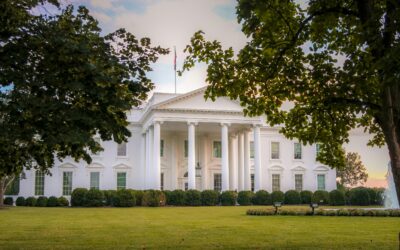
The Final Deletion: DOGE Shuts Down Operations as Trump’s Government Efficiency Agency Hits Its Self-Termination Sunset
The temporary, chainsaw-wielding federal cost-cutting apparatus that aggressively reshaped Washington’s bureaucratic landscape has officially closed its doors. In strict accordance with the original executive mandate that established the temporary body, the Department of Government Efficiency (DOGE) reached its self-termination deadline and permanently deactivated its central operations. The deactivation of the central DOGE website and its final public metrics dashboard marked a quiet, highly calculated conclusion to the agency’s tenure. Taking to social media on the evening of the shutdown, the temporary agency issued a definitive final sign-off, signaling that while the centralized entity was dissolving itself, its operational philosophy would remain embedded across the federal government. “While the formal mission of DOGE has come to an end, the mission to eliminate waste, fraud, and abuse will continue,” the agency stated in its concluding public message. “Good stewardship of taxpayer dollars and accountable government are not temporary initiatives.” At The Modern Memo, we break down the final $215 billion savings sheet claimed by the agency, the mechanics of the executive “sunset” timeline, and the massive federal hiring pivot unfolding as agencies move to stabilize the civil service grid. The July 4th Blueprint: Fulfilling the Execution Mandate The dissolution of DOGE represents the exact fulfillment of the timeline laid down by President Donald Trump when he formalized the temporary body on the first day of his second term. The 250th Anniversary Sunset: When the administration established the U.S. DOGE Service Temporary Organization, it explicitly anchored its operational lifespan to a firm sunset date: July 4, 2026. The White House positioned the initiative as a historic structural “gift” to the American taxpayer on the nation’s 250th anniversary of the Declaration of Independence. The Self-Deletion Promise: The closure honors a long-standing pledge from technology billionaire Elon Musk, who spearheaded the agency’s initial workforce-slashing and regulatory rollbacks before stepping away from day-to-day operations. Musk had famously asserted that the ultimate triumph of a true efficiency agency is its willingness to eventually “delete itself.” No Final Report: Demonstrating the administration’s pivot toward permanent implementation rather than bureaucratic navel-gazing, Office of Management and Budget (OMB) Director Russ Vought confirmed that the executive branch has no plans to draft or publish a comprehensive “closing DOGE report,” choosing instead to let individual agency adjustments speak for themselves. The Final Metrics: Red Ink vs. $215 Billion in Savings Right up until the tracking matrix went dark, the DOGE data dashboard displayed an estimated cumulative taxpayer savings total of $215 billion—a metric that has ignited a fierce, ongoing debate between populist reformers and congressional watchdogs. While independent think tanks and House Oversight Democrats have disputed the headline total, arguing that the public documentation does not fully substantiate the multi-billion-dollar figure, White House spokesperson Davis Ingle fiercely defended the performance. Ingle told reporters that President Trump received a clear, unyielding mandate to modernize operations, and that DOGE had achieved historic, unprecedented strides in dismantling redundant spending walls. The Civil Service Pendulum: Staffing Back Up With the centralized authority of DOGE officially dissolved, the federal government is witnessing an immediate, massive operational pivot as individual agencies move to fix capacity shortages triggered by last year’s aggressive workforce contractions. The OPM Course Correction: Office of Personnel Management (OPM) Director Scott Kupor confirmed that the administration is overseeing a deliberate “reshaping” phase. Rather than maintaining blanket hiring freezes, the White House is directing agency heads to identify critical gaps and backfill mission-critical positions. The Hiring Resurgence: The scale of the turnaround is vividly illustrated by hiring metrics tracked via USAJobs. During the final five months of 2025—the height of the initial workforce purge—the government listed just 68,900 open positions. In the first five months of 2026, that number surged past 104,000 active job postings. Targeted Authorities: The Internal Revenue Service (IRS) has recently been granted emergency fast-track authority to hire up to 8,000 personnel to recover from steep clerical drops, while the State Department has quietly reopened its training loops for Foreign Service Officers to reinforce diplomatic outposts. Final Word The self-termination and deactivation of the Department of Government Efficiency is the definitive proof that the administration has successfully concluded the shock-therapy phase of its second-term domestic agenda. When you look past the intense political posturing of both sides and analyze the cold, hard data—a strict 18-month sunset deadline fulfilled precisely on schedule, a claimed $215 billion dent in redundant federal spending chains, and a post-closure transition that has seen job listings surge back past 104,000 to stabilize core infrastructure—you gain an unvarnished view of structural governance. Quality information replaces the progressive media’s narrative of a “failed experiment” with the reality of a permanent, systemic re-alignment. DOGE has successfully completed its centralized mission to disrupt the bureaucracy; by dissolving itself and scattering its operatives directly into high-level agency positions, the populist movement has ensured that the fight against waste is no longer an external threat, but a permanent feature of the deep machinery of the American state.

Security Strained: TSA Absenteeism Climbs as Shutdown Hits Paychecks
As the Department of Homeland Security (DHS) shutdown enters its second month, the thin blue line at America’s airports is beginning to fray. Internal data reveals that the nationwide “call-out” rate for Transportation Security Administration (TSA) officers has surged to 6%—triple the normal rate—as thousands of essential workers prepare to miss their first full paychecks this weekend. At The Modern Memo, we examine the growing chaos at major travel hubs, the reality of a workforce pushed to the brink, and the security vulnerabilities created by the ongoing funding standoff in Washington. Hubs in Crisis: Houston and New Orleans Hit Hardest While the impact varies by city, the fallout from the staffing shortage has reached a breaking point at several key Southern hubs. The combination of Spring Break travel and reduced officer turnout has turned security checkpoints into a test of endurance for passengers. Houston’s Hobby Airport: Travelers over the weekend faced staggering wait times, with lines at standard checkpoints reportedly exceeding three and a half hours. The congestion was so severe that some passengers had to be funneled through baggage claim areas just to find a place to stand. New Orleans (MSY): Louis Armstrong International warned travelers to arrive at least three to five hours before their flights, as a significant shortage of agents led to multi-hour delays that caused dozens of families to miss their departures. National Impact: Atlanta and Charlotte have also reported “hotspots” where security lanes were shuttered due to a lack of available personnel, creating a ripple effect of delays throughout the domestic flight network. The Financial Breaking Point The spike in absenteeism is directly tied to the financial strain on a workforce that largely lives paycheck-to-paycheck. TSA officers have been working without pay since the shutdown began on February 14. The First Full Miss: March 14. While officers received a partial “bridge” check earlier this month, this coming weekend marks the first time they will receive a zero-dollar pay stub. Side Hustles and Survival: Union representatives note that many “call-outs” aren’t traditional sick days but “survival days,” where officers are forced to stay home to care for children they can no longer afford childcare for, or to pick up temporary gig work to cover rent and groceries. Employee Exodus: Since the shutdown began, more than 300 TSA employees have reportedly resigned entirely, choosing the certainty of private-sector pay over the uncertainty of a government IOU. The Security Blind Spot Beyond the inconvenience to travelers, experts are sounding the alarm on the “perceived vulnerability” this creates. With fewer eyes on the monitors and managers forced to consolidate lanes, the rigorous standards of the screening process are being put under immense pressure. Operational Strain: Remaining officers are being asked to work overtime and double shifts to cover gaps, leading to fatigue—a major risk factor in high-stakes security environments. DOGE and Vetting: While the administration’s Department of Government Efficiency (DOGE) continues to look for ways to streamline federal spending, critics argue that the frontline security workforce is the wrong place to allow a “vacuum of presence” to form. Final Word The gridlock in D.C. has moved from the halls of Congress to the airport terminal. When you look past the political blame-shifting and focus on the data—the 6% call-out rate and the three-hour lines in Houston—you gain a clearer picture of the real-world consequences of a suspended DHS. Quality information replaces the noise of partisan talking points with the clarity of operational reality: you cannot expect a security-first workforce to maintain 100% vigilance while facing 0% compensation. It allows you to see this not just as a travel delay, but as a critical stress test of our national infrastructure. By choosing to stay informed on these shifts, you align your travel plans and your perspective with the reality of a system currently operating on the dedication of people who are effectively being asked to volunteer for national security. Where Facts, Context, and Perspective Matter At The Modern Memo, our goal is simple: to provide clear, well-researched reporting in a media landscape that often feels overwhelming. We focus on substance over sensationalism, and context over commentary. If you value thoughtful analysis, transparent sourcing, and stories that go beyond the headline, we invite you to share our work. Informed conversations start with reliable information, and sharing helps ensure important stories reach a wider audience. Journalism works best when readers engage, question, and participate. By reading and sharing, you’re supporting a more informed public and a healthier media ecosystem. The Modern Memo may be compensated and/or receive an affiliate commission if you click or buy through our links. Featured pricing is subject to change. 📩 Love what you’re reading? Don’t miss a headline! Subscribe to The Modern Memo here!

Independent Journalist Chrissy Clark Predicts Huge Govt. Waste, Corruption Days Before DOGE Revelation
This article is updated from content originally shared here. Independent journalist Chrissy Clark shared a video in late January where she “suggested the US government was [directly] interfering [with] alleged ‘journalism’ at Politico, which other journalists now believe may be true. Clark’s story revolves around a report by former Politico journalists who recently alleged that the outlet “took their sweet time” to cover certain stories and published “a bunch of lies disguised as headlines.” One example involved coverage of Hunter Biden’s laptop and the 51 intelligence agents who signed a letter claiming it wasn’t real. 8 days ago I reviewed an interview between two ex-Politico reporters on my YouTube channel and suggested the US government was DIRECTLY interfering w/ alleged “journalism” at Politico. If you like being ahead of the curve, follow me on YT: https://t.co/tqbeqTNGbZ https://t.co/UEeJpUVmX9 pic.twitter.com/pdx8mfe2ZU — Chrissy Clark (@chrissyclark_) February 5, 2025 “And so I just have to wonder whether the Biden administration went to their preferred … media outlets that they knew would push their narrative?” Clark said in the video. Her post came in response to another claim by podcaster and journalist Benny Johnson, who said Politico “missed a pay period” on February 4, after which it was revealed that U.S. government agencies “dropped a staggering $34 million in contracts with Virginia-based news outlet Politico, mostly on subscriptions, according to data from USASpending.gov.,” wrote the Daily Caller. The missed pay period at Politico was apparently due to a “technical error.” Where Did All That Money Go? The money was broken down and shared out across almost every government agency. Examples include $862,025 between 2021 and 2025 in subscriptions for the Department of the Interior’s National Park Service to Politico’s Energy and Environment (E&E) News service. U.S. Fish and Wildlife Services made a purchase order of $445,140 to Politico. The Environmental Protection Agency, Department of Energy, Department of Health and Human Services and the Treasury Department all spent hundreds of thousands of dollars on either E&E or Politico Pro. Subscriptions to Politico Pro costs roughly $10,000, according to Daily Caller. (FAITH NEWS: ‘Separation Of Church And State Is So Stupid’: National Radio Host Joe Pags Goes Off) Other outlets found to be “raking in taxpayer cash” include The New York Times, Wall Street Journal parent company Dow Jones & Co Inc., The Associated Press, and others, according to data shared by the Daily Caller News Foundation. What Is Next For Govt. Waste? White House Press Secretary Karolina Leavitt didn’t leave much to the imagination when explaining the future of those payments to Politico: Press Secretary Leavitt calls out Politico to their face. “I was made aware of funding from USAID to Media Outlets…including Politico…who I know has a seat in this room. The $8M you receive ends today. The DOGE Team is cancelling those payments now…” pic.twitter.com/s3xiy2h87F — Liz Churchill (@liz_churchill10) February 5, 2025 Republican Missouri Sen. Josh Hawley told Fox News that people “are losing their minds” over the Trump administration’s exposure of taxpayer dollars being wasted. “They’re panicking big time, Laura, because their power base is being threatened. That’s what’s really going on here. I mean, look at what they’re doing over USAID. This is because they’ve used that as their personal plaything. That includes billions and billions of taxpayer dollars that have gone, yeah, to fund outrageous stuff overseas like trans-affirming projects in Zimbabwe or whatever,” Hawley explained to host Laura Ingraham. “But also let’s not forget to fund their preferred media outlets like Politico and who knows what other left-wing rags have been getting money, federal government money from this agency, and there’s been no accountability,” Hawley added. “So yes, what’s happening is Trump is exposing all of this. He is cutting off the liberal supply chains, as it were, and the liberals are just losing their minds. They’re totally losing their minds. […] We need more of it. You mentioned the IRS. I love it. I love Trump’s idea to get rid of the Internal Revenue Service. Let’s make it the External Revenue Service. Let’s start making these agencies work for the American people.” Take Action On This Issue The Modern Memo is not a breaking news organization. We’re a resource, an aggregator, somewhere for you to come and learn more about the issues you care about. Unlike every other news outlet, The Modern Memo shows you how to Take Action on these issues. We just need a couple of things from you to make that happen: (1) tell us what you care about — whether in the comments, social media, via email, whatever, get in touch today and we’ll start researching for you, for free! (2) join us in our mission to become the loudest voices in America!