

DOJ

Blanche Vows DOJ Will Work to “Make Dobbs Permanent” in Every State, Drawing Praise From Pro-Life Groups and Fire From Democrats
Acting Attorney General Todd Blanche privately assured a group of anti-abortion activists this week that the Justice Department is working to ensure the Supreme Court’s Dobbs decision becomes a lasting, nationwide reality — a pledge that thrilled pro-life advocates who’ve grown impatient with the pace of federal action since Roe v. Wade was overturned, even as it drew immediate pushback from Democrats and some abortion-rights groups. What Blanche Told the Group Blanche made the comments on a call hosted by the White House Faith Office with Intercessors for America, a Christian advocacy organization, in a recording the group later posted publicly. “We’re working, hand in hand with HHS and the FDA and the White House and President Trump’s team, to get permanent solutions, so that the Dobbs decision becomes permanent in every single state,” Blanche told the group. He went on to project confidence about the ultimate outcome: “We don’t have complete victory yet, but we will have victory, and victory will be soon, and it will be permanent.” Blanche also signaled that the administration is preparing new restrictions on the prescription and mail delivery of abortion pills such as mifepristone, specifically targeting states that have adopted “shield laws” allowing doctors to prescribe abortion medication to patients living in other states. That approach isn’t new — Blanche had already committed to addressing mail-order abortion pill access during his own confirmation hearing, after being pressed on the issue by Sen. Katie Britt, R-Ala. A Win Pro-Life Advocates Have Been Waiting For For supporters of the pro-life movement, Blanche’s comments represent exactly the kind of sustained federal commitment they’d hoped to see following the Dobbs ruling, and confirmation that the administration intends to use the tools available to the Justice Department — not just leave the matter entirely to individual states — to protect unborn life nationwide. Advocates have grown frustrated in recent years watching abortion pill access expand dramatically through telehealth and mail-order prescriptions, which now account for the majority of abortions performed in the country; a DOJ-led effort to close that avenue, working alongside HHS and the FDA, is precisely the kind of coordinated executive action many pro-life leaders have been pushing for since Roe fell. Democrats and Some Republicans Push Back The comments landed differently on the other side of the aisle. Sen. Patty Murray, D-Wash., seized on the remarks ahead of Blanche’s Senate confirmation vote, telling colleagues that a vote for Blanche was effectively a vote for an attorney general who would “attack abortion rights in every state” — repeating Blanche’s own “every single state” language back at him. Sen. Tina Smith, D-Minn., made a similar argument, saying the private call revealed Blanche’s true intentions more clearly than his public confirmation testimony had. Notably, the pushback wasn’t confined entirely to Democrats. Sen. Susan Collins, R-Maine, a longtime supporter of abortion rights within the GOP conference, announced she would oppose Blanche’s nomination, citing both his private assurances to anti-abortion groups and a separate controversy over an IRS audit shield for the Trump family. Collins’ defection illustrates that Blanche’s posture on abortion pushes further than some in his own party are comfortable going, even within a Republican-controlled Senate broadly supportive of his nomination. The Larger Legal Strategy Reporting on the episode suggests the administration’s approach centers heavily on regulatory and legal action rather than legislation — a strategy that avoids the difficulty of passing a nationwide abortion law through a closely divided Congress. Anti-abortion groups have spent months pushing to resolve Louisiana v. FDA, a case that could restrict the mail-order mifepristone system through the courts rather than through a congressional vote. Supporters argue this is simply smart, available use of existing federal authority; critics argue it’s an attempt to achieve through executive and regulatory action what couldn’t be achieved through the ordinary legislative process — though of course, that critique cuts both ways depending on which policy area and which administration one is examining. Where Things Stand Blanche’s confirmation vote in the full Senate is expected soon after clearing the Judiciary Committee earlier this week by a 12-10 vote. Given the Republican majority in the chamber, he is likely to be confirmed even with Collins’ opposition, positioning him to begin implementing the policy priorities he outlined to Intercessors for America almost immediately upon taking the job on a permanent basis. Advocates on both sides of the abortion debate are likely to be watching closely for the administration’s next moves on mifepristone access and the shield-law states in the weeks following his confirmation. This story is developing.

Border Gridlock: DOJ Unveils Largest-Ever Trade Fraud Crackdown, Surpassing $1 Billion Milestone
The federal government’s transition from administrative border tracking to aggressive criminal warfare along global supply chains has reached an unprecedented financial and legal threshold. Appearing on Fox News’ America Reports, correspondent Garrett Tenney detailed a monumental law enforcement blitz orchestrated by the Department of Justice (DOJ), confirming that the newly weaponized Trade Fraud Task Force (TFTF) has officially surpassed $1 billion in civil and criminal recoveries, penalties, forfeitures, and publicly charged losses. The massive enforcement surge represents a total policy transformation by the executive branch, which has formally designated global trade fraud not as a minor regulatory compliance issue, but as a critical “front-line threat to U.S. national and economic security.” Operating via a centralized, multi-agency strike net that unites the DOJ’s Civil and Criminal Divisions with Homeland Security Investigations (HSI) and U.S. Customs and Border Protection (CBP), federal prosecutors have launched a comprehensive, nationwide dragnet targeting multi-million-dollar customs evasion, human rights abuses involving slave labor, and profound public health and safety violations. At The Modern Memo, we break down the operational anatomy of the $1 billion milestone, the massive Chicago jewelry and aluminum indictments anchoring the data, and the aggressive corporate whistleblowing initiatives engineered to permanently dismantle black-market supply lines. The Chicago Epicenter: Dismantling the $930 Million Gold Rings The primary breakthrough driving the task force past the billion-dollar line was unveiled in a series of sweeping indictments executed by the U.S. Attorney’s Office for the Northern District of Illinois, which serves as the TFTF’s lead prosecutorial partner. The Surya Transshipment Scheme: Federal prosecutors announced massive criminal charges against Raj Kohli and Veena Kohli, operators of California-based Surya International. The duo stands accused of illegally importing roughly $693 million in gold jewelry from India and the United Arab Emirates between 2020 and 2024. To systematically bypass rigid U.S. trade walls, the defendants allegedly falsified shipping manifestations to declare that the luxury goods originated in Singapore, successfully evading more than $38 million in mandatory customs duties. The Gulabani Loop: Operating a parallel, multi-million-dollar evasion loop, Illinois wholesaler Narain Gulabani was hit with severe federal charges for importing approximately $240 million in gold jewelry. Gulabani allegedly utilized fraudulent country-of-origin listings—falsely claiming the inventory was manufactured in Oman or Singapore—to cheat American taxpayers out of $13.6 million in lawful tariffs. The Aluminum Pallet Precedent: Beyond the jewelry sector, the task force’s single largest resolution to date is a jaw-dropping $549.5 million settlement finalized against Perfectus Aluminum. The industrial corporate giant had systematically disguised Chinese aluminum extrusions as functional shipping pallets to completely evade severe U.S. antidumping and countervailing duties. The Three Pillars of Enforcement: Forced Labor, Evasion, and Public Safety As Garrett Tenney highlighted on America Reports, the DOJ’s tactical mandate extends far past basic revenue collection, transitioning into a strict preservation of human rights and public health. Eradicating Slave Labor: The task force has established an unyielding operational link with the Forced Labor Enforcement Task Force, actively weaponizing the Uyghur Forced Labor Prevention Act (UFLPA) and Title 18 criminal provisions. Federal officials explicitly warned that corporations can no longer hide behind fragmented supply chains; any domestic brand displaying “willful blindness” toward overseas forced labor will face direct asset forfeiture and severe criminal prosecution. Securing Public Health: High-impact safety crackdowns contributing to the $1 billion milestone include an $8 million penalty against Royal Sovereign International for failing to report defective, dangerous imported goods, and a $6.3 million criminal fine levied against Boise Cascade over illegally sourced timber imports. The Whistleblower Carrots and the Multi-District Sticks The final element of the DOJ’s structural strategy is the complete elimination of safe havens for corporate fraudsters, deploying massive financial incentives to turn corporate insiders into government informants. Under the newly expanded Corporate Whistleblower Awards Pilot Program, the DOJ’s Criminal Division is now offering historic, multi-million-dollar cash payouts to private individuals and corporate employees who provide original, truthful data exposing customs or tariff evasion. Concurrently, federal prosecutors are utilizing expansive venue provisions under 18 U.S.C. § 3237. Because an illegal import technically violates the law in every single district it travels through, the DOJ can launch devastating prosecutions in any state where the goods are moved, distributed, or sold—entirely stripping fraudsters of the ability to hide behind friendly localized ports. Final Word The historic $1 billion recovery milestone achieved by the DOJ’s Trade Fraud Task Force is the definitive proof that the era of treating international customs manipulation as a victimless white-collar game is officially over. When you look past the standard corporate press releases and analyze the raw data—nearly $1 billion in fraudulent gold jewelry schemes crushed in a single inland port city, a half-billion-dollar aluminum forfeiture cutting off Chinese dumping loop-holes, and the deployment of a federal whistleblower bounty matrix explicitly engineered to turn corporate insiders against their own bosses—you gain an unvarnished view of a total strategic pivot. Quality information replaces the narrative of loose regulatory oversight with the cold reality of criminal accountability. As DOJ officials confirm that this billion-dollar haul is merely the opening salvo of a long-term economic offensive, Washington has delivered a permanent, unyielding declaration to the global market: if you seek to profit by undermining American workers, exploiting slave labor, or cheating the U.S. Treasury, you will see your goods seized, your corporate assets dismantled, and your executives marched into a federal prison cell.

The Constitution Is Not a Suggestion: DOJ Sues Denver to Smash ‘Illegal’ Assault Weapons Ban
In a massive victory for Second Amendment advocates, the Department of Justice officially filed a lawsuit against the city of Denver. The federal complaint alleges that the city’s 37-year-old ban on so-called “assault weapons” is a blatant violation of the constitutional rights of law-abiding citizens. At The Modern Memo, we analyze the DOJ’s “common use” argument, the defiant “Hell No” from Denver’s progressive leadership, and why Acting Attorney General Todd Blanche is making it clear that the Second Amendment is no longer a “second-class right.” The Federal Hammer: Smashing the ‘Assault’ Myth The DOJ’s lawsuit targets a 1989 Denver ordinance that makes it a crime to “carry, store, keep, manufacture, sell, or otherwise possess” a wide range of semi-automatic firearms. The “Common Use” Standard: Citing the Heller and Bruen precedents, the DOJ argues that the AR-15—the most popular rifle in America—is in “common use for lawful purposes” and therefore cannot be banned. Political Rhetoric vs. Reality: The complaint takes aim at the term “assault weapon” itself, echoing Justice Clarence Thomas’s observation that it is a “rhetorically charged political term developed by anti-gun publicists” rather than a technical definition. Vigorous Defense: “The Constitution is not a suggestion,” Acting Attorney General Todd Blanche stated. “Denver’s ban on commonly owned semi-automatic rifles directly violates the right to bear arms. This Department of Justice will vigorously defend the liberties of law-abiding citizens nationwide.” Denver’s Defiance: “Hell No” to the Constitution While the federal government seeks to uphold the Bill of Rights, Denver Mayor Mike Johnston and City Attorney Miko Brown held a theatrical press conference Monday to signal their intent to ignore the federal mandate. The “Hell No” Doctrine: Surrounded by gun control activists, Mayor Johnston declared “Hell no” to the DOJ’s demand to repeal the ban. He characterized the 37-year-old policy as a “common-sense” measure against “weapons of war.” Statewide Overreach: The DOJ isn’t stopping with Denver. Colorado Attorney General Phil Weiser confirmed his office also received a federal warning regarding the state’s 2013 ban on large-capacity magazines, signaling that a statewide legal reckoning is imminent. The “Bully” Narrative: Pro-ban advocates, including Tom Mauser, father of a Columbine victim, accused the Trump administration of “intimidation,” framing the enforcement of constitutional rights as a form of “bullying.” The Legal Turning Point This lawsuit marks the first time the federal government has directly intervened to strike down Denver’s local ordinances, setting up a high-stakes showdown in federal district court. Harmeet Dhillon’s Warning: Assistant Attorney General Harmeet Dhillon, of the Civil Rights Division, had previously offered Denver a chance to negotiate a “consent decree” to stop enforcing the ban. The city’s refusal has now triggered a full-scale legal war. The DNC Factor: Observers note that Denver is currently “cleaning house” and tightening security ahead of a major Democratic National Convention (DNC) visit. Critics argue the city is using the ban as a political prop to appeal to the radical left while ignoring the crime rates that continue to plague the metro area. Final Word The DOJ’s lawsuit against Denver is the definitive proof that the era of local “gun-free utopias” is coming to a legal end. When you look past the noise of “common-sense” slogans and focus on the data—the tens of millions of law-abiding AR-15 owners and the Supreme Court’s clear directives—you gain a clearer picture of an administration that views the Bill of Rights as an absolute requirement, not a suggestion. Quality information replaces the narrative of “safety” with the reality of a city government that would rather bankrupt its taxpayers in a lost legal battle than acknowledge the Second Amendment. By choosing to sue, the DOJ is ensuring that in Denver, as in the rest of America, the right to self-defense is no longer up for debate. Where Facts, Context, and Perspective Matter At The Modern Memo, our goal is simple: to provide clear, well-researched reporting in a media landscape that often feels overwhelming. We focus on substance over sensationalism, and context over commentary. If you value thoughtful analysis, transparent sourcing, and stories that go beyond the headline, we invite you to share our work. Informed conversations start with reliable information, and sharing helps ensure important stories reach a wider audience. Journalism works best when readers engage, question, and participate. By reading and sharing, you’re supporting a more informed public and a healthier media ecosystem. The Modern Memo may be compensated and/or receive an affiliate commission if you click or buy through our links. Featured pricing is subject to change. 📩 Love what you’re reading? Don’t miss a headline! Subscribe to The Modern Memo here!

New Video Shows Suspect Stalking Halls and Charging Security at White House Correspondents’ Dinner
New security footage released by federal investigators on May 1, 2026, has provided a chilling look into the moments leading up to the shooting at the White House Correspondents’ Association Dinner. The video shows 31-year-old suspect Cole Allen navigating the service corridors of the Washington Hilton with tactical precision before launching a direct charge at a Secret Service checkpoint. At The Modern Memo, we analyze the evidence of premeditation found in the footage, the heroic response from law enforcement, and what this means for the ongoing Department of Justice investigation into the targeting of administration officials. Evidence of Premeditation The footage, captured minutes before the first shots were fired, contradicts any narrative that this was a spontaneous act of violence. The Tactical Approach: Allen is seen moving through the hotel’s back hallways, bypassing public areas to position himself near a high-security entrance. The Final Charge: The video shows Allen drawing a weapon as he breaks into a sprint toward a Secret Service magnetometer station. The intent appears clear: breaching the perimeter to reach the main ballroom where the President’s Cabinet was gathered. The Secret Service Response The video highlights the split-second bravery of the agents on duty. As Allen charged the checkpoint, a Secret Service agent was seen immediately engaging the suspect, absorbing the initial fire and tackling him to the ground. Preventing a Massacre: Officials believe that if Allen had successfully breached that final door, the loss of life inside the crowded ballroom would have been catastrophic. Officer Down: One agent was wounded in the exchange, but is reportedly in stable condition thanks to the quick response of medical teams on site. JUST IN: 🇺🇸 US releases high quality footage of White House Correspondents Dinner shooting. This is not AI generated. pic.twitter.com/StMdIKrnNB — Remarks (@remarks) April 30, 2026 Building the DOJ Case This video serves as a cornerstone of the DOJ’s case against Allen, who reportedly traveled from California to D.C. with a “priority list” of government targets. Assassination Intent: Prosecutors argue the footage proves Allen wasn’t interested in a general protest, but was specifically hunting high-ranking administration officials. Radicalization Probe: The FBI is currently examining Allen’s ties to extremist groups, looking for any evidence that his actions were coordinated with others who share his anti-government views. Final Word The footage of the Hilton shooting is a sobering reminder of the threats facing our public officials. When you look past the noise and focus on the data—the calculated movement of the suspect and the immediate response of the Secret Service—you gain a clearer picture of a crisis that was managed by professionals in a moment of extreme danger. Quality information replaces speculation with the reality of a narrow escape for the nation’s leadership. It allows you to see that while the attack was planned with malice, it was met with superior resolve. Where Facts, Context, and Perspective Matter At The Modern Memo, our goal is simple: to provide clear, well-researched reporting in a media landscape that often feels overwhelming. We focus on substance over sensationalism, and context over commentary. If you value thoughtful analysis, transparent sourcing, and stories that go beyond the headline, we invite you to share our work. Informed conversations start with reliable information, and sharing helps ensure important stories reach a wider audience. Journalism works best when readers engage, question, and participate. By reading and sharing, you’re supporting a more informed public and a healthier media ecosystem. The Modern Memo may be compensated and/or receive an affiliate commission if you click or buy through our links. Featured pricing is subject to change. 📩 Love what you’re reading? Don’t miss a headline! Subscribe to The Modern Memo here!

‘Friendly Federal Assassin’: DOJ Builds Massive Case Against Left-Wing WHCA Shooter Targeting Trump Cabinet
The Department of Justice is rapidly assembling a formidable case against Cole Tomas Allen, the 31-year-old California man accused of attempting to carry out a political massacre at the White House Correspondents’ Association (WHCA) Dinner on Saturday night. Allen, a former Caltech engineering student and part-time teacher from Torrance, is set to be arraigned in federal court this afternoon as investigators peel back the layers of what is being described as a premeditated, anti-Trump assassination plot. At The Modern Memo, we analyze the “Friendly Federal Assassin” manifesto, the suspect’s history of radical left-wing donations, and why Acting Attorney General Todd Blanche believes the shooter’s primary goal was the systematic elimination of the Trump administration. The Manifesto: Targeting the Cabinet Minutes before he attempted to breach the security perimeter at the Washington Hilton, Allen reportedly sent a chilling “manifesto” to family members. In the document, he explicitly outlined a plan to hunt down members of the Trump administration. The Priority List: In his writings, Allen identified administration officials as targets, stating they were “prioritized from highest-ranking to lowest.” “Friendly Federal Assassin”: Allen signed the document using the alias “coldForce” and “Friendly Federal Assassin,” a moniker investigators believe reflects his radicalized view that he was performing a “service” by attacking elected officials. Anti-Christian Rhetoric: Authorities also uncovered writings in which Allen accused the President of failing to act with “Christian behavior,” a narrative Trump allies say is a thin veil for deep-seated religious and political hatred. A History of Radical Leanings While the corporate media has been slow to label the suspect’s affiliations, federal campaign records and social media archives paint a clear picture of a man steeped in far-left ideology. The Harris Connection: Records show that Allen was a registered Democrat who donated to Kamala Harris’s 2024 presidential campaign. “The Wide Awakes”: Family members told investigators that Allen was involved with a group called “The Wide Awakes” and had recently attended “No Kings” protests in California, movements often associated with militant anti-Trump sentiment. The Weaponry: When Allen was tackled by Secret Service agents—one of whom was shot but saved by a bulletproof vest—he was reportedly armed with a shotgun, a handgun, and multiple knives. The DOJ Response: Arraignment and Accountability Acting Attorney General Todd Blanche and U.S. Attorney for D.C. Jeanine Pirro have signaled that the initial charges are just the beginning of a long legal battle for Allen. Initial Charges: Allen currently faces counts of using a firearm during a crime of violence and assault on a federal officer. However, Blanche confirmed on Face the Nation that attempted assassination of the President is “absolutely” on the table. Premeditated Travel: Evidence suggests Allen traveled by train from California to Chicago and then to D.C., checking into the Hilton as a guest days before the event to scout the security perimeter. The “Lone Wolf” Theory: While the FBI is investigating his links to radical groups, both the President and Metropolitan Police have characterized Allen as a “lone wolf” actor who was radicalized online. Final Word The shooting at the WHCA Dinner is a grim confirmation of the “political violence” warning signs that have been ignored by the left for years. When you look past the noise of “motive uncertainty” and focus on the data—the explicit targeting of the Cabinet and the shooter’s history of radical donations—you gain a clearer picture of a man who didn’t just snap, but was methodically groomed by a culture of hatred. Quality information replaces the “senseless violence” narrative with the reality of a targeted political attack. It allows you to see that the “Friendly Federal Assassin” was anything but friendly—he was a calculated threat to the heart of the American government. By choosing to build an airtight case, the DOJ is ensuring that while the ballroom may have been shaken, the rule of law will remain unshakable. Where Facts, Context, and Perspective Matter At The Modern Memo, our goal is simple: to provide clear, well-researched reporting in a media landscape that often feels overwhelming. We focus on substance over sensationalism, and context over commentary. If you value thoughtful analysis, transparent sourcing, and stories that go beyond the headline, we invite you to share our work. Informed conversations start with reliable information, and sharing helps ensure important stories reach a wider audience. Journalism works best when readers engage, question, and participate. By reading and sharing, you’re supporting a more informed public and a healthier media ecosystem. The Modern Memo may be compensated and/or receive an affiliate commission if you click or buy through our links. Featured pricing is subject to change. 📩 Love what you’re reading? Don’t miss a headline! Subscribe to The Modern Memo here!
The Private Sector Shift: Trump Replaces Bondi as DOJ Focuses on “Maximum Impact”
In a move that signals a strategic recalibration for the Department of Justice, President Trump announced today, April 2, 2026, that Attorney General Pam Bondi will be transitioning out of her role to pursue a high-level position in the private sector. The President named Deputy Attorney General Todd Blanche, a seasoned legal mind and trusted defender of the administration’s constitutional priorities, as Acting Attorney General. At The Modern Memo, we look past the media’s “firing” narrative to analyze the President’s demand for results, the controversy over the Epstein files, and why a more aggressive DOJ is necessary to dismantle the “Deep State” for good. A Patriot’s Transition: The Official Word Taking to Truth Social on Thursday afternoon, President Trump praised Bondi’s tenure, specifically highlighting her success in restoring law and order to America’s cities. A Record of Results: The President noted that under Bondi’s leadership, murders plummeted to their lowest levels since 1900. “Pam Bondi is a Great American Patriot and a loyal friend,” Trump wrote. The New Acting AG: Todd Blanche, who served as a key architect of the President’s personal legal defense before joining the DOJ, steps into the top spot. Supporters view Blanche as a “battle-tested” prosecutor who understands the urgency of the administration’s mandate. The Friction Point: The Epstein Files & Public Trust While the official departure is framed as a transition, insiders point to a growing frustration regarding the DOJ’s handling of materials related to the Jeffrey Epstein investigation. The Transparency Gap: Despite Bondi’s loyalty, her public handling of the so-called “client list” drew sharp criticism from conservative heavyweights like Rep. Nancy Mace (R-SC). Critics argued that the Department’s messaging allowed the media to frame the administration as “holding back” information, rather than exposing the truth. The “Slow-Walking” Accusation: Reports surfaced this week that Bondi had summoned Miami-based prosecutors to D.C. to address concerns that high-profile probes were being “slow-walked.” For an administration that promised to “drain the swamp,” any perception of bureaucratic inertia is a non-starter. The Mandate for Aggression: Purging the Deep State The shift at the DOJ is widely interpreted as a signal that the President is looking for a leader who will more aggressively pursue those who weaponized the legal system against him and his supporters. Accountability for Foes: While Bondi initiated probes into figures like James Comey and Letitia James, several of these cases faced procedural dismissals. The President has reportedly expressed a desire for a “maximum impact” Justice Department that secures convictions, not just headlines. Potential Successors: Names like Lee Zeldin (current EPA Administrator) have already begun circulating as permanent replacements, suggesting the President wants a fighter who can navigate the political and judicial “lawfare” that continues to target the administration. Final Word Pam Bondi’s departure is not a sign of weakness, but a demand for excellence. When you look past the noise of “Cabinet upheaval” and focus on the data—the plummeting crime rates and the President’s push for total transparency on the Epstein files—you gain a clearer picture of an administration that refuses to settle for “good enough.” Quality information replaces the media’s “chaos” narrative with the reality of a strategic upgrade. It allows you to see the appointment of Todd Blanche as a definitive move to sharpen the spear of American justice. By choosing to back a DOJ that prioritizes aggressive accountability, you align your perspective with the reality that the swamp won’t drain itself. Where Facts, Context, and Perspective Matter At The Modern Memo, our goal is simple: to provide clear, well-researched reporting in a media landscape that often feels overwhelming. We focus on substance over sensationalism, and context over commentary. If you value thoughtful analysis, transparent sourcing, and stories that go beyond the headline, we invite you to share our work. Informed conversations start with reliable information, and sharing helps ensure important stories reach a wider audience. Journalism works best when readers engage, question, and participate. By reading and sharing, you’re supporting a more informed public and a healthier media ecosystem. The Modern Memo may be compensated and/or receive an affiliate commission if you click or buy through our links. Featured pricing is subject to change. 📩 Love what you’re reading? Don’t miss a headline! Subscribe to The Modern Memo here!

Transparency Crisis: DOJ Sues Harvard for Hiding Post-Affirmative Action Data
The Department of Justice escalated its fight for merit-based admissions on Friday, February 13, 2026, filing a lawsuit against Harvard University. The suit accuses the Ivy League giant of unlawfully withholding the very data needed to verify if the school is actually following the Supreme Court’s 2023 ban on affirmative action. At The Modern Memo, we analyze the administration’s demand for “merit over DEI,” Harvard’s claims of “government overreach,” and the high-stakes battle over $9 billion in federal funding. The “Red Flag”: 10 Months of Silence The lawsuit, filed in a Boston federal court, alleges that Harvard has spent more than 10 months “slow-walking” and “thwarting” a federal compliance review. Under the leadership of Attorney General Pam Bondi, the DOJ is demanding a trove of individualized applicant data to ensure the school hasn’t simply replaced explicit racial quotas with “subtle” ideological proxies. The Demand: The DOJ wants five years of admissions data, including grades, test scores, essays, and internal correspondence related to “Diversity, Equity, and Inclusion” (DEI) initiatives. The “Red Flag”: Assistant Attorney General Harmeet Dhillon, head of the Civil Rights Division, called the lack of cooperation a major warning sign. “If Harvard has stopped discriminating, it should happily share the data necessary to prove it,” Dhillon stated. Title VI Violations: The DOJ argues that as a recipient of federal taxpayer money, Harvard is legally obligated to provide this data for compliance reviews under Title VI of the Civil Rights Act. The Defense: “Independence” vs. Oversight Harvard has struck a defiant tone, characterizing the lawsuit as a “retaliatory” act by an administration hostile to elite academia. The Statement: A Harvard spokesperson claimed the university has responded in “good faith” and accused the government of an “unlawful attempt to control its institutional autonomy and academic freedom.” Constitutional Rights: Harvard argues that surrendering individualized applicant data violates privacy laws and constitutes an “ideological assault” on the university’s independence. The History: This suit follows a year of friction, including a previous $2.7 billion freeze on Harvard’s research funding and threats of further fines totaling up to $1 billion. The Merit Factor: Ending “Numerical Balancing” The heart of the DOJ’s case rests on the 2023 Supreme Court ruling in Students for Fair Admissions v. Harvard. The administration is concerned that Harvard—which the Court previously found used race as a “negative factor” against Asian-American applicants—is still maintaining “numerical commitments” to racial balancing. Merit over DEI: Attorney General Bondi emphasized that the goal is to ensure admissions are “free of discrimination.” The administration has signaled that universities can no longer use federal funds while simultaneously ignoring the nation’s highest court. A National Trend: Harvard is not alone. The White House is reportedly pressing dozens of other universities for similar data, signaling a nationwide effort to dismantle “woke” admissions bureaucracies that prioritize identity over achievement. The Money Trail: $9 Billion at Stake The lawsuit is more than just a request for paperwork; it carries a massive financial threat. The Trump administration has already moved to terminate or freeze billions in research grants aimed at everything from cancer research to infectious diseases. If the court finds Harvard in breach of its federal financial assistance terms, the school could face the permanent loss of nearly $9 billion in federal funding. Republicans in Congress have argued that if an institution refuses to be transparent with the taxpayers who fund it, it has no right to their money. Final Word Staying informed on the DOJ’s lawsuit against Harvard isn’t just about “culture war” headlines—it plays a powerful role in your understanding of the accountability of elite institutions. When you look past the claims of “retaliation” and focus on the data of a 10-month refusal to provide admissions records, you gain a clearer picture of the struggle to restore a true meritocracy. Quality information replaces the noise of academic defensiveness with the clarity of civil rights law and Supreme Court mandates. It allows you to see this lawsuit as a necessary tool for ensuring that “equal protection” isn’t just a suggestion, but a requirement for any institution taking public money. By choosing to follow the facts of the DOJ filing rather than the spin of the Ivy League PR machine, you align your perspective with the realities of modern justice and support a more informed, resilient republic. Where Facts, Context, and Perspective Matter At The Modern Memo, our goal is simple: to provide clear, well-researched reporting in a media landscape that often feels overwhelming. We focus on substance over sensationalism, and context over commentary. If you value thoughtful analysis, transparent sourcing, and stories that go beyond the headline, we invite you to share our work. Informed conversations start with reliable information, and sharing helps ensure important stories reach a wider audience. Journalism works best when readers engage, question, and participate. By reading and sharing, you’re supporting a more informed public and a healthier media ecosystem. The Modern Memo may be compensated and/or receive an affiliate commission if you click or buy through our links. Featured pricing is subject to change. 📩 Love what you’re reading? Don’t miss a headline! Subscribe to The Modern Memo here!
John Bolton Pleads Not Guilty to Classified Documents Charges
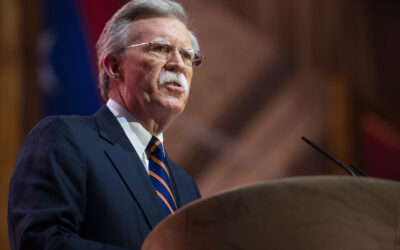
A federal grand jury has indicted former National Security Advisor John Bolton on 18 counts tied to improper handling of classified materials, per the U.S. Department of Justice. The charges include eight counts of transmitting national defense information and 10 counts of retaining national defense information. From about April 2018 through August 2025, the indictment claims Bolton shared more than a thousand pages of classified documents—some marked TOP SECRET/SCI—with two unauthorized individuals. In addition, the papers were allegedly stored in his Maryland home in violation of federal law. FBI Director Kash Patel said, “The FBI’s investigation revealed that John Bolton allegedly transmitted top secret information using personal online accounts and retained said documents in his house in direct violation of federal law. The case was based on meticulous work from dedicated career professionals at the FBI who followed the facts without fear or favor. Weaponization of justice will not be tolerated, and this FBI will stop at nothing to bring to justice anyone who threatens our national security.” (MORE NEWS: China’s Rare Earth Clampdown Threatens U.S. Tech, Defense) He turned himself in to federal authorities today and pleaded not guilty after being indicted in the classified information probe. Alleged Mishandling: Transmission and Retention According to the Department of Justice: “Bolton illegally transmitted NDI by using personal email and messaging application accounts to send sensitive documents classified as high as Top Secret. These documents revealed intelligence about future attacks, foreign adversaries, and foreign-policy relations. “ Beyond the transmissions, the indictment charges Bolton with retaining classified documents. The DOJ Press Release reads: “Bolton illegally retained NDI documents within his home. These documents included intelligence on an adversary’s leaders as well as information revealing sources and collections used to obtain statements on a foreign adversary.” FBI Raid and Seizures In August 2025, FBI agents raided John Bolton’s home under a search warrant tied to a long-running investigation into classified document handling. Items Seized The FBI removed multiple devices and materials, including: Two iPhones (one red, one black) Three computers (a Dell XPS laptop, a Dell Precision Tower, another Dell model) One Seagate hard drive Two SanDisk 64 GB USB drives A white binder labeled “Statements and Reflections to Allied Strikes…” Four boxes of printed daily activities Typed folders labeled Trump I-IV These items are central to the government’s case that Bolton stored and processed classified data improperly. Legal Context Judge’s Warning in the 2020 Memoir Case The 2025 indictment revives concerns from his 2020 legal battle over Bolton’s “tell-all” book, The Room Where It Happened, about his service in the first Trump administration. In United States v. Bolton (Case No. 1:20-cv-1580-RCL), the government alleged he violated book prepublication review protocols by publishing without security clearance, risking classified information exposure. Seeking to block further distribution, including the audiobook, the government requested an injunction. U.S. District Judge Royce C. Lamberth denied this, citing the digital age’s irreversible information spread. He stated: “If nothing else, the government argues, an injunction today would at least prevent any further spread of the book… In the Internet age, even a handful of copies in circulation could irrevocably destroy confidentiality… The damage is done. There is no restoring the status quo.” Lamberth warned: “Defendant Bolton has gambled with the national security of the United States. He has exposed his country to harm and himself to civil (and potentially criminal) liability.” Although no injunction was issued, Bolton’s royalties were placed in a constructive trust. 2021 Biden DOJ Probe Dropped In 2021, a Biden-era DOJ probe into Bolton’s retention of classified documents was dropped for political reasons, and prosecutors concluded the memoir contained no classified information. 2025 Indictment and Trump DOJ Response The 2025 charges, alleging Bolton shared over a thousand pages of TOP SECRET/SCI documents and improperly stored them at his Maryland home, echo these earlier concerns. Attorney General Pamela Bondi emphasized, “There is one tier of justice for all Americans. Anyone who abuses a position of power and jeopardizes our national security will be held accountable. No one is above the law.” Why This Case Matters This indictment raises important issues about how top officials should treat classified information—and whose oversight they face. It also ties into broader debates over document handling policies, accountability for former officials, and national security. In particular: The case tests whether a former high-ranking official can be held criminally liable for retaining or disseminating classified intelligence after leaving government. It underscores tensions between public commentary, such as memoirs and speeches, and legal boundaries around classified materials. It spotlights the challenge of safeguarding intelligence while preserving certain free speech rights for former officials. Moreover, the case could influence future decisions about how strictly courts and prosecutors enforce laws on classified materials—especially for people who once held government security clearances. (MORE NEWS: Shock at the Vatican: Muslim Prayer Room Approved Inside Historic Library) The Takeaway The indictment of John Bolton marks one of the most consequential national security cases in recent history. Federal prosecutors allege that a former top U.S. official—trusted with the nation’s most sensitive intelligence—knowingly shared and stored highly classified information outside secure channels. The charges and FBI’s detailed findings suggest an extensive pattern of misconduct that could carry serious legal consequences if proven. This case also serves as a reminder that no individual, regardless of past position or political influence, is immune from accountability. As Bolton faces the legal process, the broader question remains: how should America safeguard its secrets while balancing transparency, free speech, and justice? The outcome of this case will likely shape how future administrations handle classified information and the standards to which their senior officials are held. Expose the Spin. Shatter the Narrative. Speak the Truth. At The Modern Memo, we don’t cover politics to play referee — we swing a machete through the spin, the double-speak, and the partisan theater. While the media protects the powerful and buries the backlash, we dig it up and drag it into the light. If you’re tired of rigged narratives, selective outrage,…