
Earthquakes
Logistical Lifeline: U.S. Military Touts Massive Humanitarian Surge as Venezuela Quake Death Toll Hits 1,450
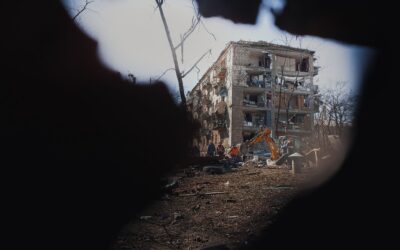
The international race against time in South America has reached a critical, life-saving nexus. Eighty-five hours after back-to-back 7.2 and 7.5 magnitude earthquakes decimated north-central Venezuela, the official death toll has climbed to a devastating 1,450 fatalities, with more than 3,150 injured, 12,700 displaced, and upwards of 46,000 citizens currently reported missing. In response to an urgent bilateral request from Venezuela’s interim government under Acting President Delcy Rodríguez, the U.S. military has executed a rapid, massive logistics surge. Operating under the directive of the War Department, U.S. Southern Command (SOUTHCOM) has assumed a leading operational role on the ground, deploying heavy naval assets, specialized amphibious engineering units, and elite search-and-rescue components to stabilize the crumbling coastal infrastructure. At The Modern Memo, we break down the operational footprint of the U.S. military’s Caribbean intervention, the strategic reopening of the Caracas airbridge, and the high-stakes maritime relief grid operating directly off the hard-hit coast of La Guairá. Air and Sea Mobilization: The SOUTHCOM Surge The humanitarian intervention, coordinated in close tandem with Secretary of State Marco Rubio and the State Department’s Bureau for Humanitarian Assistance, has mobilized the unparalleled logistical might of the U.S. Armed Forces. Reopening the Skies: In the immediate hours following Wednesday’s double-shock, collapsing infrastructure and severe debris fields completely paralyzed Simón Bolívar International Airport in Caracas. A specialized U.S. military engineering team rapidly deployed to the tarmac, clearing structural hazards and establishing an emergency air-traffic network. The U.S. has now assumed full management of airfield and humanitarian operations at the airport to handle the massive influx of global aid. The Maritime Shield: Off the coast of the devastated city of La Guairá, SOUTHCOM has positioned a formidable naval footprint. The amphibious transport dock USS Fort Lauderdale (LPD 28) and the littoral combat ship USS Billings (LCS 15) have anchored just outside the disaster zone, serving as floating command centers. The Soto Cano Pipeline: Operating out of Soto Cano Air Base in Honduras, Joint Task Force-Bravo has deployed heavy-lift CH-47 Chinook and UH-60 Black Hawk helicopters. These aircraft are flying continuous, long-range supply corridors, transporting elite rescue gear and medical infrastructure directly into cut-off regional valleys. The Rubble Race: 300 First Responders and Canine Units With over 770 large-scale buildings entirely collapsed across seven distinct Venezuelan states, the primary focus of the combined military-civilian grid remains fixed on searching for survivors trapped in deep structural voids. The Type I Task Forces: The Trump administration has augmented the military logistics grid by deploying four world-class Type I Urban Search-and-Rescue (USAR) teams to the country. The deployment comprises more than 300 of America’s finest first responders from elite teams based in Fairfax County, Virginia, and Los Angeles, California. The Canine Network: Working alongside 2,600 international rescue workers from 27 participating nations, the American contingent has deployed 23 specialized search canines trained to detect heat signatures and scent pools beneath crushed masonry. The Port Repair Mandate: Because the earthquakes severely fractured Venezuela’s primary commercial docks, a specialized U.S. Navy operations team has embedded directly at the Port of La Guairá. Working hand-in-hand with Venezuelan local civil protection units, Navy engineers are using heavy construction equipment to repair sea walls and construct temporary offloading ramps so landing craft can deliver bulk supplies directly from the USS Fort Lauderdale. The $300 Million Grid: Partnering with the Private Sector The military’s kinetic work on the ground is backed by an immediate, sweeping escalation of financial resources from Washington, highlighting the total alignment between the U.S. and the post-authoritarian interim government in Caracas. The scale of the devastation has re-written the geopolitical script for the region. Only a year ago, Venezuela operated under an anti-American autocratic regime; today, following the removal of former dictator Nicolás Maduro, U.S. forces are being cheered in the streets of Caracas as savior figures. This deep cooperation has allowed the State Department to comfortably route over $300 million in direct aid through highly trusted international and non-governmental channels, ensuring that food, clean water, and emergency medical kits bypass corrupt bureaucratic networks to reach displaced populations immediately. Final Word The massive deployment of U.S. military power to stabilize Venezuela is the definitive proof that true geopolitical leadership is measured by logistical capability, not empty diplomatic platitudes. When you look past the initial tragedy of the destruction and focus entirely on the hard data—1,450 confirmed dead and tens of thousands missing, the deployment of a U.S. amphibious fleet to bypass shattered ports, and the rapid military repair of Venezuela’s primary international airport in under 48 hours—you gain an unvarnished view of structural power projection utilized for humanitarian survival. Quality information replaces the initial panic with the cold reality of a highly coordinated, multi-national rescue web. The recovery timeline for South America will stretch across years, but by transforming the Caribbean into a massive, functioning aid pipeline, Washington has reminded the world of a permanent truth: when a continent fractures, it is the logistical muscle of the American soldier that stands between a recovering nation and absolute humanitarian collapse.
The Caribbean Fracture: 164 Dead After Back-to-Back Earthquakes Flatten Northern Venezuela
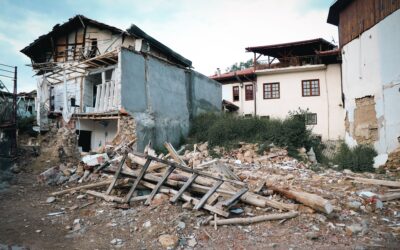
A profound humanitarian emergency is unfolding across South America following a pair of catastrophic, back-to-back earthquakes that shattered the northern coast of Venezuela on Wednesday evening. The unprecedented double-shocks, among the most powerful ever recorded in the nation’s history, collapsed dozens of high-rise structures, triggered widespread infrastructure blackouts, and left a rapidly climbing casualty toll in their wake. In a somber national address, acting Venezuelan President Delcy Rodríguez announced that at least 164 people have been confirmed dead, with another 971 injured. Rodríguez immediately declared a sweeping national state of emergency, turning to international allies for urgent search-and-rescue assistance as structural engineers warn that the preliminary death toll represents only a fraction of the expected final metrics. Responding to the disaster, U.S. President Donald Trump took to Truth Social to express profound solidarity, characterizing the twin temblors as “massive in scale” and warning of a “devastating number of deaths” while ordering federal agencies to immediately mobilize disaster assets. At The Modern Memo, we break down the seismic data behind the 39-second double-shock, the severe structural toll in Caracas and La Guairá, and the rapid deployment of a U.S. disaster response pipeline to the South American nation. The Double Shockwave: 39 Seconds of Fury The disaster struck at 6:04 p.m. local time on Wednesday, catching millions of families at home while observing the national Carabobo Battle holiday. The Foreshock: The first event materialized as a powerful 7.2-magnitude foreshock with an epicenter located near the Caribbean coastal town of Morón, roughly 100 miles west of Caracas. The Mainshock: Before citizens could successfully clear shaking buildings, a secondary, even more violent 7.5-magnitude earthquake erupted just 39 seconds later, centered a mere 10 miles away. The Overlapping Seismograms: Seismologists at the U.S. Geological Survey (USGS) noted that the extreme proximity of the two major events created an overlapping seismic feedback loop, vastly compounding the destructive energy directed at urban centers. The agency issued a rare “Red Alert,” modeling predictive metrics indicating a high probability that final casualties could eventually scale into the thousands. Ground Zero: Pancaked Buildings and Blacked-Out Capitals The primary kinetic toll of the double-shock focused heavily on Venezuela’s historic capital valley and adjacent coastal communities, bringing core infrastructure to an absolute standstill. The Disaster Zones: Acting President Rodríguez designated the coastal state of La Guairá as a complete disaster zone, where more than 100 buildings collapsed entirely into piles of shattered concrete and steel. In Caracas, affluent districts like Altamira and Chacao experienced “alarming situations” as residential complexes pancaked, trapping families beneath the rubble. The Airport Closure: Massive structural failures and falling debris severely crippled Simón Bolívar International Airport, forcing an indefinite suspension of all commercial aviation. Metro and rail systems were concurrently halted as power grids failed, cutting electricity and cellular communications across vast swaths of the capital. The Street Camps: Fearing a wave of nearly two dozen major aftershocks that continued to rattle the valley into Thursday morning, thousands of terrified residents refused to re-enter standing structures. Families set up makeshift camps directly on the asphalt, wrapping themselves in blankets and clutching pets amid lingering plumes of concrete dust. The Washington Response: Deploying the Elite Task Forces The catastrophic scale of the disaster has prompted an immediate, unified response from Washington, highlighting the close geopolitical alignment forged between the Trump administration and the interim government in Caracas. The Presidential Directive: Taking to social media late Wednesday night, President Trump assured the Venezuelan populace that American logistical power would be deployed instantly. “The two major earthquakes that just hit the great people of Venezuela are both massive in scale and have left a devastating number of deaths,” Trump wrote. “The U.S.A. stands ready, willing, and able to help! I have instructed all agencies of our government to get ready to move quickly. We will be there for our new and great friends.” Rubio and the Rescue Teams: Secretary of State Marco Rubio expanded on the operational specifics of the aid package on Thursday morning, confirming that elite urban search-and-rescue (USAR) teams from Fairfax County, Virginia, and Los Angeles, California, are already en route. “That’s their most immediate need right now, is search-and-rescue efforts—they have much of collapsed buildings. And so they’ll need a lot of help in terms of digging through that,” Rubio stated. The Diplomatic Perimeter: The State Department confirmed that despite severe shaking that evacuated the JW Marriott hotel—where a corps of American diplomats is currently based—all U.S. personnel have been accounted for with zero injuries reported. Final Word The catastrophic twin earthquakes in Venezuela are the definitive proof that nature’s tectonic timelines care nothing for political transitions or economic crises. When you look past the initial chaos and focus entirely on the hard data—two massive 7.2 and 7.5 magnitude quakes striking within 39 seconds of each other, 164 confirmed dead and nearly 1,000 injured in under 24 hours, and the immediate mobilization of elite American heavy-rescue assets—you gain an unvarnished view of a country facing an unprecedented race against time. Quality information replaces the initial panic with the cold reality of a complex international rescue operation. The next 48 hours remain entirely critical; as specialized teams from Virginia, California, and global allies touch down on bypassed runways, the durability of Venezuela’s new executive structure will be tested not by political maneuvering, but by its ability to pull its citizens alive from the dust of Caracas.