

Economy
Economic Vision Meets Public Skepticism: The AI-Driven Revolution
As we enter 2026, the administration has doubled down on an “AI-First” economic strategy, pitching a radical transformation of the American workforce as the key to long-term global dominance. Proponents call it a “techno-industrial revolution” that will usher in unprecedented GDP growth. However, this optimistic vision is increasingly colliding with a wall of public skepticism, as workers and economic analysts raise alarms over job displacement and the widening gap between productivity and pay. At Modern Memo, we analyze the data behind the administration’s projections and the grassroots concerns currently shaping the national debate. The Vision: America’s AI Action Plan The administration’s cornerstone policy—the “America’s AI Action Plan”—focuses on three primary pillars: accelerating private-sector innovation, building domestic AI infrastructure, and streamlining regulations. The goal is to outpace global competitors by integrating autonomous systems into manufacturing, logistics, and professional services. Growth Projections: Official reports suggest that AI integration could boost U.S. GDP by as much as $1 trillion by the end of the decade. The “Agentic” Shift: 2026 is being hailed as the “Year of the Agent,” as AI transitions from a tool used by humans to autonomous “agents” capable of performing complex labor independently. The Skepticism: Displacement and “Redundancy Washing” Despite the promise of growth, public sentiment is at a tipping point. Recent surveys from Davos 2026 indicate that worker anxiety has climbed from 28% to 40% in just two years. The primary concern is no longer just “automation” in factories, but the displacement of white-collar roles in law, accounting, and software development. The “11.7% Factor” A landmark MIT study released late last year revealed that 11.7% of all U.S. jobs could already be fully automated using existing AI technology. Analysts warn of “Redundancy Washing”—a trend where companies cite AI as a scapegoat for layoffs to please investors, even when the technology isn’t yet ready to replace the displaced human capital. The Productivity Paradox While the administration predicts a 15% rise in labor productivity, economists are questioning who will capture that value. Historical data shows that when productivity outpaces wage growth, the resulting inequality can lead to social and economic instability. Critics of the current push argue that without a robust “Reskilling Pipeline” or changes to the tax code—which currently makes it cheaper to invest in machines than in human training—the AI revolution may benefit corporate margins at the expense of the middle class. Conclusion: Balancing Progress and People The administration’s push for an AI-driven economic revolution is a high-stakes gamble on the future of American leadership. While the technical potential for growth is undeniable, the success of this vision may ultimately depend on the “Human Factor.” If the government cannot bridge the gap between its high-tech vision and the very real fears of the American worker, the “AI Revolution” may face more resistance from the public than from its global competitors. Final Word Staying informed on the intersection of technology and policy isn’t just about the latest gadgets—it plays a powerful role in your long-term autonomy. When you follow the raw data behind the headlines, you help your entire professional life function more efficiently. Quality information improves your mental clarity by removing the noise of hype and replacing it with the reality of economic shifts. It reduces “future-shock” by allowing you to prepare for the job market of tomorrow, rather than reacting to it today. By choosing to analyze the vision alongside the skepticism, you protect your perspective and support a more resilient, informed society. Where Facts, Context, and Perspective Matter At The Modern Memo, our goal is simple: to provide clear, well-researched reporting in a media landscape that often feels overwhelming. We focus on substance over sensationalism, and context over commentary. If you value thoughtful analysis, transparent sourcing, and stories that go beyond the headline, we invite you to share our work. Informed conversations start with reliable information, and sharing helps ensure important stories reach a wider audience. Journalism works best when readers engage, question, and participate. By reading and sharing, you’re supporting a more informed public and a healthier media ecosystem. The Modern Memo may be compensated and/or receive an affiliate commission if you click or buy through our links. Featured pricing is subject to change. 📩 Love what you’re reading? Don’t miss a headline! Subscribe to The Modern Memo here!

Bessent: U.S. Economy Will Accelerate Strongly in Early 2026
The Modern Memo may be compensated and/or receive an affiliate commission if you click or buy through our links. Featured pricing is subject to change. Scott Bessent, the U.S. Treasury Secretary, stated that he expects a “substantial acceleration” in the American economy during the first and second quarters of 2026. His comments, delivered during an interview, painted an optimistic picture of rising incomes, falling inflation, and renewed consumer confidence. Bessent’s outlook stands in contrast to the economic uncertainty many households have felt in recent years. The Key Drivers of His Optimism Bessent explained that several important factors are shaping his forecast. Among the most significant is the expectation that inflation will continue declining. Over the last several years, Americans faced higher costs for essential goods, including food, gasoline, housing, and utilities. Inflation reached levels not seen in decades. However, Bessent believes that this pressure is easing. He described the situation visually, saying, “Imagine two lines. There is the inflation line; that is going to start turning down. Then there’s the income line; real wages are going to increase.” The moment these lines move in opposite directions, households experience relief because their money stretches further. Another driver of Bessent’s optimism is the recent executive order that reduced tariffs on key imported goods. Items such as beef, coffee, and other essentials will enter the U.S. market at lower cost. This policy change intends to bring immediate downward pressure to price levels nationwide. Lower tariffs can reduce expenses for both businesses and consumers. The Inflation Challenge and Wage Growth During the interview, Bessent argued that the administration “inherited this terrible inflation.” He acknowledged that Americans have been burdened by higher costs, but he stressed that new policies are starting to work. “We are flattening it out,” he said, referring to inflation’s trajectory. What matters most to households is not only that inflation slows but that wages grow faster than prices. Bessent expects exactly that in early 2026. He predicted that “in the first two quarters of next year,” the U.S. will “see the inflation curve bend down and the real income curve substantially accelerate.” This shift could create more buying power, allowing families to spend on groceries, travel, savings, or investments with less financial strain. When real income increases, it often leads to increases in consumer spending, a key component of economic growth. 🚨 JUST IN: In an incredible development, Treasury Sec. SCOTT BESSENT announces the US economy will likely “substantially ACCELERATE” in Q1 or Q2 of next year Just in time for the midterms…all part of the plan. “The increase in real incomes – Americans will feel it in Q1, Q2… pic.twitter.com/4ieFi6RWld — Eric Daugherty (@EricLDaugh) November 16, 2025 The Role of Interest Rates and Energy Prices Another important part of Bessent’s prediction involves interest rates and energy prices. As borrowing costs decline, families and businesses may find it easier to purchase homes, finance equipment, or pay down debt. Lower interest rates can stimulate economic activity and help households feel more financially secure. Energy prices also contribute heavily to consumer costs. When gasoline and utilities become more affordable, it frees up spending for other areas. Bessent noted that improvements in energy markets should help fuel economic acceleration, especially early in the year when heating bills and transportation demand often mix. More Stories Kamala Teases 2028 Run as Democrats Scramble for Strategy FBI Probes Hunting Stand Near Trump’s Air Force One Area Trump Scores Legal Victory: $500M Fraud Penalty Overturned Potential Benefits for American Families If Bessent’s predictions prove correct, the first half of 2026 could bring relief for millions of Americans. Rising wages, combined with slower inflation, would mean greater financial stability. Families may notice they have more flexibility in their budgets. Parents might find it easier to manage childcare expenses. Young adults might feel more confident pursuing homeownership. Retirees might see their savings last longer. Stronger economic conditions can also influence job markets. As businesses feel more secure, they may hire more workers, offer better benefits, or invest in expansion. Job growth supports communities and boosts confidence across entire regions. Risks That Could Derail the Outlook Even with his optimism, Bessent acknowledged that certain risks remain. Global economic instability, supply chain disruptions, or geopolitical tensions could affect U.S. conditions. Economic recoveries rarely follow a perfectly smooth path. There is also the possibility that inflation could spike again due to unexpected factors, such as energy volatility or global shortages. If that happens, wage gains may not be enough to create meaningful improvement in people’s real earnings. Furthermore, wage growth historically lags behind broader economic indicators. Even if the economy strengthens, it could take time for the improvements to show up in paychecks. Indicators to Watch in 2026 Americans and policymakers will watch several key indicators to measure whether Bessent’s forecast holds true. These include: monthly inflation reports real wage growth hiring rates consumer spending levels small business optimism manufacturing and service sector data changes in interest rates trends in energy costs Each of these areas reveals important clues about the strength of the economy. If they move in the direction Bessent anticipates, his prediction of a “substantial acceleration” will gain credibility. Final Word In summary, Scott Bessent’s forecast suggests that the United States may enter a period of meaningful economic improvement in early 2026. His comments reflect confidence in declining inflation, rising wages, and more favorable conditions for families. Although risks remain, his view offers hope for a stronger and more stable financial landscape. If his predictions come to pass, American households could experience real relief and renewed optimism. The next several months will reveal whether the U.S. economy begins the acceleration Bessent believes is already underway. Forget the narrative. Reject the script. Share what matters. At The Modern Memo, we call it like it is — no filter, no apology, no corporate leash. If you’re tired of being lied to, manipulated, or ignored, amplify the truth. One share at a time, we dismantle the media machine — with facts, boldness,…

General Motors Cuts Over 1,700 Jobs as EV Demand Slows
General Motors (GM) has announced major layoffs as it adjusts production to meet cooling demand for electric vehicles. The company plans to cut roughly 3,400 hourly jobs across Michigan, Ohio, and Tennessee starting in January, according to The Detroit News. Of those, over 1,750 workers will be laid off indefinitely, while roughly 1,500 are expected to be called back by mid-2026. Why the Cuts? General Motors cited slower near-term electric vehicle adoption as a key reason for the job reductions. The market for electric vehicles has not grown as quickly as expected, prompting GM to realign its production capacity. (RELATED NEWS: General Motors CEO Pulls Back on EV Ambitions) Changes in the regulatory environment and incentives also played a part. For example, federal tax credits for new EV purchases expired recently, reducing incentives for buyers and adding pressure on manufacturers. GM reported it will take a $1.6 billion charge tied to scaling back EV production and restructuring. That means the company is rethinking how to build its EV business in the U.S. while staying resilient through change. What Exactly Is Being Cut? At the heart of the cuts is GM’s biggest all-electric assembly plant, known as Factory Zero in Detroit. There, GM will pause production on one shift and permanently eliminate about 1,200 jobs out of roughly 3,400 workers furloughed this summer. The plant will then resume on a single shift and determine which senior workers will return. Additionally, the battery-cell plants operated by GM’s joint venture Ultium Cells LLC in Warren, Ohio, and Spring Hill, Tennessee, will see temporary shutdowns beginning January 2026. About 850 workers in Ohio and 710 in Tennessee will face temporary layoffs, and another 550 in Ohio will be laid off indefinitely. GM emphasized that many affected employees may still receive a portion of their wages or salary plus benefits during the downtime. What It Signals for GM and the Industry In one sense, these job cuts show that GM is pivoting. The company says it remains committed to its U.S. manufacturing footprint and wants to build flexibility into its operations. But at the same time, it acknowledges that the EV roll-out will not follow the accelerated timeline it once expected. The timing also matters. With EV incentives declining and competition rising, automakers face pressure to manage costs and inventory. As a result, GM is reducing production to match demand and avoid a buildup of unsold vehicles. In the broader context, this is a reminder that the transition to electric vehicles is not a straight line. It involves shifts in consumer behavior, government policy, supply-chain constraints, and manufacturing strategy. The cuts at General Motors reflect those realities. What It Means for Workers and Communities Of course, the human side of this story matters. Workers at the Detroit plant and the battery-cell facilities face job uncertainty. Yet, GM has committed to supporting those people with benefits, continued pay in some cases, and union programs where applicable. Local communities around Detroit, Ohio, and Tennessee will also feel the impact. When major plants reduce shifts or pause production, the ripple effects extend to suppliers, service providers, and the regional economy. At the same time, General Motors says the pause in production will be used to upgrade facilities and build capabilities for the next generation of EVs — suggesting that the work may evolve rather than simply disappear. Why This Matters for Investors and Consumers For investors, the move carries both risk and opportunity. On one hand, scaling back electric Vehicle production may be seen as a setback in the race to electrify transportation. On the other, the acknowledgement of market realities and a shift toward flexibility may position GM more sustainably long term. For consumers, a slowdown in EV adoption signals that the marketplace for electric vehicles is still maturing. Factors like cost, charging infrastructure, range anxiety, and incentives continue to shape whether buyers move from internal-combustion vehicles to EVs. (MORE NEWS: High-Tech Bank Scam Leaves Victims Penniless in Seconds) Looking Ahead Going forward, several key questions will shape how the story unfolds: Will EV demand rebound? If incentives return, charging access improves or costs come down, demand could accelerate again. Can GM leverage its upgraded plants and battery facilities? The investments in flexibility and next-generation manufacturing could pay off if timed well. How will policy and regulation shift? Federal or state governments may revise incentives or emissions targets, which would change the cost-benefit equation for EVs. How will the workforce adapt? For the workers affected, retraining, redeployment, and transition support will matter. Final Word GM’s decision to lay off over 1,700 workers indefinitely — and furlough many more temporarily — marks a significant adjustment in its EV strategy. The shift is grounded in slower than expected EV adoption, changing regulatory incentives, and a need to scale manufacturing in line with demand. While challenging for workers and communities, GM frames the move as part of a long-term transition toward a more flexible, resilient manufacturing model. As the EV market continues to develop, what happens at GM may offer insight into how the auto industry evolves in the coming years. Forget the narrative. Reject the script. Share what matters. At The Modern Memo, we call it like it is — no filter, no apology, no corporate leash. If you’re tired of being lied to, manipulated, or ignored, amplify the truth. One share at a time, we dismantle the media machine — with facts, boldness, and zero fear. Stand with us. Speak louder. Because silence helps them win.

Feeling a Financial Squeeze? How to Find Relief Now
Right now, many households are feeling the financial pinch. The economy remains unsettled, layoffs continue across industries, and the number of open jobs is lower than before. At the same time, the cost of living keeps climbing. Groceries, rent, and everyday expenses have all gone up. Credit card balances are rising, and many families are using debt to make ends meet. This combination has created real financial pressure. Even people who have always paid their bills on time are struggling to keep up. While things are expected to improve in the future, the truth is we are going through a tight squeeze right now. If you find yourself buried under bills or unsure how to move forward, you are not alone. The good news is that help is available. There are ways to manage your debt, reduce financial stress, and begin rebuilding stability. Here’s what you need to know. Understanding Debt-Relief Services Debt-relief services are designed to help people who can’t keep up with unsecured debts, such as credit cards or medical bills. These programs negotiate with your creditors to lower the total amount you owe. Instead of paying your full balance, you may be able to settle for a smaller lump sum. (MORE NEWS: Retirement 2025: America’s Safest and Wealthiest Towns to Call Home) The process usually works like this: You stop making direct payments to your creditors. You deposit money each month into a special account. Once that account builds up enough funds, the company negotiates a settlement on your behalf. When an agreement is reached, your debt is marked as resolved after you pay the negotiated amount. These programs often take two to four years to complete. While they can reduce what you owe, they also require patience and consistency. Why More People Are Turning to Debt Relief In times of financial strain, more people consider debt-relief options. With prices up and incomes stretched, credit card use has surged. Interest rates a high been much higher since 2022, making it harder to pay off balances. The average credit card interest rate was 21.39% in August 2025, according the Federal Reserve. For many, debt-relief services provide structure and support. They can simplify payments and help reduce stress. Instead of facing several creditors, you work through one program that manages negotiations for you. Debt relief can also be an alternative to bankruptcy. For people who want to avoid that step, settlement programs offer a middle ground — a way to regain control without starting over completely. The Benefits of Working with a Debt-Relief Program Reduced balances: Creditors may agree to settle for less than what you owe. Simplified payments: You deposit one monthly amount instead of juggling multiple bills. Faster results: In some cases, people become debt-free in just a few years. Peace of mind: Having professionals handle negotiations can relieve stress during a difficult time. While it won’t fix everything overnight, this approach can give you a clear plan and a light at the end of the tunnel. Risks You Should Understand Debt relief isn’t a magic solution. There are trade-offs. Because you stop paying your creditors during negotiations, your credit score will likely drop. It can take time to rebuild it afterward. There is also no guarantee that every creditor will agree to settle. If they refuse, you could still owe the full balance. Additionally, forgiven debt may be considered taxable income, so it’s important to plan for that possibility. (MORE NEWS: Government Shutdown Stalls Real Estate in 5 States) Finally, not all companies operate honestly. Some charge high upfront fees or make promises they can’t keep. Always research thoroughly, check reviews, and make sure a company only charges after they’ve successfully settled your debt. Signs Debt Relief Might Be Right for You You have large unsecured debts you can’t manage under current terms. You’ve tried credit counseling, consolidation, or budgeting without success. You can make regular deposits into a settlement account for several years. You are willing to accept a temporary hit to your credit in exchange for long-term freedom. If those points describe your situation, talking to a reputable professional could be the next smart step. Other Ways to Find Relief Debt relief is only one option. You can also explore other paths: Debt consolidation: Combine several high-interest debts into one lower-rate loan. Credit-counseling programs: Work with nonprofit counselors who negotiate lower interest rates and help you create a manageable payment plan. Budget adjustments: Track spending closely, cut unnecessary expenses, and focus on essentials until prices stabilize. Side income or part-time work: Even temporary income can help you stay afloat and avoid deeper debt. Bankruptcy: As a last resort, bankruptcy can offer a clean slate, but it carries serious long-term effects. Tips for Getting Through This Moment If you’re struggling right now, remember that many people are in the same boat. Here are practical steps to make things a little easier: Track every dollar. Write down what comes in and what goes out each month. Cut unnecessary spending. Cancel unused subscriptions and reduce impulse purchases. Negotiate your bills. Some creditors will lower rates or extend deadlines if you ask. Focus on essentials. Prioritize food, housing, and transportation over unsecured debts. Build an emergency fund. Even small amounts add up over time. Ask for help early. Don’t wait until you’re behind — contact support programs before accounts go into default. A Hopeful Outlook The current economic challenges — job uncertainty, rising costs, and growing debt — are real. But they won’t last forever. Economic cycles always shift. Opportunities will return, wages will rise, and the cost of living will eventually stabilize. In the meantime, taking control of your finances is the best way to protect yourself. Whether you choose debt relief, consolidation, or budgeting adjustments, what matters most is that you take action. You are not alone, and things will improve. By learning about your options and making thoughtful choices today, you can build a stronger financial future tomorrow. Forget the narrative. Reject the script. Share what…
Trump’s EPA Pushes Green New Deal Into Political Obscurity
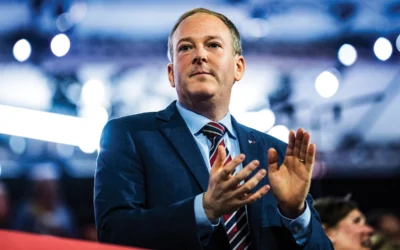
Democrats Go Silent on the Green New Deal The Green New Deal was once the main climate push for Democrats. Now it’s barely mentioned in Washington. According to a Quorum chart posted by Axios, in the past three months, Democrats in Congress used the term only a handful of times on social media or in speeches. That is the lowest count since 2018, when it was first introduced. Meanwhile, Republicans are still talking about it — a lot. They brought it up more than 300 times in the same period, using it as proof that Democrats back costly and extreme policies. Axios: “Democrats aren’t explicitly disavowing the Green New Deal, but they’ve abruptly stopped talking about it” pic.twitter.com/mVM4F19SJD — Steve Everley (@saeverley) August 1, 2025 Big Names Drop the Plan Rep. Alexandria Ocasio‑Cortez and Sen. Ed Markey, the lawmakers who first pushed the Green New Deal, have not reintroduced it since April 2023. Many Democrats are moving away from strict climate mandates. Instead, they are talking about jobs, cost savings, and energy security. (MORE NEWS: Energy Department Admits Millions Of Americans Are At Risk Thanks To Grid Vulnerabilities) Some governors are supporting natural gas projects. Even a few lawmakers have traded in their electric cars for gas‑powered SUVs. The tone is different now, and the Green New Deal is no longer the centerpiece it once was. The 2009 EPA Climate Ruling That Started It All In 2009, the Obama‑era EPA issued the Endangerment Finding — a ruling that labeled carbon dioxide and several other greenhouse gases as a danger to public health and welfare. That single decision became the legal basis for almost every major climate regulation in the years that followed. It opened the door to: Federal electric vehicle production mandates Restrictions on gas‑powered appliances Strict tailpipe emission rules Airline emission standards Power plant shutdown orders By declaring CO₂ a threat, the EPA gave itself broad power to regulate entire industries. That authority survived multiple court challenges and was used heavily by both the Obama and Biden administrations. Zeldin Moves to Kill the Endangerment Finding On July 29, 2025, EPA Administrator Lee Zeldin announced a plan to repeal the Endangerment Finding entirely. He called it “the largest deregulatory action in the history of the United States.” Zeldin said: “Many stakeholders have told me that the Obama and Biden EPAs twisted the law, ignored precedent, and warped science to achieve their preferred ends and stick American families with hundreds of billions of dollars in hidden taxes every single year.” The EPA also stated: “We heard loud and clear the concern that EPA’s GHG emissions standards themselves, not carbon dioxide … was the real threat to Americans’ livelihoods. If finalized, rescinding the Endangerment Finding and resulting regulations would end $1 trillion or more in hidden taxes on American businesses and families.” An August 3rd X post further solidified Zeldin’s stance on the Endangerment Finding. The Trump EPA won’t play along with the MANY mental leaps the Obama & Biden Admins used with the 2009 Endangerment Finding to creatively hoard themselves max power to jam through trillions of dollars of regulation, EV Mandates, and economic strangulation.pic.twitter.com/Mk5cTCzAX0 — Lee Zeldin (@epaleezeldin) August 3, 2025 A Blow to Costly Climate Rules Zeldin’s proposal would wipe out more than $1 trillion in regulations tied to the Endangerment Finding. These rules have hit vehicle manufacturers, power plants, heavy industry, and working Americans with higher costs and fewer choices. If the repeal is finalized: Federal climate mandates would be removed Electric vehicle quotas would be ended Regulatory control would shift back to states and local communities ESG‑driven industry restrictions would take a major hit The EPA under Zeldin is moving aggressively, framing this as a return to energy freedom and economic growth. It will lift the crushing burden from businesses and households. Critics warn it would remove key protections against climate change. (MORE NEWS: Texas Dems Flee to Stop Redistricting Map) Green Groups Lose Power While the EPA moves to dismantle its own authority, public enthusiasm for sweeping climate plans is also fading. Wind and solar still have majority support, but not as much as before. Republicans now strongly favor fossil fuel expansion. Environmental groups are struggling. The Sunrise Movement — once one of the most aggressive Green New Deal backers — raised less than $30,000 in the first half of 2025. That’s a fraction of what they raised during Trump’s first term. The Bottom Line Trump’s second term is changing climate politics at every level. Democrats are talking less about the Green New Deal. The EPA’s main legal authority to regulate greenhouse gases is under direct challenge. If Lee Zeldin’s repeal succeeds, the Endangerment Finding — and the regulations built on it — will be gone. That would mark the end of an era for federal climate policy and a dramatic shift in how the U.S. approaches energy, industry, and the environment. The once‑loud Green New Deal is now just a faint echo in Washington. Cut Through the Noise. Slice Through the Lies. Share the Truth. At The Modern Memo, we don’t tiptoe around the narrative—we swing a machete through it. The mainstream won’t say it, so we will. If you’re tired of spin, censorship, and sugar-coated headlines, help us rip the cover off stories that matter. Share this article. Wake people up. Give a voice to the truth the powerful want buried. This fight isn’t just ours—it’s yours. Join us in exposing what they won’t tell you. America needs bold truth-tellers, and that means you.

The Trade Deal That Changed Everything: U.S.–EU Breakthrough
In a bold move that will reshape the future of global trade, President Donald J. Trump announced a historic trade agreement with the European Union (EU). The deal redefines the economic relationship between the world’s two largest economies. The deal, hailed as a “generational modernization of the transatlantic alliance,” according to the White House, delivers unprecedented market access for American producers, workers, and innovators, while advancing U.S. economic and national security interests. A Monumental Economic Shift The agreement marks a pivotal victory for the United States. It positions the country as the world’s foremost destination for investment, manufacturing, and energy exports. Through 2028, the EU is expected to purchase a staggering $750 billion in U.S. energy exports. It will also invest an additional $600 billion into the American economy. These moves will drive growth in key industries and fortify the domestic manufacturing base. Furthermore, President Trump’s leadership continues to prioritize the American worker and bring jobs back home. This trade deal reflects his unshakable commitment to economic fairness, reciprocal trade, and revitalizing American industry. Structural Trade Reform for Generations The agreement goes far beyond symbolic diplomacy—in fact, it achieves real, enforceable structural reform with long-lasting impact. Under the new U.S.-EU Cooperation Agreement on Reciprocal, Fair and Balanced Trade, American farmers, ranchers, manufacturers, and small businesses will see sweeping new opportunities to grow and export their goods. One of the most groundbreaking aspects of the deal is the elimination of all EU tariffs on U.S. industrial goods. This change unlocks European markets for American-made products and reduces the longstanding goods trade deficit. The removal of these barriers will allow American products to compete and win in Europe’s lucrative markets, supporting high-quality U.S. jobs and production across various sectors. Strategic Tariff Restructuring As part of the agreement, the EU will adopt a new tariff framework that includes a 15% tariff on key sectors, such as autos, auto parts, pharmaceuticals, and semiconductors. Additionally, tariffs on steel, aluminum, and copper will remain at 50%. Both sides will engage in future discussions to secure critical supply chains. Altogether, this new tariff structure is expected to generate tens of billions in revenue annually, helping to restore trade balance and incentivize reshoring of critical industries. Major Trade Provisions and Breakthroughs This landmark agreement includes a comprehensive set of commitments that benefit the United States across multiple fronts: $600 Billion EU Investment: The EU will invest this sum in U.S. infrastructure, innovation, and job creation. This is in addition to the $100 billion EU companies already contribute annually. $750 Billion in U.S. Exports: Through 2028, Europe will depend more heavily on clean, reliable U.S. energy, reducing its reliance on adversarial nations and boosting U.S. energy dominance. Tariff and Quota Reforms: The EU will eliminate or significantly reduce tariffs and open up meaningful quotas across various sectors, allowing American goods to flow freely and competitively. Reducing Red Tape: The deal addresses non-tariff barriers that burden U.S. exporters—particularly small and medium-sized businesses—by streamlining EU regulations and procedures. Agricultural Access: U.S. pork and dairy products will face fewer bureaucratic hurdles, as sanitary certifications and other requirements are streamlined. Digital Trade Protections: The EU commits to not imposing unjustified digital trade barriers or network usage fees, and both parties agree to maintain zero customs duties on electronic transmissions. Economic Security and Innovation Alignment: The U.S. and EU will align on supply chain security, coordinate efforts on investment reviews, and guard against unfair practices and duty evasion from non-market economies. Military and Commercial Cooperation: The EU will increase purchases of U.S. military equipment and finalize new commercial deals in key sectors such as semiconductors and clean energy. Restoring Economic Sovereignty This deal is a direct result of President Trump’s “America First” agenda. That agenda is rooted in restoring national sovereignty, protecting American workers, and confronting decades of trade imbalances caused by one-sided policies and foreign protectionism. On April 2, President Trump declared a national emergency in response to persistent U.S. trade deficits driven by foreign practices that depressed domestic wages and consumer demand. That declaration laid the groundwork for a bold and necessary reset of America’s global trade posture. This agreement reflects the culmination of that reset. It liberates American producers from the stranglehold of unfair trade practices and builds a level playing field for U.S. industry. For too long, the U.S. tolerated foreign policies that stifled innovation and drained manufacturing capacity. That era is now over. A Historic Victory Where Others Failed Despite repeated attempts by past administrations, no American president had successfully negotiated a trade agreement of this magnitude with the European Union—until now. This historic win reaffirms America’s status as the global standard-bearer of economic leadership and strategic strength. In just six months, President Trump has catapulted the United States into a new era of industrial revival, global investment attraction, and energy supremacy. His approach combines bold action, strong negotiation, and an unyielding focus on results. He delivers what previous leaders promised but failed to achieve. A Triumph for the American Trade Future This U.S.-EU trade agreement is more than just a diplomatic milestone. It’s a victory for every American worker, farmer, inventor, and business owner. More importantly, it proves that bold leadership can reverse decades of economic decline. It reignites American industry and reclaims prosperity for future generations. President Trump’s historic deal with the European Union is a triumph of principle, power, and patriotism—and it has only just begun to reshape the world.
Post-COVID Homeowners Are In Dire Financial Situation And No One Is Talking About It
U.S. Director of the Federal Housing Finance Agency (FHFA) William J. Pulte announced in early July that people may now be eligible to receive a mortgage using just their rental data. “My ORDER today (thanks to my boss, POTUS) will allow for Americans to use their RENT to qualify for a mortgage. Credit history will no longer just include credit cards and loans. This is HUGE,” Pulte wrote on social media. He went onto note that the agency will be “incentivizing lenders, who USE both Vantage 4.0 and FICO, with better pricing – anything to help the consumer,” and that “[i]f you use Vantage and not just FICO, for the betterment of the American people and the consumer, you should get better pricing. It’s just math. Predictive math.” If you’re likely to pay your rent, you’re likely to pay your mortgage. — Pulte (@pulte) July 8, 2025 Will This Actually Change Anything? “VantageScore thanks Director Pulte for his resolute focus on enacting credit score competition as required by the law, and promoting efficiency and affordability for creditworthy Americans,” said Silvio Tavares, President and CEO of VantageScore in a statement shared by PR Newswire. (MORE NEWS: What’s America Gonna Look Like? Shocking Video from Rome Gives Preview) “Under Director Pulte’s leadership, the FHFA’s long-expected decision to accept VantageScore 4.0 will revolutionize the American mortgage market and grant millions of creditworthy Americans the golden opportunity to own their homes.” 2008 2.0? Skeptics immediately pointed out that there will always be concerns that making it easier to get a mortgage will simply lead to another 2008 situation, where millions of homeowners will use the new system to acquire properties they may not actually be able to afford. Without the legal parameters in place for renters, wherein landlords can issue eviction notices for unpaid rent. For those who go through sudden lifestyle changes, meaning they have to break a lease or downsize to a smaller, cheaper property, the rental system allows you to do this without actually harming your long-term credit score or ability to purchase in the future. The national housing market continues to weaken. Single-Family Months of Supply: 4.17 (highest since 2016) Condo Months of Supply: 6.16 (highest since 2012) What’s hidden in the national averages is that certain states (TX, FL) are starting to look a lot like 2008. While other… pic.twitter.com/fPJOXoUSRP — Nick Gerli (@nickgerli1) May 22, 2025 Under this new system, people will potentially be able to simply stop paying their mortgages. They would therefore either have to refinance, meaning their interest rates will likely go up, and their equity payments will go down — i.e.: it will take you even longer to actually own your home. (MORE NEWS: Los Angeles Burns (Again); Is The Golden State Turning Into An Open Air Prison Camp?) Those who cannot refinance will then be forced to default on their mortgage. Their property will be foreclosed upon, and this will make it incredibly difficult for them to own a property again — and in some cases, make it difficult to rent as foreclosures and mortgage defaults hurt your credit for years into the future. Many Homeowners Already Underwater The saddest part of this whole situation is that most people who bought homes between 2022 and today — with an interest rate of 5% or above — do not realize that they don’t own their home. The bank owns their home because the rate at which they are paying into the equity is significantly lower than what they are paying in interest. The improvement in affordability in Austin, TX’s housing market has been miraculous. 3 years ago, homes were 52% overvalued. Today, homes are only 6% overvalued. A severe home price correction, to go along with rising income levels, has now made Austin’s housing market… pic.twitter.com/tdQpokek8G — Nick Gerli (@nickgerli1) June 27, 2025 These same people often bought properties at a hyper-inflated value, with many shoddily-built new homes selling for $400,000 or more. Not only does this mean these people will pay over $1,000,000 for these properties over the course of their mortgage agreement, but most of these properties have decreased in value. Zillow, Realtor, and other such real estate sites do not reflect actual home values, so millions of Americans are estimated to be underwater on their mortgage and they have no idea. This means they’ll be stuck in these overpriced homes, unable to sell, forced to massively overpay because that is the way the system works right now. TMM Analysis If you are ignoring the housing crisis, your head is in the sand. Writing in 2023, The Modern Memo editor in chief Kay Hill (nee Smythe) reported that the ” national median existing home price dropped 1.7 percent in April 2023, the largest year-on-year drop since 2012, according to recent reports.” And these issues are continuing to compound. There is absolutely no telling what will happen next. But the luckiest people right now are the ones who either (a) own their property outright, (b) have a mortgage rate below 2.5%, or (c) are renting. If you fall outside of these categories, you need to speak to a financial planner today, and get the heck out of your home before it is too late — and remember, it is not actually your home if the bank owns most of the equity. Requests for comment and additional information from Pulte went unanswered prior to the time of publishing.
Walmart Met With MAGA Boycott After Heiress Funds ‘No Kings Day’ Ad
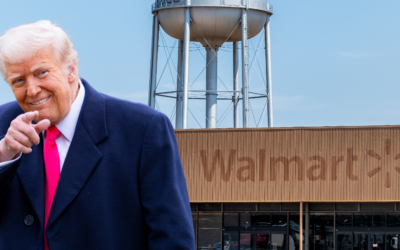
Walmart heiress Christy Walton placed a full-page ad in The New York Times in June supporting “No Kings Day,” which many believe is a fierce anti-President Donald Trump and anti-American First celebration. The ad itself did not explicitly mention Trump, but many have interpreted the language as being anti-American First, according to Newsweek. “No Kings Day” is supposed to support things like honoring commitments to allies, defending against dictatorships, and respecting trading partners, which sounds really great on the surface — but also leaves many people asking, “why do we need a day like this? Feel like something corporate America needs, but not the American people?” The ad (as seen below) includes language like “The honor, dignity and integrity of our country is not for sale. Show up, attend your town halls, be civil,” and “WE honor our commitments and stand by our allies;” “WE defend against aggression by dictators;” “WE respect our neighbors and trading partners.” (RELATED: Los Angeles Burns (Again); Is The Golden State Turning Into An Open Air Prison Camp?) As a majority of Walmart’s products are either made in China, or depend on products made in China — a nation defined by the extremist Chinese Communist Party dictatorship — it is unclear whether Walton has realized her absurd levels of hypocrisy in claiming to be anti-dictator. Walmart heiress Christy Walton is funding full page color ads in the NYT for “No Kings Day,” a nationwide counter protest scheduled for Trump’s birthday, organized by far-left group Indivisible. Looks like the Walmart dynasty is big mad about China Tariffs. pic.twitter.com/22hWK73LjX — Rep. Anna Paulina Luna (@RepLuna) June 10, 2025 “The advertisements from Christy Walton are in no way connected to or endorsed by Walmart. She does not serve on the board or play any role in decision making at Walmart,” a spokesperson for Walmart told Newsweek. Still, Walton is the Walmart heiress, so shoppers are spending their cash elsewhere so as not to keep funding her lifestyle and seemingly anti-American rhetoric. What Is ‘No Kings Day’ Don’t feel bad for not knowing what “No Kings Day” is, or when it is — it is not a national holiday. In fact, it isn’t even a “day.” It appears to be a protest organized by a group called Invisible, which is pretty funny because that is what “No Kings Day” was — invisible — until Walton made a big deal out of it. Now that America does know what “No Kings Day” is, most people don’t want it. The protest is organized for June 14. Patriots will know that June 14 is also flag day, and the 250th anniversary of the U.S. Army. Trump has organized a substantial military parade to honor this sacred day. (MORE NEWS: Will Summer 2026 Be The Season Of The Blackout? Energy Grid Fails In Major US City) Ironically, Walton, Invisible, and whatever other misinformed folks are involved in the “No Kings Day” event owe its existence to the U.S. army and the flag under which it flies. If it were not for the U.S. army, Walton — and the rest of us — would either be drinking tea with milk or speaking German on June 14. TMM Analysis “No Kings Day” isn’t a thing — thankfully. It is a sad excuse for a small group of loud elites and the people who fund their lifestyles to sit around and do nothing about the problems they think they understand. We’ll be celebrating June 14 in true patriotic fashion: yes, we’ll be watching the parade. We don’t care if you continue to shop at Walmart. Quite frankly, if you can afford to keep shopping at Walmart, well done! In just the last few years, we’ve realized their prices are skyrocketing from being the go-to place for families to get their weekly shop, to an overpriced dumpster fire of crap Chinese toys and furniture, and foods filled with every synthetical chemical known to man. If you can, shop local. Go to your farmer’s market. Start a garden. Thrift and swap with friends. There are so many ways to save money while these huge retailers try to get rich off your backs. And if you’re the kind of person who needs *new* things to feel special, then you better start working really hard, or else the next decade will be a very difficult time for you.
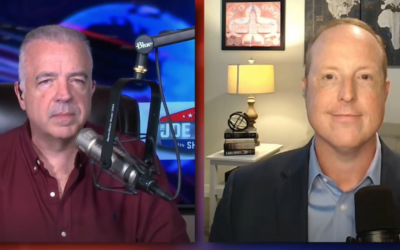
Economist Breaks Down Trump Tariffs, Talks Recession Terror, Talks Mass Chicken Slaughter
Former chief economist for President Donald Trump’s first administration, Vance Ginn, joined “The Joe Pags Show” in early May to discuss tariffs, recession, and something about the mass killing of chickens. Ginn was quick to clarify that the American economy is not in a recession (at the time of writing), concurring with Pags that the Biden administration only narrowly avoided going into a mass economic downturn using “artificial” measures. “I think the economy was propped up by fiscal and monetary policy to make things look good. Like, it put a lot of money in the economy. What do we get? We got a lot of inflation. We got a lot of people who dropped out of the labor force,” Ginn continued, noting the continued decline in labor force participation since the previous administration. Even though America maybe didn’t go into a recession publicly, to the people living outside of the upper echelons, it “felt like a recession.” Killing Chickens On Purpose? Pags then turned the conversation to everyone’s favorite backyard buddies: chickens. Pags stated that Dir. of the National Economic Council Kevin Hassett said recently that “he wouldn’t be surprised if Biden killed 140 million chickens on purpose and then, of course, the egg prices soared.” The purpose for this was to hand Trump a food and grocery-price crisis. “Is there anything to that do you think, Vance?” Pags asked. (MORE NEWS: ‘Will Be Punished’: Consequences Arrive Early For Canadian Voters After Doubling Down On Wokeism) “Anything is possible,” Ginn replied, but noted there was also a bird flu epidemic during that same time period, so there was likely a push by the CDC to kill off chickens. Trump’s Tariff Impacts Explained … We highly recommend you watch the full interview between Pags and Ginn to understand the scope of Trump’s global impact in his global tariff deals. Take Action Check out Joe Pags on X: always the hottest takes and the news you need Joe Pags Official Website Rumble — Joe Pags Use Your Voice today with a Million Voices Partnership … click the banner to learn more!