

Energy Infrastructure
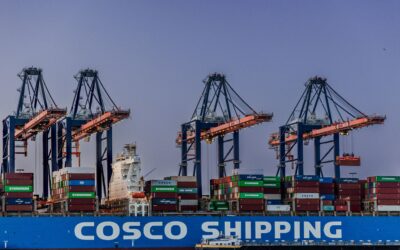
Deadly Explosion Rocks Europe’s Largest Port, Raising Fresh Questions About Energy Infrastructure Security
An explosion tore through a fuel storage facility at the Port of Rotterdam on Thursday, killing at least one person and injuring several others, in an incident that struck at the heart of Europe’s largest and most strategically important port — one that also handles a substantial share of the continent’s oil, gas, and refined fuel supply chain. What Happened The blast occurred at approximately 11:30 a.m. local time at a facility operated by Gunvor Energy, a major commodities trading company, located in the Europoort industrial section of the sprawling Rotterdam port complex. Rotterdam police confirmed at least one fatality and multiple injuries, with several of the wounded transported to hospitals. A trauma helicopter was dispatched to the scene alongside ground-based emergency crews. Authorities moved quickly to secure the area as a crime scene while investigators worked to determine the cause. Rotterdam police spokesperson Daan Valkenburg told reporters at the scene that no definitive conclusions had been reached and that officials were “keeping all possibilities open.” In a subsequent social media post, police described the incident as appearing, for the time being, to be a workplace accident, though they stopped short of ruling out other explanations. The Dutch labor inspectorate was also dispatched to the site as part of the investigation, standard procedure for an industrial accident of this scale. Dutch broadcaster NOS reported that a maintenance crew had reportedly been working on a section of pipes at the facility when the explosion occurred, though authorities have not officially confirmed that account as the definitive cause. Visible damage included a heavily damaged wall and clear signs of an explosion on what appeared to be a storage tank at the site. A Company Statement Gunvor Group, which operates the affected site, confirmed the fatality and said six people were injured in the incident — a slightly higher injury count than initial police estimates. In a statement, the company said the area had been secured and an investigation was underway, though it declined to confirm reports from local authorities that an explosion, specifically, had occurred. Notably, Gunvor’s website indicates the company closed the actual refining operations at this particular site back in 2024, with the facility since serving primarily as a storage terminal for crude oil and refined petroleum products rather than an active refinery — meaning Thursday’s blast occurred at a storage and logistics facility rather than at an operating refinery unit. The Port of Rotterdam Authority, which oversees the broader port complex but does not directly operate individual company facilities, issued a statement expressing condolences. “We are deeply saddened by the tragic incident that occurred this morning at Gunvor Energy in the Port of Rotterdam,” the authority said. “Our thoughts are with the family and loved ones of the deceased victim and with those who were injured.” A Chaotic Morning at the Port Thursday’s explosion was notably not the only significant incident at the vast port complex that morning. According to Dutch outlet NL Times, the Gunvor explosion was actually the third major emergency response within the Rotterdam port area that day. Earlier in the morning, a malfunction was reported at a nearby ExxonMobil refinery facility on Botlekweg, triggering a formal “Grip 2” regional emergency declaration due to a power outage at that site, though officials confirmed there was no fire and firefighters stood by only as a precaution. An ExxonMobil spokesperson said the outage affected only a limited number of processing units at that facility. Separately, emergency services also reported a major power failure affecting another section of the port, where a high-voltage transformer caught fire under circumstances that remain unexplained. That fire prompted several companies operating in the surrounding area to halt operations and evacuate workers as a precaution, though by mid-afternoon, power had been fully restored to the affected section of the port, which is home to numerous other oil and gas companies. Authorities have not yet said definitively whether the transformer fire, the ExxonMobil power outage, and the Gunvor explosion are connected in any way, though the unusual clustering of three separate serious incidents within the same industrial complex on a single morning has drawn its own scrutiny. Smoke from the incidents drifted toward the nearby towns of Vlaardingen and Maassluis, prompting a wave of concerned calls from residents in those areas, though officials have not reported any specific health warnings tied to the smoke. Why the Port Matters So Much The Port of Rotterdam is Europe’s largest port by a wide margin and serves as one of the continent’s central hubs for oil, gas, and refined petroleum product logistics, alongside broader container shipping and general cargo operations. Any significant disruption to operations there carries outsized implications for European energy supply chains, particularly given the port’s role as an interconnected node linking pipeline networks and inland waterway shipping between Rotterdam and other major European industrial centers, including Antwerp. That strategic importance is precisely why incidents like Thursday’s — even when they ultimately prove to be workplace accidents rather than anything more sinister — tend to draw close attention from energy market analysts and European security officials alike. European energy infrastructure has faced heightened scrutiny over the past several years amid broader concerns about sabotage, aging industrial infrastructure, and the general vulnerability of critical energy nodes to disruption, whether from accidents, extreme weather, or deliberate attack. What Happens Next Dutch investigators, including the labor inspectorate, are continuing to work to determine the precise cause of Thursday’s explosion, and it may be some time before officials reach a definitive conclusion about whether the maintenance work reportedly underway at the time played a direct role. In the meantime, the broader port complex appears to have returned to largely normal operations following the earlier power restoration, though the human toll of the day’s events — one confirmed death and several injured workers — remains the most immediate and serious consequence of what unfolded at one of the world’s most critical energy logistics hubs. Given the port’s central role in…