

Funding Bill
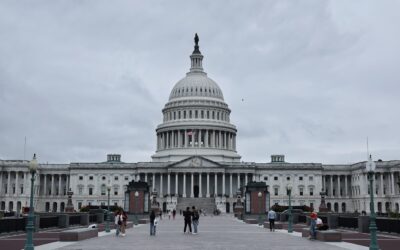
House Passes Stopgap Funding Bill, Averting Shutdown Before Midterm Elections
The House of Representatives passed a short-term government funding bill Tuesday by a lopsided 370-48 vote, sending the measure to President Trump’s desk and averting a government shutdown just weeks before voters head to the polls in the November midterms. The stopgap measure, known as a continuing resolution, keeps federal agencies funded generally at current spending levels through December 11, buying Congress additional time to negotiate full-year appropriations bills without the immediate pressure of an October 1 funding cliff. The Senate had already approved the measure by an overwhelming margin before it reached the House floor, and with Trump’s signature considered a formality, the bill is expected to become law well before the current funding deadline expires. The lopsided vote margin reflects a rare moment of bipartisan alignment on a piece of must-pass legislation, particularly notable given how badly the last two funding fights went. Lawmakers in both parties have been eager to avoid a repeat of 2025’s shutdown chaos, when the federal government endured a 43-day lapse in funding followed by a separate, even longer 76-day shutdown limited to the Department of Homeland Security — the longest shutdown of any single federal department in U.S. history. With midterm elections just two months away, neither party wanted to be blamed for a third disruptive funding lapse in as many years, a dynamic that appears to have driven Tuesday’s smooth passage far more than any newfound spirit of bipartisan cooperation on the underlying spending questions that remain unresolved. House Appropriations Committee Chairman Tom Cole framed the bill as straightforward good governance, telling reporters it provides “certainty that the government will remain open, certainty that our service members will be paid.” House Speaker Mike Johnson struck a similar tone, crediting Republicans for delivering the result and saying the House GOP is “continuing to do the grown-up thing, get the job done” — remarks aimed as much at midterm voters weighing which party can be trusted to keep basic government functions running as at colleagues on the floor. Democrats offered a more qualified endorsement. Rep. Rosa DeLauro, the top Democrat on the Appropriations Committee, pointed to a provision delaying a proposed rule that would have given Trump-appointed officials new authority to halt federal grants for programs they deem misaligned with the administration’s policy agenda, calling the delay “an important first step.” But DeLauro made clear Democrats see the underlying policy fight as far from settled, warning that “whether a community receives disaster relief should not depend on who they voted for in the last election” — a pointed reference to Democratic concerns that the administration could eventually use grant-approval authority to reward friendly states and jurisdictions while punishing others. The bill includes at least one other notable policy provision beyond the topline spending extension: language preventing the Department of Homeland Security from transferring funds internally to boost Border Patrol’s budget beyond what Congress has already appropriated, a restriction that reflects ongoing congressional efforts to maintain oversight over how immigration enforcement dollars are actually spent even as the administration has pushed to expand enforcement operations through other channels, including the National Guard deployments and ICE surges already underway in several major cities. The relatively narrow scope of the bill — a straightforward extension of current funding levels rather than a comprehensive rewrite of federal spending priorities — reflects a deliberate strategy by leadership in both chambers to keep the legislation simple enough to avoid the kind of ideological riders that have sunk previous funding bills. Appropriators on both sides have signaled they intend to use the roughly three-month runway before the December 11 deadline to try to negotiate full-year spending bills covering the various federal agencies individually, rather than relying on another continuing resolution when the current one expires. Whether that effort succeeds is an open question; previous attempts at regular-order appropriations have repeatedly broken down over disputes on individual agency budgets, immigration enforcement funding, and policy riders attached by both parties, which is part of why the government has now operated under a series of short-term patches for much of the past several years rather than the full-year budgets that were once the norm. The bill’s passage removes one significant source of uncertainty from the political landscape heading into the fall campaign season, allowing both parties to turn their full attention to the redistricting fights, the state of the economy, and other issues expected to dominate midterm messaging without the added complication of a government shutdown playing out in the final stretch before Election Day. Still, the December 11 deadline means the underlying funding fight has only been postponed, not resolved, and lawmakers on both sides say they expect a more contentious round of negotiations once Congress returns from the elections to face a lame-duck session that will need to produce either full-year spending bills or yet another short-term extension before the holidays. For federal workers and contractors who lived through last year’s back-to-back shutdowns, Tuesday’s vote offers at least a few months of certainty. Whether that certainty extends much beyond December remains very much in the hands of a Congress that has struggled repeatedly in recent years to complete its most basic constitutional task of funding the government it oversees. The timing of the new deadline is itself politically significant. By pushing the next funding cliff to December 11, congressional leaders in both parties effectively guaranteed that the fight over full-year spending bills will unfold in a lame-duck session immediately following the midterms, when the incentives facing individual lawmakers shift considerably. Members who lost reelection bids in November will have less political exposure to worry about when casting votes on politically difficult spending bills, while members who won will be looking ahead to a new two-year term rather than an immediate election. Congressional aides in both parties have said privately that lame-duck sessions, for all their reputation as chaotic and rushed, have historically proven more capable of producing genuine compromise on appropriations than sessions held in the shadow of an looming…

Restoring the Frontline: Senate Moves to Fund DHS and End Airport Gridlock
In a significant step toward national stabilization, the Senate has passed a targeted funding bill aimed at restoring the operational capacity of the Department of Homeland Security (DHS). The legislation, which cleared a key procedural hurdle early Friday, March 27, 2026, is designed to immediately address the critical staffing shortages at the nation’s airports and the mounting pressure on the Transportation Security Administration (TSA). At The Modern Memo, we analyze the strategic “security-first” funding model, the relief for unpaid frontline officers, and why this move signals a pivot toward ending the month-long budget standoff. Prioritizing the Gatekeepers: TSA and CBP Relief The core of the bill focuses on the immediate restoration of payroll for “essential” personnel who have been working without pay for over five weeks. By decoupling DHS funding from more contentious legislative battles, the Senate is moving to plug the most dangerous holes in the nation’s security infrastructure. Ending the Call-Out Crisis: With TSA absenteeism hitting record highs and security wait times at hubs like JFK and Hartsfield-Jackson stretching past four hours, the funding provides the necessary “oxygen” to get screeners back on the line. Border Reinforcement: The bill also ensures that Customs and Border Protection (CBP) officers—many of whom have been stretched thin by the ongoing regional instability—will receive their backpay and the resources needed to maintain port-of-entry integrity. The “Safety First” Mandate: Following the tragic runway collision at LaGuardia, the pressure to restore a fully focused, fully compensated aviation workforce became an undeniable priority for both sides of the aisle. A Strategic Compromise: Funding Security, Not Bureaucracy While the bill does not resolve every dispute regarding the broader DHS budget, it represents a victory for those who argued that national security should never be a bargaining chip for unrelated social policy. Targeted Allocation: The legislation specifically allocates funds for personnel and “hard” security assets, effectively bypassing some of the “soft” programs that had led to the initial gridlock. The Thune-Schumer Pivot: Majority Leader John Thune emphasized that the bill is a “common-sense stopgap” that protects the American traveler while negotiations continue on the remaining 15% of the department’s administrative budget. Breaking the “Hostage” Narrative: Supporters of the bill argue that by funding the frontline first, the Senate has removed the “human shield” of unpaid workers from the political battlefield. The Musk Factor and the ICE Deployment The Senate’s move also follows significant public and executive pressure. The “threat” of a private-sector bailout by Elon Musk and the President’s tactical deployment of ICE agents to airports created a sense of urgency that many believe forced the Senate’s hand. Executive Leverage: The administration’s willingness to use every available tool to keep airports open signaled that the “shutdown as leverage” strategy was yielding diminishing returns for the opposition. Restoring Morale: For the 50,000 TSA officers and 20,000 CBP agents, the passage of this bill is a long-overdue acknowledgment of their role as the first line of defense. Final Word The Senate’s decision to move forward with DHS funding is a win for the rule of law and the safety of every American traveler. When you look past the noise of “partisan bickering” and focus on the data—the restoration of 70,000 security paychecks and the immediate reduction of airport vulnerability—you gain a clearer picture of a government finally returning to its primary duty: protection. Quality information replaces the fear of a “hollowed-out” border with the reality of a reinforced frontline. It allows you to see this bill not as a concession, but as a definitive commitment to the professionals who keep our skies and borders secure. By choosing to support the funding of our defenders, you align your perspective with the reality that national security is an absolute, not a variable. Where Facts, Context, and Perspective Matter At The Modern Memo, our goal is simple: to provide clear, well-researched reporting in a media landscape that often feels overwhelming. We focus on substance over sensationalism, and context over commentary. If you value thoughtful analysis, transparent sourcing, and stories that go beyond the headline, we invite you to share our work. Informed conversations start with reliable information, and sharing helps ensure important stories reach a wider audience. Journalism works best when readers engage, question, and participate. By reading and sharing, you’re supporting a more informed public and a healthier media ecosystem. The Modern Memo may be compensated and/or receive an affiliate commission if you click or buy through our links. Featured pricing is subject to change. 📩 Love what you’re reading? Don’t miss a headline! Subscribe to The Modern Memo here!