

Illinois

The Phantom Vote: Elected Blue-State Official Surrenders to Authorities for Casting Dead Mother’s Ballot
The persistent national debate over election integrity and mail-in voting security hit home in Illinois this week. Sylvia Sims Bolton, an elected city alderperson in Waukegan, surrendered to law enforcement on Wednesday morning after prosecutors slapped her with felony and misdemeanor charges for allegedly forging and casting a vote-by-mail ballot in her deceased mother’s name. At The Modern Memo, we analyze the timeline of the alleged fraud, the specific vulnerability in the mail-in ballot loop, and why this case is refueling the national pushback against unmonitored drop boxes. The Arrest: An Elected Official in the Mugshot Center The scandal has rocked Lake County, Illinois, where the 67-year-old Bolton has served as the elected First Ward alderperson for the city of Waukegan, a suburban hub north of Chicago. The Charges: The Lake County State’s Attorney’s Office announced that Bolton has been hit with a Class 4 felony count of Mutilation of Election Material alongside a Class A misdemeanor charge of Disregarding Election Code. If convicted on the felony count, the sitting official faces up to three years in prison. The Surrender: Following a multi-week investigation by the Lake County Sheriff’s Office, Bolton turned herself in to authorities on Wednesday morning before making an initial appearance in front of a county judge. Official Conduct Exemption: Prosecutors noted that the ongoing criminal case is not tied to her official municipal duties as an alderperson, meaning she is not currently facing official misconduct charges, though calls for her resignation from local civic groups are already mounting. The Timeline: How the Ballot Passed the Dead Voter Loop According to official election records and prosecutors, the fraudulent activity began during the ramp-up to the state’s March 17 primary election, exposing a critical window of vulnerability in the mail-in apparatus. February 5: The Lake County Clerk’s Office mailed out a requested vote-by-mail ballot to the residence of Mary Sims, Bolton’s mother. February 12: The Clerk’s Office officially processed the cancellation of Mary Sims’ voter registration after receiving formal notification of her death from the Illinois Department of Public Health through the state’s automated voter tracking system. February 26: Despite the voter being deceased and her registration canceled, a completed mail-in ballot envelope bearing Mary Sims’ name was returned and dropped off inside a secure, unmonitored exterior ballot drop box located right outside the Lake County Clerk’s Office. The Forgery Accusation: Sheriff’s detectives allege that Bolton intercepted the ballot sent to her late mother’s home, filled it out, forged her mother’s signature on the security envelope, and personally deposited it into the government drop box knowing it was entirely illegal. The Safeguard Debate: Success or Systemic Threat? While progressive election officials are eager to frame the incident as proof that current checks and balances are working perfectly, conservative watchdogs argue the case highlights a terrifying lack of real-time prevention. The Intake Capture: Lake County Clerk Anthony Vega praised his staff, noting that automated verification protocols flagged, voided, and segregated the ballot during a routine post-election auditing review on March 27, ensuring the fraudulent vote was never officially tallied. “The safeguards and verification procedures in place within our election system worked exactly as intended,” Vega insisted. The Real-Time Failure: Critics, however, point out a different reality: the automated state system failed to stop the ballot from being issued, failed to stop it from being accepted at a drop box two weeks after the death was registered, and relied entirely on a manual back-end check a month after the election took place. The Drop Box Weaponization: The fact that an elected official allegedly utilized a public drop box to execute the crime has given fresh ammunition to election reform advocates who argue that unmonitored drop boxes facilitate illegal ballot harvesting and identity theft, making it far too easy for bad actors to experiment with fraudulent votes. Final Word The arrest of Waukegan Alderperson Sylvia Sims Bolton is the definitive proof that the threat of voter fraud is not a conspiracy theory—it is a reality engineered by people who know exactly how the system operates. When you look past the noise of “procedural success” spin and focus on the data—a sitting official facing three years in prison, a ballot accepted two weeks after a death notification, and a system that allowed a forged signature into a public drop box—you gain a clearer picture of a voting infrastructure with dangerous structural gaps. Quality information replaces the narrative of “flawless security” with the reality of a system that can be compromised by anyone with access to a mailbox. It allows you to see that if an elected lawmaker is willing to risk a felony to forge a ballot, the honor system is a luxury American democracy cannot afford. By choosing to prosecute this case, Lake County has drawn a vital boundary, reminding the electorate that every phantom vote cast is an attempt to cancel out the voice of a living, law-abiding citizen.
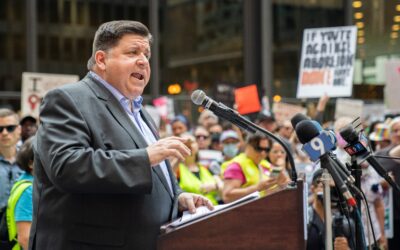
ICE Blocked by Pritzker’s Sanctuary Law After Fatal Crash
A heartbreaking crash in Coles County, Illinois, has reignited fierce debate between ICE and the state’s sanctuary policies. Michael and Gail Clayton — a respected Republican county official and his wife — were killed when an alleged illegal immigrant, driving under the influence, crossed into their lane and struck their car head-on. The Claytons were well known in Charleston for their kindness and community service. Their sudden deaths have shaken the town — and raised serious questions about whether Illinois Governor Pritzker’s decision to shield illegal immigrants from federal law enforcement contributed to this tragedy. The Crash and the Suspect On October 24, 34-year-old Edwin Pacheco-Meza, a Honduran national living illegally in the United States, allegedly veered his van into oncoming traffic. The impact killed both Michael, 71, and Gail Clayton, 66, at the scene. (MORE NEWS: Kamala Teases 2028 Run — Democrats Scramble for Strategy) Authorities reported that Pacheco-Meza appeared intoxicated. In his vehicle, police found open alcohol containers, drugs, and even an extended ammunition magazine. An 18-year-old Guatemalan passenger, Juan Morales-Martinez, also in the country illegally, was charged with drug and weapons offenses. Prosecutors quickly filed charges of reckless homicide and aggravated DUI against Pacheco-Meza. ICE officials later confirmed both men were in the country unlawfully and lodged detainer requests to take them into custody. Assistant Secretary for Public Affairs at the Department of Homeland Security Tricia McLaughlin said: “Two innocents were killed because this criminal illegal alien chose to drive under the influence. President Trump and Secretary Noem have unleashed ICE and CBP in Illinois to restore law-and-order and remove criminal illegal aliens from our communities. Anyone who is in the U.S. illegally and thinks they can roam free while breaking our laws and harming Americans is in for a rude awakening. If you are in our country illegally and break our laws, we will find you, arrest you, remove you, and you will never return.” How Illinois’ Sanctuary Law Comes Into Play Here is where the story becomes more complicated — and controversial. Illinois law bars local police and county jails from cooperating with federal immigration detainers. Under Governor J.B. Pritzker’s “Trust Act,” state and local agencies are prohibited from holding someone for ICE unless there is a federal court order. In practice, this means that even when immigration authorities ask to take custody of criminal suspects, local jails must ignore those requests. According to reports, detainers were placed on both men after the crash, but local officials initially refused to honor them. This policy undermines public safety and invites exactly the kind of tragedy that took the Claytons’ lives. There is a human cost when those laws shield people accused of serious crimes. Community Shock and Grief The deaths of Michael and Gail Clayton have devastated the small town of Charleston. Their obituary describes the couple as warm, dependable, and deeply involved in local life. They volunteered in civic projects, attended the farmers’ market, and supported small businesses. Their loss has left the community in deep shock and mourning. It’s a reminder of how policy decisions made in the state capital can reach into the heart of a small community. What Sanctuary States Get Wrong This crash has revived a national conversation about what sanctuary states owe their citizens. Opponents of these policies say Illinois’ refusal to cooperate with ICE leaves law enforcement powerless to prevent known offenders from remaining in the country. (RELATED NEWS: Portland Police Go Easy on Antifa…Again) When local officials ignore federal detainers, they effectively place politics above public safety. Federal immigration law exists to identify and remove individuals who commit crimes after entering the country illegally. When states block that process, they weaken both accountability and deterrence. Even those who support a compassionate immigration system are now questioning whether blanket non-cooperation makes sense. Compassion should not come at the expense of safety — and laws meant to protect the vulnerable should not allow reckless behavior that endangers innocent families. The Federal-State Divide This case highlights a growing rift between federal immigration enforcement and certain state governments. ICE and the Department of Homeland Security maintain that immigration law is a federal responsibility. Yet states like Illinois, California, and New York have passed legislation to limit cooperation, often citing civil rights concerns. The result is confusion, uneven enforcement, and, in tragic cases like this one, deadly outcomes. Local police are caught in the middle — bound by state restrictions yet facing the real-world consequences when things go wrong. Calls for Change As details of the crash spread, public pressure on state leaders has intensified. Lawmakers are calling for a review of Illinois’ sanctuary statutes, arguing that local agencies must be able to communicate with federal authorities when crimes involve non-citizens. Others insist on a balanced approach — maintaining trust with immigrant communities while ensuring that those who commit crimes are not protected from accountability. Regardless of where one stands politically, the deaths of the Claytons are forcing an uncomfortable but necessary conversation about the limits of sanctuary policies. A Case That Demands Accountability Michael and Gail Clayton should still be alive. Their deaths were not a random accident; they were the foreseeable result of a system that failed to put public safety first. When state officials choose to defy federal law, they assume responsibility for what happens next. Every ignored detainer, every preventable crime, every family left grieving — these are the consequences of decisions made in Springfield and echoed across other sanctuary states. The Takeaway The tragedy in Charleston, Illinois, is a national warning. When state leaders prioritize ideology over enforcement, the victims are often ordinary citizens like the Claytons. As the investigation continues, one thing is clear: the sanctuary model is under scrutiny. States that reject cooperation with federal law must reckon with the outcomes of that choice. The Claytons’ memory deserves more than condolences. It deserves action and a renewed commitment to laws that protect every American, regardless of politics or policy debates. Cut Through the Noise. Slice Through the…