

Inflation Relief

The Hidden Gap Leaving Millions Without Their Inflation Relief Payments—And How to Check If You’re Owed Money
See if you qualify for local inflation relief! Unlock Your Personalized Inflation Relief Guide Here’s a fact that might surprise you: finding and claiming benefits is intentionally confusing. Government websites are a maze, eligibility rules change constantly, and programs are scattered across federal, state, and local levels. You could spend days researching and still miss out. That’s why a free, personalized benefits guide is a game-changer. Services like the Benefits Access Center do the heavy lifting for you. By answering a few simple questions about your household and income, their system instantly cross-references your data against hundreds of available relief programs. This includes everything from state-issued inflation rebates and expanded tax credits to homeowner assistance and utility bill reduction programs. Instead of confusion, you get a simple, customized report with an action plan to claim the funds you deserve. Stop Leaving Free Money on the Table Did you recently change jobs, have a child, or move to a new state? Any of these common life events could suddenly make you eligible for assistance you didn’t qualify for before. Most people never re-check their eligibility, leaving hundreds or even thousands of dollars on the table. The truth is, you could be owed money right now and not even know it. The key is to check your eligibility through a trusted service. The process is designed to be incredibly simple and quick—it often takes less than five minutes. Your information is kept secure and private, and the service is completely free to use. You have nothing to lose and potentially a significant financial boost to gain. Don’t let bureaucratic red tape stop you from claiming the support your family is entitled to. This article was created with AI-assisted writing.
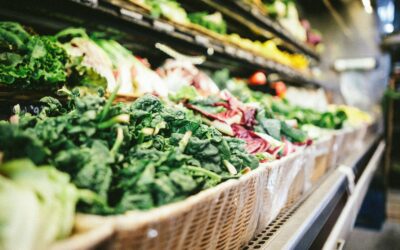
Grocery Relief: USDA Moves to Slash Red Tape and Accelerate Food Production
In a major win for American consumers facing high grocery bills, the U.S. Department of Agriculture (USDA) announced a sweeping plan this morning to deregulate “line speed” restrictions in poultry and pork processing plants. The move, spearheaded by Secretary Brooke Rollins, aims to dismantle decades of “Washington-imposed bottlenecks” that have stifled productivity and inflated the cost of meat across the country. At The Modern Memo, we analyze the administration’s “Freedom Framework,” the science behind the efficiency surge, and the struggle between industrial modernization and labor union opposition. Breaking the Bottleneck: The Rollins Directive Secretary Rollins officially proposed the updates to federal line speed regulations for establishments operating under modernized inspection systems. For years, federal caps have limited how many animals can be processed per minute, regardless of a plant’s technological capacity or safety record. Ending the Patchwork: The new proposal replaces a confusing system of temporary waivers and pilot programs with a predictable, long-term federal standard. Poultry Acceleration: Modernized plants can now move beyond the previous 140 birds-per-minute cap, matching the 175 bpm standard successfully used in many international markets. Pork Efficiency: Swine facilities will be empowered to operate at speeds supported by their specific equipment and food safety performance, effectively removing the 1,106-head-per-hour “speed limit.” Inspector Authority: Under the new rules, FSIS federal inspectors maintain full authority to slow or stop lines if they identify a safety risk, ensuring that speed never comes at the cost of the “highest food safety standards.” The Economic Impact: Lowering the “Grocery Tax” The administration is framing this deregulation as a direct attack on inflation. By allowing plants to operate at full capacity, the USDA expects a significant drop in production costs that should translate to savings for the average household. Cost Savings for Producers: Industry groups like the National Pork Producers Council have noted that artificial speed caps can cost producers nearly $10 per head in lost efficiency. Supply Chain Resilience: Faster processing means more product on shelves and a more responsive supply chain that can better weather demand spikes. Global Competitiveness: Secretary Rollins emphasized that America must lead the world in production, stating: “We are committed to ensuring our producers remain competitive on a global scale without being held back by unnecessary bureaucracy.” The “Workplace Safety” Debate While the industry applauds the efficiency, labor groups like the United Food and Commercial Workers (UFCW) have voiced concerns that the faster pace will lead to increased worker injuries, such as carpal tunnel and musculoskeletal disorders. The Scientific Counter-Argument: The USDA cited multiple internal and third-party studies showing no statistically significant link between increased line speeds and workplace injury rates. Instead, the studies suggest that injuries are more closely tied to staffing levels and ergonomic training rather than the speed of the line itself. Streamlining Paperwork: As part of the rollout, the USDA is also removing “redundant” worker safety reporting requirements that fall outside its statutory authority, allowing businesses to focus on production rather than filing duplicate paperwork with multiple agencies. “Make America Healthy Again” Integration In a move that aligns with the administration’s broader “Make America Healthy Again” initiative, the USDA noted that these modernized lines often utilize advanced automation that is more sanitary than traditional, manual-heavy processing. Secretary Rollins, alongside HHS Secretary Robert F. Kennedy Jr., has previously signaled that modernization is key to providing “nutritious, wholesome, and affordable” food. By empowering domestic producers to scale up, the administration seeks to reduce the nation’s reliance on foreign imports while keeping costs low for working families. Final Word Staying informed on the USDA’s move to accelerate our food supply isn’t just about tracking a policy shift—it plays a powerful role in your understanding of the total effort to dismantle the “administrative state” and lower your cost of living. When you look past the noise of labor union rhetoric and focus on the data of “123 Agreement”-style efficiency and the removal of outdated bottlenecks, you gain a clearer picture of the path toward economic restoration. Quality information replaces the anxiety of rising prices with the clarity of deregulatory benchmarks and production stats. It allows you to see this move not as “reckless,” but as a necessary correction to decades of federal overreach. By choosing to follow the facts of the Rollins directive rather than the spin of the professional critics, you align your perspective with the realities of a modern, efficient America and support a more informed, resilient food future. Where Facts, Context, and Perspective Matter At The Modern Memo, our goal is simple: to provide clear, well-researched reporting in a media landscape that often feels overwhelming. We focus on substance over sensationalism, and context over commentary. If you value thoughtful analysis, transparent sourcing, and stories that go beyond the headline, we invite you to share our work. Informed conversations start with reliable information, and sharing helps ensure important stories reach a wider audience. Journalism works best when readers engage, question, and participate. By reading and sharing, you’re supporting a more informed public and a healthier media ecosystem. The Modern Memo may be compensated and/or receive an affiliate commission if you click or buy through our links. Featured pricing is subject to change. 📩 Love what you’re reading? Don’t miss a headline! Subscribe to The Modern Memo here!

Inflation Relief Programs That Could Put Some Extra Cash in Your Pocket
How have you tried to find financial savings or assistance programs in the past?