

Iran
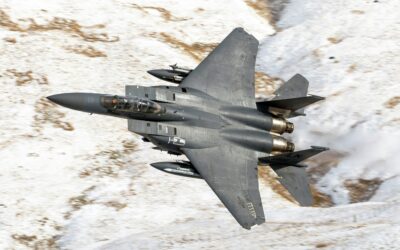
Friendly Fire Tragedy: 3 U.S. Fighter Jets Downed Over Kuwait
In a harrowing development amidst the rapidly widening regional conflict, U.S. Central Command (CENTCOM) confirmed that three American F-15E Strike Eagle fighter jets were mistakenly shot down by Kuwaiti air defenses late Sunday night. The incident, characterized by officials as a “friendly fire” catastrophe, occurred during a period of intense combat as the U.S. and Israel continue their coordinated military campaign against Iran, dubbed Operation Epic Fury. At The Modern Memo, we break down the chaotic conditions that led to this blunder, the miraculous survival of the flight crews, and what this signals for the stability of the U.S.-led coalition in the Gulf. The Incident: Combat Chaos Over Kuwait The loss of the three aircraft took place around 11:03 p.m. ET on Sunday, March 1, as U.S. forces were navigating a crowded and dangerous airspace. The Fog of War: During the incident, Kuwaiti air defenses were actively engaging incoming Iranian ballistic missiles, drones, and aircraft. In the high-stress environment of active combat, sensors and command systems struggled to distinguish between the friendly F-15s and hostile targets, leading to the catastrophic engagement. Miraculous Survival: Despite the jets being destroyed, all six aircrew members—two per F-15E—successfully ejected. They were recovered by Kuwaiti forces and are currently listed in “stable condition” at local medical facilities. Public Documentation: The incident was verified by raw, circulating footage showing the F-15s spiraling toward the ground in flames, with parachutes visible against the desert sky near Al Jahra, Kuwait. Regional Impact: The Widening Conflict This friendly fire event is the latest flashpoint in a war that has seen Iran strike targets across Bahrain, Qatar, the UAE, and Kuwait in retaliation for the initial U.S.-Israeli strikes that reportedly killed Iran’s Supreme Leader, Ali Khamenei. Casualties and Chaos: While the pilots survived, the broader conflict has taken a toll. U.S. officials have confirmed the deaths of four American service members in separate attacks on regional bases. Global Disruption: The intense military activity has led to the cancellation of thousands of flights across the Middle East, effectively grounding commercial aviation in the Gulf and stranding hundreds of thousands of travelers. Coalition Tension: Kuwait has formally acknowledged the “mistake” and is conducting a joint technical investigation with the U.S. to prevent a recurrence. However, the event highlights the extreme risks of operating in a theater where allied and adversary munitions are crossing paths at high velocities. The Strategy Under Scrutiny As Operation Epic Fury enters its third day, the U.S. administration is facing heightened scrutiny regarding its military strategy and the lack of clear, long-term objectives for this campaign. Operational Strain: Military analysts are pointing to the “ops tempo”—the sheer speed and density of combat operations—as a major contributor to the misidentification of the jets. The “Epic Fury” Outlook: While the White House maintains that the operation will continue until its security objectives are met, the incident has fueled debates in Washington over the necessity of the campaign and the lack of congressional authorization for what is fast becoming a full-scale regional war. Final Word The accidental downing of three American jets is a sobering reality check on the unpredictable nature of modern air combat. When you look past the headlines of “friendly fire” and focus on the data of the misidentified sensor profiles and the saturated combat environment, you gain a clearer picture of why this theater of war is so perilous for all parties involved. Quality information replaces the noise of military speculation with the clarity of official CENTCOM briefings and verified visual evidence. It allows you to see this event as a tragic consequence of an increasingly chaotic battlefield. By choosing to follow the verified facts of the crash investigation rather than the inflammatory claims circulating on social media, you align your perspective with the realities of modern warfare and support a more informed, resilient outlook on this rapidly escalating global situation. Where Facts, Context, and Perspective Matter At The Modern Memo, our goal is simple: to provide clear, well-researched reporting in a media landscape that often feels overwhelming. We focus on substance over sensationalism, and context over commentary. If you value thoughtful analysis, transparent sourcing, and stories that go beyond the headline, we invite you to share our work. Informed conversations start with reliable information, and sharing helps ensure important stories reach a wider audience. Journalism works best when readers engage, question, and participate. By reading and sharing, you’re supporting a more informed public and a healthier media ecosystem. The Modern Memo may be compensated and/or receive an affiliate commission if you click or buy through our links. Featured pricing is subject to change. 📩 Love what you’re reading? Don’t miss a headline! Subscribe to The Modern Memo here!
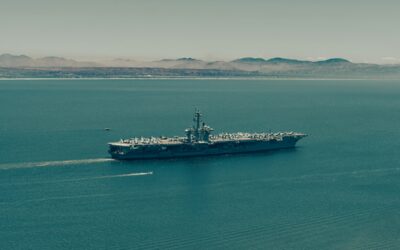
The Iran Ultimatum: Diplomacy Under the Shadow of the “Armada”
As of late January 2026, the long-simmering standoff between Washington and Tehran has reached what military analysts describe as a critical decision point. Following a month of severe domestic upheaval in Iran and a massive U.S. military buildup in the Middle East, President Trump has issued a definitive ultimatum: negotiate a new, restrictive nuclear deal immediately or face military action “far worse” than previous interventions. At Modern Memo, we analyze the strategic movement of the U.S. “Armada,” the administration’s shifting demands, and the high-stakes mediation currently underway in regional capitals. 1. The Arrival of the “Massive Armada” The centerpiece of the current U.S. strategy is the deployment of a significant naval force, which President Trump has publicly termed a “massive armada.” As of January 27, 2026, the USS Abraham Lincoln (CVN-72) carrier strike group has officially entered the region. This deployment is a heavy psychological and military signal. The strike group brings a comprehensive array of airpower and electronic warfare capabilities to Iran’s doorstep, including: Advanced Aviation Power: F-35C Lightning II stealth fighters and F/A-18E/F Super Hornets. Integrated Air Defense: Coordination with land-based THAAD and Patriot missile systems recently surged to neighboring allies. Maritime Force Flexibility: Accompanied by Arleigh Burke-class destroyers and specialized electronic jamming assets. Eight destroyers threatening Iran right now: • USS Frank E. Petersen Jr. — North Arabian Sea (escorting USS Abraham Lincoln carrier) • USS Spruance — North Arabian Sea (escorting USS Abraham Lincoln carrier) • USS Michael Murphy — North Arabian Sea (escorting USS… pic.twitter.com/dVqhGuhZ2R — Open Source Intel (@Osint613) January 29, 2026 2. The Trump Ultimatum: “NO NUCLEAR WEAPONS” On January 28, the President shifted the rationale for this buildup from supporting domestic protesters to a hardline nuclear demand. In public statements, he warned that “time is running out” and urged Tehran to “Come to the Table” for a deal that would be “good for all parties.” The administration’s preconditions for a new agreement have shifted toward an “all-or-nothing” framework: The Zero-Enrichment Standard: A total ban on domestic uranium enrichment, which remains a “red line” for the Iranian leadership. Stockpile Removal: The mandatory transfer of all highly enriched uranium to a third-party country. Missile Caps: Strict limits on Iran’s long-range ballistic missile stockpile. Regional Influence: A requirement for a fundamental change in Iran’s policy regarding support for regional proxy groups. The administration has pointed to “Operation Midnight Hammer”—the June 2025 operation that destroyed several key Iranian nuclear facilities—as a precedent for the “speed and violence” that could follow if negotiations fail. 3. Tehran’s Stance: “Finger on the Trigger” The Iranian leadership is currently navigating a period of internal crisis. Protests that began in December 2025 over a collapsing currency and the rising cost of living have led to a brutal crackdown, with casualties estimated in the thousands and widespread internet blackouts. Despite this domestic pressure, Tehran’s official stance remains defiant: Defensive Readiness: The Iranian mission to the UN stated that while they stand ready for “dialogue based on mutual respect,” they will respond “like never before” if a military strike occurs. Economic Fragility: The Iranian rial hit an all-time low on January 27, and basic goods have seen a 60% price increase since mid-December, complicating the regime’s ability to sustain a prolonged conflict. 4. The Mediation Race and Regional Friction The current buildup has created a complex diplomatic environment among regional allies. While some partners support the “maximum pressure” campaign, others are wary of a total regional destabilization. Turkish Mediation: Foreign Minister Abbas Araghchi has engaged in urgent talks in Ankara, seeking to find a middle ground before the U.S. ultimatum expires. Neutrality Declarations: High-level allies, including the United Arab Emirates, have signaled they will maintain neutrality and not allow their airspace or territory to be used for an offensive strike on Iran. Final Word Staying informed on the shifting lines of Middle Eastern diplomacy isn’t just about geopolitics—it plays a powerful role in your understanding of global energy stability and national security. When you follow the data behind carrier movements and diplomatic cables, you gain a clearer picture of the forces shaping our world. Quality information improves your mental health by replacing the noise of “imminent war” headlines with the clarity of strategic analysis. It reduces “news anxiety” by allowing you to distinguish between coercive deterrence and actual mobilization. By choosing to analyze the policy rather than the posturing, you protect your perspective and support a more informed, resilient global community. Where Facts, Context, and Perspective Matter At The Modern Memo, our goal is simple: to provide clear, well-researched reporting in a media landscape that often feels overwhelming. We focus on substance over sensationalism, and context over commentary. If you value thoughtful analysis, transparent sourcing, and stories that go beyond the headline, we invite you to share our work. Informed conversations start with reliable information, and sharing helps ensure important stories reach a wider audience. Journalism works best when readers engage, question, and participate. By reading and sharing, you’re supporting a more informed public and a healthier media ecosystem. The Modern Memo may be compensated and/or receive an affiliate commission if you click or buy through our links. Featured pricing is subject to change. 📩 Love what you’re reading? Don’t miss a headline! Subscribe to The Modern Memo here!
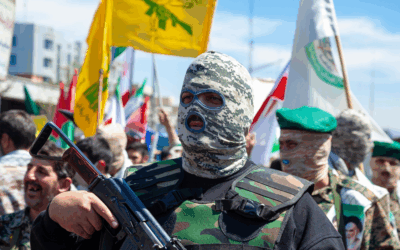
Iran Making Clear It’s Not Done Messing With America And Freedom
From Daily Caller News Foundation defense reporter Wallace White. Iran is attempting to rearm its militias across the Middle East after U.S. strikes crippled its nuclear program in June, according to CNN. Tehran has continued to arm the Houthi rebels in Yemen, Hezbollah in Lebanon and its various militias in Iraq and Syria as the Islamic Republic reels from its 12-day-war with Israel and the U.S., which left its nuclear infrastructure and military crippled, according to CNN. While Iran has sustained serious damage from the war, its proxies remain a key arm of its influence over the region as frequent agitators against Israeli and U.S. forces. (RELATED: USAID Quietly Sent Thousands Of Viruses To Chinese Military-Linked Biolab (DCNF Exclusive)) “Iran was never going to stop resupplying their groups,” Michael Knights, a senior fellow at The Washington Institute, told CNN. “They might not be able to send this much or regularly – more stuff might get intercepted – but if you’re the (Iranian) Revolutionary Guards’ Quds Force right now, what you’re trying to show is ‘we still exist, we’re intact, nothing has changed.’” A vessel carrying 750 tons of missiles and equipment bound for Yemen was intercepted by exiled Yemeni government loyalists Wednesday, according to U.S. Central Command (CENTCOM). Iran denied sending the shipment, saying it was a “deceitful attempt” to incriminate the regime. The Houthis have regularly launched attacks against Israel, with the Israeli Air Force mostly recently hitting Houthi targets Monday in response to the strikes. The rebels also have imperiled international shipping through the Red Sea, which prompted a U.S. bombing campaign in March. Increased Attacks On Western Entities, Personnel Suspected Iranian-backed groups in Iraq have increased their attacks on Western entities and personnel in the nation, mostly recently hitting five oil fields with drone strikes, Aziz Ahmad, a Kurdish Regional Government official, said on X on Wednesday. Two of the oil fields were owned by U.S. companies, according to CNN. (RELATED: COVID-19 mRNA Shots Linked To Higher Death Toll Amongst Cancer Patients) In Lebanon, Hezbollah has received waning support from Iran after the December 2024 fall of the former Bashar al-Assad regime in Syria and Israel’s 2024 killing of the militant group’s leader, Hassan Nasrallah. Hezbollah is a key ally to Hamas in its post-Oct. 7 war with Israel, regularly engaging with the Israeli Defense Forces (IDF) in skirmishes on the border. Hamas has also been met with relative silence from their Iranian allies in the wake of Tehran’s brief war with Israel. What Is Syria Up To? Meanwhile, the new government in Syria — formerly a key thoroughfare for Tehran’s weapons transfers to allied terrorist groups — has seized Iranian shipments of arms to Hezbollah over the past year, according to CNN. Iran agreed Monday to meet in Istanbul, Turkey, on Friday with France, Germany and the U.K. to discuss Tehran’s nuclear program. The European nations threatened Iran with renewed sanctions if there was not any movement on talks regarding its nuclear ambitions. The Iranian Foreign Ministry did not respond to the Daily Caller News Foundation’s request for comment.

WATCH: What You Don’t Know About The People Of Iran Will SHOCK You!
An interview published in late June with journalist Nicole Sadighi detailed all of the things about the people of Iran that most of us don’t realize. Joe Pags was joined by Sadighi for an exclusive and highly insightful interview in his podcast series “Unshaken and Unafraid” where we learned all about how the Iranian regime controls everything from speech to people’s dress and the entirety of the media. Thankfully, younger generations are pushing back against the tyranny, and we hear real stories of Iranian protests and defiance. “Why are the Iranian people risking everything to fight their own government? In this eye-opening interview, we expose the stark differences between the freedom-loving Iranian people and the oppressive theocratic regime that rules them. From daily life under strict laws to the bravery of women removing hijabs in protest, this is a story of courage, truth, and the fight for freedom,” wrote the Pags team in the video description. Iran’s Persecution of Christians The oppressive regime in Iran led to the execution of more than 900 people in 2024, along with “scores of death sentences for religious-based charges,” according to a March report from the U.S. Commission on International Religious Freedom (USCIRF), reported International Christian Concern. (RELATED: ‘Secret Ties Between Soros and Your Local Prosecutor’: LaHood, Pags Reveals How One Foreign Billionaire Is Buying Control Of Your State) “Morality police violently arrested and assaulted women not in compliance with these regulations,” USCIRF noted in their report, adding that the so-called morality police “also penalized businesses that allowed patronage by women not wearing the hijab.” Where To Find More From Pags You can subscribe to Joe Pags on YouTube by clicking here. The Modern Memo will be bringing you as many of Pags’ episodes as humanly possible, but please follow and subscribe to him across all of the following platforms. Check out Joe Pags on X: always the hottest takes and the news you need Joe Pags Official Website Rumble — Joe Pags Join the Mailing List! – http://www.joepags.com/subscribe