

As of late January 2026, the long-simmering standoff between Washington and Tehran has reached what military analysts describe as a critical decision point. Following a month of severe domestic upheaval in Iran and a massive U.S. military buildup in the Middle East, President Trump has issued a definitive ultimatum: negotiate a new, restrictive nuclear deal immediately or face military action “far worse” than previous interventions.
At Modern Memo, we analyze the strategic movement of the U.S. “Armada,” the administration’s shifting demands, and the high-stakes mediation currently underway in regional capitals.
1. The Arrival of the “Massive Armada”
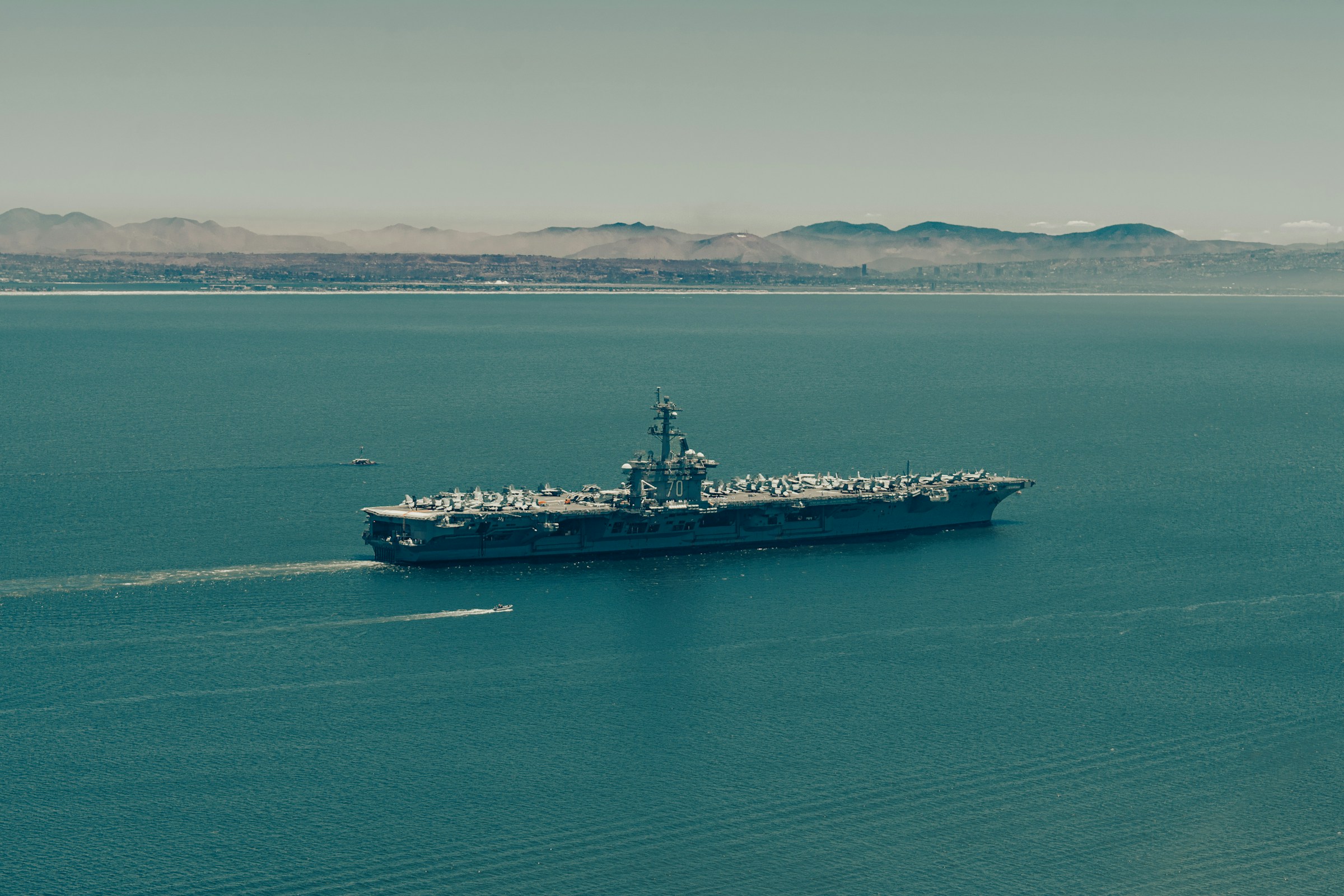
The centerpiece of the current U.S. strategy is the deployment of a significant naval force, which President Trump has publicly termed a “massive armada.” As of January 27, 2026, the USS Abraham Lincoln (CVN-72) carrier strike group has officially entered the region.
This deployment is a heavy psychological and military signal. The strike group brings a comprehensive array of airpower and electronic warfare capabilities to Iran’s doorstep, including:
-
Advanced Aviation Power: F-35C Lightning II stealth fighters and F/A-18E/F Super Hornets.
-
Integrated Air Defense: Coordination with land-based THAAD and Patriot missile systems recently surged to neighboring allies.
-
Maritime Force Flexibility: Accompanied by Arleigh Burke-class destroyers and specialized electronic jamming assets.
Eight destroyers threatening Iran right now:
• USS Frank E. Petersen Jr. — North Arabian Sea (escorting USS Abraham Lincoln carrier)
• USS Spruance — North Arabian Sea (escorting USS Abraham Lincoln carrier)
• USS Michael Murphy — North Arabian Sea (escorting USS… pic.twitter.com/dVqhGuhZ2R
— Open Source Intel (@Osint613) January 29, 2026
2. The Trump Ultimatum: “NO NUCLEAR WEAPONS”
On January 28, the President shifted the rationale for this buildup from supporting domestic protesters to a hardline nuclear demand. In public statements, he warned that “time is running out” and urged Tehran to “Come to the Table” for a deal that would be “good for all parties.”
The administration’s preconditions for a new agreement have shifted toward an “all-or-nothing” framework:
-
The Zero-Enrichment Standard: A total ban on domestic uranium enrichment, which remains a “red line” for the Iranian leadership.
-
Stockpile Removal: The mandatory transfer of all highly enriched uranium to a third-party country.
-
Missile Caps: Strict limits on Iran’s long-range ballistic missile stockpile.
-
Regional Influence: A requirement for a fundamental change in Iran’s policy regarding support for regional proxy groups.
The administration has pointed to “Operation Midnight Hammer”—the June 2025 operation that destroyed several key Iranian nuclear facilities—as a precedent for the “speed and violence” that could follow if negotiations fail.
3. Tehran’s Stance: “Finger on the Trigger”
The Iranian leadership is currently navigating a period of internal crisis. Protests that began in December 2025 over a collapsing currency and the rising cost of living have led to a brutal crackdown, with casualties estimated in the thousands and widespread internet blackouts.
Despite this domestic pressure, Tehran’s official stance remains defiant:
-
Defensive Readiness: The Iranian mission to the UN stated that while they stand ready for “dialogue based on mutual respect,” they will respond “like never before” if a military strike occurs.
-
Economic Fragility: The Iranian rial hit an all-time low on January 27, and basic goods have seen a 60% price increase since mid-December, complicating the regime’s ability to sustain a prolonged conflict.
4. The Mediation Race and Regional Friction
The current buildup has created a complex diplomatic environment among regional allies. While some partners support the “maximum pressure” campaign, others are wary of a total regional destabilization.
-
Turkish Mediation: Foreign Minister Abbas Araghchi has engaged in urgent talks in Ankara, seeking to find a middle ground before the U.S. ultimatum expires.
-
Neutrality Declarations: High-level allies, including the United Arab Emirates, have signaled they will maintain neutrality and not allow their airspace or territory to be used for an offensive strike on Iran.
Final Word
Staying informed on the shifting lines of Middle Eastern diplomacy isn’t just about geopolitics—it plays a powerful role in your understanding of global energy stability and national security. When you follow the data behind carrier movements and diplomatic cables, you gain a clearer picture of the forces shaping our world.
Quality information improves your mental health by replacing the noise of “imminent war” headlines with the clarity of strategic analysis. It reduces “news anxiety” by allowing you to distinguish between coercive deterrence and actual mobilization. By choosing to analyze the policy rather than the posturing, you protect your perspective and support a more informed, resilient global community.
Where Facts, Context, and Perspective Matter
At The Modern Memo, our goal is simple: to provide clear, well-researched reporting in a media landscape that often feels overwhelming. We focus on substance over sensationalism, and context over commentary.
If you value thoughtful analysis, transparent sourcing, and stories that go beyond the headline, we invite you to share our work. Informed conversations start with reliable information, and sharing helps ensure important stories reach a wider audience.
Journalism works best when readers engage, question, and participate. By reading and sharing, you’re supporting a more informed public and a healthier media ecosystem.
The Modern Memo may be compensated and/or receive an affiliate commission if you click or buy through our links. Featured pricing is subject to change.
Subscribe to The Modern Memo here!
