
Islam
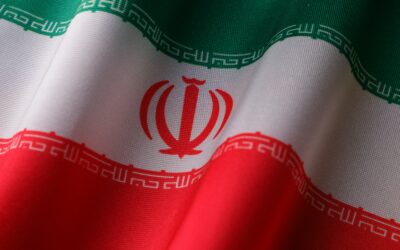
Tehran Defiant: Pezeshkian Blames “Foreign Plot” for Economic Unrest
In a move that has become a hallmark of the Islamic Republic’s response to domestic dissent, Iranian President Masoud Pezeshkian has formally accused the United States and Israel of orchestrating the massive wave of protests currently sweeping across Iran. Speaking in a televised address on January 31, 2026, Pezeshkian characterized the unrest—which began over economic grievances—as a “foreign-backed plot” designed to sow division and destabilize the nation. At Modern Memo, we analyze the administration’s claims of outside interference, the underlying economic crisis, and the escalating “war of words” between Tehran and the West. The Narrative of “Foreign Instigation” President Pezeshkian’s comments follow weeks of the largest anti-government demonstrations Iran has seen in decades. While the protests initially focused on the collapse of the national currency (the rial), the government’s narrative has shifted toward a framework of national defense against external enemies. The Accusation: Pezeshkian alleged that the U.S. and Israel have “exploited” Iran’s economic hardships to incite “violent rioters.” He claimed that foreign intelligence agencies have trained “terrorist elements” inside and outside the country to attack mosques, banks, and government buildings. The “12-Day War” Context: Tehran is increasingly framing the protests as a continuation of the June 2025 conflict between Iran and Israel. The administration argues that after failing to topple the regime through military strikes last summer, Western powers have pivoted to “hybrid warfare” and domestic subversion. The “National Resistance” Label: Official state statements have begun to frame security personnel killed in the crackdown as “martyrs of the resistance,” suggesting they are fighting a foreign invasion rather than domestic protestors. Economic Realities vs. Regime Rhetoric While the President points to foreign interference, independent observers and economists highlight a domestic system under immense pressure. The “economic blackout” in Iran is driven by several factors that the administration has struggled to manage: Currency Collapse: In late December 2025, the rial hit a record low of approximately 1.4 million rials to the U.S. dollar. This hyper-devaluation triggered the initial strikes among shopkeepers in Tehran’s Grand Bazaar. Subsidy Reforms: In an attempt to stabilize the market, Pezeshkian has pushed through major subsidy cuts on essential goods like wheat and oil. While intended to boost purchasing power in the long term, the immediate result has been a 60% spike in food prices, fueling public anger. Sanctions Pressure: The U.S. has intensified “maximum pressure” sanctions following the June 2025 hostilities, effectively cutting off Iran’s ability to access global financial markets and deteriorating the standard of living for the average citizen. The Crackdown: Security Forces and Information Control The government’s response to the protests has been described by international monitors as “unprecedented.” To regain control, the regime has deployed a strategy of total isolation: The Internet Shutdown: Since January 8, 2026, a near-total telecommunications blackout has blanketed the country. This “digital curtain” is designed to prevent protestors from coordinating and to stop images of the crackdown from reaching the global press. Arrest and Casualty Figures: While Iran’s Foreign Ministry claims roughly 3,100 deaths, international rights groups like HRANA and Amnesty International have reported significantly higher numbers, with some estimates suggesting over 6,000 confirmed deaths and more than 40,000 arrests. Judiciary Action: The Iranian judiciary has vowed to fast-track trials for those arrested, with officials suggesting that charges of “terrorism” and “enmity against God”—which carry the death penalty—will be applied to “rioters” deemed to be working for foreign powers. Final Word Understanding the rhetoric of the Iranian presidency isn’t just about foreign policy—it plays a powerful role in your understanding of how authoritarian regimes maintain control during a crisis. When you look at the raw data of currency devaluation alongside claims of “foreign plots,” you gain a clearer picture of the survival tactics being used in Tehran. Quality information improves your mental health by replacing the noise of propaganda with the clarity of economic and political analysis. It reduces “civic cynicism” by helping you realize that even the most aggressive narratives are often a response to deep-seated internal vulnerabilities. By choosing to analyze both the regime’s stance and the documented economic data, you protect your perspective and support a more informed, resilient global community. Where Facts, Context, and Perspective Matter At The Modern Memo, our goal is simple: to provide clear, well-researched reporting in a media landscape that often feels overwhelming. We focus on substance over sensationalism, and context over commentary. If you value thoughtful analysis, transparent sourcing, and stories that go beyond the headline, we invite you to share our work. Informed conversations start with reliable information, and sharing helps ensure important stories reach a wider audience. Journalism works best when readers engage, question, and participate. By reading and sharing, you’re supporting a more informed public and a healthier media ecosystem. The Modern Memo may be compensated and/or receive an affiliate commission if you click or buy through our links. Featured pricing is subject to change. 📩 Love what you’re reading? Don’t miss a headline! Subscribe to The Modern Memo here!
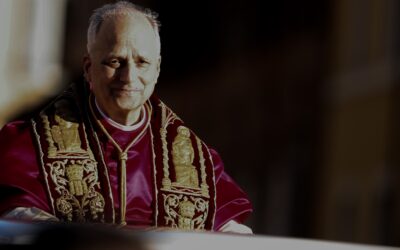
Shock at the Vatican: Muslim Prayer Room Approved Inside Historic Library
The Vatican made the decision to offer a prayer room for Muslim scholars marking a historic moment in interfaith relations. While many see it as a gesture of hospitality and respect, others raise serious theological objections. This article explores the background, responses, and deeper implications of this unprecedented accommodation. Historical Roots and the Vatican Library The Vatican Apostolic Library has stood as a center of Christian scholarship since its founding under Pope Nicholas V in 1451. Over centuries, it has collected manuscripts not only from Christian traditions but from across religions and civilizations. The library holds incredibly old Qurans alongside works in Hebrew, Arabic, Ethiopian, and Chinese, testifying to its universal scope. According to The Catholic Herald, “Today, the Vatican Library is estimated to contain some 80,000 manuscripts, 50,000 archival items, nearly two million printed books, and more than 100,000 engravings, prints, coins, and medals. New discoveries continue to emerge, including a rare manuscript of Spinoza’s Ethics unearthed in recent years.” Recently, Muslim scholars visiting the library requested a small space in which to pray. The library granted their request, offering a carpeted area for those moments of worship. According to Fr Giacomo Cardinali, Vice Prefect of the library, this was done simply in response to scholars’ needs. (MORE NEWS: Melania Trump Helps Reunite Ukrainian Children Amid War) Reactions: Respect, Concern, and Controversy Unsurprisingly, the announcement sparked immediate reactions across Christian and religious communities. Some welcomed it as a sign of openness, dialogue, and respect toward Islam. They argue that allowing fellow scholars a space to pray fosters goodwill, mutual understanding, and academic freedom. However, others voiced deep concern and even alarm. Critics see the move as compromising the sacredness of Christian spaces. As one commentary put it, “a place dedicated to preserving Christian truth” should not facilitate worship to beliefs that deny Christ’s divinity. Some warn that such gestures may lead toward religious compromise or syncretism—blending of religions. They fear that the boundary between hospitality and endorsement becomes dangerously thin when worship is permitted within Christian precincts. Theologically, the criticism draws on passages like Exodus 20:3, “You shall have no other gods before Me,” and 2 Corinthians 6:14, “What fellowship has righteousness with lawlessness?” For critics, welcoming prayers to a different god within Vatican walls inches into problematic territory. Supporters counter that the Vatican Library is not a sanctuary in the liturgical sense, but a research institution; its purpose is not worship but scholarship. They argue that accommodating Muslim scholars does not equate to endorsing their theology. Rather, it affirms respect for academic inquiry and human dignity. The Deeper Implications Beyond the surface-level dispute, this decision touches on issues of identity, theology, and the mission of the Church in a pluralistic world. Sacred vs. Secular Spaces This case forces a rethinking of what is “sacred” and who defines that. While the Vatican Library is a deeply Christian institution, its role is largely intellectual and archival rather than sacramental. That ambiguity opens a space for debate: Does a prayer room transform the library into a shared worship space? Or does it remain what it has always been—a scholarly site that simply accommodates scholars’ needs? Boundary of Hospitality Christian tradition emphasizes hospitality, yet always with limits. The question here is whether creating a worship space goes beyond mere hospitality into compromise. Where do we draw the line between welcoming and enabling? How can the Church affirm its own convictions while extending respect to others? Precedent Setting This act may set a precedent. If other Christian institutions follow suit, what standards will govern such accommodations? Who will decide when, where, and how worship by non-Christians is permitted within Christian spaces? Over time, small concessions can accumulate into significant shifts in institutional culture. Looking Forward: Questions and Paths Ahead As this decision unfolds publicly, several key questions deserve attention: Clarity of purpose: Will Vatican leadership issue a formal theological statement clarifying that hosting a Muslim prayer room does not imply doctrinal endorsement? Scope and boundaries: Will Muslims be allowed to pray only within limited times, areas, or under certain restrictions, or will more expansive worship follow? Response from local Christian communities: How will dioceses, parishes, and laity interpret and respond to this development? Future accommodations: Might other faiths request similar access? How will the Church respond to requests from, say, Hindu, Buddhist, or Sikh scholars? Dialogue outcomes: Could this gesture lead to formal conversations about shared values, theological disagreements, and joint social action? Final Word The Vatican Library’s granting of a prayer room for Muslim scholars is a bold and risky move—a dangerous crossing of sacred boundaries. In reality, this decision raises an uncomfortable question: would the same courtesy ever be extended in reverse? In most Muslim countries, Christian worship is forbidden in mosques and often even restricted in public. The Vatican’s choice highlights a striking contrast—one faith showing extraordinary accommodation, while the other would not allow similar access. For many believers, that imbalance is precisely why discernment and conviction are so essential when faith and diplomacy meet. Forget the narrative. Reject the script. Share what matters. At The Modern Memo, we call it like it is — no filter, no apology, no corporate leash. If you’re tired of being lied to, manipulated, or ignored, amplify the truth. One share at a time, we dismantle the media machine — with facts, boldness, and zero fear. Stand with us. Speak louder. Because silence helps them win.