

JD Vance

Historic Pivot: Vance Lands in Armenia to Cement Nuclear Deal and Regional Peace
In a landmark visit signaling a major shift in the South Caucasus, Vice President JD Vance arrived in Yerevan on Monday, February 9, 2026. This historic trip makes him the highest-ranking U.S. official to ever visit Armenia, underscoring the Trump administration’s commitment to peeling the former Soviet republic away from Russian and Iranian influence. At Modern Memo, we break down the multibillion-dollar energy deal, the “Trump Route” for peace, and the strategic implications of this new American partnership in the region. The $9 Billion Nuclear Breakthrough The center-piece of Vance’s visit was the signing of a joint statement concluding negotiations on a “123 Agreement”—the legally binding framework required for the United States to export nuclear technology and fuel. Energy Independence: Armenia currently relies on the aging, Russian-built Metsamor Nuclear Power Plant for roughly 40% of its electricity. This deal paves the way for American companies to build modern Small Modular Reactors (SMRs), effectively breaking Moscow’s energy stranglehold on Yerevan. Economic Win-Win: Vance announced that the agreement would underpin up to $9 billion in U.S. engagement. This includes an initial $5 billion tranche for technology and exports, followed by $4 billion in long-term maintenance and fuel contracts. American Jobs: The Vice President emphasized that the deal would create thousands of high-quality jobs in the United States while providing Armenia with “safe, innovative, and reliable” power. The “Trump Route” for Peace and Prosperity Vance’s visit follows the U.S.-brokered peace accord signed last August between Armenia and Azerbaijan, ending decades of hostilities over the Karabakh region. The Vice President is in Yerevan to push the implementation of the Trump Route for International Peace and Prosperity (TRIPP). The Corridor: This proposed 43-kilometer (27-mile) transit corridor through southern Armenia would connect mainland Azerbaijan to its exclave, Nakhchivan, and onward to Turkey. Global Trade Hub: Washington envisions the “Trump Route” as a transformative East-West trade artery that bypasses both Russia and Iran. Vance described it as a “regional hub for economic growth” that would draw massive private investment into Armenia. Leasing Rights: A key feature of the peace framework gives the United States significant shares in the development company overseeing the corridor’s infrastructure, ensuring American oversight of this strategic gateway. Defense and Tech: Beyond Energy In a move that signifies a deepening security relationship, Prime Minister Nikol Pashinyan confirmed Armenia’s first-ever purchase of U.S. military technology. V-BAT Drones: Armenia has acquired U.S.-made V-BAT surveillance drones, a step that follows years of joint “Eagle Partner” military exercises. The Silicon Push: Vance also announced new export licenses for high-powered Nvidia chips, aiming to establish Armenia as a regional center for data centers and semiconductor research. Geopolitical Realities: Outpacing Russia Vance’s arrival in Yerevan is a clear signal that the “Maximum Pressure” era has evolved into a “Maximum Engagement” strategy for allies in Russia’s backyard. The Affinity Factor: Speaking alongside Pashinyan, Vance highlighted his personal affinity for Armenia as “one of the oldest Christian cultures in the entire world,” a framing that resonates with the administration’s focus on protecting religious heritage. The Azerbaijan Stop: Following his meetings in Yerevan, the Vice President will travel to Baku on Tuesday to meet with President Ilham Aliyev, ensuring both sides of the peace deal remain committed to the February 19 “Peace Council” session scheduled at the White House. Final Word Staying informed on the Vice President’s mission to Armenia isn’t just about foreign diplomacy—it plays a powerful role in your understanding of how the U.S. uses economic leverage to reshape global power. When you look past the headlines and focus on the data of “123 Agreements” and “trade corridors,” you gain a clearer picture of the strategy to replace Russian dependency with American technology. Quality information replaces the noise of regional conflict with the clarity of strategic energy and trade benchmarks. It allows you to see this historic visit as a calculated move to secure a new, stable partner in a vital part of the world. By choosing to follow the facts of the agreements rather than the rhetoric of the past, you align your perspective with the realities of modern geopolitics and support a more informed, resilient national outlook. Where Facts, Context, and Perspective Matter At The Modern Memo, our goal is simple: to provide clear, well-researched reporting in a media landscape that often feels overwhelming. We focus on substance over sensationalism, and context over commentary. If you value thoughtful analysis, transparent sourcing, and stories that go beyond the headline, we invite you to share our work. Informed conversations start with reliable information, and sharing helps ensure important stories reach a wider audience. Journalism works best when readers engage, question, and participate. By reading and sharing, you’re supporting a more informed public and a healthier media ecosystem. The Modern Memo may be compensated and/or receive an affiliate commission if you click or buy through our links. Featured pricing is subject to change. 📩 Love what you’re reading? Don’t miss a headline! Subscribe to The Modern Memo here!
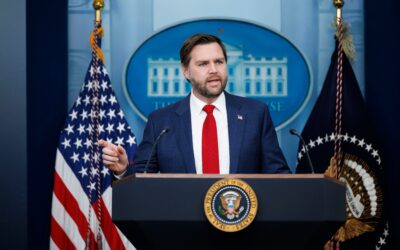
JD Vance: Illegal Immigration Drives Up Home Prices
The Modern Memo may be compensated and/or receive an affiliate commission if you click or buy through our links. Featured pricing is subject to change. Rising Home Costs and the Immigration Debate In recent months, Vice President J.D. Vance has linked the growing housing-affordability crisis in America to the increase in illegal immigration. He argues that when millions of people arrive without legal status, they create new demand for housing, and that in turn drives up home prices and rents for American citizens. Furthermore, he contends that regulatory burdens and insufficient home construction further amplify the problem, Breitbart News reports. Vance’s Key Argument: Demand Outpacing Supply Vance asserts that the U.S. is experiencing too much demand for housing and not enough new homes to match. He notes that younger Americans are “worried about the basics,” including the ability to buy a home. He connects this directly to mass illegal immigration under former President Joe Biden. If more people enter the country—especially those without legal status—they require housing. He claims that those demands compete with citizens and drive up prices for everyone. Additionally, he argues that regulatory and construction shortfalls worsen the crisis. For example, new-home building lags behind where it should be, and local regulations add costs and delay projects. Because of this, Vance believes the American Dream of owning a home is slipping out of reach for many, particularly younger generations. Related Stories Kamala Teases 2028 Run as Democrats Scramble for Strategy FBI Probes Hunting Stand Near Trump’s Air Force One Area Trump Scores Legal Victory: $500M Fraud Penalty Overturned Young Americans at a Disadvantage According to Vance, younger generations (millennials and younger) face steeper hurdles than previous ones. He pointed out that while older generations often acquired homes by age 30, many in the younger cohort cannot even begin that journey. This matters because homeownership has long been a major way for families to build wealth. With prices soaring and supply tight, the pathway has narrowed. Vance says the combination of rising costs, high interest rates, tighter lending, and increased competition means it’s harder for a young person to buy a first home now than it was decades ago. He casts the situation as less about individual failure and more about structural shifts in the economy and housing market. Immigration’s Role According to Vance Central to Vance’s viewpoint is the idea that large-scale illegal immigration has drawn more people into the housing market than the system can easily absorb. For instance, he has used figures suggesting “20 million” or “25 million” undocumented people competing for housing. He argues that every new person needing a home exerts pressure on limited housing stock, especially in tight markets. Furthermore, he says that when legal entry is lax and enforcement weak, the influx accelerates the problem. By linking immigration to housing, Vance hopes to shift some policy focus toward border-security, enforcement, and limiting illegal entries — as part of the broader housing-affordability agenda. Supply-Side Problems and Structural Constraints Although demand is an important piece, Vance also highlights supply-side issues. He says that too few homes have been built in recent years and that local zoning rules, building regulations, and high development costs delay or block construction. For young buyers, this means fewer entry-level homes and more bidding wars. Vance’s solution emphasizes unlocking supply: simplifying regulations, increasing production, and thereby easing price pressure. He argues that without such structural fixes, simply blaming demand alone will not suffice. Moreover, he draws comparisons to other countries that faced high immigration and housing-cost spikes, using that to support his claim that immigration and housing affordability are linked. 🚨 JUST IN — JD VANCE: “We need to build 5 MILLION new homes!” Yep, and we need to deport 20 MILLION illegals! If we do both of those things (and quickly), we can FINALLY start making housing affordable again. pic.twitter.com/TKfa7OcpYG — Nick Sortor (@nicksortor) November 14, 2025 What It Means for Homebuyers For young Americans trying to buy a home, the message from Vance is that they are caught in a confluence of pressures: high demand, tight supply, regulatory friction, and migration-driven competition. If his diagnosis is correct, then policy actions would need to address all these elements simultaneously. From a practical standpoint, this suggests that aspiring buyers may need to broaden their search areas, adjust expectations (in terms of size or location), and act quickly when opportunities arise. Meanwhile, policymakers may need to streamline permitting, incentivize construction of starter homes, and ensure that housing supply keeps pace with growing need. If, on the other hand, the primary challenges are supply-side rather than immigration-driven demand, then focusing resources entirely on border enforcement may miss the bigger housing-policy target. Moving Forward: Policy and Opportunity Looking ahead, if the government adopts Vance’s framing, we might see increased emphasis on stricter immigration enforcement, border control, and minimizing illegal entries — all linked to housing-affordability goals. At the same time, a supply-side push could involve incentives for builders, reduced regulations, tax breaks for starter homes, and faster development permitting. For homebuyers, that means staying informed about local housing-policy changes, monitoring interest-rate and credit-market trends, and preparing financially (saving for down payments, improving credit scores). In markets where supply is increasing or regulatory burdens easing, buyers may find better opportunities. Ultimately, as Vance argues, the goal should be to restore the possibility of homeownership for young Americans — enabling them to buy a home, build equity, and feel rooted in their communities. Final Thoughts In summary, J.D. Vance presents a bold argument: that illegal immigration has materially contributed to America’s housing-affordability crisis by driving up demand while supply lags. He combines this with a critique of regulatory barriers and the younger generation’s diminishing access to homeownership. While many experts agree that the housing supply shortfall is a central issue, they caution that immigration is only one part of a complex equation. For young Americans hoping to buy a home, recognizing both the demand and supply aspects of the challenge is critical. And…