

Miami

Championship Clash: USA and Venezuela Meet in Miami for the WBC Final
The 2026 World Baseball Classic has reached its peak. Tonight, March 17, at loanDepot park in Miami, Team USA and Team Venezuela will square off in a winner-take-all championship game. For the United States, it is a chance to secure their second title in three tournaments; for Venezuela, it is the opportunity to claim their first-ever gold on the world’s biggest stage. At The Modern Memo, we analyze the dramatic path to the final, the clash of baseball philosophies, and the high-stakes pitching matchup that will decide the crown. The Road to Miami: Battle-Tested vs. History-Makers Neither team coasted to the final. Both rosters had to survive high-tension nail-biters to earn their spot in tonight’s championship. USA’s Grit: After an early-tournament scare against Italy, Team USA has been the definition of “clutch.” They narrowly escaped a semifinal thriller against the Dominican Republic with a 2-1 victory, fueled by solo home runs from Gunnar Henderson and Roman Anthony. The U.S. is appearing in its third consecutive final, a testament to the depth and consistency of American talent. Venezuela’s Historic Rally: Venezuela is the story of the tournament. After upsetting the defending champions, Japan, in the quarterfinals, they ended Italy’s “Cinderella” run in the semifinals. Down 2-1 in the seventh inning, Venezuela ignited a three-run rally with two outs, powered by the bats of Ronald Acuña Jr., Maikel Garcia, and Luis Arraez. This is Venezuela’s first-ever appearance in a WBC final. The Pitching Matchup: McLean vs. Rodriguez In a tournament defined by pitch counts and strategic bullpen usage, tonight’s starters carry the weight of their nations. Nolan McLean (USA): The Americans are handing the ball to the hard-throwing right-hander. McLean represents the “new breed” of American arm—high velocity with a devastating breaking ball. After a rested day on Monday, the U.S. bullpen is fully available, meaning McLean likely only needs to navigate the lineup twice before turning it over to the relief corps. Eduardo Rodriguez (Venezuela): The veteran lefty gets the start for Venezuela. Rodriguez brings years of big-game MLB experience and a savvy approach that relies on location and changing speeds. His goal will be to neutralize the power-heavy left-handed bats in the American lineup, such as Henderson and Anthony. A Clash of Styles Tonight is also a study in contrast. Team USA has adopted a business-like, “mission-focused” demeanor, with many players citing a desire to play for the servicemen and women of the United States. Conversely, Team Venezuela has played with a joyful, “winter ball” energy—dancing in the dugout and feeding off the exuberant, flag-waving crowds in Miami. A pre-game coin flip determined that Team USA will be the home team, giving them the critical advantage of the last at-bat in front of a raucous, sold-out crowd of over 36,000. Final Word Tonight, the world stops to watch the two best teams in the sport. When you look past the regional rivalries and focus on the data—the lockdown American bullpen and the resilient Venezuelan two-out hitting—you gain a clearer picture of a final that is too close to call. Quality information replaces the noise of partisan predictions with the reality of a statistical toss-up. It allows you to see this game as the ultimate validation of the WBC’s growth: a championship where the “established” power and the “rising” nation are on perfectly equal footing. By choosing to tune in tonight, you align your perspective with the pinnacle of international competition. Where Facts, Context, and Perspective Matter At The Modern Memo, our goal is simple: to provide clear, well-researched reporting in a media landscape that often feels overwhelming. We focus on substance over sensationalism, and context over commentary. If you value thoughtful analysis, transparent sourcing, and stories that go beyond the headline, we invite you to share our work. Informed conversations start with reliable information, and sharing helps ensure important stories reach a wider audience. Journalism works best when readers engage, question, and participate. By reading and sharing, you’re supporting a more informed public and a healthier media ecosystem. The Modern Memo may be compensated and/or receive an affiliate commission if you click or buy through our links. Featured pricing is subject to change. 📩 Love what you’re reading? Don’t miss a headline! Subscribe to The Modern Memo here!
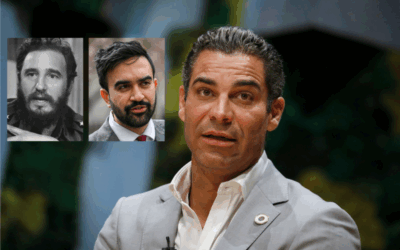
Miami Mayor’s Warning: NYC’s Mamdani Echoes Castro
Miami Mayor Francis Suarez ignited a firestorm this week in an interview with the New York Post. He made a bold comparison that links New York City’s mayoral frontrunner to one of history’s most notorious dictators. Drawing from his family’s painful escape from Cuba, Suarez likened Democratic socialist Zohran Mamdani to a young Fidel Castro. He cautions that electing Mamdani could steer the Big Apple down a “very dark path” of economic ruin and repression. As the November 4, 2025, election looms, Suarez’s words cut deep, urging New Yorkers to confront the ghosts of socialism head-on. His call to the people of NYC is rooted in personal history and political conviction. Suarez’s Family Legacy Fuels His Fierce Stance Francis Suarez, Miami’s dynamic mayor since 2017, carries the weight of his parents’ exile from Castro’s Cuba in the early 1960s. They fled a regime that promised equality but delivered despair. In an exclusive with the New York Post, Suarez channeled that trauma into a vivid warning. He recounted, “My parents fled [Cuba] . . . because a young charismatic leader said ‘Give us all your property, give us all your businesses, and don’t worry, we’ll make everybody equal.’ And he did.” Suarez didn’t mince words: “He made everybody equally poor, equally miserable, and equally repressed. And that’s all that communism has delivered throughout the history of humanity.” At 47, Suarez embodies Miami’s transformation into the “Capital of Latin America.” Term-limited and eyeing national ambitions, he refuses to watch silently as New York flirts with policies he sees as disastrous. (RELATED NEWS: Rising Socialism Exposes the Democratic Party’s Identity Crisis) His father, Xavier Suarez, Miami mayor from 1985 to 1993 and then from November 1997 to March 1998, is running again, but Francis stays neutral there. Instead, he trains his focus northward, where the stakes feel personal. Transitioning from family scars to public alarm, Suarez begs New Yorkers to heed history’s lessons before it’s too late. Mamdani’s Rise: Charisma Meets Controversy Enter Zohran Mamdani, the Queens Assemblyman positioning himself as the Democratic socialist frontrunner in the 2025 NYC mayoral race. At just 33, Mamdani pushes an agenda of so-called “affordable” housing, government-run healthcare, and heavy wealth taxes—policies critics warn could destabilize the city’s fragile economy. Despite his limited experience, Mamdani’s rhetoric has gained traction in a city already struggling with soaring costs. Polls suggest he could even unseat incumbent Eric Adams, now running as an independent. But many see his rise less as a sign of strength and more as a symptom of voter frustration. Suarez, however, sees dangerous echoes in Mamdani’s appeal. He compares the young Assemblyman’s charisma to that of Fidel Castro in his early days—the polished revolutionary who promised hope but delivered repression. Mamdani’s public missteps have only added fuel. His inability to bench-press 135 pounds at a Brooklyn “Men’s Day” event became an embarrassing moment that Suarez quickly capitalized on. The Miami mayor later posted an Instagram reel showcasing his own strength—benching 225 pounds 13 times—captioned “Socialism VS Capitalism.” The clip went viral, underlining the contrast. Mamdani’s campaign brushed off the criticism, but Suarez points to it as a broader symbol of weakness—ideological and literal. Even as supporters brand him a fresh voice against corporate greed, opponents fear his “seize the means” mindset would chase businesses and jobs out of the city. Most telling, perhaps, is Mamdani’s silence. He refused to address Suarez’s attacks, leaving voters to wonder if he can withstand scrutiny. In a city of 8.8 million, the whispers of “Castro 2.0” grow louder with each passing week. (MORE NEWS: Pregnant Women Take Tylenol to Defy Trump in Viral Trend) A “Dark Path” Looms: Suarez’s Dire Predictions Suarez doesn’t sugarcoat the fallout. He envisions New York crumbling under socialist weight: businesses fleeing, taxes soaring, and innovation stifled. “There’s some people that say . . . that maybe [electing a socialist mayor in NYC] is best for America in a backwards way because, once you see the abject failure that it will be, there will be a correction and a reset,” he told the New York Post. But Suarez rejects that cruelty: “I don’t want people to suffer for that to happen.” He implores New Yorkers to feel “terrified” of socialism’s track record, from Cuba’s ration lines to Venezuela’s collapse. He also praised Adams, calling him a “good relationship” ally as the two mayors have connected over shared urban challenges. Broader forces shape the narrative: National Republicans cast Mamdani’s rise as a cautionary tale, while Democrats defend his equity-driven proposals. Suarez’s Castro analogy isn’t isolated—it resonates strongly in Cuban-American communities and beyond. As election day nears, his words ripple through op-eds and talk shows, sharpening the stakes of the contest as one of freedom versus folly. Echoes in Miami: A Tale of Two Cities Contrast Miami’s boom with New York’s struggles, and Suarez’s warning becomes clearer. The Sunshine City continues to attract tech leaders and investors with its low taxes, limited regulation, and unapologetically pro-business climate. As host of the American Business Forum on November 5-6, 2025—just after the election—Suarez plans to highlight Miami’s success as a model. “Miami is a truly great global city,” he says, framing it as the antidote to socialist experiments. Attendees will see firsthand how free enterprise and hard work have turned exile stories into prosperity. Meanwhile, New York—once the envy of the world—faces a shrinking tax base, businesses leaving, and mounting fiscal troubles. Suarez warns that a Mamdani victory would only accelerate the decline, echoing the collapse seen in nations that embraced socialism and paid the price. Mamdani’s supporters push for sweeping reforms, but socialism is no bold new idea—it has been tried repeatedly, and it has failed every time. The choice is stark: stay on the proven path of growth and opportunity, or repeat history’s mistakes and risk turning America’s greatest city into another cautionary tale. Backlash and Broader Ripples Mamdani’s camp stays quiet, while allies dismiss Suarez’s warning as “fearmongering.” Progressive voices call it a smear, but critics argue it’s simply…