
Midterms
Republicans Hold Roughly 8-Seat Redistricting Edge Heading Into 2026 Midterms
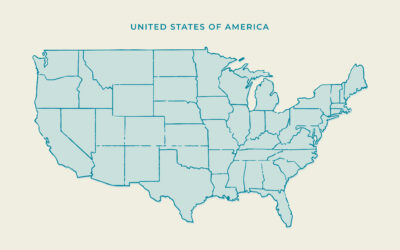
A wave of mid-decade congressional map redraws has left Republicans with a net advantage of roughly eight U.S. House seats heading into the November midterms, the product of an aggressive redistricting push in GOP-controlled states that a Supreme Court ruling this spring helped clear the way for. Texas kicked off the fight last August when Governor Greg Abbott signed a new congressional map creating five additional Republican-leaning districts. Democratic-controlled California countered in November, when voters approved a new map projected to net Democrats five seats of their own. Since then, the redistricting arms race has spread well beyond those two states: Ohio’s bipartisan redistricting commission approved a map last October worth two more seats for Republicans, Florida’s governor signed a map in early May netting the GOP an estimated four seats, and Missouri’s legislature — over Democratic objections — redrew Kansas City-area Representative Emanuel Cleaver’s district to add a Republican-leaning seat, a move the state Supreme Court upheld in May. Louisiana was forced into its own redraw after the U.S. Supreme Court’s late-April ruling in Texas’s case, a decision that is expected to net Republicans an additional seat there as well. Not every state redraw favored the GOP: a Virginia court struck down a Democratic-backed constitutional amendment that would have let the legislature redraw that state’s map, keeping Virginia’s current lines in place. Added together, Republicans have picked up an estimated 13 seats across Texas, Florida, Ohio, Missouri and Louisiana, while Democrats have gained roughly five through California’s counter-map — a net swing of about eight seats toward the GOP, enough to meaningfully shift the math in a chamber where 218 seats decide control. The redistricting fights were reshaped by the Supreme Court’s 6-3 ruling in Louisiana v. Callais, which narrowed the Voting Rights Act’s protections for minority-opportunity districts. The court held that maps drawn specifically to maximize the electoral chances of non-white candidates can themselves run afoul of the Constitution’s equal-protection guarantee, a decision legal analysts say gave state legislatures far more room to redraw lines for straightforward partisan advantage without running into the VRA constraints that had shaped redistricting for decades. Democratic National Committee Chair Ken Martin has criticized the wave of GOP-led redraws, saying of Missouri’s effort specifically that Governor Mike Kehoe “undermined the voice of Missouri voters” and sought to “dilute their power altogether.” Republican officials have defended the new maps as legitimate exercises of state legislative authority, noting that Democratic-controlled California pursued the same strategy once voters there approved it. More maps could still be litigated before November. Courts have traditionally been reluctant to order new congressional lines close to an election, but this year’s Supreme Court ruling has led some legal observers to say that “traditional expectations may not apply in 2026,” leaving open the possibility of further changes in the months ahead. Even with the current GOP edge, strategists in both parties caution that redistricting alone won’t decide House control — Republicans continue to face separate headwinds heading into the midterms, including historical trends that typically favor the party out of the White House in off-year elections.

House GOP Passes Funding Bill Through Midterms, Daring Democrats to Force Another Shutdown
House Republicans pushed through a stopgap government funding bill this week that would keep federal agencies running through Dec. 4 — safely past the November midterms — in a move GOP leaders framed as a responsible, no-drama alternative to the shutdown fights Democrats have triggered twice in the past year. The House voted 220-205 to extend government funding at existing levels through Dec. 4, with six Democrats joining Republicans to advance the bill. Only one Republican, Rep. Thomas Massie of Kentucky, voted against the measure. The bill now heads to the Senate, where its fate is far less certain. Republicans Frame It as Responsible Governing House Appropriations Chairman Tom Cole, R-Okla., told colleagues that “the hard reality before us is straightforward — the fiscal year deadline is outpacing the work that remains,” and that Republicans “refuse to let the obstruction and inaction of Senate Democrats trigger another manufactured shutdown.” Speaker Mike Johnson praised the bill and placed the blame squarely on Democrats who opposed it. Republicans have pointed to this year’s earlier 76-day shutdown of the Department of Homeland Security — the longest in U.S. history, which Democrats triggered over demands to overhaul ICE and Border Patrol funding — as a preview of what could happen again if Democrats aren’t willing to negotiate in good faith before the Sept. 30 deadline. Democrats Push Back House Democratic leadership blasted the bill as a one-sided attempt to lock in current spending and policy priorities without their input. House Minority Leader Hakeem Jeffries, Democratic Whip Katherine Clark, and Democratic Caucus Chair Pete Aguilar said in a joint statement that the continuing resolution “is a premature and desperate attempt by Republicans to abdicate their responsibility to govern while there are still several months left to negotiate a bipartisan agreement.” An Uncertain Path in the Senate Senate Majority Leader John Thune has said he’ll try to bring a stopgap measure to a vote before the chamber breaks for its August recess, but acknowledged it’s “possible” the fight could get “punted” further into September, leaving the funding question unresolved right up against the fiscal year deadline. With not a single annual appropriations bill having cleared both chambers so far this year, lawmakers are running out of runway to avoid another last-minute scramble. This story is developing.