

NASA
Homecoming of Heroes: Artemis II Crew Nears Pacific Splashdown After Record-Breaking Lunar Voyage
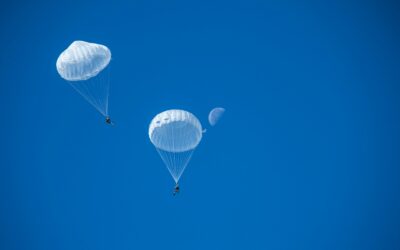
The eyes of the nation are fixed on the Pacific horizon today, April 10, 2026, as the Orion spacecraft, aptly named Integrity, prepares for a high-stakes splashdown off the coast of San Diego. After a historic 10-day mission that took humanity further into the cosmos than ever before, Commander Reid Wiseman and his crew are in the final hours of their journey home. At The Modern Memo, we analyze the harrowing “skip entry” physics of re-entry, the recovery operations led by the U.S. Navy, and why this mission’s success is a definitive victory for American space dominance. The Final Descent: 25,000 MPH and 5,000 Degrees The most dangerous phase of the mission begins tonight. At 7:53 p.m. EDT, the Orion capsule will hit the Earth’s atmosphere at a staggering 24,800 mph (roughly Mach 32). The Heat Shield Test: The spacecraft’s 16.5-foot heat shield will face temperatures up to 5,000°F—half as hot as the surface of the sun. Following the minor charring issues observed during the uncrewed Artemis I flight, NASA engineers have optimized a “skip entry” trajectory to dissipate heat more effectively before the final descent. The Blackout Period: For several minutes, a sheath of superheated plasma will surround the capsule, causing a total communications blackout. During this “white-knuckle” window, the world will wait for the first signal that the parachutes have successfully deployed. The Chute Sequence: At approximately 8:04 p.m. EDT, Orion will unfurl its three massive main parachutes, slowing the craft from hundreds of miles per hour to a gentle 20 mph for splashdown. Recovery Operations: The USS John P. Murtha Stands Ready The U.S. Navy is already on-station 50 to 70 miles off the coast of Arte, ready to retrieve the first lunar explorers of the 21st century. Elite Recovery Teams: The USS John P. Murtha, an amphibious transport dock, is leading the operation. Navy divers and NASA recovery specialists will secure the capsule while it is still in the water before extracting the crew via MH-60S Sea Hawk helicopters. Health First: Once aboard the ship, the four-person crew—Reid Wiseman, Victor Glover, Christina Koch, and Jeremy Hansen—will undergo immediate medical evaluations. After 10 days in microgravity, the return to Earth’s 1G environment is a significant physical challenge. A San Diego Welcome: The crew is expected to be flown to Naval Base San Diego before returning to NASA’s Johnson Space Center in Houston for a hero’s welcome. A Legacy Refined: Breaking the Apollo 13 Record While the splashdown marks the end of the flight, the data collected during this mission has already rewritten the record books. Farthest from Home: On April 6, the crew reached a maximum distance of 252,756 miles from Earth—shattering the 56-year-old record held by the Apollo 13 crew. The Path to 2027: The perfection of Artemis II’s systems—from the life support to the manual piloting demonstrations performed yesterday—clears the “red tape” for Artemis III, the mission that will return Americans to the lunar surface in 2027. Final Word The return of Artemis II is the ultimate validation of the “America First” space agenda. When you look past the noise of “scientific exploration” and focus on the data—the Mach 32 re-entry, the shattering of the deep-space distance record, and the flawless performance of the SLS rocket—you gain a clearer picture of a nation that has reclaimed its role as the undisputed leader of the high ground. Quality information replaces the memory of the “lost decades” with the reality of a new, aggressive lunar era. It allows you to see this splashdown not as an ending, but as the final rehearsal for a permanent American presence on the Moon. By choosing to celebrate this homecoming today, you align your perspective with the reality that the stars are no longer just for looking at—they are for reaching. Where Facts, Context, and Perspective Matter At The Modern Memo, our goal is simple: to provide clear, well-researched reporting in a media landscape that often feels overwhelming. We focus on substance over sensationalism, and context over commentary. If you value thoughtful analysis, transparent sourcing, and stories that go beyond the headline, we invite you to share our work. Informed conversations start with reliable information, and sharing helps ensure important stories reach a wider audience. Journalism works best when readers engage, question, and participate. By reading and sharing, you’re supporting a more informed public and a healthier media ecosystem. The Modern Memo may be compensated and/or receive an affiliate commission if you click or buy through our links. Featured pricing is subject to change. 📩 Love what you’re reading? Don’t miss a headline! Subscribe to The Modern Memo here!

History in the Making: Artemis II Crew Enters Lunar Domain, Sets Sights on All-Time Distance Record
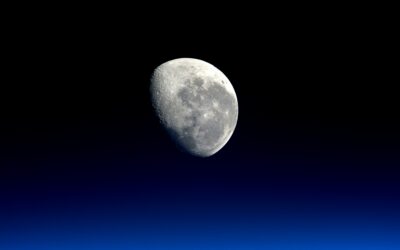
In a monumental moment for human exploration, the four-person crew of Artemis II officially entered the Moon’s “sphere of influence” at 12:37 a.m. EDT today, April 6, 2026. For the first time in over five decades, the Moon’s gravity now has a stronger pull on a human-crewed spacecraft than the Earth’s—marking the definitive beginning of the mission’s high-stakes lunar flyby. At The Modern Memo, we analyze the “free-return” physics bringing our astronauts home, the record-breaking distance they are about to reach, and why this mission is the ultimate validation of the Artemis program’s engineering. The Milestone: “Falling Toward the Moon” The Orion spacecraft, carrying Commander Reid Wiseman, Pilot Victor Glover, and Mission Specialists Christina Koch and Jeremy Hansen, has spent the last five days rising away from Earth. Today, that trajectory shifted. A New Perspective: “We are now falling to the Moon rather than rising away from Earth. It is an amazing milestone!” Mission Specialist Christina Koch reported to Houston shortly after crossing the gravitational threshold. The Record Breakers: Later today, at approximately 1:46 p.m. EDT, the crew is expected to surpass the all-time distance record for humans in space—a record held for 56 years by the crew of Apollo 13 (248,655 miles). By tonight, Artemis II will reach a maximum distance of 252,760 miles from our home planet. The Flyby: Observations of the Far Side As Orion swings around the Moon, the crew will be the first humans to see the lunar far side with the naked eye since 1972. NASA has identified 35 geological features for the crew to photograph and analyze, including the massive Orientale Basin. The Communication Blackout: Starting at roughly 6:44 p.m. EDT, the mission will enter a planned 40-minute communications blackout as Orion passes behind the Moon. Closest Approach: While behind the lunar disc and out of contact with Earth, the crew will make their closest approach to the surface—just 4,070 miles above the lunar crust—at 7:02 p.m. EDT. Earthset: The astronauts are expected to witness a rare “Earthset,” seeing our planet sink beneath the lunar horizon, a view that has historically united humanity in awe. Strategic Safety: The Free-Return Trajectory A key highlight of the Artemis II mission is its “free-return trajectory.” Unlike complex orbital insertions, this path uses the Moon’s gravity as a natural slingshot. Physics Over Propulsion: By looping around the Moon, Orion is naturally propelled back toward Earth without the need for a massive engine burn. This “fail-safe” design ensures that even if the main service module engine encountered an issue, the crew would still be on a direct path to a Pacific Ocean splashdown. The “Good Morning” Wakeup: The crew began their historic day to the sounds of “Good Morning” by Mandisa and TobyMac, following a lighthearted “Easter egg hunt” yesterday where they hid dehydrated scrambled eggs around the cabin to celebrate the holiday in orbit. Final Word The Artemis II lunar flyby is more than a technical demonstration; it is a restoration of American exceptionalism in deep space. When you look past the noise of “space race” comparisons and focus on the data—the crossing of the gravitational sphere of influence and the shattering of a 56-year-old distance record—you gain a clearer picture of a nation that has finally reclaimed the high ground. Quality information replaces the nostalgia of the 1960s with the reality of 21st-century precision. It allows you to see this mission not as a repeat of history, but as the essential bridge to the 2027 lunar landing. By choosing to follow this journey today, you align your perspective with the reality that humanity’s reach is once again exceeding its grasp. Where Facts, Context, and Perspective Matter At The Modern Memo, our goal is simple: to provide clear, well-researched reporting in a media landscape that often feels overwhelming. We focus on substance over sensationalism, and context over commentary. If you value thoughtful analysis, transparent sourcing, and stories that go beyond the headline, we invite you to share our work. Informed conversations start with reliable information, and sharing helps ensure important stories reach a wider audience. Journalism works best when readers engage, question, and participate. By reading and sharing, you’re supporting a more informed public and a healthier media ecosystem. The Modern Memo may be compensated and/or receive an affiliate commission if you click or buy through our links. Featured pricing is subject to change. 📩 Love what you’re reading? Don’t miss a headline! Subscribe to The Modern Memo here!
A New Dawn at Canaveral: NASA Fuels SLS for Historic Artemis II Launch
Today, April 1, 2026, the eyes of the world are fixed on Launch Pad 39B at the Kennedy Space Center. After years of anticipation and recent delays, NASA has officially entered the final countdown for Artemis II—the first crewed mission to the lunar vicinity in over 54 years. At The Modern Memo, we analyze the “Liquid Gold” fueling process, the diverse crew making history, and why this mission is the ultimate stress test for America’s deep-space infrastructure. The Countdown: Fueling the Behemoth As of 9:00 AM EDT, NASA Launch Director Charlie Blackwell-Thompson has given the “Go” for cryogenic loading. The 322-foot Space Launch System (SLS) rocket is currently being filled with over 750,000 gallons of super-cooled liquid hydrogen and liquid oxygen. The Launch Window: Liftoff is targeted for 6:24 PM EDT today. Forecasters currently give the mission an 80% chance of favorable weather, with the primary concerns being thick cloud cover and potential upper-level wind shear. The Sound Suppression Surge: Ground teams have begun filling the massive sound suppression tanks. At the moment of ignition, hundreds of thousands of gallons of water will be unleashed to dampen the acoustic energy of the SLS’s 8.8 million pounds of thrust. The Crew: A New Generation of Explorers Unlike the Apollo missions of the past, Artemis II represents a broader cross-section of humanity. The four-person crew is currently in the final stages of suit-up and pre-flight medical checks. Reid Wiseman (Commander): A veteran Navy aviator leading the first lunar flight of the 21st century. Victor Glover (Pilot): Making history as the first person of color to leave low Earth orbit. Christina Koch (Mission Specialist): An engineer and record-breaking astronaut who will become the first woman to fly to the Moon. Jeremy Hansen (Mission Specialist): Representing the Canadian Space Agency, Hansen is the first non-American to embark on a lunar mission. The Mission: Testing the Life Support “Safe Haven” Artemis II is a 10-day flight test. It will not land on the lunar surface, but it will push the Orion spacecraft further than any crewed vehicle in history. The Lunar Flyby: The crew will perform a “free-return trajectory,” swinging around the far side of the Moon approximately 4,700 miles above the surface. Life Support Stress Test: The first 24 hours will be spent in high Earth orbit to ensure the life support systems are fully functional before the “Trans-Lunar Injection” burn commits the crew to the deep-space leg of the journey. The Heat Shield Stakes: Following the minor charring issues observed during the uncrewed Artemis I mission, engineers have implemented a redesigned thermal protection system. This mission will be the definitive test of whether Orion can survive a 25,000 mph re-entry into Earth’s atmosphere. Final Word The launch of Artemis II is a definitive reassertion of American leadership in the cosmos. When you look past the “billion-dollar price tag” critiques and focus on the data—the 8.8 million pounds of thrust, the multinational crew, and the strategic pivot toward a permanent Moon base—you gain a clearer picture of a nation returning to its pioneering roots. Quality information replaces the noise of “space race” rhetoric with the clarity of a methodical, safety-first engineering feat. It allows you to see this launch not as a one-off event, but as the foundational stone for the 2027 lunar landing. By choosing to watch the SLS rise today, you align your perspective with the reality that the horizon of human achievement is once again expanding. Where Facts, Context, and Perspective Matter At The Modern Memo, our goal is simple: to provide clear, well-researched reporting in a media landscape that often feels overwhelming. We focus on substance over sensationalism, and context over commentary. If you value thoughtful analysis, transparent sourcing, and stories that go beyond the headline, we invite you to share our work. Informed conversations start with reliable information, and sharing helps ensure important stories reach a wider audience. Journalism works best when readers engage, question, and participate. By reading and sharing, you’re supporting a more informed public and a healthier media ecosystem. The Modern Memo may be compensated and/or receive an affiliate commission if you click or buy through our links. Featured pricing is subject to change. 📩 Love what you’re reading? Don’t miss a headline! Subscribe to The Modern Memo here!

Moon Mission Under Pressure: NASA Battles “Cryogenic Leaks” in Artemis II Test
The road back to the Moon is rarely a smooth one. As of Monday evening, February 2, 2026, NASA’s Artemis II mission is undergoing its final “Wet Dress Rehearsal” (WDR) at Kennedy Space Center’s Launch Complex 39B. While fueling operations are well underway, the team is currently troubleshooting a liquid hydrogen leak that has injected new tension into the countdown. At Modern Memo, we break down the critical milestones of this rehearsal, the technical hurdles on the pad, and what this means for the historic crewed launch later this month. The “Wet” Dress Rehearsal: Why It Matters A wet dress rehearsal is the final “test like you fly” operation before an actual launch. NASA calls it “wet” because it involves pumping over 700,000 gallons of super-cold liquid oxygen (LOX) and liquid hydrogen (LH2) into the Space Launch System (SLS) rocket. The mission has three primary objectives: Validate the “Stack”: Ensuring the SLS rocket and Orion spacecraft can handle the immense thermal stress of cryogenic fuel. Practice the Countdown: Running the launch team through the precise 48-hour timeline they will follow on launch day. The “T-Minus” Recycle: Proving the ground systems can stop the clock and “recycle” the countdown in the event of a last-minute technical glitch. Status Update: The Hydrogen Hurdle Earlier today, Launch Director Charlie Blackwell-Thompson gave the official “go” to begin tanking. However, the simulation hit a snag around midday when sensors detected a liquid hydrogen leak at the tail service mast umbilical—the connection point between the ground and the rocket. The Response: NASA engineers have paused the LH2 flow to the core stage to perform “troubleshooting procedures” developed after the Artemis I mission. The Workaround: While hydrogen flow is paused for the core stage, the liquid oxygen loading continues, and fuel continues to flow into the Interim Cryogenic Propulsion Stage (ICPS), the rocket’s upper stage. This type of leak is a familiar ghost for NASA; similar issues delayed the Artemis I mission for months in 2022. However, the team is applying “lessons learned” to attempt a fix while the rocket remains fueled. The Path to “T-0” Despite the leak, NASA is still targeting a simulated T-0 for 9:00 PM EST tonight. If the troubleshooting takes longer, the agency has the flexibility to extend the test window until 1:00 AM EST Tuesday. If the simulation reaches the final minutes, the team will perform two distinct countdown runs: The Terminal Count: Taking the clock down to T-minus 33 seconds, then stopping to test a recycle. The Final Cut: Restarting the clock and taking it all the way to T-minus 10 seconds—just seconds before the four RS-25 engines would normally ignite. Launch Window: When Will Humans Fly? The outcome of tonight’s test will determine if NASA can hit its earliest available launch window. Target Date: If the wet dress is successful and data review goes smoothly, the earliest possible launch for the crewed Artemis II mission is Sunday, February 8 (Super Bowl Sunday). Backup Windows: If the team needs more time for repairs, subsequent windows are available on February 10 and 11. The Crew: The four astronauts—Reid Wiseman, Victor Glover, Christina Koch, and Jeremy Hansen—remain in medical quarantine in Houston, monitoring the test remotely before flying to Florida later this week. Final Word Staying informed on the complexities of the Artemis mission isn’t just about space—it plays a powerful role in your understanding of human persistence and engineering precision. When you look past the frustration of “delays” and focus on the data behind safety protocols, you gain a clearer picture of the immense effort required to protect the lives on board. Quality information replaces the noise of scheduling rumors with the clarity of technical benchmarks. It allows you to see every troubleshooting step as a necessary layer of protection for the four souls making this historic journey. By choosing to follow the science rather than the clock, you align your perspective with the reality of deep-space exploration and support a more informed, resilient future for humanity. Where Facts, Context, and Perspective Matter At The Modern Memo, our goal is simple: to provide clear, well-researched reporting in a media landscape that often feels overwhelming. We focus on substance over sensationalism, and context over commentary. If you value thoughtful analysis, transparent sourcing, and stories that go beyond the headline, we invite you to share our work. Informed conversations start with reliable information, and sharing helps ensure important stories reach a wider audience. Journalism works best when readers engage, question, and participate. By reading and sharing, you’re supporting a more informed public and a healthier media ecosystem. The Modern Memo may be compensated and/or receive an affiliate commission if you click or buy through our links. Featured pricing is subject to change. 📩 Love what you’re reading? Don’t miss a headline! Subscribe to The Modern Memo here!
US ‘Unprepared’ For Major Solar Storm, Exercise Reveals
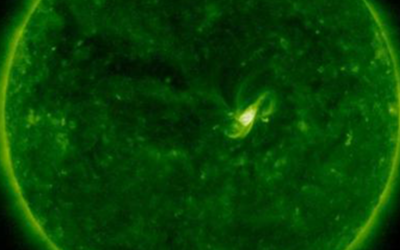
Details of a first-of-its-kind space weather emergency preparedness exercise conducted in May 2024 to test the U.S. response to a cataclysmic solar storm were released in spring 2025. Things didn’t go well. On April 28, 2025 (less than a month ago from the time of writing), a still-unknown incident caused the entirety of Europe’s Iberian Peninsula to crash into darkness. Any device not powered by batteries was rendered useless, transport systems were immobile, stranding countless people across the continent. It was described as the “blackout of the century” by Space.com, and may have been caused by a still-impending threat from our cosmos: solar storms. Somewhat bizarrely, almost a year to-the-day prior, the U.S. conducted its first ever space weather simulation exercise, the details of which were released in mid-April 2025. (MORE NEWS: Mainstream Media Finally Wakes Up To Massive Geological Threat To US) The exercise ran from May 8-9 and was designed to simulate and review our nation’s (specifically, our government’s) preparedness for a “severe space weather event,” such as a massive solar storm that interferes dangerously with Earth’s magnetic field. Interagency coordination, response protocols, and communications throughout industry and various critical infrastructure were all put through the test, which included: Intense radiation exposure to satellites, astronauts and commercial aviation Radio communications outages and disruptions Loss of functionality or degraded performance of GPS for precision navigation and timing Reduced ability to communicate with and track on-orbit satellites Local- to regional-scale power outages, affecting railways and even pipelines The hypothetical scenario was adapted from the Department of Homeland Security’s Exercise and Evaluation Program (HSEEP), included more than 25 federal, state, tribal, and local agencies, and ran participants through a “series of solar events with wide-ranging effects on Earth as well as the region between Earth and the moon.” What Happens During A Major Solar Storm? When the sun releases huge bursts of energy, particles, and other materials, we call it a “solar storm.” They range in scale from A (weakest) to X (strongest), according to NASA. The scale works similarly to the Richter scale, with each class adding a 10-fold increase in energy. Along with the aforementioned impacts to core modern technologies, such as GPS and other navigation systems, there are significant threats to aviation and satellites when they’re bombarded by these solar materials. And if there are threats to aviation and satellites, there are threats to those of us here on the ground. If you’ve a spare 15 minutes or so, we highly recommend watching this excellent episode of “The Why Files” to learn more about the potential impacts of minor and major solar storms. You can also listen to the podcast version by clicking here. How Significant Is The Threat of Solar Storms On the extremely biased “Modern Memo Scale of Danger,” solar storms are around an 8/10. Though not as physically destructive as an asteroid impact or nuclear apocalypse, there is a very real chance an extreme solar storm could cause the latter through disruptions to our nuclear facilities. The largest solar event known to science occurred around 12,350 B.C. (which oddly coordinates closely with the Younger Dryas, right at the end of our last major Ice Age), and was so massive its discovery “expands the timeline and intensity of known solar activity and sets a new upper boundary for such solar phenomena,” according to a 2025 study detailed by Astrobiology. These massive storms are called “Miyake events,” and increase the normal production of various isotopes such as radiocarbon (14C) in the atmosphere. The event and post-event impacts of solar storms on the scale of Miyake events are myriad, ranging from mass civil disruption, loss of life, infrastructural collapse, to all-out civilization reset. It all depends on how a storm impacts our energy grid. But again, we simply don’t know enough about them to know more than the major risks to our grid and modern lifestyles. “Understanding its scale is critical for evaluating the risks posed by future solar storms to modern infrastructure like satellites, power grids, and communication systems,” writes co-author Kseniia Golubenko. (MORE NEWS: Best Crops To Grow During A Nuclear Apocalypse, According To Scientists) “Grid failure is a real and imminent threat, a devastatingly deadly occurrence leading to life-threatening shortages of heat, food, and water. If protective measures are not taken, we will experience catastrophic failures leaving citizens in states of starvation, death, destruction, and darkness for months,” says the minds behind the documentary “Grid Down, Power Up.” Solar storms are uncontrollable, but we have more options to mitigate their impact than we would a major earthquake. Right now, we’re at our solar maximum. This is a time when our sun emits the most energy during its roughly 11-year solar cycle. If we’re going to be hit with a solar storm capable of disrupting all technologies across North America, it’ll be soon. What Did The Exercise Reveal? Here are the key findings, according to the National Environmental Satellite, Data, And Information Service (NESDIS): Demonstrated the need for better coordination to produce meaningful and understandable Space Weather notifications that are useful for operations and clearly describe the potential impacts on critical infrastructure. Emphasized the importance of a whole-of-government approach, especially federal-regional-state level coordination and awareness, while also highlighting existing gaps that need filling to ensure streamlined and rapid response. Provided opportunities to understand current technology limitations and discussed possibilities for improved forecasting capabilities, including suggestions to place spacecraft farther upstream to provide earlier warning of impending storms. Underscored the need for a national space weather education campaign to raise awareness of risks and improve public understanding. Demonstrated the need for a more coordinated and streamlined communications plan with the public through federal, state, and local agencies, and on social media, with particular emphasis on impact rather than technical science. Served as an exemplary event demonstrating the benefits of a whole-of-government exercise to prepare for scientifically complex threats. We absolutely agree that this was an exemplary event and exercise, but will we see any actual action…