
National Guard

National Guard’s DC Deployment Extended Through 2029 at Projected $1.4 Billion Cost
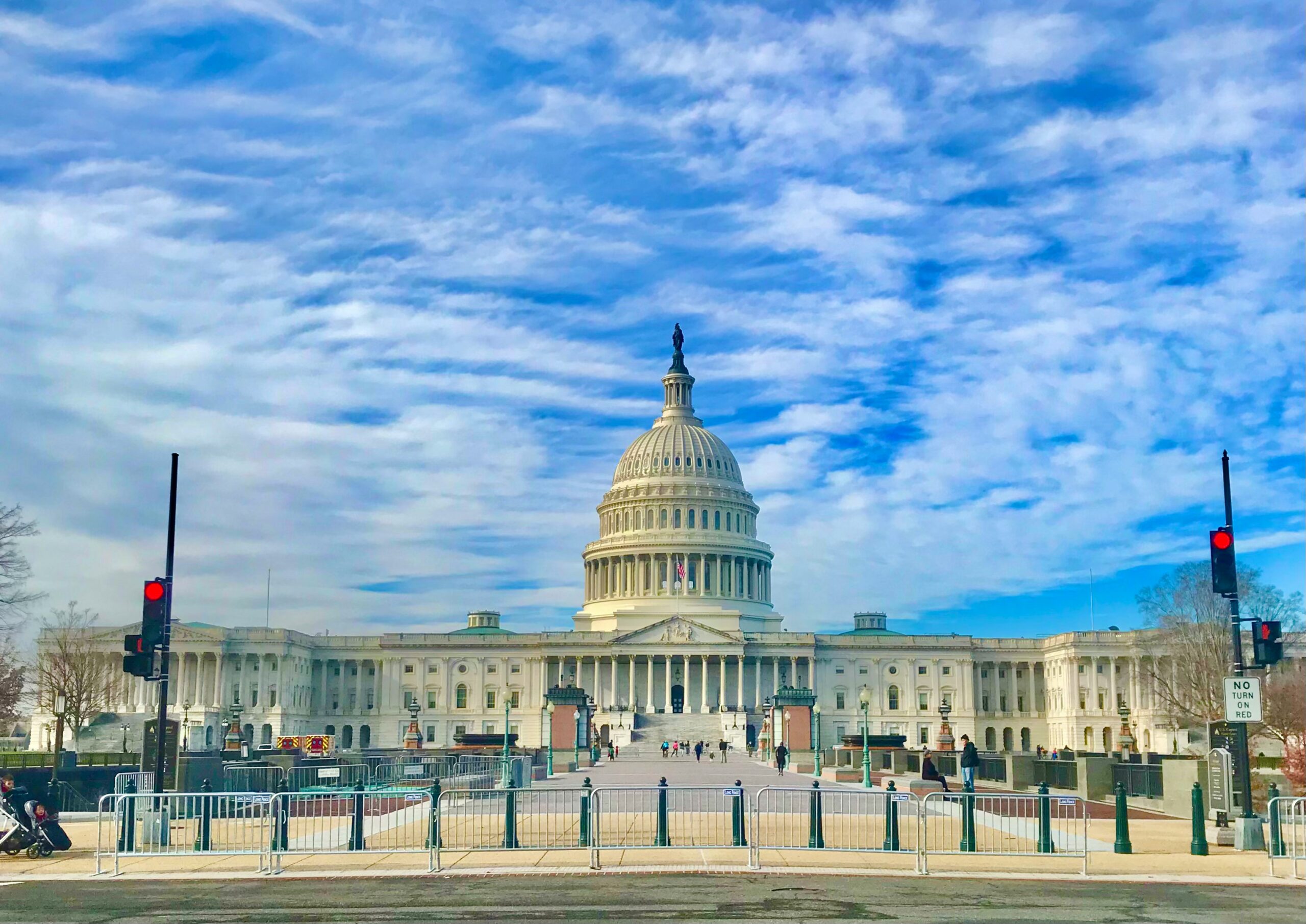
The federal deployment of National Guard troops in Washington, D.C. has been extended through January 2029, stretching what began as a short-term crime crackdown into a multi-year presence projected to cost taxpayers roughly $1.4 billion, according to Defense Department estimates. President Trump originally ordered the deployment on August 11, 2025, framing it as a federal law enforcement surge aimed at bringing down violent crime in the nation’s capital. More than a year later, the mission has grown rather than wound down: as of August 4, more than 4,600 military personnel drawn from the D.C. Guard and units from 24 states and territories remain stationed in the city, working alongside federal law enforcement officers on patrols and other public safety functions. The administration points to concrete numbers to justify the extension. Officials credit the surge with more than 13,000 arrests since it began, and city crime statistics show an overall 20% drop in crime through August 7 compared with the same period in 2025, including a 32% decline in homicides, from 97 down to 66. Supporters of the deployment argue those numbers speak for themselves and reflect a level of coordinated federal-local enforcement that the city could not achieve on its own. Critics, including independent crime analysts, note a more complicated picture: violent crime in Washington had already been on a downward trend before the National Guard surge began in 2025, part of a broader decline in major-city crime rates seen across much of the country. That has fueled a debate over how much of the recent improvement can be credited specifically to the military deployment versus a continuation of trends already underway. The extension has deepened long-simmering tension between the Trump administration and D.C.’s local government over who controls law enforcement and public safety policy in the district. Mayor Muriel Bowser, who has walked a careful line between cooperating with federal authorities and defending the city’s limited home-rule autonomy, acknowledged the district’s constrained position bluntly: “We don’t have voting representation in Congress. We don’t control the D.C. National Guard.” Unlike governors in the 50 states, D.C.’s mayor does not have direct authority over the district’s Guard units, which answer instead to the president — a quirk of the district’s unique legal status that has become newly consequential now that the deployment is expected to stretch across multiple years and, potentially, into a different presidential administration. Some members of the D.C. Council have been more openly critical. Council member Brianne Nadeau said the extended presence has taken a toll on residents’ sense of normalcy in their own city. “The fact that we still have the National Guard walking our streets a year later with no end in sight is really demoralizing,” she said, capturing a sentiment shared by other local officials who argue that a temporary emergency measure has effectively become a permanent fixture of daily life in the capital without the kind of public debate that would normally accompany a policy of that scale and duration. A lawsuit challenging the legal basis for the deployment remains pending in federal court, though legal observers have expressed skepticism about its odds of success, citing the district’s unusual legal status and the broad authority presidents have historically exercised over its Guard units. Unlike a Guard deployment to a state, which generally requires the governor’s consent, the president’s authority over the D.C. National Guard is considerably more direct, giving the White House wide latitude to extend the mission with comparatively little legal friction. The $1.4 billion price tag has also drawn scrutiny on Capitol Hill, where lawmakers from both parties have raised questions about the deployment’s long-term cost-effectiveness compared with alternative approaches, such as funding additional D.C. Metropolitan Police officers directly or investing in community-based violence-intervention programs. Defenders of the current approach counter that the National Guard’s visible presence provides a deterrent effect that a strictly local police response cannot replicate, particularly in high-traffic tourist and government areas of the city that carry outsized symbolic and security importance. The deployment has also become a flashpoint in the broader national debate over the use of military and quasi-military forces for domestic law enforcement, a debate that has grown louder as the administration has weighed similar deployments in other major cities experiencing crime spikes or high-profile public safety incidents. Administration officials have pointed to Washington as a proof-of-concept for the approach, arguing that the visible reduction in violent crime validates extending similar deployments elsewhere. Opponents warn that normalizing a years-long military presence in American cities, even one focused on ostensibly civilian law enforcement tasks, sets a precedent that could prove difficult to unwind regardless of which party controls the White House in the years ahead. For now, the roughly 4,600 troops remain a fixture of daily life in the nation’s capital, stationed at Metro stations, tourist landmarks and neighborhood patrol routes that, before 2025, would have been the sole responsibility of D.C.’s own police force. With the deployment now locked in through the start of 2029, the debate over its costs, benefits and legal footing is likely to remain a recurring feature of D.C. politics for years to come, well beyond whatever crime statistics ultimately emerge from any single year of the surge. The multi-state composition of the deployment has added another layer of political complexity. Guard units from 24 states and territories have rotated through the mission alongside D.C.’s own Guard, meaning governors in a range of red and blue states have had to decide whether to keep contributing troops to a mission that has become a symbol of the broader fight over federal versus local control of policing. Several Republican governors have framed their states’ continued participation as supporting law and order in the capital, while governors in a handful of Democratic-led states have faced pressure to withdraw their contingents, arguing the mission has drifted well beyond its stated purpose as a short-term emergency response. The financial structure of the deployment has also drawn attention from budget analysts. The projected $1.4 billion cost…

Indiana Gov. Braun Declares Statewide Disaster Emergency, Mobilizes National Guard as “Catastrophic” Flooding Slams the State
Indiana Gov. Mike Braun declared a statewide disaster emergency and mobilized the Indiana National Guard this week as a brutal stretch of severe storms, tornadic activity, flash flooding, and a destructive derecho tore through the state, killing at least three people and forcing dramatic water rescues in multiple communities. The Scope of the Damage Braun signed Executive Order 26-21 on Thursday, declaring the statewide emergency in response to what officials described as widespread destruction beginning Aug. 11: damaged and destroyed homes, businesses, and infrastructure; widespread power outages; downed trees and power lines; road closures; and injuries across affected communities. The National Weather Service characterized the flood damage as “catastrophic,” and forecasters warned additional rainfall over the following several days threatened to worsen an already dire situation in parts of the state. The rainfall totals were extraordinary by any measure. In New Castle, more than 11 inches of rain fell in a single day — a rainfall event so rare that meteorologists estimate it carries only a 1-in-1,000, or 0.1%, chance of occurring in any given year in that location. Flash Flood Emergencies, the National Weather Service’s most severe flood warning category, were issued across Fayette, Wayne, Franklin, and Union counties, with the most severe impacts concentrated in and around Cambridge City, Connersville, and Brownsville. Dramatic Rescues Across the State Emergency crews conducted numerous water rescues as flooding overwhelmed roads and neighborhoods. In Cambridge City, resident Karlie Fry was among those evacuated from her home by rescue boat as floodwaters overtook her street. In Delaware County, rescue operations continued into Thursday for one person still unaccounted for among four people who had gone into the Mississinewa River during flooding Wednesday — three others had already been pulled from the river safely the night before. A brand-new road in New Castle collapsed entirely under the force of the storm, prompting evacuations along nearby Riley Road, according to the city’s mayor. The danger wasn’t confined to Indiana. As floodwaters continued rising along the Whitewater River, emergency management officials in Dearborn County, Indiana, and neighboring Hamilton County, Ohio — home to Cincinnati — ordered residents to evacuate Thursday night as officials described the rapidly rising water as “unprecedented” and “dangerous.” Flash flooding also reached south into Knoxville, Tennessee, where fire crews blocked off waterlogged streets, and flood watches remained active across Iowa, Kentucky, and North Carolina as additional storms threatened to strike the same saturated areas repeatedly — a weather pattern meteorologists refer to as “training,” where storm systems stall and repeatedly dump rain over the same ground. The State’s Response Braun struck a determined tone in announcing the state’s mobilization. “My heart goes out to every Hoosier impacted by these storms,” Braun said. “My number one priority is protecting Hoosier lives, and our state and local teams are standing shoulder to shoulder to do just that. Our state’s response is firing on all cylinders. I’ve declared a statewide disaster emergency, mobilized the Indiana National Guard and directed state agencies to get people, equipment and resources where they’re needed.” The Indiana Department of Homeland Security has deployed mobile radio towers to maintain communications in affected areas, sent recovery teams to Northwest Indiana to begin damage assessments, and dispatched an Incident Management Team to Franklin County to assist directly with flood response. The American Red Cross and other partner organizations have opened shelters throughout the state for displaced residents. State officials activated Indiana 211 specifically for residents in Franklin, Henry, Lake, LaPorte, Madison, Newton, Pike, Porter, and Pulaski counties to report property damage, and the disaster declaration remains in effect for 30 days, unlocking emergency resources and giving state agencies expanded authority to support local recovery efforts. A Recurring Challenge for the State This marks the second time this year Indiana has faced a statewide weather emergency of this scale. Braun issued a separate disaster declaration for 63 counties back in June following a similar stretch of flooding, severe weather, tornadic activity, and a derecho — suggesting the state is contending with an unusually active and destructive pattern of severe weather events in 2026, on top of a March disaster declaration covering tornado damage in three counties and a January statewide declaration tied to a severe winter storm. What Comes Next Flood warnings remain in effect for several Indiana rivers well into the following week, with Bartholomew County officials noting the National Weather Service extended flood warnings for three local rivers through Monday, Aug. 17. As waters recede in the hardest-hit areas, state and local officials expect to shift from emergency rescue operations into a longer recovery phase, with residents in affected counties encouraged to document damage and apply for assistance through the State Disaster Relief Fund, which has historically provided direct assistance of up to $25,000 for eligible homeowners in past declared disasters. This story is developing.