
NYC
The Battle for George Washington’s Desk: Spencer Pratt Torpedoes NYC Mayor Mamdani’s July 4th Address in Viral Takedown
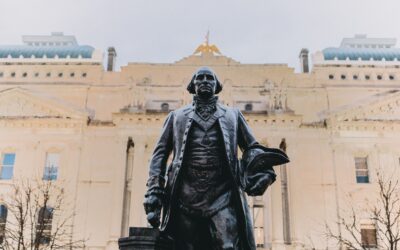
The cultural and political chasm splitting America on its historic 250th anniversary of independence has found an explosive new battleground. Following a deeply controversial, revisionist Independence Day address delivered by New York City’s socialist Mayor Zohran Kwame Mamdani, former reality television star and cultural commentator Spencer Pratt unleashed a blistering, viral counter-offensive that has completely lit social media on fire. Speaking from the historic Governor’s Room at New York City Hall, Mamdani marked the semiquincentennial by using the lens of New York’s immigrant struggles to aggressively criticize the nation’s historical shortcomings, asserting that true patriotism requires confronting America’s systemic flaws. The speech—delivered from the very ceremonial desk once used by General George Washington—instantly drew the fury of conservatives across the country. Taking to X (formerly Twitter) in a video broadcast that has garnered millions of views, Pratt thoroughly dismantled the mayor’s framing, labeling Mamdani a “vile, commie mayor” and warning that progressive attempts to rewrite American history are part of a calculated ideological effort to erase the nation’s foundational anchors. At The Modern Memo, we analyze the structural details of Mamdani’s controversial July 4th address, the mechanics of Spencer Pratt’s viral historical defense, and the broader cultural war over American exceptionalism during the nation’s milestone birthday. The Hall Confrontation: Mamdani’s Fragmented Patriotism The controversy ignited on Friday, July 3, 2026, when Mayor Mamdani delivered a pre-recorded Independence Day address explicitly designed to challenge traditional, celebratory narratives of American history. The Historical Backdrop: Mamdani chose to position himself directly at George Washington’s ceremonial desk inside City Hall—a deeply symbolic piece of American heritage. The Fragmented History: Rather than focusing on the triumphs of the Revolutionary War or the execution of the Constitution, Mamdani focused heavily on America’s historical grievances. While conceding that “America is exceptional because here, nothing is fixed in place,” the mayor argued that the nation’s 250-year legacy is defined primarily by its rigid historical exclusions and systemic inequalities. The Institutional Backlash: Critics immediately blasted the optics of the address, accusing the progressive mayor of weaponizing the holiday to lecture everyday Americans and desecrating a desk used by the father of the country to push a standard, anti-American grievance narrative. The Pratt Takedown: “Communists Start with Bad Memories” Spencer Pratt—who has increasingly transitioned his public platform into a venue for sharp, populist cultural commentary—intercepted the mayor’s speech with an unyielding digital broadside that resonated with millions of frustrated patriots. The Erasing of Anchors: In his viral video response, Pratt laid bare what he views as the underlying psychological tactics of the political left. “The communist must attack your history,” Pratt argued with sharp intensity. “Why? Because history is what anchors you. It’s what makes us attached to something. Communists always start with the bad memories.” The Drywall Analogy: To illustrate his point, Pratt compared a nation’s history to a family home passed down through generations. He noted that a house is only valuable because of the shared experiences and memories created within its walls. “If you have no memories to attach you to it, it’s just wood and drywall—who cares? Get rid of it,” Pratt explained, asserting that Mamdani is trying to strip Americans of their historical memories so they will happily allow the foundational structure of the country to be demolished. The Call to Pride: Rejecting the mayor’s somber lectures, Pratt concluded his video with an unapologetic, profanity-laced defense of traditional patriotism. “It’s okay to love America; not only is it okay, it’s necessary,” Pratt insisted. “Be proud of your history; show some American pride. Raise your plaid, raise your finger, and say, F—k you, communist.” The Semiquincentennial Fault Line: Two Distinct Americas The explosive engagement surrounding the Pratt-Mamdani feud highlights a massive, structural polarization defining the country during its 250th anniversary season. The divide is no longer just about tax rates or regulatory policies; it is a fundamental, zero-sum war over national identity. On one side stands the progressive administrative state, represented by figures like Mamdani, who view American history as a ledger of sins that must be constantly repented for through sweeping policy overhauls. On the other side stands an increasingly energized populist movement, amplified by cultural figures like Pratt, who view America as an exceptional, providential experiment built on the unparalleled sacrifices of the Founding Fathers. By attempting to use George Washington’s own desk to deconstruct Washington’s legacy, Mamdani inadvertently supercharged the very populist resistance he sought to neutralize. Final Word Spencer Pratt’s viral takedown of Mayor Zohran Mamdani is the definitive proof that everyday Americans are entirely exhausted by elected officials using national holidays to demean and lecture the citizenry. When you look past the standard media hand-wringing and focus entirely on the hard data—a socialist mayor utilizing George Washington’s desk to deliver an anti-exceptionalism address, a viral counter-response exposing the communist strategy of historical erasure, and millions of citizens rallying behind an unapologetic display of American pride—you gain an unvarnished view of a cultural turning point. Quality information replaces the progressive narrative of “enlightened critique” with the cold reality of an elite class completely disconnected from the people they govern. By standing up and refusing to allow our national anchors to be dismantled, Spencer Pratt has delivered an unyielding reminder to Sacramento, Albany, and City Hall: America is a nation worth loving, our history is a legacy worth defending, and the American spirit will never bow to the sterile lectures of a Marxist bureaucracy.
The Central Park Vapor: NYC Issues Emergency Alert to Park Visitors as Upper East Side Legionnaires’ Outbreak Swells
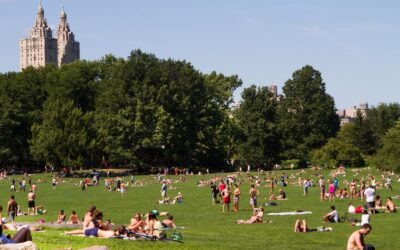
A localized public health emergency has expanded dramatically on Manhattan’s Upper East Side, forcing city health officials to issue a sweeping weekend warning to locals and tourists visiting New York’s iconic Central Park. Just days after the New York City Department of Health and Mental Hygiene (DOHMH) first sounded the alarm on an isolated community cluster consisting of just two confirmed cases, the outbreak has rapidly multiplied. Health officials confirmed that 14 individuals have now tested positive for Legionnaires’ disease—a severe, potentially fatal form of pneumonia caused by waterborne bacteria. The geographical footprint of the cluster has spread across three affluent Upper East Side ZIP codes (10028, 10128, and 10075), encompassing neighborhoods like Yorkville and Carnegie Hill. Crucially, because the investigative zone directly borders Central Park, the city has issued an emergency alert urging anyone who has spent time along the eastern edge of the park between East 76th and East 97th Streets to aggressively monitor themselves for respiratory distress. At The Modern Memo, we break down the operational data driving the 14-case Upper East Side cluster, the science of rooftop cooling tower transmission, and the city’s immediate surveillance measures to isolate the toxic vapor. The Data Inversion: From Two Cases to an Active Grid The speed with which the health department expanded its alert system underscores the localized density of the active bacterial plume. The Quick Multiplication: On Thursday, epidemiologists flagged a baseline anomaly when two distinct individuals in Yorkville contracted the rare respiratory infection. By Sunday evening, comprehensive clinical tracking data forced the health department to revise its metrics to 14 confirmed cases, establishing a high-volume community cluster. The Central Park Warning Track: The decision to issue an unprecedented alert for Central Park visitors stems from tracking patient footprints. Officials confirmed that at least one of the sickened individuals lives, works, or recently spent extensive time in the 10075 area—a sector flanking the park’s world-famous running paths and stone walls. The High-Risk Profiles: While DOHMH Commissioner Dr. Alister F. Martin stressed that the general public faces a relatively low statistical probability of contracting the disease, the agency has hoisted a firm red flag for high-risk demographics, including adults aged 50 or older, active smokers or vapers, individuals with chronic lung diseases, and the immunocompromised. The Vector Mechanics: How Rooftop Towers Weaponize the Plume To understand why park-goers are at risk from an outbreak originating in Upper East Side residential blocks, one must look at the mechanical engineering behind modern urban climate systems. The Investigation Matrix: City health inspectors have moved past interior residential plumbing checks, launching a 100% saturation testing sweep of all registered commercial and residential rooftop cooling towers across the affected ZIP codes. The Safe Zones: To prevent widespread urban panic, Mayor Zohran Mamdani issued a stabilizing directive confirming that the current outbreak is entirely external. The city’s domestic drinking water supply, tap water grid, and indoor window air conditioning units remain completely safe and uncompromised. Residents are explicitly clear to continue showering, bathing, and cooking as normal. Clinical Recognition: Differentiating Pneumonia from Summer Flu Because the onset of Legionnaires’ disease heavily mirrors standard respiratory bugs or a late-summer bout of COVID-19, municipal health authorities are distributing strict diagnostic parameters to triages and emergency rooms across Manhattan. Core Symptoms of Legionnaires’ Disease High-Risk Complications (If Untreated) High Fever & Chills Respiratory Failure / Oxygen Deprivation Dry, Persistent Cough Septic Shock & Systemic Organ Failure Severe Muscle Aches & Fatigue Acute Kidney Injury Headache & Confusion / Diarrhea Fatal Pulmonary Consolidations Medical teams emphasize that if an individual who visited the East Side of Central Park since late June experiences these markers, they must seek immediate medical attention rather than relying on over-the-counter flu remedies. When caught early, the Legionella bacterium is easily neutralized by standard, aggressive courses of intravenous or oral antibiotics. Left unchecked, however, the disease retains an alarming 10% mortality rate among the general populace, a metric that climbs significantly higher inside senior living communities. Final Word The rapid scaling of the Upper East Side Legionnaires’ cluster from 2 to 14 cases is the definitive proof that dense metropolitan infrastructures require continuous, aggressive environmental surveillance. When you look past the clinical deflections and focus entirely on the hard data—14 infected New Yorkers clustered along three specific neighborhood grids, an active airborne warning field blanketing 21 blocks of Central Park’s perimeter, and a specialized team of city epidemiologists racing to test hundreds of rooftop towers—you gain an unvarnished view of a city managing an active biological hazard. Quality information replaces urban myth with the cold reality of public health metrics. As inspectors flood the rooftops of Yorkville and Carnegie Hill to identify the rogue cooling unit, New York has been handed an unyielding reminder: in a concrete jungle, even an innocent stroll through a park can turn hazardous if the very air we breathe is compromised by bureaucratic oversight.
The Socialist Slip: Judge Halts Mamdani’s ‘Fast-Tracked’ Shelter as East Village Base Turns on Mayor
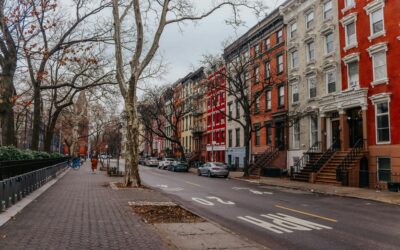
The progressive “utopia” is hitting a snag in the East Village this week as Mayor Zohran Mamdani’s administration faces a humiliating revolt from the very base that propelled him to City Hall. Social media erupted after a state judge temporarily slammed the brakes on a controversial plan to relocate a massive homeless intake center to East 3rd Street—a move residents claim was illegally “fast-tracked” by the socialist mayor. At The Modern Memo, we analyze the lawsuit filed by V.O.I.C.E. (Village Organization for the Integrity of Community Engagement), the hypocrisy of the far-left’s “Not In My Backyard” (NIMBY) pivot, and why the judge’s suspension of the project is being hailed as a victory for the rule of law over executive overreach. The ‘Fast-Track’ Fiasco The lawsuit at the heart of the standoff argues that the Mamdani administration attempted to bypass critical environmental and legal safeguards to force the shelter into a densely populated residential block. Executive Overreach: Mayor Mamdani reportedly issued an executive order to move the intake site from its current, deteriorating location to the East Village. Residents argue this was an end-run around the Uniform Land Use Review Procedure (ULURP). Environmental Blind Spot: The complaint alleges the city failed to conduct a proper environmental impact study, ignoring concerns regarding safety, overcrowding, and the strain on local infrastructure. The “Oops” Moment: Critics on social media were quick to point out the irony: the same activists who championed “housing for all” during the campaign are now the primary litigants fighting to keep a shelter out of their own neighborhood. The Judicial Hammer: “Putting the Brakes On” On Wednesday, April 22, 2026, a New York State Supreme Court judge issued a temporary restraining order, halting all work on the East 3rd Street site. The Ruling: The judge noted that the city’s justification for the “emergency” move—citing the unsafe conditions of the previous site—did not give the Mayor carte blanche to ignore the legal rights of East Village residents. Safety Concerns: The community group V.O.I.C.E. argued that the intake center, which serves as a high-traffic entry point for the city’s unsheltered population, would devastate the character and safety of the surrounding streets. A Mayor Under Fire from Both Sides For Mayor Mamdani, the East Village standoff is just the latest in a series of “socialist setbacks” that have defined his first months in office. Advocates vs. Residents: While community groups sue to stop the shelter, homeless advocacy groups like the Safety Net Project have accused Mamdani of “retreating” from his promises by failing to provide enough low-barrier beds. The Political Paradox: To the Right, Mamdani is a radical whose policies are inviting chaos; to the Far-Left, he is a “neoliberal sellout” who isn’t moving fast enough. By trying to please everyone, the Mayor has found himself in a legal and political quagmire where his own supporters are now his most vocal litigants. Final Word The East Village shelter crisis is a textbook example of what happens when radical rhetoric meets the reality of governance. When you look past the noise of the “compassionate” campaign promises and focus on the data—the judicial suspension of the project and the legal failure to follow environmental safeguards—you gain a clearer picture of an administration that believes the law is an optional hurdle. Quality information replaces the “humanitarian” narrative with the reality of a community that was systematically ignored. It allows you to see that “progressive” policy is only popular until it arrives on your doorstep. By choosing to sue their own Mayor, the East Village has sent a loud message: even in a socialist New York, the rules still apply. Where Facts, Context, and Perspective Matter At The Modern Memo, our goal is simple: to provide clear, well-researched reporting in a media landscape that often feels overwhelming. We focus on substance over sensationalism, and context over commentary. If you value thoughtful analysis, transparent sourcing, and stories that go beyond the headline, we invite you to share our work. Informed conversations start with reliable information, and sharing helps ensure important stories reach a wider audience. Journalism works best when readers engage, question, and participate. By reading and sharing, you’re supporting a more informed public and a healthier media ecosystem. The Modern Memo may be compensated and/or receive an affiliate commission if you click or buy through our links. Featured pricing is subject to change. 📩 Love what you’re reading? Don’t miss a headline! Subscribe to The Modern Memo here!
Terrorism Investigation: Explosives Thrown at Gracie Mansion Protests
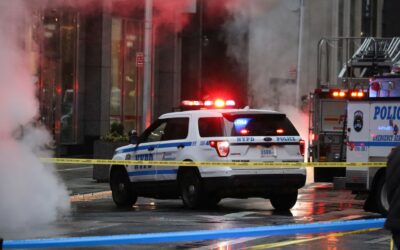
In a chilling escalation of political violence in the heart of New York City, federal authorities have launched a terrorism investigation after improvised explosive devices (IEDs) were ignited and thrown during a violent confrontation outside the official residence of Mayor Zohran Mamdani this past weekend. At The Modern Memo, we analyze the shocking events at Gracie Mansion, the radicalization risks highlighted by these devices, and the broader breakdown of order that continues to plague America’s largest city. The Incident: A Near-Catastrophe at Gracie Mansion On Saturday, March 7, 2026, a protest organized by right-wing activist Jake Lang—focused on the issue of public Muslim prayer—met with a large, aggressive counter-protest. What began as a volatile shouting match quickly devolved into a scene of potential mass casualty. The Explosive Threat: According to NYPD Commissioner Jessica Tisch, counter-protesters deployed multiple IEDs, described as jars wrapped in black tape, packed with nuts, bolts, and screws, and ignited by hobby fuses. “Serious Injury or Death”: NYPD bomb squad analysis confirmed that these were not mere “hoax devices” or smoke bombs; they were lethal instruments capable of causing serious injury or death. One device landed just feet from responding officers. The Arrests: Two suspects, Emir Balat, 18, and Ibrahim Kayumi, 19—both from Pennsylvania—have been taken into custody. The FBI’s Joint Terrorism Task Force has now assumed the lead on the investigation, with officials actively probing whether the suspects were inspired by ISIS extremist messaging. A City Under Siege? The violence at Gracie Mansion is not an isolated event; it is the latest in a series of chaotic clashes that have gripped New York City, raising urgent questions about public safety and the administration’s ability to maintain order. The Security Vacuum: Critics point out that allowing these groups to collide so close to the Mayor’s residence—where he was present with his wife during the violence—highlights a lack of effective containment strategy by local leadership. Political Rhetoric: Mayor Mamdani’s response has been to label the far-right participants as “white supremacists” while condemning the violence. However, many residents are asking why such volatile gatherings are permitted to escalate to the point of improvised explosives being deployed in a crowded residential neighborhood. The “ISIS” Connection: The revelation that the devices may be linked to ISIS-inspired terror adds a grim layer to a protest that was already centered on deep-seated societal divides. It highlights a dangerous new reality where legitimate political disagreement is being hijacked by extremists looking to ignite a much larger conflict. Final Word The ignition of IEDs outside the Mayor’s residence is a watershed moment that moves beyond mere “protest” and into the realm of domestic terrorism. When you look past the partisan finger-pointing and focus on the data of the improvised shrapnel devices and the FBI’s terrorism probe, you gain a clearer picture of the fragile state of public security in New York. Quality information replaces the noise of social media rumors with the clarity of forensic evidence and official law enforcement findings. It allows you to see this event as a dire warning of what happens when the rule of law is allowed to erode. By choosing to rely on verified updates from the NYPD and federal authorities, you align your perspective with the reality of the situation and support a more informed, resilient, and vigilant community. Where Facts, Context, and Perspective Matter At The Modern Memo, our goal is simple: to provide clear, well-researched reporting in a media landscape that often feels overwhelming. We focus on substance over sensationalism, and context over commentary. If you value thoughtful analysis, transparent sourcing, and stories that go beyond the headline, we invite you to share our work. Informed conversations start with reliable information, and sharing helps ensure important stories reach a wider audience. Journalism works best when readers engage, question, and participate. By reading and sharing, you’re supporting a more informed public and a healthier media ecosystem. The Modern Memo may be compensated and/or receive an affiliate commission if you click or buy through our links. Featured pricing is subject to change. 📩 Love what you’re reading? Don’t miss a headline! Subscribe to The Modern Memo here!