
Peace

The Bürgenstock Blueprint: U.S. and Iran Agree to 60-Day Peace Roadmap in Switzerland Despite Trump Threat Matrix
The high-stakes brinkmanship shadowing the Persian Gulf has yielded a remarkable, if highly fragile, diplomatic breakthrough. Following an intensive 18-hour negotiating marathon at the Bürgenstock luxury resort overlooking Lake Lucerne, Switzerland, U.S. and Iranian delegations officially concluded their first round of high-level peace talks by locking in a formal 60-day roadmap toward a comprehensive treaty to end the regional war. The summit—orchestrated under the joint mediation of Pakistan and Qatar—produced immediate, tangible structural guardrails designed to de-escalate the Middle Eastern theater. Chief among the breakthroughs is the creation of a direct military hotline to secure the volatile Strait of Hormuz and a “de-confliction cell” aimed at arresting the war in Lebanon. At The Modern Memo, we break down the operational mechanics of the Bürgenstock blueprint, the immediate sanctions waivers issued by the U.S. Treasury, and the profound policy contradictions between Vice President J.D. Vance’s diplomatic engagement and President Trump’s digital warnings. The Bürgenstock Deliverables: Hotlines and De-Confliction Cells The joint statement released by Pakistani and Qatari facilitators on Monday, June 22, 2026, details a structured framework designed to translate last week’s raw 14-point Versailles Memorandum of Understanding (MOU) into verifiable technical milestones. The 60-Day Runway: The high-level committee established a strict two-month timeline to resolve foundational disputes regarding Iran’s nuclear enrichment limits and long-term economic reintegration. While the principal political leaders have wrapped their initial sessions, lower-level technical working groups remain embedded in Switzerland to flesh out compliance tracking. The Hormuz Safety Valve: To mitigate immediate global energy shocks, the roadmap introduces a dedicated communication line between the U.S. Navy and the Islamic Revolutionary Guard Corps (IRGC). The channel serves as an emergency safety valve to prevent tactical miscalculations inside the world’s most critical oil chokepoint. Iran has pledged its “best efforts” to ensure the safe passage of commercial vessels, walking back a tense weekend threat to close the waterway. The Lebanon Buffer: Recognizing that proxy warfare could easily torpedo the talks, the framework introduces a localized de-confliction cell involving the Lebanese government. This mechanism aims to enforce a sustainable termination of military operations between Israel and Hezbollah, providing the essential geopolitical stability required for broader diplomacy to survive. The Economic Injections: Waiving the Oil Blockade To prove Washington’s immediate material commitment to the roadmap, the executive branch authorized swift, high-impact economic relief mechanisms right as the high-level talks concluded. The 60-Day Oil License: The U.S. Treasury officially issued a dynamic 60-day general license waiving structural sanctions targeting Iranian petroleum. The temporary mandate legally authorizes the production, delivery, and transparent commercial sale of Iranian crude through August 21, 2026—a move market analysts predict will instantly suppress global energy prices. The Assets and Reconstruction Framework: Iranian Foreign Minister Abbas Araghchi took to social media to celebrate what he termed a “major structural shift,” asserting that the U.S. had agreed to lift port blockades, release a portion of frozen sovereign financial assets, and support an expansive post-war reconstruction and development plan for the Iranian domestic market. The Double-Track Strategy: Vance’s Diplomacy vs. Trump’s Bombers The primary variable threatening the durability of the Bürgenstock roadmap is the starkly polarized messaging strategy simultaneously deployed by the White House and its negotiating team in the field. While Vice President J.D. Vance—who personally led the U.S. team alongside Jared Kushner—praised the Swiss talks as having established a “good foundation for a successful final house,” President Trump maintained a hyper-aggressive public posture on social media. Trump explicitly warned Tehran that if its regional proxies continued to instigate clashes in Lebanon, the U.S. military would resume targeted bombings. “If they don’t, we’ll hit Iran very hard again, just like we did last week, only harder!!!” Trump posted. The bellicose rhetoric briefly derailed direct talks, prompting Iranian Lead Negotiator Mohammad Bagher Ghalibaf to walk out of a session in protest before returning via international mediators. Ghalibaf issued a sharp warning of his own, advising the White House to be “careful with their statements” and noting that Iran’s armed forces are fully prepared to respond to any resumption of American hostility. Final Word The finalization of the 60-day Bürgenstock roadmap is the definitive proof that the administration is executing a classic double-track strategy: using Vice President Vance to methodically construct a complex diplomatic exit ramp while President Trump holds a cocked military revolver to the adversary’s head. When you look past the theatrical public warnings and examine the raw financial and structural metrics—a legally binding 60-day timeline backed by the immediate lifting of oil sanctions, the institutionalization of a direct naval hotline in the Strait, and an explicit de-confliction framework for Lebanon—you gain an unvarnished view of a superpower systematically locking in its leverage. Quality information replaces the fear of an inevitable regional war with the reality of highly calculated transactional diplomacy. Washington has successfully brought Tehran to a written schedule; the next two months will prove whether this roadmap is the foundation of a historic peace, or merely a temporary pause before the bombers are ordered back into the sky.

The New Peace Paradigm: Trump Secures Historic Billions for Gaza Stabilization at Inaugural “Board of Peace” Meeting
In a move that bypasses the “bloated bureaucracies” of traditional international bodies, President Donald J. Trump convened the inaugural meeting of the Board of Peace today, February 19, 2026. Stepping into the newly renamed Donald J. Trump U.S. Institute of Peace, the President secured immediate, massive commitments from a coalition of over 20 nations aimed at the total reconstruction and demilitarization of the Gaza Strip. At The Modern Memo, we analyze the $17 billion fundraising surge, the “New Gaza” real estate vision, and how this body is effectively sidelining the United Nations. The $17 Billion “Stability Fund” While legacy institutions often spend years debating budgets, the Board of Peace moved with “Trump-speed,” announcing staggering financial commitments within the first hour of the summit. The Member Pledges: Nine nations—including Saudi Arabia, the UAE, Kuwait, and Qatar—pledged a combined $7 billion specifically for Gaza relief and infrastructure. The U.S. Anchor: President Trump doubled down on American leadership by pledging $10 billion in U.S. funds for the Board, though he signaled this money would be tied to “strict performance and demilitarization benchmarks.” Economic Logic: In his opening remarks, Trump described the funds as an “investment in stability,” arguing that a prosperous, “harmonious” Middle East is the only permanent solution to generations of conflict. Security: The International Stabilization Force (ISF) The most critical pillar of the “Trump Peace Plan” is the establishment of the International Stabilization Force (ISF), an armed body tasked with the permanent disarmament of Hamas. Troop Commitments: In a significant win for the administration, major Islamic nations—including Indonesia, Morocco, and Kazakhstan—officially pledged troops for the stabilization force. Police Training: Regional heavyweights Egypt and Jordan have committed to training a new, depoliticized Palestinian police force to manage day-to-day civil order. The Command: Under the leadership of Maj. Gen. Jasper Jeffers, the ISF will oversee the destruction of weapon manufacturing sites and incentivize the handover of light weapons through “funds, jobs, and amnesty.” Remaking the World: A Rival to the UN? The Board of Peace is increasingly being viewed as a pragmatic alternative to the United Nations, which the President has criticized for being “rife with ideological bias.” A “Nimble” Alternative: U.S. Ambassador to the UN Mike Waltz defended the Board’s unconventional structure, stating that “the old ways were not working.” Authoritarian Slant? While European allies like the UK, France, and Germany declined to join the inaugural meeting, the Board features strong participation from the “doers” of the Middle East and Central Asia, along with allies like Argentina’s Javier Milei and Hungary’s Viktor Orbán. Global Remit: Though the current focus is Gaza, the Board’s charter allows it to intervene in “any area affected or threatened by conflict,” suggesting it may soon take over roles previously held by the 66 international organizations the U.S. exited earlier this year. “New Gaza”: From Rubble to Real Estate The vision for the territory—frequently referred to as the “New Gaza” plan championed by Jared Kushner—reimagines the enclave through the lens of free-market principles. District Redevelopment: The plan treats Gaza as “prime beachfront real estate,” dividing the territory into designated districts designed to resemble high-end Gulf cities like Dubai. GDP Overhaul: Kushner noted that for too long, 85% of Gaza’s GDP was aid. The Board aims to flip this by creating “economic zones” that empower Palestinians to thrive through capitalism rather than dependence. Final Word The inaugural Board of Peace meeting marks a fundamental shift toward “transactional diplomacy,” where results are measured in dollars pledged and boots committed rather than speeches made. When you look past the skepticism of the “chattering class” and focus on the data of a $17 billion starting fund and the technicality of the ISF’s disarmament mandate, you gain a clearer picture of a new international order. Quality information replaces the noise of bureaucratic defensiveness with the clarity of action-oriented benchmarks. It allows you to see this Board not as a “distraction,” but as a necessary disruption of a failed status quo. By choosing to follow the results of the Washington summit rather than the handwringing of the legacy press, you align your perspective with the realities of modern peacemaking and support a more informed, resilient global future. Where Facts, Context, and Perspective Matter At The Modern Memo, our goal is simple: to provide clear, well-researched reporting in a media landscape that often feels overwhelming. We focus on substance over sensationalism, and context over commentary. If you value thoughtful analysis, transparent sourcing, and stories that go beyond the headline, we invite you to share our work. Informed conversations start with reliable information, and sharing helps ensure important stories reach a wider audience. Journalism works best when readers engage, question, and participate. By reading and sharing, you’re supporting a more informed public and a healthier media ecosystem. The Modern Memo may be compensated and/or receive an affiliate commission if you click or buy through our links. Featured pricing is subject to change. 📩 Love what you’re reading? Don’t miss a headline! Subscribe to The Modern Memo here!
BREAKING: All 20 Living Israeli Hostages Released From Hamas Captivity
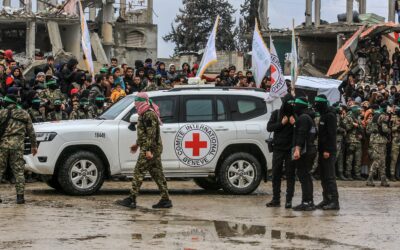
The world watched in relief and gratitude as all 20 Israeli hostages were released into the care of the International Committee of the Red Cross (ICRC). This marks a historic turning point in the pursuit of lasting peace between Israel and Hamas. Early Monday, Red Cross convoys were seen moving through Gaza as the first seven hostages were freed under the new ceasefire peace agreement. Hours later, 13 more hostages joined them, completing the full transfer to Israeli custody. The handover began around 8 a.m. and continued throughout the morning under careful coordination by the Red Cross and Israeli Defense Forces. BREAKING: The remaining 13 hostages were just received by the Red Cross. They are now heading toward IDF positions in Gaza and will back in Israel soon pic.twitter.com/pIJomXYeD3 — Visegrád 24 (@visegrad24) October 13, 2025 This moment — the safe release of all 20 hostages — represents the first step in the 20-point plan toward peace. The framework was built to restore stability, rebuild trust, and lay the groundwork for a new era of cooperation in the region. (RELATED NEWS: Hamas Accepts Trump Peace Plan to End Gaza War, Return Hostages) Emotional Scenes Across Israel As news of the first releases spread, emotional scenes unfolded across Israel. Families gathered in homes, public squares, and synagogues to celebrate. In Tel Aviv, crowds cheered and waved flags as live coverage showed the Red Cross convoys crossing into Israeli territory. Many held signs reading “Welcome Home” and “We Prayed for You,” echoing the deep relief felt across the nation. Prime Minister Benjamin Netanyahu and his wife, Sara, prepared special care kits for each returning hostage. Each kit included clothing, personal items, and digital devices to help reconnect them with loved ones. Inside, a handwritten note from the Netanyahus read: “On behalf of all the people of Israel, welcome back! We have been waiting for you. We embrace you. — Sara and Benjamin Netanyahu.” The Role of the Red Cross and the Ceasefire Agreement The International Committee of the Red Cross (ICRC) played a vital role in the hostage exchange. The organization protected civilians, coordinated humanitarian operations, and ensured safe passage for both hostages and prisoners. Red Cross convoys moved steadily between Gaza and Israel throughout the day, carrying with them the fragile but tangible hope of renewed peace. Under the ceasefire terms, Israel released more than 1,900 Palestinian prisoners in exchange for 20 Israeli hostages. The exchange followed weeks of intensive negotiations led by Israeli, Palestinian, American, and regional mediators. Their tireless diplomatic work broke the cycle of violence that has divided the region for generations and opened the door to reconciliation. Trump’s Leadership and Global Cooperation Israeli officials confirmed that this day would not have been possible without President Trump’s leadership. He brokered the peace framework and will be central in holding all parties to their commitments. Caroline Glick, Prime Minister Netanyahu’s international affairs advisor, affirmed Israel’s confidence in Trump’s leadership, calling him “a sincere friend of Israel” and “a man of peace through strength.” “We have deep faith in President Trump — in his sincerity, his support for Israel, and his leadership,” Glick told Fox News Digital. “We are confident in his commitment to holding all parties accountable to the deal, in partnership with Prime Minister Netanyahu.” (MORE NEWS: Trump Orders Military Pay Amid Government Shutdown) The partnership between Washington and Jerusalem delivered immediate humanitarian results and built the foundation for long-term stability. Trump’s plan prioritizes accountability and opportunity, ensuring that every step toward peace rests on transparency, action, and shared responsibility — not empty promises. President Trump’s Visit to Israel and the Region President Trump arrived in Tel Aviv today, drawing intense global attention to this landmark moment — the release of hostages from Gaza and the renewed push for peace. He came to demonstrate his personal commitment to the process, meet with key Israeli leaders and affected families, and then travel to Egypt for a major peace summit. A VIEW FROM AIR FORCE ONE, flying over the beach front of the U.S. Embassy branch in Tel Aviv… 🙏🏼🕊️ pic.twitter.com/CA9EZ1R89f — Dan Scavino (@Scavino47) October 13, 2025 Arrival in Israel After landing at Ben Gurion Airport, Trump praised the “unbreakable bond” between the United States and Israel and called the moment a rare opportunity to bring stability and progress to a turbulent region. Israeli officials welcomed him warmly, and he promised to engage directly with those most affected by the conflict. pic.twitter.com/02DCbpsBru — Dan Scavino (@Scavino47) October 13, 2025 Speaking to the Knesset Trump will address Israel’s Knesset today in what officials describe as a historic speech. His remarks will highlight unity, reconciliation, and the path forward as the ceasefire and hostage-release agreement move ahead. Meeting With Hostage Families Before leaving Israel, Trump plans to meet privately with families of the released hostages. Their voices shaped public support and helped build momentum behind the agreement. The Hostages & Missing Families Forum formally invited him to meet, saying the visit shows genuine solidarity and compassion from the U.S. toward those who endured unimaginable hardship. On to the Peace Summit in Egypt After his visit to Israel, Trump will travel to Sharm El-Sheikh, Egypt, where he will join world leaders for a regional peace summit focused on implementing the ceasefire, ensuring humanitarian access, and determining Gaza’s future governance. He reportedly insisted on being present for this historic moment — not only as a symbolic figure but as a hands-on participant in the negotiations. His presence signals that he intends to serve not just as a broker of peace but as a witness and guarantor to its success. The 20-Point Plan Toward Peace The release of all 20 hostages launches the first phase of the 20-point peace plan — a detailed framework that drives demilitarization, reconstruction, and reconciliation across Gaza. Phase One secures the hostages’ freedom and enforces an immediate ceasefire. Phase Two, now underway, calls on Israel and its partners to demobilize and disarm Hamas, then lead efforts to deradicalize…
Hamas Accepts Trump Peace Plan to End Gaza War, Return Hostages
Hamas has accepted a peace plan introduced by President Donald Trump to end a nearly two-year war in Gaza and return hostages to Israel. The agreement marks a turning point in Middle East diplomacy and could open the door to a lasting peace if both sides honor their commitments. The plan reflects President Trump’s active leadership in global negotiations and his push for stability in the region. Key Elements of the Agreement Under the first phase of the plan, Hamas agrees to a full ceasefire, the withdrawal of Israeli forces to agreed-upon lines, and the return of all hostages, living and deceased. In exchange, Israel will release 250 prisoners serving life sentences and 1,700 Palestinians detained since October 2023. Hamas members who surrender their weapons will be granted amnesty. A technocratic, non-political Palestinian committee will temporarily manage essential services in Gaza. An international board, including world leaders and regional representatives, will oversee reconstruction and ensure transparency in rebuilding efforts. The goal is to stabilize Gaza, restore vital infrastructure, and create economic opportunities that discourage future conflict. Trump’s Announcement Announcing the deal, President Donald Trump said, “I am very proud to announce that Israel and Hamas have both signed off on the first Phase of our Peace Plan. This means that ALL of the Hostages will be released very soon, and Israel will withdraw their Troops to an agreed upon line as the first steps toward a Strong, Durable, and Everlasting Peace. All Parties will be treated fairly! This is a GREAT Day for the Arab and Muslim World, Israel, all surrounding Nations, and the United States of America, and we thank the mediators from Qatar, Egypt, and Turkey, who worked with us to make this Historic and Unprecedented Event happen. BLESSED ARE THE PEACEMAKERS!” “I am very proud to announce that Israel and Hamas have both signed off on the first Phase of our Peace Plan… BLESSED ARE THE PEACEMAKERS!” – President Donald J. Trump pic.twitter.com/lAUxi1UPYh — The White House (@WhiteHouse) October 8, 2025 The president’s statement highlighted his administration’s diplomatic efforts and the cooperation between multiple nations. His message emphasized fairness, unity, and optimism for what could become one of the most significant peace breakthroughs in decades. (RELATED NEWS: Trump Issues a Grim Ultimatum to Hamas) Role of Mediators and International Support The success of this agreement rests heavily on the work of mediators from Qatar, Egypt, and Turkey, who helped facilitate direct talks. Their involvement was critical in overcoming longstanding distrust. These nations have acted as neutral brokers in previous negotiations, but this time, their cooperation with Trump’s team gave the plan unprecedented momentum. Internationally, the peace plan has received cautious support. Several Arab states view it as a chance to reduce regional instability, while Western nations welcome the potential for humanitarian recovery. Still, questions remain about the long-term political framework and whether the agreement will eventually lead to Palestinian statehood. Israeli and Palestinian Reactions Israeli Prime Minister Benjamin Netanyahu welcomed the agreement, calling it a crucial step toward bringing home hostages and restoring calm. He confirmed that his cabinet would meet to approve the first phase of the deal and ensure its proper enforcement. Netanyahu expressed gratitude to President Trump and his team for their efforts: “A great day for Israel. Tomorrow I will convene the government to approve the agreement and bring all our dear hostages home. I thank the heroic soldiers of the IDF and all the security forces, thanks to whose courage and sacrifice we have reached this day. I thank from the depths of my heart President Trump and his team for their mobilization for this sacred mission of releasing our hostages. With the help of the Almighty, together we will continue to achieve all our goals and expand peace with our neighbors.” יום גדול לישראל. אכנס מחר את הממשלה כדי לאשר את ההסכם ולהחזיר את כל חטופינו היקרים הביתה. אני מודה לחיילי צה״ל הגיבורים ולכל כוחות הביטחון שבזכות אומץ ליבם והקרבתם הגענו ליום הזה. אני מודה מעומק ליבי לנשיא טראמפ ולצוותו על התגייסותם למשימה קדושה זו של שחרור חטופינו. בעזרת… — Benjamin Netanyahu – בנימין נתניהו (@netanyahu) October 8, 2025 Hamas, on its part, framed the decision as a pragmatic move to protect Gaza’s population and rebuild shattered communities. The group emphasized that the plan’s humanitarian and reconstruction clauses were decisive factors in their acceptance. Challenges and Concerns While the deal offers hope, its implementation remains complex. Hamas has raised concerns about the disarmament process and the future role of Israeli forces in border areas. Israel has insisted that all hostages—living and deceased—be returned before any further concessions. There is also uncertainty about who will enforce reconstruction and security arrangements. The proposed international board must coordinate massive rebuilding projects while ensuring that funds do not fuel future conflicts. Analysts caution that if either side hesitates or violates the agreement, the fragile peace could collapse quickly. Still, the inclusion of multiple global stakeholders gives the plan more structure and oversight than many past efforts. Humanitarian and Reconstruction Goals If implemented, the plan will allow essential aid to flow into Gaza. For civilians enduring nearly two years of conflict, this will bring immediate relief. Hospitals, schools, and housing projects are set to receive top priority under the reconstruction phase. The agreement envisions an economic revival that promotes self-sufficiency. Infrastructure experts from the Middle East will oversee modernization projects, creating jobs and restoring public services. In this sense, the peace plan is designed not just to end violence but to build a sustainable future. The Hostages and Public Response According to estimates, 48 hostages remain in Hamas captivity, with 21 believed to be alive. Their families have expressed profound gratitude for the deal, calling it a historic step toward reuniting loved ones. Many families credit Trump’s persistence for breaking the deadlock and sparking progress. In Israel, public reaction has been largely supportive. Citizens weary of years of conflict see this as an opportunity to end bloodshed and begin healing. In Gaza, reactions are mixed—some…

Alaska Hosts Historic Summit Between Trump and Putin
Alaska Hosts Historic Summit Between Presidents Trump and Putin Next Friday, Alaska will serve as the backdrop for a historic summit between Presidents Donald Trump and Vladimir Putin. The meeting, focused on the future of the ongoing war in Ukraine, comes at a time of heightened geopolitical tensions. (MORE NEWS: Trump’s EPA Pushes Green New Deal Into Political Obscurity) Alaska’s Strategic Role Alaska Governor Mike Dunleavy expressed his support for the summit, emphasizing the state’s unique strategic position: “Alaska is the most strategic location in the world, sitting at the crossroads of North America and Asia, with the Arctic to our north and the Pacific to our south.” With just two miles separating Russia from Alaska, Governor Dunleavy highlighted the region’s crucial role in U.S. national defense, energy security, and Arctic leadership. I welcome the upcoming meeting between President Donald J. Trump and Russia’s President Putin being held here in the great state of Alaska. Alaska is the most strategic location in the world, sitting at the crossroads of North America and Asia, with the Arctic to our north and… — Governor Mike Dunleavy (@GovDunleavy) August 8, 2025 U.S. Legislative Reaction The announcement of the summit took many by surprise, particularly members of the three-member congressional delegation. Rep. Nick Begich III, who Trump endorsed during last year’s U.S. House elections, expressed cautious optimism. He stated: “The pursuit of peace requires open dialogue. And it’s encouraging that the dialogue will be occurring at the highest levels here in Alaska, where Russia and America share a historic relationship and geographic proximity.” The pursuit of peace requires open dialogue. And it’s encouraging that the dialogue will be occurring at the highest levels here in Alaska, where Russia and America share a historic relationship and geographic proximity. My prayer is that the conversations are productive and… pic.twitter.com/0HiaHngpnb — Congressman Nick Begich (@RepNickBegich) August 8, 2025 Putin’s Visit: No Risk of Arrest The United States remains a safe venue for President Putin, as the U.S. does not recognize the jurisdiction of the International Criminal Court, which has issued a warrant for Putin’s arrest for war crimes. This is the first time the two leaders have met since their 2019 summit in Osaka, Japan. It remains unclear whether Ukrainian President Volodymyr Zelensky will attend the summit. Historical Context: Alaska’s Russian Roots Alaska’s history adds another layer of significance to this meeting. Once part of the Russian Empire, Alaska was sold to the U.S. for $7.2 million in 1867 under President Andrew Johnson. The decision was largely motivated by Russia’s struggle to defend the region and fears of a potential British takeover, as Canada was under British rule at the time. Since the sale, no Russian leader has visited Alaska, although international meetings have taken place there twice before: President Richard Nixon met with Japanese Emperor Hirohito in Anchorage in 1971, and President Ronald Reagan met with Pope John Paul II in Fairbanks in 1984. Trump’s Controversial Proposal The summit’s timing is noteworthy, coming just hours after President Trump suggested that Ukraine might need to cede some territory to end the war. At a press conference, Trump remarked: “You’re looking at territory that’s been fought over for three and a half years, a lot of Russians have died. A lot of Ukrainians have died. It’s very complicated. We’re going to get some back, we’re going to get some switched. There will be some swapping of territories, to the betterment of both.” JUST IN: President Trump says Russia and Ukraine are looking at “some swapping of territories to the betterment of both” as part of peace negotiations pic.twitter.com/dbbSYVV2K2 — Fox News (@FoxNews) August 8, 2025 Diplomatic Backchannels and Offers According to CBS News, the White House is attempting to garner European support for a plan that would involve Russia taking control of the entire Donbas region, while Ukraine would cede the partially occupied Kherson and Zaporizhzhia regions. The Wall Street Journal reports that Putin presented a similar proposal during a meeting with Trump’s Envoy, Steve Witkoff, in Moscow. The plan would end the war if Russia could claim the eastern Donetsk region, including the annexed Crimean Peninsula. On Saturday night, several European leaders issued a joint statement on Trump’s meeting with Putin: “We welcome President Trump’s work to stop the killing in Ukraine, end the Russian Federation’s war of aggression, and achieve just and lasting peace and security for Ukraine… Ukraine has the freedom of choice over its own destiny. Meaningful negotiations can only take place in the context of a ceasefire or reduction of hostilities. The path to peace in Ukraine cannot be decided without Ukraine. We remain committed to the principle that international borders must not be changed by force.” (RELATED: The Trade Deal That Changed Everything: U.S.–EU Breakthrough) Zelensky’s Stance Ukrainian President Zelensky has steadfastly rejected any territorial concessions. In a statement on Telegram, Zelensky reaffirmed his commitment to Ukraine’s territorial integrity: “We will not reward Russia for what it perpetrated. The answer to the Ukrainian territorial issue is already in the Constitution of Ukraine.” He further stated: “Any solutions that are against us, any solutions that are without Ukraine, are at the same time solutions against peace.” He emphasized that Ukraine is ready for “real solutions” that can bring lasting peace, working alongside President Trump and other partners to achieve this goal. The Toll of War and the Need for Peace The ongoing Russia-Ukraine war has taken a devastating toll, with over a million lives lost and billions of U.S. taxpayer dollars spent. Despite the immense cost, little progress has been made toward ending the conflict. Both Presidents Putin and Zelensky continue to hold steadfast to their demands for peace, but neither side has achieved the necessary conditions for a resolution. Trump’s Track Record as a Peace Broker President Trump has a proven history of negotiating peace deals in seemingly impossible situations. Some of his notable successes include: Azerbaijan and Armenia Cambodia and Thailand Israel and Iran Rwanda and the Democratic Republic of the…