
Hamas has accepted a peace plan introduced by President Donald Trump to end a nearly two-year war in Gaza and return hostages to Israel. The agreement marks a turning point in Middle East diplomacy and could open the door to a lasting peace if both sides honor their commitments. The plan reflects President Trump’s active leadership in global negotiations and his push for stability in the region.
Key Elements of the Agreement
Under the first phase of the plan, Hamas agrees to a full ceasefire, the withdrawal of Israeli forces to agreed-upon lines, and the return of all hostages, living and deceased. In exchange, Israel will release 250 prisoners serving life sentences and 1,700 Palestinians detained since October 2023.
Hamas members who surrender their weapons will be granted amnesty. A technocratic, non-political Palestinian committee will temporarily manage essential services in Gaza. An international board, including world leaders and regional representatives, will oversee reconstruction and ensure transparency in rebuilding efforts.
The goal is to stabilize Gaza, restore vital infrastructure, and create economic opportunities that discourage future conflict.
Trump’s Announcement
Announcing the deal, President Donald Trump said,
“I am very proud to announce that Israel and Hamas have both signed off on the first Phase of our Peace Plan. This means that ALL of the Hostages will be released very soon, and Israel will withdraw their Troops to an agreed upon line as the first steps toward a Strong, Durable, and Everlasting Peace. All Parties will be treated fairly! This is a GREAT Day for the Arab and Muslim World, Israel, all surrounding Nations, and the United States of America, and we thank the mediators from Qatar, Egypt, and Turkey, who worked with us to make this Historic and Unprecedented Event happen. BLESSED ARE THE PEACEMAKERS!”
“I am very proud to announce that Israel and Hamas have both signed off on the first Phase of our Peace Plan… BLESSED ARE THE PEACEMAKERS!” – President Donald J. Trump pic.twitter.com/lAUxi1UPYh
— The White House (@WhiteHouse) October 8, 2025
The president’s statement highlighted his administration’s diplomatic efforts and the cooperation between multiple nations. His message emphasized fairness, unity, and optimism for what could become one of the most significant peace breakthroughs in decades. (RELATED NEWS: Trump Issues a Grim Ultimatum to Hamas)
Role of Mediators and International Support
The success of this agreement rests heavily on the work of mediators from Qatar, Egypt, and Turkey, who helped facilitate direct talks. Their involvement was critical in overcoming longstanding distrust. These nations have acted as neutral brokers in previous negotiations, but this time, their cooperation with Trump’s team gave the plan unprecedented momentum.
Internationally, the peace plan has received cautious support. Several Arab states view it as a chance to reduce regional instability, while Western nations welcome the potential for humanitarian recovery. Still, questions remain about the long-term political framework and whether the agreement will eventually lead to Palestinian statehood.
Israeli and Palestinian Reactions
Israeli Prime Minister Benjamin Netanyahu welcomed the agreement, calling it a crucial step toward bringing home hostages and restoring calm. He confirmed that his cabinet would meet to approve the first phase of the deal and ensure its proper enforcement. Netanyahu expressed gratitude to President Trump and his team for their efforts:
“A great day for Israel. Tomorrow I will convene the government to approve the agreement and bring all our dear hostages home. I thank the heroic soldiers of the IDF and all the security forces, thanks to whose courage and sacrifice we have reached this day. I thank from the depths of my heart President Trump and his team for their mobilization for this sacred mission of releasing our hostages. With the help of the Almighty, together we will continue to achieve all our goals and expand peace with our neighbors.”
יום גדול לישראל. אכנס מחר את הממשלה כדי לאשר את ההסכם ולהחזיר את כל חטופינו היקרים הביתה.
אני מודה לחיילי צה״ל הגיבורים ולכל כוחות הביטחון שבזכות אומץ ליבם והקרבתם הגענו ליום הזה.
אני מודה מעומק ליבי לנשיא טראמפ ולצוותו על התגייסותם למשימה קדושה זו של שחרור חטופינו.
בעזרת…
— Benjamin Netanyahu – בנימין נתניהו (@netanyahu) October 8, 2025
Hamas, on its part, framed the decision as a pragmatic move to protect Gaza’s population and rebuild shattered communities. The group emphasized that the plan’s humanitarian and reconstruction clauses were decisive factors in their acceptance.
Challenges and Concerns
While the deal offers hope, its implementation remains complex. Hamas has raised concerns about the disarmament process and the future role of Israeli forces in border areas. Israel has insisted that all hostages—living and deceased—be returned before any further concessions.
There is also uncertainty about who will enforce reconstruction and security arrangements. The proposed international board must coordinate massive rebuilding projects while ensuring that funds do not fuel future conflicts.
Analysts caution that if either side hesitates or violates the agreement, the fragile peace could collapse quickly. Still, the inclusion of multiple global stakeholders gives the plan more structure and oversight than many past efforts.
Humanitarian and Reconstruction Goals
If implemented, the plan will allow essential aid to flow into Gaza. For civilians enduring nearly two years of conflict, this will bring immediate relief. Hospitals, schools, and housing projects are set to receive top priority under the reconstruction phase.
The agreement envisions an economic revival that promotes self-sufficiency. Infrastructure experts from the Middle East will oversee modernization projects, creating jobs and restoring public services. In this sense, the peace plan is designed not just to end violence but to build a sustainable future.
The Hostages and Public Response
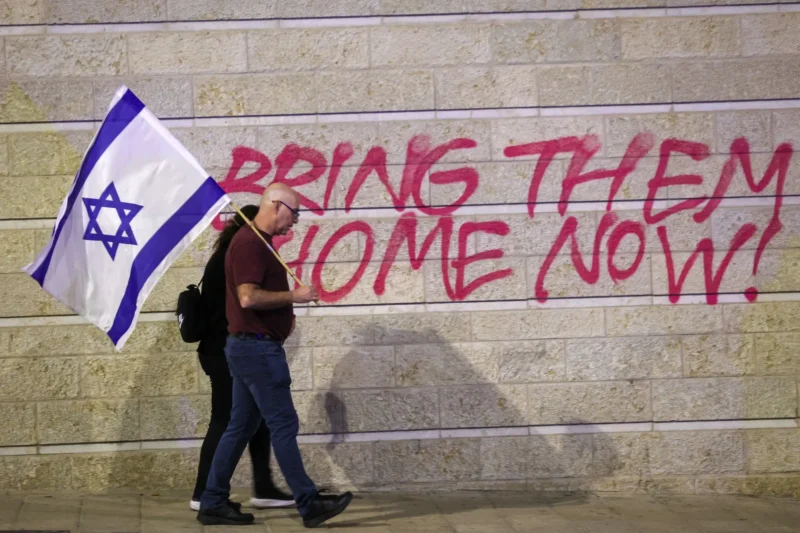
According to estimates, 48 hostages remain in Hamas captivity, with 21 believed to be alive. Their families have expressed profound gratitude for the deal, calling it a historic step toward reuniting loved ones. Many families credit Trump’s persistence for breaking the deadlock and sparking progress.
In Israel, public reaction has been largely supportive. Citizens weary of years of conflict see this as an opportunity to end bloodshed and begin healing. In Gaza, reactions are mixed—some view the agreement as a lifeline, while others remain skeptical that promises of peace will be kept. (RELATED NEWS: Hamas Agrees to Release Hostages After Trump Ultimatum)
What Comes Next
The first steps include releasing all living hostages within 72 hours and initiating the withdrawal of Israeli forces from designated areas. Following this, reconstruction efforts will begin under international supervision. The success of this process will depend on transparency, accountability, and continued cooperation from mediators.
If trust is maintained, further phases could address long-term governance and border arrangements. However, any breach of terms could reignite tensions. Both sides face pressure from their populations to show tangible progress.
A Turning Point for the Region
This peace agreement, if fulfilled, could mark the most significant turning point in the Israel-Gaza conflict in a generation. It presents an opportunity to replace years of destruction with diplomacy and development. Yet, history reminds observers that peace in this region is never guaranteed.
Still, the tone of the current moment is one of cautious optimism. Trump’s plan has created a rare sense of unity among mediators, and the first signs of cooperation are already visible.
The world now watches closely to see whether this ceasefire will lead to a lasting resolution. For millions affected by war, the hope is simple—a strong, durable, and everlasting peace, just as the agreement promises.
Cut Through the Noise. Slice Through the Lies. Share the Truth.
At The Modern Memo, we don’t tiptoe around the narrative—we swing a machete through it. The mainstream won’t say it, so we will.
If you’re tired of spin, censorship, and sugar-coated headlines, help us rip the cover off stories that matter. Share this article. Wake people up. Give a voice to the truth the powerful want buried.
This fight isn’t just ours—it’s yours. Join us in exposing what they won’t tell you. America needs bold truth-tellers, and that means you.
