

Politics

France’s Political Season Reopens With No Majority, No Budget, and a 2027 Race Already Underway
France’s political class returned from summer recess this week facing a familiar and worsening problem: a National Assembly with no working majority, a 2027 budget that must somehow pass anyway, and a presidential race that, with less than eight months to go before voters head to the polls, is already reshaping how every major party approaches the fall legislative session. Prime Minister Sébastien Lecornu, who has spent months trying to hold together a government that lacks a stable parliamentary coalition, has made passing a 2027 budget his central priority for the fall, but he is doing so under a self-imposed constraint designed to keep his own political future out of the equation. “I am not a candidate in the presidential election,” Lecornu said, an explicit attempt to signal that his budget proposals are being shaped by fiscal necessity rather than positioning for 2027 — a distinction he hopes will make it easier to find votes from lawmakers who might otherwise view any prime ministerial initiative through the lens of the coming presidential contest. Lecornu’s team has described the budget measures under consideration as deliberately “reversible,” a hedge intended to make the package more palatable to a fractured Assembly where no single bloc controls anything close to a majority. The budget fight is unfolding against a backdrop of sharpening ideological battle lines. Olivier Faure, first secretary of the Socialist Party, has staked out a position built around what he calls “ecological socialism,” combining traditional left-wing tax and spending priorities with climate policy, while explicitly ruling out any accommodation with the far right. Faure has warned that his party will not support any Lecornu-backed measure that draws backing from Marine Le Pen’s National Rally, declaring flatly that “if…the far right supports it, we will vote to censure it” — a warning that any bill perceived as dependent on far-right votes will trigger a no-confidence motion from the Socialists, regardless of the bill’s substance. That dynamic hands outsized leverage to Jordan Bardella, president of the National Rally, who has used the summer to prepare the party’s platform for the 2027 campaign rather than negotiate over the current government’s budget. Bardella said his party has “worked hard this summer on a programme to get the country back on its feet,” language aimed squarely at voters rather than at his colleagues in the Assembly, and reflecting the extent to which the National Rally now positions itself as a government-in-waiting rather than a conventional opposition party working the current legislative session for incremental wins. On the center-right and center, Édouard Philippe of the Horizons party has tried to carve out space as a unifying figure capable of pulling together right-of-center and centrist voters wary of both the National Rally and the hard-left France Unbowed. Philippe has paired that pitch with a call for fiscal restraint, positioning himself as the candidate of budgetary seriousness against both a far right he views as fiscally reckless in its own way and a resurgent left pushing for higher taxes and spending. Adding another layer to the field, former Socialist President François Hollande has signaled his own 2027 ambitions are gaining momentum, calling for tax increases to address France’s economic strains — a notable break from the fiscal caution favored by Philippe and much of the governing center, and a sign that Hollande, who left office deeply unpopular in 2017, sees an opening to reposition himself for a political comeback. The immediate legislative agenda facing Lecornu’s government extends well beyond the budget itself. Lawmakers are also expected to take up an agricultural “rescue plan” aimed at addressing financial strain among French farmers, along with a reform of the country’s sick leave policy — both politically sensitive measures in their own right that will require the same kind of fragile, ad hoc coalition-building the government has relied on for every major initiative since the last National Assembly elections left no party or bloc with a majority. The stakes of the budget fight are difficult to overstate in a political system still adjusting to a period of chronic parliamentary fragmentation. France has cycled through multiple prime ministers in rapid succession in recent years as successive governments failed to build durable coalitions, and a failure to pass a budget this fall would raise fresh questions about the viability of governing at all under the current Assembly’s composition — potentially reviving talk of new legislative elections or a fresh government reshuffle less than a year before voters choose a new president. Moderate figures across the political spectrum have used the start of the new session to warn against the further radicalization of French politics, cautioning that both a resurgent far right and an emboldened far left threaten the kind of pragmatic, compromise-based governance that a divided Assembly requires to function at all. Whether those warnings translate into actual cooperation on the budget, or whether the approaching presidential election simply accelerates the trend toward legislative gridlock as every major figure positions for 2027 rather than for the next fiscal year, is likely to become clear well before voters cast their first ballots. For now, Lecornu’s government remains dependent on a shifting, issue-by-issue patchwork of support from lawmakers who, in nearly every case, have far more to gain politically from distancing themselves from the current government than from helping it succeed — a structural problem that no amount of “reversible” budget language is likely to fully solve. The instability has broader implications beyond France’s own borders. As one of the European Union’s two largest economies alongside Germany, France’s ability to pass a credible budget carries weight for European bond markets and for the bloc’s broader fiscal credibility at a moment when several member states are already navigating their own debt and spending pressures. European officials have watched the past several years of French governmental turnover with concern, worried that prolonged instability in Paris could complicate joint EU initiatives that require French buy-in, from defense spending coordination to the bloc’s collective response to Russia’s war in Ukraine,…

Federal Judge Rejects Maxwell’s Bid to Keep Sealed Epstein-Case Documents Secret
A federal judge in New York has rejected Ghislaine Maxwell’s constitutional challenge to a law forcing the release of long-sealed documents from the Jeffrey Epstein investigation, clearing the way for another batch of previously secret materials from Virginia Giuffre’s 2015 civil lawsuit against Maxwell to become public. U.S. District Judge Loretta Preska ruled August 12 that the Epstein Files Transparency Act, signed into law in 2025, overrides the decade-old protective order that had kept the documents under seal. Maxwell, who is serving a 20-year federal sentence after her 2021 conviction for sex trafficking, had argued the law was unconstitutional on three separate grounds, all of which Preska rejected in her opinion. Maxwell’s attorneys first argued the law violated separation-of-powers principles by improperly reopening a final judgment and directing courts how to rule in a specific case — in effect, they argued, Congress was doing a judge’s job by legislating a particular outcome in ongoing litigation rather than setting general policy. Preska disagreed, finding that Congress has clear authority to modify the rules governing grand jury secrecy through legislation, and that the original protective order sealing the documents was never meant to be permanent in the first place. The order, she noted, was explicitly modifiable “by the Court at any time for good cause shown” — meaning the parties involved never had an ironclad guarantee that the records would stay sealed forever. Maxwell’s second argument leaned on Federal Rule of Criminal Procedure 6(e), which generally bars disclosure of materials gathered through grand jury subpoenas. Some of the documents at issue were produced by Boies Schiller Flexner LLP, the law firm that represented Giuffre, after the firm complied with a grand jury subpoena as part of the broader Epstein investigation; those materials were originally placed under seal by a March 2016 protective order. Preska found that Congress retains the authority to override grand jury secrecy protections through validly enacted legislation, undercutting Maxwell’s claim that the records were categorically off-limits regardless of what a later statute said. Maxwell’s third and final argument was that unsealing the documents now would violate her due process rights by stripping away a vested legal right to permanent secrecy that she claimed to have earned when the original protective order was issued. Preska rejected that framing outright, ruling that Maxwell never had “a vested right to total and perpetual secrecy” in the first place — a protective order, by its nature, protects information only for as long as a court determines that protection remains warranted, not as an unconditional promise that can never be revisited. The Epstein Files Transparency Act itself requires the Department of Justice to “make publicly available … all unclassified records, documents, communications, and investigative materials” tied to a list of specified subjects, including Epstein and Maxwell by name. The law was the product of sustained pressure from lawmakers in both parties, along with victims’ advocates, who argued that years of piecemeal, heavily redacted document releases had failed to give the public a full accounting of who knew what about Epstein’s abuse of underage girls and when they knew it. Since the law’s passage, courts and the Justice Department have released multiple rounds of material, including a batch of roughly 3 million documents and photos made public by the DOJ in January, though critics on the House Oversight Committee have repeatedly accused the department of slow-walking the fullest disclosures and continuing to withhold material that lawmakers say should be released under the statute. Preska’s ruling did not set a specific date for when the newly cleared documents will actually become public. Records released under the Transparency Act typically go through a redaction process first, intended to protect the identities of Epstein’s victims and other private individuals named in the files who are not themselves subjects of the underlying allegations — a process that has, in past rounds of disclosure, taken anywhere from several weeks to a few months after a judge clears materials for release. It remains unclear from the ruling itself whether Maxwell’s legal team plans to appeal Preska’s decision to the Second Circuit, though her attorneys have signaled in past filings that they intend to keep contesting individual releases of sealed material as they come up, even as the broader legal fight over the Transparency Act’s constitutionality has now been resolved, at least at the district court level, in the government’s favor. Giuffre, who died by suicide in April 2025, sued both Maxwell and Prince Andrew in the years before her death, alleging she had been trafficked as a teenager. Maxwell settled Giuffre’s suit against her in 2017; Prince Andrew reached his own settlement with Giuffre in 2022. Epstein died in federal custody in 2019 while awaiting trial on sex-trafficking charges, a death that was officially ruled a suicide but that has continued to fuel public skepticism and conspiracy theories, adding to the political pressure that eventually produced the Transparency Act. Lawmakers on the House Oversight Committee, which has spent much of the past year pressing the Justice Department for fuller compliance with the law, have said they view the ruling as a significant step toward the kind of complete public accounting they have been demanding since the statute’s passage, even as they continue to argue that millions of additional pages remain improperly withheld. Whether this latest release meaningfully advances that broader effort, or simply becomes the next flashpoint in an ongoing legal and political fight over how much of the Epstein investigation’s paper trail the public is ultimately entitled to see, is likely to become clearer only once the newly cleared documents are actually made public in the weeks ahead. Preska’s decision is notable partly because it is not the first time a federal judge has sided with disclosure advocates over Maxwell’s objections this year. Her ruling followed similar findings from other judges handling related sealed materials from the broader Epstein docket, part of a pattern that has emerged since the Transparency Act’s passage: courts asked to weigh decades-old secrecy orders…
Republicans Hold Roughly 8-Seat Redistricting Edge Heading Into 2026 Midterms
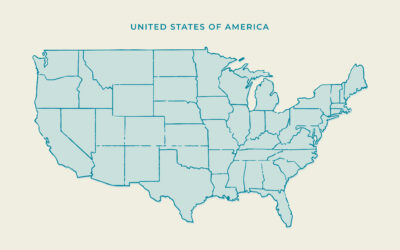
A wave of mid-decade congressional map redraws has left Republicans with a net advantage of roughly eight U.S. House seats heading into the November midterms, the product of an aggressive redistricting push in GOP-controlled states that a Supreme Court ruling this spring helped clear the way for. Texas kicked off the fight last August when Governor Greg Abbott signed a new congressional map creating five additional Republican-leaning districts. Democratic-controlled California countered in November, when voters approved a new map projected to net Democrats five seats of their own. Since then, the redistricting arms race has spread well beyond those two states: Ohio’s bipartisan redistricting commission approved a map last October worth two more seats for Republicans, Florida’s governor signed a map in early May netting the GOP an estimated four seats, and Missouri’s legislature — over Democratic objections — redrew Kansas City-area Representative Emanuel Cleaver’s district to add a Republican-leaning seat, a move the state Supreme Court upheld in May. Louisiana was forced into its own redraw after the U.S. Supreme Court’s late-April ruling in Texas’s case, a decision that is expected to net Republicans an additional seat there as well. Not every state redraw favored the GOP: a Virginia court struck down a Democratic-backed constitutional amendment that would have let the legislature redraw that state’s map, keeping Virginia’s current lines in place. Added together, Republicans have picked up an estimated 13 seats across Texas, Florida, Ohio, Missouri and Louisiana, while Democrats have gained roughly five through California’s counter-map — a net swing of about eight seats toward the GOP, enough to meaningfully shift the math in a chamber where 218 seats decide control. The redistricting fights were reshaped by the Supreme Court’s 6-3 ruling in Louisiana v. Callais, which narrowed the Voting Rights Act’s protections for minority-opportunity districts. The court held that maps drawn specifically to maximize the electoral chances of non-white candidates can themselves run afoul of the Constitution’s equal-protection guarantee, a decision legal analysts say gave state legislatures far more room to redraw lines for straightforward partisan advantage without running into the VRA constraints that had shaped redistricting for decades. Democratic National Committee Chair Ken Martin has criticized the wave of GOP-led redraws, saying of Missouri’s effort specifically that Governor Mike Kehoe “undermined the voice of Missouri voters” and sought to “dilute their power altogether.” Republican officials have defended the new maps as legitimate exercises of state legislative authority, noting that Democratic-controlled California pursued the same strategy once voters there approved it. More maps could still be litigated before November. Courts have traditionally been reluctant to order new congressional lines close to an election, but this year’s Supreme Court ruling has led some legal observers to say that “traditional expectations may not apply in 2026,” leaving open the possibility of further changes in the months ahead. Even with the current GOP edge, strategists in both parties caution that redistricting alone won’t decide House control — Republicans continue to face separate headwinds heading into the midterms, including historical trends that typically favor the party out of the White House in off-year elections.

Venezuela Frees 131 More Political Prisoners as Post-Maduro Transition Talks Continue
Venezuela’s transitional government announced the release of 131 more political prisoners this month under a program it calls “Peace and Democratic Coexistence,” part of an ongoing reconciliation effort in the roughly eight months since a U.S. military operation removed longtime authoritarian ruler Nicolás Maduro from power. The releases bring the total number of Venezuelans freed since Maduro’s January 3 removal to 1,046, according to government figures, though independent monitors have repeatedly reported lower confirmed numbers than the government claims. The rights group Foro Penal said it had independently verified at least 40 releases from the latest batch, while the opposition party Vente Venezuela confirmed 43. As of August 10, roughly 391 political prisoners remained behind bars, though outside estimates have varied over the course of the year. Delcy Rodríguez, Maduro’s former deputy, has governed Venezuela since his removal with what observers describe as significant influence from Washington. Her government has overseen a general amnesty law and a series of staggered prisoner releases throughout the year, though the process has been uneven — the United Nations has reported that Venezuela’s broader apparatus of repression remains largely intact despite the change in leadership, and documented dozens of new politically motivated arrests even as older cases were resolved. U.S.-brokered talks between the Rodríguez government and opposition representatives wrapped up this week, led by opposition figure Dinorah Figuera and National Assembly President Jorge Rodríguez, Delcy’s brother. The two sides agreed to keep working on recovering Venezuelan funds frozen overseas — which officials hope could help fund earthquake recovery efforts — and on reforms to the country’s judiciary. Secretary of State Marco Rubio called the latest prisoner releases “a crucial step for the nation’s reconciliation process.” Opposition leader Juan Pablo Guanipa, himself previously detained for several hours shortly after an earlier release before being placed under house arrest, welcomed the news but pressed for more, saying every freed prisoner represents “an immense relief” while demanding the government free all remaining political detainees “without exception, without delay.” Freed prisoners have not been given a clean break from state oversight. Under the terms of their release, many are barred from speaking publicly about their detention and must appear before judges on a monthly basis. As of earlier this summer, roughly 213 military personnel remained in custody on political charges tied to alleged conspiracies against the Maduro government before its collapse. The Trump administration, which called off a planned second wave of military strikes on Venezuela earlier this year in response to the government’s cooperation on releases, has continued to press Caracas publicly for faster progress, though it has stopped short of threatening renewed military action over the pace of the transition.
Senate Committee Holds Fauci in Contempt After He Invokes the Fifth More Than 100 Times
A Senate committee voted along party lines Thursday to hold Dr. Anthony Fauci in contempt of Congress, after the former NIAID director refused to answer lawmakers’ questions about the government’s handling of COVID-19 and the pandemic’s origins at a hearing just one week earlier — a defiant stance that even members of his own legal team acknowledged put him on shaky procedural ground. What Happened at the Hearing Fauci, who once led the National Institute of Allergy and Infectious Diseases, appeared before the Senate Homeland Security and Governmental Affairs Committee on July 29, where he invoked his Fifth Amendment right against self-incrimination more than 100 times rather than respond to lawmakers’ questions. Republicans on the committee noted what they characterized as a contradiction: Fauci delivered opening testimony addressing the pandemic response, then declined to answer virtually any follow-up questions on the same subject matter. The Contempt Vote The committee voted 8-5 along party lines Thursday to advance the contempt resolution. Chairman Sen. Rand Paul, R-Ky., framed the vote narrowly, insisting it wasn’t about relitigating Fauci’s pandemic-era policy decisions but purely about whether a witness can defy a direct order to answer questions without consequence. “We are voting on whether a witness who has received the benefit of a sweeping federal pardon can be ordered by this committee to answer questions and then defy that order without consequence,” Paul said ahead of the vote. That pardon reference is central to Republicans’ argument. Fauci received a broad federal pardon in early 2025, and Paul and other committee Republicans argue that a pardon covering past conduct shouldn’t shield him from having to testify about that same conduct now — nor should it protect him from consequences for any false statements made during current testimony, since a pardon can’t retroactively cover perjury committed after the fact. Democrats Push Back, Question the Point Democrats on the committee, led by Sen. Gary Peters, D-Mich., attempted to table the contempt vote before it proceeded, arguing the whole exercise was symbolic and wouldn’t actually accomplish anything. “This resolution will not provide the committee with any additional information, or compel Dr. Fauci to provide answers to our inquiries,” Peters said. “Criminal contempt is punitive; it does not compel a witness to answer questions or produce the documents we’d all like to see.” Paul rejected the tabling motion, telling Democrats their effort to delay the vote was “intended to avoid accountability.” Fauci’s legal counsel, David Schertler, was similarly dismissive of the proceeding, calling Thursday’s vote “a crude political stunt.” What Happens Next Under normal procedure, a contempt resolution that clears committee would move to a vote on the full Senate floor, where it would need 60 votes to pass — a threshold this measure is highly unlikely to clear given the chamber’s makeup. Rather than send it there and watch it fail, Paul said he intends to refer the matter directly to the Department of Justice, leaving it up to federal prosecutors to decide whether to pursue the case. If prosecutors move forward, the matter would go to the U.S. Attorney for the District of Columbia, Jeanine Pirro, who could ultimately bring it before a grand jury. The Bigger Picture The vote is the latest chapter in a yearslong effort by congressional Republicans to hold Fauci accountable for decisions made during the COVID-19 pandemic, including gain-of-function research funding, mask and vaccine guidance, and the broader federal response that many conservatives argue caused lasting economic and social damage disproportionate to the actual threat. Supporters of the committee’s action argue that no witness — regardless of past government service or a prior pardon — should be able to simply refuse to answer legitimate congressional oversight questions without any consequence, and that letting this stand would set a troubling precedent for future oversight hearings of any administration. Whether the Justice Department ultimately decides to act on the referral remains to be seen, but the vote itself ensures the debate over pandemic accountability — and Fauci’s role in it — will remain a live political issue well into the fall. This story is developing.

Democrats Nominate Progressive Firebrand El-Sayed in Michigan, Setting Up Fall Clash With GOP’s Mike Rogers
Michigan Democrats have chosen progressive activist Abdul El-Sayed as their nominee for the state’s open U.S. Senate seat, rejecting the party establishment’s preferred candidate in favor of a further-left alternative — a result Republicans are already framing as a gift heading into what both parties agree is one of the most critical Senate races of the 2026 midterms. A Bruising, Narrow Win El-Sayed narrowly defeated Rep. Haley Stevens, D-Mich., in Tuesday’s primary, winning by roughly one percentage point after the race remained too close to call into Wednesday morning. The former Wayne County health director will now face Republican and former Rep. Mike Rogers in the general election for the seat being vacated by retiring Sen. Gary Peters — a race both parties view as essential to determining control of the chamber next year. El-Sayed’s win came despite a massive financial disadvantage. Stevens and her allies outspent El-Sayed and his supporters by nearly nine to one on advertising, according to ad-tracking firm AdImpact, with more than $30 million of that spending coming from the United Democracy Project, a super PAC affiliated with the American Israel Public Affairs Committee. Michigan Gov. Gretchen Whitmer also endorsed Stevens late in the race in what was widely seen as a last-ditch effort by the party establishment to block El-Sayed’s rise. The Most Progressive Wing Ascendant El-Sayed ran as an outspoken critic of both the Israeli government’s conduct in Gaza and continued U.S. military aid to Israel, positions that put him well to the left of most sitting Senate Democrats and drew sustained attacks from AIPAC-aligned groups throughout the campaign. “If you believe like me that rather than fund the genocide perpetrated by a foreign government, we better build schools right here in Grand Rapids, then we better put ourselves in democracy,” El-Sayed said at a recent campaign stop — rhetoric Republicans are already previewing as a preview of general-election attack ads to come. His win wasn’t an isolated data point. Michigan Democrats also nominated state Rep. Donavan McKinney, a self-described democratic socialist, over sitting Rep. Shri Thanedar in a competitive House primary the same night — suggesting Tuesday’s results reflect a broader leftward shift among Michigan’s Democratic primary electorate, not simply one unusually strong candidate. A Warning Sign for Democrats in a Swing State Michigan is a state Democrats effectively must hold to have any realistic path to a Senate majority in 2026, and Trump carried the state by roughly one point in the last presidential election, underscoring just how competitive the general electorate remains. Stevens, for her part, had attempted to cast El-Sayed as an extremist who would make things easier for Republicans, warning voters directly that the GOP was “propping up” his candidacy — a message that ultimately failed to overcome El-Sayed’s grassroots momentum and his argument that a nearly $65 million spending advantage represented exactly the kind of establishment influence voters were rejecting. Republicans see an opening. Rogers, who ran unopposed for the GOP nomination, now gets to run a general election campaign against a candidate who spent the primary sparring over U.S. aid to Israel and courting the most progressive wing of his party — a considerably different opponent than the more centrist, auto-industry-focused Stevens would have been. President Trump wasted little time weighing in publicly on the outcome, criticizing El-Sayed’s candidacy following the results. Democrats Try to Project Unity For his part, El-Sayed moved quickly to project a message of party unity following his narrow win, downplaying the closeness of the margin and telling supporters “we cannot wait to come together and win in November.” He also praised Stevens as a committed public servant, and Stevens herself offered her support to the nominee following the result, with Democratic Party leadership broadly coalescing behind him in the race’s immediate aftermath. Whether that unity holds through November remains to be seen. The race is expected to be one of the most closely watched and heavily funded Senate contests in the country, testing whether a candidate who won a Democratic primary by running to the left on foreign policy and criticizing his own party’s fundraising apparatus can still assemble a broad enough coalition to win a genuine swing state in a midterm year — a question that will likely shape how national Democrats think about candidate selection in competitive states well beyond this single race. This story is developing.
Blanche Vows DOJ Will Work to “Make Dobbs Permanent” in Every State, Drawing Praise From Pro-Life Groups and Fire From Democrats
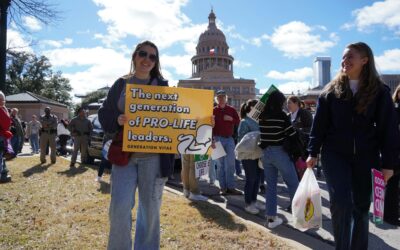
Acting Attorney General Todd Blanche privately assured a group of anti-abortion activists this week that the Justice Department is working to ensure the Supreme Court’s Dobbs decision becomes a lasting, nationwide reality — a pledge that thrilled pro-life advocates who’ve grown impatient with the pace of federal action since Roe v. Wade was overturned, even as it drew immediate pushback from Democrats and some abortion-rights groups. What Blanche Told the Group Blanche made the comments on a call hosted by the White House Faith Office with Intercessors for America, a Christian advocacy organization, in a recording the group later posted publicly. “We’re working, hand in hand with HHS and the FDA and the White House and President Trump’s team, to get permanent solutions, so that the Dobbs decision becomes permanent in every single state,” Blanche told the group. He went on to project confidence about the ultimate outcome: “We don’t have complete victory yet, but we will have victory, and victory will be soon, and it will be permanent.” Blanche also signaled that the administration is preparing new restrictions on the prescription and mail delivery of abortion pills such as mifepristone, specifically targeting states that have adopted “shield laws” allowing doctors to prescribe abortion medication to patients living in other states. That approach isn’t new — Blanche had already committed to addressing mail-order abortion pill access during his own confirmation hearing, after being pressed on the issue by Sen. Katie Britt, R-Ala. A Win Pro-Life Advocates Have Been Waiting For For supporters of the pro-life movement, Blanche’s comments represent exactly the kind of sustained federal commitment they’d hoped to see following the Dobbs ruling, and confirmation that the administration intends to use the tools available to the Justice Department — not just leave the matter entirely to individual states — to protect unborn life nationwide. Advocates have grown frustrated in recent years watching abortion pill access expand dramatically through telehealth and mail-order prescriptions, which now account for the majority of abortions performed in the country; a DOJ-led effort to close that avenue, working alongside HHS and the FDA, is precisely the kind of coordinated executive action many pro-life leaders have been pushing for since Roe fell. Democrats and Some Republicans Push Back The comments landed differently on the other side of the aisle. Sen. Patty Murray, D-Wash., seized on the remarks ahead of Blanche’s Senate confirmation vote, telling colleagues that a vote for Blanche was effectively a vote for an attorney general who would “attack abortion rights in every state” — repeating Blanche’s own “every single state” language back at him. Sen. Tina Smith, D-Minn., made a similar argument, saying the private call revealed Blanche’s true intentions more clearly than his public confirmation testimony had. Notably, the pushback wasn’t confined entirely to Democrats. Sen. Susan Collins, R-Maine, a longtime supporter of abortion rights within the GOP conference, announced she would oppose Blanche’s nomination, citing both his private assurances to anti-abortion groups and a separate controversy over an IRS audit shield for the Trump family. Collins’ defection illustrates that Blanche’s posture on abortion pushes further than some in his own party are comfortable going, even within a Republican-controlled Senate broadly supportive of his nomination. The Larger Legal Strategy Reporting on the episode suggests the administration’s approach centers heavily on regulatory and legal action rather than legislation — a strategy that avoids the difficulty of passing a nationwide abortion law through a closely divided Congress. Anti-abortion groups have spent months pushing to resolve Louisiana v. FDA, a case that could restrict the mail-order mifepristone system through the courts rather than through a congressional vote. Supporters argue this is simply smart, available use of existing federal authority; critics argue it’s an attempt to achieve through executive and regulatory action what couldn’t be achieved through the ordinary legislative process — though of course, that critique cuts both ways depending on which policy area and which administration one is examining. Where Things Stand Blanche’s confirmation vote in the full Senate is expected soon after clearing the Judiciary Committee earlier this week by a 12-10 vote. Given the Republican majority in the chamber, he is likely to be confirmed even with Collins’ opposition, positioning him to begin implementing the policy priorities he outlined to Intercessors for America almost immediately upon taking the job on a permanent basis. Advocates on both sides of the abortion debate are likely to be watching closely for the administration’s next moves on mifepristone access and the shield-law states in the weeks following his confirmation. This story is developing.
Johnson Scores Commanding Victory in Fight to Advance SAVE America Act Through Democrat Opposition
The $95B budget reconciliation framework includes $10B for states to implement election integrity measures from the SAVE America Act House Speaker Mike Johnson notched a major procedural win this week, steering his plan to advance the SAVE America Act through unified Democrat opposition and a bruising internal battle with fiscal hawks in his own conference. The House Rules Committee cleared Johnson’s budget reconciliation framework Monday, setting up a chamber-wide vote that would tee up passage of one of President Trump’s top legislative priorities — without a single Democrat vote required. Bypassing the Blockade Democrats have refused to support the SAVE America Act, which would require states to verify voter citizenship and mandate photo ID at the polls — commonsense election integrity measures that polling shows are backed by the overwhelming majority of Americans. Rather than let that obstruction stand in the way, Johnson moved to fold key elements of the SAVE America Act into a sweeping budget reconciliation package, a maneuver that lowers the Senate’s threshold for passage from 60 votes to a simple majority, cutting Democrats out of the equation entirely. “Safeguarding American elections and strengthening our national defense are the most basic responsibilities of Congress and are supported by an overwhelming majority of Americans,” Johnson said. The strategy is not without hurdles. Reconciliation rules require legislation to be tied directly to federal spending and revenue, meaning the full text of the SAVE America Act cannot simply be inserted wholesale — the Senate parliamentarian will ultimately decide which election-related provisions can survive under the chamber’s Byrd Rule. To clear that bar, House Republicans structured the package to direct $10 billion to the House Administration Committee specifically to help states implement SAVE America Act-style requirements, such as citizenship verification and voter ID. What’s in the Package The broader $95 billion framework goes well beyond election integrity. It also directs: $60 billion to the Armed Services Committee for military funding, including support amid the ongoing conflict with Iran $13 billion to the Intelligence Committee for defense and Iran-related spending $12 billion to the Agriculture Committee for farm aid, providing relief to American farmers $10 billion to the House Administration Committee for state election integrity grants tied to the SAVE America Act Republicans are framing the package as a three-pronged America First priority: secure the border and the ballot box, rebuild military readiness, and support the farmers who keep the country fed. Overcoming a GOP Revolt Johnson’s win came only after he beat back a revolt from fiscal hawks within his own conference, who balked at nearly $100 billion in new spending with no offsets elsewhere in the budget. President Trump personally intervened to press wavering House Republicans to fall in line, and Johnson has continued working closely with Vice President JD Vance to shore up support. Following a meeting with Vance and House Republicans, Johnson made clear there would be no retreat: “We’re going to pass the SAVE America Act into law, as much of that as possible.” The House Budget Committee advanced the framework Thursday on a 20-14 vote, and Monday’s Rules Committee action clears the way for a full House floor vote before lawmakers depart for their August recess. What Comes Next Passage of the budget framework is only the first step. It directs the relevant House committees to draft the detailed reconciliation text and submit it by September 11, after which the full package must still pass both chambers before reaching the president’s desk. Senate Republicans, including Sen. Mike Lee of Utah — the SAVE America Act’s lead Senate sponsor — have cautioned that the final scope of what survives reconciliation will depend heavily on how the legislative text is drafted and what the parliamentarian allows. Still, Johnson’s ability to unify his conference around a path forward, after Democrats made clear they would offer zero cooperation, marks a significant early win in Republicans’ third use of reconciliation this Congress — and keeps alive Trump’s push to get citizenship verification and voter ID protections written into federal law before the midterms. This story is developing.

The Phantom Roster: Shocking Twist in Minnesota Voting Integrity Battle as Decorated Veteran Blows Whistle on Ghost Ballots
A high-stakes political and legal firestorm has erupted over the integrity of the vote in the Upper Midwest. As the primary season heats up, an alarming investigative report published by Fox News correspondent Peter Pinedo has injected a major plot twist into the state’s ongoing voter registration debate. Decorated former Navy SEAL and frontline Republican U.S. Senate candidate Adam Schwarze has stepped forward as a high-profile whistleblower, providing verified documentation that exposes a critical vulnerability inside Minnesota’s historical voting logs. Schwarze revealed a shocking administrative paradox: while he was deployed nearly 2,000 miles away in California undergoing grueling tactical training as a young Navy SEAL candidate in 2012, official Minnesota voter participation records show that an in-person vote was actively cast under his unique legal name and registration. The revelation has sent immediate shockwaves through the Minnesota Secretary of State’s office, prompting aggressive demands from transparency advocates for a comprehensive forensic audit of historical rolls to determine how many other overseas military personnel have had their identities hijacked by illegal “ghost voters.” The Deployment Alibi: 2,000 Miles from the Ballot Box The primary evidence anchoring Schwarze’s whistleblower disclosure is backed by ironclad, unalterable federal military service logs that leave zero room for administrative interpretation. The St. Paul Disconnect: A formal review of official county voter ledgers confirmed that a ballot was checked in, processed, and cast in person under Adam Schwarze’s name during the November 2012 general election. The SEAL Training Wall: However, federal military deployment rosters and training schedules confirm that throughout the fall of 2012, Schwarze was physically stationed at Naval Amphibious Base Coronado in San Diego, California. As a candidate navigating the intense pipeline of Navy SEAL qualification, he was under strict base confinement and rigorous physical observation—making it geographically and physically impossible for him to step inside a Minnesota polling place. The Absentee Omission: Crucially, Schwarze verified that he did not request, receive, or return an absentee or mail-in military ballot for that cycle. The state record specifically designates the 2012 action as an in-person standard vote, proving that another individual walked into a precinct, claimed his identity, and successfully voted without being verified by local election judges. The Institutional Rift: A Frontrunner Shaking the Roster The timing of the Fox News investigation has heavily supercharged the political stakes in Minnesota, as Schwarze is no longer just a private citizen, but the endorsed leader of the state’s opposition party. The Endorsement Momentum: In May, Schwarze secured a major political victory, capturing 62.6% of the delegate vote on the sixth ballot at the Republican state convention in Duluth to win the official GOP endorsement for the open U.S. Senate seat vacated by retiring Senator Tina Smith. The Primary Standoff: Moving toward the highly anticipated primary election, Schwarze has integrated his personal identity-theft experience directly into his campaign core. He is utilizing the hard documentation to run aggressive media spots targeting the state’s loose structural voting guidelines. The Security Void: Conservative legal groups have long argued that Minnesota’s continuous rejection of mandatory, photo-verified voter identification requirements creates a permanent, structural invitation for low-level fraud. By demonstrating that a high-profile military officer had his ballot cast by a stranger while he was training to defend the nation, Schwarze has effectively stripped state administrators of their ability to claim that identity fraud is a myth. The Statewide Audit Push: Demanding the Voter ID Shift The publication of Peter Pinedo’s report has instantly galvanized election integrity organizations, who are weaponizing the veteran’s case to demand sweeping legislative overhauls. Current Voting Protocol The Schwarze Vulnerability Metric Proposed Structural Remedy No Photo ID Requirement: Voters simply state a name and address at the desk. Allowed a fraudulent actor to impersonate an active-duty SEAL without detection. Mandatory Photo ID: Requiring a government-issued driver’s license or military passport. Voter Roll Maintenance: Relies on passive death and relocation records. Kept an overseas deployed soldier active as an available target for identity theft. Active Duty Verification: Automating a cross-check system with military databases. The Office of the Minnesota Secretary of State has faced a deluge of inquiries from independent watchdogs demanding a comprehensive review of all active-duty military personnel records from the past decade. Legal analysts note that if a prominent, highly visible community figure like a future Senate nominee can be successfully impersonated on a historical voter roll, the vulnerability likely extends to thousands of lesser-known service members who are routinely deployed out of state during major election cycles. Final Word The stunning revelation that Minnesota records show an in-person vote cast in Adam Schwarze’s name while he was sweating through Navy SEAL training 2,000 miles away is the definitive proof of a deeply compromised electoral ledger. When you look past the standard, dismissive press releases issued by state election officials and focus entirely on the hard data—an unyielding federal deployment log proving a physical impossibility, a state party nominee utilizing his own stolen identity to anchor a national security platform, and an elite journalist exposing the systemic lack of photo verification at local desks—you gain an unvarnished view of a profound administrative failure. Quality information replaces the sterile political talking points with the cold reality of identity exploitation. By stepping forward as a whistleblower and forcing Fox News to put the evidence on the national stage, Adam Schwarze has delivered an unyielding ultimatum to St. Paul: a state that fails to protect the ballots of the soldiers fighting for its freedom has surrendered its own moral authority, and the rolls must be structurally audited before another switch is thrown.

Which Political Philosopher Shapes Your Worldview?
Which Political Philosopher Shapes Your Worldview? Ever wonder why you see society the way you do? This quiz reveals the classic thinker whose ideas most align with your own. Question 1 of 8 You’re stranded on a desert island with a group of strangers. What’s your first priority? Establish clear rules and a strong leader to ensure everyone’s survival. Make sure everyone has a say in how we organize ourselves and work for the common good. Figure out how to maximize our chances of survival and happiness, even if it means tough choices. Define each person’s personal space and property to avoid conflicts from the start. What’s the most important foundation for a successful society? The unshakeable right of every individual to life, liberty, and property. A shared sense of community and commitment to the collective well-being. Strong, stable leadership that guarantees peace and security for all citizens. The freedom for each person to pursue their own happiness, as long as they don’t harm others. You’re designing a government from scratch. Its main job should be… To act on the “general will” of the people, reflecting our shared values. To protect citizens from foreign threats and internal chaos, period. To create laws that produce the greatest amount of good for the greatest number of people. To protect the natural rights of its citizens and otherwise stay out of their way. Next Question → A person is publicly sharing ideas you find deeply offensive. What’s your reaction? Their speech is harmful to the community’s values and should be restricted. As long as they aren’t directly inciting violence, they must be allowed to speak. All ideas must be heard. This kind of dissent can lead to instability. The authorities should step in to maintain order. They have a right to speak, and I have the right to argue passionately against them. When it comes to the economy, you believe… The government’s role is to protect private property and enforce contracts, letting the free market work. The economy should be structured to reduce inequality and serve the entire community. Economic policy should be whatever is most practical for ensuring national stability and strength. We should choose policies that demonstrably increase overall happiness and well-being for the most people. Your friend wants to make a life choice you think is a huge mistake. You… Let them do it. It’s their life and their right to make their own mistakes, as long as it doesn’t hurt me. Remind them of their responsibilities to their family and community, urging them to reconsider. It’s their business. People are entitled to their own choices and to control their own lives. Warn them that their choice could lead to personal chaos and instability, which is always a bad thing. Where does a government’s right to rule come from? From the consent of the governed, who agree to be ruled in exchange for protection of their rights. From the people’s collective agreement to be part of a society and be guided by its general will. From a practical contract where people give up some freedom to a sovereign for security. Its legitimacy is based on how well it promotes the general welfare and happiness of its citizens. Which motto best captures your personal philosophy? My rights end where yours begin. We’re all in this together. Order is the foundation of everything. Live and let live. See My Result → Your Result Share your result & challenge your friends to take the quiz! Facebook Post on X Copy Link Take Quiz Again