
Republicans
Republicans Hold Roughly 8-Seat Redistricting Edge Heading Into 2026 Midterms
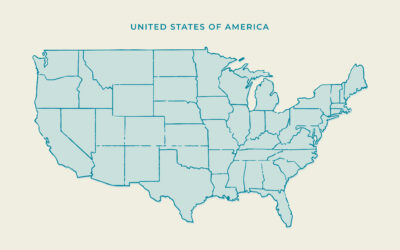
A wave of mid-decade congressional map redraws has left Republicans with a net advantage of roughly eight U.S. House seats heading into the November midterms, the product of an aggressive redistricting push in GOP-controlled states that a Supreme Court ruling this spring helped clear the way for. Texas kicked off the fight last August when Governor Greg Abbott signed a new congressional map creating five additional Republican-leaning districts. Democratic-controlled California countered in November, when voters approved a new map projected to net Democrats five seats of their own. Since then, the redistricting arms race has spread well beyond those two states: Ohio’s bipartisan redistricting commission approved a map last October worth two more seats for Republicans, Florida’s governor signed a map in early May netting the GOP an estimated four seats, and Missouri’s legislature — over Democratic objections — redrew Kansas City-area Representative Emanuel Cleaver’s district to add a Republican-leaning seat, a move the state Supreme Court upheld in May. Louisiana was forced into its own redraw after the U.S. Supreme Court’s late-April ruling in Texas’s case, a decision that is expected to net Republicans an additional seat there as well. Not every state redraw favored the GOP: a Virginia court struck down a Democratic-backed constitutional amendment that would have let the legislature redraw that state’s map, keeping Virginia’s current lines in place. Added together, Republicans have picked up an estimated 13 seats across Texas, Florida, Ohio, Missouri and Louisiana, while Democrats have gained roughly five through California’s counter-map — a net swing of about eight seats toward the GOP, enough to meaningfully shift the math in a chamber where 218 seats decide control. The redistricting fights were reshaped by the Supreme Court’s 6-3 ruling in Louisiana v. Callais, which narrowed the Voting Rights Act’s protections for minority-opportunity districts. The court held that maps drawn specifically to maximize the electoral chances of non-white candidates can themselves run afoul of the Constitution’s equal-protection guarantee, a decision legal analysts say gave state legislatures far more room to redraw lines for straightforward partisan advantage without running into the VRA constraints that had shaped redistricting for decades. Democratic National Committee Chair Ken Martin has criticized the wave of GOP-led redraws, saying of Missouri’s effort specifically that Governor Mike Kehoe “undermined the voice of Missouri voters” and sought to “dilute their power altogether.” Republican officials have defended the new maps as legitimate exercises of state legislative authority, noting that Democratic-controlled California pursued the same strategy once voters there approved it. More maps could still be litigated before November. Courts have traditionally been reluctant to order new congressional lines close to an election, but this year’s Supreme Court ruling has led some legal observers to say that “traditional expectations may not apply in 2026,” leaving open the possibility of further changes in the months ahead. Even with the current GOP edge, strategists in both parties caution that redistricting alone won’t decide House control — Republicans continue to face separate headwinds heading into the midterms, including historical trends that typically favor the party out of the White House in off-year elections.

Minnesota GOP Rejects Trump’s Pick, Nominates Lisa Demuth for Governor Over Mike Lindell
Minnesota Republicans delivered a genuine primary night upset Tuesday, choosing state House Speaker Lisa Demuth as their nominee for governor over Trump-endorsed MyPillow founder Mike Lindell — setting up a general election matchup against Democratic Sen. Amy Klobuchar in a race Republicans see as one of their best pickup opportunities in a state that hasn’t elected a GOP governor in more than two decades. A Come-From-Behind Win The Associated Press called the race for Demuth just before midnight, with her holding more than 43% of the vote to Lindell’s less than 33% once the count was finalized. That represented a real reversal of fortune: Lindell had appeared to be leading in the limited public polling available heading into Election Day, and he had touted President Trump’s endorsement heavily in the campaign’s final stretch. “I have an advantage over everyone up here,” Lindell told supporters at an event just days before the primary. “I can call up and work with the President of the United States.” That advantage ultimately wasn’t enough. Notably, Demuth won the nomination despite not having the backing of either major GOP power center in the race — she’d been passed over by the state Republican Party’s own endorsement process, which instead backed businessman Kendall Qualls back in May, and she lacked Trump’s presidential endorsement as well, which went to Lindell. Demuth stayed in the race regardless, citing what she described as irregularities in the party’s convention voting process, and built a coalition strong enough to overcome both organizational disadvantages. Qualls, for his part, conceded graciously as Demuth’s lead widened on election night, congratulating her for “earning the support of the Republican primary voters.” What Sank Lindell’s Campaign Lindell’s defeat wasn’t simply a story of Demuth outperforming expectations — it also reflected real friction within his own campaign in its closing weeks. According to NBC News, attacks on Lindell from fellow Republicans, including pointed questions about his state residency raised publicly by the chairman of the Minnesota Republican Party, meaningfully hampered his campaign heading into the final stretch, as segments of the state GOP actively worked to consolidate support behind an alternative. Lindell, the report noted, has become better known nationally in recent years as an outspoken election conspiracy theorist than as a Minnesota political figure, a reputation that appears to have created real vulnerabilities even within a Republican primary electorate generally sympathetic to Trump’s endorsement. As of Tuesday night, Lindell had not formally conceded the race, continuing to raise claims about anomalies in the vote count even as the Associated Press, NBC News, CBS News, and other major outlets all called the race decisively in Demuth’s favor. Why the Seat Is Open in the First Place The race to replace term-limited Democratic Gov. Tim Walz has been shaped heavily by controversy well before Tuesday’s primary. Walz, who had originally planned to seek a third term, abruptly announced in January that he would not run for reelection after facing mounting scrutiny over allegations that his administration ignored repeated warnings about social aid fraud at daycare centers across the state — a scandal Minnesota Department of Human Services employees say they flagged internally long before it became public. Demuth referenced the episode directly on the campaign trail, blaming what she called “incompetent Democrat control” for the fraud cases and pointing to her own record establishing a Fraud Prevention Agency Oversight Committee while leading the state House. Klobuchar entered the governor’s race only a few weeks after Walz’s withdrawal, adding her name to a Democratic field that included four sitting U.S. senators nationally seeking governorships this cycle. She easily secured her party’s nomination Tuesday, defeating lesser-known primary opponents Kobey Layne and businessman Bill Gates Jr. — no relation to the Microsoft co-founder. Demuth’s Case to Voters Demuth, 59, has spent the current legislative session presiding over a state House that’s nearly evenly split between the two parties, and she leaned into that experience on the campaign trail, emphasizing her record of working across the aisle in a divided chamber as evidence she can govern effectively in a purple state. Speaking to reporters after her win was projected Tuesday night, she struck an optimistic tone about the race ahead. “This is our opportunity to really move Minnesota forward, and I’m excited about that,” Demuth said. An Uphill Fight, But a Real One Even with a clean primary win now behind her, Demuth faces a genuinely difficult path in November. Minnesota hasn’t elected a Republican governor since 2002, and the state has trended Democratic in recent presidential cycles — Kamala Harris carried it by roughly four percentage points in the last presidential election, and Trump has never won the state in any of his three runs for the White House. Klobuchar, a fixture in Minnesota politics since her election to the Senate in 2007, enters the general election with substantial name recognition and a well-established statewide fundraising network. That said, Republicans see real opportunity in this particular race that goes beyond simple partisan trend lines. The daycare fraud scandal that ended Walz’s political career gives Demuth a concrete, non-abstract line of attack against continued Democratic control of the governor’s office, and an open seat — rather than a Democratic incumbent seeking reelection — typically presents a more favorable opportunity for the out-of-power party. Trump’s team, despite backing the losing candidate in the primary, is likely to engage heavily in the general election regardless, given how closely national Republicans are watching Minnesota as a genuine midterm target after Lindell’s defeat scrambled expectations about the state of the race. The Bigger Picture for Trump’s Political Capital Tuesday’s result also carries a broader signal about the limits of a Trump endorsement within his own party. Lindell’s loss, despite the president’s public backing, suggests Minnesota Republican primary voters were willing to prioritize a candidate with concrete legislative experience and a clean campaign presence over one carrying more national baggage — even one with the president’s explicit support. Whether that dynamic reflects a uniquely Minnesota set…

Blanche Vows DOJ Will Work to “Make Dobbs Permanent” in Every State, Drawing Praise From Pro-Life Groups and Fire From Democrats
Acting Attorney General Todd Blanche privately assured a group of anti-abortion activists this week that the Justice Department is working to ensure the Supreme Court’s Dobbs decision becomes a lasting, nationwide reality — a pledge that thrilled pro-life advocates who’ve grown impatient with the pace of federal action since Roe v. Wade was overturned, even as it drew immediate pushback from Democrats and some abortion-rights groups. What Blanche Told the Group Blanche made the comments on a call hosted by the White House Faith Office with Intercessors for America, a Christian advocacy organization, in a recording the group later posted publicly. “We’re working, hand in hand with HHS and the FDA and the White House and President Trump’s team, to get permanent solutions, so that the Dobbs decision becomes permanent in every single state,” Blanche told the group. He went on to project confidence about the ultimate outcome: “We don’t have complete victory yet, but we will have victory, and victory will be soon, and it will be permanent.” Blanche also signaled that the administration is preparing new restrictions on the prescription and mail delivery of abortion pills such as mifepristone, specifically targeting states that have adopted “shield laws” allowing doctors to prescribe abortion medication to patients living in other states. That approach isn’t new — Blanche had already committed to addressing mail-order abortion pill access during his own confirmation hearing, after being pressed on the issue by Sen. Katie Britt, R-Ala. A Win Pro-Life Advocates Have Been Waiting For For supporters of the pro-life movement, Blanche’s comments represent exactly the kind of sustained federal commitment they’d hoped to see following the Dobbs ruling, and confirmation that the administration intends to use the tools available to the Justice Department — not just leave the matter entirely to individual states — to protect unborn life nationwide. Advocates have grown frustrated in recent years watching abortion pill access expand dramatically through telehealth and mail-order prescriptions, which now account for the majority of abortions performed in the country; a DOJ-led effort to close that avenue, working alongside HHS and the FDA, is precisely the kind of coordinated executive action many pro-life leaders have been pushing for since Roe fell. Democrats and Some Republicans Push Back The comments landed differently on the other side of the aisle. Sen. Patty Murray, D-Wash., seized on the remarks ahead of Blanche’s Senate confirmation vote, telling colleagues that a vote for Blanche was effectively a vote for an attorney general who would “attack abortion rights in every state” — repeating Blanche’s own “every single state” language back at him. Sen. Tina Smith, D-Minn., made a similar argument, saying the private call revealed Blanche’s true intentions more clearly than his public confirmation testimony had. Notably, the pushback wasn’t confined entirely to Democrats. Sen. Susan Collins, R-Maine, a longtime supporter of abortion rights within the GOP conference, announced she would oppose Blanche’s nomination, citing both his private assurances to anti-abortion groups and a separate controversy over an IRS audit shield for the Trump family. Collins’ defection illustrates that Blanche’s posture on abortion pushes further than some in his own party are comfortable going, even within a Republican-controlled Senate broadly supportive of his nomination. The Larger Legal Strategy Reporting on the episode suggests the administration’s approach centers heavily on regulatory and legal action rather than legislation — a strategy that avoids the difficulty of passing a nationwide abortion law through a closely divided Congress. Anti-abortion groups have spent months pushing to resolve Louisiana v. FDA, a case that could restrict the mail-order mifepristone system through the courts rather than through a congressional vote. Supporters argue this is simply smart, available use of existing federal authority; critics argue it’s an attempt to achieve through executive and regulatory action what couldn’t be achieved through the ordinary legislative process — though of course, that critique cuts both ways depending on which policy area and which administration one is examining. Where Things Stand Blanche’s confirmation vote in the full Senate is expected soon after clearing the Judiciary Committee earlier this week by a 12-10 vote. Given the Republican majority in the chamber, he is likely to be confirmed even with Collins’ opposition, positioning him to begin implementing the policy priorities he outlined to Intercessors for America almost immediately upon taking the job on a permanent basis. Advocates on both sides of the abortion debate are likely to be watching closely for the administration’s next moves on mifepristone access and the shield-law states in the weeks following his confirmation. This story is developing.

House Republicans Push Through $73B Pentagon Boost and $10B for Election Integrity in Major Budget Win
House Republicans notched another significant legislative win this week, advancing a budget package that pairs a major infusion of Pentagon funding with fresh money for states to implement voter ID and citizenship verification measures — all without a single Democrat vote. House Republicans passed more than $1 trillion for the Pentagon alongside a budget blueprint designed to fund the war with Iran and implement provisions of President Trump’s election overhaul bill. The package specifically directs $73 billion in new Pentagon funding and $10 billion toward voting-related measures, according to reporting on the bill’s contents. Election Security Front and Center The $10 billion carve-out is aimed at helping states implement citizenship verification and voter ID requirements similar to those in the SAVE America Act, which has stalled in the Senate amid unified Democrat opposition. By folding those provisions into the reconciliation process, Republicans lower the vote threshold needed for Senate passage from 60 to a simple majority — a maneuver that could finally get key election integrity measures across the finish line without Democrat cooperation. Funding the War Effort The bulk of the package goes toward military readiness and the ongoing conflict with Iran, reflecting the administration’s determination to make sure funding constraints don’t hamstring the war effort even as the conflict drags on longer than initially projected. Republicans have framed the bill as addressing two of Congress’s most basic responsibilities at once: protecting American elections and strengthening national defense. What’s Next The measure still needs to clear the Senate, where the parliamentarian will have final say over which election-related provisions survive under reconciliation rules. Republican leaders have expressed confidence that enough of the SAVE America Act’s core provisions can be preserved to make the effort worthwhile, even if the full text can’t be included wholesale. This story is developing.