

Savings

What Kind of Saver Are You? Find Out if Your Money is Working Hard (or Hardly Working!)
What Kind of Saver Are You? Find Out if Your Money is Working Hard (or Hardly Working!) Your savings account might be a secret money-loser—take this quiz to discover your saver personality and how to make your cash grow! Question 1 of 8 A surprise $1,000 bonus lands in your bank account. What’s your first move? Immediately transfer it to my main savings account. Safety first! It’ll just sit in my checking until my next scheduled savings transfer. Research the best high-yield savings account or short-term CD for it. Find a hot stock or crypto tip to invest it in. Go big or go home! When you hear the word “inflation,” you think… “Oh no, are prices going up again?” A little worried. “My budget feels tighter, but I’m sticking to my plan.” “Time to check if my savings rate is beating the current percentage.” “It’s just part of the market cycle. Big risks can beat it.” How often do you check the interest rate on your savings account? Rarely. I just like seeing the balance go up. Maybe once a year, if I remember to. At least quarterly, or when the Fed makes a move. What savings account? All my money is invested. Next Question → Your friend is raving about a new investment app. You… Smile and nod. Sounds way too risky for my taste. Think, “Cool, but my current automatic system is working fine.” Download it to see if it offers better returns than my current strategy. Are already three steps ahead and have been using it for weeks. What does your “emergency fund” look like? It’s huge! I’ve got a year’s worth of expenses saved, just in case. A solid 3-6 months, automatically building up in my savings. 3-6 months in a high-yield account, accessible but still earning interest. My ’emergency fund’ is the ability to sell some assets quickly. The term “High-Yield Savings Account” (HYSA) makes you feel… A little skeptical. Is it as safe as my regular bank? Curious. I’ve heard of them but haven’t gotten around to looking. Confident. It’s the bare minimum for any cash I’m holding. Bored. The returns are too small to get excited about. Next Question → Imagine it’s 2030. Where do you hope your money will be? In the same safe bank account, but with a much bigger number. I hope my auto-deposits have built up a really nice nest egg. Spread across a diversified portfolio of savings, bonds, and index funds. Hopefully, it has grown 10x from some smart, aggressive investments. You’re planning a big vacation for next year. How do you save for it? I’ll just pull from my main savings pile when the time comes. Set up a new automatic transfer to my savings account labeled “Vacation.” Open a separate HYSA or short-term CD to maximize earnings on the funds. I’ll count on my investment returns to be big enough to cover it. See My Result → Your Result Take Quiz Again
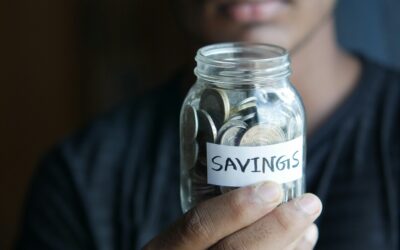
The New “Trump Account”: Guidance Issued for Historic Children’s Savings Initiative
The Department of the Treasury and the IRS issued official guidance today for “Trump Accounts,” a new category of tax-advantaged investment accounts established under the One Big Beautiful Bill Act (OBBBA). Officially classified as 530A accounts, these “mini-IRAs” are designed to create a permanent wealth-building vehicle for every American child under the age of 18. At The Modern Memo, we analyze the $1,000 “seed money” pilot, the unique employer-matching incentives, and how these accounts compare to traditional 529 plans. The Core Structure: A Tax-Deferred “Growth Period” The Trump Account functions as a hybrid between a traditional IRA and a custodial savings account. Its primary goal is to encourage long-term compounding by restricting access until the beneficiary reaches adulthood. Eligibility: Available to any U.S. citizen under 18 with a valid Social Security number. Launch Date: While enrollment can begin immediately via IRS Form 4547, the accounts will officially launch and begin accepting contributions on July 4, 2026—symbolically timed for the nation’s 250th anniversary. Growth Period: During the “growth period” (until age 18), no withdrawals are permitted under any circumstances (with rare exceptions for disability rollovers). This ensures the “magic of compounding” remains uninterrupted. Post-18 Transition: Upon turning 18, the account automatically converts into a Traditional IRA, allowing the young adult to continue saving for retirement or use funds for qualified life events. Funding the Future: Government Seeds and Private Growth The most striking feature of the program is the direct injection of capital from both public and private sources. The $1,000 Federal Seed: As part of a pilot program, children born between January 1, 2025, and December 31, 2028, are eligible for a one-time $1,000 contribution from the U.S. Treasury. Annual Contribution Limits: Families, relatives, and friends can contribute up to an aggregate of $5,000 per year (indexed for inflation after 2027). Unlike traditional IRAs, the child does not need earned income to receive these contributions. Philanthropic Pledges: High-profile donors have already stepped in to “backfill” accounts for older children. For example, the Michael & Susan Dell Foundation has pledged $6.25 billion to provide $250 deposits for up to 25 million children under age 10 who live in lower-income ZIP codes. The Employer Incentive: A New Benefit Category In a move to integrate savings into the modern workplace, the USDA and Treasury have enabled a new type of fringe benefit. Pre-Tax Contributions: Employers can contribute up to $2,500 annually to an employee’s child’s Trump Account. Tax Status: These employer contributions are tax-free to the employee and deductible for the employer, providing a powerful alternative to traditional bonus structures. Employee Salary Reductions: Parents can also elect to have a portion of their own pre-tax salary redirected into their child’s account, similar to a 401(k) or HSA election. Investment Strategy: “America First” Equities To protect the accounts from high fees and speculative risk, the Treasury has placed strict guardrails on where this money can be parked. Eligible Investments: Funds must be invested in low-cost mutual funds or ETFs that track a diversified index of primarily U.S.-based companies (such as the S&P 500). Fee Caps: Management fees for these investment vehicles are capped at 0.10% (10 basis points), ensuring that administrative costs do not erode the child’s wealth over time. Final Word Staying informed on the rollout of Trump Accounts isn’t just about financial planning—it plays a powerful role in your understanding of a fundamental shift in the American “social contract” toward individual wealth ownership. When you look past the partisan debate and focus on the data of a $1,000 seed growing for 18 years and the technicality of employer-sponsored contributions, you gain a clearer picture of an attempt to democratize the stock market for the next generation. Quality information replaces the noise of political rhetoric with the clarity of compound interest tables and tax benchmarks. It allows you to see this program as a tool for long-term household resilience rather than a mere campaign promise. By choosing to follow the Treasury’s guidance rather than the skepticism of the legacy press, you align your family’s strategy with the realities of a modern, “save-first” economy and support a more informed, financially secure future for your children. Where Facts, Context, and Perspective Matter At The Modern Memo, our goal is simple: to provide clear, well-researched reporting in a media landscape that often feels overwhelming. We focus on substance over sensationalism, and context over commentary. If you value thoughtful analysis, transparent sourcing, and stories that go beyond the headline, we invite you to share our work. Informed conversations start with reliable information, and sharing helps ensure important stories reach a wider audience. Journalism works best when readers engage, question, and participate. By reading and sharing, you’re supporting a more informed public and a healthier media ecosystem. The Modern Memo may be compensated and/or receive an affiliate commission if you click or buy through our links. Featured pricing is subject to change. 📩 Love what you’re reading? Don’t miss a headline! Subscribe to The Modern Memo here!