

SCOTUS
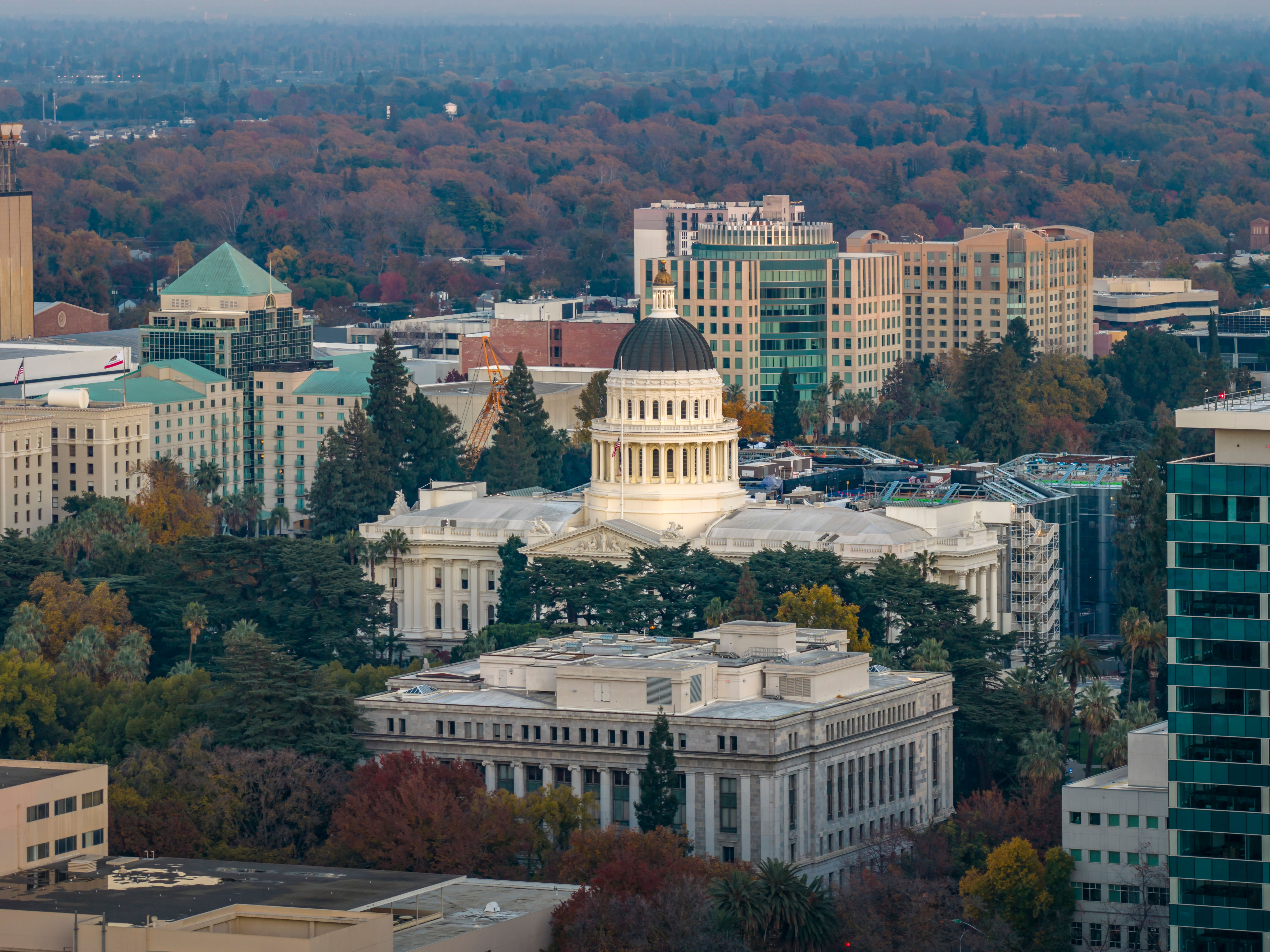
The Golden State Redoubt: Sacramento Defies SCOTUS Women’s Sports Mandate as Trump Prepares Funding Guillotine
The deep-blue political establishment in Sacramento has drawn an aggressive line in the sand, officially converting the state of California into a non-compliant sanctuary for transgender athletes in direct defiance of the highest court in the land. Following a landmark 6–3 ruling by the United States Supreme Court that definitively established the right of states to ban biological males from girls’ and women’s athletic categories, Governor Gavin Newsom’s office issued a swift, defiant counter-strike. A formal gubernatorial spokesperson confirmed that the high court’s decision will have zero impact on the state’s expansive gender-identity laws, aggressively boasting of Newsom’s multi-decade record as an unyielding bulwark for the transgender community. The choice to double down on the state’s trans athlete policies comes as California encounters an unprecedented wave of transgender participants entering high school and collegiate female divisions—a trend that has triggered intense local protests and set the state on a direct collision course with a multi-billion-dollar federal funding blockade. At The Modern Memo, we analyze the operational mechanics of California’s sanctuary laws, the data behind the state’s ongoing transgender athletic surge, and the imminent federal civil rights lawsuit threatening to completely bankrupt the state’s public education infrastructure. The Sacramento Inversion: “Met With Dignity and Respect” The primary political shockwaves radiating from the Supreme Court’s ruling focused heavily on whether progressive states would yield to the new national jurisprudence. Newsom’s office wasted no time making their position explicitly clear. “The Supreme Court’s decision today does not affect California’s laws,” a spokesperson for Governor Newsom stated in an official release immediately following the 6–3 opinion. “The state remains committed to ensuring every Californian, including the LGBTQ+ community, is met with dignity and respect.” Boasting the Record: The administration used the high-profile defeat as a branding vehicle, actively leaning into Newsom’s history of championing radical gender-identity initiatives. Aides pointed to the governor’s signing of laws protecting out-of-state minors seeking irreversible gender surgeries, blocking school districts from notifying parents of a child’s gender transition, and allocating tens of millions in state tax dollars to specialized transgender health funds. The CIF Stance: Operating in absolute lockstep with the governor, the California Interscholastic Federation (CIF)—the governing body overseeing high school athletics for over 800,000 student-athletes—confirmed it will continue to legally allow male-born students to play on girls’ sports teams based purely on self-identified gender. The Legal Fiction: Legal experts note that while the Supreme Court’s ruling confirmed that athletic bans based on biological sex do not violate Title IX or the Equal Protection Clause, the majority opinion intentionally allowed states to maintain permissive frameworks if they choose—a loophole Sacramento is aggressively exploiting to maintain its current structure. The Trans Wave: Front-Line Collisions in California Schools Sacramento’s ongoing legislative shield has turned California into the premier destination for the transgender athletic movement, generating an escalating series of intense localized flashpoints. The Riverside Volleyball Outcry: The real-world data of California’s policy was vividly illustrated at Norte Vista High School in Riverside, where a biological male athlete, AB Hernandez, dominated a girls’ high school volleyball match. Parents and female competitors voiced extreme frustration, presenting data showing that the physical advantages of male puberty—including superior bone density and upper-body explosive power—create an inherently unsafe and deeply unfair playing field for biological girls. The Grassroots Resistance: The ongoing surge has completely fractured the traditional progressive consensus in Southern California. Groups like the California Family Council are aggressively mobilizing, utilizing the momentum of the Supreme Court’s decision to flood local school board meetings. The New Bills: Conservative and moderate assembly members are preparing a fresh wave of state-level legislation designed to bypass Newsom’s veto pen by placing a binding voter initiative directly on the California ballot, giving everyday parents the direct power to restore biological sex definitions to sports. The Federal Guillotine: Trump Moves to Strip Education Billions The primary vulnerability shadowing Newsom’s defiance is that California is no longer just fighting conservative activist groups; it is facing the full, crushing weight of the federal executive branch. The administration has moved past public warnings into direct judicial warfare. The Department of Justice, working in close coordination with Secretary of Education Linda McMahon, has officially launched a sweeping civil rights lawsuit against the State of California. The federal complaint alleges that by systematically forcing young girls to forfeit their titles, scholarships, and private locker room spaces to biological males, California is operating in explicit violation of federal Title IX protections. Federal attorneys have already notified Sacramento that non-compliance will trigger an immediate, catastrophic clawback of more than $9.5 billion in annual federal education grants—a financial penalty that would instantly throw California’s already deficit-ridden state budget into an absolute state of bankruptcy. Final Word The California executive branch’s absolute defiance of the Supreme Court’s sports ruling is the definitive proof that Governor Gavin Newsom has completely decoupled his state’s educational policies from the constitutional consensus of the nation. When you look past the sterile press office rhetoric of “dignity and respect” and focus entirely on the hard data—a historic 6–3 Supreme Court ruling validating biological sex divisions, an ongoing wave of male-born athletes capturing roster spots in Southern California high schools, and a $9.5 billion federal financial guillotine poised to drop on California classrooms—you gain an unvarnished view of a state leadership driving its citizenry off a fiscal cliff to preserve a radical ideological agenda. Quality information replaces the progressive narrative of “civil rights advancement” with the reality of state-sponsored discrimination against biological women. By choosing to boast about his transgender record while the Department of Justice moves to freeze school funding, Gavin Newsom has made his calculation: he would rather bankrupt California’s schools than admit that a girl’s sport belongs exclusively to girls.

The ‘Cruelty’ Conundrum: Walz’s Attack on SCOTUS Girls’ Sports Ruling Fires Up Online Backlash
A landmark decision by the United States Supreme Court upholding state laws that protect biological female sports categories has triggered a fierce national showdown. Writing for the majority, the high court definitively ruled that state bans on transgender athletes in girls’ and women’s sports do not violate Title IX or the Equal Protection Clause, cementing a massive victory for biological fairness. The ruling immediately drew the ire of outgoing Minnesota Democratic-Farmer-Labor (DFL) Governor Tim Walz. Taking to social media to blast the decision, Walz accused the nation’s highest court of state-sanctioned malice. “As the Supreme Court says states can be cruel to trans kids, my message is clear: Here in Minnesota, we stand with and value our trans neighbors and youth,” Walz posted, vowing that Minnesota’s trans-inclusive athletic policies will remain unchanged. However, the governor’s use of the word “cruel” triggered an immediate and aggressive online backlash. Critics, female athletes, and Minnesota Republican lawmakers swiftly turned the tables on Walz, leveraging a devastating digital counter-offensive to expose what they argue is the true cruelty: forcing young girls to forfeit their safety, their privacy, and their hard-earned athletic opportunities to biological males. At The Modern Memo, we break down the operational lines of the Supreme Court’s Title IX decision, analyze the legal and financial crosshairs centering on Minnesota’s defiant stance, and examine the political firestorm engulfing the state’s gubernatorial race. The Digital Reversal: Defining “True Cruelty” The primary shock to Walz’s public relations strategy was the lightning-fast unity of the online pushback, where thousands of respondents thoroughly rejected the governor’s framing of the ruling. Shattering the Sacrifice: Conservative commentators and parent advocacy groups flooded Walz’s comment sections, pointing directly to the high-profile case of a Champlin Park transgender athlete who helped a team capture a Minnesota high school state softball championship. Critics noted that the true cruelty lies in telling biological girls that their lifetime of early-morning practices, personal sacrifices, and dreams of state titles mean absolutely nothing when a biological male decides to step onto their playing field. The Locker Room Dimension: The backlash heavily centered on the erosion of basic student privacy. “What’s actually cruel is forcing 14-year-old girls to strip down and change clothes in front of biological males in their own school locker rooms,” wrote independent independent women’s sports advocate Independent Women’s Forum. The United Nations Metric: Online watchdogs cited a landmark United Nations report documenting the structural toll of trans-inclusive policies on global athletics. The study verified that female athletes across the globe have lost nearly 900 medals, podium placements, and scholarship opportunities to biological male competitors entering female divisions. Minnesota GOP Lawmakers Strike Back: “A Win for Common Sense” The digital fury was instantly mirrored by Republican leadership within the Minnesota Legislature, who seized on the Supreme Court’s mandate to demand a total legislative overhaul of the state’s athletic policies. Demuth Demands Boundaries: Republican Representative Lisa Demuth, who is currently hoping to earn the party’s nomination in the upcoming Minnesota gubernatorial race, issued a blistering rebuke of the governor’s rhetoric. “Today, the Supreme Court upheld what Minnesotans and Americans all know — boys and girls are different,” Demuth stated. “As governor, I will protect girls’ opportunities in sports and safety in intimate spaces. Boys don’t belong in girls’ sports and men don’t belong in women’s locker rooms.” Qualls Validates Fairness: Fellow Republican gubernatorial contender Kendall Qualls echoed the common-sense alignment. “Today, the Supreme Court ruled with common sense,” Qualls declared. “When I’m governor, boys will play in boys’ sports and girls will play in girls’ sports. It’s that simple.” The Legislative Arsenal: House Republicans noted that they have already introduced a pair of protective bills—including the Preserving Girls’ Sports Act—which would legally restrict school sports categories purely on the basis of biological sex. While legislative Democrats have consistently blocked the bills from passing, the high court’s ruling strips the left of its core constitutional defense. The Federal Guillotine: Minnesota Faces Loss of All Education Funds The primary political vulnerability facing Governor Walz is that his rhetorical defiance is running headfirst into a massive, multi-million-dollar federal enforcement action. The DOJ Referral: Earlier this year, U.S. Secretary of Education Linda McMahon and Secretary of Health and Human Services Robert F. Kennedy, Jr. officially referred the Minnesota Department of Education and the Minnesota State High School League to the U.S. Department of Justice for explicit, ongoing non-compliance with Title IX laws. The Compliance Ultimatum: The federal government has formally notified Minnesota that its refusal to bar biological males from women’s sports and intimate facilities constitutes a direct violation of federal civil rights laws. The Financial Penalty: The Department of Justice has initiated proceedings that could ultimately result in the total termination of all federal education and health funding flowing into the state of Minnesota—a catastrophic structural penalty that would plunge local school budgets into an absolute state of bankruptcy. Final Word Governor Tim Walz’s attempts to frame the protection of female athletes as an act of institutional “cruelty” is the definitive proof that progressive leaders are willing to sacrifice the safety and rights of biological women to appease a narrow ideological base. When you look past the standard partisan deflections and focus entirely on the hard data—a decisive Supreme Court ruling confirming that biological sex is the legal anchor of sports categories, a massive online backlash exposing the real cruelty of stolen medals and compromised locker rooms, and a federal DOJ lawsuit threatening to bankrupt Minnesota schools over its non-compliance—you gain an unvarnished view of a governor backed into a desperate corner. Quality information replaces the progressive narrative of “dignity and respect” with the cold reality of administrative overreach. By continuing to force young girls to share their sports and private spaces with biological males in defiance of the highest court in the land, Walz has guaranteed that the ultimate verdict on his legacy will be delivered not by his executive orders, but by the furious voters of Minnesota at the ballot box.

The Interstate Mayhem: Justice Thomas Blasts SCOTUS for Rejecting Florida Suit Over Blue-State Trucking Licenses Issued to Undocumented Migrants
The U.S. Supreme Court on Tuesday delivered a major blow to interstate accountability, throwing out a high-stakes, original-jurisdiction lawsuit filed by the state of Florida against California and Washington. The Sunshine State had sued the two progressive strongholds, alleging their sanctuary policies openly defy federal transportation and immigration laws by putting thousands of undocumented truckers on American highways without proper vetting or English proficiency. While the unsigned, 7-2 majority dismissed the suit without offering an explanation, Justice Clarence Thomas—joined by Justice Samuel Alito—penned a stinging five-page dissent, blasting the high court for running away from its constitutional duty to adjudicate serious disputes between sovereign states. At The Modern Memo, we analyze the devastating Florida Turnpike crash that triggered this interstate legal war, the raw data behind the blue-state licensing pipeline, and Justice Thomas’s warning about a “disturbing phenomenon” threatening American motorists. The Tragedy: Ten Failed Tests and a Fatal Turn The legal battle wasn’t born out of a abstract political disagreement, but from a horrific, multi-fatality traffic accident on Florida’s Turnpike in August 2025. The Crash: Harjinder Singh, a 28-year-old national of India who entered the United States illegally through the southern border, jackknifed his 80,000-pound commercial tractor-trailer while attempting an illegal, multi-lane U-turn on the highway in St. Lucie County. A passenger van smashed into the side of the semi, killing three people. The Systemic Failures: State and federal post-crash investigations revealed a stunning lack of qualification. Official records showed that Singh had failed his Commercial Driver’s License (CDL) knowledge exam in Washington state 10 separate times in a span of just two months before the state finally handed him a license. He also failed his air brakes knowledge test twice. The Language Barrier: Investigators discovered that Singh could not read standard English road signs and had completely failed the Federal Motor Carrier Safety Administration’s (FMCSA) English proficiency requirements. Bodycam footage from an earlier traffic stop in New Mexico captured a state trooper struggling to communicate basic instructions to Singh due to his lack of English comprehension. The Blue-State Pipeline: Defying Federal Standards Despite his immigration status and clear safety deficiencies, Singh was able to exploit sanctuary state policies to secure commercial credentials. Washington state issued him his first CDL, and California’s DMV subsequently granted him a second, valid non-domiciled CDL. The Florida Accusation: Florida Attorney General James Uthmeier filed an original action directly with the Supreme Court, accusing the West Coast states of willful negligence and creating a public nuisance. The suit argued that by handing big-rig licenses to undocumented migrants who cannot comprehend American traffic safety markers, California and Washington are actively exporting danger across state lines. The Federal Crackdown: The issue has already triggered a severe fiscal standoff with Washington D.C. U.S. Transportation Secretary Sean Duffy put states on notice, withholding roughly $40 million in federal highway safety funds from California due to its systemic non-compliance with commercial driver English-language mandates. The Blue State Defense: Attorneys general from California and Washington dismissed Florida’s lawsuit as a “political stunt.” They countered that their licensing programs comply with state-level sanctuary regulations designed to ensure all drivers are registered and insured, regardless of legal presence. The Thomas Dissent: ‘Nowhere Else to Bring Their Claims’ Under Article III of the Constitution, the Supreme Court possesses original jurisdiction over lawsuits between two or more states, meaning the case bypasses lower federal courts entirely. By refusing to even hear the evidence, Justice Thomas argued that the majority left Florida completely defenseless against extra-jurisdictional threats. The Constitutional Mandate: “This Court declines to even hear Florida’s claims, even though it has nowhere else to bring them,” Thomas wrote in his dissent. He reiterated his long-held view that the Supreme Court does not have the discretion to simply pick and choose which interstate suits it wants to hear. The English Requirement: Thomas directly addressed the core safety hazard at the heart of the litigation. “An illegal alien who cannot read English road signs cannot drive an 80,000-pound tractor-trailer,” Thomas wrote, validating Florida’s concerns over the “disturbing phenomenon” of unlicensed and unqualified drivers causing fatal accidents. A State’s Recourse: Legal scholars noted that Thomas’s framework points out a dangerous constitutional paradox: if the Supreme Court closes its doors to states seeking peaceful, legal remedies against the reckless domestic policies of their neighbors, it strips away the very mechanism meant to keep the Union intact. Final Word The Supreme Court’s dismissal of Florida v. California and Washington is the definitive proof that the legal system is currently failing to protect citizens from the consequences of open-border sanctuary policies. When you look past the noise of blue-state “political stunt” rhetoric and focus on the data—the three dead motorists on the Florida Turnpike, an illegal alien who failed his driving metrics 10 times, and $40 million in withheld federal transit funds—you gain a clearer picture of a dangerous regulatory breakdown. Quality information replaces the narrative of “routine state licensing” with the reality of an interstate public nuisance that transforms 80,000-pound commercial vehicles into unguided missiles. It allows you to see that while seven justices chose bureaucratic convenience, Clarence Thomas chose the safety of the American family. By refusing to hold progressive states accountable for who they put behind the wheel, the high court has ensured that the next tragedy is only a state line away.

“Zone of Secrecy”: School District’s Gender Policy Slammed for ‘Deception’ After Landark SCOTUS Ruling
A local school district is facing a fierce backlash and formal complaints this week as parents and advocates demand the immediate repeal of policies that allow—and in some cases require—staff to withhold information about a student’s “social transition” from their families. The controversy has reached a fever pitch following a pivotal Supreme Court (SCOTUS) decision in March that effectively dismantled the legal shield used by districts to justify these “non-disclosure” mandates. At The Modern Memo, we analyze the “pipeline of secrecy” being exposed by religious parents, the fallout from the Mirabelli v. Bonta ruling, and why the era of government-mandated deception in the classroom is coming to an end. The Complaint: Fostering a “Culture of Deception” The latest legal challenge, filed on behalf of a group of concerned families, argues that the district’s policy—which allows students to change names and pronouns at school without parental notification—is not a matter of “privacy,” but a systematic effort to deceive parents. The “Secret Transition” Protocol: Under current guidelines, teachers are instructed to use a student’s preferred identity during school hours but revert to their legal name and biological pronouns when communicating with parents. The “Lying” Mandate: “This isn’t just about privacy; it’s about forcing public employees to lie to the people who pay their salaries and raise these children,” a representative for the parents stated. Institutional Distrust: Critics argue that these policies create a “zone of secrecy” that severs the essential bond between the school and the home, casting parents as a threat to be managed rather than the primary stakeholders in their children’s lives. The SCOTUS Shadow: Mirabelli v. Bonta The legal ground shifted dramatically on March 2, 2026, when the Supreme Court issued a 6-3 ruling in Mirabelli v. Bonta. The Court reinstated an injunction against California’s state-wide policy that barred schools from informing parents about gender identity changes. Free Exercise Victory: The high court found that such “secrecy” policies likely violate the First Amendment’s Free Exercise Clause, as they interfere with the religious rights of parents to raise their children in accordance with their beliefs about sex and gender. Due Process and Mental Health: The majority opinion also invoked the 14th Amendment, stating that parents cannot be “shut out” of decisions regarding their children’s mental health. The Court noted that because gender dysphoria is a significant health condition, schools have no right to facilitate a “social transition” while keeping the “primary protectors of children”—the parents—in the dark. Strict Scrutiny: Following the precedent set in Mahmoud v. Taylor (2025), the Court signaled that any state policy that “substantially interferes” with parental rights must meet the highest level of legal scrutiny—a bar California and other liberal districts have so far failed to clear. The “Medical Pipeline” Concern For many parents, the issue goes beyond names and pronouns. The complaint highlights a growing concern that school-led “affirmation” is the first step in a medicalized pipeline. Social to Medical: Advocates argue that when schools “socially transition” a child without parental involvement, they are performing a psychological intervention that often leads directly to referrals for puberty blockers and cross-sex hormones at external clinics. The “Varian” Warning: The complaint points to recent $2 million jury verdicts against medical providers for “fast-tracking” transitions, suggesting that schools that facilitate secret transitions are exposing themselves to massive constitutional and civil liability. Final Word The “deception” policies currently under fire are a relic of an era when school boards believed they could replace the family unit. When you look past the noise of “student privacy” and focus on the data—the SCOTUS ruling in March and the growing mountain of lawsuits from parents who were lied to—you gain a clearer picture of a legal system finally returning to its roots. Quality information replaces the “expert-only” narrative with the reality of fundamental parental rights. It allows you to see that a school’s job is to educate, not to serve as a secret laboratory for social engineering. By choosing to stand with the Supreme Court, parents are ensuring that the door to their children’s lives is no longer locked from the inside by bureaucrats. Where Facts, Context, and Perspective Matter At The Modern Memo, our goal is simple: to provide clear, well-researched reporting in a media landscape that often feels overwhelming. We focus on substance over sensationalism, and context over commentary. If you value thoughtful analysis, transparent sourcing, and stories that go beyond the headline, we invite you to share our work. Informed conversations start with reliable information, and sharing helps ensure important stories reach a wider audience. Journalism works best when readers engage, question, and participate. By reading and sharing, you’re supporting a more informed public and a healthier media ecosystem. The Modern Memo may be compensated and/or receive an affiliate commission if you click or buy through our links. Featured pricing is subject to change. 📩 Love what you’re reading? Don’t miss a headline! Subscribe to The Modern Memo here!
Executive Presence: Trump Attends Landmark Birthright Citizenship Arguments at SCOTUS
In a move that has sent ripples through the nation’s capital, President Trump yesterday became the first sitting commander-in-chief in modern history to personally attend oral arguments at the Supreme Court. The President’s presence in the courtroom gallery underscores the high stakes of Trump v. Barbara, a case that could fundamentally redefine the 14th Amendment and the future of American immigration law. At The Modern Memo, we analyze the legal theory behind the “jurisdiction” challenge, the President’s unprecedented courtroom appearance, and the ongoing battle over the $400 million White House Ballroom project. The Birthright Battle: Trump v. Barbara The case centers on Executive Order 14160, signed earlier this term, which seeks to end the automatic granting of citizenship to children born on U.S. soil to parents who are unlawfully present or in the country on temporary visas. The Core Argument: The administration, led by Solicitor General D. John Sauer, argues that the 14th Amendment’s phrase “subject to the jurisdiction thereof” requires more than just physical presence. They contend it implies a “permanent allegiance” or “domicile” that non-citizens do not possess. Challenging Precedent: The lawsuit, brought by a class of plaintiffs led by a person identified as Barbara, argues that the 1898 Wong Kim Ark decision settled this matter over a century ago. The “Birth Tourism” Defense: During the 90-minute session, the administration highlighted the rise of “birth tourism” and the “pull factor” of unrestricted citizenship, arguing that the original intent of the post-Civil War amendment was never to reward those who bypass our legal immigration system. The Scene: Resolve or “Strong-Arming”? The President arrived at the Court yesterday morning, sitting in the public gallery for roughly 90 minutes of the proceedings. He notably left after the government’s portion of the argument concluded. A Show of Strength: Supporters viewed the visit as a necessary display of executive resolve, signaling that the administration views the integrity of the ballot and the value of citizenship as its highest priority. The Critic’s View: Opponents were quick to label the move a “strong-arming tactic” intended to intimidate the Justices. However, the President’s allies noted that the Court has long been a co-equal branch that should not be shielded from the direct interest of the Executive when the Constitution itself is at stake. The $400 Million Ballroom: A Vote on the Horizon While the Supreme Court deliberates, another battle is brewing at the White House. Planning authorities are expected to vote today on the controversial $400 million White House Ballroom project, which has faced significant legal and political hurdles. The Judicial Halt: Earlier this week, U.S. District Judge Richard Leon issued a preliminary injunction, ruling that construction on the massive 90,000-square-foot facility cannot proceed without explicit Congressional approval. Defiance from the Oval: The President has blasted the ruling as “wrong,” arguing that previous administrations conducted extensive renovations without seeking legislative permission. The Thursday Vote: Today’s vote by planning authorities represents the final procedural hurdle outside the courts. If approved, it would set up a direct showdown between the administration’s “modernization” agenda and a Congress that remains deeply divided over the project’s scale and private funding model. Final Word The President’s physical presence at the Supreme Court is a definitive statement that the era of “business as usual” immigration policy is over. When you look past the noise of “tradition” and focus on the data—the legal ambiguity of “jurisdiction” and the 125-year-old precedents being tested—you gain a clearer picture of a nation finally grappling with the true meaning of citizenship. Quality information replaces the rhetoric of “tradition” with the clarity of constitutional originalism. It allows you to see Trump v. Barbara not just as a court case, but as the essential restoration of the “priceless gift” of being an American. By choosing to stand with the President in this fight, you align your perspective with the reality that a sovereign nation must define its own borders and its own people. Where Facts, Context, and Perspective Matter At The Modern Memo, our goal is simple: to provide clear, well-researched reporting in a media landscape that often feels overwhelming. We focus on substance over sensationalism, and context over commentary. If you value thoughtful analysis, transparent sourcing, and stories that go beyond the headline, we invite you to share our work. Informed conversations start with reliable information, and sharing helps ensure important stories reach a wider audience. Journalism works best when readers engage, question, and participate. By reading and sharing, you’re supporting a more informed public and a healthier media ecosystem. The Modern Memo may be compensated and/or receive an affiliate commission if you click or buy through our links. Featured pricing is subject to change. 📩 Love what you’re reading? Don’t miss a headline! Subscribe to The Modern Memo here!