

SNAP

SNAP Turns 62 With Enrollment Down 11% Nationally as New Work Requirements Take Hold
The federal food stamp program marks 62 years since President Lyndon B. Johnson signed the Food Stamp Act into law on August 31, 1964 — an anniversary landing this year amid the steepest enrollment decline in the program’s modern history, as expanded work requirements and eligibility restrictions passed last year work their way through the system. More than 4 million people lost Supplemental Nutrition Assistance Program benefits between July 2025 and April 2026, according to federal data, with nationwide participation falling from roughly 42 million to 37 million recipients — an 11% decline in less than a year. More recent estimates put the total number of people who have lost benefits since the changes began at over 5 million, with enrollment continuing to decline in every state, according to Lauren Bauer, an economist at the Brookings Institution who tracks the program. The changes stem from the One Big Beautiful Bill Act, the sweeping tax and spending package Congress passed in July 2025. The law significantly expanded SNAP’s work requirements, mandating that more adults prove they are working or volunteering at least 80 hours a month to keep receiving benefits. Groups newly subject to those requirements include veterans, homeless individuals, young adults aging out of the foster care system, parents with children between 14 and 17, and adults between the ages of 55 and 64 — populations that had previously been exempted from SNAP’s work-requirement rules in whole or in part. The law also eliminated federal food aid eligibility entirely for certain categories of noncitizens, including refugees, asylum seekers, and victims of domestic abuse or human trafficking who had previously qualified for assistance regardless of immigration status. The Congressional Budget Office projects that the expanded work requirements alone will reduce SNAP participation by an average of 2.4 million people per month over the 2025-2034 period, a scale of reduction that budget analysts describe as one of the largest deliberate contractions of the program’s reach since its modern form took shape in the 1970s. Children have not been spared: at least 1 million children lost benefits across the 19 states surveyed in one recent analysis, even though most of the new work requirements are aimed at adult recipients rather than families with young children directly. The impact has landed unevenly across the country. Arizona has seen the steepest decline of any state, with enrollment falling to roughly half of the previous year’s level — a drop of more than 400,000 participants. Louisiana, Florida and Oklahoma have also recorded significant enrollment drops as the new eligibility rules and paperwork requirements take hold, according to state-level data reviewed by researchers tracking the rollout. Agriculture Secretary Brooke Rollins has offered a different read on the numbers, attributing the enrollment decline primarily to “a better economy” and arguing that many people leaving the rolls were “taking the program that shouldn’t have been” receiving benefits in the first place — framing the drop as evidence the new work requirements are successfully targeting the program toward those who genuinely need it. Policy analysts studying the data have pushed back on that explanation, noting that unemployment has remained essentially flat over the same period while food prices have continued to rise, a combination they argue points toward the policy changes themselves, rather than a strengthening labor market, as the primary driver of the decline. Beyond the immediate eligibility changes, the law sets up a more structural shift in how SNAP is funded starting in 2027, when states will be required to help cover the program’s costs for the first time in the program’s history. SNAP has historically been funded almost entirely by the federal government, with states responsible mainly for administrative costs rather than the benefits themselves. Tim Shaw, a policy expert at the Aspen Institute, said the new state cost-sharing requirement creates a serious long-term risk for the program’s reach, since most states are legally required to balance their budgets every year and have far less fiscal flexibility than the federal government to absorb a new, potentially large and unpredictable expense. “More than 60 years of food assistance could soon come to an end” in some states, Shaw warned, raising the possibility that a handful of states could eventually scale back their participation in the program altogether once the funding burden shifts. Some states have also begun restricting which specific food items SNAP recipients are permitted to purchase with their benefits, a separate trend that predates the 2025 law but has gained momentum alongside the broader push to tighten the program’s rules. Supporters of those restrictions argue they encourage healthier purchasing patterns among recipients; critics counter that they add administrative complexity for retailers and stigmatize recipients without meaningfully improving nutrition outcomes. Elaine Waxman of the Urban Institute pointed to what she described as one of SNAP’s core historical strengths now under strain: its universality. Before the recent changes, she noted, the program’s defining feature was that “it was available everywhere,” providing a consistent nutritional safety net regardless of which state a family happened to live in. With enrollment now falling unevenly by state and a state-funding requirement looming in 2027, that consistency is increasingly in question, with anti-hunger advocates warning that the practical experience of the program could soon vary dramatically depending on a family’s zip code in a way it has not for most of the program’s 62-year history. Food banks and local charitable networks in several of the hardest-hit states say they have already seen a noticeable uptick in demand as SNAP recipients lose eligibility, though most describe their capacity as strained rather than broken so far. Anti-hunger organizations argue that private charity was never designed to absorb the scale of need that a federal entitlement program covering tens of millions of people is built to address, and they warn that a further wave of state-level funding shortfalls in 2027 could push local food assistance networks well past their sustainable limits. Supporters of the new work requirements counter that a modest transition period of strained…
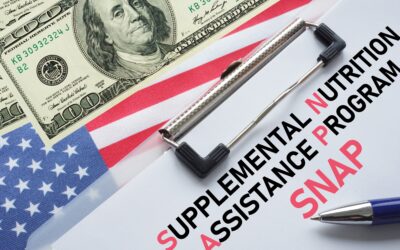
SNAP Benefits Partially Restored as USDA Uses Emergency Funds
The federal government’s partial shutdown has now run into a critical phase, and the effects are spreading into key assistance programs. As the shutdown drags on, the Supplemental Nutrition Assistance Program (SNAP) is under strain. The United States Department of Agriculture (USDA) told a federal judge that it will partially resume SNAP benefits for November, according to Fox Business. Until this decision, recipients of SNAP — more than 40 million Americans — faced a sudden uncertainty about whether their food-aid would arrive. The government’s shutdown stems from a standoff over budget appropriations. This has left many federal programs functioning on limited or emergency funding. Background of the Shutdown and Food-Aid Impact The USDA announced that it will allocate $4.65 billion of its $5 billion contingency fund to keep SNAP running in November. That move covers only part of the expected cost, which USDA officials say is closer to $9 billion for full monthly coverage. (MORE NEWS: ACA Premiums Are Rising — But Not Because of Expiring Subsidies) As a result, the benefit level will be reduced. Secretary of Agriculture Brooke Rollins said: “We submitted to the courts our plan to get partial allotments to SNAP households. Both are STOPGAP measures that create unnecessary chaos in State systems and distribution of benefits.https://www.mlh9trk.com/cmp/2Z3GP8/2PKSM4/ It will take several weeks to execute partial payments. THIS MUST END. Senate Democrats need to quit the games, quit holding American families hostage to ridiculous demands like health care for illegals, and REOPEN THE GOVERNMENT. Once they do, FULL benefits can get to families without delay.” .@POTUS is doing everything he can to help our most vulnerable mothers and babies while Radical Left Democrats continue to obstruct. Today, full November WIC benefits will be disbursed to States. Additionally, we submitted to the courts our plan to get partial allotments to… — Secretary Brooke Rollins (@SecRollins) November 3, 2025 Rollins went on to say she expects the process to take weeks: 🚨This morning, @USDA sent SNAP guidance to States. My team stands by to offer immediate technical assistance. This will be a cumbersome process, including revised eligibility systems, State notification procedures, and ultimately, delayed benefits for weeks, but we will help… — Secretary Brooke Rollins (@SecRollins) November 4, 2025 Legal Pressure and Role of the Courts Twenty-five Democratic state attorneys general and governors sued the USDA. They argued that ceasing SNAP benefits would be harmful to the public health and well-being of millions of Americans. Two federal judges ruled that the USDA must use its contingency fund to keep SNAP benefits paid beyond November 1. In court filings, the Justice Department acknowledged the tight timeline and the burden posed by the shutdown in meeting the court’s order. “Defendants have worked diligently to comply … during a government shutdown,” the filing stated. What This Means for SNAP Recipients For the millions of people who rely on SNAP, this announcement brings some relief — but also new uncertainty. Many recipients may need to stretch existing food supplies longer than usual or reduce purchases as they wait for partial benefits to arrive. Moreover, because the contingency funds are being used now, there will be no remaining cushion for new applicants in November, for disaster assistance. There also won’t be a buffer against a full shutdown of SNAP. That means those who apply later in November or enter the program for the first time may face gaps or be excluded until full funding returns. States administering SNAP may face added administrative burdens. They must adjust allotments, handle delayed payments, and manage communication with beneficiaries about reduced benefits. This creates further risk of confusion, missed payments, or mis-processing. Broader Implications and Risks This scenario illustrates how federal shutdowns ripple out into social-safety-net programs. A funding gap does not just halt new enrollment; it cuts into lifelines for low-income families. The partial-resumption plan reflects triage — the government is choosing which obligations to meet partially while skipping or limiting others. Because the full funding shortfall of $9 billion is larger than the contingency plan, the USDA’s move is a short-term solution. If the shutdown continues, SNAP and other programs may face deeper cuts or longer delays. The mention that no funds remain for new applicants or disaster-related aid heightens the risk of erosion in the program’s reach. (RELATED NEWS: Trump Ally Donates $130M to Cover Military Pay Amid Shutdown) What to Watch Next Going forward, there are several key developments to monitor. How states handle the adjustment of benefit amounts: Are households correctly receiving about 50% of the usual allotment? Are there delays or administrative errors? What happens with new applicants in November: will they be excluded or delayed indefinitely? Additionally, one should look at how other federal programs respond. SNAP is a visible case, but other aid programs may face similar bottlenecks, meaning this could be part of a broader pattern of stress on the system. Final Word In short, while the USDA’s partial resumption of SNAP benefits offers a vital buffer for millions of Americans facing food uncertainty, it does not address the deeper issue — the political tug-of-war that often turns struggling families into pawns. Democrats are using the situation to score political points rather than solve the problem. Whether this strategy will backfire in 2026 remains to be seen. At the same time, the situation highlights the fragility of social safety-net funding during government gridlock. With only half of eligible households receiving their full benefit this month and new applicants excluded, the program continues to operate in crisis mode. The system also needs stronger accountability. Recipients should regularly requalify for benefits and demonstrate that they are either working or actively seeking employment. Assistance is meant to provide temporary relief — not become a permanent lifestyle. As the shutdown continues, the risk grows that benefit gaps will widen, assistance will weaken, and vulnerable populations will feel the impact even more deeply. It remains essential to watch how states manage the rollout and whether full funding — and lasting reform — can…