

Supreme Court
Supreme Court Rejects Trump’s Mail Ballot Restrictions Ahead of 2026 Midterms in Major Election Ruling
The Supreme Court rejected the Trump administration’s bid to impose new restrictions on mail-in voting ahead of the 2026 midterm elections, a decisive ruling handed down Monday that allows states to continue running their existing vote-by-mail systems even as ballots are already being cast in some jurisdictions. The ruling marks the definitive resolution of a legal fight that had been winding through federal courts since spring, when President Trump signed an executive order directing the U.S. Postal Service to play a central role in verifying mail-ballot eligibility. The administration framed the mail-voting restrictions as an election-integrity safeguard, but the justices found the plan “unlikely to succeed on the merits,” a phrase that effectively ended the administration’s chances of implementing the order before November’s midterm elections. Notably, the coalition that rejected the mail-in voting restrictions was not drawn along the predictable ideological lines that typically define high-profile Supreme Court election cases. Justices Neil Gorsuch, Amy Coney Barrett and Brett Kavanaugh — all three appointed by Trump himself during his first term — joined the majority in ruling against the administration’s position, while Justices Samuel Alito and Clarence Thomas publicly dissented. That alignment complicates any straightforward narrative about the court simply protecting a Republican president’s agenda, underscoring instead a genuine split among the court’s conservative wing over the limits of executive authority in setting election procedure. The mail ballot restrictions case traces back to Trump’s original executive order, which sought to have USPS compile and rely on eligibility lists supplied by state election officials before delivering mail ballots to voters. A federal judge had already found that the Postal Service, as an independent federal agency, lacks the legal authority to condition ballot delivery on the kind of citizenship and eligibility verification scheme the order envisioned — a finding the Supreme Court’s Monday ruling effectively left intact by declining to revive the administration’s approach in time for this election cycle. Data on the scale of mail voting in the United States helps explain why Monday’s ruling carries such high stakes for how the 2026 midterms will actually be conducted. Roughly one-third of American voters now cast their ballots by mail rather than in person, and eight states — California, Colorado, Hawaii, Nevada, Oregon, Utah, Vermont and Washington — conduct their elections almost entirely through mail-in voting, meaning any successful restriction would have reshaped how a substantial share of the electorate participates in this fall’s elections. The administration had defended the push for tighter verification by citing concerns about noncitizen voting, though independent research, including a 2025 Brookings Institution analysis, has found that instances of noncitizen voting occur at a rate of approximately 0.000043% of all ballots cast — a figure voting rights advocates have repeatedly cited as evidence that the restrictions targeted a problem far smaller in practice than in political rhetoric. Reaction from state election officials, who have spent months preparing for the possibility that mail-voting rules could shift dramatically and suddenly, was one of relief tempered by continued vigilance given how contentious the underlying legal fight has been. Oregon’s Secretary of State framed the ruling in stark terms, emphasizing that “presidents don’t run elections, the people do,” a line that captured the broader argument voting rights groups have made throughout the litigation: that election administration authority under the Constitution rests primarily with states and Congress, not the executive branch. Nevada’s Secretary of State described the mood among election officials as “one of relief,” while still urging voters to remain confident in the process regardless of the legal turbulence surrounding it in recent months. Monday’s ruling is the latest and most consequential chapter in a case that has moved through the courts in fits and starts since Trump signed the original order. An earlier Supreme Court order in August had paused a lower-court injunction specifically as it applied to roughly two dozen Democratic-led states, allowing partial implementation to proceed in a narrower set of circumstances while a separate, broader nationwide injunction remained in place. That fragmented earlier ruling had left election officials genuinely uncertain about which rules would apply where, a limbo that Monday’s more sweeping rejection appears to resolve in voters’ favor nationwide, at least for this election cycle. The timing of the decision — arriving as voting is already underway in some states with early and mail balloting — added urgency to the court’s ruling, since any further delay in resolving the legal uncertainty risked disrupting ballot printing, mailing schedules and voter confidence in the weeks immediately preceding the election. Legal analysts following the case say the practical effect of Monday’s ruling is to lock in the status quo for mail voting through the 2026 midterms, even though the broader constitutional questions about presidential authority over election administration remain technically unresolved and could resurface in future litigation well before the next presidential election cycle. Republican officials who had supported the push for tighter mail-ballot verification expressed disappointment but signaled the fight over election security is far from over, pointing to state-level efforts to tighten voter ID rules through legislative channels. Democratic officials and voting rights organizations characterized the ruling as a necessary check on executive overreach into an area the Constitution reserves primarily to states and Congress. The decision lands amid a broader wave of election-related legal battles playing out simultaneously across the country this election cycle, including ongoing redistricting fights in more than half a dozen states that have reshaped House maps ahead of November. Voting rights advocates argue that taken together, the mail-ballot litigation and the redistricting battles reflect a coordinated push to influence the midterm playing field through the courts and executive action alike, while administration officials continue to insist each initiative addresses a distinct and legitimate concern about fairness or integrity in how elections are run. With the mail-voting question now largely settled for this cycle, attention is likely to shift toward how those redistricting disputes and other pending election-law cases are resolved in the final stretch before voters head to the polls in November….
Supreme Court Lets Trump’s Mail-Voting Order Partially Take Effect, Injecting Uncertainty Into Midterms
The Supreme Court’s conservative majority handed the Trump administration a preliminary win Monday, pausing a lower-court ruling that had blocked key parts of President Trump’s executive order overhauling mail-in voting rules across two dozen states — even as a separate nationwide injunction keeps the order’s central mechanism frozen for now. Trump signed the executive order in March, directing the Department of Homeland Security to compile citizenship verification lists and requiring the U.S. Postal Service to obtain lists of eligible mail voters from state election officials. Under the order, USPS would deliver mail ballots only to voters confirmed on those lists, and election officials would be required to place specific verification barcodes on ballot return envelopes. The White House has defended the order as a necessary safeguard against noncitizen voting, though research on the subject has consistently found that noncitizen voting in U.S. elections is, in the words of election researchers, “infinitesimally rare.” U.S. District Judge Indira Talwani had blocked the order’s key provisions in June for 23 Democratic-led states and the District of Columbia, ruling that Trump “overstepped a president’s authority” under a Constitution that assigns election rule-setting power to state legislatures and Congress, not the executive branch. Talwani also found that the Postal Service, as an independent federal agency, has no legal authority to condition mail-ballot delivery on the kind of voter-list verification scheme the order envisions. The Supreme Court’s unsigned order Monday paused Talwani’s injunction specifically as it applied to those 23 states and D.C., allowing the administration to move forward with certain aspects of implementation there while the underlying legal fight continues. But the justices left a separate, broader nationwide injunction in place, meaning USPS still cannot actually begin restricting mail-ballot delivery based on the disputed voter lists anywhere in the country while the administration’s appeals proceed. The court was notably cautious in its own language, writing that its decision “does not mean that any measure taken by the Government to implement the Order will necessarily be lawful. On that score, time will tell” — a signal that the justices were resolving only a narrow procedural question about which injunction applies where, not endorsing the order’s ultimate legality. Justice Ketanji Brown Jackson dissented from the ruling, warning that the decision “needlessly injects chaos and uncertainty into the upcoming midterm elections” at a moment when state election officials are already deep into planning for November. New York’s attorney general, whose office has been among those challenging the order, called the ruling a “painful setback” while vowing to continue pursuing the underlying legal challenge through the appeals process. The practical stakes of the ruling are tied tightly to the calendar. Administration officials have acknowledged that full implementation of the order would need to begin “as soon as early to mid-August” to be operationally ready before the midterm elections in November — a deadline that has now effectively passed, meaning that even with Monday’s favorable ruling, the legal and logistical hurdles remaining make it increasingly unlikely the order will be fully in effect in time to reshape how mail ballots are processed in this year’s midterms. That timing crunch has left election administrators in the affected states in an awkward holding pattern, uncertain whether to prepare systems for a new verification regime that may or may not be operational before ballots go out. Republican-led states that intervened in the case have appealed the broader injunction, arguing that Talwani’s nationwide order improperly extended relief to states that were never party to the original lawsuit and that federal courts should not be able to block a presidential directive on a nationwide basis based on a challenge brought by a subset of states. Democratic attorneys general and voting rights groups, meanwhile, argue that the administration’s own timeline concessions undercut its claim of urgency, suggesting the order’s real purpose was less about closing a negligible security gap and more about making mail voting logistically harder in states that rely on it most heavily. The dispute now heads back to the lower courts for further proceedings on the merits, with the Supreme Court’s Monday order settling only which injunction controls in the interim rather than resolving the constitutional questions at the heart of the case. Legal analysts following the litigation say a final resolution — whether from the appeals court or eventually from the Supreme Court itself on the full merits — is unlikely before the 2026 midterms are decided, meaning the order’s ultimate fate will most likely be determined only after this election cycle has already played out under whatever patchwork of rules happens to be in effect this fall. For voters in the 23 states and D.C. covered by Monday’s ruling, the immediate practical impact remains limited given the separate nationwide injunction still blocking USPS implementation, but election officials in those states say they are watching the appeals process closely, given how quickly the legal landscape has shifted over the past several months. The ruling arrives against a backdrop of intensifying legal and political fights over election procedure in the run-up to November, following on the heels of the redistricting battles reshaping House maps in more than half a dozen states. Voting rights groups have argued that the mail-voting order, the redistricting fights, and a series of other state-level changes to voter ID and registration rules amount to a coordinated effort to tilt the midterm playing field in ways that will be difficult for courts to fully sort out before votes are cast. Administration officials reject that characterization, framing each initiative as a separate, good-faith effort to address a specific and distinct integrity or fairness concern, whether in how districts are drawn or how ballots are verified. Election law scholars note that the fractured nature of Monday’s ruling — one injunction lifted, another left standing — is itself a reflection of how unusual this case is procedurally, since it involves overlapping lawsuits filed in different jurisdictions raising similar claims against the same federal policy. That fragmentation means the order’s legal status could…
Supreme Court Expands Trump’s Power to Fire Agency Heads, Carves Out Exception for the Fed
The Supreme Court delivered President Trump a major victory over the administrative state last month, ruling 6-3 that the president has broad authority to remove members of independent government agencies without needing to provide a reason — a decision that significantly reshapes the balance of power between the White House and the sprawling federal bureaucracy. The ruling strengthens the president’s hand across a wide range of independent commissions and boards that have historically operated with some insulation from direct presidential control. Supporters of the decision argue it restores accountability to unelected officials who wield significant regulatory power while answering to no one at the ballot box — a long-standing goal of conservative legal thinking about executive authority. An Exception for the Fed Notably, the court carved out a specific exception for the Federal Reserve. In a separate 5-4 ruling, the justices sided with Fed Governor Lisa Cook, allowing her to remain in her position for now, with Chief Justice John Roberts joining the court’s three liberal justices and Justice Brett Kavanaugh in the majority opinion. The court’s reasoning drew on the historical independence granted to the nation’s central bank, distinguishing it from other agencies subject to the broader removal ruling. The split decisions mean the president now has significantly more latitude to reshape independent agencies according to his priorities, while the Fed retains a firewall against direct political interference in monetary policy — at least for now. Part of a Consequential Term The rulings came alongside other high-profile decisions as the court wrapped up its term, including a ruling affirming birthright citizenship under the 14th Amendment and a decision upholding state bans on transgender athletes in women’s and girls’ school sports. Legal scholars note the executive power ruling in particular could have far-reaching implications for how future administrations — of either party — manage independent agencies overseeing everything from communications to nuclear energy to the civil service. Critics of the ruling have raised concerns that reduced insulation for agency leaders could open the door to more politicized decision-making across the federal government, while supporters counter that voters deserve a president who can actually hold the executive branch accountable rather than watching key decisions get made by officials insulated from any electoral consequences. This story is developing.
Supreme Court Backs Trump on Ending Temporary Protected Status, Restoring Program’s Original Intent
The Supreme Court handed the Trump administration a significant immigration enforcement win last month, upholding its authority to end Temporary Protected Status for hundreds of thousands of Haitian nationals — a ruling now playing out in real time in Springfield, Ohio, a city that became a flashpoint in the national immigration debate. The ruling affirmed that TPS, a humanitarian program meant to provide temporary relief rather than a permanent path to stay in the country, can be wound down at the administration’s discretion once the underlying conditions that justified it are reassessed. In Springfield, where a large Haitian population had settled in recent years to work in local manufacturing and warehouse jobs, the shift is already reshaping the local workforce. An Immediate Local Impact One Haitian resident who had worked at a local warehouse said employers moved quickly once the ruling came down. “When they heard the decision of the Supreme Court, they immediately told us not to come to work after July 1,” the worker said. Community organizers say the ruling triggered a wave of calls and messages throughout Springfield’s Haitian community as people scrambled to understand what the decision meant for their ability to legally work and remain in the country. Part of a Broader Legal Term The TPS ruling was one of several major decisions the Supreme Court issued as it closed out its term, in a stretch that saw the court hand the administration wins on some fronts while ruling against it on others — including a landmark decision affirming birthright citizenship under the 14th Amendment and a separate ruling protecting the independence of the Federal Reserve. The Bigger Debate Supporters of the administration’s approach argue Temporary Protected Status was never meant to be a permanent or indefinite immigration pathway, and that restoring the program’s original time-limited intent is both lawful and overdue, particularly as the administration works to enforce stricter overall immigration standards. Advocates for TPS holders counter that many recipients have built lives, jobs, and families in the U.S. over years of lawful presence, and argue that abrupt terminations put both workers and the local economies that depend on them in a difficult position with little time to adjust. Local officials in Springfield say they’re continuing to monitor the fallout as businesses work to fill gaps left by departing workers, while community groups help affected families navigate their legal options going forward. This story is developing.

Staking the Control Grid: Supreme Court Strikes Down Blue-State ‘Vampire Laws’ in Landmark Second Amendment Victory
The Supreme Court handed gun rights advocates a historic, structural victory, permanently dismantling a wave of highly restrictive “default gun-free zones” enacted by blue states looking to subvert the expansion of concealed carry rights. In a divided 6–3 decision in Wolford v. Lopez, the high court struck down a sweeping Hawaii statute that criminally barred licensed concealed carry permit holders from bringing firearms onto any private property open to the public—including restaurants, gas stations, supermarkets, and malls—unless the property owner explicitly displayed permission or provided “express authorization.” Writing for the conservative supermajority, Justice Samuel Alito effectively drove a stake through these regulations—colloquially dubbed “vampire laws” because they required gun owners to be explicitly “invited in” by a household or proprietor. The ruling establishes that states cannot weaponize private property laws to create a de facto blanket ban on carrying firearms outside the home. At The Modern Memo, we break down the operational mechanics of the ruling, the legal failure of the blue-state “Bruen response” loop, and how the decision guarantees unconstrained self-defense metrics for lawful gun owners nationwide. The ‘Vampire’ Trap: How Blue States Presumed Guilt The legal battle in Wolford v. Lopez directly traces its lineage back to the Supreme Court’s watershed 2022 decision in New York State Rifle & Pistol Association v. Bruen, which established that the Second Amendment guarantees an individual’s right to carry a firearm in public for self-defense. The Anti-Bruen Rebellion: In the immediate aftermath of Bruen, five heavily progressive states—Hawaii, California, Maryland, New York, and New Jersey—scrambled to pass massive legislative workarounds to neutralize the expansion of carry permits. Flipping the Default: Rather than banning permits entirely, Hawaii’s Act 52 and California’s Senate Bill 2 flipped the legal default of public spaces. Under the progressive framework, every private business open to the public was automatically presumed to be a criminal “gun-free zone” unless the owner explicitly opted out by placing state-approved signs in their windows or verbally granting permission. The Interception Math: Trump administration attorneys joined forces with a coalition of Hawaii gun owners to aggressively challenge the restriction. They presented data showing that if a state can legally criminalize carrying a weapon into a routine grocery store or coffee shop without advance permission, a lawful permit holder faces an impossible criminal matrix simply by stepping out of their vehicle to go about their daily lives. The Ruling: Second-Class Status Shattered The 6–3 ideological division on the bench saw the conservative majority thoroughly reject the progressive legal architecture, asserting that Hawaii’s rule placed an unconstitutional, undue burden on fundamental rights. “This regime hobbles what the Second Amendment protects: the right of Americans to carry arms for self-defense as they go about their daily lives,” Justice Samuel Alito wrote for the majority. “We hold that the law is unconstitutional.” Rejecting Second-Class Status: The ruling solidified warnings Alito delivered during oral arguments, where he pointedly blasted state lawyers for trying to relegate the Second Amendment to a “second-class status” compared to other constitutional protections. The Historical Text Failure: Under the Bruen standard, if a state wishes to regulate firearms, it must prove the restriction is rooted in the nation’s historical tradition of firearms regulation dating back to the founding era. The majority found that Hawaii utterly failed to produce any relevant historical analogue from the late 18th or 19th centuries showing American citizens were routinely required to obtain advance municipal permission to carry tools of self-defense onto public-facing commercial property. The Dissenting View: Writing for the three liberal justices, Justice Sonia Sotomayor issued a sharp dissent, arguing that the majority had severely overreached. Sotomayor contended that states possess a vital public safety interest in preventing gun violence and should retain the authority to balance the property rights of business owners against the desires of armed citizens. The National Domino Effect: Stripping Control Maps The structural fallout from the Wolford decision will immediately vaporize identical restrictive frameworks implemented by other deep-blue state capitals across the country. The Coast-to-Coast Collapse: Beyond Hawaii, the ruling directly torpedoes major components of California’s SB 2 and New York’s Concealed Carry Improvement Act. Gun rights litigators are already filing emergency motions to permanently strike down matching “vampire provisions” currently tied up in lower federal court backlogs across Maryland and New Jersey. The “Sensitive Places” Boundary: Crucially, the Supreme Court’s ruling leaves intact traditional restrictions on narrowly tailored “sensitive places.” Governments can still legally bar firearms inside core state infrastructure—such as schools, government buildings, polling stations, and courthouses—but they can no longer expand that definition to include an entire city’s commercial economy. Final Word The Supreme Court’s striking down of Hawaii’s restrictive property law is the definitive proof that the conservative supermajority will not tolerate state-level subversion of the Bruen precedent. When you look past the noise of the political fallout and focus entirely on the hard data—a 6–3 constitutional decision securing public-facing businesses, the structural collapse of ‘vampire laws’ across five separate states, and the re-anchoring of gun regulations strictly to historical traditions—you gain an unvarnished view of an ascendant Second Amendment doctrine. Quality information replaces the progressive narrative of “protecting private property” with the reality of an aggressive bureaucratic attempt to construct a backdoor gun ban. By declaring that the right to self-defense does not pause the moment an American citizen walks into a grocery store, the high court has delivered a permanent, unyielding message to blue-state legislatures: the right to keep and bear arms is an active reality, and the era of creative constitutional avoidance is officially over.
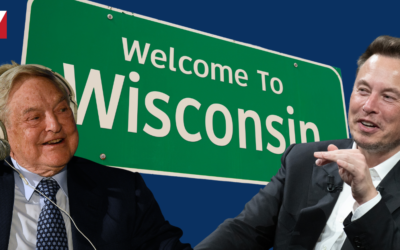
Wisconsin Could Control America If Voters Stay Home In April 2025
Wisconsin voters have the potential to decide the fate of all Americans in April, a situation finally getting some of the attention it deserves (but probably not enough). Voters in Wisconsin will head to the polls on April 1 to decide the ideological balance of the state’s Supreme Court, which could have a direct impact on every future presidential election. The “highly consequential” race will further dictate the future of issues such as life, religious freedom, as well as election integrity, and more. The current balance in Wisconsin’s Supreme Court is a 4-3 liberal majority after Justice Janet Protasiewicz won in 2023. Justice Ann Walsh Bradley is officially retiring her position, allowing for either an even balance or a significant liberal majority to dictate the future of Wisconsin’s legislation, according to Breitbart. “It’s probably going to be just as competitive as the last couple of presidential and gubernatorial elections and Senate elections here,” said former Wisconsin Republican Gov. Scott Walker, according to NBC News. Though the race is supposed to be nonpartisan, Walked noted the situation is promised to “reach a level that much more like what you see in partisan elections.” Who Are The Candidates? Left-wing billionaires like George Soros, Silicon Valley’s Reid Hoffman, and more, are pouring millions into Dane County Circuit Court judge Susan Crawford. “I believe people in Wisconsin deserve to feel safe as they go about their lives…My top priority in making decisions is always to make our communities safer,” said Crawford of her policies, according to Ballotpedia. Other liberal judges have also endorsed Crawford’s campaign. The Milwaukee Police Association officially endorsed Waukesha County Circuit court judge Brad Schimel’s campaign. He says he’s running to “restore confidence in the people of Wisconsin that the justice system will be fair and impartial…I will be honest about my principles, but will never prejudge a case.” Support is rolling into both campaigns, including $1 million from a group with ties to technology billionaire Elon Musk, according to Politico. Why This Matters To People Outside Of Wisconsin “Wisconsin is the only state that was one of the closest three margins in the last three Presidential elections. It was critical in deciding who became president each of the last three elections. The margins have been by less than 30,000 with over 3,000,000 votes cast,” Million Voices’ John Graves explains. “The four liberal justices overruled the three conservative justices after the liberal took over the court in 2023, and reversed the ruling on drop boxes and other critical election integrity rulings. That’s why it’s the most important state right now, and that’s why this election is so important.” The Wisconsin election isn’t just about what happens for state residents. The issues that matter most to you ultimately, as they trickle upwards from the local level, end up in the hands of those who run this nation. Wisconsin basically chooses the president every four years. Do you want policies related to noncitizen voting, ballot drop boxes, and more, to be part of Wisconsin’s electoral system? It is essential to tell your friends, family, pastor, anyone you know who may have ties to Wisconsin, to get out and vote in April. We’ll be bringing you the latest updates on the races, so be sure to share them with your kin. Read more from Million Voices and get your Wisconsin Voter Guide! Explore more from The Modern Memo.