TikTok
TikTok’s $14 Billion Divorce: Balancing National Security and the Global App Economy
After more than five years of executive orders, court injunctions, and federal ultimatums, the saga of TikTok’s American operations has reached a definitive turning point. On January 22, 2026, ByteDance officially finalized a deal transferring control of TikTok’s U.S. unit to a new majority-American joint venture, effectively averting a nationwide ban under the Protecting Americans from Foreign Adversary Controlled Applications Act. At Modern Memo, we analyze the structure of this historic $14 billion transition, the technical safeguards being implemented, and the ongoing debate between national security and free-market commerce. The New Structure of American TikTok The newly formed entity, TikTok USDS Joint Venture LLC, now operates as the primary steward of the app for over 170 million U.S. users. To satisfy federal divestiture laws, the ownership has been redistributed to ensure ByteDance maintains only a minority, non-controlling stake of 19.9%. The majority of the company is now held by a consortium of managing investors, including Oracle, Silver Lake, and the Abu Dhabi-based AI firm MGX, who each hold 15% stakes. The remaining shares are distributed among a group of strategic U.S. participants, including the Dell family office and existing ByteDance investors. The venture is led by CEO Adam Presser and is overseen by a seven-member board of directors. Per federal mandate, this board maintains a majority of U.S. citizens and includes security experts tasked with auditing the platform’s independence. National Security vs. Technical Interoperability The core of the “TikTok Deal” rests on a complex technical “firewall” designed to isolate American user data while maintaining the app’s global functionality. The Algorithmic “Fork” To address concerns that the recommendation engine could be used for foreign influence, the joint venture is currently “retraining” the algorithm. While the underlying source code is licensed from ByteDance, the version used in the U.S. is being tested and updated exclusively on American user data within Oracle’s secure cloud environment. Data Residency and Oversight Oracle has transitioned from a simple hosting partner to a “technological steward.” All U.S. user data is now stored on domestic servers, and Oracle possesses the authority to monitor data flows and validate the code. This is intended to ensure that no unauthorized data packets are transmitted to foreign servers. The Commercial Paradox While the U.S. joint venture controls data and content moderation, certain commercial functions—including e-commerce, global advertising, and marketing—remain tied to ByteDance-controlled units. This “interoperability” ensures that U.S. creators can still reach global audiences, but it has also become a focal point for lawmakers who worry that these commercial links could still serve as conduits for data harvesting. Legislative Skepticism and the “Divorce” Debate Despite the deal’s closure, a bipartisan group of lawmakers continues to question its efficacy. Transparency Concerns: Senators like Ed Markey (D-MA) and Marco Rubio (R-FL) have called for an investigation into the “secrecy” of the negotiations. Critics argue that without a public audit of the licensed code, it is impossible to verify if the app is truly free of foreign influence. The “Clean Break” Standard: Members of the House Select Committee on China have vowed to conduct rigorous oversight, questioning if a 19.9% stake and a licensed algorithm meet the “qualified divestiture” standard intended by Congress. User Backlash: Coinciding with the ownership shift, TikTok rolled out updated Terms of Service and Privacy Policies on January 22. This triggered a significant spike in uninstalls as users voiced concerns over new geolocation tracking requirements and perceived shifts in content reach. Final Word Navigating the intersection of tech policy and national security isn’t just about the apps on your phone—it plays a powerful role in your digital privacy and the stability of the global economy. When you look at the facts of a $14 billion divestiture, you gain a clearer picture of how “digital borders” are being drawn in real-time. Quality information improves your mental health by replacing the panic of a “ban” with the clarity of ownership and security data. It reduces “tech fatigue” by helping you understand exactly who has the keys to your digital footprint. By choosing to follow the policy rather than the hype, you protect your perspective and support a more informed, secure digital world. Where Facts, Context, and Perspective Matter At The Modern Memo, our goal is simple: to provide clear, well-researched reporting in a media landscape that often feels overwhelming. We focus on substance over sensationalism, and context over commentary. If you value thoughtful analysis, transparent sourcing, and stories that go beyond the headline, we invite you to share our work. Informed conversations start with reliable information, and sharing helps ensure important stories reach a wider audience. Journalism works best when readers engage, question, and participate. By reading and sharing, you’re supporting a more informed public and a healthier media ecosystem. The Modern Memo may be compensated and/or receive an affiliate commission if you click or buy through our links. Featured pricing is subject to change. 📩 Love what you’re reading? Don’t miss a headline! Subscribe to The Modern Memo here!
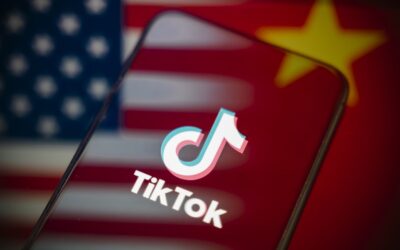
TikTok: Trump Announces Deal With China
President Donald Trump says a deal has been reached with China over TikTok, with only final details left to lock in. According to Trump, he will speak directly with Chinese President Xi Jinping on Friday to seal the agreement. This move marks a turning point in the long-running battle over TikTok’s future in the United States. At the heart of the issue has always been the app’s most valuable asset—its recommendation algorithm—and now, after months of uncertainty, a path forward seems to be in place. NOW – Trump: “We have a deal on TikTok. I’ve reached a deal with China.” pic.twitter.com/GPlS4UJuQZ — Disclose.tv (@disclosetv) September 16, 2025 Why the Tiktok Algorithm Became the Flashpoint TikTok’s success comes down to its algorithm, the technology that drives the For You page. This is what keeps users hooked and what makes TikTok such a powerful platform. For years, U.S. officials worried that the algorithm, owned by TikTok’s parent company ByteDance in China, could be used to push certain narratives or collect sensitive data on American users. China, however, has been unwilling to give up one of its most prized technologies. That’s why this fight has never just been about a social media app—it’s been about national security, intellectual property, and global power. What the TikTok Deal Includes While we await details, the agreement Trump is expected to announce offers a compromise. Rather than stripping ByteDance of ownership altogether, the deal would allow the algorithm to be licensed to a U.S.-based entity. That means the technology would still belong to ByteDance, but it would operate under new safeguards inside the United States. American officials would have oversight of U.S. user data, and a third party could be put in place to manage the most sensitive parts of the system. This setup would give the U.S. more control over how TikTok runs here, while still letting China hold on to its intellectual property. (MORE NEWS: AI Is Taking Entry-Level Jobs and Shaking Up the Workforce) Why It’s Happening Now There’s urgency behind the timing. U.S. law set a deadline requiring TikTok to divest from Chinese control or face a potential ban. That deadline is fast approaching, and without an agreement, TikTok could vanish from American app stores. By announcing the deal now, Trump is signaling that the standoff is over. The planned phone call with Xi Jinping on Friday is expected to finalize the details and remove any last roadblocks. Both leaders want to avoid escalation, but both also want to show they are defending their nations’ interests. Treasury Secretary Scott Bessent weighed in: Under President Trump, America is back. Talks with China are respectful and results-driven. @POTUS was ready to let TikTok go dark and made clear that we will never trade away national security. Thanks to his tough negotiating, a framework for a deal is in place, and China is… pic.twitter.com/3QdD4iro5U — Treasury Secretary Scott Bessent (@SecScottBessent) September 16, 2025 Questions That Still Remain Even with a deal on the table, some big questions linger. Will American oversight of the algorithm be strong enough to satisfy critics? How much transparency will be built into the system so users can trust it? And will Congress sign off on the final arrangement, or push for even tougher conditions? On the Chinese side, export-control rules could also complicate how the licensing arrangement is structured. If Beijing insists on tighter restrictions, parts of the deal could face delays. Why This Agreement Matters Beyond TikTok If the deal is finalized Friday, it won’t just impact TikTok. It will set the stage for how countries around the world handle foreign-owned apps and technologies. Nations everywhere are wrestling with the same issues: data security, content influence, and who ultimately controls the technology behind powerful platforms. This agreement could become the blueprint for managing those challenges. It also feeds into broader U.S.-China relations, which remain strained over tariffs, trade restrictions, and technology policy. A successful deal here could cool tensions and open the door to cooperation in other areas. What Happens Next After the call between Trump and Xi, the next step will be writing the legal framework. That means spelling out who has authority over data, how licensing will work, and what safeguards will protect U.S. users. (MORE NEWS: AI Stethoscope Spots Deadly Heart Conditions 15 Seconds) If all goes as planned, TikTok’s millions of American users will be able to keep scrolling without interruption. But if the deal hits a snag, the threat of restrictions or even a ban still hangs in the balance. The Bigger Picture This announcement highlights how much bigger the TikTok story has become. It’s not just about a social media app anymore—it’s about technology, influence, and the balance of power between the world’s two largest economies. By stepping in and announcing a deal, Trump is moving the debate from endless speculation to concrete action. Friday’s call with Xi will be the real test, but for now, TikTok looks closer than ever to having its future in the U.S. secured. Cut Through the Noise. Slice Through the Lies. Share the Truth. At The Modern Memo, we don’t tiptoe around the narrative—we swing a machete through it. The mainstream won’t say it, so we will. If you’re tired of spin, censorship, and sugar-coated headlines, help us rip the cover off stories that matter. Share this article. Wake people up. Give a voice to the truth the powerful want buried. This fight isn’t just ours—it’s yours. Join us in exposing what they won’t tell you. America needs bold truth-tellers, and that means you.