
Voters

A City Divided: One Burning Issue Dominates as LA Voters Head to the Polls Over Spencer Pratt’s Mayoral Bid
Los Angeles voters head to the polls for a high-stakes, nonpartisan primary election that will permanently reshape the city’s political landscape. With more than a dozen names on a crowded ballot, Tuesday’s vote is mathematically guaranteed to narrow the field down to the top two candidates for a definitive head-to-head showdown in the November general election. Yet, as the lines form at voting precincts from East LA to the Westside, the entire election has been swallowed by one inescapable, burning crisis: the intersection of crisis management, public disorder, and the slow, agonizing recovery from the devastating 2025 Pacific Palisades wildfire. It is an issue that has transformed a reality television villain into a potent political disruptor and split America’s second-largest city right down the middle. At The Modern Memo, we look past the Hollywood aesthetics to analyze the polling numbers deadlocking the frontrunners, the raw data behind the wildfire fallout, and how an anti-establishment populist is testing the boundaries of a heavily blue stronghold. The Three-Way Deadlock: The Primary Data For months, incumbent Mayor Karen Bass—the first female mayor in Los Angeles history—was widely expected to glide toward an unencumbered re-election bid. But a late-stage surge from the political fringes has forced the establishment into a brutal fight for political survival. The Statistical Tie: A final UC Berkeley/Los Angeles Times poll released just ahead of Tuesday’s vote reveals a razor-thin, three-way statistical deadlock among likely primary voters. Bass holds a vulnerable lead at 26%, with progressive City Councilwoman Nithya Raman surging to 25%, and Spencer Pratt nipping at their heels with 22%. The Nonpartisan Filter: Because California utilizes a top-two primary system for municipal elections, party affiliations are stripped from the ballot. If no candidate achieves an absolute majority of 50% plus one on Tuesday—an statistical impossibility given the current polling—the top two vote-getters, regardless of ideology, will advance to a November runoff. The Reality Disruptor: Running as a MAGA-aligned, registered Republican, Spencer Pratt—the former breakout star of MTV’s The Hills—has upended the traditional playbook. Dismissed early on as a novelty candidate, Pratt’s unfiltered, social-media-heavy populist campaign has successfully capitalized on deep, localized voter exhaustion. The Defining Issue: The Smoke and the Sidewalks While traditional municipal campaigns focus on abstract budgetary allocations, the 2026 mayoral race is being fought entirely on the pavement. The collective trauma of the catastrophic 2025 Pacific Palisades fire has supercharged a broader debate regarding public safety and chronic homelessness. The Personal Catalyst: For Pratt, the crisis is intensely personal; his own family home was entirely incinerated during the 2025 wildfire. He has relentlessly weaponized his personal tragedy on TikTok and Instagram, running viral ads that blast Mayor Bass for being physically overseas during the disaster and slamming City Hall’s subsequently sluggish, heavily bureaucratic permitting process. The Law Enforcement Ultimatum: Pratt has blended his fire-recovery rhetoric with an aggressive, zero-tolerance platform targeting public encampments and street crime. “I don’t do the politician talk,” Pratt told reporters, pitching a platform aimed at mothers who no longer feel safe walking their children past encampments near schools and daycares. “I’m going to enforce the laws that exist… Common sense does not require an advisory committee.” The Progressive Fracture: The issue has split the traditional Democratic coalition in two. While Bass defends her administration’s record—pointing to documented decreases in street-level homelessness during her tenure—Councilwoman Nithya Raman, a democratic socialist, is attacking the mayor from the left. Raman argues the city’s current approach relies too heavily on temporary sweeps rather than permanent municipal housing infrastructure, leaving progressive voters fractured over how to solve the crisis. The Bel-Air Controversy: Authenticity vs. Optics As the race hit its final stretch, the establishment attempted to puncture Pratt’s populist narrative by targeting his lavish lifestyle, highlighting the stark contrast between his “everyman” campaign rhetoric and his reality-TV roots. The Trailer vs. The Hotel: Pratt faced intense media blowback after filming an anti-establishment campaign ad outside a parked Airstream trailer, declaring to viewers, “this is where I live.” Investigative reports later exposed that the candidate was actually residing in a luxury suite at the ultra-exclusive Bel-Air Hotel while his Palisades home was being cleared. The Ideological Uphill Climb: Even if Pratt’s “common sense” messaging sneaks him into the top two slots on Tuesday night, veteran California strategists point out that his long-term math remains incredibly bleak. To win a general election in November, he must somehow convince a heavily, historically blue Democratic metropolis to elect a conservative who has never held public office. Final Word Tuesday’s Los Angeles mayoral primary is the definitive proof that when a city’s core infrastructure and basic safety lapse, voters will look to the absolute fringes for answers. When you look past the noise of reality-television celebrity and focus on the data—the three-way statistical tie at 26%, 25%, and 22%, the lingering displacement of the 2025 wildfires, and widespread urban frustration over unenforced municipal ordinances—you gain a clearer picture of an electorate in open revolt against institutional inertia. Quality information replaces the narrative of a standard local election with the reality of a generational, systemic fracture. It allows you to see that whether Spencer Pratt is a temporary protest vote or a viable November contender, his platform has fundamentally shattered the political peace inside City Hall. By choosing to vote on the singular issue of urban functionality today, Angelenos are sending an unmistakable message: the era of business as usual is officially dead.

The Redistricting Reckoning: Alabama and Tennessee Launch Mid-Decade Map Battles as Indiana, Ohio Voters Hit the Polls
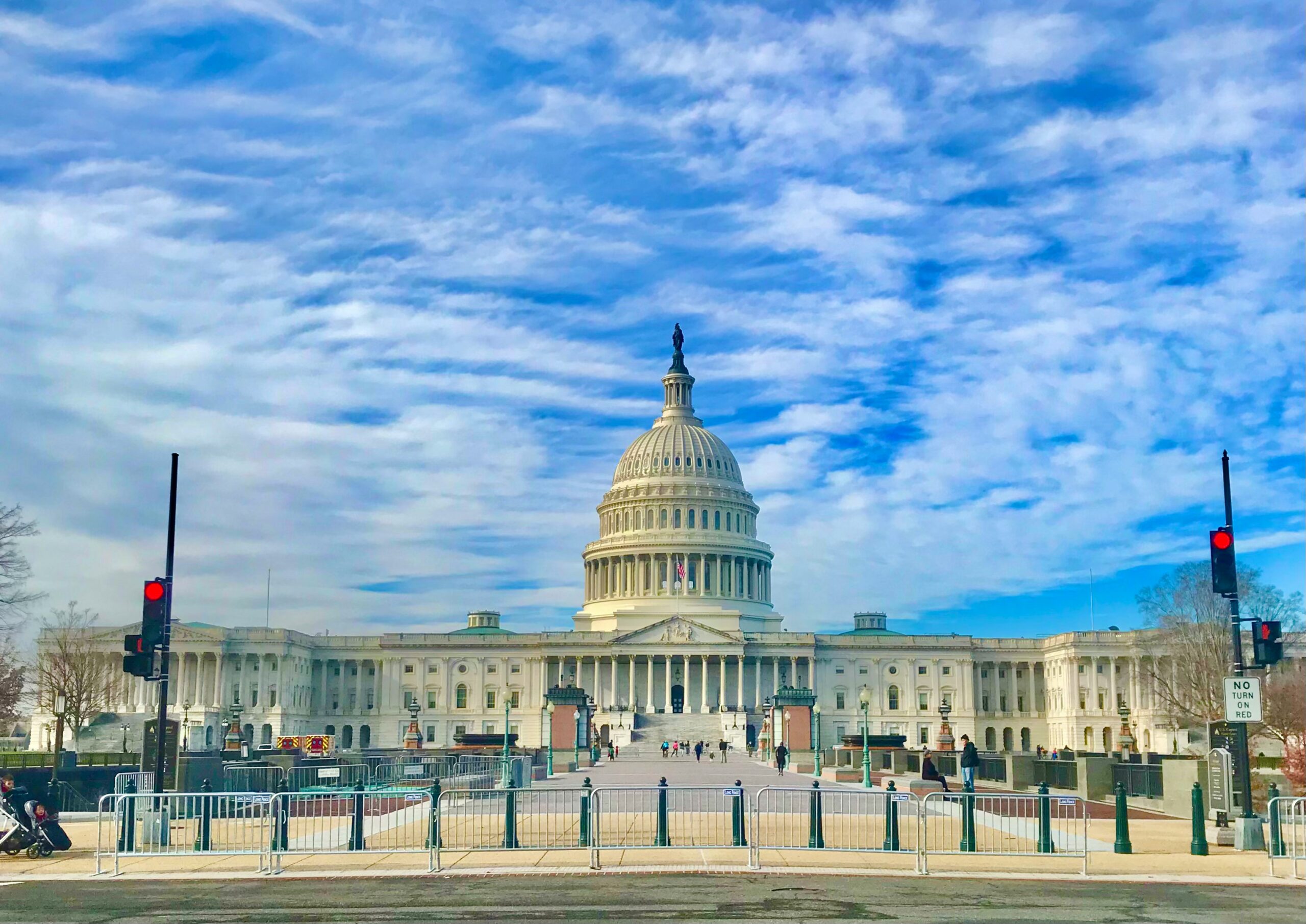
While primary voters in Indiana and Ohio cast their ballots today, May 5, 2026, a seismic shift in the American electoral landscape is unfolding further south. As the 2026 midterm cycle officially moves into high gear, Alabama and Tennessee have initiated high-stakes, mid-decade redistricting battles that could fundamentally alter the balance of power in Washington. At The Modern Memo, we analyze the “GOP Sweep” strategy in the South, the Supreme Court’s role in reshaping the Voting Rights Act, and why today’s primary results in the Midwest are only half the story for the battle for Congress. The Southern Special Sessions: Chasing the 7-0 and 9-0 Sweeps Following recent Supreme Court action—specifically the Louisiana v. Callais ruling—Republican governors in Alabama and Tennessee have summoned lawmakers back to their respective capitals to redraw congressional lines. Alabama’s 7-0 Ambition: Governor Kay Ivey called a special session starting yesterday, Monday, May 4. The goal? To replace a court-ordered map that created a second majority-Black district with a new GOP-drawn map. Republican leaders aim to transform the current delegation—which includes two Democrats—into a 7-0 Republican sweep. Tennessee’s Memphis Maneuver: Governor Bill Lee has convened a special session beginning today, Tuesday, May 5. The objective is to break up the state’s lone remaining Democratic-held seat in Memphis. If successful, Tennessee would likely send a 9-0 Republican delegation to D.C. The “Louisiana” Precedent: These moves follow a SCOTUS decision striking down a majority-Black district in Louisiana for relying “too heavily on race,” a ruling that has effectively green-lit a “Southern Surge” of Republican redistricting efforts. Primary Day: Indiana and Ohio Voters Speak As Southern legislatures move lines on paper, Midwestern voters are moving into the booths. Today’s primaries in Indiana and Ohio serve as the first major test of the GOP’s “America First” momentum in the 2026 cycle. Indiana Spotlight: Voters are selecting nominees for all nine U.S. House seats. Key races include District 5, where Victoria Spartz faces a crowded primary field, and District 7, where Destiny Wells and George Hornedo are vying for the Democratic nomination to challenge the status quo. Ohio’s Battleground: In Ohio, the primary is seen as a bellwether for the President’s influence over the party. High-profile contests for state legislative seats and congressional nods are being scrutinized as indicators of whether the “Red Wave” predicted for November is already cresting. The National Implications: A 20-Seat Swing? The timing of these events is not coincidental. With the 2026 midterms looming, the combination of mid-decade redistricting and primary outcomes could hand Republicans a massive advantage. Trump’s Call to Action: On Sunday, the President urged state legislatures to follow the Supreme Court’s lead, suggesting that mid-decade redistricting could net the GOP an additional 20 House seats. The Democratic Defense: National Democrats and civil rights groups have slammed the special sessions as “blatant power grabs” designed to disenfranchise minority voters. They are expected to seek immediate judicial intervention to stay any new maps before the general election. Final Word The simultaneous action in the State Houses of the South and the polling places of the Midwest represents a pincer movement on the current electoral map. When you look past the noise of “voter suppression” rhetoric and focus on the data—the Supreme Court’s pivot on race-based maps and the strategic timing of the special sessions—you gain a clearer picture of a party that is not waiting for November to win. Quality information replaces the narrative of “bureaucratic routine” with the reality of a surgical, aggressive restructuring of American political power. It allows you to see that while voters in Ohio and Indiana are making their voices heard today, the maps being drawn in Alabama and Tennessee may determine whose voices carry the most weight in the next Congress. Where Facts, Context, and Perspective Matter At The Modern Memo, our goal is simple: to provide clear, well-researched reporting in a media landscape that often feels overwhelming. We focus on substance over sensationalism, and context over commentary. If you value thoughtful analysis, transparent sourcing, and stories that go beyond the headline, we invite you to share our work. Informed conversations start with reliable information, and sharing helps ensure important stories reach a wider audience. Journalism works best when readers engage, question, and participate. By reading and sharing, you’re supporting a more informed public and a healthier media ecosystem. The Modern Memo may be compensated and/or receive an affiliate commission if you click or buy through our links. Featured pricing is subject to change. 📩 Love what you’re reading? Don’t miss a headline! Subscribe to The Modern Memo here!