
White House

Could You Survive a Day as a White House Press Secretary?
Could You Survive a Day as a White House Press Secretary? Step up to the podium and face the press—discover your inner spin-master with this quiz! Question 1 of 8 It’s your first press briefing. You walk up to the podium. What’s your opening move? “Good afternoon. I have a brief statement to read, and then I will take a few questions.” “Wow, bright lights! Good to see so many familiar faces. Who’s got the first question for me?” “Hello everyone. Before we begin, I want to commit to providing you with the most accurate information we have.” “Let’s get started. I know some of you have already written your stories, but let’s see if we can get some facts in there today.” A reporter from a major network asks a loaded question, accusing the administration of a cover-up. What’s your immediate response? “That’s a very serious accusation. Let’s break down the facts as we know them, one by one.” “I reject the premise of your question. It’s frankly irresponsible for your network to be pushing baseless theories from this podium.” “I’m not going to comment on unsourced rumors. What I can tell you is…” “Whoa, starting with the fireworks, Mark! Look, I know why you’re asking, but the reality is much simpler.” The President just tweeted something that contradicts official administration policy. The first question is, “Can you clarify the President’s tweet?” “The President’s tweet speaks for itself. Our official policy remains as previously stated.” “The President is a unique communicator! He’s emphasizing the *spirit* of the policy.” “The President is the ultimate authority. His tweet *is* the policy. It seems others need to catch up.” “That’s a fair question. The tweet and our policy appear to conflict. We are working to clarify the official position.” Next Question → A sensitive internal memo is leaked. A reporter holds up a copy and asks you to confirm its authenticity. “I’m not going to legitimize stolen documents. The real story is who is illegally leaking information.” “I can’t confirm that specific document, but I can tell you that the topic it discusses is under review.” “You know I can’t comment on every piece of paper in Washington. Let’s talk about the bigger picture…” “We don’t comment on alleged internal documents.” A reporter keeps asking the same question you’ve already answered three times. How do you shut it down? “Sarah, I appreciate your persistence! But we’ve covered this. Let’s give someone else a chance.” “I’ve answered that question. I have nothing further to add. Next question.” “I’ve answered your question three times. Asking a fourth won’t change the answer. Let’s move on to a real reporter.” “I understand you want a different answer, but the one I’ve given is the most complete one I have right now.” In the middle of a tense discussion about foreign policy, a reporter asks, “What’s the name of the new White House puppy?” “That’s a bit of a change of pace! The puppy’s name is Commander. Now, back to the matter at hand…” “Ah, the most important question of the day! His name is Commander. A great moment of levity! Okay, back to the serious stuff…” “I’m not here to discuss the First Family’s pets. We’re talking about national security. Next question.” “With all the serious issues facing the country, you’re asking about a dog? It shows where your priorities are.” You’re presented with new data showing unemployment has ticked up, contrary to your administration’s optimistic projections. “We’re looking at long-term trends, not one-off monthly numbers. The fundamentals of the economy remain strong.” “This is the same selective data-picking the media always uses. You ignore the massive job growth over the last year.” “Yes, that number is higher than we’d like. It’s a concern, and it shows we have more work to do.” “Nobody likes to see that, of course. But you have to see it in context. A little fluctuation is natural.” The briefing was brutal. You’ve been grilled for an hour. What’s your closing line as you leave the podium? “Thanks for nothing. See you tomorrow.” “Thanks, everyone. I know it was a lively one today. See you all tomorrow!” “I’ve given you the best information I have for today. We’ll be back tomorrow with updates. Thank you.” “That’s all the time I have. Thank you.” See My Result → Your Result Share your result & challenge your friends to take the quiz! Facebook Post on X Copy Link Take Quiz Again

New Video Shows Suspect Stalking Halls and Charging Security at White House Correspondents’ Dinner
New security footage released by federal investigators on May 1, 2026, has provided a chilling look into the moments leading up to the shooting at the White House Correspondents’ Association Dinner. The video shows 31-year-old suspect Cole Allen navigating the service corridors of the Washington Hilton with tactical precision before launching a direct charge at a Secret Service checkpoint. At The Modern Memo, we analyze the evidence of premeditation found in the footage, the heroic response from law enforcement, and what this means for the ongoing Department of Justice investigation into the targeting of administration officials. Evidence of Premeditation The footage, captured minutes before the first shots were fired, contradicts any narrative that this was a spontaneous act of violence. The Tactical Approach: Allen is seen moving through the hotel’s back hallways, bypassing public areas to position himself near a high-security entrance. The Final Charge: The video shows Allen drawing a weapon as he breaks into a sprint toward a Secret Service magnetometer station. The intent appears clear: breaching the perimeter to reach the main ballroom where the President’s Cabinet was gathered. The Secret Service Response The video highlights the split-second bravery of the agents on duty. As Allen charged the checkpoint, a Secret Service agent was seen immediately engaging the suspect, absorbing the initial fire and tackling him to the ground. Preventing a Massacre: Officials believe that if Allen had successfully breached that final door, the loss of life inside the crowded ballroom would have been catastrophic. Officer Down: One agent was wounded in the exchange, but is reportedly in stable condition thanks to the quick response of medical teams on site. JUST IN: 🇺🇸 US releases high quality footage of White House Correspondents Dinner shooting. This is not AI generated. pic.twitter.com/StMdIKrnNB — Remarks (@remarks) April 30, 2026 Building the DOJ Case This video serves as a cornerstone of the DOJ’s case against Allen, who reportedly traveled from California to D.C. with a “priority list” of government targets. Assassination Intent: Prosecutors argue the footage proves Allen wasn’t interested in a general protest, but was specifically hunting high-ranking administration officials. Radicalization Probe: The FBI is currently examining Allen’s ties to extremist groups, looking for any evidence that his actions were coordinated with others who share his anti-government views. Final Word The footage of the Hilton shooting is a sobering reminder of the threats facing our public officials. When you look past the noise and focus on the data—the calculated movement of the suspect and the immediate response of the Secret Service—you gain a clearer picture of a crisis that was managed by professionals in a moment of extreme danger. Quality information replaces speculation with the reality of a narrow escape for the nation’s leadership. It allows you to see that while the attack was planned with malice, it was met with superior resolve. Where Facts, Context, and Perspective Matter At The Modern Memo, our goal is simple: to provide clear, well-researched reporting in a media landscape that often feels overwhelming. We focus on substance over sensationalism, and context over commentary. If you value thoughtful analysis, transparent sourcing, and stories that go beyond the headline, we invite you to share our work. Informed conversations start with reliable information, and sharing helps ensure important stories reach a wider audience. Journalism works best when readers engage, question, and participate. By reading and sharing, you’re supporting a more informed public and a healthier media ecosystem. The Modern Memo may be compensated and/or receive an affiliate commission if you click or buy through our links. Featured pricing is subject to change. 📩 Love what you’re reading? Don’t miss a headline! Subscribe to The Modern Memo here!
Executive Presence: Trump Attends Landmark Birthright Citizenship Arguments at SCOTUS
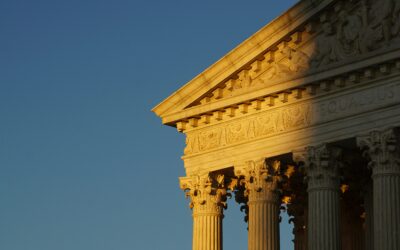
In a move that has sent ripples through the nation’s capital, President Trump yesterday became the first sitting commander-in-chief in modern history to personally attend oral arguments at the Supreme Court. The President’s presence in the courtroom gallery underscores the high stakes of Trump v. Barbara, a case that could fundamentally redefine the 14th Amendment and the future of American immigration law. At The Modern Memo, we analyze the legal theory behind the “jurisdiction” challenge, the President’s unprecedented courtroom appearance, and the ongoing battle over the $400 million White House Ballroom project. The Birthright Battle: Trump v. Barbara The case centers on Executive Order 14160, signed earlier this term, which seeks to end the automatic granting of citizenship to children born on U.S. soil to parents who are unlawfully present or in the country on temporary visas. The Core Argument: The administration, led by Solicitor General D. John Sauer, argues that the 14th Amendment’s phrase “subject to the jurisdiction thereof” requires more than just physical presence. They contend it implies a “permanent allegiance” or “domicile” that non-citizens do not possess. Challenging Precedent: The lawsuit, brought by a class of plaintiffs led by a person identified as Barbara, argues that the 1898 Wong Kim Ark decision settled this matter over a century ago. The “Birth Tourism” Defense: During the 90-minute session, the administration highlighted the rise of “birth tourism” and the “pull factor” of unrestricted citizenship, arguing that the original intent of the post-Civil War amendment was never to reward those who bypass our legal immigration system. The Scene: Resolve or “Strong-Arming”? The President arrived at the Court yesterday morning, sitting in the public gallery for roughly 90 minutes of the proceedings. He notably left after the government’s portion of the argument concluded. A Show of Strength: Supporters viewed the visit as a necessary display of executive resolve, signaling that the administration views the integrity of the ballot and the value of citizenship as its highest priority. The Critic’s View: Opponents were quick to label the move a “strong-arming tactic” intended to intimidate the Justices. However, the President’s allies noted that the Court has long been a co-equal branch that should not be shielded from the direct interest of the Executive when the Constitution itself is at stake. The $400 Million Ballroom: A Vote on the Horizon While the Supreme Court deliberates, another battle is brewing at the White House. Planning authorities are expected to vote today on the controversial $400 million White House Ballroom project, which has faced significant legal and political hurdles. The Judicial Halt: Earlier this week, U.S. District Judge Richard Leon issued a preliminary injunction, ruling that construction on the massive 90,000-square-foot facility cannot proceed without explicit Congressional approval. Defiance from the Oval: The President has blasted the ruling as “wrong,” arguing that previous administrations conducted extensive renovations without seeking legislative permission. The Thursday Vote: Today’s vote by planning authorities represents the final procedural hurdle outside the courts. If approved, it would set up a direct showdown between the administration’s “modernization” agenda and a Congress that remains deeply divided over the project’s scale and private funding model. Final Word The President’s physical presence at the Supreme Court is a definitive statement that the era of “business as usual” immigration policy is over. When you look past the noise of “tradition” and focus on the data—the legal ambiguity of “jurisdiction” and the 125-year-old precedents being tested—you gain a clearer picture of a nation finally grappling with the true meaning of citizenship. Quality information replaces the rhetoric of “tradition” with the clarity of constitutional originalism. It allows you to see Trump v. Barbara not just as a court case, but as the essential restoration of the “priceless gift” of being an American. By choosing to stand with the President in this fight, you align your perspective with the reality that a sovereign nation must define its own borders and its own people. Where Facts, Context, and Perspective Matter At The Modern Memo, our goal is simple: to provide clear, well-researched reporting in a media landscape that often feels overwhelming. We focus on substance over sensationalism, and context over commentary. If you value thoughtful analysis, transparent sourcing, and stories that go beyond the headline, we invite you to share our work. Informed conversations start with reliable information, and sharing helps ensure important stories reach a wider audience. Journalism works best when readers engage, question, and participate. By reading and sharing, you’re supporting a more informed public and a healthier media ecosystem. The Modern Memo may be compensated and/or receive an affiliate commission if you click or buy through our links. Featured pricing is subject to change. 📩 Love what you’re reading? Don’t miss a headline! Subscribe to The Modern Memo here!

Trump’s East Wing Demolition and Ballroom Plan Explained
A Major Change at the White House President Donald Trump has begun tearing down the East Wing of the White House to make room for a new 90,000-square-foot ballroom. The project has already started, and demolition crews are clearing parts of the historic structure. The move has raised questions about preservation laws, federal permits, and who actually has the authority to approve such a major project. No Permit Required for the Project The White House sits on federal property managed directly by the Executive Office of the President (EOP). Because of that, the President can authorize construction or demolition without going through outside agencies. Unlike most federal buildings, the White House is not managed by the General Services Administration or the District of Columbia’s permit office. The President’s office acts as both property owner and regulator because he is the head of the Executive Branch of government. That means the work can move forward without outside permits or reviews. Why the National Park Service Isn’t Involved Many assume the National Park Service (NPS) oversees all White House changes because it manages nearby landmarks such as Lafayette Square and the Ellipse. However, NPS only becomes involved when federal funds are used. (MORE NEWS: FBI Probes Hunting Stand Near Trump’s Air Force One Area) In this case, the ballroom construction is privately funded, removing the NPS from the process entirely, although the President has been consulting with them since the beginning, per their statement. The President and private donors are covering the cost, so no federal money is being spent. That distinction keeps the project outside the reach of most preservation and environmental-review laws. Exemptions Under the National Historic Preservation Act The National Historic Preservation Act of 1966 (NHPA) normally protects historic properties by requiring federal agencies to review projects that could affect the National Register of Historic Places. But here’s the key detail: the White House, the U.S. Capitol, the Supreme Court, and all their related buildings and grounds are exempt from that review process. Congress carved out these constitutional buildings decades ago, leaving them free from the NHPA’s Section 106 requirements. So while the White House is one of America’s most iconic historic sites, it’s legally exempt from the standard preservation process that governs most federal properties. The Role of the NCPC Even though no permit is required, one agency still plays a small part — the National Capital Planning Commission (NCPC). This body oversees federal development in Washington, D.C. The NCPC must review and approve new construction, but it does not oversee demolition. NCPC Chair Will Scharf said about the project: “It is in fact the case that this commission does not have jurisdiction — and it has long denied that it has jurisdiction — over demolition and site preparation work for federal buildings on federal property. What we deal with is essentially construction — vertical build.” That means Trump’s team can legally demolish the East Wing before submitting final designs for the new ballroom. Once the building plans are complete, they will be reviewed by the NCPC. Most commissioners were appointed by Trump, so approval is expected to move quickly. What the New Ballroom Will Look Like The proposed ballroom is expected to be the largest indoor space ever built within the White House complex. According to the White House Statement, “theme and architectural heritage will be almost identical” to the White House itself. Concept renderings show a grand event hall with marble floors, gold trim, and chandeliers imported from Italy. (MORE NEWS: John Bolton Pleads Not Guilty to Classified Documents Charges) Officials say the space will be used for state dinners, receptions, and formal events. The President describes it as a “modernization,” not an expansion. A Long History of White House Changes The East Wing demolition is only the latest in a long line of White House transformations. Over more than a century, presidents have shaped and reshaped the building to fit their needs. Theodore Roosevelt oversaw the construction of the West Wing in 1902, separating the family residence from the offices. William Howard Taft added the first Oval Office in 1909, modeled after the Blue Room’s graceful oval shape. Calvin Coolidge renovated the third floor and replaced the roof with a new steel-framed attic story in 1927. Franklin D. Roosevelt built the East Wing in 1942 and installed an indoor swimming pool in 1933 to treat his polio. Harry S. Truman completely gutted and rebuilt the White House interior between 1948 and 1952 because it was structurally unsound. He also installed the first bowling alley in 1947, a small two-lane setup in the basement. Richard Nixon added another bowling alley in 1969 under the North Portico, creating the one still used today. Gerald Ford built an outdoor swimming pool on the South Grounds in 1975 for family use. Barack Obama converted the tennis court into a full basketball court in 2009. Also, made $376 million in renovations on the taxpayer’s dime. Each administration has left a visible mark on the property, blending function, symbolism, and personal style. A CNN report from 2010: $376 million White House renovation during the Obama Administration. Where was the Democrat outrage then? pic.twitter.com/MvLVDFcTru — Christian Collins (@CollinsforTX) October 22, 2025 What Happens Next Demolition is expected to continue through winter, with construction on the new ballroom starting soon after. The full project could take up to three years. Tours of the East Wing are suspended, and sections of the South Grounds are closed to staff and the public. Meanwhile, daily operations continue inside the main residence and West Wing. Officials insist that safety standards are being met and that the new structure will complement the White House’s classic style. Final Thoughts The East Wing demolition marks an exciting new chapter for the White House. The addition of a state-of-the-art ballroom will enhance the Executive Residence’s ability to host world leaders, dignitaries, and major diplomatic events with unmatched elegance. Designed to reflect the building’s historic character while embracing modern functionality, the new space…
Erika Kirk Honors Charlie’s Legacy at the White House
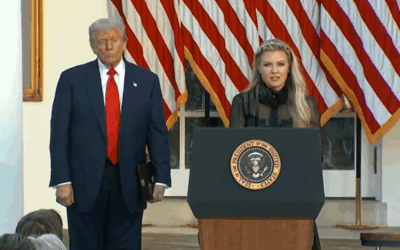
At the White House Rose Garden on Tuesday, President Donald Trump presented the Presidential Medal of Freedom to honor the late Charlie Kirk. The award, accepted by his wife, Erika Kirk, came on what would have been Charlie’s 32nd birthday. The moment was filled with emotion as Erika delivered a moving tribute, celebrating her husband’s passion for liberty, his deep faith, and his lifelong mission to serve others. President Trump had kind words to say about Erika before presenting the medal: .@POTUS: “I’m honored to be joined by a woman who has endured unspeakable hardship with unbelievable strength, and that’s Charlie’s widow, @MrsErikaKirk… Erika, your love and courage have been an inspiration to all of us, and we will always be here for you…” pic.twitter.com/3Vk0twmqOt — Rapid Response 47 (@RapidResponse47) October 14, 2025 A Day of Deep Meaning Erika began her speech by thanking President Trump, the First Lady, and Vice President, along with Turning Point USA staff and chapters, calling them “the heartbeat of this future and of this movement.” She urged everyone to continue Charlie’s mission to preserve and protect freedom. She explained that the Medal of Freedom represents the core of America’s founding ideals. Erika said the honor reminds us that the national interest of the United States has always been freedom. She tied that meaning to Charlie’s own life, describing him not just as a believer in liberty but as a man who lived to defend it. (OUR TRIBUTE: Charlie Kirk: A Patriot Remembered, A Legacy Unbroken) Freedom as a Calling Erika Kirk spoke passionately about her husband’s convictions. She remembered one of his favorite sayings—freedom is both a right and a responsibility. Charlie often told her that freedom is “the ability to do what is right without fear.” She reflected on how even his name, Charles, means “free man,” and said he embodied that meaning from start to finish. She recalled their first conversations about politics, philosophy, and theology. From the start, she saw “the fire in his soul,” a passion to protect something sacred. Charlie’s belief in freedom, she said, was not abstract—it was rooted in his faith. He believed freedom had to be grounded in God and truth. “Without God, freedom becomes chaos,” he used to say. Erika explained that Charlie knew true liberty could not exist without moral foundation, and that he saw captivity, not law, as the true enemy of freedom. Mrs. Erika Kirk Accepts Charlie’s Presidential Medal of Freedom on His 32nd Birthday:https://t.co/Ne9CyhO6yF pic.twitter.com/d4sDLFv1hY — Charlie Kirk (@charliekirk11) October 15, 2025 Everyday Life, Big Meaning Erika also shared tender memories of Charlie’s everyday life. She described how he loved simple moments—quiet walks, reading books, and drinking decaf coffee on Saturdays while unplugging from technology. He kept his Sabbath sacred and valued rest and reflection. She recalled his birthday ritual of eating mint chocolate-chip ice cream, but only on July 4th and his birthday. One year, his wish was to see the Oregon Ducks play Ohio State—and they won. Smiling through tears, Erika said, “Mr. President, you have given him the best birthday gift he could ever have.” She revealed that in his final moments, Charlie wore a shirt with one word—“freedom.” That single word, she said, perfectly summed up his life’s mission. A Life of Purpose and Faith Erika Kirk reflected on Charlie’s courage and conviction. She shared that he never feared losing friends for speaking the truth. His confidence came from faith, not public approval. Charlie lived boldly, fought for truth when it was unpopular. He stood for God even when it was costly. He prayed for his enemies and showed them love when it was inconvenient. Erika explained that her husband ran his race with endurance and now wears “the crown of a righteous martyr.” She reminded the audience that this moment should be more than recognition—it should be a commissioning. Erika urged everyone to live freely, resist fear, and stand courageously in truth. To her, Charlie’s medal is not just an honor; it’s a responsibility for all who believe in liberty. (MORE NEWS: Trump’s Vision: A New DC Monument for America’s 250th) A Family’s Farewell and Promise Before ending her speech, Erika Kirk shared touching words from their young daughter, Gigi. “Happy birthday, daddy. I want to give you a stuffed animal. I want you to eat a cupcake with ice cream. I love you.” Their son, she added, has decided to “be the man of the house” at just sixteen months old. Erika said their children miss their father deeply, but they will grow up knowing who he was and what he stood for. She closed with a powerful declaration: “To live free is the greatest gift, but to die free is the greatest victory. Happy birthday, Charlie. Happy freedom day.” Her words brought both tears and inspiration to everyone present. The Takeaway Erika Kirk’s speech was a defining moment of love, courage, and conviction. Charlie’s life was a living testimony of faith and freedom. His courage, clarity, and moral strength inspired countless Americans to believe that truth and liberty are worth fighting for. President Trump’s decision to honor Charlie with the Medal of Freedom affirmed what many already knew: no one is more deserving of this recognition. Charlie dedicated his life to preserving the ideals that make America strong—faith, freedom, and responsibility. Charlie Kirk was assassinated in the prime of his life for speaking the truth, living his faith, & relentlessly fighting for America. That is why today President Trump posthumously awarded Charlie Kirk our nation’s highest civilian honor, the Presidential Medal of Freedom. 🇺🇸 pic.twitter.com/Bqd1hr9byX — The White House (@WhiteHouse) October 15, 2025 Through her emotional words, Erika called on others to follow his example. She urged Americans to cherish their freedoms, stand firm in their beliefs, and live with the same conviction Charlie carried every day. His legacy will continue to light the path for generations to come—a reminder that freedom is not guaranteed, but it is always worth defending. Cut through the…