

World News

Mexico Claims 46% Drop in Homicides Under Sheinbaum, But Watchdogs Warn the Numbers Don’t Tell the Whole Story
Mexican President Claudia Sheinbaum’s government says intentional homicides have fallen 46% since she took office, a dramatic decline her administration is holding up as proof that its aggressive campaign against cartel operators is working — even as independent researchers warn that other forms of criminal violence are quietly rising in the shadow of the falling murder count. According to figures presented by Sheinbaum’s government, the daily average of intentional homicides dropped from 86.9 in September 2024, when she took office, to 47.3 by May 2026, making that May the lowest for the month in twelve years. Officials say 28 of Mexico’s 32 states recorded year-over-year reductions in homicides, with some of the improvements especially dramatic: San Luis Potosí saw an 81% decline, while Zacatecas, long one of the country’s most violence-plagued states amid competition between rival cartel factions, posted a 63% drop. High-impact crimes more broadly — a category that includes homicide, kidnapping and extortion — fell 31% from October 2024 through May 2026, according to the government’s figures. The security gains, if they hold up, would represent one of the most significant declines in criminal violence in Mexico’s recent history, a country that has struggled for nearly two decades with cartel-driven violence that has claimed hundreds of thousands of lives since the government’s military confrontation with drug trafficking organizations began in earnest in the mid-2000s. Sheinbaum’s administration has pointed to a substantial law enforcement push behind the numbers: officials report more than 56,000 detentions tied to high-impact crimes, nearly 30,000 firearms seized, and approximately 420 tons of drugs confiscated, including a naval operation that alone secured more than 71 tons of cocaine. The government has paired that enforcement push with social investment it argues addresses violence at its root, enrolling more than 385,000 young people in job-training and education programs such as Jóvenes Construyendo el Futuro, alongside plans to create 200,000 new high school spaces aimed at keeping at-risk youth out of cartel recruitment pipelines. The approach marks a notable shift from the “hugs, not bullets” strategy associated with Sheinbaum’s predecessor and political mentor, former President Andrés Manuel López Obrador, whose government favored addressing the social roots of cartel violence over direct military confrontation. Sheinbaum has instead leaned into more assertive, at times militarized operations against cartel leadership structures, including a major operation in Jalisco earlier this year targeting the Jalisco New Generation Cartel, one of the country’s most powerful and violent criminal organizations. Her government has also drawn a harder line than some anticipated on U.S. relations, at one point refusing to extradite certain Mexican officials wanted on drug trafficking charges in the United States even while separately transferring dozens of cartel suspects to American custody in what her administration described as a “sovereign decision” rather than a concession to U.S. pressure. Violence remains heavily concentrated in a handful of states even as the national numbers improve. Officials say eight states now account for 54% of all homicides nationwide, led by Guanajuato, which alone represents 8.8% of the national total, followed by Baja California, Chihuahua, Sinaloa, Morelos, the State of Mexico, Guerrero and Veracruz — a list that reads as a rough map of where major cartel factions continue to compete most fiercely for territory and trafficking routes. Independent researchers and security analysts, however, have urged considerable caution about reading the declining homicide figures as evidence that Mexico’s underlying violence problem is actually improving. The 2026 Peace Index, a widely cited annual assessment of security conditions across the country, found homicides fell 22.7% over the year it examined — a smaller but still substantial decline that nonetheless came paired with concerning increases in disappearances across multiple regions and the expansion of extortion networks tied to increasingly fragmented criminal groups. Researchers behind the index cautioned that these trends reflect “the persistence of criminal structures” and continuing gaps in Mexico’s investigative and judicial capacity, warning that “structural risks threatening the sustainability of these advances persist” even as the topline homicide numbers move in the right direction. Some analysts have gone further, suggesting that at least part of the decline in reported homicides may reflect a shift in how criminal violence manifests rather than a genuine reduction in its overall scale — with disappearances, in particular, sometimes serving as a way for both criminal organizations and, in some documented cases, state actors to obscure killings that might otherwise be counted as homicides. The Peace Index report noted that domestic violence has become Mexico’s most commonly reported offense even as firearm use in street crime has risen, and pointed to Mexico’s prison population reaching a record 256,000 inmates alongside what it described as a severe deficit in the investigative and judicial capacity needed to actually process that volume of cases and hold perpetrators accountable. For the Trump administration, which has made pressuring Mexico on both cartel violence and fentanyl trafficking a signature element of its broader Western Hemisphere policy, Sheinbaum’s numbers present a complicated diplomatic dynamic. A genuine, sustained decline in cartel violence would support continued cooperation between the two governments on security matters, while persistent skepticism from independent monitors gives U.S. officials who favor a harder line on Mexico ample grounds to argue that the underlying crisis remains far from resolved regardless of which statistics get emphasized on either side of the border. U.S. law enforcement agencies have continued to report large fentanyl seizures tied to Mexican trafficking networks even as Sheinbaum’s government touts its own record hauls, underscoring that whatever progress has been made against cartel violence domestically within Mexico has not yet translated into a comparable slowdown in the flow of drugs across the border. That disconnect has fueled ongoing friction between Washington and Mexico City over how much credit Sheinbaum’s security strategy actually deserves, with American officials in border states frequently pointing to seizure statistics on their own side of the border as a more reliable gauge of cartel activity than homicide figures reported by a foreign government with an obvious political incentive to showcase improvement. Whether…
Taiwan Approves $7.5 Billion Drone Budget as Chinese Naval Presence Surges Fourfold
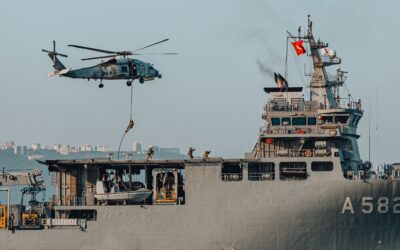
Taiwan’s legislature approved a NT$240 billion — roughly $7.5 billion — special budget for unmanned military systems late last month, a major investment in drone warfare capability that comes as official data shows Chinese naval activity around the island surging to levels far beyond anything recorded a year ago. Taiwan’s Coast Guard Administration reported that 244 Chinese vessels were observed in Taiwan’s surrounding waters in July alone, compared with just 58 vessels during the same month last year — more than a fourfold increase. Taiwanese officials say that since May, they have documented approximately 1,247 Chinese vessels operating in waters around the island, part of what analysts describe as a sustained campaign of naval presence intended to normalize China’s military footprint near Taiwan without crossing the threshold that would trigger a more forceful international response. China’s People’s Liberation Army also continued its long-running pattern of aerial incursions into Taiwan’s Air Defense Identification Zone, though the August numbers offered a partial counterpoint to the naval trend: the PLA conducted 125 such incursions during the month, less than half the rate recorded during the same period in each of the two previous years. Analysts tracking the shift say the decline in aerial incursions alongside the sharp rise in naval activity may reflect a deliberate strategic recalibration by Beijing, shifting the weight of its pressure campaign from more visible and internationally scrutinized air incursions toward a less dramatic, harder-to-counter buildup of maritime presence that accumulates gradually rather than in single, headline-grabbing incidents. China’s coast guard has maintained a steady drumbeat of incursions specifically near Taiwan’s outlying islands as well. Four separate China Coast Guard incursions occurred near Kinmen Island in August — on the 5th, 13th, 19th and 29th — continuing a pattern of roughly four monthly intrusions that has held steady since February 2024. Separately, two Chinese coast guard vessels entered restricted waters around Pratas Island on August 18, an atoll far to the south that sits closer to the Philippines than to Taiwan’s main island but that Taipei has controlled and garrisoned for decades. Taiwan’s government has responded with a combination of legislative and military measures aimed at hardening the island’s defenses against exactly the kind of gray-zone pressure campaign China appears to be waging. The newly approved drone budget, which cleared Taiwan’s Legislative Yuan on August 27 with support from opposition lawmakers who have not always aligned with the governing party on defense spending, is earmarked for unmanned systems procurement and for building out Taiwan’s domestic drone manufacturing industry — a recognition among Taiwanese defense planners that relying primarily on imported systems from the United States and other partners leaves the island vulnerable to supply disruptions in a crisis. The Executive Yuan formally endorsed the opposition-backed measure shortly after its passage, an unusual instance of cross-party alignment on a major defense initiative in Taiwan’s often fractious legislature. Taiwan’s military followed the budget’s passage with live-fire artillery drills on August 27 that specifically integrated unmanned systems alongside traditional platforms like howitzers and armored vehicles, a combination officials said was designed to incorporate “tactical lessons learned from the war in Ukraine,” where drones have transformed frontline combat in ways that militaries around the world have scrambled to study and adapt to. Taiwanese defense officials have been especially attentive to how cheap, mass-produced drones have been used in Ukraine both for reconnaissance and for direct strikes against armor and personnel, seeing clear parallels to how a Chinese invasion force crossing the Taiwan Strait might similarly be vulnerable to distributed, low-cost unmanned systems deployed at scale. Beyond the military dimension, Taiwan’s Central Election Commission has approved a referendum question asking voters whether to repeal the island’s long-standing “nuclear-free homeland” policy, which has kept Taiwan’s nuclear power plants offline or headed toward decommissioning for years. The push to revisit that policy reflects growing concern among Taiwanese officials about the island’s energy vulnerability in a potential blockade scenario, since Taiwan currently imports the vast majority of its energy needs, primarily as liquefied natural gas delivered by sea — precisely the kind of supply line that Chinese naval and coast guard vessels operating in the surrounding waters could threaten to interdict in a crisis, giving Beijing a coercive lever over Taiwan’s economy and daily life without firing a shot. On the U.S. side, the Commerce Department’s Bureau of Industry and Security has opened an investigation into Apex Logistics, a Singapore-based transportation and logistics firm, over allegations it facilitated illegal exports of advanced semiconductors to China in violation of U.S. export controls. If the investigation results in formal charges, officials say it would mark the first legal action taken against a transportation and logistics company specifically for its role in chip smuggling, rather than against the exporters or end-users more typically targeted in such cases — a potential expansion of enforcement that could have ripple effects across the broader logistics industry that moves sensitive technology components around the world, given how much of that industry currently operates on the assumption that liability rests primarily with shippers and manufacturers rather than the intermediaries that physically move the goods. Taken together, the naval buildup, Taiwan’s defense response, and the expanding U.S. enforcement posture on chip exports reflect a relationship between Washington, Taipei and Beijing that continues to grow more tense across multiple fronts simultaneously, even without a single dramatic flashpoint driving the headlines. U.S. officials have said China’s military activities near Taiwan “unnecessarily raise tensions,” a formulation that has become a standard part of Washington’s response to nearly every escalation in the strait over the past several years, even as the underlying trend lines — more ships, more coercive economic pressure points, and now a referendum revisiting one of Taiwan’s most fundamental energy policies — suggest the strategic picture is shifting in ways that go well beyond any single incident. The timing of Taiwan’s defense buildup is also shaped by the broader U.S.-China relationship, which observers say is being closely watched for signs of where the next Trump-Xi summit…

North Korea Stole 76% of All Crypto Hack Value Worldwide in 2026 Using Just Two Attacks
North Korean state-linked hackers accounted for a staggering 76% of all cryptocurrency stolen worldwide through the first four months of 2026, according to blockchain analytics firm TRM Labs, with two attacks alone netting the regime a combined $577 million even as international sanctions continue to formally cut it off from the global financial system. The two operations, carried out weeks apart in April, showcased increasingly sophisticated tactics that blockchain security researchers say represent a marked evolution from North Korea’s earlier, cruder hacking playbook. In the first attack, on April 1, hackers targeted Drift Protocol, a decentralized finance platform built on the Solana blockchain, stealing $285 million through a scheme that unfolded over months. The attackers spent weeks on social engineering — building trust with people who held authorization credentials — before spending roughly three weeks staging the theft directly on the blockchain itself. They ultimately exploited a feature of Solana’s transaction system known as a “durable nonce” to get the platform’s security council signers to pre-authorize transactions without fully realizing what they were approving, then executed 31 separate withdrawals in a rapid-fire window of approximately 12 minutes once the theft began in earnest. A separate North Korean group struck again just over two weeks later, on April 18, this time targeting KelpDAO through a cross-chain bridge built on the LayerZero protocol. That attack netted $292 million by compromising the remote procedure call nodes that platforms use to communicate with the blockchain, exploiting what researchers described as a single-verifier design flaw that allowed the attackers to push through fraudulent transactions without the additional layers of verification more robust systems require. In the aftermath, the Arbitrum Security Council managed to freeze roughly $75 million of the stolen funds before the hackers could move them further, but the bulk of the money was successfully laundered through THORChain, a decentralized cross-chain exchange that has become a favored laundering route for stolen crypto precisely because it allows funds to be swapped between different blockchains with minimal friction and limited centralized oversight. Combined, the two attacks totaled $577 million and, despite representing just 3% of the total number of crypto-theft incidents tracked globally in 2026, accounted for the overwhelming majority of the dollar value stolen across the entire industry during that period — a reflection of how selectively and effectively North Korean hacking units have come to target the largest, most lucrative platforms rather than pursuing high-volume, low-value theft. The scale of the haul lines up with a broader pattern researchers have documented in North Korea’s cyber operations over the past several years, in which state-linked hacking groups — most prominently the Lazarus Group, a unit widely believed to operate under North Korea’s Reconnaissance General Bureau intelligence agency — have increasingly targeted decentralized finance platforms, crypto exchanges and blockchain bridges as a primary funding mechanism for the isolated regime. Separate reporting from Bloomberg has put North Korean leader Kim Jong Un’s cumulative windfall from crypto theft and related illicit financial activity at roughly $22 billion, a sum that analysts say has become an increasingly important funding stream for a government that remains subject to some of the most extensive international sanctions of any country in the world, largely over its nuclear weapons and ballistic missile programs. The persistence and scale of the thefts have raised uncomfortable questions for the broader cryptocurrency industry about whether current security practices at even well-established platforms are adequate against a persistent, well-resourced state actor. Unlike criminal hacking groups motivated purely by short-term profit, North Korea’s units operate with the backing, patience and operational security resources of a nation-state, allowing them to invest months in reconnaissance and social engineering before executing a theft — an asymmetry that has repeatedly proven difficult for even sophisticated crypto platforms to defend against, since it targets human trust and institutional processes as much as it does purely technical vulnerabilities in code. U.S. and allied officials have long argued that North Korea’s crypto theft operations directly subsidize its weapons programs, helping the regime work around the formal international financial sanctions imposed by the United Nations Security Council and individual countries including the United States. That argument has taken on renewed urgency as North Korea has continued to expand its ballistic missile testing and, according to U.S. intelligence assessments, deepen military cooperation with Russia amid the ongoing war in Ukraine — cooperation that has reportedly included North Korean troops deployed to support Russian forces in exchange for military technology transfers, adding another dimension to concerns that sanctions-evading revenue streams like crypto theft are helping fund activity with consequences well beyond North Korea’s own borders. Industry groups and blockchain security firms have called for stronger cross-platform information sharing and more robust verification standards for the kinds of bridge and cross-chain infrastructure that both the Drift Protocol and KelpDAO attacks exploited, arguing that the current fragmented approach to security across thousands of independent DeFi platforms leaves systemic vulnerabilities that a sufficiently patient and well-funded attacker — state-sponsored or otherwise — will continue to find and exploit. Whether the industry moves quickly enough to close those gaps before North Korea’s hacking units identify the next one remains, based on the pattern of the past several years, very much an open question. U.S. Treasury officials have continued to add sanctions designations against individuals and front companies linked to North Korean cyber operations throughout the year, part of a broader effort to disrupt the laundering networks that convert stolen crypto into usable funds for the regime. But enforcement officials and blockchain analysts alike acknowledge that sanctions targeting individual wallets or front companies have had limited success in actually stopping the underlying theft, since decentralized platforms like THORChain are specifically designed to resist the kind of centralized control that would let a government freeze or block transactions the way it can with a traditional bank. Some lawmakers in Washington have pushed for legislation that would impose stricter know-your-customer requirements on cross-chain bridges and DeFi protocols, arguing that the industry’s continued resistance to centralized…
Deadly Explosion Rocks Europe’s Largest Port, Raising Fresh Questions About Energy Infrastructure Security
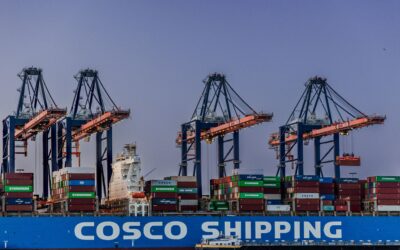
An explosion tore through a fuel storage facility at the Port of Rotterdam on Thursday, killing at least one person and injuring several others, in an incident that struck at the heart of Europe’s largest and most strategically important port — one that also handles a substantial share of the continent’s oil, gas, and refined fuel supply chain. What Happened The blast occurred at approximately 11:30 a.m. local time at a facility operated by Gunvor Energy, a major commodities trading company, located in the Europoort industrial section of the sprawling Rotterdam port complex. Rotterdam police confirmed at least one fatality and multiple injuries, with several of the wounded transported to hospitals. A trauma helicopter was dispatched to the scene alongside ground-based emergency crews. Authorities moved quickly to secure the area as a crime scene while investigators worked to determine the cause. Rotterdam police spokesperson Daan Valkenburg told reporters at the scene that no definitive conclusions had been reached and that officials were “keeping all possibilities open.” In a subsequent social media post, police described the incident as appearing, for the time being, to be a workplace accident, though they stopped short of ruling out other explanations. The Dutch labor inspectorate was also dispatched to the site as part of the investigation, standard procedure for an industrial accident of this scale. Dutch broadcaster NOS reported that a maintenance crew had reportedly been working on a section of pipes at the facility when the explosion occurred, though authorities have not officially confirmed that account as the definitive cause. Visible damage included a heavily damaged wall and clear signs of an explosion on what appeared to be a storage tank at the site. A Company Statement Gunvor Group, which operates the affected site, confirmed the fatality and said six people were injured in the incident — a slightly higher injury count than initial police estimates. In a statement, the company said the area had been secured and an investigation was underway, though it declined to confirm reports from local authorities that an explosion, specifically, had occurred. Notably, Gunvor’s website indicates the company closed the actual refining operations at this particular site back in 2024, with the facility since serving primarily as a storage terminal for crude oil and refined petroleum products rather than an active refinery — meaning Thursday’s blast occurred at a storage and logistics facility rather than at an operating refinery unit. The Port of Rotterdam Authority, which oversees the broader port complex but does not directly operate individual company facilities, issued a statement expressing condolences. “We are deeply saddened by the tragic incident that occurred this morning at Gunvor Energy in the Port of Rotterdam,” the authority said. “Our thoughts are with the family and loved ones of the deceased victim and with those who were injured.” A Chaotic Morning at the Port Thursday’s explosion was notably not the only significant incident at the vast port complex that morning. According to Dutch outlet NL Times, the Gunvor explosion was actually the third major emergency response within the Rotterdam port area that day. Earlier in the morning, a malfunction was reported at a nearby ExxonMobil refinery facility on Botlekweg, triggering a formal “Grip 2” regional emergency declaration due to a power outage at that site, though officials confirmed there was no fire and firefighters stood by only as a precaution. An ExxonMobil spokesperson said the outage affected only a limited number of processing units at that facility. Separately, emergency services also reported a major power failure affecting another section of the port, where a high-voltage transformer caught fire under circumstances that remain unexplained. That fire prompted several companies operating in the surrounding area to halt operations and evacuate workers as a precaution, though by mid-afternoon, power had been fully restored to the affected section of the port, which is home to numerous other oil and gas companies. Authorities have not yet said definitively whether the transformer fire, the ExxonMobil power outage, and the Gunvor explosion are connected in any way, though the unusual clustering of three separate serious incidents within the same industrial complex on a single morning has drawn its own scrutiny. Smoke from the incidents drifted toward the nearby towns of Vlaardingen and Maassluis, prompting a wave of concerned calls from residents in those areas, though officials have not reported any specific health warnings tied to the smoke. Why the Port Matters So Much The Port of Rotterdam is Europe’s largest port by a wide margin and serves as one of the continent’s central hubs for oil, gas, and refined petroleum product logistics, alongside broader container shipping and general cargo operations. Any significant disruption to operations there carries outsized implications for European energy supply chains, particularly given the port’s role as an interconnected node linking pipeline networks and inland waterway shipping between Rotterdam and other major European industrial centers, including Antwerp. That strategic importance is precisely why incidents like Thursday’s — even when they ultimately prove to be workplace accidents rather than anything more sinister — tend to draw close attention from energy market analysts and European security officials alike. European energy infrastructure has faced heightened scrutiny over the past several years amid broader concerns about sabotage, aging industrial infrastructure, and the general vulnerability of critical energy nodes to disruption, whether from accidents, extreme weather, or deliberate attack. What Happens Next Dutch investigators, including the labor inspectorate, are continuing to work to determine the precise cause of Thursday’s explosion, and it may be some time before officials reach a definitive conclusion about whether the maintenance work reportedly underway at the time played a direct role. In the meantime, the broader port complex appears to have returned to largely normal operations following the earlier power restoration, though the human toll of the day’s events — one confirmed death and several injured workers — remains the most immediate and serious consequence of what unfolded at one of the world’s most critical energy logistics hubs. Given the port’s central role in…

Colombia’s Deadliest Earthquake in a Generation Kills More Than 160, Tests New President’s First Crisis
A powerful 7.4-magnitude earthquake tore through western Colombia early Monday morning, killing more than 160 people, collapsing dozens of buildings, and leaving hundreds still missing — the strongest quake to strike the country in more than two decades and an immediate, defining crisis for a president who had been sworn into office only days earlier. What Happened The earthquake struck near San José del Palmar on Colombia’s Pacific coast shortly after 7:30 a.m. local time Monday, with a depth of roughly 103 kilometers. Colombia’s Geological Service confirmed it as the strongest quake to hit the country so far this century, and it was followed by multiple aftershocks. The tremor was powerful enough to be felt across the border in neighboring Ecuador and Panama. By Monday evening, officials with the Colombian Association of Capital Cities put the death toll at 132, with 570 people reported injured — figures authorities warned were likely to keep climbing as search and rescue operations continued. By Tuesday morning, NBC News reported the confirmed death toll had risen further, to at least 169. The hardest-hit areas were concentrated in the Risaralda region, home to the city of Pereira, where at least 60 deaths were reported, and the Valle del Cauca region, home to Colombia’s third-largest city, Cali, where at least 27 people died, including three children. Widespread Destruction Across Multiple Cities The quake caused damage across a wide swath of western Colombia, hitting Cali, Pereira, Quibdó, and Manizales in particular. Local officials reported that at least 86 buildings had fully collapsed and hundreds more were damaged, with President Abelardo de la Espriella saying the quake destroyed or seriously damaged more than 1,500 homes, along with more than a dozen health centers and numerous schools. Seven airports across the affected region suspended operations in the quake’s immediate aftermath, and five capital cities were placed under a red alert. In Cali, city officials said at least 188 people remained missing as of Monday evening. Eyewitnesses described scenes of chaos and destruction. Jorge Moncayo, a 64-year-old taxi driver in the city, told the Associated Press he watched plumes of dust shoot into the air as buildings came down around him. Juan Carlos Osorio, who helped dig through rubble at a collapsed structure, told Colombian broadcaster Caracol Television that the sound of the building coming down “sounded like a bomb.” Neighbors organized themselves into human chains to help move debris by hand while waiting for heavier equipment to arrive. Álvaro López, a Cali resident who watched search efforts unfold while holding his dog, described the scope of the damage bluntly: “Our building has basically been left in ruins, and the building next to ours? Completely collapsed.” In Pereira, rescue crews evacuated 16 people who had been trapped for six hours inside a cable car system used for public transit in the mountainous city. A Region Especially Vulnerable The earthquake’s epicenter fell near Colombia’s Chocó region, one of the country’s poorest and most remote areas, nestled deep in Pacific coastal jungle and reachable in many parts only by boat or small aircraft. That remoteness has significantly complicated damage assessment and relief efforts, with communications outages in the hours after the quake leaving some areas without any mobile phone service and delaying an accurate accounting of the toll from the region closest to where the quake actually struck. Colombia sits along the Pacific “Ring of Fire,” the extensive chain of seismic fault lines encircling the Pacific Ocean responsible for the majority of the world’s earthquakes, making the country and its neighbors chronically vulnerable to major seismic events. Colombian officials noted that the country has taken concrete steps to prepare for exactly this kind of disaster since a devastating 1999 earthquake, including instituting evacuation drills conducted at least twice annually in major cities such as Bogotá, Medellín, Barranquilla, and Cali. An Unwelcome Echo of Venezuela’s Recent Disaster For many in the region, Monday’s earthquake carried an especially painful resonance: memories remain fresh of the devastating twin earthquakes that struck neighboring Venezuela in June, which together killed more than 6,000 people and left thousands more displaced, with recovery efforts there still ongoing more than a month later. NPR noted that residents and rescue workers searching through rubble in Cali described scenes strikingly similar to those still playing out across the border in Venezuela. A Test for a Brand-New President The timing of the disaster carries particular political weight in Colombia. The earthquake struck just days after Abelardo de la Espriella was sworn in as the country’s new president, thrusting his administration into a major national crisis before it had barely begun. De la Espriella declared a national state of emergency Monday afternoon, pledging the full resources of the federal government toward rescue and relief efforts. “The national government has all of its capabilities deployed to protect lives, assist affected communities and deliver aid wherever it is needed,” he said in a national address. “The first priority is rescuing the people trapped under the rubble.” International Response The United States moved quickly to offer support. The State Department announced it is committing $15.5 million to Colombia specifically for shelter, food, protection services, and ongoing earthquake damage assessments. The U.S. Embassy in Bogotá also confirmed it is actively assisting American citizens affected by the disaster — a notable point given that hundreds of thousands of Americans visit Colombia annually, making the U.S. the largest single source of tourists to the country. What Comes Next With search and rescue operations still actively underway in hard-hit cities and communications still limited in some of the more remote areas near the epicenter, officials caution that the full scope of the disaster — both in terms of lives lost and total economic damage — likely won’t be clear for days or even weeks. For a president barely into his first week in office, the response to this disaster is likely to shape public perception of his administration’s competence and priorities well beyond the immediate crisis itself, as reconstruction in…

Ukrainian Drone Strike Kills 13 in Russian Oil City as Fuel Crisis Grinds On Deep Into Its Second Year
A Ukrainian drone strike on the Russian city of Nizhnekamsk killed 13 people, including a child, and wounded 75 others on Monday, regional authorities said, in one of the deadlier single strikes of a sustained Ukrainian campaign against Russia’s oil refining infrastructure that has now dragged the country’s fuel supply into its second year of sustained disruption. What Happened Authorities in Russia’s Tatarstan region confirmed the death toll following the strike, which the Ukrainian military said targeted an oil refinery in the city. Russian officials did not publicly confirm what the drones were aiming at, but Nizhnekamsk is a significant refining hub, home to two separate refineries as well as a major petrochemical plant — making it a logical target within Ukraine’s broader campaign to degrade the revenue and fuel supply that sustains Russia’s war effort. Ukraine has targeted Russian oil facilities with long-range drones nearly every day in recent months, part of a strategy Kyiv has pursued with increasing intensity since a dramatic escalation began in the second half of 2025. The strategy’s stated logic is straightforward: Russia’s oil and gas exports remain one of the Kremlin’s primary sources of war financing even amid extensive Western sanctions, and damaging domestic refining capacity simultaneously starves military fuel supplies while pressuring Russian civilians and, by extension, the political leadership overseeing the war. A Fuel Crisis Now Well Into Its Second Year Monday’s deadly strike is only the latest chapter in what has become a sustained, nationwide Russian fuel crisis. The trouble began in earnest in August 2025, when Ukraine dramatically ramped up drone strikes on Russian energy infrastructure, hitting more than a dozen facilities in a three-week span, concentrated heavily in Ryazan and Volgograd Oblasts. A late-August strike on the Ryazan refinery — one of the primary arteries supplying fuel to Moscow — was described by independent oil and gas analyst Boris Aronstein at the time as triggering “the most severe crisis in recent years,” with Russia’s repair capacity unable to keep pace with the frequency and coordination of the drone waves. The damage rippled outward from there. Crimea and Russia’s far east were the first regions to experience shortages, and by late September the problems had spread into the Volga river region and southern and central Russia. Forbes reported that conditions deteriorated quickly nationwide, with rising prices, rationing, long lines at gas stations, and pumps running dry in some areas. Nearly Every Region Now Affected Nearly a year later, the crisis hasn’t resolved — if anything, analysts say it has deepened. According to CNN’s analysis, nearly all of Russia’s 83 regions are now experiencing gasoline shortages or supply disruptions of some kind, with widespread rationing at gas stations. Sumit Ritolia, lead analyst for refining supply and modeling at commodities intelligence firm Kpler, estimated Russian gasoline production is currently running around 20% below domestic demand as a direct consequence of the sustained Ukrainian strikes, with refinery throughput sitting at multi-year lows. What’s changed compared to previous bouts of Russian fuel shortages, analysts say, is the sheer scale and persistence of the current campaign. “The key difference is the scale and persistence of the attacks,” Ritolia said, noting that Russia is also still working through repair backlogs from the previous year’s strikes even as new attacks continue to arrive. Sergey Vakulenko, a former longtime Russian oil and gas industry veteran now at the Carnegie Russia Eurasia Center, described the dynamic in stark terms: “In this race between the repairers and the attackers the balance is shifting” — in Ukraine’s favor. Repeated Hits on Major Refineries The strikes have repeatedly targeted some of Russia’s largest and most economically significant refineries. The Slavneft-YANOS facility in Yaroslavl — among Russia’s top-five largest refineries, with the capacity to process up to 15 million metric tons of crude annually — has been struck seven separate times in 2026 alone, according to reporting from the Kyiv Post, forcing repeated temporary shutdowns at a plant majority-owned by Russian state energy giants Rosneft and Gazprom. Ukrainian President Volodymyr Zelenskyy has been direct about the strategic rationale behind the sustained campaign, arguing that Russia’s energy sector both funds and directly fuels the broader invasion, and that continuing to degrade it is one of the more effective non-front-line levers Ukraine has to pressure Moscow. Western analysts broadly agree the strikes have had a real battlefield effect as well, with some assessing that the fuel disruption has measurably slowed Russian military logistics and added to pressure on the Kremlin to eventually return to serious negotiations. Moscow’s Response So Far Russia has taken emergency measures to try to manage the fallout, including a suspension of gasoline exports intended to preserve domestic supply while damaged refineries are repaired. Those stopgap measures, however, have so far failed to meaningfully outpace the continuing tempo of Ukrainian strikes, and the shortages have persisted and in some respects worsened over the past year rather than resolving. The Bigger Strategic Picture For supporters of continued Western military and intelligence support to Ukraine, the sustained success of this campaign is held up as clear evidence that Kyiv retains real capability to impose meaningful costs on Russia more than four years into the war, using long-range drone technology developed and scaled largely with Western backing. The strategy also carries a harder edge that’s drawn less public attention until strikes like Monday’s: refinery and energy-infrastructure targets sit inside populated Russian cities, meaning civilian casualties — like the 13 killed and 75 wounded in Nizhnekamsk — are increasingly a feature of this phase of the war rather than a rare exception. What Comes Next With Ukraine showing no signs of scaling back the pace of its refinery campaign and Russia continuing to struggle to keep repair efforts ahead of new strikes, the fuel crisis appears likely to remain a persistent feature of the Russian home front for the foreseeable future. How much longer Moscow can absorb the economic and political costs of nationwide fuel shortages — even as it continues prosecuting the broader…

Iran and Oman Agree on Hormuz Shipping Coordinates, But Tehran Makes Clear the Strait Isn’t Reopening Yet
Iran and Oman announced Wednesday that they’ve agreed on the geographic coordinates for a new commercial shipping route through the Strait of Hormuz, a step toward de-escalation that comes even as Tehran insists it has no intention of fully reopening the critical waterway anytime soon — a reminder that the diplomatic progress touted by U.S. officials in recent days remains far more fragile than the headlines might suggest. What Was Actually Agreed Iranian Foreign Ministry spokesperson Esmaeil Baghaei told reporters that after roughly two months of negotiations, the two countries have settled on coordinates for a proposed shipping route, and that a joint statement covering the technical, legal, security, and environmental details of the arrangement is now in its final stages of drafting. “The geographical coordinates of the route proposed by the two sides have been agreed upon,” Baghaei said, adding the caveat that the joint statement would only move forward “provided that certain third parties do not obstruct the process” — a clear reference to the United States. Iran’s deputy foreign minister for legal and international affairs, Kazem Gharibabadi, told state news agency IRNA that the two countries have reached understanding on “almost all” outstanding issues in the negotiation. The Catch: Iran Still Wants the US Blockade Lifted First Despite the apparent breakthrough on coordinates, Baghaei was explicit that an agreement with Oman alone won’t be enough to make the strait safe for shipping. “An understanding with Oman cannot, in itself, mean that the strait has become safe for passing vessels, because the factors creating insecurity in the Strait of Hormuz — particularly the U.S. naval blockade and other actions against Iran and its interests — remain in place,” he said. That’s a significant condition. Reuters reported that the proposed arrangement would give Tehran control over ships entering the Gulf through the strait — described by sources as one of the biggest concessions to Iran since the war began — while regional officials cautioned that important details still needed to be finalized despite President Trump’s recent public optimism that a deal reopening the strait was close at hand. How We Got Here Iran effectively closed the Strait of Hormuz in March in response to the U.S. and Israeli strikes that launched the war in late February, and its forces have repeatedly threatened commercial vessels attempting to transit the waterway with drones, missiles, small boats, and mines ever since. An earlier ceasefire framework, the Islamabad Memorandum of Understanding, collapsed in July, triggering a fresh wave of strikes and reigniting the standoff over the strait that has disrupted roughly 20% of the world’s oil and liquefied natural gas exports and pushed global energy prices higher for months. At its narrowest point, the strait is just 21 miles wide, meaning any agreement over shipping lanes and territorial control carries outsized strategic weight — there’s essentially no room for a truly neutral international shipping lane if both countries insist on standard 12-mile territorial waters. Reading the Administration’s Position Trump administration officials have been eager to characterize the negotiations as evidence that sustained American pressure is finally working. Treasury Secretary Scott Bessent said earlier this week that a deal could come within days, and noted that vessel traffic has already picked back up despite the continued uncertainty. Whether that optimism proves justified will depend heavily on what happens next: Iran’s insistence on tying any final resolution to an end of the U.S. naval presence in the region suggests Tehran still believes it holds real leverage, even after months of American and Israeli strikes on its military and nuclear infrastructure. Supporters of the administration’s approach argue that extracting even partial concessions from Iran — a country that had effectively shut down a fifth of the world’s oil shipping for months — represents real progress from a position of strength, and that Tehran’s public hedging is standard negotiating posture rather than a sign the pressure campaign has stalled. Skeptics counter that a deal requiring the U.S. to lift its naval blockade in exchange for Iranian control over Gulf-bound shipping lanes would hand Tehran a durable strategic win, not a defeat, regardless of how the administration chooses to frame it. What Comes Next Officials on both sides say the joint statement between Iran and Oman is nearly finished, but its release — and any broader resolution to the shipping standoff — still hinges on decisions well above either country’s negotiating teams. Reports suggest the broader framework may also require sign-off from Iran’s Supreme Leader before anything becomes final. In the meantime, the war itself continues, with American and Israeli strikes ongoing and no comprehensive ceasefire yet in place covering anything beyond the narrow question of Gulf shipping routes. This story is developing.

Venezuela Earthquake Death Toll Surpasses 5,500 a Month After Twin Quakes Devastate the Country
More than a month after twin earthquakes struck Venezuela, the human toll continues to climb, with officials confirming the death toll has now surpassed 5,500 and thousands more still unaccounted for as the country struggles to recover from one of the most devastating natural disasters in its recent history. A Staggering Toll The official death count now stands above 5,500, with more than 16,700 people reported injured. Damage from the twin quakes is estimated at $19.6 billion, and thousands of Venezuelans remain homeless more than a month after the disaster struck. The number of people still listed as missing has not been updated since late June, raising concerns that the final toll could climb even higher as search and recovery efforts continue. A Country Already Under Strain The earthquakes hit a nation already grappling with a battered economy and years of political instability under the Maduro regime, complicating both the government’s ability to respond and the international community’s efforts to deliver aid. The scale of destruction has strained local infrastructure and emergency services that were already stretched thin before the disaster struck. International Response The disaster has drawn attention from humanitarian organizations and foreign governments assessing how to best deliver aid to affected communities, though the specifics of international relief efforts continue to evolve as the scope of the damage becomes clearer. With thousands still displaced and rebuilding likely to take years, the long-term recovery effort is expected to remain a major humanitarian concern in the region well beyond the immediate aftermath. This story is developing.

US Halts Iran Airstrikes to “Give Talks Some Space” as Fragile Off-Ramp Emerges
The United States has paused its military campaign against Iran after nearly two weeks of intensifying airstrikes, as diplomatic efforts push forward in an attempt to pull the two countries back from the brink of all-out war — though it remains far from clear whether the lull will hold. President Trump halted lethal strikes over the weekend following 13 days of escalating attacks, and said the pause came at Iran’s own request. “They asked us very nicely, ‘Please stop, let’s meet,’” Trump told reporters aboard Air Force One. “And that’s where we are right now, see what happens. If we don’t make a deal, we go back to the same thing.” Mixed Signals From Tehran Iran’s messaging has been notably inconsistent. U.S. Ambassador to the United Nations Mike Waltz said the pause was meant to give ongoing negotiations “some space,” and said mediators had indicated real progress was being made. But Iranian Foreign Ministry spokesperson Esmaeil Baghaei pushed back hard on that framing, telling reporters Monday that “we have no negotiations with the United States at present” and that Iran “will never allow the United States to determine the timing of war and peace.” Baghaei added that Tehran does not consider the current lull a genuine ceasefire. What Sparked the Latest Escalation The nearly two-week bombing campaign was touched off after Iran began firing on ships attempting to transit the Strait of Hormuz, shredding an earlier ceasefire brokered in Islamabad. According to one official familiar with the talks, both sides now want to return to that interim ceasefire framework, with a potential compromise centered on Iran overseeing vessel transit through the strait under looser restrictions. The Stakes Keep Rising The conflict is set to reach its five-month mark this week, far exceeding early administration predictions that it could be resolved within roughly 60 days. Oil prices spiked to a two-month high above $100 a barrel during the fighting before easing back to around $92, and reporting suggests dwindling U.S. munitions stockpiles may be factoring into military planning as officials weigh their next move. Complicating matters further, Israeli Prime Minister Benjamin Netanyahu is set to visit Washington next week for talks with Trump, adding another variable to an already unpredictable diplomatic moment. This story is developing.

Andrew and Tristan Tate Face Federal Detention as UK Seeks Extradition on Dozens of New Charges
Andrew and Tristan Tate, the influencer brothers long known for their controversial online personas, are sitting in federal detention in Miami after U.S. Marshals arrested them on a sealed warrant tied to a sweeping new set of charges out of the United Kingdom. British prosecutors have added dozens of new charges against the pair, bringing the total to 59 combined — including rape, sex trafficking, assault, and, in Andrew Tate’s case, additional charges relating to indecent images of children. Andrew Tate faces 42 charges, including rape, human trafficking, indecent images of a child and assault, while Tristan Tate faces 17 charges, including sexual assault, rape and trafficking. The allegations were brought forward by seven women and are said to have occurred in England between 2010 and 2017. From Romania to Florida to Federal Court The brothers, dual U.S.-U.K. citizens, were first arrested in Romania in December 2022 on separate human trafficking charges, which they have denied and continue to fight. After Romanian authorities lifted a travel ban last year, the Tates flew to Florida on a private jet — a move that drew criticism from advocates who said it allowed them to evade accountability. Following their arrest in Miami, the brothers appeared before a U.S. magistrate, where their attorney, Joseph McBride, said they intend to fight extradition. McBride has also publicly appealed to the Trump administration to intervene on their behalf, calling the newest charges “filth and slander.” The Justice Department has pushed back on suggestions the arrest was improperly authorized, telling reporters it was approved at the leadership level of its Criminal Division. Advocates Welcome the Arrest Groups that work with trafficking victims say the arrests are a long-overdue step toward accountability. Dani Pinter, chief legal officer at the National Center on Sexual Exploitation, said her organization was thankful U.S. and U.K. authorities pursued the arrest and extradition of the brothers, adding that her client and the client’s family, who she says were harassed and intimidated by the Tates, are now safer. A U.S. district judge will determine in the coming weeks whether the brothers meet the legal conditions for extradition to the United Kingdom. This story is developing.