

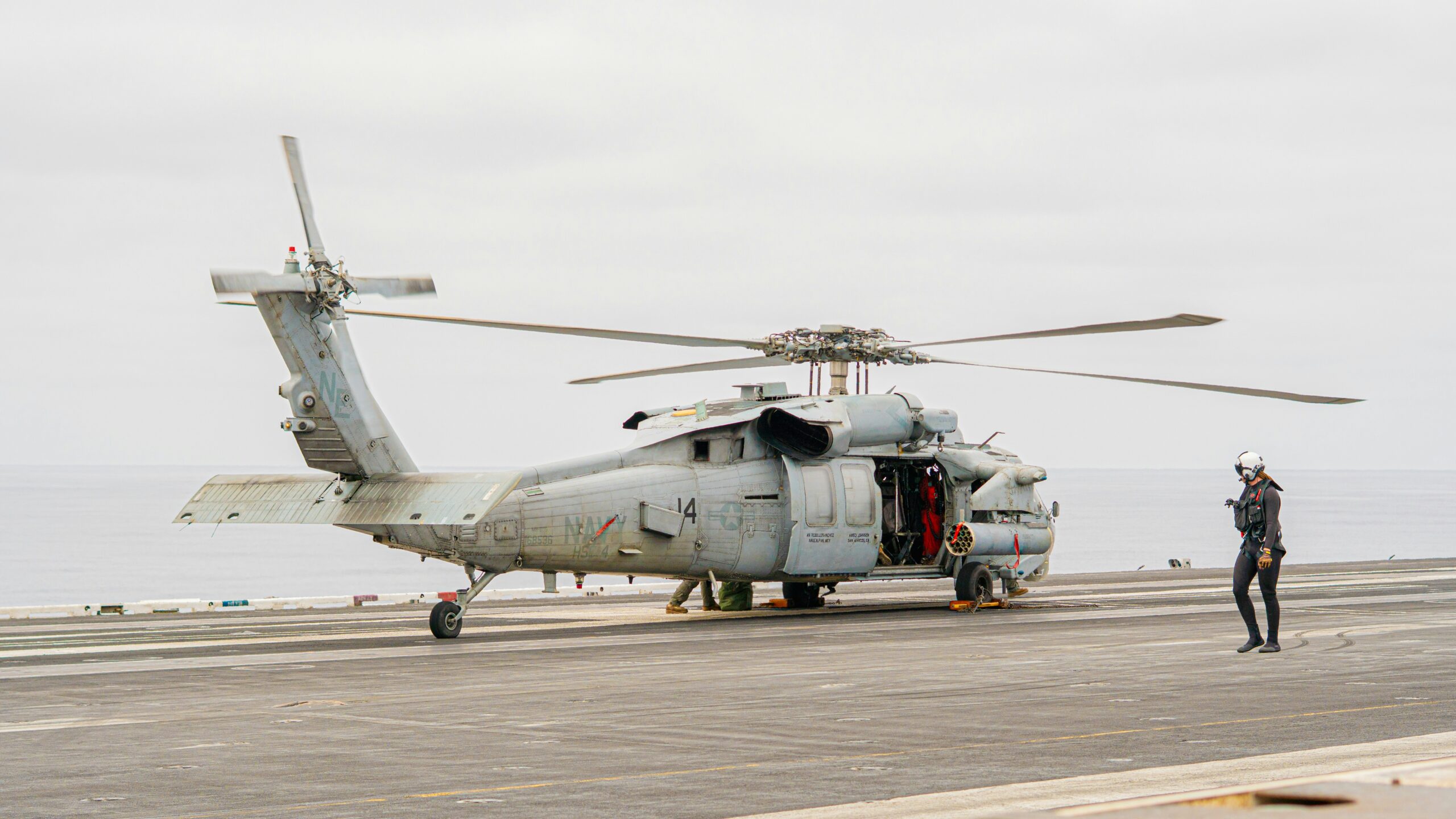
The fragile regional peace between Washington and Tehran completely went up in flames. Following the downing of a U.S. Army AH-64 Apache attack helicopter by an Iranian Shahed-type drone over the Strait of Hormuz, President Donald Trump made good on his promise of swift retaliation.
At the President’s direct command, U.S. Central Command (CENTCOM) unleashed a massive, concentrated wave of precision airstrikes against strategic military assets deep inside sovereign Iranian territory. The kinetic exchange marks the most severe disruption to the region’s shaky ceasefire since it was implemented, turning the strategic waterways of the Persian Gulf back into an active combat theater.
At The Modern Memo, we break down the raw operational metrics of the American bombing run, the locations left in ruins along Iran’s coast, and the high-stakes political math defining Trump’s “powerful” message to the Islamic Republic.
The Retaliation: Blasting the Radar Grid
The operation, executed under the umbrella of the U.S. military’s ongoing campaign—Operation Epic Fury—began precisely at 5:00 p.m. Eastern Time (after midnight local time in Iran) and concluded after a devastating four-hour window.
-
The Strike Package: Utilizing a combined arm of U.S. Air Force and Navy fighter jets—including F-16 Fighting Falcons and carrier-launched F/A-18F Super Hornets—the military deployment targeted a total of nearly 20 distinct strategic infrastructure sites along Iran’s southern coast.
-
The Target Profile: CENTCOM confirmed that precision-guided munitions systematically neutralized primary Iranian air defense nodes, surface-to-air missile batteries, ground control stations used to pilot attack drones, and long-range surveillance radar sites tracking the Strait of Hormuz.
-
The Destruction Zones: Open-source intelligence reports and satellite data confirmed massive secondary explosions lighting up the night sky near the heavily fortified Iranian port cities of Jask and Bandar Abbas, as well as critical military facilities embedded on Qeshm Island.
The Trump Doctrine: A “Warning Shot” to Enforce a Deal
Speaking to reporters on Tuesday evening following the conclusion of the bombing run, President Trump fiercely defended the military intervention, shifting his rhetoric from flexible diplomacy to unyielding deterrence.
-
The Strong Message: “I believe the response should be very strong, very powerful,” Trump stated, confirming he personally authorized the strike package the moment intelligence established a Shahed drone caused the Apache crash. “The operation was a proportional response to recent attacks on U.S. forces and international commercial ships transiting regional waters.”
-
The “Not a Big Deal” Paradox: While Trump authorized a heavy kinetic response, he simultaneously sought to downplay the crisis to preserve his broader foreign policy goals, telling media outlets that the downing itself “wasn’t a big deal” because the two American pilots were successfully rescued by a Task Force 59 Corsair sea drone.
-
The Final Throes Strategy: White House insiders note the strikes were intentionally engineered as a severe “warning shot” rather than the start of a regime-change campaign. Trump insists the U.S. remains in the “final throes of what will be a very, very good deal” to permanently entomb Iran’s nuclear enrichment capabilities, using the swift destruction of their coastal radars to show Tehran exactly what will happen to their entire infrastructure if they walk away from the negotiating table.
The Escalation Sequence: Tehran Fires Back
The American strikes did not occur in a vacuum. Refusing to absorb the blow silently, the Islamic Revolutionary Guard Corps (IRGC) instantly activated its regional proxy network, triggering a massive, multi-theater missile and drone exchange across the Middle East.
-
The Regional Firefight: Hours after the U.S. jets returned to their bases, Iran launched a coordinated barrage of ballistic missiles and one-way attack drones targeting American and allied military installations across neighboring countries.
-
The Interception Metrics: Defense officials confirmed that the overwhelming majority of the incoming Iranian assets were successfully intercepted by regional air shields. The Jordanian military confirmed its air defenses shot down five incoming Iranian missiles targeting the Muwaffaq Salti Air Base—which hosts American F-35 fighter jets—while base alerts were also triggered across Kuwait and Bahrain. No American casualties or significant infrastructure damage have been reported.
-
The Diplomatic Fallout: The exchange has pushed regional diplomacy to the absolute brink. Iranian Foreign Minister Abbas Araghchi took to social media to warn that Tehran “will leave no attack or threat unanswered,” threatening Gulf nations that allow the U.S. to use their airspace. Meanwhile, Iranian negotiators in Islamabad announced they are officially “reviewing” whether to permanently freeze all ongoing peace talks with Washington.
Final Word
The U.S. precision strikes inside Iran are the definitive proof that the Trump administration will not allow a diplomatic transition to be used as an open season on American service members. When you look past the noise of the “proportional response” messaging and focus entirely on the hard data—nearly 20 Iranian military targets vaporized in four hours, five Iranian missiles shot down over Jordan, and a multi-billion-dollar nuclear negotiation dangling by a thread—you gain a clear picture of a superpower enforcing boundaries at the edge of a bayonet.
Quality information replaces the illusion of a stable regional ceasefire with the reality of a high-stakes geopolitical poker game. It allows you to see that while Trump wants to sign a historic accord and exit the region, he is entirely willing to flatten Iran’s defensive architecture to protect American military credibility. By turning the radar stations of Bandar Abbas to rubble, Washington has delivered an uncompromised mathematical reality to Tehran: the cost of hunting an American helicopter is the systematic dismantling of your own sky shield.
