

Latest News

Operation Epic Fury: U.S. Reinforces the Front as Conflict with Iran Escalates
As the war against the Islamic Republic enters its third decisive week, the United States is significantly expanding its military footprint in the Middle East. Under the direction of Defense Secretary Pete Hegseth, the Pentagon has ordered thousands of Marines and a powerful amphibious strike group to the region—a move that signals Washington’s unwavering commitment to absolute naval dominance and the total reopening of the world’s most critical energy corridors. At The Modern Memo, we analyze the strategic arrival of the USS Tripoli, the mission to secure the Strait of Hormuz, and why this buildup is the necessary response to a regime that has “abandoned all restraint.” The Arrival of the “Floating Fortress” The centerpiece of this reinforcement is the USS Tripoli (LHA-7) and the 31st Marine Expeditionary Unit (MEU). Sailing from Japan, this amphibious assault carrier functions as a mobile airbase, bringing a specialized set of capabilities to Operation Epic Fury. Elite Rapid Response: The MEU consists of roughly 2,200 to 2,500 combat-ready Marines trained for high-intensity raids, amphibious landings, and the securing of strategic infrastructure. Air Superiority from the Sea: The Tripoli carries a lethal contingent of F-35B Lightning II stealth fighters and V-22 Ospreys, providing commanders with “over-the-horizon” strike options that do not depend on land-based foreign runways. Strategic Positioning: Joining the USS Abraham Lincoln and USS Gerald R. Ford strike groups, the Tripoli’s arrival creates one of the most concentrated displays of American naval power in the region since 2003. Securing the Strait: Ending the “Iranian Veto” The primary objective of the increased presence is the contested Strait of Hormuz. Following Iran’s illegal closure of the waterway on March 2, global energy markets have been roiled, and the administration has made it clear that the “veto” on global oil flow will not stand. Clearing the Shoreline: Military analysts suggest the Marines may be utilized for targeted raids on hardened Iranian missile bunkers and drone launch sites along the coastline—targets that are often difficult to eliminate through airstrikes alone. Escort Operations: Treasury Secretary Scott Bessent and Defense Secretary Hegseth have both signaled that U.S. Navy escorts for commercial tankers could begin “very soon.” The addition of the Tripoli’s ESG (Expeditionary Strike Group) provides the necessary Aegis-class protection to shield merchant ships from Iranian “suicide” boats and cruise missiles. Kharg Island Warning: President Trump has already confirmed that U.S. forces “obliterated” military sites on Kharg Island. The deployment of ground-capable Marines serves as a final warning: should the interference continue, the regime’s critical oil infrastructure will be next. A Posture of Strength Amidst Domestic Strain This surge in Middle Eastern forces comes despite the ongoing political gridlock in Washington regarding the Department of Homeland Security (DHS) shutdown. While critics point to the strain on domestic agencies, the administration maintains that national security is a global, indivisible priority. Decisive Command: Secretary Hegseth has remained focused on the mission, noting that over 15,000 enemy targets have been struck since the war began. “We have a plan for every option,” Hegseth told reporters, emphasizing that the U.S. will not allow the Strait to remain a contested zone. The Deterrence Factor: By moving ground-capable forces into the theater, the U.S. is signaling that it is prepared for a wider confrontation if Tehran continues its asymmetric attacks on American assets and allies. Final Word The deployment of the 31st MEU is a cold, calculated message to Tehran: the era of “strategic patience” has ended. When you look past the noise of regional escalation and focus on the data—the 2,500 Marines, the F-35B squadrons, and the systematic dismantling of the Iranian Navy—you gain a clearer picture of an administration that prioritizes results over rhetoric. Quality information replaces the fear of a “forever war” with the clarity of a targeted, high-tech campaign designed to restore order to the global commons. It allows you to see this buildup not as an act of aggression, but as the essential enforcement of maritime law. By choosing to support this decisive posture, you align your perspective with the reality that a secure world is only possible through undisputed strength. Where Facts, Context, and Perspective Matter At The Modern Memo, our goal is simple: to provide clear, well-researched reporting in a media landscape that often feels overwhelming. We focus on substance over sensationalism, and context over commentary. If you value thoughtful analysis, transparent sourcing, and stories that go beyond the headline, we invite you to share our work. Informed conversations start with reliable information, and sharing helps ensure important stories reach a wider audience. Journalism works best when readers engage, question, and participate. By reading and sharing, you’re supporting a more informed public and a healthier media ecosystem. The Modern Memo may be compensated and/or receive an affiliate commission if you click or buy through our links. Featured pricing is subject to change. 📩 Love what you’re reading? Don’t miss a headline! Subscribe to The Modern Memo here!

Community Safety Strained: Series of Incidents Impact Coastal Spring Break Destinations
The mid-March travel season, traditionally a period of leisure and economic boost for coastal communities, has faced significant public safety challenges this year. Over a 72-hour period ending Sunday, March 15, 2026, several high-profile spring break destinations were impacted by a series of separate shooting incidents that have left law enforcement and local residents on high alert. At The Modern Memo, we examine the concentrated surge of violence in Florida and Texas, the evolving response of local authorities, and the broader implications for tourism safety in 2026. A Weekend of Unrest in Daytona Beach Daytona Beach, Florida, experienced an exceptionally difficult weekend as local police managed five distinct shooting incidents between Friday and Sunday. The violence, which largely occurred within the city’s popular entertainment districts, has raised urgent questions about the effectiveness of current crowd-control measures. Sequential Incidents: The activity began Friday evening with an altercation at a local establishment on Seabreeze Boulevard, followed shortly by a shooting near a fitness center. Saturday saw further disturbances beachside, including an incident near Main Street that caused significant crowds to flee for safety. Enforcement Challenges: The weekend culminated in a high-stakes pursuit on Sunday when a South Daytona officer was wounded while pursuing a suspect. Authorities confirmed that the officer is expected to recover, and the suspect was apprehended following a confrontation near I-95. Official Stance: Volusia County officials have been quick to differentiate between “chaotic crowds” and the specific acts of violence, noting that while the beach itself remained largely under control, the surrounding city streets became flashpoints for conflict. Texas Coastal Incident: Five Wounded in Port Aransas While Florida handled multiple isolated events, Port Aransas, Texas, faced a singular mass-casualty event on Saturday night. An altercation between two groups on the beach escalated into gunfire, resulting in five people being wounded. Rapid Response: Local authorities and state troopers moved quickly to secure the area, detaining suspects in connection with the shooting. A 17-year-old from San Antonio was later charged with multiple counts of aggravated assault. Safety Protocols: The incident has prompted a review of beach safety protocols during “Texas Week,” as the sudden escalation of a dispute into a shooting underscores the difficulty of managing thousands of visitors in open-access public spaces. The National Picture: A Shifting Safety Landscape The weekend’s events reflect a broader trend seen across the country this March. In Daytona Beach, officials confirmed five separate shootings that took place primarily in tourist-heavy districts like Main Street and Seabreeze. Meanwhile, in Port Aransas, the shooting at “Hole 20” left five individuals hospitalized, adding to a month already marred by the March 1 mass shooting in downtown Austin that left four dead and 15 wounded. Beyond these major hubs, communities like Riviera Beach have also faced violent outbursts, including a recent shooting spree that resulted in one death and four injuries. These incidents collectively suggest that the combination of large seasonal crowds and interpersonal conflicts continues to pose a severe challenge to local security infrastructure. Final Word The safety of our coastal communities is a shared responsibility that requires more than just reactive policing. When you look past the headlines of “chaos” and focus on the data—the five incidents in one city and the targeted nature of these altercations—you gain a clearer picture of the specific security gaps that need closing. Quality information replaces the noise of sensationalism with the clarity of law enforcement reports and city-wide safety statistics. It allows you to see these events not as a reason to abandon our beaches, but as a call for smarter, more localized enforcement and a rejection of the lawlessness that threatens the American tradition of travel. By staying informed on these safety shifts, you align your perspective with a commitment to a secure and orderly public square. Where Facts, Context, and Perspective Matter At The Modern Memo, our goal is simple: to provide clear, well-researched reporting in a media landscape that often feels overwhelming. We focus on substance over sensationalism, and context over commentary. If you value thoughtful analysis, transparent sourcing, and stories that go beyond the headline, we invite you to share our work. Informed conversations start with reliable information, and sharing helps ensure important stories reach a wider audience. Journalism works best when readers engage, question, and participate. By reading and sharing, you’re supporting a more informed public and a healthier media ecosystem. The Modern Memo may be compensated and/or receive an affiliate commission if you click or buy through our links. Featured pricing is subject to change. 📩 Love what you’re reading? Don’t miss a headline! Subscribe to The Modern Memo here!

Breaking Point: Airline CEOs Issue Dire Warning as DHS Shutdown Hits Day 30
The Department of Homeland Security (DHS) shutdown has officially crossed the one-month threshold, and the cracks in our national infrastructure are no longer just visible—they are widening. On Monday, March 16, 2026, the CEOs of the nation’s largest airlines sent a joint letter to Congress, delivering a chilling ultimatum: the American aviation system is nearing a total collapse. At The Modern Memo, we analyze the fallout of the $0 paycheck, the record-shattering TSA “call-outs,” and why the gridlock in Washington is putting both our economy and our security in the crosshairs. The $0 Paycheck: A Financial Cliff for Frontline Security The symbolic weight of the 30-day mark hit home this weekend when thousands of Transportation Security Administration (TSA) officers logged into their payroll portals to find a balance of exactly zero. The Reality on the Ground: While these essential workers have been expected to maintain 100% vigilance, they are now doing so while facing their first full month without compensation. Record Absenteeism: The “call-out” rate, which had already been climbing, hit a record high this morning. Internal reports suggest that in some major hubs, as many as 1 in 10 officers did not report for duty, citing an inability to pay for childcare or fuel to reach their shifts. CEOs to Congress: “The System is Fraying” The joint letter from the leaders of United, Delta, American, and Southwest was uncharacteristically blunt. They warned that if a funding resolution isn’t reached immediately, the “breaking point” will move from theoretical to operational. Operational Paralysis: Major airports like Atlanta, Chicago O’Hare, and Houston are seeing security wait times stretch beyond four hours. Economic Ripple Effect: It isn’t just about frustrated travelers. The CEOs highlighted that the uncertainty is beginning to affect business travel and international commerce, potentially draining billions from a domestic economy that the administration has worked so hard to revitalize. Safety Concerns: The letter pointed out that a fatigued and distracted security force is a vulnerability that cannot be ignored. When officers are worried about eviction notices, they aren’t at their peak performance for detecting threats. The Washington Standoff While the administration continues its push for a leaner, more efficient federal government, the funding of frontline security remains the sticking point in the current budget battle. The Border Priority: Critics of the stalemate argue that while DHS efficiency is a valid goal, leaving the borders and the skies understaffed creates a “vacuum of protection.” The “Essential” Paradox: Many are asking how the government can continue to classify these roles as “essential” while failing to provide the basic compensation required to keep the workforce intact. Final Word Thirty days of a DHS shutdown is no longer a political maneuver; it is a national security risk. When you look past the partisan posturing and focus on the data—the record call-outs, the joint CEO warning, and the $0 paychecks—you gain a clearer picture of a system that is being pushed to the brink of failure. Quality information replaces the noise of cable news debates with the reality of empty security lanes and a workforce at its limit. It allows you to see this not as a theoretical policy fight, but as a direct threat to the mobility and safety of every American. By choosing to acknowledge the severity of this 30-day milestone, you align your perspective with the reality that national security requires more than just mandates—it requires a functional and funded front line. Where Facts, Context, and Perspective Matter At The Modern Memo, our goal is simple: to provide clear, well-researched reporting in a media landscape that often feels overwhelming. We focus on substance over sensationalism, and context over commentary. If you value thoughtful analysis, transparent sourcing, and stories that go beyond the headline, we invite you to share our work. Informed conversations start with reliable information, and sharing helps ensure important stories reach a wider audience. Journalism works best when readers engage, question, and participate. By reading and sharing, you’re supporting a more informed public and a healthier media ecosystem. The Modern Memo may be compensated and/or receive an affiliate commission if you click or buy through our links. Featured pricing is subject to change. 📩 Love what you’re reading? Don’t miss a headline! Subscribe to The Modern Memo here!

Security Heroism: Armed Guard Stops Terrorist Attack at Michigan Synagogue
In a terrifying display of the growing threat to religious freedom and public safety, a Lebanese-born naturalized citizen launched a violent, multifaceted terror attack on Temple Israel in West Bloomfield, Michigan, on Thursday. The incident, which involved a vehicle-ramming, a high-powered rifle, and suspected explosives, was stopped only by the decisive actions of the temple’s armed security personnel. At The Modern Memo, we examine the chilling details of this targeted act of violence, the perpetrator’s background, and the undeniable necessity of armed protection for houses of worship in an increasingly volatile world. The Attack: A Purposeful Breach At approximately 12:19 p.m. on March 12, 2026, 41-year-old Ayman Mohamed Ghazali drove his vehicle with “clear purpose” into the hallway of Temple Israel, one of the nation’s largest Reform synagogues. The Breach: Ghazali rammed through the facility’s doors while 140 children were in the on-site early childhood learning center. The Arsenal: Authorities confirmed Ghazali was armed with a rifle and that a “large amount” of apparent explosives were found in the back of his vehicle. The Fire: Upon impact, the vehicle ignited, sending thick black smoke billowing through the building as Ghazali reportedly exchanged gunfire with security. 🚨 BREAKING: The truck used to ram the Temple Israel school in Michigan is registered to a MIGRANT FROM LEBANON who lived in DEARBORN, MICHIGAN, per @BillMelugin_ IMAGINE MY SHOCK that this guy lived in the MUSLIM CAPITAL of the US We CANNOT relax on mass deportations.… pic.twitter.com/K4rXgn5x6l — Nick Sortor (@nicksortor) March 12, 2026 The Defense: Security Saves 140 Lives While the national media often focuses on the “root causes” of such violence, the reality on the ground in West Bloomfield was a simple matter of good guys with guns. Immediate Response: Temple Israel’s professional security team did not wait for backup. They engaged Ghazali immediately, neutralizing the threat before he could reach the classrooms or the main sanctuary. Casualties Prevented: Miraculously, no staff or children were injured. One heroic security guard was struck by the vehicle and knocked unconscious, but is expected to recover. The Outcome: Ghazali was found dead inside his burning vehicle following the shootout. FBI Director Kash Patel has since confirmed federal agents are treating this as a “targeted act of violence against the Jewish community.” The Profile: A Pattern of Radicalization? The perpetrator, Ayman Mohamed Ghazali, was a Lebanese-born US citizen living in Dearborn Heights. While some have pointed to recent family losses in the Middle East as a “trigger,” investigators are looking closer at potential ties to extremist ideologies. Terror Nexus: FBI personnel and bomb technicians are investigating whether the attack was an act of domestic terrorism inspired by foreign conflict. Vulnerability of “Soft Targets”: This attack follows a string of similar incidents targeting religious sites, including a deadly attack on a Mormon church in Grand Blanc last year. For many, this event underscores the reality that “Gun-Free Zones” serve as little more than invitations for those looking to commit mass murder. Final Word The horror at Temple Israel is a stark reminder of why we must remain vigilant. When you look past the political distractions and focus on the data—the rifle, the explosives, and the breach of a preschool hallway—you gain a clearer picture of the evil that exists in our society. Quality information replaces the noise of “context” with the clarity of a smoking gun. It allows you to see this event as a definitive proof that trained, armed security is the only reliable shield against those who seek to destroy our way of life. By choosing to stand with the heroes who protected those 140 children, you align your perspective with the reality that safety is not a given—it is defended. Where Facts, Context, and Perspective Matter At The Modern Memo, our goal is simple: to provide clear, well-researched reporting in a media landscape that often feels overwhelming. We focus on substance over sensationalism, and context over commentary. If you value thoughtful analysis, transparent sourcing, and stories that go beyond the headline, we invite you to share our work. Informed conversations start with reliable information, and sharing helps ensure important stories reach a wider audience. Journalism works best when readers engage, question, and participate. By reading and sharing, you’re supporting a more informed public and a healthier media ecosystem. The Modern Memo may be compensated and/or receive an affiliate commission if you click or buy through our links. Featured pricing is subject to change. 📩 Love what you’re reading? Don’t miss a headline! Subscribe to The Modern Memo here!

Security Strained: TSA Absenteeism Climbs as Shutdown Hits Paychecks
As the Department of Homeland Security (DHS) shutdown enters its second month, the thin blue line at America’s airports is beginning to fray. Internal data reveals that the nationwide “call-out” rate for Transportation Security Administration (TSA) officers has surged to 6%—triple the normal rate—as thousands of essential workers prepare to miss their first full paychecks this weekend. At The Modern Memo, we examine the growing chaos at major travel hubs, the reality of a workforce pushed to the brink, and the security vulnerabilities created by the ongoing funding standoff in Washington. Hubs in Crisis: Houston and New Orleans Hit Hardest While the impact varies by city, the fallout from the staffing shortage has reached a breaking point at several key Southern hubs. The combination of Spring Break travel and reduced officer turnout has turned security checkpoints into a test of endurance for passengers. Houston’s Hobby Airport: Travelers over the weekend faced staggering wait times, with lines at standard checkpoints reportedly exceeding three and a half hours. The congestion was so severe that some passengers had to be funneled through baggage claim areas just to find a place to stand. New Orleans (MSY): Louis Armstrong International warned travelers to arrive at least three to five hours before their flights, as a significant shortage of agents led to multi-hour delays that caused dozens of families to miss their departures. National Impact: Atlanta and Charlotte have also reported “hotspots” where security lanes were shuttered due to a lack of available personnel, creating a ripple effect of delays throughout the domestic flight network. The Financial Breaking Point The spike in absenteeism is directly tied to the financial strain on a workforce that largely lives paycheck-to-paycheck. TSA officers have been working without pay since the shutdown began on February 14. The First Full Miss: March 14. While officers received a partial “bridge” check earlier this month, this coming weekend marks the first time they will receive a zero-dollar pay stub. Side Hustles and Survival: Union representatives note that many “call-outs” aren’t traditional sick days but “survival days,” where officers are forced to stay home to care for children they can no longer afford childcare for, or to pick up temporary gig work to cover rent and groceries. Employee Exodus: Since the shutdown began, more than 300 TSA employees have reportedly resigned entirely, choosing the certainty of private-sector pay over the uncertainty of a government IOU. The Security Blind Spot Beyond the inconvenience to travelers, experts are sounding the alarm on the “perceived vulnerability” this creates. With fewer eyes on the monitors and managers forced to consolidate lanes, the rigorous standards of the screening process are being put under immense pressure. Operational Strain: Remaining officers are being asked to work overtime and double shifts to cover gaps, leading to fatigue—a major risk factor in high-stakes security environments. DOGE and Vetting: While the administration’s Department of Government Efficiency (DOGE) continues to look for ways to streamline federal spending, critics argue that the frontline security workforce is the wrong place to allow a “vacuum of presence” to form. Final Word The gridlock in D.C. has moved from the halls of Congress to the airport terminal. When you look past the political blame-shifting and focus on the data—the 6% call-out rate and the three-hour lines in Houston—you gain a clearer picture of the real-world consequences of a suspended DHS. Quality information replaces the noise of partisan talking points with the clarity of operational reality: you cannot expect a security-first workforce to maintain 100% vigilance while facing 0% compensation. It allows you to see this not just as a travel delay, but as a critical stress test of our national infrastructure. By choosing to stay informed on these shifts, you align your travel plans and your perspective with the reality of a system currently operating on the dedication of people who are effectively being asked to volunteer for national security. Where Facts, Context, and Perspective Matter At The Modern Memo, our goal is simple: to provide clear, well-researched reporting in a media landscape that often feels overwhelming. We focus on substance over sensationalism, and context over commentary. If you value thoughtful analysis, transparent sourcing, and stories that go beyond the headline, we invite you to share our work. Informed conversations start with reliable information, and sharing helps ensure important stories reach a wider audience. Journalism works best when readers engage, question, and participate. By reading and sharing, you’re supporting a more informed public and a healthier media ecosystem. The Modern Memo may be compensated and/or receive an affiliate commission if you click or buy through our links. Featured pricing is subject to change. 📩 Love what you’re reading? Don’t miss a headline! Subscribe to The Modern Memo here!

Naval Dominance: U.S. Forces Systematic Dismantling of the Iranian Surface Fleet
The naval balance of power in the Persian Gulf has shifted decisively following a devastating week for the Islamic Republic of Iran Navy (IRIN). In a series of high-precision strikes as part of Operation Epic Fury, U.S. Central Command (CENTCOM) confirmed on Wednesday, March 11, 2026, that an entire class of Iran’s most advanced warships has been “rendered combat ineffective” and largely removed from the surface of the sea. At The Modern Memo, we analyze the systematic dismantling of the Iranian surface fleet, the debut of “ship-killing” ballistic missiles, and what the elimination of these vessels means for the security of the Strait of Hormuz. The Wiping of the Catamaran Class The centerpiece of the recent U.S. maritime offensive has been the total destruction of the Shahid Soleimani-class missile catamarans. Representing the pinnacle of Iranian naval engineering, these stealth-designed, high-speed corvettes were the IRGCN’s primary tool for maritime harassment. The Tally: In the last ten days, the lead ship IRIS Soleimani was sunk at sea, followed by the destruction of the IRIS Shahid Sayyad Shirazi near Bandar Abbas. The final operational vessels of the class, including the IRIS Haj Qasem, were visually confirmed to be burning or sunk following strikes on March 8 and 10. Combat Ineffective: Defense Secretary Pete Hegseth stated Tuesday that this entire class of advanced missile-carrying catamarans is now “out of the fight,” leaving Iran without its most modern surface-to-air and anti-ship missile platforms. Operation Epic Fury: The Casualty List Since the launch of the joint U.S.-Israeli campaign on February 28, the Iranian Navy (IRIN) and the Revolutionary Guard Navy (IRGCN) have suffered losses not seen since the “Tanker Wars” of the 1980s. Drone Carriers: Both the IRIS Shahid Bagheri and the IRIS Shahid Bahman Bagheri have been eliminated, stripping Iran of its ability to launch long-range UAV swarms from the sea. Forward Base Ships: The IRINS Makran, a massive former oil tanker converted into a mobile sea base, was destroyed, removing a critical logistics hub. Moudge-class Frigates: This backbone of the traditional navy is now critically depleted, with the IRIS Jamaran, IRIS Dena, and IRIS Sahand all confirmed as casualties. Bayandor-class Corvettes: Both the IRIS Bayandor and IRIS Naghdi have been wiped out. Mine-Laying Vessels: U.S. forces are currently in an “active hunt” phase, with 16 mine-laying vessels already sent to the bottom as of March 11. The Debut of the “Ship-Killers” The rapid destruction of the Iranian fleet has been fueled by the combat debut of the PrSM (Precision Strike Missile) Increment 2. For the first time, the U.S. Army used HIMARS-launched ballistic missiles to target and sink moving vessels at sea. Speed and Lethality: Unlike traditional subsonic cruise missiles, these ballistic munitions descend on targets at hypersonic speeds, leaving Iranian air defense systems—already degraded by initial cyber and SEAD (Suppression of Enemy Air Defenses) operations—virtually no time to react. The “Zero Fleet” Goal: CENTCOM officials noted that while Iran’s major surface combatants are largely gone, the focus is now shifting to “hunting” the hundreds of IRGCN fast-attack boats and midget submarines that could still pose a threat to merchant shipping. Final Word The systematic annihilation of the Iranian Navy is a cold, calculated execution of the administration’s “no nukes, no navy, no missiles” mandate. When you look past the fog of war and focus on the data—the dozens of major vessels sunk and the neutralization of the entire Soleimani catamaran class—you gain a clearer picture of a superpower that has abandoned “proportional response” in favor of absolute naval dominance. Quality information replaces the noise of Iranian state propaganda with the clarity of satellite imagery and official Pentagon briefings. It allows you to see this not just as a series of skirmishes, but as the total removal of a regional naval threat. By choosing to rely on verified reports of these technological and tactical shifts, you align your perspective with the reality of a transformed Middle East. Where Facts, Context, and Perspective Matter At The Modern Memo, our goal is simple: to provide clear, well-researched reporting in a media landscape that often feels overwhelming. We focus on substance over sensationalism, and context over commentary. If you value thoughtful analysis, transparent sourcing, and stories that go beyond the headline, we invite you to share our work. Informed conversations start with reliable information, and sharing helps ensure important stories reach a wider audience. Journalism works best when readers engage, question, and participate. By reading and sharing, you’re supporting a more informed public and a healthier media ecosystem. The Modern Memo may be compensated and/or receive an affiliate commission if you click or buy through our links. Featured pricing is subject to change. 📩 Love what you’re reading? Don’t miss a headline! Subscribe to The Modern Memo here!

Security Alert: Southwest Flight Diverted to Atlanta After Passenger Disturbance
Passengers aboard a Southwest Airlines flight from Nashville to Fort Lauderdale experienced a tense ordeal late Friday evening, March 6, 2026, when their aircraft was diverted to Atlanta following a reported “possible security matter.” The incident, which took place aboard Flight 2094, resulted in a significant law enforcement response at Hartsfield-Jackson Atlanta International Airport, though federal investigators later determined that there was no credible threat to the flight or its passengers. Inside the Incident The situation unfolded roughly 30 minutes into the flight. According to passenger accounts, the mood in the cabin shifted when flight crew members began moving urgently through the aisles. The captain subsequently instructed passengers to keep their heads down and hands up as the plane was rerouted to Atlanta. Upon landing around 9:00 p.m., the aircraft was directed to a remote area of the tarmac, where it was surrounded by emergency vehicles. Armed officers from the Atlanta Police Department then boarded the plane to detain and remove one passenger. Viral social media footage showed the tense scene as passengers followed crew instructions while officers escorted the individual off the aircraft. The Investigation Following the removal of the passenger, federal and local authorities conducted a thorough investigation. Reports initially surfaced suggesting that the concern may have stemmed from the passenger’s behavior, including the use of a phone timer and reports from other travelers regarding the individual’s actions. The FBI’s Atlanta field office led the investigation and ultimately concluded that there was no credible threat. No charges were filed against the passenger who was detained. Airline and Passenger Response Southwest Airlines issued a statement confirming the diversion, noting that it was made “out of an abundance of caution” to address a possible security matter. The airline apologized to customers for the significant delay and the distress caused by the event. While many passengers were shaken by the experience—which included waiting on the tarmac for over an hour and having their belongings swept by K-9 units—they were eventually reaccommodated on a replacement flight and arrived in Fort Lauderdale early Saturday morning. Final Word The diversion of Flight 2094 highlights the extreme level of vigilance currently maintained by airlines and federal authorities regarding potential security threats in the skies. While the incident ultimately proved to be a misunderstanding rather than a malicious act, the “heads down, hands up” scenario remains a stark example of how seriously flight crews and law enforcement take even the possibility of a threat. By prioritizing safety through these robust, albeit disruptive, protocols, the aviation industry aims to maintain order and security, even in high-pressure situations where the line between a routine disturbance and a genuine emergency is difficult to discern in the moment. Where Facts, Context, and Perspective Matter At The Modern Memo, our goal is simple: to provide clear, well-researched reporting in a media landscape that often feels overwhelming. We focus on substance over sensationalism, and context over commentary. If you value thoughtful analysis, transparent sourcing, and stories that go beyond the headline, we invite you to share our work. Informed conversations start with reliable information, and sharing helps ensure important stories reach a wider audience. Journalism works best when readers engage, question, and participate. By reading and sharing, you’re supporting a more informed public and a healthier media ecosystem. The Modern Memo may be compensated and/or receive an affiliate commission if you click or buy through our links. Featured pricing is subject to change. 📩 Love what you’re reading? Don’t miss a headline! Subscribe to The Modern Memo here!
Terrorism Investigation: Explosives Thrown at Gracie Mansion Protests
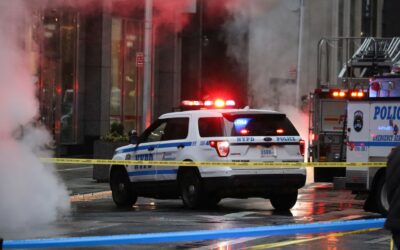
In a chilling escalation of political violence in the heart of New York City, federal authorities have launched a terrorism investigation after improvised explosive devices (IEDs) were ignited and thrown during a violent confrontation outside the official residence of Mayor Zohran Mamdani this past weekend. At The Modern Memo, we analyze the shocking events at Gracie Mansion, the radicalization risks highlighted by these devices, and the broader breakdown of order that continues to plague America’s largest city. The Incident: A Near-Catastrophe at Gracie Mansion On Saturday, March 7, 2026, a protest organized by right-wing activist Jake Lang—focused on the issue of public Muslim prayer—met with a large, aggressive counter-protest. What began as a volatile shouting match quickly devolved into a scene of potential mass casualty. The Explosive Threat: According to NYPD Commissioner Jessica Tisch, counter-protesters deployed multiple IEDs, described as jars wrapped in black tape, packed with nuts, bolts, and screws, and ignited by hobby fuses. “Serious Injury or Death”: NYPD bomb squad analysis confirmed that these were not mere “hoax devices” or smoke bombs; they were lethal instruments capable of causing serious injury or death. One device landed just feet from responding officers. The Arrests: Two suspects, Emir Balat, 18, and Ibrahim Kayumi, 19—both from Pennsylvania—have been taken into custody. The FBI’s Joint Terrorism Task Force has now assumed the lead on the investigation, with officials actively probing whether the suspects were inspired by ISIS extremist messaging. A City Under Siege? The violence at Gracie Mansion is not an isolated event; it is the latest in a series of chaotic clashes that have gripped New York City, raising urgent questions about public safety and the administration’s ability to maintain order. The Security Vacuum: Critics point out that allowing these groups to collide so close to the Mayor’s residence—where he was present with his wife during the violence—highlights a lack of effective containment strategy by local leadership. Political Rhetoric: Mayor Mamdani’s response has been to label the far-right participants as “white supremacists” while condemning the violence. However, many residents are asking why such volatile gatherings are permitted to escalate to the point of improvised explosives being deployed in a crowded residential neighborhood. The “ISIS” Connection: The revelation that the devices may be linked to ISIS-inspired terror adds a grim layer to a protest that was already centered on deep-seated societal divides. It highlights a dangerous new reality where legitimate political disagreement is being hijacked by extremists looking to ignite a much larger conflict. Final Word The ignition of IEDs outside the Mayor’s residence is a watershed moment that moves beyond mere “protest” and into the realm of domestic terrorism. When you look past the partisan finger-pointing and focus on the data of the improvised shrapnel devices and the FBI’s terrorism probe, you gain a clearer picture of the fragile state of public security in New York. Quality information replaces the noise of social media rumors with the clarity of forensic evidence and official law enforcement findings. It allows you to see this event as a dire warning of what happens when the rule of law is allowed to erode. By choosing to rely on verified updates from the NYPD and federal authorities, you align your perspective with the reality of the situation and support a more informed, resilient, and vigilant community. Where Facts, Context, and Perspective Matter At The Modern Memo, our goal is simple: to provide clear, well-researched reporting in a media landscape that often feels overwhelming. We focus on substance over sensationalism, and context over commentary. If you value thoughtful analysis, transparent sourcing, and stories that go beyond the headline, we invite you to share our work. Informed conversations start with reliable information, and sharing helps ensure important stories reach a wider audience. Journalism works best when readers engage, question, and participate. By reading and sharing, you’re supporting a more informed public and a healthier media ecosystem. The Modern Memo may be compensated and/or receive an affiliate commission if you click or buy through our links. Featured pricing is subject to change. 📩 Love what you’re reading? Don’t miss a headline! Subscribe to The Modern Memo here!

Parents Win Major Victory: Supreme Court Blocks California “Secrecy” Policy in School Gender Cases
In a significant rebuke to state-mandated secrecy in the classroom, the U.S. Supreme Court intervened on Monday, March 2, 2026, to block California from enforcing policies that required public schools to hide a student’s gender transition from their own parents. The ruling, issued in the case Mirabelli v. Bonta, marks a major win for parental rights and signals that the state may not treat parents as obstacles to be managed, but as the primary guardians of their children’s well-being. At The Modern Memo, we analyze why the High Court found these “secrecy rules” constitutionally suspect, the role of parental autonomy, and why this decision is sending shockwaves through statehouses across the country. The Core Ruling: Parents Are Not Optional The Supreme Court’s 6–3 decision—delivered as part of the emergency or “shadow” docket—vacated a Ninth Circuit stay that had allowed California’s nondisclosure policies to remain in effect. By lifting that stay, the Court reinstated a lower-court injunction that prevents schools from “misleading” parents about their children’s gender identity and social transitioning at school. The Constitutional Mandate: The majority held that parents who object to these policies on religious or non-religious grounds are likely to succeed on their claims under the First Amendment (Free Exercise Clause) and the Fourteenth Amendment (Substantive Due Process). “Primary Protectors”: In its opinion, the Court stated plainly that California’s policies “cut out the primary protectors of children’s best interests: their parents.” The Court reinforced long-standing legal precedent that parents, not the state, possess the primary authority to direct the upbringing, education, and mental health care of their children. Shattering the “Student Safety” Defense For years, the state of California and various school districts argued that keeping parents in the dark about a child’s gender transition was necessary for “student safety.” They contended that some students might be at risk if their parents were informed. The Blanket Gag Rule: The Supreme Court effectively rejected the idea that a “blanket gag rule” on teachers and staff is a justifiable way to manage student welfare. The ruling suggests that while the state has an interest in safety, it cannot use that interest as a license for government-wide secrecy that excludes fit, loving, and engaged parents from consequential decisions about their child’s mental health. A Targeted Approach: The decision implies that if genuine risks to a student exist, those must be handled on a case-by-case basis—not by treating all parents as potential threats who must be circumvented. The Echo Effect: A National Turning Point The impact of Mirabelli v. Bonta reaches far beyond California’s borders. Nearly 40 similar cases challenging school gender-nondisclosure policies are currently winding through the court system nationwide. Putting Other States on Notice: Similar policies in states like Washington and elsewhere now face heightened legal scrutiny. The Court’s messaging suggests that any policy requiring school employees to deceive parents regarding a child’s gender identity is almost certainly unconstitutional. The “Parents’ Right” Footing: This ruling provides parents with their strongest constitutional footing yet. By establishing that parents have a “federal constitutional right” to be informed if their child expresses gender incongruence, the Court has drawn a clear line: school-based social transitions cannot be conducted behind a parent’s back. Final Word The Mirabelli ruling is more than just a procedural win; it is a profound reaffirmation of the foundational structure of the American family. When you look past the heated rhetoric and focus on the data of the Court’s “strict scrutiny” standard, you gain a clearer picture of a judiciary that is prioritizing constitutional parental rights over ideological school policies. Quality information replaces the noise of partisan divide with the clarity of a foundational truth: government institutions exist to serve families, not to supersede them. By choosing to uphold the right of parents to remain the primary voices in their children’s lives, this decision supports a more resilient and transparent educational system. It serves as a stark reminder to any state tempted to circumvent the family unit: the Constitution is not a blank check for administrative secrecy. Where Facts, Context, and Perspective Matter At The Modern Memo, our goal is simple: to provide clear, well-researched reporting in a media landscape that often feels overwhelming. We focus on substance over sensationalism, and context over commentary. If you value thoughtful analysis, transparent sourcing, and stories that go beyond the headline, we invite you to share our work. Informed conversations start with reliable information, and sharing helps ensure important stories reach a wider audience. Journalism works best when readers engage, question, and participate. By reading and sharing, you’re supporting a more informed public and a healthier media ecosystem. The Modern Memo may be compensated and/or receive an affiliate commission if you click or buy through our links. Featured pricing is subject to change. 📩 Love what you’re reading? Don’t miss a headline! Subscribe to The Modern Memo here!

Honoring the Fallen: Pentagon Identifies Six Service Members Killed in Kuwait Drone Strike
The Department of Defense has confirmed the identities of the six American service members who lost their lives in a tragic drone strike at the Port of Shuaiba, Kuwait, on Sunday, March 1, 2026. The soldiers, all members of the 103rd Sustainment Command based in Des Moines, Iowa, were supporting Operation Epic Fury when their tactical operations center was struck by an Iranian unmanned aerial system. The loss of these six soldiers represents the first American fatalities since the commencement of U.S. and Israeli military operations against Iran. In the days following the attack, the Pentagon conducted a methodical process to identify and notify the families of the fallen, releasing their names in two groups. The Fallen Heroes The service members identified by the Department of Defense are: Maj. Jeffrey R. O’Brien, 45, of Waukee, Iowa. Chief Warrant Officer 3 Robert M. Marzan, 54, of Sacramento, California. Capt. Cody A. Khork, 35, of Winter Haven, Florida. Sgt. 1st Class Noah L. Tietjens, 42, of Bellevue, Nebraska. Sgt. 1st Class Nicole M. Amor, 39, of White Bear Lake, Minnesota. Sgt. Declan J. Coady, 20, of West Des Moines, Iowa (posthumously promoted from Specialist). A Community in Mourning As the names of the fallen were made public, tributes poured in from across the nation. Each soldier leaves behind a legacy of dedicated service and sacrifice. Maj. Jeffrey R. O’Brien and Chief Warrant Officer 3 Robert M. Marzan: Recognized for their leadership, their loss has prompted statements of condolence from state leadership in Iowa and California, with flags ordered to half-staff in their honor. Capt. Cody A. Khork: Remembered by family and peers as a deeply patriotic individual who took great pride in serving his country across multiple deployments. Sgt. 1st Class Noah L. Tietjens: A legacy soldier who served alongside his father in previous deployments; his loss has been deeply felt by his family and the communities in which he served. Sgt. 1st Class Nicole M. Amor: An automated logistics specialist who was just days away from returning home to her husband and two children. Her family remembers her as a source of light and a pillar of support for those in need. Sgt. Declan J. Coady: A student at Drake University studying cybersecurity and an Eagle Scout, remembered by those who knew him as “kind, smart, and amazing.” The Investigation and Ongoing Response The strike on the tactical operations center, which also resulted in serious injuries to at least 18 other service members, is currently under intense investigation. Military officials have noted that the incident occurred in a high-threat environment where an Iranian munition successfully bypassed existing air defense measures and fortifications. Defense Secretary Pete Hegseth expressed the nation’s deepest condolences, stating, “Moments like that—as we remember them and we take care of them and take care of their families—only stiffen our resolve to ensure that we do this properly.” The Department of Defense continues to work closely with the families of the deceased and the wounded, ensuring that those who have made the ultimate sacrifice in defense of our nation are honored with the dignity they deserve. Final Word The deaths of these six brave service members are a painful reminder of the human cost of military engagement. When you look beyond the tactical details of the drone attack and focus on the individual stories of the lives lost, you gain a clearer picture of the sacrifice required by those who serve in the Armed Forces. Quality information replaces the noise of speculative reporting with the clarity of official identification and respectful remembrance. It allows you to see these soldiers as individuals with families, passions, and dreams, rather than just statistics in a briefing. By choosing to honor their memory through verified accounts, you align your perspective with the reality of their service and support a more informed, empathetic, and resilient national community. Where Facts, Context, and Perspective Matter At The Modern Memo, our goal is simple: to provide clear, well-researched reporting in a media landscape that often feels overwhelming. We focus on substance over sensationalism, and context over commentary. If you value thoughtful analysis, transparent sourcing, and stories that go beyond the headline, we invite you to share our work. Informed conversations start with reliable information, and sharing helps ensure important stories reach a wider audience. Journalism works best when readers engage, question, and participate. By reading and sharing, you’re supporting a more informed public and a healthier media ecosystem. The Modern Memo may be compensated and/or receive an affiliate commission if you click or buy through our links. Featured pricing is subject to change. 📩 Love what you’re reading? Don’t miss a headline! Subscribe to The Modern Memo here!