
World News
King Charles III Gives President Trump A Royal Welcome
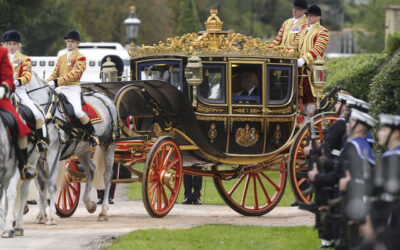
President Donald Trump and First Lady Melania Trump couldn’t have asked for a warmer reception when they arrived at Windsor. From the moment King Charles III and Queen Camilla greeted them, it was clear this was more than just another state visit. The smiles, the handshakes, the genuine ease between the two families set the tone for a gathering filled with respect on both sides. And it wasn’t just the King and Queen. Prince William and Princess Catherine were front and center too, showing that this was a family welcome. Trump himself even made a point to compliment them, calling Kate “so radiant and so healthy.” It was the kind of personal remark that breaks through stiff protocol and adds a human touch to diplomacy. pic.twitter.com/UpX0M1yM5c — Rapid Response 47 (@RapidResponse47) September 17, 2025 Ceremonial Tradition Meets Friendship The British know how to put on a show, and Windsor delivered. The Guard of Honour stood tall in full regimental dress, lining up for inspection. As the American and British national anthems played, Trump and King Charles stood side by side, a picture of two nations bound together. (RELATED NEWS: London: 100K Rally-Goers Unite Against Mass Immigration) Then came the royal carriages. For a U.S. president who usually travels in bulletproof SUVs and helicopters, the sight of horse-drawn coaches carrying his team was something special. It was a nod to history and tradition, and it sent a clear signal: this visit mattered. WHAT A SIGHT! Carriages for @POTUS, @FLOTUS, and Their Majesties arrive at Windsor Castle in a remarkable welcome for the unprecedented second state visit of President Donald J. Trump 🇺🇸🇬🇧 pic.twitter.com/NAgxH5XAia — Rapid Response 47 (@RapidResponse47) September 17, 2025 Shared Moments Inside the Castle After the pageantry outside, things turned more personal inside Windsor Castle. A private lunch gave the families time to connect without cameras flashing. Trump also laid a wreath at the tomb of Queen Elizabeth II, a simple but powerful gesture of respect for Britain’s beloved monarch. Reflecting on the day, Trump offered a thought that connected the past to the present: “I cannot help but wonder what our forebears from 1776 would make of this friendship today.” That single line captured the remarkable journey from revolution to alliance, and how the bond between the U.S. and the U.K. has endured through time. The State Banquet When evening came, the focus shifted to the State Banquet—a glittering affair inside Windsor’s grand halls. Glasses clinked, toasts were made, and both sides leaned into the spirit of friendship. Trump’s words struck a chord. “We’re like two notes in one chord, or two verses of the same poem. Each beautiful on its own but really meant to be played together,” he said about the U.S. and the U.K. It was poetic, and it spoke directly to the deep connection the two nations share. He didn’t stop there. With warmth in his voice, Trump added, “Together we must defend the exceptional heritage that makes us who we are. We must continue to stand for the values of the people of the English-speaking world… I offer a toast to the two great countries… King Charles is a very special man, and we also have a very special Queen.” The message was clear: this wasn’t just about a political relationship. It was about culture, history, and values that both sides are determined to protect. .@POTUS: “We’re joined by history and fate, by love and language, and by transcendent ties of culture, tradition, ancestry, and destiny… The bond of kinship and identity between America and the United Kingdom is priceless and eternal — it’s irreplaceable and unbreakable.” 🇺🇸🇬🇧 pic.twitter.com/RhFIaLNcAp — Rapid Response 47 (@RapidResponse47) September 17, 2025 Mutual Respect in Action What stood out most about the day was the balance of respect. King Charles treated Trump not just as a head of state but as a valued partner. He made sure the welcome included the next generation of royals, signaling continuity and long-term friendship. Trump returned that respect in kind. He didn’t just go through the motions—he leaned into the traditions of the monarchy, participated fully in the ceremonies, and honored the late Queen. His toasts were personal, filled with admiration for both Charles and Camilla. These weren’t hollow gestures. They showed a recognition that diplomacy works best when it’s grounded in mutual appreciation. Why This Visit Matters This wasn’t Trump’s first state visit to Britain, but it may be one of the most significant. Few foreign leaders are welcomed with the full measure of royal pageantry—carriages, guards, banquets, private meals—and fewer still are embraced with such visible warmth. For two nations often described as sharing a “special relationship,” Windsor was proof that the phrase still has meaning. The formalities could have been stiff, but instead, they felt warm and human. From Trump’s admiration of Princess Kate to his poetic words about shared heritage, the visit highlighted connection over ceremony. A Lasting Impression What people will remember most from this visit isn’t just the images of carriages or banquets. It’s the sense that two families—the Trumps and the Royals—found common ground in friendship and respect. When Trump raised his glass and called King Charles “a very special man” and Queen Camilla “a very special Queen,” it wasn’t just polite words. It was a personal acknowledgment of the bond that has grown between the two sides. The visit showed that America and Britain are more than allies on paper. They are partners tied together by history, heritage, and a shared vision for the future. Windsor proved that when respect flows both ways, diplomacy doesn’t just work—it shines. Forget the narrative. Reject the script. Share what matters. At The Modern Memo, we call it like it is — no filter, no apology, no corporate leash. If you’re tired of being lied to, manipulated, or ignored, amplify the truth. One share at a time, we dismantle the media machine — with facts, boldness, and zero fear. Stand with us. Speak louder. Because silence helps them…
London: 100K Rally-Goers Unite Against Mass Immigration
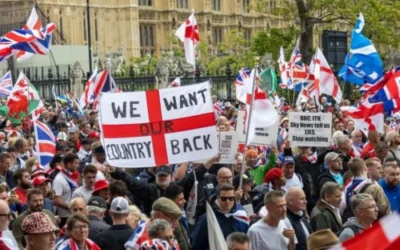
Massive Turnout at London Rally On September 13, 2025, more than 100,000 people filled central London for a rally titled “Unite the Kingdom.” The event was organized by Tommy Robinson, a controversial figure known for his anti-immigration activism. Police estimated the crowd at around 110,000, making it one of the largest protests in modern British history. The guardian reported “110k” at our London rally today. Yet, literally had their own helicopter showing the millions of patriots 🤡 Legacy media proving again they’ll just lie to your face for their own agenda. This is why nobody trusts them. We are the media now. pic.twitter.com/s0yOh2NEfe — Tommy Robinson 🇬🇧 (@TRobinsonNewEra) September 13, 2025 The rally focused on immigration, national identity, and frustration with government policies. Protesters carried English flags, Union Jacks, American flags, and Israeli flags. Many wore MAGA hats as chants of “Stop the boats” and “Send them home” echoed across the city streets. Alongside those messages, people honored Charlie Kirk, the late American activist. Supporters held pictures, raised signs in his memory, and chanted his name throughout the demonstration. (MORE NEWS:Fake Jobs Boom Exposed: Nearly 2 Million Vanish) Counter-Protesters Gather While Robinson’s supporters dominated London streets, about 5,000 counter-protesters also turned out. Their message centered on opposing what they described as xenophobia and far-right extremism. Police prepared for both groups with a massive deployment. More than 1,600 officers, including mounted units and riot teams, patrolled London. Buffer zones separated the rallies, though some protesters attempted to cross the police lines. Authorities reported repeated efforts to breach the cordons, which led to clashes. Violence and Arrests Although organizers promoted the rally as peaceful, violence broke out. Officers reported bottles, flares, and other objects thrown from the crowd. Police confirmed that 26 officers were injured, four of them seriously. Injuries included broken teeth and concussions. At least 25 people were arrested. The charges ranged from assaulting officers to damaging property and engaging in violent disorder. Authorities stressed that while the majority of attendees stayed within the law, a smaller but aggressive group escalated the situation. Political Tensions Rise The rally came at a time of growing division in Britain over immigration. Record numbers of migrants crossing the English Channel this year have intensified calls for action. Asylum centers and migrant housing have become focal points for protests across the country. (RELATED NEWS: Kilmar Abrego Garcia and the Deep Immigration Divide) For many supporters, the demonstration represented more than a call for stricter immigration controls. They described it as a stand for free speech, national sovereignty, and resistance to political elites. Critics, however, argued that the march reflected growing far-right influence and hostility toward immigrants. Elon Musk’s Message One of the most striking moments came from Elon Musk, who addressed the crowd by video. He warned that immigration was being used as a political tool. “There’s a massive incentive on the left to import voters. So if they can’t convince their nation to vote for them, they’re going to import people from other nations to vote for them. It’s a strategy that will succeed if it is not stopped.” 💯 https://t.co/IF8cDC3g3t — Elon Musk (@elonmusk) September 13, 2025 Musk also expressed wider concerns about Britain’s future. He said free speech and open debate were being stifled. According to him, the BBC enables policies that erode national identity. He argued that mass migration was causing rapid social change, that the government had failed to protect its citizens, and that Britain now stood at a crossroads between decline and renewal. His remarks drew thunderous applause from the marchers and quickly spread across social media, intensifying the debate over Britain’s direction. Robinson’s Video Message After the rally ended, Robinson recorded a thank-you video from his car. He praised the crowd for making history and called for continued involvement. “Every one of you helped us make history today. The fight is not over, it’s just starting. We need all of you to get involved. Everyone. We’ve all got a role to play. Don’t talk about change. Be the change. Thank you to Elon Musk, man. What a moment… Twenty minutes of Elon Musk’s time, he gave that time to you, the British public. He spoke up for us. He continues to fight for us for free speech. As has Donald Trump. As has JD Vance. So when you voted to save America, it wasn’t a vote to save America.. Everything wouldn’t have happened today without your vote. It’s a vote to save the West… we are fighting back.” 🇬🇧🇬🇧🇬🇧 Unite the Kingdom 🇬🇧🇬🇧🇬🇧 https://t.co/jRDmwLJIi0 — Elon Musk (@elonmusk) September 13, 2025 The video circulated widely online, energizing his supporters and tying the event to a larger international movement. Opposition Voices Stand Up To Racism and allied groups used their counter-protest to call for tolerance and inclusion. They argued that immigration strengthens the UK and warned that Robinson’s message was dangerous. Leaders urged the government to take a stronger stand against what they called the rise of far-right extremism. Police praised both sides for mostly staying within their designated areas, but they acknowledged the day was marked by tension, confrontations, and disruption. The Metropolitan Police said it would review its planning after so many officers were hurt. What Comes Next The “Unite the Kingdom” rally showed how immigration now dominates British politics. Prime Minister Keir Starmer faces pressure to act, and inaction could spark more protests. The counter-protest highlighted Britain’s divide. Opponents of Robinson’s message plan to intensify their campaigns, while his backers push harder for change. Immigration debates have left Parliament and moved to the streets. Leaders must confront issues of security, housing, and identity while protecting freedoms. The London rally proved immigration is Britain’s defining political fight, and the government’s response will shape the nation’s future. Cut through the noise. Drown out the spin. Deliver the truth. At The Modern Memo, we’re not here to soften the blow — we’re here to land it. The media plays defense for the powerful. We don’t. If you’re…
Trump Vows Tough Sanctions on Russia After Deadly Attack
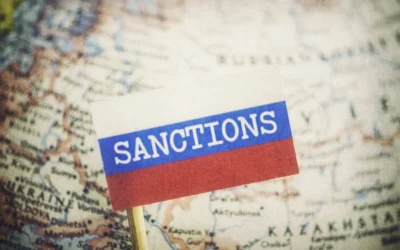
President Trump responded firmly and vowed tough sanctions after Russia launched its most devastating assault on Ukraine since the start of the war. The strike involved 810 drones and multiple missiles aimed at Kyiv and surrounding areas. Ukrainian officials reported at least four people dead and more than forty injured. Among the targets was Ukraine’s central government headquarters, marking the first time Moscow directly hit that building. (RELATED NEWS: Trump and His ‘Art of the Deal’ for Ukraine Peace) Trump called the attack a deliberate escalation and promised to punish Russian President Vladimir Putin. He announced plans for a new wave of sanctions designed to cripple Russia’s ability to fund its war effort. The president emphasized that oil exports remain Russia’s economic lifeline, and those flows must be disrupted to reduce Moscow’s capacity to continue the assault. A “Phase Two” of Sanctions Trump described the upcoming measures as a “second phase” of economic pressure. While earlier rounds of sanctions restricted banking and trade, this next step will focus heavily on Russian energy. The president signaled that the United States will push for penalties not only on Russia itself but also on countries that continue to purchase Russian oil. Q: “Are you ready to move to the second phase of sanctions against Russia?” TRUMP: “Yeah, I am.” pic.twitter.com/ikRedacRms — Breaking911 (@Breaking911) September 7, 2025 Treasury Secretary Scott Bessent confirmed that Washington is exploring secondary tariffs on nations still engaging in oil trade with Moscow. These tariffs would place heavy costs on countries that attempt to skirt sanctions by buying Russian crude. The strategy is designed to make it more expensive for Russia’s largest buyers to continue their partnerships. India Already Targeted India quickly felt the impact of this new approach. The United States announced a fifty percent tariff on Indian imports, directly tied to New Delhi’s ongoing purchase of Russian oil. Ukrainian leaders praised the move, calling it a meaningful step toward weakening Russia’s funding pipeline. Critics, however, argue that tariffs will not achieve their full effect unless they target the largest consumers of Russian energy. China and India together account for most of Russia’s oil exports. Without stronger measures directed at both nations, sanctions risk losing their power. Energy analysts note that these penalties could disrupt global crude flows, raising costs for many countries. Europe and U. S. Push for United Strategy European leaders quickly rallied behind Washington’s strategy. Officials from the European Union met with U.S. representatives to coordinate the nineteenth package of sanctions since the war began. Talks focused on expanding restrictions on oil sales, tightening financial measures, and limiting access to key technologies. EU sanctions envoy David O’Sullivan stressed the importance of unity across the Atlantic. By working together, the United States and Europe aim to close loopholes and prevent Moscow from shifting its trade to willing partners. European Council President Antonio Costa added that the new sanctions would send a clear signal of resolve after the deadly strike on Kyiv. Ukraine Demands Swift Action Ukrainian President Volodymyr Zelensky condemned the Russian assault as a crime against civilians. He urged allies to respond with action, not just words. That is why statements by state leaders and institutions must be backed by strong actions – sanctions against Russia and individuals connected with Russia, tough tariffs and other restrictions on trade with Russia. Their losses must be felt. That is what is truly convincing. — Volodymyr Zelenskyy / Володимир Зеленський (@ZelenskyyUa) September 7, 2025 Prime Minister Yuliya Svyrydenko “condemned the assault as a blatant rejection of peace efforts.” Ukraine’s leaders framed the bombing as proof that Putin has no intention of de-escalating. Instead, they argued, Moscow is intensifying the war and must face the strongest possible response. The strike on the government headquarters underscored the danger of delay in international decision-making. Russia’s Defiance Despite growing pressure, the Kremlin dismissed the latest sanctions threats. Spokesperson Dmitry Peskov said: “No sanctions will be able to force the Russian Federation to change the consistent position that our president has repeatedly spoken about.” Still, analysts note that energy revenue is critical to Russia’s survival. If oil sales fall sharply, the Kremlin will face mounting difficulty in financing both the war effort and its domestic programs. Even if sanctions do not alter Putin’s political stance, they could weaken its ability to sustain military operations at the current scale. Economic and Global Impact The threat of secondary sanctions could reshape energy markets worldwide. Restricting Russia’s oil buyers would redirect global trade flows and potentially create shortages in some regions. Traders warn that costs may rise as markets adjust, though supporters argue that the sacrifice is necessary to limit Russia’s war chest. For Western nations, the sanctions also carry risks. Higher energy prices could strain households and industries already coping with inflation. Leaders in Washington and Brussels stress that the long-term goal outweighs the short-term discomfort. By targeting Russia’s oil trade now, they believe they can shorten the war and reduce future instability. What Comes Next The coming weeks will test Western resolve. Trump has committed to a second wave of sanctions designed to cut deeper into Russia’s economy than ever before. Europe is preparing to match those measures with its own package. Together, these actions could finally limit the resources Russia depends on to sustain its invasion. The global energy market may feel the strain, but the underlying message is clear: Western powers are no longer content with symbolic measures. They are moving toward sanctions that directly threaten Russia’s ability to wage war. Whether these efforts succeed will depend on coordination, persistence, and the willingness of nations like China and India to resist or adapt. Bottom Line Trump’s vow to punish Putin after the deadly attack on Ukraine signals a decisive shift in strategy. The focus on oil revenues and secondary sanctions marks an escalation in economic warfare aimed at crippling Moscow’s war machine. Trump has given Putin every opportunity to come to the table with a serious plan and to stop the strikes long…

Free Speech Alarm: Farage’s Wake-Up Call to Congress
Nigel Farage brought a blunt message to Washington. Speaking before the U.S. Congress, he warned that Britain is slipping into a culture of suppression, abandoning free speech. His comparison cut sharp: the nation, he said, looks more like North Korea than a free democracy. 📺MUST WATCH: @Nigel_Farage outlines the importance of free speech around the world. If we lose free speech, we lose everything. pic.twitter.com/c83XW4OFID — House Judiciary GOP 🇺🇸🇺🇸🇺🇸 (@JudiciaryGOP) September 3, 2025 The Reform UK leader appeared before the House Judiciary Committee on September 3, 2025. From the start, he accused Britain’s political class of betraying core democratic values. Laws written to fight “hate speech,” he argued, now crush open debate. Police enforce speech violations instead of protecting expression. Farage urged lawmakers to pay attention. What happens in Britain, he said, will not stay in Britain. Once censorship takes hold in one Western democracy, it spreads. America must recognize the danger and refuse to stand by silently. (RELATED: Court Nixes California AI Deepfake Law, Free Speech Wins) To drive home the point, he drew on history. Free nations, he explained, have always defended speech, even offensive or unpopular speech. Citing the spirit of Voltaire, he said, “We’ve forgotten the Voltarian principles that we’ll fight and defend to the death your right to say something that we fundamentally disagree with. That is the absolute foundation, if you think about it, of free speech, of democracy, of living in freedom. It’s kind of why we fought two world wars, at massive, massive cost. To defend that very principle for ourslves and for many, many others around the country.” His testimony framed censorship as a creeping threat. It rarely arrives with blunt force. Instead, it advances quietly, disguised as protection or safety. That, he said, makes it more dangerous. For Farage, the solution is clear: hold Britain accountable and defend free voices before they are silenced altogether. Linehan Arrest: A Comedy Writer in Handcuffs While Farage spoke in Washington, a separate story unfolded in London. Graham Linehan, the comedy writer behind hit shows like Father Ted, was arrested at Heathrow Airport. His alleged crime was not violence or fraud but a series of social media posts criticizing trans activism. One post claimed that if a “trans-identified male” entered a female-only space, the act should be treated as violent and abusive. He suggested that bystanders should make a scene, call the police, or even respond physically. The message drew swift attention from authorities. Police questioned Linehan over the post and banned him from using X, formerly Twitter, while on bail. For him, the arrest was absurd. He described it as a “dystopian clown show” and vowed to challenge it in court. In his view, the state had criminalized satire. This is how Graham Linehan shows up for trial in the UK just days after being arrested in the London airport for posting “offensive tweets” This is how you deal with the trans mob. Double down. We’re cheering you on, @Glinner 👏🏼🔥pic.twitter.com/vWVItcwUGK — Riley Gaines (@Riley_Gaines_) September 4, 2025 Linehan’s case exposes the tension between comedy and censorship. Once a staple of British humor, satire is now being dragged into police stations. To his supporters, this proves Farage’s point. What begins as regulation of speech can quickly become prosecution of thought. A Growing Storm Around Free Expression Farage’s testimony and Linehan’s arrest tell the same story from different angles. One shows political leaders tightening laws. The other shows police enforcing those laws on individuals. Together, they highlight a dangerous shift in how Britain treats free expression. (MORE NEWS: U.S. Strike on Venezuelan Drug Cartel Boat Signals New Era) Critics of these policies argue that governments are overstepping. They ask who decides where satire ends and offense begins. They warn that the power to punish speech can easily be abused. Defining “harm” too broadly, they say, allows almost any opinion to be silenced. Supporters of strict laws counter that hateful rhetoric poses real risks. They argue that social cohesion requires limits. Yet opponents point out that once the state defines harmful speech, political dissent often becomes the first casualty. In Washington, Farage urged Congress not to ignore the trend. He pressed lawmakers to use America’s influence to keep free speech alive in allied nations. Across the Atlantic, British citizens watched Linehan’s case unfold and asked whether their own freedoms were next. Why This Matters for the West Free speech shapes more than Britain. It defines the Western world. When one democracy clamps down, others copy the move. Farage warns that Britain could set the model — for censorship instead of liberty. Linehan’s arrest exhibits danger in real time. Police charged a comedian for satire. That action chills journalists, writers, and citizens who use humor to push back against authority. These events prove a hard truth: free speech survives only when people defend it. Laws must shield it, not crush it. Leaders must honor it, not bargain it away for peace. The debate cannot wait. Citizens, not governments, define acceptable thought. They must choose whether satire stays part of culture or becomes a crime by voting out of office those who threaten freedom. Conclusion: A Call to Defend Free Speech The message is clear. Societies that value freedom must defend speech in all its forms—serious or satirical, popular or unpopular. If they fail, censorship will not remain confined to Britain. It will spread across the democratic world. America once broke free from British control to secure liberty. Today, Britain drifts toward censorship, using “safety” and “tolerance” as excuses. Farage’s warning should not be ignored. If the U.K. can arrest comedians and silence debate, America must make sure it never follows down that path. Linehan’s arrest proves how quickly jokes and opinions can be turned into criminal offenses. Free nations survive only when debate is open and free speech is protected. America doesn’t need to repeat Britain’s mistakes. It needs to stand firm, defend its Constitution, and remind the world that freedom of speech is not…
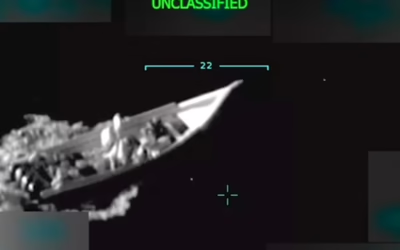
U.S. Strike on Venezuelan Drug Cartel Boat Signals New Era
On September 2, 2025, U.S. military forces sank a Venezuelan-linked vessel in the southern Caribbean. Intelligence identified the boat as part of the Tren de Aragua gang, a transnational Venezuelan cartel network tied to narcotics, extortion, and human trafficking. Eleven smugglers were killed. Video of the strike spread quickly, showing the precision of the U.S. operation. The Venezuelan government rushed to claim the footage was fake, but U.S. officials stood by the evidence. (RELATED NEWS: U.S. Confronts Venezuela Narco-State) This was no accident. It was a deliberate blow against a cartel that has pushed poison into American communities for years. For families who have lost loved ones to fentanyl and cocaine, the message was unmistakable: Washington will no longer tolerate business as usual on the high seas. pic.twitter.com/K15IcBG3b3 — Karoline Leavitt (@PressSec) September 2, 2025 Rubio Defends the Operation The administration defended the strike as both legal and necessary. Secretary of State Marco Rubio said the narco-gangs “pose an immediate threat” to U.S. security. He pointed out that these groups are not ragtag dealers but corporate-style syndicates that traffic in drugs, weapons, and people. Rubio argued that when an imminent danger is identified, the Commander-in-Chief has the right to act. “The President is going to be on offense against drug cartels.” Secretary of State Marco Rubio says cartels are in for a rude awakening after the U.S. military destroyed a drug-laden boat from Venezuela. pic.twitter.com/s3kY4RWI8D — Fox News (@FoxNews) September 2, 2025 “We’re not going to sit back anymore and watch these people sail … like a cruise,” Rubio declared. His blunt words carried the weight of a doctrine shift—no longer waiting until cartels reach America’s shores. 💨= 🔥 — Marco Rubio (@marcorubio) September 2, 2025 More Strikes May Follow Secretary of Defense Pete Hegseth reinforced that this was just the beginning. He revealed that additional U.S. naval power has already been deployed near Venezuela, including destroyers, an amphibious assault ship, and a submarine. These assets are not symbolic. They are a clear warning to traffickers, Maduro’s regime, and anyone else who profits from America’s pain. He also said to Fox News: “I’d say we smoked a drug boat and there’s 11 narco-terrorists at the bottom of the ocean — and when other people try to do that, they’re gonna meet the same fate.” “I’d say we smoked a drug boat and there’s 11 narco-terrorists at the bottom of the ocean — and when other people try to do that, they’re gonna meet the same fate.” Pete Hegseth said the U.S. military had the “absolute” authority to strike a Venezuelan boat carrying nearly a… pic.twitter.com/pK4cdv85wu — Fox News (@FoxNews) September 5, 2025 The administration’s stance is straightforward: more strikes will come if cartels continue their deadly trade. For the first time in decades, the United States is signaling that cartel leaders will face not only prison cells but military firepower. A Shift From Past Strategies For years, Washington leaned heavily on Coast Guard interdictions and criminal prosecutions. While important, these efforts left Venezuelan cartels emboldened. Arrest one trafficker, and another steps in. Seize one shipment, and ten more slip through. This new approach changes the calculus. Instead of chasing smugglers after the fact, the U.S. is eliminating threats before they reach American soil. It is proactive, decisive, and far harder for cartels to counter. Regional Reactions Are Divided Not all neighbors welcomed the strike, though some showed strong support. Trinidad and Tobago’s prime minister praised the U.S. for taking bold action, saying the cartels are “evil” and must be stopped with force. “I, along with most of the country, am happy that the US naval deployment is having success in their mission. The pain and suffering the cartels have inflicted on our nation is immense. I have no sympathy for traffickers; the U.S. military should kill them all violently,” she said in a statement. “Our country has been ravaged by bloody violence and addiction because of the greed of the cartels. The slaughter of our people is fuelled by evil cartel traffickers.” Colombia’s President Gustave Petro, by contrast, labeled the strike an “extrajudicial killing.” But while elites argue over definitions, families across the region know who the real villains are. Cartels terrorize communities, enslave women, and funnel drugs northward. For many, America’s action is overdue. International Law Concerns Critics questioned whether the strike complied with international law. They claimed the attack occurred in international waters and targeted criminals without trial. Legal scholars debated whether the 2001 Authorization for Use of Military Force applies. Yet supporters argue that cartels have long crossed the line into terrorism. They kill without hesitation, destabilize governments, and funnel billions into criminal networks. To treat them as ordinary criminals is to ignore the reality on the ground. The Terrorist Label Labeling cartels as terrorist organizations has given the U.S. more tools to act. A month ago, the administration increased the bounty on Nicolás Maduro to $50 million and classified the Cartel of the Suns as a terrorist network. By recognizing cartel violence as a form of warfare, Washington is taking the fight seriously. Supporters point out that these groups flood American cities with fentanyl, fueling record overdoses. Treating them like terrorists reflects the scale of their crimes. Toward a Military Campaign This strike is not an isolated event. Rubio made clear it “will happen again.” The administration is preparing a sustained campaign against cartels that threaten U.S. security. Far from a one-off message, it is a standing policy: America will strike first, and strike hard. pic.twitter.com/WlLvoACd9o — Marco Rubio (@marcorubio) September 4, 2025 Venezuela Prepares for Conflict Maduro responded with bluster, mobilizing the Bolivarian Militia and declaring “maximum preparedness.” Yet his regime, weakened by sanctions and corruption, cannot match U.S. power. For years, he has sheltered cartels in exchange for profit. Now, that alliance puts him in Washington’s crosshairs. A New Era of U.S. Anti-Cartel Policy The obliteration of the Venezuelan drug boat marks more than a single battle. It represents a turning point in U.S….
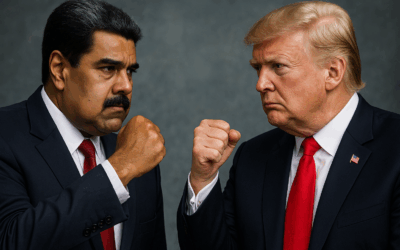
U.S. Confronts Venezuela Narco-State
Venezuela, once one of the wealthiest nations in South America, is now defined by authoritarian rule, collapsing infrastructure, and the largest refugee crisis in the Western Hemisphere. Nicolás Maduro has clung to power since 2013 through repression, sham elections, and close ties to drug cartels. His regime controls the judiciary, censors the media, and puts political opponents in prison. Sounds all too familiar. For ordinary Venezuelans, the result has been catastrophic: widespread shortages of food, fuel, and medicine, and the mass flight of more than seven million citizens seeking survival abroad. (MORE NEWS: Kilmar Abrego Garcia and the Deep Immigration Divide) The United States has not remained silent. Faced with a regime tied directly to narco-trafficking, the Trump administration recently deployed naval assets in the Caribbean in what was one of the largest U.S. military operations in the region since the 1989 Panama intervention. Maduro immediately claimed the Trump administration was “seeking a regime change through military threat.” That charge fits his propaganda playbook, but it misrepresents American intentions. Pentagon spokesman Sean Parnell explained, “This requires a whole-of-government effort… the Department of Defense will undoubtedly play an important role in meeting the President’s objective to eliminate the ability of these cartels to threaten the territory, safety, and security of the United States and its people.” In short, the U.S. was not aiming to topple Maduro by force. It is protecting American citizens and reinforcing the rule of law in a region plagued by cartel violence. Newsweek is reporting that Maduro has “mobilized troops along the coast and border with Colombia.” While U.S. officials have not signaled plans for a land invasion, Maduro has mobilized troops along the coast and border with Colombia. https://t.co/VKhOLKVhfI — Newsweek (@Newsweek) September 1, 2025 China and Global Critics Misread U.S. Intentions Predictably, America’s adversaries tried to spin the move as imperialism. China’s Foreign Ministry spokesperson Mao Ning accused Washington of meddling, declaring, “We oppose the use or threat of force in international relations… under any pretext.” Beijing framed the deployment as interference in regional affairs, ignoring the obvious reality: Maduro’s Venezuela has become a safe haven for criminal cartels, which threaten America, our citizens, and our interests. National security requires decisive action beyond our borders when foreign regimes enable crime that spills into American communities. Fentanyl and cocaine do not respect borders. Neither should our response be to the cartels that traffic them. By misrepresenting America’s actions as an invasion, Beijing and Caracas both reveal their fear of U.S. strength. Critics who call this “foreign interference” fail to acknowledge that narco-terrorism is itself interference—an assault on sovereignty, law, and order. America is not building colonies in South America. It is stopping cartels from building empires of crime on our doorstep. President Trump has stated he is “prepared to use every element of American power to stop drugs from flooding in to our country.” Encouraging Democracy Through Strength Beyond military deterrence, the U.S. has pursued a strategy of sanctions and indictments that weaken Maduro’s regime from within. The Department of Justice indicted Maduro and several top officials for narcoterrorism in 2020, offering a $15 million reward for information leading to his arrest. A larger package of sanctions targeted Venezuela’s state-owned oil company PDVSA, choking off the cash that funds Maduro’s patronage networks. These measures serve two purposes: they deprive the dictatorship of resources while giving hope to Venezuela’s democratic opposition. Figures like Juan Guaidó briefly gained international recognition as legitimate representatives of the Venezuelan people, though internal divisions later weakened the movement. Still, the U.S. policy of pressure keeps alive the possibility of peaceful political change. This is an example of strength used wisely. America does not have to invade to make an impact. By raising the cost of tyranny and supporting those who resist it, Washington advances freedom without repeating the mistakes of reckless interventions. As President Ronald Reagan once said, “We maintain the peace through our strength; weakness only invites aggression” (1983 speech, Orlando, FL to the National Association of Evangelicals). That lesson holds true in Caracas just as it did in Moscow. Strength Preserves Freedom At its core, the Venezuelan crisis is not only about one dictator. It is about whether authoritarian regimes and criminal cartels can operate freely in the Western Hemisphere. The principle is straightforward: a secure America requires a secure hemisphere. If drug cartels use Venezuela as a launching pad, then America has every right—and every duty—to respond with force, sanctions, and diplomatic pressure. The Trump Administration is defending its people, and without U.S. resolve, Maduro would operate with total impunity and the cartels would expand unchecked. The vision is not reckless intervention. It is principled strength—measured, deliberate, and unapologetic. America has a right to communities free from drugs and cartel violence, and it has a duty to expose the lies that keep Maduro’s narco-state alive. Cut Through the Noise. Slice Through the Lies. Share the Truth. At The Modern Memo, we don’t tiptoe around the narrative—we swing a machete through it. The mainstream won’t say it, so we will. If you’re tired of spin, censorship, and sugar-coated headlines, help us rip the cover off stories that matter. Share this article. Wake people up. Give a voice to the truth the powerful want buried. This fight isn’t just ours—it’s yours. Join us in exposing what they won’t tell you. America needs bold truth-tellers, and that means you.
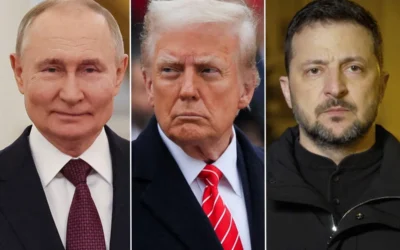
Trump and His ‘Art of the Deal’ for Ukraine Peace
President Trump met with Russian leader Vladimir Putin in Alaska on Friday to see if a deal could be reached to end the war in Ukraine. After the meeting, Trump told European allies that Putin proposed Russia take full control of the Donbas region. This move, Putin argued, would stop the fighting and bring peace. A European diplomat told Fox News that “President Trump supports the terms of this proposal.” Secretary of State Marco Rubio, however, pushed back on that claim on “Sunday Morning Futures,” saying, “The president has said that, in terms of territories, these are things that Zelenskyy is going to have to decide on. These are things that the Ukrainian side is going to have to agree to.” Another masterclass from Secretary Marco Rubio. A must watch! pic.twitter.com/7NY6EHZHyh — Brigitte Gabriel (@ACTBrigitte) August 17, 2025 Donbas at the Heart of the Deal The Donbas region, home to 6.5 million people, includes Luhansk and Donetsk, according to the Ukrainian Research Institute of Harvard University. Ukraine still holds about 30% of Donetsk. President Volodymyr Zelenskyy has vowed not to surrender that land. He insists giving up Donbas would be unconstitutional and warns it could enable future Russian offensives. NOW – Zelensky says Ukraine’s constitution makes giving up land “impossible,” and should only be discussed at a trilateral meeting; if Russia “refuses,” more sanctions “must” be imposed. pic.twitter.com/7wicKa5erW — Disclose.tv (@disclosetv) August 17, 2025 Despite this, Trump urged Zelenskyy to accept Putin’s offer. Zelenskyy will meet Trump at the White House on Monday to discuss the peace proposal. Trump Shifts Toward Peace Agreement Trump initially supported a ceasefire. But after his talks with Putin, he shifted toward a full peace deal. Russia, Trump said, wants a long-term settlement, not just a temporary fix. On Truth Social, Trump said on Saturday: “It was determined by all that the best way to end the horrific war between Russia and Ukraine is to go directly to a Peace Agreement, which would end the war, and not a mere Ceasefire Agreement, which often times do not hold up.” On Sunday, he said, “BIG PROGRESS ON RUSSIA. STAY TUNED! President DJT.” Mixed Reaction From Europe European leaders reacted cautiously. While they did not endorse Putin’s plan, they praised Trump’s leadership in seeking peace. (RELATED : The Trade Deal That Changed Everything: U.S.–EU Breakthrough) German Chancellor Friedrich Merz told ZDF television, “And the good news is that America is ready to participate in such security guarantees and is not leaving it to the Europeans alone.” About the possibility of a peace agreement, he said, “If that works out, it’s worth more than a ceasefire.” The European Commission issued a statement on Trump’s efforts, saying they: “welcomed President Trump’s efforts to stop the killing in Ukraine, end Russia’s war of aggression, and achieve just and lasting peace.” But skepticism remained. Czech Foreign Minister Jan Lipavský posted: “From Putin, we heard the same propagandistic nonsense about the ‘roots of the conflict’ that his state television promotes. The problem is Russian imperialism, not Ukraine’s desire to live freely.” (RELATED: Alaska Hosts Historic Summit Between Trump and Putin) EU foreign policy chief Kaja Kallas posted on X: “President Trump’s resolve to get a peace deal is vital. The EU and our European partners worked to coordinate with President Trump ahead of Alaska meeting. But the harsh reality is that Russia has no intention of ending this war anytime soon.” Hungarian Prime Minister and friend of Trump, Viktor Orban expressed optimism, writing: “For years we have watched the two biggest nuclear powers dismantle the framework of their cooperation and shoot unfriendly messages back and forth. That has now come to an end. Today the world is a safer place than it was yesterday. May every weekend be at least this good!” Putin and Zelenskyy Respond Putin said his talk with Trump was “very frank.” He added: “We, of course, respect the position of the American administration, which sees the need for a speedy end to military actions. We would like to move to resolving all issues by peaceful means.” Several European leaders will join Zelenskyy in Washington by invitation of President Trump to continue negotiations for a peace deal and to keep them part of the process, as they are close to the region. On Sunday, Zelenskyy met in Brussels with European Commission President Ursula von der Leyen, who will travel with him. Zelenskyy posted on X: “We agreed on the necessity of a ceasefire for subsequent diplomatic steps, effective security guarantees for Ukraine, and continued sanctions pressure on Russia.” I had an important meeting with President of the European Commission @vonderleyen in Brussels. Significant support for Ukraine in the context of the upcoming meeting with President Trump. Today, together and in several formats, we are determining what we will discuss in… pic.twitter.com/I8doSrACqR — Volodymyr Zelenskyy / Володимир Зеленський (@ZelenskyyUa) August 17, 2025 Tomorrow will be the day to watch. Will Trump be able to make progress with Zelenskyy? Up to this point, he has been unwilling to make concessions. It remains to be seen if both sides can agree on a lasting deal. If anyone can make it happen, it is the Dealmaker-in-Chief. For him, negotiation is an art form he has long mastered. Forget the Headlines. Challenge the Script. Deliver the Truth. At The Modern Memo, we don’t tiptoe through talking points — we swing a machete through the media’s favorite lies. They protect power. We confront it. If you’re sick of censorship, narrative control, and being told what to think — stand with us. Share the story. Wake the people. Because truth dies in silence — and you weren’t made to stay quiet.

Alaska Hosts Historic Summit Between Trump and Putin
Alaska Hosts Historic Summit Between Presidents Trump and Putin Next Friday, Alaska will serve as the backdrop for a historic summit between Presidents Donald Trump and Vladimir Putin. The meeting, focused on the future of the ongoing war in Ukraine, comes at a time of heightened geopolitical tensions. (MORE NEWS: Trump’s EPA Pushes Green New Deal Into Political Obscurity) Alaska’s Strategic Role Alaska Governor Mike Dunleavy expressed his support for the summit, emphasizing the state’s unique strategic position: “Alaska is the most strategic location in the world, sitting at the crossroads of North America and Asia, with the Arctic to our north and the Pacific to our south.” With just two miles separating Russia from Alaska, Governor Dunleavy highlighted the region’s crucial role in U.S. national defense, energy security, and Arctic leadership. I welcome the upcoming meeting between President Donald J. Trump and Russia’s President Putin being held here in the great state of Alaska. Alaska is the most strategic location in the world, sitting at the crossroads of North America and Asia, with the Arctic to our north and… — Governor Mike Dunleavy (@GovDunleavy) August 8, 2025 U.S. Legislative Reaction The announcement of the summit took many by surprise, particularly members of the three-member congressional delegation. Rep. Nick Begich III, who Trump endorsed during last year’s U.S. House elections, expressed cautious optimism. He stated: “The pursuit of peace requires open dialogue. And it’s encouraging that the dialogue will be occurring at the highest levels here in Alaska, where Russia and America share a historic relationship and geographic proximity.” The pursuit of peace requires open dialogue. And it’s encouraging that the dialogue will be occurring at the highest levels here in Alaska, where Russia and America share a historic relationship and geographic proximity. My prayer is that the conversations are productive and… pic.twitter.com/0HiaHngpnb — Congressman Nick Begich (@RepNickBegich) August 8, 2025 Putin’s Visit: No Risk of Arrest The United States remains a safe venue for President Putin, as the U.S. does not recognize the jurisdiction of the International Criminal Court, which has issued a warrant for Putin’s arrest for war crimes. This is the first time the two leaders have met since their 2019 summit in Osaka, Japan. It remains unclear whether Ukrainian President Volodymyr Zelensky will attend the summit. Historical Context: Alaska’s Russian Roots Alaska’s history adds another layer of significance to this meeting. Once part of the Russian Empire, Alaska was sold to the U.S. for $7.2 million in 1867 under President Andrew Johnson. The decision was largely motivated by Russia’s struggle to defend the region and fears of a potential British takeover, as Canada was under British rule at the time. Since the sale, no Russian leader has visited Alaska, although international meetings have taken place there twice before: President Richard Nixon met with Japanese Emperor Hirohito in Anchorage in 1971, and President Ronald Reagan met with Pope John Paul II in Fairbanks in 1984. Trump’s Controversial Proposal The summit’s timing is noteworthy, coming just hours after President Trump suggested that Ukraine might need to cede some territory to end the war. At a press conference, Trump remarked: “You’re looking at territory that’s been fought over for three and a half years, a lot of Russians have died. A lot of Ukrainians have died. It’s very complicated. We’re going to get some back, we’re going to get some switched. There will be some swapping of territories, to the betterment of both.” JUST IN: President Trump says Russia and Ukraine are looking at “some swapping of territories to the betterment of both” as part of peace negotiations pic.twitter.com/dbbSYVV2K2 — Fox News (@FoxNews) August 8, 2025 Diplomatic Backchannels and Offers According to CBS News, the White House is attempting to garner European support for a plan that would involve Russia taking control of the entire Donbas region, while Ukraine would cede the partially occupied Kherson and Zaporizhzhia regions. The Wall Street Journal reports that Putin presented a similar proposal during a meeting with Trump’s Envoy, Steve Witkoff, in Moscow. The plan would end the war if Russia could claim the eastern Donetsk region, including the annexed Crimean Peninsula. On Saturday night, several European leaders issued a joint statement on Trump’s meeting with Putin: “We welcome President Trump’s work to stop the killing in Ukraine, end the Russian Federation’s war of aggression, and achieve just and lasting peace and security for Ukraine… Ukraine has the freedom of choice over its own destiny. Meaningful negotiations can only take place in the context of a ceasefire or reduction of hostilities. The path to peace in Ukraine cannot be decided without Ukraine. We remain committed to the principle that international borders must not be changed by force.” (RELATED: The Trade Deal That Changed Everything: U.S.–EU Breakthrough) Zelensky’s Stance Ukrainian President Zelensky has steadfastly rejected any territorial concessions. In a statement on Telegram, Zelensky reaffirmed his commitment to Ukraine’s territorial integrity: “We will not reward Russia for what it perpetrated. The answer to the Ukrainian territorial issue is already in the Constitution of Ukraine.” He further stated: “Any solutions that are against us, any solutions that are without Ukraine, are at the same time solutions against peace.” He emphasized that Ukraine is ready for “real solutions” that can bring lasting peace, working alongside President Trump and other partners to achieve this goal. The Toll of War and the Need for Peace The ongoing Russia-Ukraine war has taken a devastating toll, with over a million lives lost and billions of U.S. taxpayer dollars spent. Despite the immense cost, little progress has been made toward ending the conflict. Both Presidents Putin and Zelensky continue to hold steadfast to their demands for peace, but neither side has achieved the necessary conditions for a resolution. Trump’s Track Record as a Peace Broker President Trump has a proven history of negotiating peace deals in seemingly impossible situations. Some of his notable successes include: Azerbaijan and Armenia Cambodia and Thailand Israel and Iran Rwanda and the Democratic Republic of the…
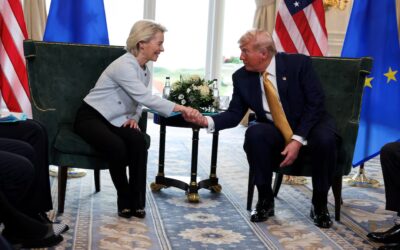
The Trade Deal That Changed Everything: U.S.–EU Breakthrough
In a bold move that will reshape the future of global trade, President Donald J. Trump announced a historic trade agreement with the European Union (EU). The deal redefines the economic relationship between the world’s two largest economies. The deal, hailed as a “generational modernization of the transatlantic alliance,” according to the White House, delivers unprecedented market access for American producers, workers, and innovators, while advancing U.S. economic and national security interests. A Monumental Economic Shift The agreement marks a pivotal victory for the United States. It positions the country as the world’s foremost destination for investment, manufacturing, and energy exports. Through 2028, the EU is expected to purchase a staggering $750 billion in U.S. energy exports. It will also invest an additional $600 billion into the American economy. These moves will drive growth in key industries and fortify the domestic manufacturing base. Furthermore, President Trump’s leadership continues to prioritize the American worker and bring jobs back home. This trade deal reflects his unshakable commitment to economic fairness, reciprocal trade, and revitalizing American industry. Structural Trade Reform for Generations The agreement goes far beyond symbolic diplomacy—in fact, it achieves real, enforceable structural reform with long-lasting impact. Under the new U.S.-EU Cooperation Agreement on Reciprocal, Fair and Balanced Trade, American farmers, ranchers, manufacturers, and small businesses will see sweeping new opportunities to grow and export their goods. One of the most groundbreaking aspects of the deal is the elimination of all EU tariffs on U.S. industrial goods. This change unlocks European markets for American-made products and reduces the longstanding goods trade deficit. The removal of these barriers will allow American products to compete and win in Europe’s lucrative markets, supporting high-quality U.S. jobs and production across various sectors. Strategic Tariff Restructuring As part of the agreement, the EU will adopt a new tariff framework that includes a 15% tariff on key sectors, such as autos, auto parts, pharmaceuticals, and semiconductors. Additionally, tariffs on steel, aluminum, and copper will remain at 50%. Both sides will engage in future discussions to secure critical supply chains. Altogether, this new tariff structure is expected to generate tens of billions in revenue annually, helping to restore trade balance and incentivize reshoring of critical industries. Major Trade Provisions and Breakthroughs This landmark agreement includes a comprehensive set of commitments that benefit the United States across multiple fronts: $600 Billion EU Investment: The EU will invest this sum in U.S. infrastructure, innovation, and job creation. This is in addition to the $100 billion EU companies already contribute annually. $750 Billion in U.S. Exports: Through 2028, Europe will depend more heavily on clean, reliable U.S. energy, reducing its reliance on adversarial nations and boosting U.S. energy dominance. Tariff and Quota Reforms: The EU will eliminate or significantly reduce tariffs and open up meaningful quotas across various sectors, allowing American goods to flow freely and competitively. Reducing Red Tape: The deal addresses non-tariff barriers that burden U.S. exporters—particularly small and medium-sized businesses—by streamlining EU regulations and procedures. Agricultural Access: U.S. pork and dairy products will face fewer bureaucratic hurdles, as sanitary certifications and other requirements are streamlined. Digital Trade Protections: The EU commits to not imposing unjustified digital trade barriers or network usage fees, and both parties agree to maintain zero customs duties on electronic transmissions. Economic Security and Innovation Alignment: The U.S. and EU will align on supply chain security, coordinate efforts on investment reviews, and guard against unfair practices and duty evasion from non-market economies. Military and Commercial Cooperation: The EU will increase purchases of U.S. military equipment and finalize new commercial deals in key sectors such as semiconductors and clean energy. Restoring Economic Sovereignty This deal is a direct result of President Trump’s “America First” agenda. That agenda is rooted in restoring national sovereignty, protecting American workers, and confronting decades of trade imbalances caused by one-sided policies and foreign protectionism. On April 2, President Trump declared a national emergency in response to persistent U.S. trade deficits driven by foreign practices that depressed domestic wages and consumer demand. That declaration laid the groundwork for a bold and necessary reset of America’s global trade posture. This agreement reflects the culmination of that reset. It liberates American producers from the stranglehold of unfair trade practices and builds a level playing field for U.S. industry. For too long, the U.S. tolerated foreign policies that stifled innovation and drained manufacturing capacity. That era is now over. A Historic Victory Where Others Failed Despite repeated attempts by past administrations, no American president had successfully negotiated a trade agreement of this magnitude with the European Union—until now. This historic win reaffirms America’s status as the global standard-bearer of economic leadership and strategic strength. In just six months, President Trump has catapulted the United States into a new era of industrial revival, global investment attraction, and energy supremacy. His approach combines bold action, strong negotiation, and an unyielding focus on results. He delivers what previous leaders promised but failed to achieve. A Triumph for the American Trade Future This U.S.-EU trade agreement is more than just a diplomatic milestone. It’s a victory for every American worker, farmer, inventor, and business owner. More importantly, it proves that bold leadership can reverse decades of economic decline. It reignites American industry and reclaims prosperity for future generations. President Trump’s historic deal with the European Union is a triumph of principle, power, and patriotism—and it has only just begun to reshape the world.
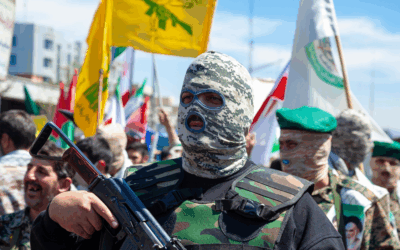
Iran Making Clear It’s Not Done Messing With America And Freedom
From Daily Caller News Foundation defense reporter Wallace White. Iran is attempting to rearm its militias across the Middle East after U.S. strikes crippled its nuclear program in June, according to CNN. Tehran has continued to arm the Houthi rebels in Yemen, Hezbollah in Lebanon and its various militias in Iraq and Syria as the Islamic Republic reels from its 12-day-war with Israel and the U.S., which left its nuclear infrastructure and military crippled, according to CNN. While Iran has sustained serious damage from the war, its proxies remain a key arm of its influence over the region as frequent agitators against Israeli and U.S. forces. (RELATED: USAID Quietly Sent Thousands Of Viruses To Chinese Military-Linked Biolab (DCNF Exclusive)) “Iran was never going to stop resupplying their groups,” Michael Knights, a senior fellow at The Washington Institute, told CNN. “They might not be able to send this much or regularly – more stuff might get intercepted – but if you’re the (Iranian) Revolutionary Guards’ Quds Force right now, what you’re trying to show is ‘we still exist, we’re intact, nothing has changed.’” A vessel carrying 750 tons of missiles and equipment bound for Yemen was intercepted by exiled Yemeni government loyalists Wednesday, according to U.S. Central Command (CENTCOM). Iran denied sending the shipment, saying it was a “deceitful attempt” to incriminate the regime. The Houthis have regularly launched attacks against Israel, with the Israeli Air Force mostly recently hitting Houthi targets Monday in response to the strikes. The rebels also have imperiled international shipping through the Red Sea, which prompted a U.S. bombing campaign in March. Increased Attacks On Western Entities, Personnel Suspected Iranian-backed groups in Iraq have increased their attacks on Western entities and personnel in the nation, mostly recently hitting five oil fields with drone strikes, Aziz Ahmad, a Kurdish Regional Government official, said on X on Wednesday. Two of the oil fields were owned by U.S. companies, according to CNN. (RELATED: COVID-19 mRNA Shots Linked To Higher Death Toll Amongst Cancer Patients) In Lebanon, Hezbollah has received waning support from Iran after the December 2024 fall of the former Bashar al-Assad regime in Syria and Israel’s 2024 killing of the militant group’s leader, Hassan Nasrallah. Hezbollah is a key ally to Hamas in its post-Oct. 7 war with Israel, regularly engaging with the Israeli Defense Forces (IDF) in skirmishes on the border. Hamas has also been met with relative silence from their Iranian allies in the wake of Tehran’s brief war with Israel. What Is Syria Up To? Meanwhile, the new government in Syria — formerly a key thoroughfare for Tehran’s weapons transfers to allied terrorist groups — has seized Iranian shipments of arms to Hezbollah over the past year, according to CNN. Iran agreed Monday to meet in Istanbul, Turkey, on Friday with France, Germany and the U.K. to discuss Tehran’s nuclear program. The European nations threatened Iran with renewed sanctions if there was not any movement on talks regarding its nuclear ambitions. The Iranian Foreign Ministry did not respond to the Daily Caller News Foundation’s request for comment.