

World News

Venezuela Frees 131 More Political Prisoners as Post-Maduro Transition Talks Continue
Venezuela’s transitional government announced the release of 131 more political prisoners this month under a program it calls “Peace and Democratic Coexistence,” part of an ongoing reconciliation effort in the roughly eight months since a U.S. military operation removed longtime authoritarian ruler Nicolás Maduro from power. The releases bring the total number of Venezuelans freed since Maduro’s January 3 removal to 1,046, according to government figures, though independent monitors have repeatedly reported lower confirmed numbers than the government claims. The rights group Foro Penal said it had independently verified at least 40 releases from the latest batch, while the opposition party Vente Venezuela confirmed 43. As of August 10, roughly 391 political prisoners remained behind bars, though outside estimates have varied over the course of the year. Delcy Rodríguez, Maduro’s former deputy, has governed Venezuela since his removal with what observers describe as significant influence from Washington. Her government has overseen a general amnesty law and a series of staggered prisoner releases throughout the year, though the process has been uneven — the United Nations has reported that Venezuela’s broader apparatus of repression remains largely intact despite the change in leadership, and documented dozens of new politically motivated arrests even as older cases were resolved. U.S.-brokered talks between the Rodríguez government and opposition representatives wrapped up this week, led by opposition figure Dinorah Figuera and National Assembly President Jorge Rodríguez, Delcy’s brother. The two sides agreed to keep working on recovering Venezuelan funds frozen overseas — which officials hope could help fund earthquake recovery efforts — and on reforms to the country’s judiciary. Secretary of State Marco Rubio called the latest prisoner releases “a crucial step for the nation’s reconciliation process.” Opposition leader Juan Pablo Guanipa, himself previously detained for several hours shortly after an earlier release before being placed under house arrest, welcomed the news but pressed for more, saying every freed prisoner represents “an immense relief” while demanding the government free all remaining political detainees “without exception, without delay.” Freed prisoners have not been given a clean break from state oversight. Under the terms of their release, many are barred from speaking publicly about their detention and must appear before judges on a monthly basis. As of earlier this summer, roughly 213 military personnel remained in custody on political charges tied to alleged conspiracies against the Maduro government before its collapse. The Trump administration, which called off a planned second wave of military strikes on Venezuela earlier this year in response to the government’s cooperation on releases, has continued to press Caracas publicly for faster progress, though it has stopped short of threatening renewed military action over the pace of the transition.

US-Canada Trade Talks Collapse as Trump Imposes 50% Tariffs, Threatens More on Autos
Trade negotiations between the United States and Canada broke down late Friday, triggering 50% U.S. tariffs on roughly $20 billion worth of Canadian goods and prompting Canadian Prime Minister Mark Carney to declare his country is “at war” economically with its largest trading partner. The tariffs took effect just after midnight Friday into Saturday, August 22, after last-minute talks collapsed. U.S. Trade Representative Jamieson Greer said Canada “declined to finalize the trade deal” and came back with “new demands and walk backs” despite what he called an American offer of “the best treatment of any major exporter.” The new duties hit a range of Canadian products, including dairy, alcoholic beverages, cement and hockey equipment. Carney rejected the U.S. characterization of how talks fell apart. “You’re at war when you get attacked. We got attacked,” he told reporters at a Saturday press conference, arguing that Washington had introduced unfair, last-minute changes that undermined the reliability of any deal. “Canada has what the world wants,” Carney said. “And we will not allow any nation to determine our future.” Canada has announced it will respond with matching, dollar-for-dollar tariffs beginning September 8, targeting American steel, dairy, appliances, agricultural equipment, pulp and paper, and electronics — an attempt to mirror the economic pain on industries and states that export heavily to Canada. The dispute escalated further this weekend when Trump threatened an additional round of 50% tariffs on Canadian cars, trucks, auto parts and steel, this time set to take effect January 1, 2027, unless a deal is reached. Trump urged automakers to shift production to the United States, promising “ZERO TARIFFS” for companies that manufacture domestically. He accused Canada of imposing steep tariffs on American farmers and blamed the imbalance for what he described as a $60 billion U.S. trade deficit with Canada, writing that the current arrangement is “not sustainable, and NOT ANYMORE!” The latest tariffs follow months of on-and-off negotiations. U.S. steel and aluminum tariffs on Canada had already doubled to 50% back in June, and the two countries pledged at the G7 summit in June to reach a broader deal within 30 days — a timeline that slipped after Washington briefly suspended talks in late June before restarting them at month’s end. U.S. officials have downplayed the near-term economic impact on the American side. Greer noted the newly tariffed goods represent roughly 5% of overall Canadian trade and just 0.06% of total U.S. consumption, though he acknowledged the effect “may be different” for Canada, which sends the large majority of its exports south of the border. Economists on both sides of the border are watching how the dispute filters through to consumers. Tariffs on dairy, alcohol and construction materials like cement are likely to show up in retail prices in both countries, while a prolonged standoff over autos and steel — industries deeply intertwined across the two countries’ supply chains — could raise vehicle prices and squeeze manufacturers in the U.S. Midwest and Ontario alike if it drags into 2027. No new talks have been publicly scheduled between the two governments as of this weekend.
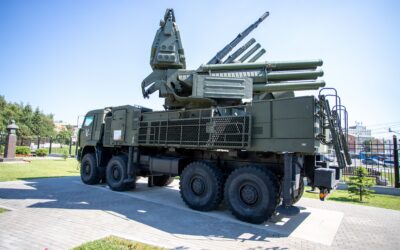
North Korea Fires Barrage of Missiles Toward the Sea, Rebuffing Trump’s Bid to Restart Diplomacy
North Korea launched a barrage of ballistic missiles into the sea off its eastern coast Thursday, a pointed rejection of a recent U.S. gesture aimed at reviving stalled diplomacy — the latest sign that Pyongyang intends to hold out for bigger concessions before returning to the negotiating table with the Trump administration. What Happened South Korea’s Joint Chiefs of Staff said North Korea launched about 10 short-range ballistic missiles from the country’s capital region around 5 p.m. local time Thursday, with the missiles traveling roughly 185 miles toward North Korea’s eastern waters. The launch came just a day after North Korean officials publicly dismissed a U.S. decision to scale back the size and duration of joint military drills with South Korea — a move Washington had made in an apparent bid to create space for renewed talks. Pyongyang’s Blunt Rejection Kim Yo Jong, the influential sister of North Korean leader Kim Jong Un, made clear Wednesday that the scaled-back drills weren’t enough to change North Korea’s calculus. “The provocative, aggressive nature of the drills won’t change even though their duration and size were reduced,” she said in a statement, adding a warning to Washington against reading too much into the gesture: “If the U.S. calculates that it can propagate its recent measure as the one of so-called good faith, they will not get the desired answer.” Kim Yo Jong also directly disputed a claim from President Trump that her brother had responded positively to his outreach for a conversation, denying that any such response had been given. Reading Between the Lines Despite the firm rejection, Kim Yo Jong notably avoided the kind of fiery, personally directed rhetoric North Korea has often employed in past standoffs. She specifically noted that personal relations between her brother and Trump remain “still excellent” — a detail analysts say suggests Pyongyang isn’t slamming the door on diplomacy altogether, but rather signaling that it wants Trump to offer more substantial concessions before agreeing to resume formal talks. In other words, Thursday’s missile launch appears designed as calibrated pressure rather than a definitive rejection of engagement. Asked by reporters Wednesday whether he expects to meet with Kim Jong Un before the end of the year, Trump responded simply: “Yeah, I will be” — suggesting the administration remains optimistic about eventually restarting the kind of high-profile, direct diplomacy that characterized Trump’s approach to North Korea during his first term. Part of a Longer Pattern Thursday’s launch fits a well-established pattern in the on-again, off-again relationship between Washington, Seoul, and Pyongyang. North Korea has repeatedly used missile tests over the years as a signal of displeasure with joint U.S.-South Korea military exercises, which it has long characterized as rehearsals for an invasion. Backdrop tensions have simmered for months, with North Korea previously dismissing earlier South Korean peace overtures as a “clumsy, deceptive farce” and warning of “terrible consequences” over prior rounds of joint drills. The Strategic Calculation For Pyongyang, using missile tests to register displeasure while stopping short of a full rhetorical escalation serves a specific purpose: it keeps pressure on Washington and Seoul without foreclosing the possibility of resumed talks, preserving North Korea’s leverage heading into any eventual negotiation. Supporters of the administration’s approach argue that offering to scale back joint drills was a reasonable, low-cost gesture worth attempting, and that North Korea’s calibrated response — firm rejection paired with warm personal comments about the Trump-Kim relationship — actually signals the door to eventual talks remains open, just not yet on terms Pyongyang is prepared to accept. Skeptics note that this is a familiar cycle: the U.S. offers a concession, North Korea rejects it as insufficient while conducting a weapons test to underscore the point, and the two sides remain at a standstill until one party is willing to move further. From that view, genuine breakthroughs with North Korea have historically required much larger, more concrete concessions than a modest reduction in drill size and duration. What Happens Next With Trump signaling continued optimism about an eventual meeting with Kim Jong Un and North Korea leaving the door open, if only narrowly, further diplomatic maneuvering seems likely in the coming months. In the meantime, South Korea’s military continues to closely monitor North Korean military activity, and additional missile tests or other displays of military capability remain a real possibility as both sides continue to feel out the other’s position ahead of any potential return to the negotiating table. This story is developing.

Trump Declares “Economic D-Day” Against Iran, Warns Any Nation Aiding Tehran Will Face “Tremendous” Consequences
President Trump announced an all-out escalation of economic pressure against Iran this week, declaring what he called “the most crushing economic operation ever taken against any country” and warning that any nation helping Iran evade sanctions — from oil buyers to shipping registries — will face severe financial retaliation of its own. What Trump Announced In an all-caps Truth Social post Wednesday evening, Trump declared “ECONOMIC D-DAY” against Iran, writing that the country’s military has been effectively dismantled and its economy is on the brink. “Their navy is gone, their air force is destroyed, their military factories are now rubble, their currency is worthless, and their country is hanging by a thread,” Trump wrote. He went on to warn that “ANY country that allows its financial institutions, businesses, airports, or government entities to provide any type of lifeline to Iran will itself face TREMENDOUS Economic Consequences.” Trump specifically called out the mechanisms he wants shut down: “Oil smuggling, swap lines, cash transfers, exchange houses, ship registries, front companies — It all needs to stop NOW. You know who you are,” he wrote, without naming specific countries. “This will be an ECONOMIC D-DAY, and we need all of our Allies to stand with the United States of America to isolate, and defeat, the Iran threat.” Building on an Existing Pressure Campaign Wednesday’s announcement extends a sanctions effort the administration has waged since April under the name Operation Economic Fury. Treasury Secretary Scott Bessent had previewed the escalation in comments the prior week, signaling that a fresh round of financial pressure was coming as diplomatic talks over ending the war remained stalled. The timing is notable: Trump’s announcement came just two days after the 60-day deadline for a comprehensive U.S.-Iran peace deal quietly expired without an agreement, and after Trump had said Tuesday he wasn’t interested in resuming talks with Iran at all — only to strike a somewhat more open tone by Wednesday, saying he remained willing to negotiate even as he unveiled the new economic offensive. Who Could Be in the Crosshairs Trump did not name specific countries in his post, but analysts note the threat carries real weight for several major economies. According to World Bank data, Iran exported to 147 countries and imported from 114 countries as of the most recent figures available, with China standing out as by far Iran’s largest trading partner, accounting for the bulk of both its oil and non-oil exports. That means Trump’s threat could realistically put pressure on relationships with China, India, and even Germany, depending on how aggressively the administration chooses to enforce it — a reminder that “economic D-Day” rhetoric, if followed through, carries diplomatic complications well beyond Iran itself. Notably, the announcement came just a day after the United Arab Emirates — a longtime U.S. ally — announced it would sever all financial and economic ties with Iran, following a fresh missile threat from Tehran. That move suggests at least some regional partners are already moving to align themselves with Washington’s posture ahead of any formal enforcement action. Iran’s Response Iranian Foreign Minister Abbas Araghchi dismissed Trump’s announcement as a distraction from problems at home. “Economic D-Day’ is a diversion from America’s own crisis: unprecedented debt and surging interest costs,” Araghchi wrote on X, pointing to a New York Times report that the U.S. national debt has now surpassed $40 trillion. He went on to accuse Washington of “economic terrorism,” arguing the campaign threatens the broader global economy and the sovereignty of countries well beyond Iran itself. “Doubling down on failed policies will only bring further defeat — and enmity of Iranians,” Araghchi added. A Pattern of Escalating Rhetoric Araghchi’s dismissal echoes a pattern he’s followed throughout the conflict, having previously accused Washington of ratcheting up sanctions every time an earlier round failed to change Tehran’s underlying position. That said, independent data on Iran’s economic condition lends some credibility to Trump’s framing: Iran has been grappling with a serious economic crisis since well before this latest round of pressure, with inflation having climbed above 48% at points over the past year and a substantial share of the population living below the poverty line, according to various estimates. The Market Reaction Trump’s threat had an immediate effect on global energy markets. Oil prices rose to their highest levels in a month following the announcement, as traders weighed the possibility that a serious crackdown on Iranian oil exports and the shipping networks that move them could tighten global supply. That’s a familiar dynamic in this conflict: virtually every major escalation, on either side, has rippled through energy markets given the ongoing standoff over the Strait of Hormuz, one of the world’s most critical oil shipping chokepoints. Reading the Strategy Supporters of the administration’s approach argue that after nearly six months of war and a missed diplomatic deadline, ratcheting up financial pressure on Iran and the networks helping it evade existing sanctions is a logical and appropriately aggressive next step — one that avoids further direct military escalation while still working to force Tehran back to the negotiating table on more favorable terms for the U.S. From this view, targeting the shadow economy that has allowed Iran to partially sustain itself despite existing sanctions is precisely the kind of comprehensive pressure that could finally break the current stalemate. Skeptics, including voices within Iran’s own government, argue that repeatedly escalating sanctions without offering a credible diplomatic off-ramp risks entrenching the conflict indefinitely rather than resolving it, and that framing the campaign in maximalist terms — an “economic D-Day” — sets an extremely high bar for what would actually count as success. Iran’s pointed counterattack referencing America’s own debt crisis also underscores a broader rhetorical strategy Tehran has employed throughout the war: reframing U.S. pressure campaigns as evidence of American overreach and financial strain rather than a position of strength. What Happens Next Trump has not yet specified exactly what mechanisms or timeline the new sanctions regime will follow, leaving considerable uncertainty about…
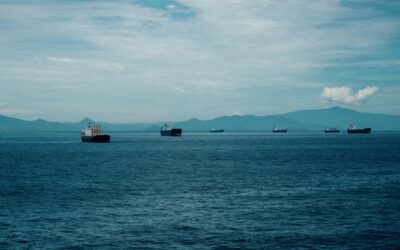
US and Iran Blow Through 60-Day Deadline for War Deal as Both Sides Dig In Over Control of Hormuz
The 60-day deadline President Trump set in June for reaching a comprehensive deal to end the war with Iran and resolve the dispute over its nuclear program quietly expired Monday, with both sides at a genuine impasse and neither showing meaningful signs of budging — a milestone that is largely symbolic at this point, since both American and Iranian officials had already acknowledged in recent weeks that the underlying agreement had effectively collapsed. What Was Supposed to Happen President Trump signed the memorandum of understanding with great fanfare at a ceremony in Versailles back in June, presenting it as the framework that would finally bring the war — then already several months old — to a close. The 14-point agreement, negotiated in Islamabad, called for an immediate halt to military operations and set a 60-day window for the two countries to negotiate a lasting deal covering two central issues: the lifting of sanctions on Iran and a longer-term resolution of the dispute over Iran’s nuclear program. The deadline could have been extended by mutual consent if both sides wanted more time and were making genuine progress. Instead, the agreement began unraveling almost immediately after it was signed. Disputes over implementation, and specifically over control of the Strait of Hormuz, took center stage almost from the start, effectively pushing the nuclear negotiations — ostensibly the more consequential issue — to the back burner entirely. How the Ceasefire Fell Apart The core problem, according to multiple officials and analysts who have tracked the negotiations closely, is that the U.S. and Iran walked away from the June agreement with fundamentally different understandings of what they had actually agreed to regarding the strait. Iranian officials pointed to what they characterized as ambiguous language in the ceasefire deal to declare that certain vessels were passing through the waterway without proper Iranian permission, and Iranian forces fired on some of those ships. U.S. forces retaliated by bombarding targets in southern Iran, touching off a cycle of attacks and counterattacks that ultimately reignited nearly two full weeks of direct fighting before Trump abruptly halted the American bombing campaign in an effort to salvage the broader deal. Iran’s Foreign Ministry has been blunt about where it places blame for the breakdown. Spokesperson Esmaeil Baghaei said this week that due to what he called “the flagrant and widespread violation of the memorandum of understanding by the United States,” meaningful dialogue never even began in the weeks following the June signing. “As a result, the discussion of the 60-day deadline completely lost its relevance,” Baghaei said, adding that U.S. sanctions have “no impact” on Iran and that the real obstacle to resolving the dispute isn’t a shortage of potential mediators — pointing to Pakistan and Qatar as countries already playing an active role, alongside several European nations that have signaled willingness to offer their own diplomatic good offices. Iran, notably, doesn’t even consider the 60-day countdown to have properly begun in the first place. A senior Iranian source told Reuters last week that Tehran never engaged in discussions with Washington about extending the ceasefire deadline, precisely because it doesn’t view the deadline as having been triggered given the U.S. actions Iran considers violations of the original agreement. The Sticking Point: Who Controls Hormuz Control of the Strait of Hormuz — the narrow waterway through which roughly a fifth of the world’s traded oil and gas passes — has emerged as the fundamental issue blocking any broader resolution, effectively sidelining the nuclear question that Trump had originally cited as central to his case for going to war in the first place. There has been no visible sign of compromise on the strait, and no indication that detailed, substantive nuclear talks have even started between the two sides. Nader Itayim, a political economist following the negotiations, captured the sense of drift surrounding Monday’s deadline bluntly: “Why are we still hanging on to this 17 August date like it means something?” That skepticism reflects a broader consensus among analysts that the deadline’s expiration changes little on the ground, since the practical reality — a stalemate over the strait, no active nuclear negotiations, and a war now well into its sixth month — was already well established before the calendar caught up to it. Neither Side Has an Easy Way Out Both countries face genuinely difficult trade-offs in deciding how to proceed from here. For the United States, acceding to Iran’s demands over the strait would mean effectively conceding control of a critical international waterway to Tehran — a outcome that would be widely read as a significant setback for the war’s stated objectives, including curbing Iran’s nuclear ambitions. At the same time, further escalating the conflict would draw down American supplies of advanced missile interceptors, continue rattling global energy markets, and risk pushing gas prices higher domestically ahead of November’s congressional elections — a politically unwelcome outcome for an administration that has repeatedly promised the war would be resolved quickly and cited economic strength as a core selling point. For Iran’s part, the government appears to feel considerably emboldened by how the standoff has played out so far, having successfully resisted American and Israeli military pressure for close to six months without capitulating on its core demands regarding the strait. That posture carries its own risks for Tehran, however, given the toll continued conflict and Western sanctions continue to take on Iran’s already strained economy. Where Things Stand for American Policy Supporters of the administration’s approach argue that refusing to cave to Iran’s demands over Hormuz — even at the cost of a missed diplomatic deadline — reflects appropriate resolve rather than failure, and that a war fought to prevent Iran from ever obtaining a nuclear weapon shouldn’t be judged a disappointment simply because a symbolic 60-day clock expired without a finalized agreement. Critics counter that the missed deadline underscores a broader pattern in which the administration’s stated war aims have consistently outpaced what it has actually been able to achieve on…

Poland Foils Unprecedented Russian Plot to Assassinate US-Ukrainian Citizen on NATO Soil
Polish security services thwarted a Russian intelligence plot to assassinate a dual U.S.-Ukrainian citizen in Warsaw, Prime Minister Donald Tusk announced Thursday, describing it as the first known instance of Moscow directing an attack against an American citizen on the territory of another NATO member nation — a stark escalation that comes amid mounting Western warnings about the possibility of a broader Russian provocation against the alliance. What Happened Tusk told reporters that Polish authorities detained a Russian national on Aug. 7 who had allegedly been recruited by Russian intelligence services to carry out the assassination. “At the last minute, thanks to the action of the Internal Security Agency and the police, we managed to prevent this execution, this attack,” Tusk said. He declined to identify the intended target by name, describing the individual only as “a thorn in the side of the Putin regime” who had been targeted specifically because they were “inconvenient” to Russian authorities. The operation to detain the suspect was carried out with direct cooperation from American intelligence services, according to Tomasz Siemoniak, the Polish minister overseeing Poland’s intelligence agencies, who confirmed the intended target was a U.S. citizen “of Ukrainian origin.” The suspect will be held in custody for three months as the investigation continues, according to a statement from Warsaw police. An Unprecedented Escalation, According to Warsaw Tusk was direct about the significance of the plot within the broader pattern of Russian actions against its critics abroad. “This marks the first instance where someone, acting on Russian orders, has attempted to assassinate an American citizen on the territory of another NATO country,” he said. He also warned that Poland and other alliance members should brace for similar attempts going forward. “We have to accept the assumption that we will likely face such pressure in the future, so we have a very difficult task ahead of us to avert the worst-case scenarios,” Tusk said. Part of a Broader, Documented Pattern Thursday’s disclosure adds to a growing list of alleged Russian plots against Kremlin critics and Ukraine supporters across European territory in recent years. In June, Russian caricaturist and Putin critic Semyon Skrepetsky — whose real name was Robert Kuzovkov — was shot dead at close range near his home in eastern Poland, an incident Tusk described at the time as bearing the hallmarks of a political assassination, though Polish officials have not formally attributed that killing to Moscow. Last November, a railway line connecting Warsaw to southeastern Poland was damaged in an explosion Tusk called an “unprecedented act of sabotage.” Poland is far from alone in confronting this pattern. French officials disrupted a plot last year aimed at killing Vladimir Osechkin, a Russian exile living under police protection who works to help military defectors flee the war in Ukraine. Lithuanian authorities separately disrupted a plot targeting a Lithuanian supporter of Ukraine, and German officials have broken up multiple plots of their own, including one targeting the head of a European defense manufacturer. Western security officials have said publicly that Russia has significantly escalated a campaign of sabotage and targeted killings against its critics and adversaries abroad since launching its full-scale invasion of Ukraine in 2022. Heightened Alarm About What Comes Next Thursday’s announcement lands amid a broader climate of alarm within NATO about the possibility of an even more direct Russian provocation against the alliance. Recently released U.S. intelligence assessments have indicated that Russian President Vladimir Putin could potentially order a limited attack against a NATO member state as early as this fall — a timeline that, if accurate, would place a genuinely serious escalation risk just months away. Poland, which shares a border with both Ukraine and Russian ally Belarus, has positioned itself as one of the most important logistical and military hubs supporting Ukraine’s defense against the ongoing Russian invasion, a role that Warsaw itself has repeatedly said makes it a particular target for Russian retaliation and sabotage. Tusk’s government has pointed to this pattern of incidents — the railway sabotage, the Skrepetsky killing, and now the foiled Warsaw assassination plot — as evidence that Russia is actively testing the alliance’s resolve and internal security capabilities well short of a direct military confrontation. Why This Matters for the US and NATO For American policymakers, the fact that a U.S. citizen was the specific target of a Russian-directed assassination attempt on NATO soil adds a new and direct dimension to an already tense standoff between Washington and Moscow. Supporters of continued robust U.S. and NATO support for Ukraine point to incidents like this as concrete evidence of the stakes involved in the broader confrontation with Russia — arguing that a Kremlin willing to order assassinations of American citizens on the territory of a treaty ally is not a government that responds to anything other than sustained strength and deterrence. Others have cautioned that incidents like this also raise the risk of miscalculation or unintended escalation between nuclear-armed powers, underscoring the delicate balance NATO members are attempting to strike between supporting Ukraine and avoiding a direct, wider confrontation with Moscow. What Happens Next The detained suspect remains in Polish custody as the investigation continues, and officials have not indicated whether additional individuals connected to the plot might still be identified or apprehended. Given Tusk’s explicit warning that Poland and its NATO allies should expect further similar attempts, the incident is likely to further intensify counterintelligence cooperation among alliance members already on heightened alert for Russian sabotage and targeted attacks against government critics and Ukraine supporters operating on their soil. This story is developing.
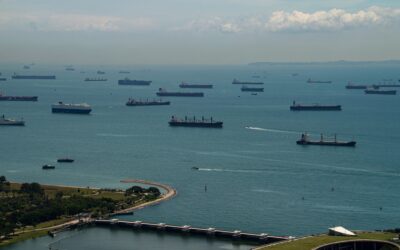
Iran Rejects Trump’s Claim of Controlling the Strait of Hormuz, Insists Waterway Is Fully Under Its Command
Iran’s military dismissed as “lies” comments from President Trump this week in which he claimed the United States now controls the Strait of Hormuz, with Tehran insisting the strategically vital waterway remains fully under Iranian control — the latest sign that the diplomatic momentum touted by American officials in recent weeks remains far shakier than the administration’s public messaging has suggested. The Dispute Over Who’s Actually in Control President Trump has repeatedly claimed in recent public remarks that the sustained American and allied pressure campaign against Iran has succeeded in securing the Strait of Hormuz for international shipping, framing it as a direct outcome of the administration’s military and diplomatic strategy toward Tehran. Iran’s military flatly rejected that characterization Thursday, calling the claim false and asserting that the waterway — one of the most critical oil shipping chokepoints in the world — remains under Iranian jurisdiction and control, not American. The disagreement underscores a pattern that has persisted throughout recent negotiations over the strait: American officials have repeatedly signaled optimism about breakthroughs in shipping arrangements, while Iranian officials have just as consistently pushed back on the specifics of that optimism, insisting that any agreements reached are narrower, more conditional, or more favorable to Iran than U.S. statements have implied. A Familiar Pattern of Mixed Signals This isn’t the first time the two sides have offered conflicting accounts of the same negotiations. Iran and Oman had separately announced progress toward agreeing on shipping corridor coordinates through the strait, but Iranian officials were careful at the time to insist that any Oman-specific arrangement was entirely separate from, and did not represent, a broader resolution involving the United States. Iran’s deputy foreign minister said explicitly that “the path of understanding is between Iran and Oman, and no negotiations with the U.S. have taken place during this period” — a direct contradiction of Trump’s own public statements insisting that talks with Iran were underway “whether Iran wants to admit it or not.” Adding another layer of complication, Iranian lawmakers have separately advanced legislation in parliament that would permanently bar U.S. and Israeli vessels from the strait altogether, alongside a broader fee structure targeting other commercial shipping — hardly the posture of a country that considers the waterway’s control question settled or resolved in America’s favor. Why the Strait Matters So Much The Strait of Hormuz sits at the mouth of the Persian Gulf and is one of the most strategically significant shipping corridors on Earth, with roughly a fifth of the world’s oil and liquefied natural gas exports passing through it. At its narrowest point, the strait is just 21 miles wide, meaning any dispute over territorial control and shipping lanes carries substantial weight for global energy markets — a fact reflected in oil price movements that have swung repeatedly in recent weeks based on even incremental developments in the standoff. Iran effectively closed the strait to normal shipping traffic in March in response to joint U.S.-Israeli strikes that launched the broader war in late February, and Iranian forces have since repeatedly threatened commercial vessels attempting to transit the waterway. An earlier ceasefire framework covering safe passage collapsed in July, reigniting both the fighting and the shipping disruption that has weighed on global energy prices for months. The Administration’s Framing Versus the Reality on the Ground Trump administration officials, including Secretary of State Marco Rubio and Treasury Secretary Scott Bessent, have continued to express public confidence that a comprehensive resolution to the shipping standoff is close at hand, pointing to the progress in Iran-Oman talks and the resumption of some vessel traffic through the strait in recent days as evidence the pressure campaign is working. Supporters of that framing argue that Iran’s public denials and defiant rhetoric are standard negotiating theater from a government that doesn’t want to appear to be capitulating to American pressure, even as its actual conduct — allowing more ships through, engaging in serious talks with Oman — tells a different story. Skeptics of that optimistic reading point to Thursday’s blunt rejection of Trump’s control claim, together with the parliamentary bill targeting American and Israeli shipping specifically, as evidence that Iran continues to view itself as negotiating from a position of real strength and sovereign authority over the strait — not as a country capitulating to outside pressure. From that perspective, American officials’ repeated public claims of progress may be running ahead of what Tehran has actually agreed to accept. What Happens Next With Iran continuing to publicly and directly contradict American claims about the state of affairs in the strait, and with hardline legislation targeting U.S. and Israeli shipping still moving through Iran’s parliament, a fully resolved, mutually acknowledged agreement over Hormuz appears to remain elusive despite months of on-and-off negotiations. How much further diplomatic progress can realistically be made while the two sides can’t even agree on the basic factual premise of who currently controls the waterway is likely to remain one of the more difficult underlying questions shaping the broader path toward ending the conflict. This story is developing.
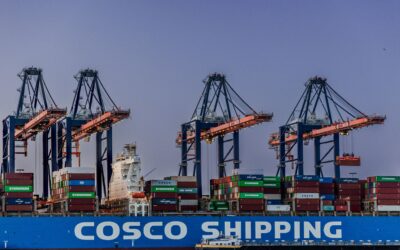
Deadly Explosion Rocks Europe’s Largest Port, Raising Fresh Questions About Energy Infrastructure Security
An explosion tore through a fuel storage facility at the Port of Rotterdam on Thursday, killing at least one person and injuring several others, in an incident that struck at the heart of Europe’s largest and most strategically important port — one that also handles a substantial share of the continent’s oil, gas, and refined fuel supply chain. What Happened The blast occurred at approximately 11:30 a.m. local time at a facility operated by Gunvor Energy, a major commodities trading company, located in the Europoort industrial section of the sprawling Rotterdam port complex. Rotterdam police confirmed at least one fatality and multiple injuries, with several of the wounded transported to hospitals. A trauma helicopter was dispatched to the scene alongside ground-based emergency crews. Authorities moved quickly to secure the area as a crime scene while investigators worked to determine the cause. Rotterdam police spokesperson Daan Valkenburg told reporters at the scene that no definitive conclusions had been reached and that officials were “keeping all possibilities open.” In a subsequent social media post, police described the incident as appearing, for the time being, to be a workplace accident, though they stopped short of ruling out other explanations. The Dutch labor inspectorate was also dispatched to the site as part of the investigation, standard procedure for an industrial accident of this scale. Dutch broadcaster NOS reported that a maintenance crew had reportedly been working on a section of pipes at the facility when the explosion occurred, though authorities have not officially confirmed that account as the definitive cause. Visible damage included a heavily damaged wall and clear signs of an explosion on what appeared to be a storage tank at the site. A Company Statement Gunvor Group, which operates the affected site, confirmed the fatality and said six people were injured in the incident — a slightly higher injury count than initial police estimates. In a statement, the company said the area had been secured and an investigation was underway, though it declined to confirm reports from local authorities that an explosion, specifically, had occurred. Notably, Gunvor’s website indicates the company closed the actual refining operations at this particular site back in 2024, with the facility since serving primarily as a storage terminal for crude oil and refined petroleum products rather than an active refinery — meaning Thursday’s blast occurred at a storage and logistics facility rather than at an operating refinery unit. The Port of Rotterdam Authority, which oversees the broader port complex but does not directly operate individual company facilities, issued a statement expressing condolences. “We are deeply saddened by the tragic incident that occurred this morning at Gunvor Energy in the Port of Rotterdam,” the authority said. “Our thoughts are with the family and loved ones of the deceased victim and with those who were injured.” A Chaotic Morning at the Port Thursday’s explosion was notably not the only significant incident at the vast port complex that morning. According to Dutch outlet NL Times, the Gunvor explosion was actually the third major emergency response within the Rotterdam port area that day. Earlier in the morning, a malfunction was reported at a nearby ExxonMobil refinery facility on Botlekweg, triggering a formal “Grip 2” regional emergency declaration due to a power outage at that site, though officials confirmed there was no fire and firefighters stood by only as a precaution. An ExxonMobil spokesperson said the outage affected only a limited number of processing units at that facility. Separately, emergency services also reported a major power failure affecting another section of the port, where a high-voltage transformer caught fire under circumstances that remain unexplained. That fire prompted several companies operating in the surrounding area to halt operations and evacuate workers as a precaution, though by mid-afternoon, power had been fully restored to the affected section of the port, which is home to numerous other oil and gas companies. Authorities have not yet said definitively whether the transformer fire, the ExxonMobil power outage, and the Gunvor explosion are connected in any way, though the unusual clustering of three separate serious incidents within the same industrial complex on a single morning has drawn its own scrutiny. Smoke from the incidents drifted toward the nearby towns of Vlaardingen and Maassluis, prompting a wave of concerned calls from residents in those areas, though officials have not reported any specific health warnings tied to the smoke. Why the Port Matters So Much The Port of Rotterdam is Europe’s largest port by a wide margin and serves as one of the continent’s central hubs for oil, gas, and refined petroleum product logistics, alongside broader container shipping and general cargo operations. Any significant disruption to operations there carries outsized implications for European energy supply chains, particularly given the port’s role as an interconnected node linking pipeline networks and inland waterway shipping between Rotterdam and other major European industrial centers, including Antwerp. That strategic importance is precisely why incidents like Thursday’s — even when they ultimately prove to be workplace accidents rather than anything more sinister — tend to draw close attention from energy market analysts and European security officials alike. European energy infrastructure has faced heightened scrutiny over the past several years amid broader concerns about sabotage, aging industrial infrastructure, and the general vulnerability of critical energy nodes to disruption, whether from accidents, extreme weather, or deliberate attack. What Happens Next Dutch investigators, including the labor inspectorate, are continuing to work to determine the precise cause of Thursday’s explosion, and it may be some time before officials reach a definitive conclusion about whether the maintenance work reportedly underway at the time played a direct role. In the meantime, the broader port complex appears to have returned to largely normal operations following the earlier power restoration, though the human toll of the day’s events — one confirmed death and several injured workers — remains the most immediate and serious consequence of what unfolded at one of the world’s most critical energy logistics hubs. Given the port’s central role in…

Colombia’s Deadliest Earthquake in a Generation Kills More Than 160, Tests New President’s First Crisis
A powerful 7.4-magnitude earthquake tore through western Colombia early Monday morning, killing more than 160 people, collapsing dozens of buildings, and leaving hundreds still missing — the strongest quake to strike the country in more than two decades and an immediate, defining crisis for a president who had been sworn into office only days earlier. What Happened The earthquake struck near San José del Palmar on Colombia’s Pacific coast shortly after 7:30 a.m. local time Monday, with a depth of roughly 103 kilometers. Colombia’s Geological Service confirmed it as the strongest quake to hit the country so far this century, and it was followed by multiple aftershocks. The tremor was powerful enough to be felt across the border in neighboring Ecuador and Panama. By Monday evening, officials with the Colombian Association of Capital Cities put the death toll at 132, with 570 people reported injured — figures authorities warned were likely to keep climbing as search and rescue operations continued. By Tuesday morning, NBC News reported the confirmed death toll had risen further, to at least 169. The hardest-hit areas were concentrated in the Risaralda region, home to the city of Pereira, where at least 60 deaths were reported, and the Valle del Cauca region, home to Colombia’s third-largest city, Cali, where at least 27 people died, including three children. Widespread Destruction Across Multiple Cities The quake caused damage across a wide swath of western Colombia, hitting Cali, Pereira, Quibdó, and Manizales in particular. Local officials reported that at least 86 buildings had fully collapsed and hundreds more were damaged, with President Abelardo de la Espriella saying the quake destroyed or seriously damaged more than 1,500 homes, along with more than a dozen health centers and numerous schools. Seven airports across the affected region suspended operations in the quake’s immediate aftermath, and five capital cities were placed under a red alert. In Cali, city officials said at least 188 people remained missing as of Monday evening. Eyewitnesses described scenes of chaos and destruction. Jorge Moncayo, a 64-year-old taxi driver in the city, told the Associated Press he watched plumes of dust shoot into the air as buildings came down around him. Juan Carlos Osorio, who helped dig through rubble at a collapsed structure, told Colombian broadcaster Caracol Television that the sound of the building coming down “sounded like a bomb.” Neighbors organized themselves into human chains to help move debris by hand while waiting for heavier equipment to arrive. Álvaro López, a Cali resident who watched search efforts unfold while holding his dog, described the scope of the damage bluntly: “Our building has basically been left in ruins, and the building next to ours? Completely collapsed.” In Pereira, rescue crews evacuated 16 people who had been trapped for six hours inside a cable car system used for public transit in the mountainous city. A Region Especially Vulnerable The earthquake’s epicenter fell near Colombia’s Chocó region, one of the country’s poorest and most remote areas, nestled deep in Pacific coastal jungle and reachable in many parts only by boat or small aircraft. That remoteness has significantly complicated damage assessment and relief efforts, with communications outages in the hours after the quake leaving some areas without any mobile phone service and delaying an accurate accounting of the toll from the region closest to where the quake actually struck. Colombia sits along the Pacific “Ring of Fire,” the extensive chain of seismic fault lines encircling the Pacific Ocean responsible for the majority of the world’s earthquakes, making the country and its neighbors chronically vulnerable to major seismic events. Colombian officials noted that the country has taken concrete steps to prepare for exactly this kind of disaster since a devastating 1999 earthquake, including instituting evacuation drills conducted at least twice annually in major cities such as Bogotá, Medellín, Barranquilla, and Cali. An Unwelcome Echo of Venezuela’s Recent Disaster For many in the region, Monday’s earthquake carried an especially painful resonance: memories remain fresh of the devastating twin earthquakes that struck neighboring Venezuela in June, which together killed more than 6,000 people and left thousands more displaced, with recovery efforts there still ongoing more than a month later. NPR noted that residents and rescue workers searching through rubble in Cali described scenes strikingly similar to those still playing out across the border in Venezuela. A Test for a Brand-New President The timing of the disaster carries particular political weight in Colombia. The earthquake struck just days after Abelardo de la Espriella was sworn in as the country’s new president, thrusting his administration into a major national crisis before it had barely begun. De la Espriella declared a national state of emergency Monday afternoon, pledging the full resources of the federal government toward rescue and relief efforts. “The national government has all of its capabilities deployed to protect lives, assist affected communities and deliver aid wherever it is needed,” he said in a national address. “The first priority is rescuing the people trapped under the rubble.” International Response The United States moved quickly to offer support. The State Department announced it is committing $15.5 million to Colombia specifically for shelter, food, protection services, and ongoing earthquake damage assessments. The U.S. Embassy in Bogotá also confirmed it is actively assisting American citizens affected by the disaster — a notable point given that hundreds of thousands of Americans visit Colombia annually, making the U.S. the largest single source of tourists to the country. What Comes Next With search and rescue operations still actively underway in hard-hit cities and communications still limited in some of the more remote areas near the epicenter, officials caution that the full scope of the disaster — both in terms of lives lost and total economic damage — likely won’t be clear for days or even weeks. For a president barely into his first week in office, the response to this disaster is likely to shape public perception of his administration’s competence and priorities well beyond the immediate crisis itself, as reconstruction in…

Ukrainian Drone Strike Kills 13 in Russian Oil City as Fuel Crisis Grinds On Deep Into Its Second Year
A Ukrainian drone strike on the Russian city of Nizhnekamsk killed 13 people, including a child, and wounded 75 others on Monday, regional authorities said, in one of the deadlier single strikes of a sustained Ukrainian campaign against Russia’s oil refining infrastructure that has now dragged the country’s fuel supply into its second year of sustained disruption. What Happened Authorities in Russia’s Tatarstan region confirmed the death toll following the strike, which the Ukrainian military said targeted an oil refinery in the city. Russian officials did not publicly confirm what the drones were aiming at, but Nizhnekamsk is a significant refining hub, home to two separate refineries as well as a major petrochemical plant — making it a logical target within Ukraine’s broader campaign to degrade the revenue and fuel supply that sustains Russia’s war effort. Ukraine has targeted Russian oil facilities with long-range drones nearly every day in recent months, part of a strategy Kyiv has pursued with increasing intensity since a dramatic escalation began in the second half of 2025. The strategy’s stated logic is straightforward: Russia’s oil and gas exports remain one of the Kremlin’s primary sources of war financing even amid extensive Western sanctions, and damaging domestic refining capacity simultaneously starves military fuel supplies while pressuring Russian civilians and, by extension, the political leadership overseeing the war. A Fuel Crisis Now Well Into Its Second Year Monday’s deadly strike is only the latest chapter in what has become a sustained, nationwide Russian fuel crisis. The trouble began in earnest in August 2025, when Ukraine dramatically ramped up drone strikes on Russian energy infrastructure, hitting more than a dozen facilities in a three-week span, concentrated heavily in Ryazan and Volgograd Oblasts. A late-August strike on the Ryazan refinery — one of the primary arteries supplying fuel to Moscow — was described by independent oil and gas analyst Boris Aronstein at the time as triggering “the most severe crisis in recent years,” with Russia’s repair capacity unable to keep pace with the frequency and coordination of the drone waves. The damage rippled outward from there. Crimea and Russia’s far east were the first regions to experience shortages, and by late September the problems had spread into the Volga river region and southern and central Russia. Forbes reported that conditions deteriorated quickly nationwide, with rising prices, rationing, long lines at gas stations, and pumps running dry in some areas. Nearly Every Region Now Affected Nearly a year later, the crisis hasn’t resolved — if anything, analysts say it has deepened. According to CNN’s analysis, nearly all of Russia’s 83 regions are now experiencing gasoline shortages or supply disruptions of some kind, with widespread rationing at gas stations. Sumit Ritolia, lead analyst for refining supply and modeling at commodities intelligence firm Kpler, estimated Russian gasoline production is currently running around 20% below domestic demand as a direct consequence of the sustained Ukrainian strikes, with refinery throughput sitting at multi-year lows. What’s changed compared to previous bouts of Russian fuel shortages, analysts say, is the sheer scale and persistence of the current campaign. “The key difference is the scale and persistence of the attacks,” Ritolia said, noting that Russia is also still working through repair backlogs from the previous year’s strikes even as new attacks continue to arrive. Sergey Vakulenko, a former longtime Russian oil and gas industry veteran now at the Carnegie Russia Eurasia Center, described the dynamic in stark terms: “In this race between the repairers and the attackers the balance is shifting” — in Ukraine’s favor. Repeated Hits on Major Refineries The strikes have repeatedly targeted some of Russia’s largest and most economically significant refineries. The Slavneft-YANOS facility in Yaroslavl — among Russia’s top-five largest refineries, with the capacity to process up to 15 million metric tons of crude annually — has been struck seven separate times in 2026 alone, according to reporting from the Kyiv Post, forcing repeated temporary shutdowns at a plant majority-owned by Russian state energy giants Rosneft and Gazprom. Ukrainian President Volodymyr Zelenskyy has been direct about the strategic rationale behind the sustained campaign, arguing that Russia’s energy sector both funds and directly fuels the broader invasion, and that continuing to degrade it is one of the more effective non-front-line levers Ukraine has to pressure Moscow. Western analysts broadly agree the strikes have had a real battlefield effect as well, with some assessing that the fuel disruption has measurably slowed Russian military logistics and added to pressure on the Kremlin to eventually return to serious negotiations. Moscow’s Response So Far Russia has taken emergency measures to try to manage the fallout, including a suspension of gasoline exports intended to preserve domestic supply while damaged refineries are repaired. Those stopgap measures, however, have so far failed to meaningfully outpace the continuing tempo of Ukrainian strikes, and the shortages have persisted and in some respects worsened over the past year rather than resolving. The Bigger Strategic Picture For supporters of continued Western military and intelligence support to Ukraine, the sustained success of this campaign is held up as clear evidence that Kyiv retains real capability to impose meaningful costs on Russia more than four years into the war, using long-range drone technology developed and scaled largely with Western backing. The strategy also carries a harder edge that’s drawn less public attention until strikes like Monday’s: refinery and energy-infrastructure targets sit inside populated Russian cities, meaning civilian casualties — like the 13 killed and 75 wounded in Nizhnekamsk — are increasingly a feature of this phase of the war rather than a rare exception. What Comes Next With Ukraine showing no signs of scaling back the pace of its refinery campaign and Russia continuing to struggle to keep repair efforts ahead of new strikes, the fuel crisis appears likely to remain a persistent feature of the Russian home front for the foreseeable future. How much longer Moscow can absorb the economic and political costs of nationwide fuel shortages — even as it continues prosecuting the broader…