

Crash
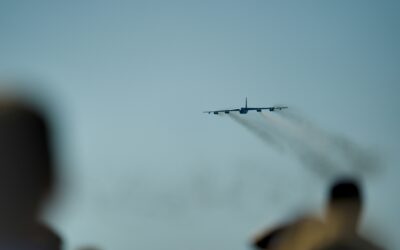
High Desert Disaster: B-52 Stratofortress Bomber Crashes Upon Takeoff at Edwards Air Force Base
A catastrophic military aviation mishap has struck the heart of the American aerospace testing grid. On Monday, June 15, 2026, a U.S. Air Force B-52 Stratofortress heavy bomber crashed shortly after taking off from the main airfield at Edwards Air Force Base in Southern California. The incident triggered an immediate, large-scale emergency response. While details regarding the fate of the crew remain fiercely guarded by military officials, the crash has sent shockwaves through the defense community, marking a rare and severe hull loss for the Air Force’s most enduring strategic bomber fleet. At The Modern Memo, we examine the raw timeline of the crash, the strategic testing footprint of Edwards Air Force Base, and the aging mechanics of the multi-million-dollar nuclear-capable platform. The Incident: A Firestorm on the Runway The mishap materialized in the late morning hours over California’s high desert, interrupting routine flight operations at the sprawling military testing installation. The Takeoff Failure: According to a formal statement released by Edwards Air Force Base officials, the B-52 bomber crashed “shortly after takeoff” at approximately 11:20 a.m. local time on Monday. Local media reports and unofficial military monitoring groups indicate the massive aircraft came down on or directly adjacent to the base’s main runway. The Fireball: Aerial footage from regional news helicopters and photographs taken by eyewitnesses captured a massive, rolling column of thick black smoke billowing high into the sky above the Mojave Desert. Intense, ground-level fires actively consumed the wreckage of the aircraft as military fire crews rushed to suppress the flames. The Crew Status: The Air Force has not yet released official metrics regarding casualties or injuries. A standard B-52H flight complement typically consists of five crew members. In a brief social media dispatch, base public affairs stated: “Emergency crews immediately responded to the scene and the situation is ongoing. More information will be provided as it becomes available.” The Edwards Footprint: Why Was the Bomber There? While operational B-52 squadrons are permanently stationed at Barksdale Air Force Base in Louisiana and Minot Air Force Base in North Dakota, the aircraft at Edwards are part of a highly specialized developmental ecosystem. Edwards Air Force Base serves as the premier testing hub for the Air Force Test Center and the 412th Test Wing. The B-52 airframes assigned here are heavily instrumented testbed platforms used to flight-test upcoming weapon systems, cruise missiles, and cutting-edge hypersonic projectiles. Because of the base’s role in vanguard engineering, investigators will be aggressively analyzing whether the aircraft was carrying an experimental payload, mock munitions, or testing newly integrated avionics packages when the takeoff sequence failed. The Aging Titan: Managing a Century-Old Fleet Valued at roughly $110 million per unit, the subsonic, eight-engine B-52 Stratofortress is capable of hauling a staggering 70,000-pound payload of conventional or nuclear ordnance. The Air Force currently manages an inventory of just 76 B-52H bombers. The service has committed billions of dollars to an aggressive modernization program—including installing brand-new Rolls-Royce F130 commercial engines and upgraded radar arrays—designed to keep the Cold War-era airframes flying until nearly a century old. However, defense analysts warn that the massive backlog of structural maintenance, combined with the extreme physical strain placed on these decades-old airframes during specialized test flights, creates a volatile operating environment where sudden component failures can turn fatal in seconds. Final Word The grounding and destruction of a B-52 Stratofortress at Edwards Air Force Base is the definitive proof that even America’s most reliable strategic assets face extreme risks on the modern flightline. When you look past the standard military PR deflections and focus entirely on the hard data—a $110 million nuclear-capable bomber lost shortly after takeoff, a massive airfield fire producing smoke visible across counties, and the critical status of a five-person crew hanging in the balance—you gain an unvarnished view of the brutal realities of military aviation testing. Quality information replaces the sterile press releases with the cold mechanics of a high-risk aerospace environment. It allows you to see that while the Pentagon plans to fly these giants for another thirty years, the physical limits of aging aluminum and complex machinery will always have the final say. As a formal military safety board convenes to sift through the blackened wreckage, the Air Force must now determine whether this crash was an isolated mechanical anomaly, or a grim warning sign for the rest of the aging fleet.

Tragedy at LaGuardia: Pilot and Co-Pilot Killed in Runway Collision Amid Shutdown Strain
A devastating ground collision at New York’s LaGuardia Airport late Sunday night has left two pilots dead and dozens injured, paralyzed one of the nation’s busiest travel hubs, and raised urgent questions about aviation safety during the ongoing federal funding lapse. At The Modern Memo, we analyze the timeline of the Air Canada Express crash, the communication breakdown in the tower, and how a hollowed-out DHS workforce is struggling to maintain order under the pressure of a month-long shutdown. The Incident: A Fatal Miscalculation on Runway 4 Just before midnight on March 22, 2026, Air Canada Express Flight 8646—a Bombardier CRJ-900 operated by Jazz Aviation—was completing its arrival from Montreal. As the jet touched down and began to decelerate, it struck a Port Authority Aircraft Rescue and Firefighting (ARFF) vehicle at high speed. The Impact: The force of the collision crushed the nose of the aircraft and severed the cockpit. Tragically, both the pilot and the co-pilot were killed instantly. The Injury Count: Beyond the two fatalities, 41 people were transported to local hospitals. This included 39 individuals from the aircraft and the two officers inside the fire truck. While most have been released, nine remain hospitalized with serious injuries, including one passenger suffering from a brain bleed. The Miraculous Survival: In a harrowing detail, a flight attendant was reportedly ejected from the aircraft while still strapped to her jumpseat. Rescuers found her on the tarmac; she is currently in stable condition. The Tower Audio: “Stop, Stop, Stop!” Preliminary investigations and leaked Air Traffic Control (ATC) recordings suggest a catastrophic breakdown in runway coordination. The fire truck was responding to a separate emergency—a United Airlines flight reporting a suspicious odor—and had been granted permission to cross the active runway. Conflicting Clearances: Audio captures the moment a controller cleared the fire truck to “cross Four at Delta” just as the Air Canada flight was on its landing roll. The Frantic Correction: Seconds later, the same controller realized the impending disaster, shouting, “Stop, Truck 1, stop! Stop, stop, stop!” It was too late. Admission of Error: Roughly 20 minutes after the crash, the controller was heard on an open mic stating, “We were dealing with an emergency earlier… I messed up.” The Shutdown Context: A System at the Breaking Point While the NTSB has launched a full investigation, the crash occurred against the backdrop of a 37-day Department of Homeland Security (DHS) shutdown. The strain on the aviation system has moved from “inconvenience” to “lethal vulnerability.” Staffing Impacts: LaGuardia was already reeling from high TSA and FAA absenteeism as workers faced their second $0 paychecks this week. Fatigue and “minimalist” staffing levels in high-stress environments like ATC towers are now being scrutinized as contributing factors. The National Gridlock: With LaGuardia’s runways shuttered for nearly 15 hours, over 600 flights were canceled on Monday alone. The closure rippled through the East Coast, exacerbating a travel landscape already thinned by the funding impasse. Final Word The tragedy at LaGuardia is the nightmare scenario critics of the shutdown have feared. When you look past the official “accident” labels and focus on the data—the two dead pilots, the frantic tower recordings, and the exhausted, unpaid workforce—you gain a clearer picture of a national infrastructure in decline. Quality information replaces the noise of partisan finger-pointing with the reality of a system that cannot function on “essential” status alone. It allows you to see this crash not as an isolated mistake, but as a definitive warning that security and safety are the first casualties of political gridlock. By staying informed on the investigation’s findings, you align your perspective with the urgent need for a fully funded, fully focused defense of our skies. Where Facts, Context, and Perspective Matter At The Modern Memo, our goal is simple: to provide clear, well-researched reporting in a media landscape that often feels overwhelming. We focus on substance over sensationalism, and context over commentary. If you value thoughtful analysis, transparent sourcing, and stories that go beyond the headline, we invite you to share our work. Informed conversations start with reliable information, and sharing helps ensure important stories reach a wider audience. Journalism works best when readers engage, question, and participate. By reading and sharing, you’re supporting a more informed public and a healthier media ecosystem. The Modern Memo may be compensated and/or receive an affiliate commission if you click or buy through our links. Featured pricing is subject to change. 📩 Love what you’re reading? Don’t miss a headline! Subscribe to The Modern Memo here!