

Sports

Tadej Pogačar Wins Historic Fifth Tour de France, Joining Cycling’s Greatest Ever
Slovenian cyclist Tadej Pogačar completed one of the most dominant runs in modern cycling history this week, capturing his fifth Tour de France title and becoming just the fifth rider ever to win the race three years running, joining an elite club that includes some of the sport’s most legendary names. A Dominant Three Weeks Pogačar entered the race’s final stage in Paris with a commanding seven-minute lead, all but guaranteeing the win before the peloton even hit the Champs-Élysées. His total time across the grueling three-week race — which spanned more than 3,321 kilometers and 54,450 meters of elevation gain, starting in Barcelona — came in at 73 hours, 56 minutes, and 26 seconds, nearly six and a half minutes faster than his nearest competitor, Belgium’s Remco Evenepoel. Dutch rider Mathieu van der Poel won the final stage itself by the thinnest of margins, edging out Pogačar in a two-man sprint after the pair broke away from the pack late in the race — but the stage win did nothing to change the overall outcome, which had been effectively sealed days earlier. Joining Cycling Royalty With this fifth overall title, Pogačar becomes just the fifth cyclist in history to win the Tour de France three years in a row, joining a group that includes Jacques Anquetil, Eddy Merckx, Bernard Hinault, and Miguel Induráin — legendary names in the sport’s history. He’s the first rider to pull off three straight wins since Chris Froome accomplished the feat from 2015 to 2018. “Unbelievable,” Pogačar told reporters after crossing the finish line, thanking his fans and team for the support that carried him through another grueling campaign. A Race Marked by More Than Racing This year’s edition wasn’t without disruption. The final stage’s route was shortened after security and police resources originally assigned to the race were reassigned to help battle wildfires burning in southwest France, a reminder of how extreme summer conditions across Europe are increasingly bleeding into major sporting events. Even with the shortened course, the finale delivered one of the more dramatic sprint finishes of the tournament, capping off a Tour that once again cemented Pogačar’s place among the sport’s all-time greats. This story is developing.

MLB Trade Deadline Heats Up as Contenders Circle Tarik Skubal and a Loaded Seller Market
Major League Baseball’s trade deadline is shaping up to be one of the most active in recent memory, with the clock ticking toward Monday, Aug. 3, at 6 p.m. ET — moved later than the traditional July 31 date for the first time in years — and contenders scrambling to lock down the final pieces of their playoff pushes. The Biggest Name on the Board All eyes remain on Detroit Tigers ace Tarik Skubal, the two-time reigning AL Cy Young winner who can hit free agency after this season. The Tigers are reportedly weighing a middle-path approach — trading Skubal for a package that includes both a controllable rotation piece and long-term prospects — while also considering simply keeping their ace and pushing for the postseason themselves. Elsewhere, hard-throwing Athletics right-hander Mason Miller, who carries a minuscule 0.86 ERA with 78 strikeouts in just 41 2/3 innings this season, is drawing interest from the Mariners, Pirates, and Yankees, though he remains under club control through 2029 and wouldn’t be a rental for whoever lands him. Deals Already in Motion The Red Sox struck early, acquiring infielder Curtis Mead from the Nationals in exchange for rookie left-hander Connelly Early, a former Top 100 prospect with a 3.24 ERA through his first 21 big-league starts. The Pirates and White Sox also swapped pieces, with Pittsburgh sending Jacob Gonzalez and Brandon Eisert to Chicago. Buyers and Sellers Taking Shape With the Dodgers, Brewers, Cubs, Braves, Yankees, Rays, and Phillies all eyeing deep playoff runs, expect a busy final week of dealing. On the seller side, the Giants and Angels both have productive right-handed bats to dangle — San Francisco’s Heliot Ramos, Willy Adames, and Matt Chapman among them — while the Mets’ Luis Robert Jr. and starter Freddy Peralta are drawing looks from multiple contenders as New York’s season slips away. The Reds and Marlins, meanwhile, appear headed toward selling as their seasons unravel, giving contenders even more options to fortify their rosters before the deadline hits. This story is developing.

The Silent Locker Room: West Virginia Student Breaks Silence on Unaddressed Harassment Following Landmark Supreme Court Victory
A historic judicial correction at the nation’s highest court has given way to a deeply personal, sobering public reckoning in West Virginia. Following the U.S. Supreme Court’s landmark 6–3 ruling in West Virginia v. B.P.J.—which permanently upheld state laws restricting girls’ school sports teams to biological females—an affected student has stepped directly into the spotlight to expose the administrative failures that preceded the decision. Adaleia Cross, a student at Bridgeport High School, spoke out publically for the first time since the high court dismantled backdoor gender-identity mandates in school sports. Cross revealed that the ruling brought a profound “sense of peace” after years of enduring what she characterizes as systemic intimidation and explicit sexual harassment inside her school’s private spaces—complaints she alleges were completely ignored and swept under the rug by her local school district. At The Modern Memo, we break down the graphic details of Cross’s locker room allegations, the administrative silence from the Harrison County school system, and the legislative aftermath of the Supreme Court’s monumental ruling on Title IX. The Locker Room Flashpoint: Allegations of Graphic Harassment The legal battle surrounding the Save Women’s Sports Act was frequently framed by corporate media outlets as an abstract debate over trophies and track times. For Cross, however, the reality was a direct, inescapable invasion of her privacy. The Middle School Incidents: According to detailed accounts shared by Cross and her parents, the primary harassment materialized during the 2022–2023 academic calendar when Cross was an eighth-grade student and the transgender athlete at the center of the SCOTUS case, Becky Pepper-Jackson, was in the seventh grade. The Explicit Threats: Cross’s mother, Abby Cross, publically detailed the graphic nature of the verbal intimidation occurring inside the girls’ locker room at Bridgeport Middle School. The family alleges that Pepper-Jackson repeatedly targeted Cross and other young girls with explicitly aggressive, sexually charged remarks, threatening to perform non-consensual sexual acts on them and using vulgar anatomical references. The Psychological Toll: Cross described the locker room environment as a space of intense anxiety, noting that she and her fellow female peers felt completely trapped and unprotected by the school’s administration, who had granted the biological male student unfettered access to the biological female dressing quarters. The Administrative Stonewall: “Like Nothing Else Was Happening” The primary frustration anchoring the Cross family’s public outcry is not just the behavior of the student, but the total institutional failure of local school board officials to protect biological girls under their care. The Frozen Investigation: After gathering the courage to report the explicit comments to school administrators, Cross was initially promised a thorough, comprehensive investigation into the matter. The Total Blackout: The reality was a complete bureaucratic stonewall. “They told me they would do a full investigation into what I told them,” Adaleia revealed. “And then, all of a sudden, it was like nothing else was happening, it was done… they didn’t talk to us about it at all, they just left it there and didn’t tell us anything else.” The Institutional Armor: The family notes that the school district appeared to prioritize avoiding a high-profile civil rights clash with powerful outside progressive legal funds over the immediate physical safety and comfort of its female students. When pressed on the matter, the American Civil Liberties Union (ACLU)—which legally represented Pepper-Jackson—issued a protective statement asserting that the school district had investigated the reports and deemed them “unsubstantiated.” The Esther Mandate: Overcoming the Social Cost Standing up to challenge the powerful progressive legal establishment came at an immense, agonizing social cost for a 14-year-old student living in a close-knit West Virginia community. The Loss of Friends: Cross candidly revealed that choosing to join the legal coalition fighting to preserve women’s sports caused her to be completely ostracized by long-time peers. “The hardest part of the whole situation for me has been losing friends that I’ve had for years,” Cross admitted, noting that elementary school friends abruptly chose to have “nothing to do with me” once she stepped into the public arena. The Scripture Catalyst: Faced with isolating social pressure and intense personal fear, Cross credits a specific biblical passage for giving her the resolve to move forward. After praying for guidance, she opened her phone to find the verse of the day on her Bible application: Esther 4:14—“Perhaps you were created for such a time as this.” Cross notes that the text served as a permanent spiritual anchor throughout the multi-year litigation. The Shot Put Injustice: Before the Supreme Court delivered its final verdict, Cross and her peers were forced to watch as Pepper-Jackson went on to capture the girls’ state championship in the shot put event, physically displacing biological girls from the podium—an outcome Cross described as “extremely frustrating” for athletes who had trained their entire lives only to be defeated by undeniable biological reality. Final Word Adaleia Cross’s brave public testimony is the definitive proof that the push to integrate biological males into women’s private facilities is not a harmless gesture of inclusion—it is a policy that actively silences and endangers biological girls. When you look past the sterile press releases of the ACLU and focus entirely on the hard data—a Supreme Court ruling vindicating the physical safety of female sports categories, a high school student recounting graphic verbal intimidation in her middle school locker room, and a school board that chose bureaucratic self-preservation over executing a transparent investigation—you gain an unvarnished view of structural betrayal. Quality information replaces the progressive media’s polished narratives with the raw reality of the girls left behind in the dust of these policies. By forcing the nation to listen to the factual experiences of the students on the ground, Adaleia Cross has delivered a permanent, unyielding reminder to every school board in America: the safety, privacy, and dignity of biological women will no longer be sacrificed on the altar of radical institutional compliance.

The Line in the Sand: Riley Gaines and MyKayla Skinner Direct Warning to Simone Biles Over Women’s Sports as WNBA Stars Are Urged to Join the Fight
The tectonic legal shifts transforming America’s cultural and athletic landscape have triggered an explosive confrontation at the pinnacle of women’s sports. Following a historic Supreme Court ruling that permanently fortified biological sex protections and dismantled backdoor gender-identity mandates, a powerful alliance of female athletes has issued a direct, public challenge to Olympic legend Simone Biles. Former Kentucky swim champion Riley Gaines and Tokyo Olympic silver medalist gymnast MyKayla Skinner have united, sending an unyielding message to Biles following her highly publicized defense of transgender athletes. Concurrently, Gaines has shifted her sights to the hardcourt, explicitly calling on WNBA megastar Caitlin Clark and teammate Sophie Cunningham to stop playing defense on the sidelines and actively step into the national foxhole to preserve the future of female competition. At The Modern Memo, we break down the explosive clash between Skinner and Biles, the high-stakes cultural momentum generated by the Supreme Court’s Title IX intervention, and the strategic campaign to force basketball’s biggest icons to take a definitive stand. The Team USA Fallout: Skinner Backs Gaines Against Biles The internal friction dominating elite gymnastics has spilled over into raw political warfare, following a viral back-and-forth involving Simone Biles and Riley Gaines over a biological male participating on a girls’ regional softball team. The Spat: The firestorm originally ignited when Biles lambasted Gaines on social media, labeling the anti-trans advocate “sick” and a “sore loser.” Though Biles later issued a formal apology for the intense tone of the post, the insult drew immediate condemnation from across the sports world. The Skinner Intervention: Seizing the moment, former Olympic teammate MyKayla Skinner formally announced an alliance with Gaines through XX-XY Athletics, an athletic sportswear brand explicitly dedicated to protecting biological female divisions. The “Belittled” Reality: In an emotional interview with CBN News, Skinner revealed that witnessing Biles attack Gaines brought back deep, personal scars from her own tenure on Team USA, where she claims Biles and others “belittled, dismissed, and ostracized” her. “Just seeing the bullying, the belittling, it just really hit close to home because I had experienced the same thing Riley had,” Skinner explained. “That’s why it’s deeply troubling to see Simone Biles publicly label a fellow female athlete a ‘sore loser’—simply for expressing valid concerns about fairness.” The Next Generation: Skinner emphasized that her choice to break with the gymnastics establishment was entirely about protecting the future for her young daughter, stating that “there is no training for moral courage” and that elite female icons have an ethical obligation to stop cowering in fear of social media mobs. The Legal Catalyst: The SCOTUS Effect The public pressure directed at Biles does not exist in a vacuum; it is the direct consequence of a massive, structural correction handed down by the highest court in the United States. The Supreme Court’s decisive ruling thoroughly dismantled previous administrative attempts to bypass the text of Title IX by injecting gender identity into women’s private locker rooms and sports rosters. By legally cementing biological sex as the unyielding standard for female categories, the high court effectively stripped athletic federations of their primary legal shield. The ruling has emboldened athletes like Skinner and Gaines to transition from an ideological defense to an offensive campaign, framing any public figure who opposes biological boundaries as actively working against the legal and physical safety of women. Activating the WNBA: The Call to Clark and Cunningham With the legal foundation secured by the high court, Gaines has launched a calculated public campaign to draft the most influential icons in modern women’s basketball into the athletic border defense. Targeting Caitlin Clark: In a series of media appearances and online claps back against sports analysts who have labeled Indiana Fever star Caitlin Clark a “distraction,” Gaines vociferously defended the rookie, calling her “the best thing to ever happen to the WNBA.“ The Silence Dilemma: However, Gaines paired her defense with a direct challenge, urging Clark to use her unprecedented, historic media platform to speak out for the preservation of the sport that made her a global icon. Populist advocates argue that by remaining entirely silent on the gender debate, stars like Clark inadvertently allow progressive sports executives to continue pushing trans-inclusive policies behind the scenes. The Cunningham Vector: Gaines concurrently extended the call to Clark’s Indiana Fever teammate, Sophie Cunningham—who recently captured massive national attention and viral internet fame following an intense on-court confrontation with Phoenix Mercury forward Alyssa Thomas. The Ultimate Leverage: For Gaines, the calculation is simple: if cultural heavyweights like Clark and Cunningham combine their massive cultural leverage with the legal backing of the Supreme Court, they can permanently end the inclusion of biological males in women’s professional and collegiate sports overnight. Final Word The coordinated push by Riley Gaines and MyKayla Skinner is the definitive proof that the era of female athletes staying silent out of fear of corporate censorship is officially over. When you look past the theatrical headlines of a “gymnastics feud” and focus entirely on the hard data—the Supreme Court permanently anchoring Title IX to biological sex, a decorated Olympic medalist joining a specialized anti-trans athletic brand, and a targeted campaign to draft Caitlin Clark into the legal trenches—you gain an unvarnished view of a historic cultural counter-offensive. Quality information replaces the progressive media narrative of “inclusion” with the cold reality of structural self-preservation. Simone Biles’ previous public retreat and apology prove that the political leverage has radically shifted. By forcing the biggest icons in gymnastics and basketball to explicitly choose a side, Gaines and Skinner have laid down an unyielding marker: you cannot claim to champion women’s empowerment while remaining silent as the biological boundaries of women’s sports are dismantled.

‘Stolen Dreams’: Parents of California Track Star Blast Newsom as Title IX Crisis Hits State Finals
The finish line at the California state track and field championships in Moorpark this weekend represented more than just a race—it was the site of a breaking point for a family caught in the crosshairs of a national debate. As their daughter, a standout senior, competed in her final high school meet, her parents issued a blistering critique of Governor Gavin Newsom, accusing his administration of abandoning biological female athletes in a quest for radical gender ideology. At The Modern Memo, we analyze the emotional testimony from the trackside, the collapse of Title IX protections in the Golden State, and why the “Last Chance” for this senior has become a rallying cry for parents across the country. The Moorpark Standoff: A Final High School Chapter For the family of the “senior star”—whose name is being withheld to protect her from the vitriol of online activists—the meet in Moorpark was supposed to be the culmination of four years of grueling training and sacrifice. The Uneven Field: The athlete competed in the 400m dash against a field that included a transgender competitor who had previously competed in the boys’ division. The Parents’ Plea: Speaking to reporters outside the stadium, the girl’s father was visibly shaken. “Our daughter has worked every single morning since she was twelve for this moment,” he said. “To see a state championship taken by someone with a clear biological advantage isn’t ‘progress’—it’s a theft of her hard work and her future.” The “Last Chance”: Because the athlete is graduating, this was her final opportunity to secure a state title and the collegiate scouting interest that comes with it. Her mother noted that “seconds matter at this level, and you cannot train away a biological reality.” The Newsom Failure: “War on Women’s Sports” The parents directed their sharpest criticism at Governor Newsom, whose administration has doubled down on policies that allow biological males to compete in female divisions. Betraying Title IX: The family argued that Newsom’s office has effectively dismantled the intent of Title IX, the landmark 1972 law designed to ensure equal opportunity for women. “The Governor talks about ‘inclusion,’ but his version of inclusion means excluding our daughters from their own podiums,” the mother stated. The Sacramento Shield: Despite rising public opposition and the “fairness” concerns Newsom himself admitted to in early 2025, his administration continues to hide behind state laws like AB 1266 to maintain the status quo. Political Cowardice: “He knows this is wrong,” the father added. “But he’s more afraid of the activists in his party than he is of the parents who just want a fair shake for their kids.” The Federal Reckoning: Trump’s Title IX Reversal The plight of the California parents is being used as a primary case study for the U.S. Department of Justice (DOJ) as it prepares to dismantle California’s gender-identity-based sports policies. Withholding Funds: Under the direction of the President, the Department of Education has signaled that it will begin the process of withholding federal education grants from states that fail to protect “biological female” sports. The “Save Women’s Sports” Act: Pro-family groups are using this weekend’s events to lobby for the federal Protection of Women and Girls in Sports Act, which would codify biological sex as the only metric for female sports competition nationwide. Final Word The scene in Moorpark was a heartbreaking illustration of the real-world consequences of “progressive” policy. When you look past the noise of “inclusive” slogans and focus on the data—the thousands of hours of training rendered moot and the collapse of a 50-year-old civil rights protection—you gain a clearer picture of a state government that has lost its way. Quality information replaces the narrative of “bigotry” with the reality of biological fairness. It allows you to see that while the Newsom administration may see this as a “cynical weaponization,” the parents in the stands see it for exactly what it is: the end of fair competition for their daughters. By choosing to stay silent in Moorpark, Gavin Newsom has shouted his priorities to the world. Where Facts, Context, and Perspective Matter At The Modern Memo, our goal is simple: to provide clear, well-researched reporting in a media landscape that often feels overwhelming. We focus on substance over sensationalism, and context over commentary. If you value thoughtful analysis, transparent sourcing, and stories that go beyond the headline, we invite you to share our work. Informed conversations start with reliable information, and sharing helps ensure important stories reach a wider audience. Journalism works best when readers engage, question, and participate. By reading and sharing, you’re supporting a more informed public and a healthier media ecosystem. The Modern Memo may be compensated and/or receive an affiliate commission if you click or buy through our links. Featured pricing is subject to change. 📩 Love what you’re reading? Don’t miss a headline! Subscribe to The Modern Memo here!

The Final Road: 2026 March Madness Final Four Fields Set
After a weekend of high-stakes drama and elite-level execution, the dust has finally settled on the Elite Eight. The fields for both the Men’s and Women’s Final Four are officially locked, setting the stage for a historic finish in Indianapolis and Phoenix. At The Modern Memo, we break down the blue-blood matchups, the dominant top seeds, and the corrected venue details for the final push to the podium. The Men’s Final Four: Indianapolis Bound The men’s bracket has delivered a heavyweight lineup for the trip to Lucas Oil Stadium. With a heavy concentration of Big Ten and Big East powerhouses, the “Center of the Basketball Universe” officially shifts to the Midwest this weekend. The Matchups (Saturday, April 4) No. 3 Illinois vs. No. 2 UConn: The Illini, making their first Final Four appearance since 2005, face a surging UConn squad. The Huskies reached Indy after a stunning 19-point comeback win over Duke, punctuated by a game-winning buzzer-beater from local hero Braylon Mullins. No. 1 Michigan vs. No. 1 Arizona: A true clash of titans. Michigan dominated Tennessee to secure their spot, while Arizona has remained the tournament favorite since the opening round. This matchup features as many as nine potential NBA first-round prospects. Location: Lucas Oil Stadium — Indianapolis, Indiana Championship Game: Monday, April 6 The Women’s Final Four: All-No. 1 Seed Showdown in Phoenix For the first time in recent memory, the women’s bracket has held firm at the top. All four No. 1 seeds have successfully navigated their regions, ensuring that the games at the Mortgage Matchup Center will feature the absolute peak of the sport. The Matchups (Friday, April 3) No. 1 South Carolina vs. No. 1 UConn: A high-octane rematch of last year’s National Championship. Dawn Staley’s Gamecocks have been an unstoppable force, winning their first three games by an average of 45 points before ousting TCU in the Elite Eight. They face a UConn team that has found its rhythm at exactly the right time. No. 1 Texas vs. No. 1 UCLA: The Longhorns punched their ticket with a dominant 77-41 victory over Michigan. They will face a UCLA Bruins squad that has been consistently elite and physically dominant all season. Location: Mortgage Matchup Center — Phoenix, Arizona Championship Game: Sunday, April 5 Strategic Analysis: The Power Shifts The 2026 tournament has highlighted a significant shift back toward established powerhouses. While “Cinderella” stories dominated recent years, this year’s Final Four is defined by depth, coaching pedigree, and the effective use of the transfer portal. Big Ten Resurgence: With Illinois and Michigan both in the Final Four, the Big Ten has its best chance to snap a 26-year championship drought. The Dynasty Factor: South Carolina and UConn (on both the men’s and women’s sides) continue to prove that championship culture is the ultimate advantage in March. Venue Rebranding: The shift to the Mortgage Matchup Center in Phoenix marks a new era for the Suns’ home court, which will be packed to capacity for Friday’s historic doubleheader. Final Word March Madness is entering its most clinical phase. When you look past the “madness” and focus on the data—the all-No. 1 seed field in the women’s bracket and the Big Ten’s dominant presence in the men’s—you gain a clearer picture of a season where the best teams have simply refused to blink. Quality information replaces the hype of “upsets” with the reality of elite preparation. It allows you to see these Final Four matchups not just as games, but as the final exam for the most disciplined programs in the country. By choosing to watch these top-tier collisions, you align your perspective with the highest standard of American sport. Where Facts, Context, and Perspective Matter At The Modern Memo, our goal is simple: to provide clear, well-researched reporting in a media landscape that often feels overwhelming. We focus on substance over sensationalism, and context over commentary. If you value thoughtful analysis, transparent sourcing, and stories that go beyond the headline, we invite you to share our work. Informed conversations start with reliable information, and sharing helps ensure important stories reach a wider audience. Journalism works best when readers engage, question, and participate. By reading and sharing, you’re supporting a more informed public and a healthier media ecosystem. The Modern Memo may be compensated and/or receive an affiliate commission if you click or buy through our links. Featured pricing is subject to change. 📩 Love what you’re reading? Don’t miss a headline! Subscribe to The Modern Memo here!
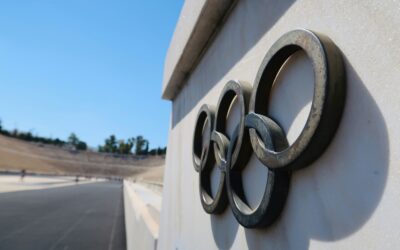
Fairness First: IOC Mandates Biological Female Requirement for Women’s Sports
In a historic reversal that marks the end of a decade-long debate over “inclusive” sports, the International Olympic Committee (IOC) has announced a definitive new policy: effective immediately, participation in the female category of all Olympic-sanctioned events will be restricted to biological females. The announcement, delivered by IOC President Kristy Coventry, represents a total pivot from the 2021 framework that deferred eligibility rules to individual sporting federations. At The Modern Memo, we analyze the science-led “fairness” mandate, the end of the testosterone-suppression era, and why this decision is being hailed as a victory for the integrity of women’s athletics. The Coventry Doctrine: Defining Fairness The move comes after years of mounting pressure from female athletes, sports scientists, and advocacy groups who argued that the previous “inclusion-first” approach ignored the permanent physical advantages of male puberty. The Clear Mandate: “It is absolutely clear that it would not be fair for biological males to compete in the female category,” President Coventry stated. “Our primary responsibility is to protect the integrity of the female category and ensure that women have a level playing field to achieve excellence.” Abandoning Testosterone Thresholds: The new policy effectively scraps the previous standard that allowed trans-identified males to compete if they suppressed their testosterone for 12 months. Recent longitudinal studies presented to the IOC confirmed that even with suppression, biological males retain significant advantages in bone density, lung capacity, and muscle explosive power. Protecting the Podium: Impact on Global Competition The ripple effects of this policy will be felt across every Olympic discipline, from swimming and track to combat sports. The IOC is now requiring international federations to align their rules with this “biological reality” standard to remain eligible for Olympic inclusion. Scientific Consensus: The IOC cited a comprehensive meta-analysis showing that male biological advantages—developed during puberty—cannot be fully reversed by hormonal therapy. This data was pivotal in convincing the committee that “inclusion” and “fairness” were, in this specific context, mutually exclusive. The “Open” Category Alternative: To remain inclusive of all athletes, the IOC has proposed the creation of an “Open” category. This would allow transgender athletes to continue competing at the highest levels without compromising the protected space of the female category. The Cultural Shift: A Return to Common Sense While the decision has sparked predictable backlash from some activist circles, the overwhelming response from the athletic community has been one of relief. The Athlete Voice: Former Olympians like Sharron Davies and Martina Navratilova, who have long campaigned for this change, characterized the move as a “restoration of common sense.” They argue that women’s sports were created as a protected category based on biological sex, not gender identity. The Legislative Landscape: The IOC’s move mirrors a growing trend in the United States and Europe, where dozens of states and national governing bodies (such as World Aquatics and World Athletics) had already moved to restrict the female category to biological women. Final Word The IOC’s new policy is a definitive acknowledgment that biology, not identity, is the governing factor in athletic performance. When you look past the noise of “exclusion” narratives and focus on the data—the irreversible advantages of male puberty and the dwindling opportunities for female athletes—you gain a clearer picture of why this correction was necessary. Quality information replaces the confusion of subjective identity with the clarity of objective science. It allows you to see this decision not as a “ban,” but as the essential preservation of a category that millions of women have fought to build. By choosing to prioritize fairness, the IOC has ensured that the Olympic motto—Citius, Altius, Fortius—remains a meaningful pursuit for women worldwide. Where Facts, Context, and Perspective Matter At The Modern Memo, our goal is simple: to provide clear, well-researched reporting in a media landscape that often feels overwhelming. We focus on substance over sensationalism, and context over commentary. If you value thoughtful analysis, transparent sourcing, and stories that go beyond the headline, we invite you to share our work. Informed conversations start with reliable information, and sharing helps ensure important stories reach a wider audience. Journalism works best when readers engage, question, and participate. By reading and sharing, you’re supporting a more informed public and a healthier media ecosystem. The Modern Memo may be compensated and/or receive an affiliate commission if you click or buy through our links. Featured pricing is subject to change. 📩 Love what you’re reading? Don’t miss a headline! Subscribe to The Modern Memo here!

100 Days to Go: The Countdown to the 2026 FIFA World Cup is Officially On
The world is officially on the clock. With exactly 100 days remaining until the opening whistle, the excitement for the 2026 FIFA Men’s World Cup™ has shifted into high gear. As the largest and most ambitious edition of the tournament in history, the 2026 event will span three nations—the United States, Canada, and Mexico—featuring 48 teams competing across 16 host cities. At The Modern Memo, we break down the coast-to-coast fan celebrations, the “Soccer Forward” initiative, and how you can get in on the action as the countdown begins. A Nationwide Celebration: The 100-Day Countdown U.S. Soccer has officially launched its 100-day campaign, designed to turn the tournament into a nationwide cultural moment rather than just a series of matches. The Federation is moving beyond the stadiums, bringing the experience directly into communities. Soccer Forward Fests: These community-driven events are the centerpiece of the countdown. Powered by the Soccer Forward Foundation and Common Goal, these locally led experiences—ranging from youth tournaments to cultural festivals and block parties—are designed to expand access to the game and celebrate its impact in every corner of the country. Anchor Hubs: Two major activations are anchoring the national campaign: U.S. Soccer House (Los Angeles): Opening June 11 in Venice Beach, this immersive space will serve as the ultimate fan destination, featuring watch parties, appearances by legends of the game, and a dedicated stage for live programming. New York City Roster Reveal: A high-energy launch event in the Big Apple has set the tone for the final stretch, highlighting the massive scale of the tournament’s conclusion at the New York New Jersey Stadium. Tournament Snapshot: What to Expect The 2026 World Cup is a milestone event, marking the first time the tournament has been hosted by three countries. The Scope: A record 104 matches will be played, significantly expanding the competition from previous editions. The Schedule: The tournament runs from June 11 to July 19, 2026. Opening Match: Mexico City Stadium (Estadio Azteca) will host the kickoff on June 11, making history as the first stadium to host three World Cup openers. The Final: The tournament will culminate on July 19, 2026, at the New York New Jersey Stadium in East Rutherford, New Jersey. Getting Involved: Insider Access and Tickets For fans looking to be part of the experience, the window for ticket access is opening soon. Ticket Draw: Applications for the U.S. Soccer World Cup ticket draw open on March 9, 2026. This opportunity is exclusive to U.S. Soccer Insiders (Premium tier and above), reinforcing the benefit of joining the Federation’s fan program. Community Activation: Organizations nationwide can still register their own “Soccer Forward Fests” via the official U.S. Soccer portal, accessing toolkits that help bring the World Cup atmosphere to local neighborhoods. Final Word The 100-day mark isn’t just about the calendar; it signals the transition from anticipation to activation. When you look past the logistical scope of 104 matches and 16 cities, you see an attempt to weave soccer into the American cultural fabric on an unprecedented scale. Quality information replaces the noise of uncertainty with the clarity of official schedules and community resources. It allows you to see this tournament as a catalyst for long-term growth in the sport, from the grassroot Fests in small towns to the massive fan houses on the coasts. By choosing to engage with the official U.S. Soccer roadmap, you align your fan experience with the realities of the tournament’s scale and support a more informed, connected soccer community. Where Facts, Context, and Perspective Matter At The Modern Memo, our goal is simple: to provide clear, well-researched reporting in a media landscape that often feels overwhelming. We focus on substance over sensationalism, and context over commentary. If you value thoughtful analysis, transparent sourcing, and stories that go beyond the headline, we invite you to share our work. Informed conversations start with reliable information, and sharing helps ensure important stories reach a wider audience. Journalism works best when readers engage, question, and participate. By reading and sharing, you’re supporting a more informed public and a healthier media ecosystem. The Modern Memo may be compensated and/or receive an affiliate commission if you click or buy through our links. Featured pricing is subject to change. 📩 Love what you’re reading? Don’t miss a headline! Subscribe to The Modern Memo here!

Olympic Ice Under Fire: Malinin’s Collapse Sparks “Soft Ice” Outcry in Milan
The shocking fall of the “Quad God,” Ilia Malin in, has ignited a fierce debate that reaches far beyond a single skater’s performance. As Malinin plummeted from a gold-medal lead to an 8th-place finish on Friday, February 13, 2026, a chorus of athletes, coaches, and commentators began pointing toward a potential culprit: the quality of the ice at the Milano Ice Skating Arena. At The Modern Memo, we analyze the “soft ice” theory, the staggering fall rate during the Men’s Final, and the technical breakdown of how temperature affects high-velocity quadruple jumps. The “Soft Ice” Theory: A Skater’s Nightmare In the aftermath of the final, several coaches and skaters voiced concerns that the ice in Milan was “too soft” or “mushy.” Unlike hockey ice, which is kept harder and colder, figure skating ice requires a delicate balance—soft enough to allow for deep edge work, but firm enough to support the explosive force of a quadruple jump. The Temperature Factor: Reports from rink-side technicians suggested the ice temperature was hovering near -3°C to -4°C, slightly warmer than the preferred -5.5°C for elite jumping. The “Rut” Problem: Softer ice creates deeper ruts and tracks. For a skater like Malinin, who launches with massive torque, hitting a pre-existing rut in soft ice can cause the blade to “sink” or “catch,” leading to the “popped” jumps and freak falls witnessed during his routine. The Humidity Issue: With a capacity crowd and unseasonably warm February weather in Milan, the arena’s HVAC system reportedly struggled to keep the surface crisp, leading to what skaters described as “heavy” or “slow” conditions. A Field in Freefall: The Data of the Disaster Malinin was far from the only victim of the Milan ice. The Men’s Free Skate turned into a literal “festival of falls,” with statistics that suggest a systemic issue rather than a collective lack of focus. Fall Count: Out of the 24 finalists, 18 skaters suffered at least one fall, with a total of 32 falls recorded across the segment. This is nearly double the fall rate seen at the 2022 Beijing Games. The Favorites Falter: Beyond Malinin’s two falls and “popped” Axel, silver medalist Yuma Kagiyama stumbled on a landing, and several European favorites, including France’s Adam Siao Him Fa, saw their programs derailed by uncharacteristic slips on basic transitions. The Anomaly: Only the gold medalist, Mikhail Shaidorov, delivered a “clean” program, though even he admitted in the post-event press conference that the ice felt “challenging” and “different” from the practice sessions. The ISU and Organizing Committee Response The International Skating Union (ISU) and the Milan-Cortina Organizing Committee have downplayed the “soft ice” narrative, attributing the mistakes to the high-altitude pressure and the extreme technical difficulty of modern programs. Official Statement: “The ice conditions in Milan meet all Olympic and international standards. We monitor the surface temperature every 15 minutes.” The Counter-Argument: Critics point out that “standards” don’t always account for the unique physics of 2026-era skating, where the force exerted on the ice during a Quad Axel is significantly higher than anything seen when these standards were written. Final Word Staying informed on the “Soft Ice” controversy isn’t just about finding excuses for a favorite athlete—it plays a powerful role in your understanding of how environmental variables can dictate the outcome of years of training. When you look past the heartbreak of the fall and focus on the data of the 75% fall rate and the technicalities of ice temperature, you gain a clearer picture of the fragile intersection between human skill and physical conditions. Quality information replaces the noise of “meltdown” headlines with the clarity of atmospheric science and rink engineering. It allows you to see this event not just as a failure of nerves, but as a failure of infrastructure that impacted an entire field of world-class athletes. By choosing to follow the forensic look at the rink conditions rather than the surface-level blame, you align your perspective with the realities of elite sport and support a more informed, resilient athletic community. Where Facts, Context, and Perspective Matter At The Modern Memo, our goal is simple: to provide clear, well-researched reporting in a media landscape that often feels overwhelming. We focus on substance over sensationalism, and context over commentary. If you value thoughtful analysis, transparent sourcing, and stories that go beyond the headline, we invite you to share our work. Informed conversations start with reliable information, and sharing helps ensure important stories reach a wider audience. Journalism works best when readers engage, question, and participate. By reading and sharing, you’re supporting a more informed public and a healthier media ecosystem. The Modern Memo may be compensated and/or receive an affiliate commission if you click or buy through our links. Featured pricing is subject to change. 📩 Love what you’re reading? Don’t miss a headline! Subscribe to The Modern Memo here!

Historic Flight: Ilia Malinin Lands Olympic Backflip to Secure Team USA Gold
In a moment that will be etched into Olympic history, American figure skating phenom Ilia Malinin—famously known as the “Quad God”—electrified the Milano Ice Skating Arena on Sunday, February 8, 2026. Performing during the Men’s Free Skate for the team event, Malinin did what was once unthinkable: he successfully landed a backflip on Olympic ice, helping Team USA secure its second consecutive gold medal. At Modern Memo, we break down the return of the “forbidden” move, the technical brilliance behind Malinin’s skate, and the nail-biting finish that put the U.S. back on top of the podium. The “Forbidden” Move Returns The backflip has been the “white whale” of figure skating for nearly 50 years. Originally banned by the International Skating Union (ISU) in 1977 due to safety concerns and its “unorthodox” nature, it remained illegal in competition until a historic rule change in late 2024. A 50-Year Gap: Malinin is the first skater to legally land a backflip at the Olympics since Terry Kubicka first performed it at the 1976 Innsbruck Games. The “One-Blade” Finish: While the backflip does not add to the technical point score (it is classified as part of the choreographic sequence), Malinin performed a high-difficulty variation, landing on a single blade to a deafening roar from the 13,000-person crowd. The Strategy: “It’s honestly such an incredible roar-feeling,” Malinin told reporters. “Once I do that backflip, everyone is just out of control. It brings in the non-figure skating crowd as well.” Team USA’s Gold Medal Nail-Biter The stakes could not have been higher for the 21-year-old world champion. Entering the final men’s segment, Team USA and Japan were locked in a dead heat. The gold medal came down to a “winner-take-all” showdown between Malinin and Japan’s Shun Sato. The Performance: Despite a minor stumble mid-program, Malinin delivered a powerhouse routine featuring five quadruple jumps. His score of 200.03 was enough to hold off a brilliant performance by Sato (194.86). The Final Standings: Team USA finished with 69 points, edging out Japan (68 points) by a single point. Host nation Italy claimed the bronze with 60 points. The Winning Roster: Along with Malinin, the gold-medal squad includes Amber Glenn, Alysa Liu, ice dancers Madison Chock and Evan Bates, and the pairs team of Ellie Kam and Danny O’Shea. The Technical Evolution of the “Quad God” While the backflip stole the headlines, Malinin’s technical mastery remains his primary weapon. He is currently the only skater in the world routinely landing the quadruple Axel—the most difficult jump in the sport—though he opted for a triple Axel in the team event to prioritize stability for the group gold. The backflip, Malinin explains, is actually “easier” for him than his quads because of his background in gymnastics. However, it serves a psychological purpose: it signals a new era of “extreme” figure skating where athleticism and spectacle are given equal weight to traditional artistry. Looking Ahead: The Individual Event With the team gold secured, the “Quad God” now turns his attention to the individual Men’s event, where he is the heavy favorite to win his first Olympic singles title. His main competition will once again be Japan’s Shun Sato and Yuma Kagiyama, but Malinin’s willingness to take risks—like the backflip—has clearly given him a psychological edge. Final Word Staying informed on the evolution of Olympic sports isn’t just about tracking medal counts—it plays a powerful role in your understanding of human potential and the breaking of long-held boundaries. When you look past the spectacle of the “backflip” and focus on the data of the rule changes and the razor-thin margin of the team victory, you gain a clearer picture of the discipline required to innovate under pressure. Quality information replaces the noise of social media hype with the clarity of technical history and scoring context. It allows you to see this historic jump not as a stunt, but as a calculated moment of athletic evolution. By choosing to follow the facts of the performance rather than just the highlights, you align your perspective with the realities of modern competition and support a more informed, resilient view of global achievement. Where Facts, Context, and Perspective Matter At The Modern Memo, our goal is simple: to provide clear, well-researched reporting in a media landscape that often feels overwhelming. We focus on substance over sensationalism, and context over commentary. If you value thoughtful analysis, transparent sourcing, and stories that go beyond the headline, we invite you to share our work. Informed conversations start with reliable information, and sharing helps ensure important stories reach a wider audience. Journalism works best when readers engage, question, and participate. By reading and sharing, you’re supporting a more informed public and a healthier media ecosystem. The Modern Memo may be compensated and/or receive an affiliate commission if you click or buy through our links. Featured pricing is subject to change. 📩 Love what you’re reading? Don’t miss a headline! Subscribe to The Modern Memo here!