
Tehran
Iran Accuses US of Using Nuclear Watchdog as Pretext for Strikes as IAEA Reports Tehran Still Blocking Inspectors
Iran has accused the United States of using the International Atomic Energy Agency’s inspection findings as political cover to justify military strikes on its nuclear facilities, escalating a standoff that shows no sign of resolution more than a year after American and Israeli warplanes bombed some of the country’s most sensitive atomic sites. The accusation, leveled by Iranian officials this week, comes just days after the IAEA’s confidential quarterly report documented that Tehran continues to deny inspectors access to more than 20 nuclear-related sites and has refused to account for its stockpile of roughly 440 kilograms of uranium enriched to near weapons-grade levels — enough material, according to nuclear experts cited in the report, to produce several nuclear weapons if enriched further. Iran maintains, as it has throughout the crisis, that it has no intention of building a nuclear weapon and says its program exists solely for civilian energy and research purposes. IAEA Director General Rafael Grossi has repeatedly pressed Tehran to restore the access it suspended in the aftermath of last year’s strikes, telling the agency’s Board of Governors in Vienna on September 7 that he was calling “on Iran to engage with the Agency constructively in order to make possible the full and effective implementation of Agency safeguards in Iran.” Iranian officials have responded by casting the IAEA’s reporting itself as compromised, arguing that Washington and its allies have weaponized the agency’s technical findings to manufacture justification for military action rather than to genuinely verify the peaceful nature of Iran’s program. The dispute traces back to June 2025, when Israel launched a 12-day bombing campaign against Iranian military and nuclear infrastructure, a campaign the United States joined less than two weeks later with strikes on the heavily fortified enrichment facilities at Natanz, Fordow and Isfahan. Iranian Foreign Minister Abbas Araghchi has previously dismissed the notion that the strikes were prompted by an “imminent nuclear threat” from Iran as a “heinous lie,” arguing the claim had been “thoroughly debunked” even by Grossi’s own agency and by Oman’s foreign minister, who had been mediating indirect talks between Tehran and Washington before the bombing campaign began. Those talks, which had reached five rounds of negotiation aimed at easing American sanctions in exchange for constraints on Iran’s nuclear activities, collapsed once the strikes began. Araghchi has insisted Iran did not “kill diplomacy,” saying instead that “those who blew up the negotiating table did.” Tensions flared again in February 2026, when a second round of conflict brought additional strikes on Iranian nuclear facilities, further hardening Tehran’s position toward international inspectors. In June 2026, American and Iranian negotiators reached a framework agreement under which Iran would dilute its stockpile of highly enriched uranium under IAEA supervision, a deal that both sides hoped might de-escalate the standoff and restore some measure of international oversight. That agreement, however, remains unimplemented three months later, with Washington and Tehran each accusing the other of failing to uphold its end of the bargain — a dynamic that has left the IAEA effectively locked out of much of Iran’s nuclear infrastructure even as international concern over the unaccounted-for enriched uranium stockpile continues to grow. Iran suspended its cooperation with IAEA inspectors almost immediately after the June 2025 strikes, arguing that continuing to grant international access to facilities that had just been bombed by two of the same countries pushing for that access amounted to a security risk it could not accept. Tehran has also pointed to what it characterizes as a pattern of politically motivated resolutions from the IAEA’s Board of Governors, arguing that the agency has allowed itself to become an instrument of pressure from Washington and Israel rather than functioning as a neutral technical body. Iranian state media and officials have periodically floated the idea that the agency’s own reporting effectively provided Israel and the United States with a roadmap for targeting, a claim the IAEA has firmly rejected as both false and dangerous, since it undermines the case for the kind of transparency that would actually reduce the risk of further military action. For the Trump administration, the unresolved standoff presents a genuine dilemma. Officials have continued to cite Iran’s stockpile of near-weapons-grade uranium and its refusal to grant inspectors access as justification for maintaining maximum economic pressure and keeping the option of further military action on the table. At the same time, the administration has faced criticism from arms-control advocates who argue that walking away from verified inspections — even inspections Iran itself suspended — leaves the international community with far less visibility into Iran’s actual nuclear activities than it had before the strikes, potentially making it harder, not easier, to detect a genuine dash toward weaponization if Tehran ever decided to pursue one. Regional dynamics add further urgency to the standoff. Israel has continued to describe Iran’s nuclear program as an existential threat and has signaled it would consider additional strikes if it judged Tehran to be reconstituting its enrichment capacity at any of the damaged or newly hardened facilities. Gulf Arab states, meanwhile, have expressed a mix of relief that Iran’s program has been set back and anxiety that the unresolved standoff could reignite into a broader regional conflict with little warning, particularly given the unrelated but overlapping tensions already playing out between Saudi Arabia and Iran-aligned Houthi forces in Yemen. Diplomats tracking the dispute say a durable resolution likely requires Iran to accept some restoration of IAEA access in exchange for tangible sanctions relief, mirroring the broad contours of the framework agreement reached in June — but implementing even that limited arrangement has proven difficult given the deep mistrust on both sides following two rounds of military strikes in less than a year. Grossi has continued to describe the situation as urgent, warning that the international community’s ability to verify Iran’s nuclear intentions deteriorates further with each month that inspectors remain locked out, while Iranian officials counter that restoring the access Washington and Israel now demand would mean trusting the same governments…

Trump Warns of Direct Strikes on Tehran if Iran Keeps Targeting Ships in the Strait of Hormuz
President Trump escalated his warnings to Iran this week, threatening to strike a bridge or power plant inside the country — potentially in Tehran itself — every time Iranian forces attack a ship passing through the Strait of Hormuz, as the conflict between the two nations grinds on well past the timeline the administration initially suggested. Trump threatened that the U.S. would destroy an Iranian bridge or power plant, including in Tehran, each time Iran attacks a ship in the Strait of Hormuz. The United States has already bombed bridges in southern Iran over the course of nearly two weeks of fighting, and striking power plants or Tehran directly would represent a further escalation. Iran Responds Tehran isn’t backing down either. Iranian Foreign Minister Abbas Araghchi responded that Iran’s defense doctrine operates on an “eye for an eye” basis, and warned countries that actively support U.S. attacks against Iran that they, too, could face consequences. U.S. forces have continued strikes on the Iran-Iraq border region as the conflict enters nearly two straight weeks of near-nightly engagement. The Bigger Picture The war began in late February with joint U.S.-Israeli strikes that killed Iran’s supreme leader, and administration officials initially suggested the conflict could be resolved within roughly 60 days. Nearly five months later, American forces remain actively engaged, and the fight over control of the Strait of Hormuz — one of the world’s most critical oil shipping chokepoints — shows no signs of a near-term resolution. Supporters of the administration’s approach argue that decisive, escalating pressure is the only language the Iranian regime understands, and that half-measures would only prolong the conflict and put U.S. personnel and allies at greater risk. Critics in Congress, including some Democrats, have pressed the administration for a clearer explanation of the war’s endgame and its mounting cost, which has already climbed past $80 billion — more than double the amount originally projected for Congress. This story is developing.
The Countdown to Consequence: Trump Convenes High-Level Situation Room Meeting as Nuclear Talks Hit ‘Dead End’
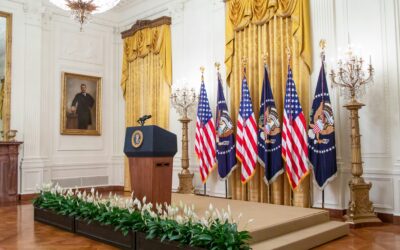
The space for diplomacy has officially run out. Following a weekend of deadlocked negotiations and fresh regional provocations, President Donald Trump has summoned his top national security advisers to the White House Situation Room. The high-stakes meeting comes directly on the heels of a stark, final warning from the President to Tehran, signaling that the United States is ready to transition from economic strangulation to direct military action. At The Modern Memo, we analyze the collapse of the Pakistan-mediated peace talks, the rigid five-point ultimatum delivered by Washington, and why the administration’s “the clock is ticking” warning means the era of strategic patience is over. The Situation Room Briefing: Preparing the Target List The meeting—convened by the President and attended by Vice President JD Vance, Secretary of State Marco Rubio, Defense Secretary Pete Hegseth, and Joint Chiefs Chairman Dan Caine—is focused on finalizing kinetic options should the Iranian regime reject America’s final terms. The Midnight Warning: The operational shift follows a blunt declaration by the President on social media: “For Iran, the Clock is Ticking, and they better get moving, FAST, or there won’t be anything left of them. TIME IS OF THE ESSENCE!” Netanyahu Coordination: Prior to the Situation Room meeting, the President held a lengthy secure call with Israeli Prime Minister Benjamin Netanyahu. Reports from Jerusalem indicate that the Israeli Security Cabinet is simultaneously convening, with U.S. and Israeli forces aligning coordinate grids for potential joint strikes on Iranian nuclear assets. The Proxies Escalate: The urgency of the military briefing was heightened by a drone strike in the United Arab Emirates that caused a fire near a nuclear power plant, an act of aggression the UAE labeled a “dangerous escalation” and blamed squarely on Iran’s proxy network. The Deadlock: Five Demands vs. Five Preconditions The temporary, Pakistan-mediated truce that halted large-scale bombing has effectively disintegrated. Internal reports reveal that both sides have rejected each other’s core frameworks, leaving no viable path to a traditional nuclear deal. The U.S. Ultimatum: Washington’s five-point list demands total capitulation from Tehran: Surrender 400 kilograms of highly enriched uranium to U.S. custody. Dismantle all but one single nuclear facility. Permanently drop all demands for war compensation. Accept that the vast majority of frozen Iranian assets will remain permanently blocked. End hostilities on all regional fronts prior to any final text being signed The Iranian Defiance: Iranian President Masoud Pezeshkian has countered with a list of “fantasies,” demanding a permanent ceasefire in Lebanon, the immediate lifting of all economic sanctions, and international recognition of Iranian sovereignty over the Strait of Hormuz. The Trump Posture: “No More Favors” The administration is making it clear that the temporary cessation of hostilities was a diplomatic courtesy, not a sign of American hesitation. The Favor to Pakistan: The President reminded reporters that the U.S. only agreed to the recent ceasefire as a “favor to Pakistan,” praising their leadership but noting that Iran chose to use the breathing room to play political games rather than comply. The “Phantom Shift” Defeated: U.S. intelligence reportedly tracked the movement of several Iranian military aircraft to an airbase near Rawalpindi during the truce—a move critics say proves Tehran was trying to shield its assets from imminent destruction. Overwhelming Deterrence: With U.S. warships maintaining a total lock on the Persian Gulf under Operation Epic Fury, the administration is operating from a position of absolute superiority. Final Word The Situation Room meeting is the definitive proof that the United States will no longer allow itself to be blackmailed by rogue states. When you look past the noise of “diplomatic channels” and focus on the data—the rigid five-point mandate and the unprecedented joint posture with Israel—you gain a clearer picture of an administration that has drawn a line in the sand. Quality information replaces the narrative of “endless negotiations” with the reality of a hard deadline. It allows you to see that while Iran wants to talk about compensation and sovereignty, the United States is talking about total disarmament. By choosing to declare that the clock is ticking, the President has ensured that if the Ayatollah does not blink, the response will be swift, surgical, and devastating. Where Facts, Context, and Perspective Matter At The Modern Memo, our goal is simple: to provide clear, well-researched reporting in a media landscape that often feels overwhelming. We focus on substance over sensationalism, and context over commentary. If you value thoughtful analysis, transparent sourcing, and stories that go beyond the headline, we invite you to share our work. Informed conversations start with reliable information, and sharing helps ensure important stories reach a wider audience. Journalism works best when readers engage, question, and participate. By reading and sharing, you’re supporting a more informed public and a healthier media ecosystem. The Modern Memo may be compensated and/or receive an affiliate commission if you click or buy through our links. Featured pricing is subject to change. 📩 Love what you’re reading? Don’t miss a headline! Subscribe to The Modern Memo here!