

USA
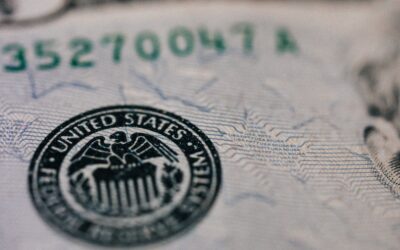
National Debt Crosses $40 Trillion for First Time Ever, Doubling in Less Than a Decade
The federal government’s total debt surpassed $40 trillion this week for the first time in American history, a milestone that arrived just five months after the debt crossed $39 trillion in March — underscoring the breakneck pace at which Washington continues to add to the national credit card even as interest payments alone now exceed $1 trillion a year. The Numbers Treasury Department data released Wednesday showed total public debt outstanding at $40.047 trillion as of the close of business Tuesday, made up of $32.266 trillion in Treasury securities held by the public and $7.782 trillion in intragovernmental debt holdings. The debt has now more than doubled in less than a decade — it stood at $19.95 trillion when Trump was first sworn into office in January 2017, meaning the figure has grown by roughly $20 trillion in less than nine years, spanning both the Trump and Biden administrations. The pace of accumulation has been remarkably consistent regardless of which party controlled Washington: the debt reached $38 trillion in October of last year, hit $39 trillion just five months later in March, and has now crossed $40 trillion only five months after that — a rhythm of roughly one trillion dollars in new debt added every five months. Where the Money Is Going Federal officials and budget analysts point to a combination of factors driving the surge: rising costs for Social Security and Medicare as the population ages, elevated defense spending tied in part to the nearly six-month-old war with Iran, and — critically — the cost of simply servicing debt that’s already been accumulated. Interest payments on the debt now exceed $1 trillion annually, meaning the government is spending more on interest alone than it does on national defense, according to Treasury figures. Roughly a third of the total increase in debt over the past decade occurred during the two years immediately following the COVID-19 pandemic, when emergency spending surged across both parties. The gap between what the government spends and what it collects in tax revenue now runs more than $2 trillion a year, according to the latest Treasury projections — meaning the debt will almost certainly continue climbing at a similarly rapid clip barring a significant change in fiscal policy from Congress. Watchdogs Sound the Alarm Fiscal watchdog groups across the political spectrum have grown increasingly vocal about the trajectory. Michael Peterson, CEO of the nonpartisan Peter G. Peterson Foundation, warned that current trends put the country on pace to reach $50 trillion in debt within just six years. “On our current path, we’re going to be at $50 trillion in just six years,” Peterson told CNN. “If you look backward, we were at $20 trillion less than 10 years ago. We’re really putting our economy and our country’s future in jeopardy.” The nonpartisan Congressional Budget Office had projected the debt wouldn’t cross $40 trillion until 2027 under its baseline scenario — meaning the milestone arrived notably ahead of even that relatively pessimistic prior projection. Under the CBO’s own faster growth-rate scenario, the debt could reach $50 trillion by 2030. Investors Are Taking Notice The scale of the debt is beginning to show up in how markets price U.S. government borrowing. Investors purchasing U.S. Treasury bonds have started demanding higher interest rates to compensate for the growing debt burden, according to NPR reporting — a dynamic that pushes up borrowing costs not just for the federal government but, indirectly, for everyday Americans as well, since Treasury yields serve as a benchmark for mortgage rates, auto loans, and other consumer borrowing costs across the broader economy. A Bipartisan Problem, A Politically Charged Moment Notably, the debt’s rapid growth spans administrations of both parties, having roughly doubled across a stretch that included Trump’s first term, the Biden administration, and now Trump’s second term — a fact that complicates any effort to assign blame to a single party or administration. Republican fiscal hawks in Congress, including Rep. Jodey Arrington of Texas, have used the milestone to renew calls for spending caps, stronger fiscal reform measures, and a serious effort to rein in government waste, arguing that neither party has shown the political will to seriously address the underlying structural drivers of the debt — chiefly the growth of mandatory spending on entitlement programs and defense. Iran’s foreign minister, notably, seized on the $40 trillion milestone this week to counter President Trump’s fresh round of economic pressure against Tehran, arguing that America’s own debt crisis undercuts its standing to lecture other countries on economic mismanagement — a reminder that the debt figure has become fodder in the broader geopolitical messaging war as well as a purely domestic fiscal concern. What Happens Next With government spending continuing to outpace revenue by more than $2 trillion annually and no major bipartisan deficit-reduction effort currently underway in Congress, the debt appears set to continue its rapid climb toward the next milestone. Given the pattern established over the past year — roughly a trillion dollars in new debt every five months — the country could plausibly cross $41 trillion by early 2027, absent a significant shift in fiscal policy from either the White House or Capitol Hill. This story is developing.

Championship Clash: USA and Venezuela Meet in Miami for the WBC Final
The 2026 World Baseball Classic has reached its peak. Tonight, March 17, at loanDepot park in Miami, Team USA and Team Venezuela will square off in a winner-take-all championship game. For the United States, it is a chance to secure their second title in three tournaments; for Venezuela, it is the opportunity to claim their first-ever gold on the world’s biggest stage. At The Modern Memo, we analyze the dramatic path to the final, the clash of baseball philosophies, and the high-stakes pitching matchup that will decide the crown. The Road to Miami: Battle-Tested vs. History-Makers Neither team coasted to the final. Both rosters had to survive high-tension nail-biters to earn their spot in tonight’s championship. USA’s Grit: After an early-tournament scare against Italy, Team USA has been the definition of “clutch.” They narrowly escaped a semifinal thriller against the Dominican Republic with a 2-1 victory, fueled by solo home runs from Gunnar Henderson and Roman Anthony. The U.S. is appearing in its third consecutive final, a testament to the depth and consistency of American talent. Venezuela’s Historic Rally: Venezuela is the story of the tournament. After upsetting the defending champions, Japan, in the quarterfinals, they ended Italy’s “Cinderella” run in the semifinals. Down 2-1 in the seventh inning, Venezuela ignited a three-run rally with two outs, powered by the bats of Ronald Acuña Jr., Maikel Garcia, and Luis Arraez. This is Venezuela’s first-ever appearance in a WBC final. The Pitching Matchup: McLean vs. Rodriguez In a tournament defined by pitch counts and strategic bullpen usage, tonight’s starters carry the weight of their nations. Nolan McLean (USA): The Americans are handing the ball to the hard-throwing right-hander. McLean represents the “new breed” of American arm—high velocity with a devastating breaking ball. After a rested day on Monday, the U.S. bullpen is fully available, meaning McLean likely only needs to navigate the lineup twice before turning it over to the relief corps. Eduardo Rodriguez (Venezuela): The veteran lefty gets the start for Venezuela. Rodriguez brings years of big-game MLB experience and a savvy approach that relies on location and changing speeds. His goal will be to neutralize the power-heavy left-handed bats in the American lineup, such as Henderson and Anthony. A Clash of Styles Tonight is also a study in contrast. Team USA has adopted a business-like, “mission-focused” demeanor, with many players citing a desire to play for the servicemen and women of the United States. Conversely, Team Venezuela has played with a joyful, “winter ball” energy—dancing in the dugout and feeding off the exuberant, flag-waving crowds in Miami. A pre-game coin flip determined that Team USA will be the home team, giving them the critical advantage of the last at-bat in front of a raucous, sold-out crowd of over 36,000. Final Word Tonight, the world stops to watch the two best teams in the sport. When you look past the regional rivalries and focus on the data—the lockdown American bullpen and the resilient Venezuelan two-out hitting—you gain a clearer picture of a final that is too close to call. Quality information replaces the noise of partisan predictions with the reality of a statistical toss-up. It allows you to see this game as the ultimate validation of the WBC’s growth: a championship where the “established” power and the “rising” nation are on perfectly equal footing. By choosing to tune in tonight, you align your perspective with the pinnacle of international competition. Where Facts, Context, and Perspective Matter At The Modern Memo, our goal is simple: to provide clear, well-researched reporting in a media landscape that often feels overwhelming. We focus on substance over sensationalism, and context over commentary. If you value thoughtful analysis, transparent sourcing, and stories that go beyond the headline, we invite you to share our work. Informed conversations start with reliable information, and sharing helps ensure important stories reach a wider audience. Journalism works best when readers engage, question, and participate. By reading and sharing, you’re supporting a more informed public and a healthier media ecosystem. The Modern Memo may be compensated and/or receive an affiliate commission if you click or buy through our links. Featured pricing is subject to change. 📩 Love what you’re reading? Don’t miss a headline! Subscribe to The Modern Memo here!

WBC Quarterfinals: USA and Canada Clash for Semifinal Spot
The lights of Daikin Park in Houston will shine on one of the most storied rivalries in North American sports tonight as Team USA faces Team Canada in a high-stakes World Baseball Classic (WBC) quarterfinal. With a trip to Miami’s semifinals on the line, tonight’s “Border Battle” carries the weight of national pride and a shot at global redemption. At The Modern Memo, we analyze the road to the quarterfinals, the tactical pitching matchup, and the pressure on a star-studded American roster to find its rhythm. The Road to the Quarterfinals: Shock and Resilience Both teams enter tonight with 3-1 records from pool play, but their paths to Houston couldn’t have been more different. Team USA’s Wake-Up Call: After dominant early wins, the Americans suffered a stunning 8-6 upset at the hands of Italy. The loss sent shockwaves through the tournament and left the U.S. briefly vulnerable to elimination. They advanced as the runner-up in Pool B, now facing a “must-win” narrative to silence critics who claim the superstar-laden roster is coasting. Canada’s Historic Run: For the first time in program history, Canada has advanced beyond the opening round. By defeating baseball powerhouses like Cuba and Puerto Rico, the Canadians topped Pool A. This breakthrough, following the Blue Jays’ deep postseason run last fall, has sparked a “baseball boom” across the Great White North. The Pitching Matchup: Webb vs. Soroka The outcome tonight will likely be decided by the chess match between two right-handers with a history of big-game experience. Logan Webb (USA): The Giants’ ace gets the nod for the U.S. Known for his elite sinker and ability to eat innings, Webb is tasked with keeping a hot Canadian lineup off balance. After the Italy upset, the U.S. bullpen is rested, but the pressure is on Webb to provide a “shut-down” start and save the relief arms for Miami. Michael Soroka (Canada): The Canadians turn to the resilient Michael Soroka. After navigating years of injury hurdles, Soroka has looked sharp in 2026, recently touching 97 mph in his WBC debut against Colombia. His mission is to use his heavy sinker and command to induce ground balls against an American lineup that thrives on power. Venue and Atmosphere: Deep in the Heart of Texas A sell-out crowd of over 41,000 is expected at Houston’s Daikin Park. While the venue is on American soil, the Canadian “Snowbirds” and traveling fans are expected to make their presence felt, creating the kind of electric, soccer-style atmosphere that has defined this year’s WBC. Final Word Tonight isn’t just a baseball game; it’s a collision of two different national trajectories. When you look past the star power and focus on the data—Team USA’s narrow escape from Pool B and Canada’s breakthrough win over Cuba—you gain a clearer picture of the volatility in this single-elimination format. Quality information replaces the noise of “David vs. Goliath” clichés with the reality of two teams that are statistically evenly matched in this tournament. It allows you to see this game as a critical test of whether the U.S. can handle the target on its back. By choosing to follow the verified pitch-by-pitch drama tonight, you align your perspective with a new era of international baseball where no outcome is guaranteed. Where Facts, Context, and Perspective Matter At The Modern Memo, our goal is simple: to provide clear, well-researched reporting in a media landscape that often feels overwhelming. We focus on substance over sensationalism, and context over commentary. If you value thoughtful analysis, transparent sourcing, and stories that go beyond the headline, we invite you to share our work. Informed conversations start with reliable information, and sharing helps ensure important stories reach a wider audience. Journalism works best when readers engage, question, and participate. By reading and sharing, you’re supporting a more informed public and a healthier media ecosystem. The Modern Memo may be compensated and/or receive an affiliate commission if you click or buy through our links. Featured pricing is subject to change. 📩 Love what you’re reading? Don’t miss a headline! Subscribe to The Modern Memo here!

Historic Flight: Ilia Malinin Lands Olympic Backflip to Secure Team USA Gold
In a moment that will be etched into Olympic history, American figure skating phenom Ilia Malinin—famously known as the “Quad God”—electrified the Milano Ice Skating Arena on Sunday, February 8, 2026. Performing during the Men’s Free Skate for the team event, Malinin did what was once unthinkable: he successfully landed a backflip on Olympic ice, helping Team USA secure its second consecutive gold medal. At Modern Memo, we break down the return of the “forbidden” move, the technical brilliance behind Malinin’s skate, and the nail-biting finish that put the U.S. back on top of the podium. The “Forbidden” Move Returns The backflip has been the “white whale” of figure skating for nearly 50 years. Originally banned by the International Skating Union (ISU) in 1977 due to safety concerns and its “unorthodox” nature, it remained illegal in competition until a historic rule change in late 2024. A 50-Year Gap: Malinin is the first skater to legally land a backflip at the Olympics since Terry Kubicka first performed it at the 1976 Innsbruck Games. The “One-Blade” Finish: While the backflip does not add to the technical point score (it is classified as part of the choreographic sequence), Malinin performed a high-difficulty variation, landing on a single blade to a deafening roar from the 13,000-person crowd. The Strategy: “It’s honestly such an incredible roar-feeling,” Malinin told reporters. “Once I do that backflip, everyone is just out of control. It brings in the non-figure skating crowd as well.” Team USA’s Gold Medal Nail-Biter The stakes could not have been higher for the 21-year-old world champion. Entering the final men’s segment, Team USA and Japan were locked in a dead heat. The gold medal came down to a “winner-take-all” showdown between Malinin and Japan’s Shun Sato. The Performance: Despite a minor stumble mid-program, Malinin delivered a powerhouse routine featuring five quadruple jumps. His score of 200.03 was enough to hold off a brilliant performance by Sato (194.86). The Final Standings: Team USA finished with 69 points, edging out Japan (68 points) by a single point. Host nation Italy claimed the bronze with 60 points. The Winning Roster: Along with Malinin, the gold-medal squad includes Amber Glenn, Alysa Liu, ice dancers Madison Chock and Evan Bates, and the pairs team of Ellie Kam and Danny O’Shea. The Technical Evolution of the “Quad God” While the backflip stole the headlines, Malinin’s technical mastery remains his primary weapon. He is currently the only skater in the world routinely landing the quadruple Axel—the most difficult jump in the sport—though he opted for a triple Axel in the team event to prioritize stability for the group gold. The backflip, Malinin explains, is actually “easier” for him than his quads because of his background in gymnastics. However, it serves a psychological purpose: it signals a new era of “extreme” figure skating where athleticism and spectacle are given equal weight to traditional artistry. Looking Ahead: The Individual Event With the team gold secured, the “Quad God” now turns his attention to the individual Men’s event, where he is the heavy favorite to win his first Olympic singles title. His main competition will once again be Japan’s Shun Sato and Yuma Kagiyama, but Malinin’s willingness to take risks—like the backflip—has clearly given him a psychological edge. Final Word Staying informed on the evolution of Olympic sports isn’t just about tracking medal counts—it plays a powerful role in your understanding of human potential and the breaking of long-held boundaries. When you look past the spectacle of the “backflip” and focus on the data of the rule changes and the razor-thin margin of the team victory, you gain a clearer picture of the discipline required to innovate under pressure. Quality information replaces the noise of social media hype with the clarity of technical history and scoring context. It allows you to see this historic jump not as a stunt, but as a calculated moment of athletic evolution. By choosing to follow the facts of the performance rather than just the highlights, you align your perspective with the realities of modern competition and support a more informed, resilient view of global achievement. Where Facts, Context, and Perspective Matter At The Modern Memo, our goal is simple: to provide clear, well-researched reporting in a media landscape that often feels overwhelming. We focus on substance over sensationalism, and context over commentary. If you value thoughtful analysis, transparent sourcing, and stories that go beyond the headline, we invite you to share our work. Informed conversations start with reliable information, and sharing helps ensure important stories reach a wider audience. Journalism works best when readers engage, question, and participate. By reading and sharing, you’re supporting a more informed public and a healthier media ecosystem. The Modern Memo may be compensated and/or receive an affiliate commission if you click or buy through our links. Featured pricing is subject to change. 📩 Love what you’re reading? Don’t miss a headline! Subscribe to The Modern Memo here!