
For decades, it was a riddle that baffled the religious community in Durham: how did a priceless collection of artifacts belonging to one of the most significant Church of England leaders of the 20th century end up scattered across a frigid riverbed? Now, the full story of the Archbishop Michael Ramsey hoard has been brought to light, revealing a tale that blends high-stakes ecclesiastical history with a touch of eccentric personal philosophy.
The treasure, which lay undisturbed in the River Wear for years, was recovered by a team of brothers and divers, Gary and Trevor Bankhead. What they found was not just a pile of gold, but a curated history of a man who stood at the center of the global religious stage during the 1960s and 70s.
The Hoard: A Life in Medals and Icons
The collection recovered from the river includes over 300 artifacts, ranging from deeply personal mementos to gifts of immense historical value.
-
Medals of Unity: Among the most significant items were medals and medallions presented to Ramsey during the Second Vatican Council. As Archbishop of Canterbury from 1961 to 1974, Ramsey was a pioneer of ecumenical dialogue, becoming the first Anglican leader to meet with a Pope (Paul VI) in Rome since the Reformation.
-
Eastern Orthodoxy: The hoard contained a rare Russian icon, rendered in copper and enamel, signifying Ramsey’s deep ties to Eastern Orthodox leaders and his personal interest in Eastern spirituality.
-
Global Ministry: Divers also recovered a silver trowel, presented to the Archbishop when he laid the foundation stone for a new church in India, a testament to the sprawling reach of the Anglican Communion during his tenure.
-
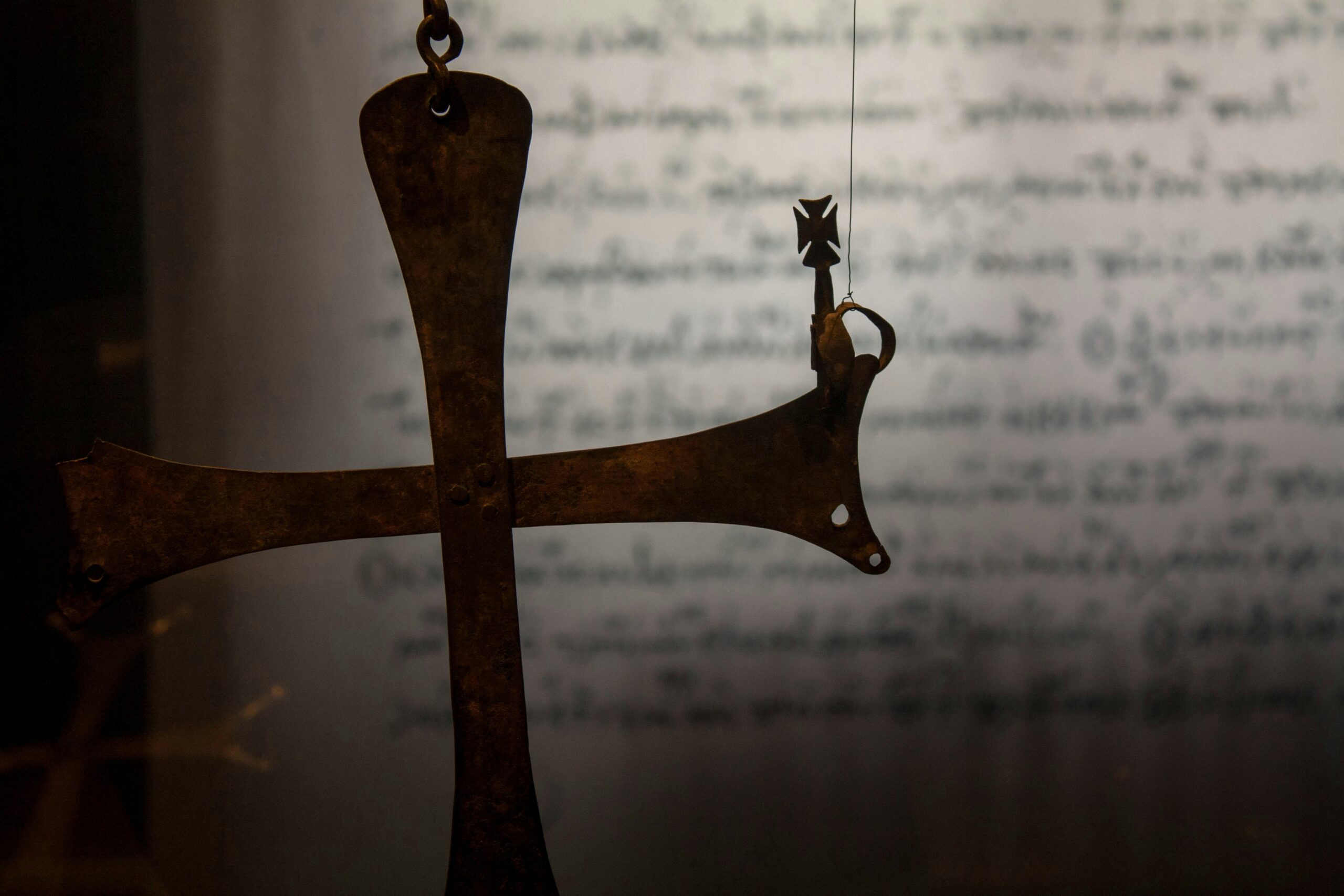
The Bronze Crucifix: A centerpiece of the discovery, a large bronze crucifix, sat at the bottom of the river, remarkably well-preserved despite years in the murky current.
Burglary or Votive Offering?
When the artifacts were first brought to the surface, the immediate assumption by Durham Cathedral officials was that Ramsey had been the victim of a robbery. It was well-documented that Ramsey had spent his retirement years in Durham, a city he loved, and many feared the items had been stolen and dumped by a thief who realized they were too “hot” to sell.
However, archaeologists and those close to the late Archbishop have offered a more profound interpretation.
“He entered the world with nothing, and he believed he should leave it with nothing.” — Gary Bankhead, lead diver.
The leading theory now suggests that Ramsey, influenced by a strict Christian view of asceticism and detachment, may have intentionally cast the items from the Prebends Bridge into the river. This “votive offering” was not an act of littering, but a spiritual exercise in shedding earthly possessions before his death in 1988.
A Legacy Restored
The recovery of the treasure has provided a new window into the character of Michael Ramsey—a leader who was often described as more of a monk than a politician.
While the items spent decades in the “frigid, murky waters” of the Wear, they are now being preserved as part of the cathedral’s heritage. The discovery serves as a reminder that for Ramsey, the gold and silver he received as a world leader was far less important than the symbolic act of returning it to the earth and the community he served.
Final Word
The “River Wear Hoard” is more than a curiosity; it is a physical map of the 20th-century church’s attempt to find unity in a fractured world. When you look past the mystery of the riverbed and focus on the data—the Vatican medals, the Russian icons, and the Indian silver—you gain a clearer picture of a man who balanced global influence with a radical personal humility.
Quality information replaces the narrative of a “theft” with the reality of a profound spiritual gesture. It allows you to see that while the treasure was “lost” for decades, it was exactly where the Archbishop intended it to be.
Where Facts, Context, and Perspective Matter
At The Modern Memo, our goal is simple: to provide clear, well-researched reporting in a media landscape that often feels overwhelming. We focus on substance over sensationalism, and context over commentary.
If you value thoughtful analysis, transparent sourcing, and stories that go beyond the headline, we invite you to share our work. Informed conversations start with reliable information, and sharing helps ensure important stories reach a wider audience.
Journalism works best when readers engage, question, and participate. By reading and sharing, you’re supporting a more informed public and a healthier media ecosystem.
The Modern Memo may be compensated and/or receive an affiliate commission if you click or buy through our links. Featured pricing is subject to change.
Subscribe to The Modern Memo here!
