


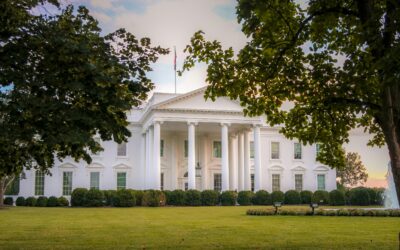
The Final Deletion: DOGE Shuts Down Operations as Trump’s Government Efficiency Agency Hits Its Self-Termination Sunset
The temporary, chainsaw-wielding federal cost-cutting apparatus that aggressively reshaped Washington’s bureaucratic landscape has officially closed its doors. In strict accordance with the original executive mandate that established the temporary body, the Department of Government Efficiency (DOGE) reached its self-termination deadline and permanently deactivated its central operations. The deactivation of the central DOGE website and its final public metrics dashboard marked a quiet, highly calculated conclusion to the agency’s tenure. Taking to social media on the evening of the shutdown, the temporary agency issued a definitive final sign-off, signaling that while the centralized entity was dissolving itself, its operational philosophy would remain embedded across the federal government. “While the formal mission of DOGE has come to an end, the mission to eliminate waste, fraud, and abuse will continue,” the agency stated in its concluding public message. “Good stewardship of taxpayer dollars and accountable government are not temporary initiatives.” At The Modern Memo, we break down the final $215 billion savings sheet claimed by the agency, the mechanics of the executive “sunset” timeline, and the massive federal hiring pivot unfolding as agencies move to stabilize the civil service grid. The July 4th Blueprint: Fulfilling the Execution Mandate The dissolution of DOGE represents the exact fulfillment of the timeline laid down by President Donald Trump when he formalized the temporary body on the first day of his second term. The 250th Anniversary Sunset: When the administration established the U.S. DOGE Service Temporary Organization, it explicitly anchored its operational lifespan to a firm sunset date: July 4, 2026. The White House positioned the initiative as a historic structural “gift” to the American taxpayer on the nation’s 250th anniversary of the Declaration of Independence. The Self-Deletion Promise: The closure honors a long-standing pledge from technology billionaire Elon Musk, who spearheaded the agency’s initial workforce-slashing and regulatory rollbacks before stepping away from day-to-day operations. Musk had famously asserted that the ultimate triumph of a true efficiency agency is its willingness to eventually “delete itself.” No Final Report: Demonstrating the administration’s pivot toward permanent implementation rather than bureaucratic navel-gazing, Office of Management and Budget (OMB) Director Russ Vought confirmed that the executive branch has no plans to draft or publish a comprehensive “closing DOGE report,” choosing instead to let individual agency adjustments speak for themselves. The Final Metrics: Red Ink vs. $215 Billion in Savings Right up until the tracking matrix went dark, the DOGE data dashboard displayed an estimated cumulative taxpayer savings total of $215 billion—a metric that has ignited a fierce, ongoing debate between populist reformers and congressional watchdogs. While independent think tanks and House Oversight Democrats have disputed the headline total, arguing that the public documentation does not fully substantiate the multi-billion-dollar figure, White House spokesperson Davis Ingle fiercely defended the performance. Ingle told reporters that President Trump received a clear, unyielding mandate to modernize operations, and that DOGE had achieved historic, unprecedented strides in dismantling redundant spending walls. The Civil Service Pendulum: Staffing Back Up With the centralized authority of DOGE officially dissolved, the federal government is witnessing an immediate, massive operational pivot as individual agencies move to fix capacity shortages triggered by last year’s aggressive workforce contractions. The OPM Course Correction: Office of Personnel Management (OPM) Director Scott Kupor confirmed that the administration is overseeing a deliberate “reshaping” phase. Rather than maintaining blanket hiring freezes, the White House is directing agency heads to identify critical gaps and backfill mission-critical positions. The Hiring Resurgence: The scale of the turnaround is vividly illustrated by hiring metrics tracked via USAJobs. During the final five months of 2025—the height of the initial workforce purge—the government listed just 68,900 open positions. In the first five months of 2026, that number surged past 104,000 active job postings. Targeted Authorities: The Internal Revenue Service (IRS) has recently been granted emergency fast-track authority to hire up to 8,000 personnel to recover from steep clerical drops, while the State Department has quietly reopened its training loops for Foreign Service Officers to reinforce diplomatic outposts. Final Word The self-termination and deactivation of the Department of Government Efficiency is the definitive proof that the administration has successfully concluded the shock-therapy phase of its second-term domestic agenda. When you look past the intense political posturing of both sides and analyze the cold, hard data—a strict 18-month sunset deadline fulfilled precisely on schedule, a claimed $215 billion dent in redundant federal spending chains, and a post-closure transition that has seen job listings surge back past 104,000 to stabilize core infrastructure—you gain an unvarnished view of structural governance. Quality information replaces the progressive media’s narrative of a “failed experiment” with the reality of a permanent, systemic re-alignment. DOGE has successfully completed its centralized mission to disrupt the bureaucracy; by dissolving itself and scattering its operatives directly into high-level agency positions, the populist movement has ensured that the fight against waste is no longer an external threat, but a permanent feature of the deep machinery of the American state.

The Central Park Vapor: NYC Issues Emergency Alert to Park Visitors as Upper East Side Legionnaires’ Outbreak Swells
A localized public health emergency has expanded dramatically on Manhattan’s Upper East Side, forcing city health officials to issue a sweeping weekend warning to locals and tourists visiting New York’s iconic Central Park. Just days after the New York City Department of Health and Mental Hygiene (DOHMH) first sounded the alarm on an isolated community cluster consisting of just two confirmed cases, the outbreak has rapidly multiplied. Health officials confirmed that 14 individuals have now tested positive for Legionnaires’ disease—a severe, potentially fatal form of pneumonia caused by waterborne bacteria. The geographical footprint of the cluster has spread across three affluent Upper East Side ZIP codes (10028, 10128, and 10075), encompassing neighborhoods like Yorkville and Carnegie Hill. Crucially, because the investigative zone directly borders Central Park, the city has issued an emergency alert urging anyone who has spent time along the eastern edge of the park between East 76th and East 97th Streets to aggressively monitor themselves for respiratory distress. At The Modern Memo, we break down the operational data driving the 14-case Upper East Side cluster, the science of rooftop cooling tower transmission, and the city’s immediate surveillance measures to isolate the toxic vapor. The Data Inversion: From Two Cases to an Active Grid The speed with which the health department expanded its alert system underscores the localized density of the active bacterial plume. The Quick Multiplication: On Thursday, epidemiologists flagged a baseline anomaly when two distinct individuals in Yorkville contracted the rare respiratory infection. By Sunday evening, comprehensive clinical tracking data forced the health department to revise its metrics to 14 confirmed cases, establishing a high-volume community cluster. The Central Park Warning Track: The decision to issue an unprecedented alert for Central Park visitors stems from tracking patient footprints. Officials confirmed that at least one of the sickened individuals lives, works, or recently spent extensive time in the 10075 area—a sector flanking the park’s world-famous running paths and stone walls. The High-Risk Profiles: While DOHMH Commissioner Dr. Alister F. Martin stressed that the general public faces a relatively low statistical probability of contracting the disease, the agency has hoisted a firm red flag for high-risk demographics, including adults aged 50 or older, active smokers or vapers, individuals with chronic lung diseases, and the immunocompromised. The Vector Mechanics: How Rooftop Towers Weaponize the Plume To understand why park-goers are at risk from an outbreak originating in Upper East Side residential blocks, one must look at the mechanical engineering behind modern urban climate systems. The Investigation Matrix: City health inspectors have moved past interior residential plumbing checks, launching a 100% saturation testing sweep of all registered commercial and residential rooftop cooling towers across the affected ZIP codes. The Safe Zones: To prevent widespread urban panic, Mayor Zohran Mamdani issued a stabilizing directive confirming that the current outbreak is entirely external. The city’s domestic drinking water supply, tap water grid, and indoor window air conditioning units remain completely safe and uncompromised. Residents are explicitly clear to continue showering, bathing, and cooking as normal. Clinical Recognition: Differentiating Pneumonia from Summer Flu Because the onset of Legionnaires’ disease heavily mirrors standard respiratory bugs or a late-summer bout of COVID-19, municipal health authorities are distributing strict diagnostic parameters to triages and emergency rooms across Manhattan. Core Symptoms of Legionnaires’ Disease High-Risk Complications (If Untreated) High Fever & Chills Respiratory Failure / Oxygen Deprivation Dry, Persistent Cough Septic Shock & Systemic Organ Failure Severe Muscle Aches & Fatigue Acute Kidney Injury Headache & Confusion / Diarrhea Fatal Pulmonary Consolidations Medical teams emphasize that if an individual who visited the East Side of Central Park since late June experiences these markers, they must seek immediate medical attention rather than relying on over-the-counter flu remedies. When caught early, the Legionella bacterium is easily neutralized by standard, aggressive courses of intravenous or oral antibiotics. Left unchecked, however, the disease retains an alarming 10% mortality rate among the general populace, a metric that climbs significantly higher inside senior living communities. Final Word The rapid scaling of the Upper East Side Legionnaires’ cluster from 2 to 14 cases is the definitive proof that dense metropolitan infrastructures require continuous, aggressive environmental surveillance. When you look past the clinical deflections and focus entirely on the hard data—14 infected New Yorkers clustered along three specific neighborhood grids, an active airborne warning field blanketing 21 blocks of Central Park’s perimeter, and a specialized team of city epidemiologists racing to test hundreds of rooftop towers—you gain an unvarnished view of a city managing an active biological hazard. Quality information replaces urban myth with the cold reality of public health metrics. As inspectors flood the rooftops of Yorkville and Carnegie Hill to identify the rogue cooling unit, New York has been handed an unyielding reminder: in a concrete jungle, even an innocent stroll through a park can turn hazardous if the very air we breathe is compromised by bureaucratic oversight.

“Why Do Convicts Matter More Than My Daughter?” Slain Loyola Student’s Parents Torpedo Democrats’ Sanctuary Policies on Capitol Hill
A devastating, emotionally raw congressional hearing has laid bare the human cost of the nation’s ongoing border security crisis. Jessica and Thomas Gorman, the grieving parents of 18-year-old Loyola University freshman Sheridan Gorman, appeared before a House Judiciary subcommittee on Tuesday to deliver a furious indictment of the municipal sanctuary city policies they blame for their daughter’s “preventable murder.” Sheridan, an vibrant first-year student from Yorktown, New York, was shot and killed in the back on March 19, 2026, while walking with friends along a beach pier in Chicago’s Rogers Park neighborhood. Her accused killer, Jose Medina, is a Venezuelan migrant who illegally crossed the southern border in 2023. Despite a subsequent arrest for theft, local sanctuary policies prevented immigration authorities from detaining him, keeping him on the streets until the fatal encounter. The Gormans’ testimony transformed into an explosive political showdown as Jessica Gorman fiercely torched Democratic lawmakers for displaying what she described as total indifference and “disrespectful” deflections toward the safety of American children. At The Modern Memo, we break down the operational failures that allowed an illegal immigrant to evade deportation, the emotional highlights of the Gormans’ Capitol Hill testimony, and the escalating legislative fight to impose strict legal liabilities on sanctuary cities. The Prevention Failure: How Sanctuary Memos Shielded a Killer The core of the Gormans’ congressional grievances rests on a clear sequence of law enforcement gaps that critics argue represent the structural failure of Chicago’s current municipal sanctuary protocols. The Border Entry: According to Cook County prosecutorial data, Jose Medina entered the United States illegally through Texas in 2023, immediately surrendering to Border Patrol. He was processed and subsequently released into the interior of the country under a heavily utilized humanitarian parole pipeline. The Shoplifting Safe Haven: Months before the murder, Medina was arrested by local law enforcement in the Chicago metropolitan area for retail theft and shoplifting. Under standard federal immigration enforcement guidelines, Immigration and Customs Enforcement (ICE) routinely issues detainer requests to local jails, asking them to hold deportable non-citizens until federal agents can assume custody. The Sanctuary Wall: However, because Chicago and Cook County strictly enforce local sanctuary ordinances, municipal authorities are legally prohibited from honoring ICE detainers for non-violent misdemeanors. Medina was promptly released back into the public without federal notification—a bureaucratic disconnect that left him free to acquire an illegal .40-caliber handgun. The Testimony: “Look Me in the Eye and Explain” Appearing before the House subcommittee hearing titled “Sanctuary Policies: Victims’ Perspectives,” Jessica Gorman delivered a tearful, blistering address that silenced the chamber and put minority lawmakers on the defensive. The Buddy Bench Memory: Gorman began by painting a picture of her daughter’s gentle nature, describing her as the little girl who would deliberately sit on her grade school’s “buddy bench” to ensure no lonely child was left without a friend. The Ultimate Question: Gripping the microphone, Gorman directly challenged the Democratic members of the committee. “I challenge you all to sit down with me, take my hand, look me in the eye, and then explain to me because I just don’t understand,” Gorman pleaded. “Explain why people here illegally matter more than your American citizens. Explain why sanctuary policies matter more than my Sheridan’s life.” Torching the Indifference: The hearing took a remarkably tense turn when a Democratic lawmaker sought to contextualize the crime within broader urban gun violence statistics rather than immigration policy. Gorman reacted with unyielding fury, accusing the opposition of dismissing her daughter’s specific cause of death to protect an abstract political position. In an emotional, sarcastic rebuke that instantly went viral online, Gorman remarked that she supposed she should be “thankful that my daughter was murdered, not raped,” signaling her complete disgust with politicians downplaying the illegal status of the shooter. The November Mandate: Lawler Pushes the Sanctuary Liability Act The Gormans’ public testimony has injected massive, late-summer momentum into a coordinated legislative counter-offensive led by House Republicans to dismantle urban sanctuary protections across the country. The Lawler Mandate: Following the hearing, Congressman Mike Lawler (R-NY), who represents the Gormans’ home district, issued a fierce public statement directly aligned with the grieving parents. “No mother should ever have to bury her daughter because politicians chose open borders and sanctuary policies over public safety,” Lawler stated. “To every Democrat who shrugged off this hearing and continues to support these dangerous policies: the blood of Sheridan Gorman is on your hands.” The Sanctuary Liability Act: Capitalizing on the public outrage, House populists are aggressively advancing the Sanctuary Liability Act. The proposed statute would strip cities like Chicago, New York, and San Francisco of their sovereign immunity, allowing the families of victims to directly sue municipal governments for financial damages if a crime is committed by an illegal alien who was shielded from an ICE detainer. The Call to the Ballot Box: As the hearing concluded, Thomas and Jessica Gorman issued a direct, non-partisan appeal to parents across the United States, urging them to remember their daughter’s face when entering the voting booth this November. The parents emphasized that voters face a definitive, structural choice: support leaders who will actively fortify the borders and cooperate with federal law enforcement, or continue electing officials who prioritize sanctuary maps over the lives of American children. Final Word The heartbreaking testimony of Thomas and Jessica Gorman is the definitive proof that sanctuary city ordinances are not compassionate, abstract social experiments—they are structural vulnerabilities that leave innocent citizens exposed to preventable violence. When you look past the cold, defensive statistics deployed by minority lawmakers and focus entirely on the hard data—an 18-year-old freshman shot in the back on a college beach, a repeat offender migrant shielded from an ICE detainer by Chicago city codes, and a grieving mother forcing Congress to look her in the eye—you gain an unvarnished view of a catastrophic governance failure. Quality information replaces the progressive narrative of “protecting vulnerable immigrant communities” with the reality of an administrative state protecting criminal aliens at the expense of its…

The Golden State Redoubt: Sacramento Defies SCOTUS Women’s Sports Mandate as Trump Prepares Funding Guillotine
The deep-blue political establishment in Sacramento has drawn an aggressive line in the sand, officially converting the state of California into a non-compliant sanctuary for transgender athletes in direct defiance of the highest court in the land. Following a landmark 6–3 ruling by the United States Supreme Court that definitively established the right of states to ban biological males from girls’ and women’s athletic categories, Governor Gavin Newsom’s office issued a swift, defiant counter-strike. A formal gubernatorial spokesperson confirmed that the high court’s decision will have zero impact on the state’s expansive gender-identity laws, aggressively boasting of Newsom’s multi-decade record as an unyielding bulwark for the transgender community. The choice to double down on the state’s trans athlete policies comes as California encounters an unprecedented wave of transgender participants entering high school and collegiate female divisions—a trend that has triggered intense local protests and set the state on a direct collision course with a multi-billion-dollar federal funding blockade. At The Modern Memo, we analyze the operational mechanics of California’s sanctuary laws, the data behind the state’s ongoing transgender athletic surge, and the imminent federal civil rights lawsuit threatening to completely bankrupt the state’s public education infrastructure. The Sacramento Inversion: “Met With Dignity and Respect” The primary political shockwaves radiating from the Supreme Court’s ruling focused heavily on whether progressive states would yield to the new national jurisprudence. Newsom’s office wasted no time making their position explicitly clear. “The Supreme Court’s decision today does not affect California’s laws,” a spokesperson for Governor Newsom stated in an official release immediately following the 6–3 opinion. “The state remains committed to ensuring every Californian, including the LGBTQ+ community, is met with dignity and respect.” Boasting the Record: The administration used the high-profile defeat as a branding vehicle, actively leaning into Newsom’s history of championing radical gender-identity initiatives. Aides pointed to the governor’s signing of laws protecting out-of-state minors seeking irreversible gender surgeries, blocking school districts from notifying parents of a child’s gender transition, and allocating tens of millions in state tax dollars to specialized transgender health funds. The CIF Stance: Operating in absolute lockstep with the governor, the California Interscholastic Federation (CIF)—the governing body overseeing high school athletics for over 800,000 student-athletes—confirmed it will continue to legally allow male-born students to play on girls’ sports teams based purely on self-identified gender. The Legal Fiction: Legal experts note that while the Supreme Court’s ruling confirmed that athletic bans based on biological sex do not violate Title IX or the Equal Protection Clause, the majority opinion intentionally allowed states to maintain permissive frameworks if they choose—a loophole Sacramento is aggressively exploiting to maintain its current structure. The Trans Wave: Front-Line Collisions in California Schools Sacramento’s ongoing legislative shield has turned California into the premier destination for the transgender athletic movement, generating an escalating series of intense localized flashpoints. The Riverside Volleyball Outcry: The real-world data of California’s policy was vividly illustrated at Norte Vista High School in Riverside, where a biological male athlete, AB Hernandez, dominated a girls’ high school volleyball match. Parents and female competitors voiced extreme frustration, presenting data showing that the physical advantages of male puberty—including superior bone density and upper-body explosive power—create an inherently unsafe and deeply unfair playing field for biological girls. The Grassroots Resistance: The ongoing surge has completely fractured the traditional progressive consensus in Southern California. Groups like the California Family Council are aggressively mobilizing, utilizing the momentum of the Supreme Court’s decision to flood local school board meetings. The New Bills: Conservative and moderate assembly members are preparing a fresh wave of state-level legislation designed to bypass Newsom’s veto pen by placing a binding voter initiative directly on the California ballot, giving everyday parents the direct power to restore biological sex definitions to sports. The Federal Guillotine: Trump Moves to Strip Education Billions The primary vulnerability shadowing Newsom’s defiance is that California is no longer just fighting conservative activist groups; it is facing the full, crushing weight of the federal executive branch. The administration has moved past public warnings into direct judicial warfare. The Department of Justice, working in close coordination with Secretary of Education Linda McMahon, has officially launched a sweeping civil rights lawsuit against the State of California. The federal complaint alleges that by systematically forcing young girls to forfeit their titles, scholarships, and private locker room spaces to biological males, California is operating in explicit violation of federal Title IX protections. Federal attorneys have already notified Sacramento that non-compliance will trigger an immediate, catastrophic clawback of more than $9.5 billion in annual federal education grants—a financial penalty that would instantly throw California’s already deficit-ridden state budget into an absolute state of bankruptcy. Final Word The California executive branch’s absolute defiance of the Supreme Court’s sports ruling is the definitive proof that Governor Gavin Newsom has completely decoupled his state’s educational policies from the constitutional consensus of the nation. When you look past the sterile press office rhetoric of “dignity and respect” and focus entirely on the hard data—a historic 6–3 Supreme Court ruling validating biological sex divisions, an ongoing wave of male-born athletes capturing roster spots in Southern California high schools, and a $9.5 billion federal financial guillotine poised to drop on California classrooms—you gain an unvarnished view of a state leadership driving its citizenry off a fiscal cliff to preserve a radical ideological agenda. Quality information replaces the progressive narrative of “civil rights advancement” with the reality of state-sponsored discrimination against biological women. By choosing to boast about his transgender record while the Department of Justice moves to freeze school funding, Gavin Newsom has made his calculation: he would rather bankrupt California’s schools than admit that a girl’s sport belongs exclusively to girls.

The ‘Cruelty’ Conundrum: Walz’s Attack on SCOTUS Girls’ Sports Ruling Fires Up Online Backlash
A landmark decision by the United States Supreme Court upholding state laws that protect biological female sports categories has triggered a fierce national showdown. Writing for the majority, the high court definitively ruled that state bans on transgender athletes in girls’ and women’s sports do not violate Title IX or the Equal Protection Clause, cementing a massive victory for biological fairness. The ruling immediately drew the ire of outgoing Minnesota Democratic-Farmer-Labor (DFL) Governor Tim Walz. Taking to social media to blast the decision, Walz accused the nation’s highest court of state-sanctioned malice. “As the Supreme Court says states can be cruel to trans kids, my message is clear: Here in Minnesota, we stand with and value our trans neighbors and youth,” Walz posted, vowing that Minnesota’s trans-inclusive athletic policies will remain unchanged. However, the governor’s use of the word “cruel” triggered an immediate and aggressive online backlash. Critics, female athletes, and Minnesota Republican lawmakers swiftly turned the tables on Walz, leveraging a devastating digital counter-offensive to expose what they argue is the true cruelty: forcing young girls to forfeit their safety, their privacy, and their hard-earned athletic opportunities to biological males. At The Modern Memo, we break down the operational lines of the Supreme Court’s Title IX decision, analyze the legal and financial crosshairs centering on Minnesota’s defiant stance, and examine the political firestorm engulfing the state’s gubernatorial race. The Digital Reversal: Defining “True Cruelty” The primary shock to Walz’s public relations strategy was the lightning-fast unity of the online pushback, where thousands of respondents thoroughly rejected the governor’s framing of the ruling. Shattering the Sacrifice: Conservative commentators and parent advocacy groups flooded Walz’s comment sections, pointing directly to the high-profile case of a Champlin Park transgender athlete who helped a team capture a Minnesota high school state softball championship. Critics noted that the true cruelty lies in telling biological girls that their lifetime of early-morning practices, personal sacrifices, and dreams of state titles mean absolutely nothing when a biological male decides to step onto their playing field. The Locker Room Dimension: The backlash heavily centered on the erosion of basic student privacy. “What’s actually cruel is forcing 14-year-old girls to strip down and change clothes in front of biological males in their own school locker rooms,” wrote independent independent women’s sports advocate Independent Women’s Forum. The United Nations Metric: Online watchdogs cited a landmark United Nations report documenting the structural toll of trans-inclusive policies on global athletics. The study verified that female athletes across the globe have lost nearly 900 medals, podium placements, and scholarship opportunities to biological male competitors entering female divisions. Minnesota GOP Lawmakers Strike Back: “A Win for Common Sense” The digital fury was instantly mirrored by Republican leadership within the Minnesota Legislature, who seized on the Supreme Court’s mandate to demand a total legislative overhaul of the state’s athletic policies. Demuth Demands Boundaries: Republican Representative Lisa Demuth, who is currently hoping to earn the party’s nomination in the upcoming Minnesota gubernatorial race, issued a blistering rebuke of the governor’s rhetoric. “Today, the Supreme Court upheld what Minnesotans and Americans all know — boys and girls are different,” Demuth stated. “As governor, I will protect girls’ opportunities in sports and safety in intimate spaces. Boys don’t belong in girls’ sports and men don’t belong in women’s locker rooms.” Qualls Validates Fairness: Fellow Republican gubernatorial contender Kendall Qualls echoed the common-sense alignment. “Today, the Supreme Court ruled with common sense,” Qualls declared. “When I’m governor, boys will play in boys’ sports and girls will play in girls’ sports. It’s that simple.” The Legislative Arsenal: House Republicans noted that they have already introduced a pair of protective bills—including the Preserving Girls’ Sports Act—which would legally restrict school sports categories purely on the basis of biological sex. While legislative Democrats have consistently blocked the bills from passing, the high court’s ruling strips the left of its core constitutional defense. The Federal Guillotine: Minnesota Faces Loss of All Education Funds The primary political vulnerability facing Governor Walz is that his rhetorical defiance is running headfirst into a massive, multi-million-dollar federal enforcement action. The DOJ Referral: Earlier this year, U.S. Secretary of Education Linda McMahon and Secretary of Health and Human Services Robert F. Kennedy, Jr. officially referred the Minnesota Department of Education and the Minnesota State High School League to the U.S. Department of Justice for explicit, ongoing non-compliance with Title IX laws. The Compliance Ultimatum: The federal government has formally notified Minnesota that its refusal to bar biological males from women’s sports and intimate facilities constitutes a direct violation of federal civil rights laws. The Financial Penalty: The Department of Justice has initiated proceedings that could ultimately result in the total termination of all federal education and health funding flowing into the state of Minnesota—a catastrophic structural penalty that would plunge local school budgets into an absolute state of bankruptcy. Final Word Governor Tim Walz’s attempts to frame the protection of female athletes as an act of institutional “cruelty” is the definitive proof that progressive leaders are willing to sacrifice the safety and rights of biological women to appease a narrow ideological base. When you look past the standard partisan deflections and focus entirely on the hard data—a decisive Supreme Court ruling confirming that biological sex is the legal anchor of sports categories, a massive online backlash exposing the real cruelty of stolen medals and compromised locker rooms, and a federal DOJ lawsuit threatening to bankrupt Minnesota schools over its non-compliance—you gain an unvarnished view of a governor backed into a desperate corner. Quality information replaces the progressive narrative of “dignity and respect” with the cold reality of administrative overreach. By continuing to force young girls to share their sports and private spaces with biological males in defiance of the highest court in the land, Walz has guaranteed that the ultimate verdict on his legacy will be delivered not by his executive orders, but by the furious voters of Minnesota at the ballot box.

The Line in the Sand: Riley Gaines and MyKayla Skinner Direct Warning to Simone Biles Over Women’s Sports as WNBA Stars Are Urged to Join the Fight
The tectonic legal shifts transforming America’s cultural and athletic landscape have triggered an explosive confrontation at the pinnacle of women’s sports. Following a historic Supreme Court ruling that permanently fortified biological sex protections and dismantled backdoor gender-identity mandates, a powerful alliance of female athletes has issued a direct, public challenge to Olympic legend Simone Biles. Former Kentucky swim champion Riley Gaines and Tokyo Olympic silver medalist gymnast MyKayla Skinner have united, sending an unyielding message to Biles following her highly publicized defense of transgender athletes. Concurrently, Gaines has shifted her sights to the hardcourt, explicitly calling on WNBA megastar Caitlin Clark and teammate Sophie Cunningham to stop playing defense on the sidelines and actively step into the national foxhole to preserve the future of female competition. At The Modern Memo, we break down the explosive clash between Skinner and Biles, the high-stakes cultural momentum generated by the Supreme Court’s Title IX intervention, and the strategic campaign to force basketball’s biggest icons to take a definitive stand. The Team USA Fallout: Skinner Backs Gaines Against Biles The internal friction dominating elite gymnastics has spilled over into raw political warfare, following a viral back-and-forth involving Simone Biles and Riley Gaines over a biological male participating on a girls’ regional softball team. The Spat: The firestorm originally ignited when Biles lambasted Gaines on social media, labeling the anti-trans advocate “sick” and a “sore loser.” Though Biles later issued a formal apology for the intense tone of the post, the insult drew immediate condemnation from across the sports world. The Skinner Intervention: Seizing the moment, former Olympic teammate MyKayla Skinner formally announced an alliance with Gaines through XX-XY Athletics, an athletic sportswear brand explicitly dedicated to protecting biological female divisions. The “Belittled” Reality: In an emotional interview with CBN News, Skinner revealed that witnessing Biles attack Gaines brought back deep, personal scars from her own tenure on Team USA, where she claims Biles and others “belittled, dismissed, and ostracized” her. “Just seeing the bullying, the belittling, it just really hit close to home because I had experienced the same thing Riley had,” Skinner explained. “That’s why it’s deeply troubling to see Simone Biles publicly label a fellow female athlete a ‘sore loser’—simply for expressing valid concerns about fairness.” The Next Generation: Skinner emphasized that her choice to break with the gymnastics establishment was entirely about protecting the future for her young daughter, stating that “there is no training for moral courage” and that elite female icons have an ethical obligation to stop cowering in fear of social media mobs. The Legal Catalyst: The SCOTUS Effect The public pressure directed at Biles does not exist in a vacuum; it is the direct consequence of a massive, structural correction handed down by the highest court in the United States. The Supreme Court’s decisive ruling thoroughly dismantled previous administrative attempts to bypass the text of Title IX by injecting gender identity into women’s private locker rooms and sports rosters. By legally cementing biological sex as the unyielding standard for female categories, the high court effectively stripped athletic federations of their primary legal shield. The ruling has emboldened athletes like Skinner and Gaines to transition from an ideological defense to an offensive campaign, framing any public figure who opposes biological boundaries as actively working against the legal and physical safety of women. Activating the WNBA: The Call to Clark and Cunningham With the legal foundation secured by the high court, Gaines has launched a calculated public campaign to draft the most influential icons in modern women’s basketball into the athletic border defense. Targeting Caitlin Clark: In a series of media appearances and online claps back against sports analysts who have labeled Indiana Fever star Caitlin Clark a “distraction,” Gaines vociferously defended the rookie, calling her “the best thing to ever happen to the WNBA.“ The Silence Dilemma: However, Gaines paired her defense with a direct challenge, urging Clark to use her unprecedented, historic media platform to speak out for the preservation of the sport that made her a global icon. Populist advocates argue that by remaining entirely silent on the gender debate, stars like Clark inadvertently allow progressive sports executives to continue pushing trans-inclusive policies behind the scenes. The Cunningham Vector: Gaines concurrently extended the call to Clark’s Indiana Fever teammate, Sophie Cunningham—who recently captured massive national attention and viral internet fame following an intense on-court confrontation with Phoenix Mercury forward Alyssa Thomas. The Ultimate Leverage: For Gaines, the calculation is simple: if cultural heavyweights like Clark and Cunningham combine their massive cultural leverage with the legal backing of the Supreme Court, they can permanently end the inclusion of biological males in women’s professional and collegiate sports overnight. Final Word The coordinated push by Riley Gaines and MyKayla Skinner is the definitive proof that the era of female athletes staying silent out of fear of corporate censorship is officially over. When you look past the theatrical headlines of a “gymnastics feud” and focus entirely on the hard data—the Supreme Court permanently anchoring Title IX to biological sex, a decorated Olympic medalist joining a specialized anti-trans athletic brand, and a targeted campaign to draft Caitlin Clark into the legal trenches—you gain an unvarnished view of a historic cultural counter-offensive. Quality information replaces the progressive media narrative of “inclusion” with the cold reality of structural self-preservation. Simone Biles’ previous public retreat and apology prove that the political leverage has radically shifted. By forcing the biggest icons in gymnastics and basketball to explicitly choose a side, Gaines and Skinner have laid down an unyielding marker: you cannot claim to champion women’s empowerment while remaining silent as the biological boundaries of women’s sports are dismantled.
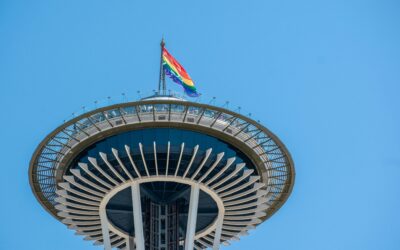
The Naked Divide: Seattle Pride Parade Sparks Backlash Over Nude Marchers in Front of Families
The annual Seattle Pride Parade—a massive cornerstone of the Pacific Northwest’s cultural landscape—has dissolved into a localized storm of public anger and online fury. Following a weekend of sweeping festivities that brought an estimated 300,000 spectators to the downtown corridor, a series of viral videos showcasing entirely nude participants marching along the parade route has ignited a fierce national conversation over public indecency, municipal ordinance loopholes, and the boundaries of family-friendly events. While organizers celebrated the parade as a massive victory for visibility, critics and parent advocacy groups have slammed the display as “unacceptable pandemonium,” demanding that city leadership enforce strict nudity restrictions when events are explicitly marketed to families and young children. At The Modern Memo, we break down the operational layout of the 2026 Seattle Pride Parade, the unique municipal legal loopholes that protect public nudity in the state of Washington, and the escalating political fallout hitting City Hall. The Parade Layout: A Million-Dollar Rainbow Footprint The incident occurred during the main procession of the Seattle Pride Parade, an event that has grown into one of the largest and most well-funded LGBTQ+ celebrations in the United States. The Procession Metrics: The parade featured more than 250 distinct contingents, blending grassroots queer activist networks, drag performers, and non-profit organizations directly with massive corporate sponsors. The Route: The march traveled along its traditional downtown corridor, starting at Westlake Park and terminating at the Seattle Center. Because the event coincided with a high-profile World Cup match weekend in the city, downtown Seattle was packed with an unprecedented volume of both local families and international tourists. The Conflict Points: The specific flashpoint that triggered the online backlash occurred along the main spectator barriers, where several groups of entirely nude marchers—some wearing only shoes and body paint—pranced and danced directly past families with toddlers and young children seated on the curbs. The Legal Loophole: Why Seattle Police Can’t Intervene As outrage flooded social media channels, with critics demanding to know why local law enforcement failed to execute immediate arrests for public indecency, legal experts pointed directly to the distinct architecture of Washington state law. The Municipal Code: Under Seattle Municipal Code (SMC) 12A.10.070, public nudity, in and of itself, is not a crime. For a person to be charged with lewd conduct, the state must prove beyond a reasonable doubt that the individual intentionally performed a lewd act in a public place with the explicit intent to cause affront or alarm, or for the purpose of sexual gratification. The Expressive Shield: The Washington State Supreme Court has historically maintained a highly permissive stance on public nudity, routinely classifying non-sexual nudity during political protests, performance art, and civic parades—such as the annual Fremont Solstice Cyclists—as a protected form of free expression. The Hands-Tied Directive: Because the nude marchers at the Pride parade were participating within the boundaries of an approved, permitted cultural expression and were not engaged in explicit sexual behavior, the Seattle Police Department’s hands were legally tied. Officers stationed along the route had zero statutory authority to intervene or order the marchers to cover up. The Cultural Chasm: Freedom of Expression vs. Child Protection The failure of the legal code to restrict the display has opened a massive, unyielding cultural chasm between traditional progressive activists and a growing coalition of moderate residents and parental rights organizations. The Case for Radical Acceptance: Proponents of the display argue that public nudity has been an integral, historical component of the Pride movement since the Stonewall Riots, symbolizing a radical shedding of societal shame and a celebration of body positivity. Organizers emphasize that Pride is fundamentally an adult-centric liberation march at its core, and argue that parents who choose to bring children to the downtown route bear the primary responsibility for vetting the environment beforehand. The Case for Common-Sense Boundaries: Conversely, parental advocacy groups counter that the event’s own marketing loops create a dangerous double standard. They point out that Seattle Pride actively promotes the parade as a “safe, inclusive, and family-friendly space for all ages,” complete with designated youth zones. Critics argue that inviting families to an event while simultaneously exposing children to adult nudity is a profound breach of public trust that undermines the broader goals of community inclusion. Final Word The pandemonium surrounding the Seattle Pride Parade is the definitive proof that the progressive movement’s commitment to absolute, unconstrained individual expression is on a direct collision course with the baseline boundaries of public child protection. When you look past the standard online screaming matches and focus entirely on the hard data—a major civic parade utilizing municipal codes to shield adult nudity in public corridors, hundreds of families caught in a structural mismatch between marketing and reality, and local police legally barred from enforcing baseline decency standards—you gain an unvarnished view of a city struggling to govern its own cultural landscape. Quality information replaces the theatrical outrage with the cold mechanics of statutory law. It shows that while activists view the display as a triumph of bodily liberation, the reality on the ground is a fracturing of the civic consensus. By refusing to establish common-sense, age-appropriate boundaries for public streets, municipal leadership has guaranteed that the debate over Pride will no longer be focused on civil rights, but on the defense of the innocence of the children watching from the curb.

The Burning Continent: Massive Heat Dome Shatters European Records as Excess Deaths Top 1,300
A climate emergency of historic proportions has engulfed the European continent. An immovable, stagnant “heat dome”—fueled by a massive atmospheric high-pressure system drawing scorched air directly northward from the Saharan desert—has systematically shattered all-time temperature records from the British Isles to the deep interior of the Balkans. The compounding, weeks-long meteorological event has forced millions of citizens under top-tier “Red Alerts,” crippled critical energy and transport infrastructure, and triggered an escalating humanitarian crisis. The World Health Organization (WHO) and regional ministries have already confirmed more than 1,300 excess deaths directly linked to the suffocating daytime peaks and sweltering overnight minimums. At The Modern Memo, we break down the localized data defining Europe’s most severe early-summer heatwave on record, the structural collapse of cooling and transport infrastructure, and the alarming shifting of the heat dome into Eastern Europe. Shattering the Baseline: The Broad-Spectrum Data The primary shock of the heatwave is its immense geographic scale and the sheer margins by which multi-decade temperature benchmarks have been obliterated across Western and Central Europe. The French Crucible: France experienced its hottest days since records began in 1947, with the national average temperature hitting an unprecedented 30.0°C. The mercury peaked at a blistering 44.3°C in the southwestern town of Pissos, while Paris sweltered through a record-breaking June high of 40.9°C. Météo-France placed 58 departments under an emergency Red Alert as the government restricted public events. The Spanish Peak: The absolute highest temperature of the cycle materialized in Andújar, Spain, where the thermometer topped out at a lethal 45.1°C. In northern Spain, the coastal city of Bilbao hit a historic June peak of 42.7°C, severely worsening an ongoing regional drought. The Northward Surge: The heat dome effectively bypassed natural geographical buffers. Germany reported an all-time record of 41.7°C in the eastern town of Coschen, with 46 distinct weather stations crossing the 40-degree threshold. The Netherlands (39.4°C), Switzerland (39.0°C in Basel), and Denmark (37.0°C) all provisionally logged their hottest June days in recorded history. The UK’s Unprecedented Red Alert: The United Kingdom’s Met Office issued Red Warnings for Extreme Heat for three consecutive days—the first time in the history of the current warning system that top-tier alerts were maintained for three straight days—as temperatures in southern England surged to a provisional June record of 37.3°C. The Critical Inversion: When Night Brings No Relief Public health experts and climatologists at World Weather Attribution (WWA) warn that the primary driver behind the surging mortality rate is not just the blinding daytime heat, but a total lack of nocturnal cooling. When nighttime temperatures remain above 25°C, the human cardiovascular system is blocked from shedding internal heat, drastically escalating stroke and cardiac arrest risks for elderly and medically vulnerable populations. A rapid historical attribution study finalized by climate scientists concluded that a multi-day June heatwave of this intensity would have been “virtually impossible” in the mid-20th century, noting that the hot daytime peaks have become ten times more likely, while the dangerous tropical nights are now 100 times more likely due to a warmed global climate baseline. Infrastructure Structural Failures: Steel, Power, and Pavement The sheer persistence of the high-pressure block has exposed the severe vulnerability of European public infrastructure, which was fundamentally designed for a cooler, mid-twentieth-century climate. Medical Emergency Overload: The sudden influx of heatstroke and dehydration cases has placed immense strain on localized healthcare networks. In the UK, multiple NHS trusts and East Surrey Hospital declared “critical incidents” after aging building cooling units suffered structural failures, forcing facilities to restrict admissions to life-threatening emergencies only. Transport and Grid Paralysis: Across France and Germany, rail networks were thrown into chaotic delays as extreme surface temperatures triggered the thermal expansion of steel tracks, threatening train derailments and snapping overhead power lines. Concurrently, electricity demand for air conditioning surged to a 45-year high, straining grids right as low river levels and high water temperatures forced power plants to curtail generation to prevent ecological damage. The Wildfire Axis: The intense heat has rapidly vaporized soil moisture, pushing forest and brush ecosystems to record seasonal lows. Out-of-control wildfires have broken out across southern France and central Spain, stretching emergency services to their absolute limits. Shifting the Dome: The Crisis Moves East As the final days of June draw to a close, real-time tracking data from the European Centre for Medium-Range Weather Forecasts (ECMWF) indicates that the core of the heat dome has officially shifted eastward, placing a fresh swathe of vulnerable nations in the crosshairs. The Balkan Red Alert: Atmospheric models show the core of the stagnant high-pressure system centering directly over Central Europe and the Balkans. Red warnings have been hoisted across Hungary, Poland, Romania, Serbia, and Slovakia. The New Targets: Slovakia has already recorded a new national benchmark of 40.5°C near its southern border, while Budapest is modeling temperatures forecast to cross the 41-degree mark. The Ukraine Grid Strain: The eastward migration is presenting a catastrophic test for Ukraine’s infrastructure. Already severely degraded by years of ongoing conflict, the nation’s state energy providers warned that temperatures approaching 38°C are forcing the power grid into a “very strained mode,” prompting emergency rolling blackouts to prevent total system collapse. Final Word The unprecedented, record-shattering heat dome blanketing Europe is the definitive proof that climate change is no longer a distant, abstract projection for future generations—it is a lethal, contemporary reality. When you look past the standard tourism cancellations and look directly at the raw meteorological data—temperatures consistently breaching 44°C in France and Spain, the structural collapse of medical cooling units and railway networks across the UK, and more than 1,300 preventable deaths recorded in a matter of weeks—you gain an unvarnished view of a continent physically unequipped for its new climate baseline. Quality information replaces the casual summer travel narratives with the cold reality of a systemic public health emergency. As the oppressive heat dome slowly drifts eastward to bake the Balkans and strain Ukraine’s grid, European leaders are being handed a permanent, unyielding warning: if cities do not aggressively invest…

Logistical Lifeline: U.S. Military Touts Massive Humanitarian Surge as Venezuela Quake Death Toll Hits 1,450
The international race against time in South America has reached a critical, life-saving nexus. Eighty-five hours after back-to-back 7.2 and 7.5 magnitude earthquakes decimated north-central Venezuela, the official death toll has climbed to a devastating 1,450 fatalities, with more than 3,150 injured, 12,700 displaced, and upwards of 46,000 citizens currently reported missing. In response to an urgent bilateral request from Venezuela’s interim government under Acting President Delcy Rodríguez, the U.S. military has executed a rapid, massive logistics surge. Operating under the directive of the War Department, U.S. Southern Command (SOUTHCOM) has assumed a leading operational role on the ground, deploying heavy naval assets, specialized amphibious engineering units, and elite search-and-rescue components to stabilize the crumbling coastal infrastructure. At The Modern Memo, we break down the operational footprint of the U.S. military’s Caribbean intervention, the strategic reopening of the Caracas airbridge, and the high-stakes maritime relief grid operating directly off the hard-hit coast of La Guairá. Air and Sea Mobilization: The SOUTHCOM Surge The humanitarian intervention, coordinated in close tandem with Secretary of State Marco Rubio and the State Department’s Bureau for Humanitarian Assistance, has mobilized the unparalleled logistical might of the U.S. Armed Forces. Reopening the Skies: In the immediate hours following Wednesday’s double-shock, collapsing infrastructure and severe debris fields completely paralyzed Simón Bolívar International Airport in Caracas. A specialized U.S. military engineering team rapidly deployed to the tarmac, clearing structural hazards and establishing an emergency air-traffic network. The U.S. has now assumed full management of airfield and humanitarian operations at the airport to handle the massive influx of global aid. The Maritime Shield: Off the coast of the devastated city of La Guairá, SOUTHCOM has positioned a formidable naval footprint. The amphibious transport dock USS Fort Lauderdale (LPD 28) and the littoral combat ship USS Billings (LCS 15) have anchored just outside the disaster zone, serving as floating command centers. The Soto Cano Pipeline: Operating out of Soto Cano Air Base in Honduras, Joint Task Force-Bravo has deployed heavy-lift CH-47 Chinook and UH-60 Black Hawk helicopters. These aircraft are flying continuous, long-range supply corridors, transporting elite rescue gear and medical infrastructure directly into cut-off regional valleys. The Rubble Race: 300 First Responders and Canine Units With over 770 large-scale buildings entirely collapsed across seven distinct Venezuelan states, the primary focus of the combined military-civilian grid remains fixed on searching for survivors trapped in deep structural voids. The Type I Task Forces: The Trump administration has augmented the military logistics grid by deploying four world-class Type I Urban Search-and-Rescue (USAR) teams to the country. The deployment comprises more than 300 of America’s finest first responders from elite teams based in Fairfax County, Virginia, and Los Angeles, California. The Canine Network: Working alongside 2,600 international rescue workers from 27 participating nations, the American contingent has deployed 23 specialized search canines trained to detect heat signatures and scent pools beneath crushed masonry. The Port Repair Mandate: Because the earthquakes severely fractured Venezuela’s primary commercial docks, a specialized U.S. Navy operations team has embedded directly at the Port of La Guairá. Working hand-in-hand with Venezuelan local civil protection units, Navy engineers are using heavy construction equipment to repair sea walls and construct temporary offloading ramps so landing craft can deliver bulk supplies directly from the USS Fort Lauderdale. The $300 Million Grid: Partnering with the Private Sector The military’s kinetic work on the ground is backed by an immediate, sweeping escalation of financial resources from Washington, highlighting the total alignment between the U.S. and the post-authoritarian interim government in Caracas. The scale of the devastation has re-written the geopolitical script for the region. Only a year ago, Venezuela operated under an anti-American autocratic regime; today, following the removal of former dictator Nicolás Maduro, U.S. forces are being cheered in the streets of Caracas as savior figures. This deep cooperation has allowed the State Department to comfortably route over $300 million in direct aid through highly trusted international and non-governmental channels, ensuring that food, clean water, and emergency medical kits bypass corrupt bureaucratic networks to reach displaced populations immediately. Final Word The massive deployment of U.S. military power to stabilize Venezuela is the definitive proof that true geopolitical leadership is measured by logistical capability, not empty diplomatic platitudes. When you look past the initial tragedy of the destruction and focus entirely on the hard data—1,450 confirmed dead and tens of thousands missing, the deployment of a U.S. amphibious fleet to bypass shattered ports, and the rapid military repair of Venezuela’s primary international airport in under 48 hours—you gain an unvarnished view of structural power projection utilized for humanitarian survival. Quality information replaces the initial panic with the cold reality of a highly coordinated, multi-national rescue web. The recovery timeline for South America will stretch across years, but by transforming the Caribbean into a massive, functioning aid pipeline, Washington has reminded the world of a permanent truth: when a continent fractures, it is the logistical muscle of the American soldier that stands between a recovering nation and absolute humanitarian collapse.

The Classroom Covenant: Texas Becomes First State to Mandate Bible Passages in Public K-12 Reading Lists
In a historic and highly polarized structural shift, the Texas State Board of Education voted to mandate specific Bible passages and Christian stories as required reading for more than 5.5 million public school students. The Republican-led, 15-member elected board approved the sweeping measure following months of intense public hearings and fierce debate over the separation of church and state, making the Lone Star State the definitive trailblazer in a nationwide conservative push to re-anchor American public education in Judeo-Christian foundations. The new curriculum standards—formally adopted into the state’s mandatory Texas Essential Knowledge and Skills (TEKS) framework—will alter English, language arts, and social studies instruction across every grade level from kindergarten through senior year of high school. While critics decry the decision as a blatant, unconstitutional infringement on religious diversity, proponents hail the decision as a long-overdue restoration of a common educational and cultural canon. At The Modern Memo, we break down the operational data of the new Texas mandated reading list, analyze the precise biblical texts assigned to each grade level, examine the legal precedents shielding the board’s decision, and explore the deep fracturing of the local community. The Scope of the Change: A Kindergarten-to-Senior Year Mandate The decision represents a profound shift away from traditional public education structures, where individual school districts, principals, and classroom teachers have historically retained localized control over which novels, stories, and historical documents are assigned to students. The Staggered Rollout: The mandatory reading list is scheduled to take effect at the beginning of the 2030–2031 school year, allowing the Texas Education Agency (TEA) a multi-year buffer window to design specific teacher guidance, finalize textbook printing, and establish instructional standards. The 200-Text Canon: The mandates are the direct result of a 2023 Texas state law that required education officials to draft a unified, statewide mandatory reading list of literary works for each grade level. The final approved list contains roughly 200 entries, blending secular classics of the Western literary canon—such as E.B. White’s Charlotte’s Web, Harper Lee’s To Kill a Mockingbird, and Jane Austen’s Pride and Prejudice—directly with explicit scriptural readings. The Centrality of Texas: Because Texas educates roughly 1 in 10 public school students in the United States, its textbook and curriculum decisions wield massive, outsized leverage over the national publishing market. Textbook companies frequently rewrite their standard editions to comply with Texas guidelines, meaning the Bible-infused frameworks approved in Austin could soon bleed into classrooms across multiple states. The Fact Sheet: What Students Will Actually Read To cut through the intense media spin and internet hyperbole surrounding the decision, it is necessary to examine the cold data of the approved curriculum list. The framework adds a minimum of one required biblical passage or religious story to every single grade level. Grade Level Assigned Biblical Text or Story Approved Translation / Source Kindergarten / 1st “Noah’s Ark” (Adapted for picture books) Peter Spier / Simplified Children’s Literature 2nd Grade “David and Goliath” The Children’s Book of Heroes 3rd Grade “Daniel and the Lion’s Den” Christian Broadcasting Network Adaptation 4th Grade The Necessity of Humility (Luke 14:7-11) New International Reader’s Version (NIrV) 5th Grade The Crossing of the Red Sea (Exodus 3 & 14) New International Reader’s Version (NIrV) 6th Grade “Do Not Be Anxious” (Matthew 6:25-34) English Standard Version (ESV) 7th Grade The Shepherd’s Psalm (Psalm 23) King James Version (KJV) 8th Grade The Eight Beatitudes (Sermon on the Mount) King James Version (KJV) High School (9-12) 1 Corinthians 13 (“The Love Chapter”) & Job Used as mandatory companion texts for Dickens & Austen The data reveals a highly specific, Protestant-centric translation map. The proposal specifically mandates that teachers utilize versions like the English Standard Version (ESV)—wildly popular among conservative evangelicals—and the King James Version (KJV). Catholic-approved translations containing the Apocrypha, Jewish-translated Tanakh alternatives (with the brief exception of a single excerpt from Lamentations), and the sacred texts of non-Christian world religions are completely absent from the mandatory requirements. The Legal Shield: Navigating the Supreme Court Grid While civil liberties organizations like the left-leaning Texas Freedom Network and Americans United for Separation of Church and State have threatened immediate litigation, the Texas State Board of Education is operating behind a highly calculated, resilient legal shield. The 1963 Precedent: Legal experts note that while the landmark 1963 Supreme Court case Abington School District v. Schempp banned state-mandated devotional Bible reading and school prayer, the majority opinion explicitly left a wide-open door for academic instruction. The court famously ruled: “It certainly may be said that the Bible is worthy of study for its literary and historic qualities.” The Secular Defense: Texas Education Agency spokesman Jake Kobersky and board proponents are anchoring their entire defense within this specific secular boundary. They argue that students cannot genuinely comprehend the metaphors, allegories, and historical references embedded in Western literature and American civic history without possessing a foundational literacy of the Bible. The Appointed Firewall: Furthermore, the Texas government has aggressively reshaped its legal environment over the last two years. The state has already successfully passed laws requiring the public display of the Ten Commandments in every classroom (a move recently upheld by a divided federal appeals court), permitted schools to hire religious chaplains as counselors, and established designated prayer periods during the schoolday. A Fractured Community: Cultural Preservation vs. Theological Exclusion The public comments and testimony delivered during the final voting sessions exposed a deep, unyielding cultural chasm between citizens who view the curriculum as a vital defense of American identity and those who view it as a dangerous escalation of Christian nationalism. The Argument for Cultural Continuity: Board member Brandon Hall, a pastor from Aledo who championed the inclusion of the texts, argued that the proportion of biblical impact on Western civilization justifies its dominance in the curriculum. “America and Texas have been a Christian nation and a Christian state forever,” Hall stated to the assembly. “And the proportion of the impact they’ve had is why they’re included. Of course, there are other faiths that are represented,…