


The King of the North’s New Grid: Who is Andy Burnham, the Trump Critic Set to Become Britain’s Next Prime Minister?
The turbulent landscape of British politics has delivered yet another extraordinary executive transition. Following the sudden resignation of Sir Keir Starmer after a two-year premiership marred by strategic missteps, the governing Labour Party has completed a lightning-fast coronation. Andy Burnham, the newly elected Member of Parliament for Makerfield and former Mayor of Greater Manchester, is officially locked in to become the United Kingdom’s next Prime Minister. Burnham’s transition through the doors of 10 Downing Street is finalized. After securing a landslide 349 nominations from Parliamentary Labour MPs—leaving it mathematically impossible for any internal rival to even launch a challenge—Burnham will formally assume the Labour leadership before kissing hands with the King to become Prime Minister. However, as Burnham prepares his domestic platform, a severe diplomatic storm is already gathering across the Atlantic. Positioned structurally to Starmer’s left, Burnham inherits a strained “Special Relationship” with Washington. His extensive track record of fierce, public attacks against U.S. President Donald Trump has set the stage for a highly volatile, rocky initiation with the White House. At The Modern Memo, we break down the operational profile of the UK’s incoming leader, his signature brand of regional populism, and the imminent geopolitical friction threatening the Westminster-Washington axis. The Rise of “Manchesterism”: From Cabinet to Devolution For international observers, Andy Burnham’s sudden ascension to the absolute apex of British power represents the culmination of a decade-long tactical pivot away from the Westminster bubble. The New Labour Veteran: Far from an outsider, Burnham, 56, is a seasoned political operator. He served as a high-profile Cabinet minister under Gordon Brown’s administration, holding the critical briefs of Chief Secretary to the Treasury, Culture Secretary, and Health Secretary. The Mayoralty Rebirth: After twice losing internal Labour leadership contests in 2010 and 2015, Burnham abandoned traditional parliamentary politics to run for the newly created position of Mayor of Greater Manchester in 2017. Over nearly a decade in the North of England, he cultivated a powerful, highly visible brand of regional populism dubbed “Manchesterism”—systematically fighting the central government for local transport integration, localized housing controls, and major economic devolution. The Makerfield By-Election Launchpad: Recognizing Starmer’s mounting vulnerabilities, Burnham executed a swift return to Westminster, resigning his mayoralty to capture the safe Labour seat of Makerfield in a highly calculated special election, positioning himself perfectly to seize the crown when Starmer collapsed. The Washington Friction: Navigating the Left-Wing Legacy The primary concern consuming civil servants within the Foreign, Commonwealth & Development Office (FCDO) is the absolute ideological mismatch between the incoming Prime Minister and the current resident of the Oval Office. The Anti-Trump Rhetoric: Unlike Starmer, who desperately attempted to maintain a professional, managerial neutrality toward Washington, Burnham has historically thrown hard rhetorical punches. He previously accused Trump of bringing toxic “instability to the world” and aggressively catered to British progressive activists who viewed the populist administration with total hostility. The Oval Office Scorn: President Trump has wasted zero time returning fire. Speaking from the Oval Office alongside NATO leadership, Trump dismissed Burnham as an “extremely liberal” politician and scoffed at his municipal credentials. “I see that he was, I guess, the mayor of a town,” Trump remarked to reporters. “I hear he’s extremely liberal. Extremely… No, I think we’re probably of a different persuasion.” The Defense and Energy Flashpoints: Titrating the Tension To survive on the global stage, Burnham’s incoming administration must execute what foreign policy experts call an intricate “art of titration”—fractional adjustments to appease the White House without alienating his own left-wing parliamentary base. Policy Arena The Left-Wing Domestic Push The Washington Realist Constraint NATO Defense Spending Grassroots demands to divert funds away from foreign deployments. Burnham has officially committed to a massive 3.5% GDP defense target to pacify Trump. Middle East & Gaza Massive internal pressure to implement a total arms embargo on Israel. Risks an immediate, full-scale diplomatic rupture with the Trump administration. North Sea Oil & Gas Environmental factions demanding an absolute end to fossil extraction. Trump explicitly warned the UK to “Open the North Sea” or face economic fallout. Burnham has already begun dropping calculated hints designed to avoid an immediate trade war. Despite his progressive domestic alignment, he signaled to industrial groups that he does not hold a “fixed position” on blocking North Sea oil and gas production—a clear nod to Trump’s explicit warning that failing to exploit domestic energy reserves would constitute a strategic failure. Final Word The sweeping coronation of Andy Burnham as the United Kingdom’s next Prime Minister is the definitive proof that the Labour movement has rejected the sterile, cautious centrist project of Keir Starmer in favor of northern regional populism. Yet, when you look past the internal party celebrations and analyze the cold, hard data—349 MPs installing a leader explicitly positioned to the left of the previous administration, a 3.5% NATO spending commitment that must be paid for amid a severe domestic cost-of-living crisis, and a U.S. President who has already branded the incoming leader an “extremely liberal town mayor”—you gain an unvarnished view of an impending collision. Quality information replaces the media’s romanticism of “Manchesterism” with the reality of international isolation. Andy Burnham successfully conquered the North of England by picking fights with Westminster; by stepping into Number 10, he will quickly discover that managing a hostile, unyielding White House during a global energy and security crisis requires far more than a charismatic regional stump speech.
The Arsenal Upgrade: Trump, Hegseth, and Wall Street Titans Mobilize Private Capital to Supercharge U.S. Weapon Stockpiles
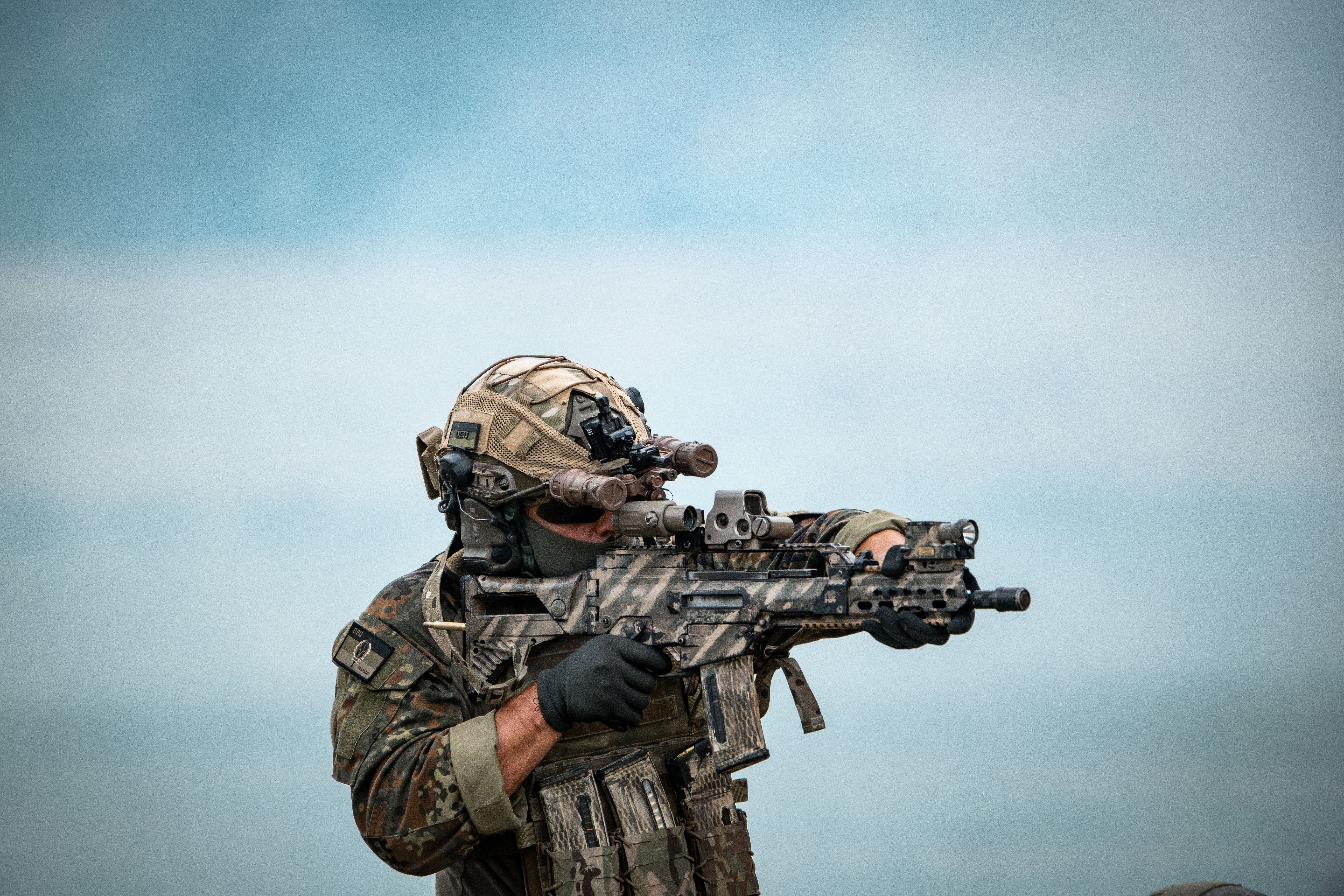
The strategic race to rebuild America’s depleted military industrial base took a massive, multi-billion-dollar leap forward in Carlisle, Pennsylvania. Against the backdrop of a grinding regional war in Iran that has severely strained domestic stockpiles of advanced munitions, President Donald Trump, Defense Secretary Pete Hegseth, and the nation’s top military brass convened a high-stakes summit to structurally reshape how the United States funds battlefield technology. The 2026 Pennsylvania Defense and Innovation Summit, hosted at the U.S. Army War College and organized by U.S. Senator Dave McCormick (R-PA), marks the first time the executive branch has gathered elite defense tech innovators, military commanders, and global private equity kings under a single roof. The explicit goal: leveraging private markets to immediately bypass congressional gridlock, expand high-precision manufacturing, and deploy bleeding-edge automation to replenish critical defense reserves. At The Modern Memo, we detail the operational constraints driving the Carlisle summit, the corporate heavyweights pledging capital, and the technological blueprints deployed to revitalize the American defense industrial base. The Material Deficit: The Logistical Shadow of the Iran Conflict The urgency animating the War College summit is driven by a stark, unvarnished physical reality: the U.S. military is expending high-tech munitions faster than its legacy manufacturing pipelines can replace them. The Stockpile Strain: Continuous precision strikes and defensive naval engagements in the Middle East have dramatically reduced U.S. operational inventories of Tomahawk cruise missiles, as well as Patriot (PAC-3) and THAAD missile defense interceptors. The Strategic Timeline: A sobering Pentagon logistics analysis verified that domestic defense contractors will require a minimum of three years to replenish these specific arsenals to pre-conflict baselines. This manufacturing lag has sparked severe anxieties within the Joint Chiefs of Staff regarding America’s firepower readiness in the event of a secondary flashpoint with China over Taiwan. The Budgetary Bottleneck: While President Trump has aggressively proposed a historic $1.5 trillion defense budget for 2027 to fix the shortfall, the massive spending bill remains heavily gridlocked in Congress. The administration is utilizing the Pennsylvania summit to unlock private financing as an emergency stopgap to expand factory floors today. Unveiling the Carlisle Coalition: Wall Street Meets the War Department To supercharge supply chains, the administration has constructed an unprecedented alignment between traditional military procurement and the world’s most powerful financial institutions. The summit features a powerful cadre of national security leaders, including Defense Secretary Pete Hegseth, Joint Chiefs Chairman Gen. Dan Caine, Army Secretary Dan Driscoll, and CIA Director John Ratcliffe. Sitting directly across the table are corporate chiefs representing the absolute apex of global capital and manufacturing logistics: The Finance Guardians: JPMorgan Chase CEO Jamie Dimon and Blackstone President Jon Gray, coordinating private equity syndicates to back high-risk defense infrastructure expansions. The Prime Contractors: Lockheed Martin CEO Jim Taiclet, Boeing CEO Kelly Ortberg, and General Dynamics CEO Phebe Novakovic, aligning legacy assembly lines with new automated sub-contractors. The Disrupted Vanguard: Palantir CTO Shyam Sankar and SpaceX Director Antonio Gracias, spearheading the swift implementation of artificial intelligence, high-speed data networks, and next-generation launch logistics into the core defense grid. The Technology Blueprint: Automation over Bureaucracy Rather than pouring cash into inefficient, multi-year legacy projects, the capital partnerships announced in Carlisle are strictly focused on immediate, modular hardware scalability. Defense Innovator Pledged Investment / Asset Core Operational Objective ZeroEyes $10 Million Allocation Expands artificial intelligence and advanced machine learning research for threat detection. Gecko Robotics 10,000-Sq-Foot Advanced Facility Integrates autonomous robotics directly into manufacturing lines to fast-track hull and structural output. Palantir Technologies Proprietary AI Targeting Frameworks Streamlines raw data sorting to compress the time between target identification and missile deployment. “We have got to supercharge our supply chains to reduce how long it takes for new technology to be ready for widespread production,” explained Jake Loosararian, CEO of Gecko Robotics, emphasizing that the modern battlefield leaves zero room for multi-year regulatory delays. The initial private sector commitments are designed to immediately upgrade Pennsylvania’s industrial corridor, transforming the Commonwealth into a localized manufacturing hub for high-precision components and software-defined defense tools. Final Word The massive convergence of executive power, military command, and Wall Street capital at the U.S. Army War College is the definitive proof that the United States is fundamentally reinventing its national security apparatus to meet the demands of modern warfare. When you look past the standard political theater and focus entirely on the hard data—a critical three-year munitions deficit caused by hot operations in the Middle East, a historic $1.5 trillion defense proposal stalled in the legislature, and the immediate deployment of private capital to build automated, robotic manufacturing infrastructure—you gain an unvarnished view of a total strategic pivot. Quality information replaces the narrative of standard peacetime defense spending with the reality of an active economic mobilization. By cutting through administrative inertia and building a direct pipeline between innovators and high-finance investors, Donald Trump and Pete Hegseth have delivered an unyielding declaration to America’s adversaries: the American industrial engine is waking up, the era of defense supply stagnation is over, and the nation is building the capacity to defend its global interests through sheer technological dominance.

Border Gridlock: DOJ Unveils Largest-Ever Trade Fraud Crackdown, Surpassing $1 Billion Milestone
The federal government’s transition from administrative border tracking to aggressive criminal warfare along global supply chains has reached an unprecedented financial and legal threshold. Appearing on Fox News’ America Reports, correspondent Garrett Tenney detailed a monumental law enforcement blitz orchestrated by the Department of Justice (DOJ), confirming that the newly weaponized Trade Fraud Task Force (TFTF) has officially surpassed $1 billion in civil and criminal recoveries, penalties, forfeitures, and publicly charged losses. The massive enforcement surge represents a total policy transformation by the executive branch, which has formally designated global trade fraud not as a minor regulatory compliance issue, but as a critical “front-line threat to U.S. national and economic security.” Operating via a centralized, multi-agency strike net that unites the DOJ’s Civil and Criminal Divisions with Homeland Security Investigations (HSI) and U.S. Customs and Border Protection (CBP), federal prosecutors have launched a comprehensive, nationwide dragnet targeting multi-million-dollar customs evasion, human rights abuses involving slave labor, and profound public health and safety violations. At The Modern Memo, we break down the operational anatomy of the $1 billion milestone, the massive Chicago jewelry and aluminum indictments anchoring the data, and the aggressive corporate whistleblowing initiatives engineered to permanently dismantle black-market supply lines. The Chicago Epicenter: Dismantling the $930 Million Gold Rings The primary breakthrough driving the task force past the billion-dollar line was unveiled in a series of sweeping indictments executed by the U.S. Attorney’s Office for the Northern District of Illinois, which serves as the TFTF’s lead prosecutorial partner. The Surya Transshipment Scheme: Federal prosecutors announced massive criminal charges against Raj Kohli and Veena Kohli, operators of California-based Surya International. The duo stands accused of illegally importing roughly $693 million in gold jewelry from India and the United Arab Emirates between 2020 and 2024. To systematically bypass rigid U.S. trade walls, the defendants allegedly falsified shipping manifestations to declare that the luxury goods originated in Singapore, successfully evading more than $38 million in mandatory customs duties. The Gulabani Loop: Operating a parallel, multi-million-dollar evasion loop, Illinois wholesaler Narain Gulabani was hit with severe federal charges for importing approximately $240 million in gold jewelry. Gulabani allegedly utilized fraudulent country-of-origin listings—falsely claiming the inventory was manufactured in Oman or Singapore—to cheat American taxpayers out of $13.6 million in lawful tariffs. The Aluminum Pallet Precedent: Beyond the jewelry sector, the task force’s single largest resolution to date is a jaw-dropping $549.5 million settlement finalized against Perfectus Aluminum. The industrial corporate giant had systematically disguised Chinese aluminum extrusions as functional shipping pallets to completely evade severe U.S. antidumping and countervailing duties. The Three Pillars of Enforcement: Forced Labor, Evasion, and Public Safety As Garrett Tenney highlighted on America Reports, the DOJ’s tactical mandate extends far past basic revenue collection, transitioning into a strict preservation of human rights and public health. Eradicating Slave Labor: The task force has established an unyielding operational link with the Forced Labor Enforcement Task Force, actively weaponizing the Uyghur Forced Labor Prevention Act (UFLPA) and Title 18 criminal provisions. Federal officials explicitly warned that corporations can no longer hide behind fragmented supply chains; any domestic brand displaying “willful blindness” toward overseas forced labor will face direct asset forfeiture and severe criminal prosecution. Securing Public Health: High-impact safety crackdowns contributing to the $1 billion milestone include an $8 million penalty against Royal Sovereign International for failing to report defective, dangerous imported goods, and a $6.3 million criminal fine levied against Boise Cascade over illegally sourced timber imports. The Whistleblower Carrots and the Multi-District Sticks The final element of the DOJ’s structural strategy is the complete elimination of safe havens for corporate fraudsters, deploying massive financial incentives to turn corporate insiders into government informants. Under the newly expanded Corporate Whistleblower Awards Pilot Program, the DOJ’s Criminal Division is now offering historic, multi-million-dollar cash payouts to private individuals and corporate employees who provide original, truthful data exposing customs or tariff evasion. Concurrently, federal prosecutors are utilizing expansive venue provisions under 18 U.S.C. § 3237. Because an illegal import technically violates the law in every single district it travels through, the DOJ can launch devastating prosecutions in any state where the goods are moved, distributed, or sold—entirely stripping fraudsters of the ability to hide behind friendly localized ports. Final Word The historic $1 billion recovery milestone achieved by the DOJ’s Trade Fraud Task Force is the definitive proof that the era of treating international customs manipulation as a victimless white-collar game is officially over. When you look past the standard corporate press releases and analyze the raw data—nearly $1 billion in fraudulent gold jewelry schemes crushed in a single inland port city, a half-billion-dollar aluminum forfeiture cutting off Chinese dumping loop-holes, and the deployment of a federal whistleblower bounty matrix explicitly engineered to turn corporate insiders against their own bosses—you gain an unvarnished view of a total strategic pivot. Quality information replaces the narrative of loose regulatory oversight with the cold reality of criminal accountability. As DOJ officials confirm that this billion-dollar haul is merely the opening salvo of a long-term economic offensive, Washington has delivered a permanent, unyielding declaration to the global market: if you seek to profit by undermining American workers, exploiting slave labor, or cheating the U.S. Treasury, you will see your goods seized, your corporate assets dismantled, and your executives marched into a federal prison cell.

The Medical Blank: Medical School Deans Falter in Tense House Hearing Over Gender Identity and Biological Science
The intensifying battle over the ideological capture of American higher education reached a fever pitch on Capitol Hill. During a high-stakes oversight session convened by the House Education and Workforce Committee, conservative lawmakers directly confronted elite medical school leaders regarding the aggressive expansion of Diversity, Equity, and Inclusion (DEI) initiatives inside the nation’s premier medical training pipelines. The hearing, engineered to examine how politicized mandates are reshaping medical curricula, transformed into an intense, gridlocked debate over basic human anatomy. Rep. Mary Miller (R-IL), a staunch social conservative serving as the committee’s Vice Chair, utilized her question period to grill the heads of the University of California system’s top medical schools point-blank on whether their institutional pivot toward gender-identity politics is systematically undermining foundational biological science. When pressed to verify whether biological women are the exclusive category of humans who possess a uterus and carry pregnancies, the academic leaders repeatedly faltered, providing evasive non-answers that committee members blasted as completely “ridiculous.” At The Modern Memo, we break down the operational lines of the House DEI committee audit, the curriculum disclaimers under scrutiny at UCLA and UCSF, and the executive mandates driving the federal conservative pushback. The Uterus Query: Questioning the UCLA Curricula The primary flashpoint of the exchange materialized when Rep. Miller introduced specific, documented classroom materials distributed to first-year medical students within the University of California, Los Angeles (UCLA) system. The Curricular Disclaimer: Miller highlighted a formal administrative text from a UCLA medical class which explicitly declared that the institutional use of the terms “she” and “women” was not intended to exclude “those who have a uterus but do not identify with these terms.” The Direct Challenge: Citing the document, Rep. Miller directly confronted Dr. Steven Dubinett, the Dean of the UCLA David Geffen School of Medicine. “Can someone have a uterus but not be a woman?” Miller asked Dubinett. “Because it seems like your school is promoting that ridiculous idea.” The Evasive Intercept: Rather than providing a standard biological response, Dr. Dubinett chose a protective, administrative posture. “We’re treating transgender people, but we’re doing that in compliance with state and federal law,” Dubinett replied. When Miller reposed the question as a strict, binary yes-or-no query, the dean remained completely silent until the congresswoman’s allotted time expired. The UCSF Guideline: “Pregnant People” vs. “Pregnant Women” The ideological gridlock intensified when the committee turned its attention to the University of California, San Francisco (UCSF), where language mandates have formally rewritten internal medical terminology. The UCSF Framework: Rep. Miller trained her sights on UCSF Chancellor Sam Hawgood, auditing a campus teaching guide titled “Framework for Gender and Sex Concepts in Teaching.” The institutional document explicitly advises medical students and clinical staff to substitute the term “pregnant women” with “pregnant people.” The Native Apology: Defending the language protocols, Hawgood—a veteran neonatologist and member of the American Academy of Pediatrics—argued that the curriculum was engineered for medical students “who are facing a wide diversity of patients.” Hawgood conceded that “the vast majority of pregnancies are in women,” adding, “I have absolutely no problem with using the word ‘pregnant women’—I use it myself.” The Definition Loop: The defense shattered when Miller asked point-blank if a “non-biological woman ever had a baby.” Hawgood replied, “A transgender person can,” before retreating to a generic talking point when the question was repeated, stating: “I would reiterate, we take care of transgender patients.” The Federal Counter-Offensive: Defunding the DEI Mandates The testy House Education and Workforce Committee hearing is the public opening salvo in a broader, systemic federal campaign to completely purge left-wing ideological requirements from federally funded institutions. Republican lawmakers at the hearing aggressively argued that both UCLA and UCSF are out of compliance with strict executive directives aimed at eliminating race- and gender-based DEI programs from medical schools receiving federal dollars. Medical freedom advocates warn that substituting precise, binary biological realities with fluid gender-identity politics leaves future physicians fundamentally unprepared to handle sex-specific medical pathologies, pharmaceutical clearance rates, and distinct reproductive diagnoses. Final Word The intense House Committee hearing is the definitive proof that the leadership of America’s elite medical institutions has prioritized political correctness over basic biological reality. When you look past the sterile, defensive jargon of “compassionate inclusivity” and focus entirely on the hard data—medical school deans refusing to state before Congress that only women have uteruses, taxpayer-funded universities formally advising students to avoid the word “woman” in pregnancy contexts, and populist lawmakers moving to enforce strict compliance metrics—you gain an unvarnished view of a corrupted academic establishment. Quality information replaces the progressive narrative of “modernizing medicine” with the cold reality of ideological compliance. By aggressively grilling these deans on the record, Rep. Mary Miller and the House Workforce Committee have delivered an unyielding message to every university board in the country: the American public will not allow the foundational truths of biological science to be sacrificed on the altar of radical institutional DEI mandates.

The Gas Conduit Contradiction: Europe Banks Funds Into Putin’s War Machine While NATO Scrambles to Fortify the Ankara Front
The geopolitical architecture of the Western alliance has exposed a profound, structural hypocrisy at the heart of the European energy defense perimeter. At the historic NATO Summit in Ankara, Turkey, allied heads of state triumphantly celebrated a massive, record-breaking surge in military defense allocations across Europe, moving decisively toward an unprecedented 4% to 5% GDP spending trajectory to counter the long-term threat of a militarized Russian Federation. Yet, behind the sterile announcements of multi-billion-dollar joint defense ventures and bolstered air shields, a silent economic reality tells an entirely different story. Fresh compliance monitoring data compiled by European energy regulators reveals that Europe is actively bankrolling the very war machine it is spending billions to defend against. Despite the formal activation of the European Union’s long-debated REPowerEU Gas Regulation (EU/2026/261)—which ostensibly aims to systematically phase out Russian energy—a massive loophole protecting pre-existing long-term delivery contracts has triggered a shocking, counter-intuitive result: Russian natural gas and liquefied natural gas (LNG) imports into the EU actually rose significantly year-on-year over the first five months of 2026. The ongoing financial pipeline has drawn blistering, unyielding condemnation from President Donald Trump, who has lambasted Europe’s continued dependence as a total strategic failure, while an aggressive, bipartisan coalition of U.S. senators moves to advance devastating secondary sanctions designed to completely choke off foreign buyers of Russian energy. At The Modern Memo, we break down the operational energy data exposing Europe’s surge in Russian gas imports, the defense procurement paradox out of the Ankara summit, and the legislative mechanics of Washington’s impending secondary sanctions firewall. The Import Paradox: Inside the 2026 Gas Surge The primary shockwave fracturing transatlantic relations is the hard, unvarnished data released by the European Union Agency for the Cooperation of Energy Regulators (ACER) in its July 2026 monitoring dossier. The Year-on-Year Spike: The ACER data explicitly documents that despite a theoretical ban on new short-term supply contracts, Russian pipeline imports into the EU surged by 7% year-on-year between January and May 2026. Concurrently, Russian LNG imports defied all reduction rhetoric, climbing by 11%. The Long-Term Loophole: The mechanism driving this influx is the legal architecture of the EU’s recent phase-out regulation. While the law successfully prohibited all new contracts signed after June 2025, it built expansive “transitional windows” protecting pre-existing authorized long-term supply agreements. These grandfathered volumes represent a staggering 45 to 55 billion cubic meters (bcm) of annual capacity. The Transit Hubs: The flow of Kremlin-backed cash is highly concentrated. Russian LNG continues to flood western maritime gates via long-term terminals in Spain, France, Belgium, and the Netherlands, which recorded an active 17% year-on-year spike in Russian deliveries immediately following the regulation’s implementation window. Meanwhile, landlocked states like Hungary, Slovakia, and Greece continue to draw massive, unyielding flows of Russian pipeline gas, directly pumping billions of euros into Moscow’s central treasury. The Ankara Divergence: Upgraded Defenses vs. Funded Threats The energy pipeline data stands in stark, awkward contrast to the historic defense industrial expansion finalized at NATO’s Ankara Summit. The administration’s strategy at the summit focused heavily on forcing European industrial equalisation. Under intense pressure from the White House, NATO Secretary General Mark Rutte confirmed that European and Canadian allies had successfully injected an extra $258 billion into core defense lines, fast-tracking a 10-year trajectory to hit a historic, unprecedented 4% to 5% GDP spending benchmark. The White House concurrently formalized over $3 billion in major joint ventures—including domestic European production facilities for Patriot (PAC-3) missiles, ATACMS artillery, and Raytheon Stinger defense networks. Yet, Trump consistently cut through the triumphalist summit atmosphere, publicly berating European leaders for maintaining their Russian fossil fuel dependencies. The President warned that Europe’s refusal to rapidly sever its long-term gas contracts forces American taxpayers to shoulder an unsustainable double burden: spending resources to protect a continent that is actively subsidizing its own primary adversary. The Congressional Hammer: Unveiling Secondary Sanctions Faced with Europe’s bureaucratic delays and the multi-year timelines extending out to late 2027 under current EU phase-out schedules, a powerful bipartisan group of U.S. senators has introduced a radical legislative override. Proposed U.S. Statutory Mechanism Operational Target Direct Sanction Penalty Secondary Energy Sanctions Any foreign entity, bank, or port operator facilitating Russian gas purchases. Total Exclusion: Immediate cutoff from the U.S. financial system and global dollar transactions. The Long-Term Contract Nullification Grandfathered European LNG/pipeline contracts extending into 2027. Imposes severe compliance penalties on European energy brokers who honor pre-existing volumes. The Tariff Firewall EU nations that fail to replace Russian flows with American or allied energy. Imposes defensive border adjustment fees on non-compliant European industrial exports. The draft legislation represents a total, aggressive expansion of unilateral American economic power. By transitioning from primary sanctions—which only block U.S. firms from doing business with Russia—to secondary sanctions, Washington is threatening to weaponize the global U.S. dollar clearing matrix against its own allies. Under the proposed statute, any European energy utility or banking conglomerate that authorizes a payment to Gazprom or Novatek for long-term gas deliveries would find its assets instantly frozen and its corporate access to American markets permanently terminated. The bill is explicitly engineered to strip Brussels of its gradual transition timelines, forcing European capitals to execute an immediate, cold-turkey detachment from Russian energy grids, regardless of localized economic friction or supply disruptions. Final Word The shocking surge in European imports of Russian gas over the first half of 2026 is the definitive proof that Europe’s rhetoric of collective security is profoundly compromised by economic self-interest. When you look past the theatrical press conferences of the Ankara summit and analyze the hard data—Russian pipeline and LNG imports rising up to 11% despite a formal EU ban, long-term loopholes shielding 55 billion cubic meters of Kremlin-backed energy volume, and a bipartisan U.S. Senate moving to deploy secondary financial guillotines against Western buyers—you gain an unvarnished view of a fractured alliance. Quality information replaces the progressive narrative of Western solidarity with the cold reality of ongoing energy dependency. By continuing to write multi-billion-dollar checks to Vladimir Putin’s treasury…

The Guardian Toll: Trump Reinstates Iran Blockade and Demands 20% Fee to Keep Strait of Hormuz Open
The operational standoff over the world’s most critical energy artery has escalated into a direct economic and military takeover. Following a massive weekend wave of U.S. airstrikes that hit roughly 140 targets across Iran, President Donald Trump officially declared the temporary, interim ceasefire dead, announcing a complete reimposition of the naval blockade on the Islamic Republic. In a characteristic and unprecedented policy shift announced Monday morning during a phone interview with Fox & Friends and detailed further on Truth Social, Trump proclaimed that the United States military would assume absolute control over the vital trade corridor. Declaring that the nation will henceforth be known as “THE GUARDIAN OF THE HORMUZ STRAIT,” the President announced that the U.S. will begin levying a mandatory 20% transit fee on all eligible commercial cargo passing through the waterway to reimburse Washington for the cost of securing the region. The drastic executive action has completely upended global maritime trade protocols, drawing immediate legal resistance from the United Nations and sending fresh shockwaves through international oil markets as the conflict slides back into full-scale kinetic warfare. At The Modern Memo, we break down the operational parameters of the U.S. Navy’s newly ordered port blockade, the financial math behind the 20% guardian toll, and the immediate multi-national legal resistance forming against Washington’s maritime decree. The Blockade Restored: Strangling the Iranian Port Grid The primary military directive signed by the President transitions U.S. forces from defensive escort missions to an aggressive, offensive stranglehold on Iran’s entire commercial shipping footprint. The Total Maritime Lockout: The U.S. Navy-led Joint Maritime Information Center confirmed that the blockade will formally commence at 20:00 GMT on Tuesday, July 14, 2026. The mandate covers all Iranian ports, coastal zones, and major crude oil terminals, legally barring any Iranian-flagged vessel or country doing business with Tehran from entering or exiting. The “Fair and Open” Exception: In his policy blueprint, Trump emphasized that the naval blockade is explicitly targeted, not a general shutdown of global shipping. “We are reinstating THE IRANIAN BLOCKADE, so named because it is only stopping Iran’s ships or customers from entering or leaving,” Trump posted. “All other countries will have fair and open use of the Strait.” The Preceding Kinetic Blast: The enforcement order arrives on the heels of devastating U.S. airstrikes that neutralized dozens of coastal threats, systematically erasing Iranian air defense networks, radar arrays, drone launch pads, and the IRGC fast-attack boat fleets that Tehran had previously deployed to assert control over the passage. The Guardian Toll: “We Expect to Be Reimbursed” The most disruptive element of the administration’s new Middle East strategy is the introduction of a premium security tariff imposed directly on global commerce. The 20% fee represents a massive geopolitical counter-strike against Iran’s recent attempts to establish a localized “Strait Authority” to tax merchant vessels. Trump made it clear that if American service members are going to absorb the physical risk of neutralizing Iranian aggression, foreign beneficiaries must foot the bill. “We’re going to keep the strait, and we’ll probably run it,” Trump told Fox & Friends. “Maybe we’ll call it the guardian angel of the strait. And we should be reimbursed for that… because the other nations are very wealthy. They’re on our side, and we can’t be expected to do that for nothing.” The collected revenues are slated to directly offset the ballooning operational costs incurred by CENTCOM naval deployments. The Legal and Diplomatic Chasm: UN Pushes Back While the White House frames the 20% fee as a matter of baseline structural fairness, the policy has triggered immediate, intense friction with international maritime organizations and even members of Trump’s own cabinet. Global Entity Official Position on Waterway Tolls Immediate Policy Impact International Maritime Organization (IMO) Stands firmly against any mandatory tolls used simply to transit international straits. Asserts there is no international legal basis to charge merchant ships for safe passage. European Union (EU) Foreign Policy Chief Kaja Kallas demands total freedom of navigation. Reaffirms that passage through the strait must remain free of arbitrary local charges. U.S. State Department Secretary Marco Rubio previously insisted international law bars any waterway fees. Creates an immediate internal diplomatic alignment challenge for U.S. envoys. The tension is particularly acute given that just last month in Bahrain, Secretary of State Marco Rubio explicitly told reporters that there was “zero support among the Gulf countries for any sort of toll or fees,” asserting that international law strictly guarantees unimpeded, non-discriminatory transit passage. By completely overriding existing global maritime conventions, the administration is betting that the physical reality of American naval dominance will force international shipping conglomerates to comply with the 20% toll, regardless of theoretical objections raised in Brussels or Geneva. Final Word The unilateral declaration of the United States as the sovereign “Guardian of the Hormuz Strait” is the definitive proof that the Trump administration has permanently discarded conventional international law in favor of raw transactional realism. When you look past the panic reverberating through European diplomatic suites and analyze the hard data—a total naval blockade of all Iranian ports taking effect tomorrow night, a 20% security fee levied on a passage that carries one-fifth of the world’s energy supply, and a decisive sequence of 140 airstrikes proving the U.S. possesses the absolute kinetic power to back its financial demands—you gain an unvarnished view of a total strategic reset. Quality information replaces the idealistic narrative of free global navigation with the cold reality of a fee-for-service security grid. Iran gambled that it could use its geographical proximity to hold global oil markets hostage; instead, Washington has physically seized the toll booth, ensuring that the clerical regime is completely starved of maritime revenues while forcing the rest of the world to pay the American military to keep the lights on.

The Inverted Standard: St. Cloud Erupts After Upside-Down American Flag Flies at Somali Independence Day Celebration
A highly contentious flag display over the Independence Day holiday weekend has thrown the city of St. Cloud, Minnesota, into an intense cultural and political firestorm. During an officially permitted Somali Independence Day celebration held at a prominent local municipal park, onlookers and digital watchdogs discovered that the United States flag was being flown upside down directly alongside the national flag of Somalia. The incident occurred on Friday, July 3, 2026, at Lake George Municipal Park, a high-traffic recreational hub in St. Cloud. Images and video footage of the inverted American flag—traditionally a standardized signal under the U.S. Flag Code reserved strictly for instances of “dire distress or extreme danger”—rapidly flooded social media channels, triggering widespread local fury and sharp online condemnation. The public outcry quickly graduated into formal political warfare during a subsequent St. Cloud City Council session, where a local lawmaker delivered a blistering rebuke of the display, branding it a sickening act of national disrespect. In the aftermath of the blowback, law enforcement logs have verified that municipal officers intervened to physically correct the standard, while event coordinators have quietly signaled to administrators that the backward installation was entirely accidental. At The Modern Memo, we break down the operational police logs from the Lake George flashpoint, analyze the public confrontation spearheaded by local lawmakers, and examine the rising municipal tension surrounding the symbolic demonstration. The Lake George Response: Correcting the Line The primary timeline compiled by municipal authorities details a rapid, five-minute intervention by law enforcement to address mounting community complaints before the evening’s formal speeches could commence. The Emergency Calls: According to an official statement issued by St. Cloud Police Chief Jeff Oxton, the emergency communications center received its first formal complaint regarding the flagpole layout at 5:29 p.m. on Friday afternoon. The On-Scene Adjustment: An RPD officer, who was already deployed to the municipal park to manage an pre-scheduled security detail for the Somali Independence Day festival, arrived at the flagpole grid at 5:35 p.m. The Unintentional Alibi: Chief Oxton confirmed that the responding officer immediately flipped the American flag back into its proper right-side-up orientation, executing the correction with zero resistance or friction from patrons. Festival organizers later informed city staff that the inverted placement was “not intentional,” attributing the incident to an unmonitored clerical oversight by volunteers setting up the stage. The Council Showdown: “It’s Sickening” The administrative explanation did little to calm the intense institutional anger that boiled over during Monday night’s St. Cloud City Council meeting, where veteran lawmakers turned the open forum into an explicit defense of national icons. Brodeen’s Indictment: City Councilmember Scott Brodeen launched an unyielding broadside during his closing remarks, revealing that he had personally driven to Lake George after a furious constituent messaged him to ask if the city had sanctioned an inverted flag. “To the event organizers that were behind such a disgusting show of disrespect to a country that has given so much, it’s sickening,” Brodeen declared to the chamber. The Price of Freedom: Reflecting on his own family’s military heritage and the sacrifice of local service members, Brodeen noted that while the display is legally classified as protected expression under First Amendment jurisprudence, the moral obligation to show baseline respect remains absolute. “Brave men and women died for that flag, for what it represents,” Brodeen argued. “I’m not saying that you don’t have that freedom here… I’m saying that you shouldn’t. It’s 100% un-American.” Targeting the Sideline Candidates: Brodeen concurrently trained his sights on high-profile local politicians and Democratic legislative candidates who attended the festival—including figures backed by promotional banners at the site—blasting them for remaining entirely silent on the field while the flag flew backward. “Shame on you,” Brodeen remarked. “Freedom-loving Americans, ask yourselves if people that support such disrespect are worthy of your votes.” The Cultural Friction: The Minnesota Diaspora Matrix The intense digital fallout surrounding the St. Cloud flag incident arrives at a moment of acute cultural and administrative friction regarding the integration of East African migrant populations across the Upper Midwest. Local civic groups have voiced growing concern that standard municipal facilities are increasingly being utilized by unelected advocacy groups to project distinct geopolitical alignments rather than focusing on local community cohesion. The symbolic clash at Lake George was further amplified across local media networks by a concurrent, unrelated controversy involving St. Louis Park Mayor Nadia Mohamed, who faced intense local criticism for spending her Fourth of July weekend traveling through Mogadishu to meet with the President of Somalia rather than participating in local, domestic anniversary events. By allowing a foreign standard to fly alongside a backward American flag on municipal park grounds, organizers inadvertently supercharged a long-festering local debate over assimilation, civic duty, and the preservation of foundational national symbols. Final Word The intense public backlash engulfing the St. Cloud Somali Independence Day celebration is the definitive proof that everyday citizens are completely unwilling to tolerate any perceived degradation of the American flag during a national holiday season. When you look past the standard defensive platitudes of “clerical accidents” and focus entirely on the hard data—an inverted U.S. flag flying side-by-side with a foreign standard on public park land, multiple emergency police calls from furious residents demanding immediate intervention, and a city councilman publicly exposing the moral cowardice of political candidates who stayed silent—you gain an unvarnished view of a community drawing a hard cultural line. Quality information replaces the progressive narrative of a harmless, diverse gathering with the cold reality of a deep structural insult to the nation’s veterans. Festival organizers may claim the inversion was an unmonitored mistake, but by allowing our national colors to be displayed as a symbol of distress on the eve of Independence Day, they have handed their community an unyielding reminder: if you choose to build a life under the protection of the American flag, the very least you can do is learn how to hang it with respect.

The Hidden Academy: Investigation Exposes SPLC’s Deeply Embedded Radical Curriculum Driving National Teacher Training
A sweeping, forensic investigation by a prominent national parental rights organization has pulled back the curtain on a massive, highly calculated network of ideological influence quietly controlling the training pipelines of America’s public school teachers. The exhaustive dossier, compiled and published by Parents Defending Education (PDE), exposes the stunning operational depth to which the Southern Poverty Law Center (SPLC)—a heavily politicized, left-wing advocacy group—has embedded its proprietary “Social Justice Standards” directly into required university courses, degree pathways, and mandatory student-teacher evaluations at colleges of education across the United States. The report completely shatters the long-standing corporate media narrative that radical frameworks like Critical Race Theory (CRT) and systemic “anti-bias” metrics are merely abstract academic concepts confined to elite postgraduate seminars. Instead, PDE’s raw tracking data proves that the SPLC has built a permanent, institutional conveyor belt, ensuring that before a new teacher ever sets foot inside a local K-12 classroom, their professional licensing, grading, and ideological alignment have been systematically audited against a far-left social justice matrix. At The Modern Memo, we break down the four tactical domains of the SPLC’s anchor standards, the institutional data pinning these requirements to major university teacher-prep programs, and the extreme legal and cultural fallout facing school districts nationwide. The Institutional Footprint: Auditing the Teacher Pipelines The primary breakthrough of the PDE investigation is its meticulous mapping of college-level compliance logs, proving that the SPLC’s educational subsidiary, Learning for Justice (formerly Teaching Tolerance), operates as an invisible accrediting body inside higher education. The Mandatory Matrix: PDE investigators uncovered that multiple state-funded universities have formally integrated the SPLC’s Social Justice Standards as foundational, required course materials. Rather than existing as elective reading, these frameworks are directly hardcoded into mandatory syllabi for student teachers seeking elementary and secondary education degrees. The Evaluative Guillotine: Most alarmingly, the report documents that multiple university education departments utilize the SPLC’s Identity, Diversity, Justice, and Action (IDJA) domains to physically grade and evaluate student teachers during their clinical classroom trials. If a prospective teacher fails to demonstrate active compliance with these ideological tenets, it can directly trigger a negative assessment, putting their graduation and state teaching license in immediate jeopardy. The Corporate Amplification: The SPLC’s reach extends far past universities via lucrative partnerships with dominant K-12 curriculum brokers. Educational publishers like Amplify Education and supplemental social-emotional learning (SEL) programs like Second Step have explicitly aligned their corporate materials with the SPLC’s standards, forcing the framework into thousands of public school districts that have never voted on the curriculum. Inside the IDJA Framework: From Identity to “Collective Action” To understand why parental advocacy groups are treating this report as an absolute code-red emergency, one must look directly at the specific, literal mandates codified within the SPLC’s 20-point anchor rubric. The SPLC’s official documentation confirms that its educational programming is deliberately split between basic prejudice reduction and radical political mobilization. Under Anchor Standards 16 through 20—the core of the “Action” domain—the framework moves entirely out of the realm of traditional, non-political education. The standards explicitly dictate that K-12 students must be taught to “plan and carry out collective action against bias and injustice in the world.” Legal analysts note that by hardcoding these parameters into teacher evaluations, colleges of education are systematically training a national workforce of activists who view their primary classroom responsibility not as instruction in literacy or mathematics, but as the active political recruitment of children. The Extremist Map Irony: Weaponizing the “Hate” Label The publication of PDE’s report arrives amid an escalating, bitter public relations war between grassroots parent organizations and the SPLC’s executive leadership in Montgomery, Alabama. The SPLC Corporate Matrix The Grassroots Parental Reality The “Hate Map” Designation: SPLC officially labels parental rights groups like PDE as “extremist anti-government groups.” The Data Counter-Strike: PDE’s report exposes the SPLC as a deeply embedded corporate monolith driving public school policy. The Funding Disconnect: The SPLC maintains a massive $160+ million endowment used to fund civil and educational litigation grids. The Local Backlash: Local school boards are using the report to formally scrub SPLC/Learning for Justice materials from libraries. The deep irony anchoring the current showdown is that in 2022, the SPLC utilized its highly controversial “Hate Map”—a tool historically reserved for tracking violent white supremacist networks and neo-Nazis—to publically target Parents Defending Education and Moms for Liberty, labeling mainstream parental rights advocates as dangerous extremists. By exposing the massive, multi-million-dollar institutional machinery the SPLC uses to covertly manipulate teacher training, PDE has effectively flipped the script. Conservative and moderate lawmakers are using the report’s hard data to argue that the true radical actors are the unelected, heavily funded special interest groups using backdoor academic channels to dictate what public school teachers are permitted to think and say. Final Word The sweeping Parents Defending Education report is the definitive proof that the ideological capture of American public education is a top-down administrative reality engineered by radical special interest groups. When you look past the sterile, protective rhetoric of “equity and inclusion” and focus entirely on the cold, hard data—the SPLC’s 20 anchor standards acting as a required grading rubric for student teachers, major educational publishing corporations aligning their K-12 programs with political frameworks, and an organization with a $160 million endowment using its leverage to classify concerned parents as “hate groups”—you gain an unvarnished view of institutional overreach. Quality information replaces the progressive media’s denial with the undeniable reality of an active ideological conveyor belt. By unearthing the specific collegiate pathways where this alignment is forced upon the next generation of educators, the parent movement has delivered an unyielding counter-strike. If state legislatures fail to immediately intervene and strip these hyper-partisan evaluations from public university teacher-prep programs, they will cede permanent, total control of their children’s classrooms to the unaccountable radicals of Montgomery.
The Clemency Backlash: Marco Rubio Condemns Tim Walz’s Pardon of Convicted Immigrant Child Sex Abuser Facing Imminent Deportation
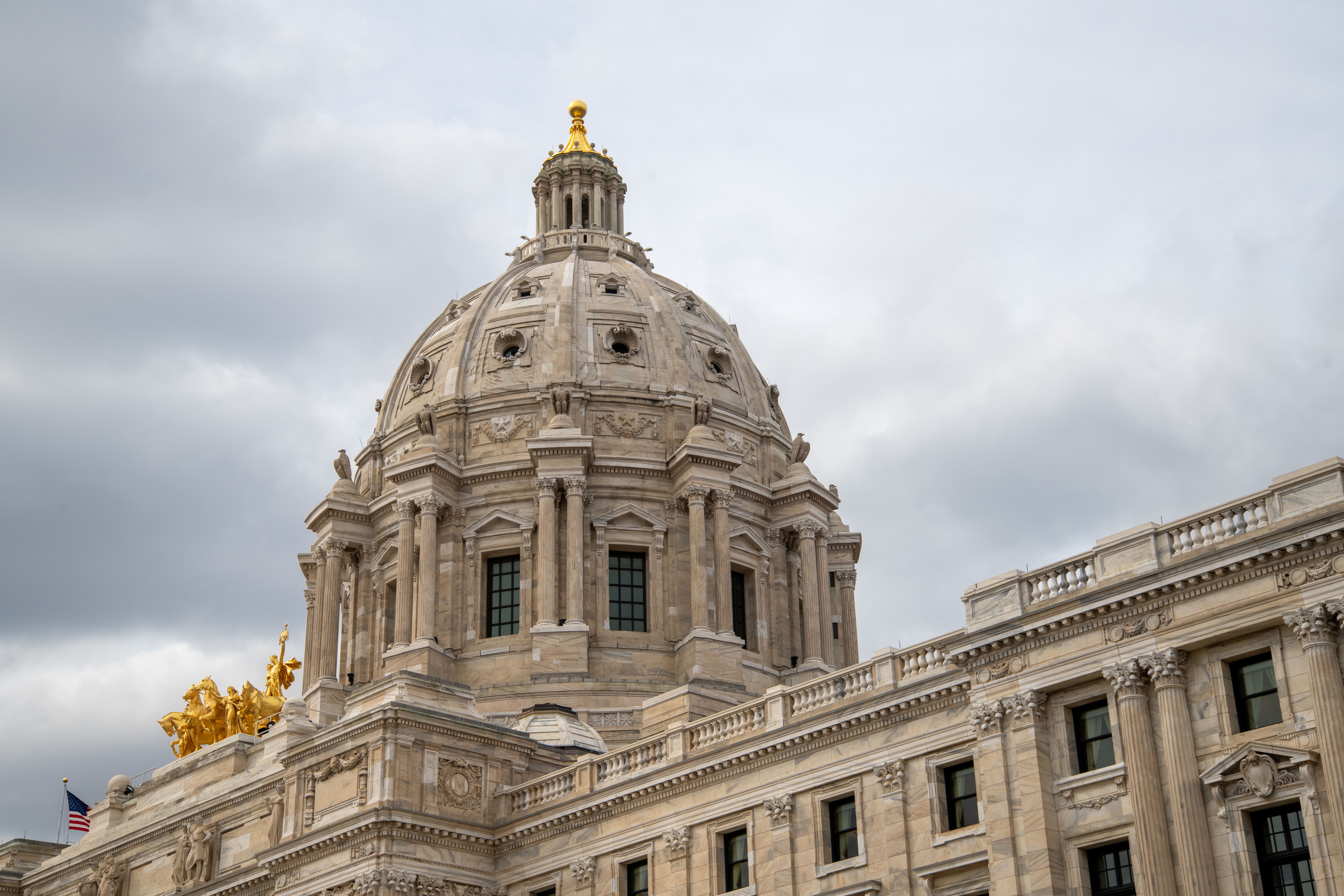
The explosive intersection of state clemency powers, public safety, and federal immigration enforcement has ignited a fierce political firestorm between the executive branch and Minnesota leadership. Following a unanimous decision by the Minnesota Board of Pardons to wipe clean the record of a Laotian national facing imminent removal from the country for sexually assaulting a 10-year-old girl, U.S. Secretary of State Marco Rubio stepped directly into the fray to deliver a blistering rebuke of Governor Tim Walz. The controversy centers on Tou Lue Vang, a 42-year-old immigrant who was convicted in 2006 of first-degree criminal sexual conduct. Vang was under a final deportation order and was scheduled to be physically removed from the United States by Immigration and Customs Enforcement (ICE). However, a last-minute pardon issued by the three-member state board—which includes Governor Walz and state Attorney General Keith Ellison—stripped away the felony conviction that served as the statutory trigger for his deportation, effectively halting the removal pipeline. The decision drew immediate, severe condemnation from the Department of Homeland Security (DHS), which slammed the move as “disgusting.” Speaking to Fox News Digital, Secretary of State Marco Rubio amplified the administration’s fury, drawing a hard line against sanctuary politics and asserting that American families should never be forced to shoulder the safety risks of violent non-citizen offenders. At The Modern Memo, we break down the operational history of the 2006 child abuse conviction, the legal mechanics of how the pardon blocks federal deportation laws, and the intensifying federal offensive against municipal clemency overreach. The Case Profile: The Criminal Record Wiped by St. Paul The immense public outrage surrounding the board’s decision is anchored directly in the severe, multi-year nature of the original criminal offense and the suspect’s initial attempts to justify the abuse. The Exploitation Window: Court and criminal complaint records show that Tou Lue Vang, a Laotian national who arrived in the U.S. as a refugee in 1994, systematically abused a female minor between 2002 and 2005. Vang was approximately 18 years old when the abuse began; the victim was just 10 years old. The “Cultural” Defense: According to a Department of Homeland Security dossier detailing the investigation, when Vang was initially arrested by local detectives in 2005, he acknowledged the sexual contact but dismissed it as a “minor thing.” He attempted to justify the assaults by claiming that it was a “cultural thing… to marry and have sex with girls as young as 12,” while aggressively attempting to deflect blame onto the young child. The Judgment: In 2006, Vang pleaded guilty to first-degree criminal sexual conduct involving a person under 13. While a 12-year prison sentence was ultimately stayed in favor of 30 years of supervised probation, the conviction stood as an aggravated felony under the Immigration and Nationality Act (INA), prompting an immigration judge to issue a final order of removal that same year. Because Laos was classified as a “recalcitrant” nation that refused to accept deportees for nearly two decades, Vang remained in limbo until federal authorities finalized removal logistics. The Legal Bypass: How Clemency Chains the Hands of ICE The primary flashpoint in the dispute focuses on how the Minnesota Board of Pardons used localized executive power to short-circuit a standing federal immigration mandate. The state board defended the choice by noting that the pardon process was exhaustive, passed through a clemency review commission, and included community support alongside an alleged statement of forgiveness from the victim. However, federal authorities counter-argued that the pardon represents a catastrophic exploitation of a legal loophole. Under federal immigration law, an absolute executive pardon for an aggravated felony completely erases the deportable offense. By wiping Vang’s slate clean just weeks before his scheduled flight to Laos, Governor Walz effectively bound the hands of Homeland Security agents on the ground. Rubio Intervenes: “Americans Shouldn’t Live in Fear” With the Department of Homeland Security labeling the state’s intervention a direct shielding of a “child rapist,” Secretary of State Marco Rubio utilized his massive foreign policy and administrative platform to turn the localized case into a national referendum on law and order. “Governor Tim Walz’s decision to pardon a convicted child predator just to block his deportation is an absolute betrayal of public safety,” Secretary Rubio told Fox News Digital. “Hardworking Americans should not have to live in fear of illegal alien criminals being deliberately protected by radical sanctuary politicians. The primary duty of any elected official is to protect our citizens—especially our children—not to twist the legal system to keep dangerous, violent non-citizens on our streets.” The intervention by the nation’s top diplomat highlights a massive, structural pivot within Washington. The administration is signaling that it will no longer view immigration non-compliance as a localized, municipal dispute. By framing the actions of Walz and Ellison as a direct threat to domestic security, Rubio is preparing the groundwork for a broader federal counter-offensive to override state-level pardons that intentionally target federal deportation grids. Final Word The unprecedented federal condemnation of Governor Tim Walz’s last-minute pardon is the definitive proof that the battle over immigration enforcement has shifted from the southern border directly into the halls of state government. When you look past the clinical, defensive press releases issued by the Minnesota Attorney General’s office and focus entirely on the hard data—a Laotian national convicted of a multi-year sexual assault against a 10-year-old child, a unanimous state board wiping out an aggravated felony conviction weeks before a scheduled deportation, and the Secretary of State intervening to slam the protection of non-citizen criminals—you gain an unvarnished view of a profound collapse in governance. Quality information replaces the progressive narrative of “restorative clemency” with the reality of an executive class prioritizing sanctuary politics over child protection. By forcing ICE to abandon a final removal order, Tim Walz has handed his critics an unyielding piece of political leverage, and Marco Rubio’s public escalation ensures that the true cost of Minnesota’s sanctuary policies will remain under a relentless national spotlight.

The Blunt Weapon: Why Iran’s Geopolitical Energy Stranglehold Is Slipping Away
The definitive weapon in the Islamic Republic of Iran’s strategic arsenal—the ability to freeze the global economy by choking off the world’s most critical energy transit corridor—is systematically losing its kinetic power. For decades, Tehran has utilized the threat of a total maritime blockade in the Strait of Hormuz as an unyielding geopolitical shield against Western military and diplomatic pressure. However, fresh, highly anticipated forecasting data from the U.S. government indicates that the global energy infrastructure has achieved an unprecedented level of structural resilience, effectively blunting Iran’s leverage. According to the July 2026 Short-Term Energy Outlook (STEO) released by the U.S. Energy Information Administration (EIA), global crude oil production and trade patterns are on track to rebound to near pre-conflict levels by the end of this year. Despite ongoing instability, localized skirmishes, and deep anxieties in the Persian Gulf, global supply chains are adapting at a rapid pace—leaving Iran’s premier economic threat looking increasingly obsolete. At The Modern Memo, we break down the operational data behind the EIA’s upgraded energy forecast, the collapse of crude prices from their spring peaks, and the historic surge in domestic American energy production that has permanently rewritten the global balance of power. The EIA Metric: Shifting Back to Oversupply The primary shockwave hitting Tehran’s strategic planners is the speed with which international energy markets are normalizing, thoroughly frustrating the regime’s attempts to maintain an artificial supply crisis. The Production Rebound: The EIA officially boosted its worldwide production forecast, confirming that the vast majority of previously shut-in crude production will be successfully restored. While supply disruptions in the Gulf averaged a peak of 11.2 million barrels per day (b/d) in May, the agency projects that the market will fully return to its pre-conflict baseline by the close of December, with remaining bottlenecks entirely resolved in the first quarter of 2027. The Price Deflation: This rapid normalization has triggered an immediate, sharp retreat in global oil benchmarks. The Brent crude spot price, which skyrocketed to a punishing multi-year peak in April 2026, collapsed to an average of $85 per barrel in June. The Outyear Decline: The downward pressure is projected to intensify. The EIA’s modeling forecasts Brent averaging $74 per barrel for the third quarter of 2026, before plunging to an average of $65 per barrel across 2027 as accumulating international inventories plunge the energy sector straight back into a state of structural oversupply. Weaponizing the Pump: The Retail Correction The macro-level data translates into immediate, stabilizing relief for everyday American consumers, dismantling previous warnings of a $5.00-per-gallon summer crisis at the pump. The retail price correction is unfolding in real time. After peak fighting forced national retail gasoline prices to a staggering average of $4.48 per gallon in May, the EIA’s updated baseline projects average pump costs will drop to $3.80 per gallon in the third quarter, eventually settling around $3.40 per gallon by the fourth quarter of 2026. This downward trend is heavily driven by expanding wholesale margins and the conclusion of the peak summer driving season, leaving the White House with a much-needed domestic economic win ahead of the midterms. The American Fortress: 14 Million Barrels Per Day The underlying reason Iran can no longer successfully hold the global economy hostage through maritime disruption is simple: the United States has permanently consolidated its position as an unyielding, self-sustaining energy superpower. Core Energy Stream 2025 Baseline Metrics Provisional 2026 Projections Forecasted 2027 Baseline U.S. Crude Production 13.6 Million b/d 13.8 Million b/d 14.0 Million b/d U.S. LNG Exports 15 Billion Cubic Feet/day 17.2 Billion Cubic Feet/day 19.0 Billion Cubic Feet/day Henry Hub Spot Price $3.53 / MMBtu $3.67 / MMBtu $3.49 / MMBtu The data tells the story of a total domestic drilling revolution. Under the administration’s aggressive pro-exploration directives, U.S. crude oil production is expanding to historic, record-shattering thresholds, averaging 13.8 million b/d this year and scaling to an unprecedented 14.0 million b/d in 2027. Concurrently, American liquefied natural gas (LNG) exports are projected to surge to 19 billion cubic feet per day over the next 18 months. By flooding the international market with reliable, Western-extracted fossil fuels, Washington has created a massive logistical buffer that dilutes the strategic impact of any localized embargo or military ambush in the Persian Gulf. Final Word The upgraded EIA energy forecast is the definitive proof that Iran’s ability to weaponize the global oil supply has officially passed its expiration date. When you look past the theatrical, apocalyptic warnings broadcast by the corporate media and focus entirely on the hard data—global crude supply patterns rebounding to near pre-conflict baselines in under six months, Brent crude prices dropping from their April peaks to a projected $65 per barrel, and the United States scaling its domestic output to an unprecedented 14 million barrels per day—you gain an unvarnished view of a failed geopolitical extortion campaign. Quality information replaces the fear of a global energy collapse with the cold reality of a structural oversupply. The clerical regime in Tehran gambled that it could paralyze Western resolve by threatening the choke points of the Middle East; instead, American roughnecks and international logistics networks have closed the gap, ensuring that the world can insulate itself from rogue states while driving the cost of fuel down for everyday citizens.