



Pretrial Publicity Wars: Robinson Defense Demands Death Penalty Be Dropped Over Prosecution’s Bullet ‘Media Tour’
The capital murder trial of Tyler Robinson—the 23-year-old accused of the September 10, 2025, assassination of conservative Turning Point USA co-founder Charlie Kirk—has dissolved into an aggressive legal brawl over media control and prosecutor misconduct. Appearing in a Provo, Utah courtroom, Robinson’s defense team formally requested that 4th District Judge Tony Graf strip the state of its ability to seek the death penalty. The defense argues that state prosecutors launched an unauthorized, toxic “media tour” regarding highly sensitive ballistics evidence, deliberately tainting the prospective jury pool and violating direct judicial orders. At The Modern Memo, we break down the forensic dispute over a critical bullet fragment, the defense’s high-stakes push for severe sanctions, and the free-speech justifications prosecutors are using to defend their press engagements. The “Media Tour” Accusation: Demanding the Ultimate Sanction Tyler Robinson faces a potential death sentence if convicted of aggravated murder for the shooting that occurred on the campus of Utah Valley University. However, the case has shifted away from the scene of the crime and into a bitter dispute over extrajudicial statements. The Contempt Charge: Robinson’s defense attorneys filed a motion to hold the Utah County Attorney’s Office in contempt of court. They allege that prosecutors explicitly breached restrictions imposed by Judge Graf that strictly barred both sides from discussing details of the case outside the courtroom. Taking Death Off the Table: While Robinson’s lawyers did not specify standard procedural fines, their court filings explicitly pointed to prior case law where a state’s contempt resulted in the loss of a capital option. The defense noted that while such a remedy is rare, the court possesses the full structural authority to take the death penalty off the table if the facts demonstrate the state compromised a defendant’s right to a fair trial. The Sealed Exhibit War: The defense’s push directly coincides with their ongoing efforts to seal dozens of upcoming prosecution exhibits and enforce a total media camera ban inside the courtroom to guard against coverage they claim constantly misrepresents Robinson. The Forensic Fuse: The Bullet Fragment Dispute The specific trigger for the defense’s outrage centers on media interviews given by prosecutors regarding an expert ballistics report—data that both sides view as a critical pillar of the state’s physical case. The Inconclusive Finding: Rumors originally leaked out of the case detailing an initial, inconclusive finding by ballistics experts. These early reports indicated that scientists could not immediately match the specific bullet fragments recovered from Charlie Kirk’s body directly to the firearm seized from Robinson. The Exoneration Narrative: The preliminary findings spurred a wave of viral media stories and public speculation hinting at Robinson’s potential innocence or imminent exoneration. The Prosecutor Counter-Strike: Alarmed by the shifting public narrative, state prosecutors gave interviews to clarify the context of the expert report, explaining that preliminary inconclusiveness did not eliminate the firearm or rule out Robinson’s involvement. The State’s Defense: The Right to Correct the Record Faced with the threat of losing their capital prosecution or being held in contempt, the Utah County Attorney’s Office mounted a fierce defense of their media interactions, arguing they had a constitutional and ethical duty to intervene. Setting the Record Straight: Deputy Utah County Attorney Christopher Ballard aggressively pushed back against the defense’s motion in written filings. “The rules expressly allow lawyers to set the record straight,” Ballard wrote, arguing that prosecutors were reacting to distorted leaks originating from the defense’s side of the aisle. The Public Right to Know: Prosecutors contend that their comments did not violate the spirit of Judge Graf’s gag order because they were explicitly intended to correct active, public misinformation rather than inject new prejudicial facts into the ecosystem. The Victims’ Stance: The political dimension of the trial remains highly charged. Kirk’s wife, Erika Kirk—who has taken the reins of Turning Point USA following her husband’s death—has publicly aligned against the defense’s secrecy push, explicitly demanding that the press and the public retain unconstrained access to every phase of the court hearings. Final Word The defense’s demand to strip the death penalty from the Tyler Robinson case is the definitive proof that modern capital trials are fought as much in the court of public opinion as they are before a judge. When you look past the noise of the “media tour” allegations and focus entirely on the hard data—a defendant facing the ultimate punishment for a high-profile campus assassination, prosecutors stepping outside court to manage a collapsing ballistic narrative, and the defense leveraging that press engagement to dismantle a capital charge—you gain an unvarnished view of a trial on a knife’s edge. Quality information replaces the theatrical outrage with the cold mechanics of due process. It allows you to see that while prosecutors believe they were merely balancing the scales of public perception, they gave the defense a potent weapon to challenge the state’s ultimate authority. By forcing Judge Graf to rule on whether the state’s words compromised a fair trial, Robinson’s team has effectively put the prosecution itself on the witness stand.

The Propaganda Battle: Trump Slams ‘Dishonorable’ Iranian Leaks as Fake News, Denying Major Concessions
The diplomatic tightrope between Washington and Tehran has degenerated into an aggressive, public war of words. Less than twenty-four hours after abruptly halting a massive U.S. airstrike package to allow space for a peace accord, President Donald Trump aggressively pushed back against a wave of media leaks originating from Iranian state television. Trump blasted the purported terms published in the Middle East as flat-out “Fake News,” accusing Tehran’s envoys of acting in profound bad faith to salvage public perception at home. At The Modern Memo, we contrast the contradictory terms leaked by Tehran against the White House’s strict performance blueprint, look at Vice President J.D. Vance’s rejection of a “cash-for-peace” giveaway, and examine the fresh drone skirmishes keeping the Strait of Hormuz on a knife’s edge. The Truth Social Broadside: “No Relation to the Truth” The diplomatic whiplash peaked on Friday morning when President Trump took to his Truth Social platform to utterly disavow the narrative being pushed by the official Islamic Republic News Agency (IRNA). The Written Boundaries: Trump explicitly stated that the public leaks completely distorted what had actually been negotiated behind closed doors. “The terms that Iran leaked out to the Fake News have NOTHING to do with the terms that were agreed to, in writing,” Trump wrote. The Character Rejection: Refusing to mince words, the president tore into the integrity of his Iranian counterparts. “What they said, including their weak and pathetic statement on having a deal, bears no relation to the truth,” Trump continued. “Very dishonorable people to deal with. With them, there is no such thing as dealing in good faith. AMAZING!” The Islamabad Framework: While the baseline text of the tentative “Islamabad Memorandum of Understanding” was hammered out by phone through international mediators, the public rollout has dissolved into a chaotic messaging war as both regimes attempt to sell the framework to their domestic audiences. Dueling Realities: What Iran Claimed vs. What the White House Demands The severe friction stems from two radically different portrayals of the draft agreement, highlighting major structural contradictions regarding nuclear concessions, funding, and maritime control. Leaked Iranian Narrative (IRNA / Mehr) The Actual White House Performance Blueprint $24 Billion Cash Release: Iran claimed the immediate unfreezing of $24 billion in blocked foreign assets. Zero Immediate Cash: No funds are released up front. Economic benefits only flow after strict verification metrics are met. Sovereign Strait Control: Tehran asserted it retains absolute authority and management over the Strait of Hormuz. Guaranteed Reopening: The Strait will be permanently opened to international shipping under a strict performance mandate. Preserving Enrichment Rights: State media insisted Iran will not give up its fundamental right to enrich uranium. Dismantling the Grid: The U.S. mandate requires all enriched nuclear material to be destroyed or removed, and the program dismantled. Proxy Funding Untouched: Leaks claimed the deal explicitly excludes Iran’s regional resistance networks and missile systems. Cutting Off Terror Capital: The blueprint legally binds Iran to completely halt all funding to regional proxy terror groups. The Vance Clarification: No Pre-Paid Blank Checks As political critics at home—including key Senate Republicans—sounded the alarm that the administration was preparing a weak, concession-heavy bailout, Vice President J.D. Vance stepped into the fray to anchor the administration’s red lines. Shattering the Fake Information: “I’m seeing a lot of fake information about a potential deal to reopen the Strait and end Iran’s nuclear weapons program,” Vance wrote on social media. The Performance Anchor: Vance categorically denied that Washington was handing Iran a financial windfall just for showing up. “First, the Iranians are not receiving any cash, and no funds are being released for simply signing a deal or attending a meeting,” Vance emphasized. Remaking the Region: The Vice President reinforced that the transaction is entirely “performance-based,” meaning that economic relief is downstream of absolute compliance. If implemented correctly, Vance argued the layout has “the potential to remake the region and lead to lasting peace,” but only on American and allied terms. Midnight Clashes: A Drone Attack on Commercial Shipping Proving that the situation on the water remains completely volatile despite the diplomatic breakthrough, a fresh military flashpoint erupted in the Gulf overnight. The Assault on Indian Vessels: In his Friday morning address, President Trump revealed that Iranian forces attempted a drone raid targeting commercial shipping. “Also, their totally rebuffed Drone attack last night against Indian Ships leaving the Hormuz Strait is TOTALLY UNACCEPTABLE,” Trump warned. The Defensive Shield: U.S. naval assets operating in the area successfully intercepted and downed a pair of one-way attack drones before they could strike the commercial targets. The Final Warning: The late-night escalation drew a sharp, final warning from the commander-in-chief, who signaled his patience has completely evaporated. “They better get their act together, and FAST!” Trump added, leaving the military option squarely on the table if Tehran continues to play double games. Final Word The explosive rollout of the Islamabad Memorandum of Understanding is the definitive proof that negotiating with a rogue regime is an exercise in structural deception. When you look past the noise of Iranian state media spin and focus entirely on the hard data—a president openly calling his negotiating partners ‘dishonorable’, a Vice President explicitly confirming that zero cash will be handed over, and U.S. warships actively shooting down Iranian drones overnight—you gain a clear picture of a deal built on extreme leverage, not mutual trust. Quality information replaces the illusion of an easy diplomatic victory with the reality of an aggressive, performance-enforced probation. It allows you to see that while Iranian negotiators are trying to mask a total structural retreat with empty public posturing, Trump has pinned them to a written, unyielding corner. By drawing a hard line against these desperate leaks, Washington has reminded Tehran of the ultimate geopolitical equation: if you lie about the terms on paper, the bombers will be back in the air before the ink can dry.

Breaking Trust: Loudoun County Parents Outraged After Superintendent Defends Transgender Policies on Capitol Hill
The bitter, long-running war over parental rights and gender identity in public education returned to the national spotlight on June 10, 2026, during a contentious congressional hearing on Capitol Hill. Entitled “Breaking Trust: Attacks on Parental Rights, Inappropriate Content, and Legal Abuses in America’s Schools,” the House Education and Workforce Committee hearing put the leaders of three major school systems directly in the hot seat. Among them, Loudoun County Public Schools (LCPS) Superintendent Aaron Spence faced an intense grilling from lawmakers. His vigorous defense of the Virginia district’s transgender policies—coupled with claims that schools and families are not at odds—has sparked fierce backlash from local parents who declare they are anything but satisfied. At The Modern Memo, we break down the fiery congressional testimony, the legal clashes over bathroom and locker room access, and the deep-seated local outrage that continues to make Loudoun County the epicenter of America’s parental rights revolution. The Hearing: “Too Often, the Narrative Frames Us as Adversaries” Superintendent Spence appeared alongside the chiefs of Chicago Public Schools and San Francisco Unified School District to answer for policies that critics argue systematically sideline parents and fuel radical ideologies in the classroom. The Soft Narrative: In his opening remarks, Spence attempted to downplay the ongoing friction between his administration and Loudoun County families. “Too often, the public narrative frames schools and parents as adversaries,” Spence testified. “That is not the reality I see in our community or in public education more broadly.” The Immediate Backlash: Local parental rights groups quickly condemned the statement as blatant gaslighting. Parents pointed to years of explosive school board meetings, formal complaints, and deep transparency deficits regarding student transitions as clear evidence that the administration remains severely out of touch with its constituents. The Legal Complaints: Compounding the pressure, the conservative advocacy group America First Legal filed formal complaints with the Trump administration just 48 hours prior to the hearing. The complaints demand immediate federal civil rights and Title IX investigations into LCPS for allegedly concealing student gender transitions and withholding vital pronoun information from families. The Clashes: Biological Men in Women’s Spaces The temperature in the committee room spiked dramatically when Republican lawmakers pinned Spence down on the mechanics of Loudoun County’s restroom, locker room, and field-trip lodging arrangements. The Locker Room Exchange: Representative Robert Onder Jr. (R-Mo.) pressed Spence directly on the district’s boundaries. “Yes or no, should biological men be allowed in locker rooms with biological women or girls?” Onder asked. “Transgender women should be allowed in women’s spaces,” Spence responded, doubling down when pressed further by asserting, “Federal law requires it.” The Title IX Divide: Lawmakers fiercely disputed Spence’s legal justification. While Spence cited the 2020 Grimm v. Gloucester County School Board Fourth Circuit ruling to argue that restricting restroom access violates Title IX, committee Republicans countered that the federal law’s original intent is to protect biological women and girls. The Trump administration has already threatened Loudoun County with a total loss of federal funding if it continues to allow biological males into female private spaces. Overnight Field Trips: Representative Virginia Foxx (R-N.C.) further targeted the district’s overnight field trip policies that allow biological males to share sleeping quarters near biological females. Spence defended the rule, stating it is “appropriate and lawful” to treat transgender students as their identified gender, while noting parents can theoretically “seek alternatives” if they object. Local Frustrations Boil Over: A History of Shielding Incidents For Loudoun County parents, the congressional testimony reopened deep wounds left by previous, highly publicized safety failures within the district’s gender-inclusive facilities. The Bathroom Incidents Raised: Lawmakers repeatedly interrogated Spence over a past incident at an LCPS high school where a transgender student was accused of surreptitiously filming other boys in a bathroom. Committee members demanded to know why the victims who complained about the privacy violation allegedly received harsher disciplinary suspensions than the perpetrator. The Privacy Shield: Spence hid behind student privacy laws to evade specifics, claiming the public reports were inaccurate. However, parents noted that the U.S. Department of Education had already found Loudoun County in violation of Title IX over its disastrous handling of that specific incident, entirely invalidating the district’s deflections. The “Partnership” Farce: “We are completely unsatisfied with his answers,” said one Loudoun County mother who watched the broadcast. “Spence stands up there in Washington and tells Congress that parents are ‘partners’, but when we ask what is happening to our daughters in the locker rooms, we are met with stonewalling and lawsuits. The trust isn’t broken—it’s gone.” Final Word Superintendent Aaron Spence’s defensive display on Capitol Hill is the definitive proof that institutional education bureaucrats remain entirely insulated from the families they are paid to serve. When you look past the hollow public relations platitudes of “safe and welcoming environments” and focus entirely on the hard data—a district explicitly permitting biological males into girls’ locker rooms and overnight cabins, pending federal complaints over hidden social transitions, and threats of a total cutoff of federal funding—you gain an unvarnished view of an administrative regime in complete denial. Quality information strips away the narrative of “lawful compliance” and exposes the reality of an institutional elite treating parental authority as an obstacle to be bypassed. By standing before Congress to declare that parents and schools are not adversaries, Spence didn’t heal the divide in Loudoun County—he proved exactly why local parents will not stop fighting until local control is fully restored.

The Master Dealmaker’s Brake: Trump Abruptly Cancels Massive Iran Strike Package, Claiming Near-Certain Peace Agreement
The high-stakes game of geopolitical chicken between Washington and Tehran took its most dramatic, unexpected turn yet. Hours after vowing to unleash an devastating wave of military bombings that would hit the Islamic Republic “VERY HARD TONIGHT”, President Donald Trump abruptly pulled the plug on the scheduled operation. Taking to social media, Trump revealed that he issued a last-minute cancellation order after receiving direct confirmation that negotiations had successfully breached the highest echelons of the Iranian regime. The president boldly declared that the foundational components of a historic transaction have been approved by a massive multi-national coalition, signaling an imminent end to the localized war. At The Modern Memo, we break down the dramatic 24-hour timeline that brought the U.S. to the brink of a massive escalation, the structural terms of the purported draft agreement, and the permanent naval stranglehold Trump is maintaining until the ink dries. The Brink of Devastation: Threatening Kharg Island The sudden de-escalation followed an intense, multi-day military build-up characterized by direct hits on Iranian energy infrastructure and a dramatic escalation of public rhetoric. The Stalled Ultimatum: On Wednesday, Trump declared that regional ceasefires had become effectively “meaningless” over Tehran’s refusal to lock in a permanent peace deal. Following a series of retaliatory strikes executed by U.S. Central Command (CENTCOM) against Iranian radar and surveillance hubs, Trump warned that a massive, secondary air campaign was finalized for Thursday night. Targeting the Economic Core: In a series of provocative statements, Trump laid bare his ultimate preference: seizing control of Kharg Island, the vital heart of Iran’s domestic oil industry through which roughly 90% of its petroleum exports flow. “At some point in the not too distant future, we will be taking Kharg Island, and other oil infrastructure points, and assume total control of their Oil and Gas Markets,” Trump had warned. The “Appetite” Restraint: Despite the heavy posturing, Trump pulled back from a full land-invasion narrative during a Thursday phone interview with Fox News, acknowledging a desire to avoid an endless military occupation. “My preference has always been to take Kharg Island,” Trump told the network. “I don’t know that America has the stomach for it to be honest… I don’t want to have boots on the ground.” The Truth Social Pivot: Citing a Breakthrough at the Top Just as fighter jets were preparing for deployment, Trump completely shifted the regional dynamic with an emergency declaration posted to Truth Social, announcing that the planned bombings were officially stood down. “Based on the fact that discussions with the Islamic Republic of Iran have been brought to the highest level of Iranian leadership and approved, I have, as President of the United States of America, cancelled the scheduled strikes and bombings against Iran this evening,” Trump announced. The Multi-National Blueprint: The president insisted that the final points and structural concepts of a comprehensive peace package have been vetted “in both concept and great detail” by an expansive roster of regional powers. According to Trump, the parameters have already received explicit sign-offs from the United States, Israel, Saudi Arabia, the UAE, Qatar, Turkey, Pakistan, Bahrain, Kuwait, Jordan, and Egypt. The Proposed Pillars: While Iranian state media has remained conspicuously quiet regarding a final endorsement, diplomatic mediators close to the talks indicate the draft agreement rests on three strict pillars: a formalized extension of regional ceasefires, the immediate reopening of the Strait of Hormuz to international shipping, and the launch of an aggressive, 60-day negotiation window strictly focused on dismantling Iran’s nuclear enrichment capabilities. A Deal on Deck: Trump concluded his statement by teasing another signature foreign policy triumph, noting that the specific “time and place of the signing to be announced shortly”. Maximum Pressure Remains: The Stranglehold Extends While the bombs are staying on their racks for now, the administration made it explicitly clear that Washington is not letting its guard down or offering pre-signature concessions to Tehran. The Blockade Stands: Trump issued a stern warning to Iranian commanders that any attempt to stall or exploit the pause will result in an immediate resumption of hostilities. “The Naval Blockade will remain in full force and effect until this Transaction is finalized,” Trump emphasized, guaranteeing that Iranian oil vessels attempting to break the defensive line will continue to be aggressively intercepted by U.S. warships. Draining Frozen Accounts: To reinforce the economic pain of the maximum pressure campaign, U.S. Treasury Secretary Scott Bessent announced a new punitive financial directive. The U.S. will begin actively extracting funds directly from frozen Iranian bank accounts to offset the exact costs of military damage sustained by American regional allies—such as Jordan, Bahrain, and Kuwait—during previous proxy missile exchanges. Final Word The eleventh-hour cancellation of the Iranian strike package is the definitive proof of the Trump Doctrine in action: utilizing the credible threat of total economic and military annihilation to force an adversary to the negotiating table. When you look past the whiplash of the fast-moving news cycle and focus on the raw data—a target package that included the core of Iran’s oil economy stood down at the absolute zero hour, a 12-nation consensus claim approved by regional partners, and a heavy naval blockade remaining firmly locked in place—you gain an unvarnished view of high-stakes transactional diplomacy. Quality information replaces the fear of an endless Middle Eastern quagmire with the cold reality of a calculated leverage play. It allows you to see that while Trump prefers the theater of a signing ceremony, the threat of flattening Kharg Island remains fully loaded on the Resolute Desk. By choosing to pause the bombers, Washington has handed Tehran one final, ultimate choice: sign the deal, or watch your entire economic lifeline evaporate overnight.

The Proportional Hammer: U.S. Jets Flatten Iranian Air Defenses After Hormuz Helicopter Ambush
The fragile regional peace between Washington and Tehran completely went up in flames. Following the downing of a U.S. Army AH-64 Apache attack helicopter by an Iranian Shahed-type drone over the Strait of Hormuz, President Donald Trump made good on his promise of swift retaliation. At the President’s direct command, U.S. Central Command (CENTCOM) unleashed a massive, concentrated wave of precision airstrikes against strategic military assets deep inside sovereign Iranian territory. The kinetic exchange marks the most severe disruption to the region’s shaky ceasefire since it was implemented, turning the strategic waterways of the Persian Gulf back into an active combat theater. At The Modern Memo, we break down the raw operational metrics of the American bombing run, the locations left in ruins along Iran’s coast, and the high-stakes political math defining Trump’s “powerful” message to the Islamic Republic. The Retaliation: Blasting the Radar Grid The operation, executed under the umbrella of the U.S. military’s ongoing campaign—Operation Epic Fury—began precisely at 5:00 p.m. Eastern Time (after midnight local time in Iran) and concluded after a devastating four-hour window. The Strike Package: Utilizing a combined arm of U.S. Air Force and Navy fighter jets—including F-16 Fighting Falcons and carrier-launched F/A-18F Super Hornets—the military deployment targeted a total of nearly 20 distinct strategic infrastructure sites along Iran’s southern coast. The Target Profile: CENTCOM confirmed that precision-guided munitions systematically neutralized primary Iranian air defense nodes, surface-to-air missile batteries, ground control stations used to pilot attack drones, and long-range surveillance radar sites tracking the Strait of Hormuz. The Destruction Zones: Open-source intelligence reports and satellite data confirmed massive secondary explosions lighting up the night sky near the heavily fortified Iranian port cities of Jask and Bandar Abbas, as well as critical military facilities embedded on Qeshm Island. The Trump Doctrine: A “Warning Shot” to Enforce a Deal Speaking to reporters on Tuesday evening following the conclusion of the bombing run, President Trump fiercely defended the military intervention, shifting his rhetoric from flexible diplomacy to unyielding deterrence. The Strong Message: “I believe the response should be very strong, very powerful,” Trump stated, confirming he personally authorized the strike package the moment intelligence established a Shahed drone caused the Apache crash. “The operation was a proportional response to recent attacks on U.S. forces and international commercial ships transiting regional waters.” The “Not a Big Deal” Paradox: While Trump authorized a heavy kinetic response, he simultaneously sought to downplay the crisis to preserve his broader foreign policy goals, telling media outlets that the downing itself “wasn’t a big deal” because the two American pilots were successfully rescued by a Task Force 59 Corsair sea drone. The Final Throes Strategy: White House insiders note the strikes were intentionally engineered as a severe “warning shot” rather than the start of a regime-change campaign. Trump insists the U.S. remains in the “final throes of what will be a very, very good deal” to permanently entomb Iran’s nuclear enrichment capabilities, using the swift destruction of their coastal radars to show Tehran exactly what will happen to their entire infrastructure if they walk away from the negotiating table. The Escalation Sequence: Tehran Fires Back The American strikes did not occur in a vacuum. Refusing to absorb the blow silently, the Islamic Revolutionary Guard Corps (IRGC) instantly activated its regional proxy network, triggering a massive, multi-theater missile and drone exchange across the Middle East. The Regional Firefight: Hours after the U.S. jets returned to their bases, Iran launched a coordinated barrage of ballistic missiles and one-way attack drones targeting American and allied military installations across neighboring countries. The Interception Metrics: Defense officials confirmed that the overwhelming majority of the incoming Iranian assets were successfully intercepted by regional air shields. The Jordanian military confirmed its air defenses shot down five incoming Iranian missiles targeting the Muwaffaq Salti Air Base—which hosts American F-35 fighter jets—while base alerts were also triggered across Kuwait and Bahrain. No American casualties or significant infrastructure damage have been reported. The Diplomatic Fallout: The exchange has pushed regional diplomacy to the absolute brink. Iranian Foreign Minister Abbas Araghchi took to social media to warn that Tehran “will leave no attack or threat unanswered,” threatening Gulf nations that allow the U.S. to use their airspace. Meanwhile, Iranian negotiators in Islamabad announced they are officially “reviewing” whether to permanently freeze all ongoing peace talks with Washington. Final Word The U.S. precision strikes inside Iran are the definitive proof that the Trump administration will not allow a diplomatic transition to be used as an open season on American service members. When you look past the noise of the “proportional response” messaging and focus entirely on the hard data—nearly 20 Iranian military targets vaporized in four hours, five Iranian missiles shot down over Jordan, and a multi-billion-dollar nuclear negotiation dangling by a thread—you gain a clear picture of a superpower enforcing boundaries at the edge of a bayonet. Quality information replaces the illusion of a stable regional ceasefire with the reality of a high-stakes geopolitical poker game. It allows you to see that while Trump wants to sign a historic accord and exit the region, he is entirely willing to flatten Iran’s defensive architecture to protect American military credibility. By turning the radar stations of Bandar Abbas to rubble, Washington has delivered an uncompromised mathematical reality to Tehran: the cost of hunting an American helicopter is the systematic dismantling of your own sky shield.

The Verdict is In: Karmelo Anthony Convicted of Murder, Sentenced to 35 Years for Frisco Track Meet Stabbing
A high-profile, emotionally charged trial that gripped North Texas for over a year came to a swift and definitive end in a McKinney, Texas courtroom. A Collin County jury found 19-year-old Karmelo Anthony guilty of first-degree murder for the fatal April 2025 stabbing of 17-year-old Austin Metcalf during a high school track meet. Following just three hours of initial deliberation on the guilt phase, the jury completely rejected the defense’s claims of self-defense. Hours later, after listening to emotional impact statements from the victim’s family and a plea for mercy from the defendant’s mother, the jury returned to sentence Anthony to 35 years in state prison. At The Modern Memo, we break down the final courtroom metrics, the legal thresholds that shattered the self-defense argument, and the raw, unvarnished statements from a divided community. The Verdict: Rejecting Manslaughter and “Sudden Passion” The eight-day trial before District Judge John Roach Jr. concluded with heavy security details lining the inside and outside of the courthouse, reflecting the immense public pressure surrounding the case. The Primary Guilt Phase: While Judge Roach instructed the jury that they could consider a lesser offense of manslaughter or acquit Anthony entirely, the 12-person panel found that Anthony “knowingly and intentionally” caused Metcalf’s death. Anthony audibly sobbed as the guilty verdict was read aloud, and his parents immediately left the courtroom in tears. The Sudden Passion Rejection: During the rapid-fire sentencing phase, defense attorney Mike Howard tried to mitigate the damage, urging the jury to consider a finding of “sudden passion.” Under Texas law, proving a crime was committed out of immediate, terror-induced passion drops the maximum sentencing ceiling from life down to 20 years. The 35-Year Sentence: The jury thoroughly rejected the sudden passion mitigation. After two additional hours of deliberation on punishment, they settled on a 35-year sentence. Under Texas statutory guidelines for first-degree murder, Anthony must serve at least half of his sentence—17.5 years—before he becomes eligible for parole. The Legal Breakdown: Why the Self-Defense Shield Collapsed The outcome of the trial directly validated warnings from legal analysts who noted that the state’s evidence heavily targeted Anthony’s behavior leading up to the single, fatal plunge of the blade. The Provocation Anchor: The state’s prosecution team, led by Collin County First Assistant District Attorney Bill Wirskye, called 21 separate witnesses to establish that Anthony provoked the fatal encounter. Multiple student witnesses testified that when Metcalf and his teammates asked Anthony to leave the Frisco Memorial team tent during a heavy rain delay, Anthony cursed at them, called them insults, and explicitly warned: “Touch me and see what happens.” The Shove vs. The Stab: Prosecutor Wirskye successfully argued that a single physical push from an unarmed Metcalf did not legally justify a deadly escalation. “You can meet deadly force with deadly force in Texas, but you cannot meet force, a shove, with deadly force, a stab,” Wirskye told the jury during closing arguments. “Size differential does not work in this case; you do not get to kill someone just because they are bigger than you.” Forensic Reality: The state clinched its case through graphic autopsy data presented by Collin County Chief Medical Examiner Dr. Elizabeth Ventura, who testified that Anthony’s 21-centimeter knife cut entirely through Metcalf’s heart, causing an immediate, gaping wound that was anatomically impossible to survive. The Aftermath: Real-World Grief and Outside Clashes Because the case involved a Black defendant and a White victim, the trial was aggressively targeted by political provocateurs and online bad actors, creating a volatile atmosphere outside the McKinney courthouse that boiled over into physical arrests after the sentence was handed down. A Lifetime Sentence: Taking the stand to deliver a powerful victim impact statement, Megan Metcalf, the victim’s mother, addressed Anthony directly. “You may have been given a sentence of 35 years. You should feel lucky. I’ve been sentenced to a lifetime without my son,” she said, recounting how she unknowingly hugged her son for the last time the morning of the track meet. “Not About Race”: Jeff Metcalf, Austin’s father, blasted the external political exploitation of his son’s death. “I said from day one this was never about race. It’s about right and wrong,” he stated, condemning the viral misinformation that leaked out despite a strict judicial gag order. “We are all humans. We all bleed the same color. You will face those consequences starting today.” Courthouse Arrests: Outside the building, in 90-degree heat, confrontations immediately erupted between Anthony supporters who decried the all-white jury panel as a product of a biased judicial system, and local counter-protesters who insisted justice was served. The escalating shouting matches forced local police to intervene, resulting in at least two immediate arrests. Final Word The first-degree murder conviction of Karmelo Anthony is the definitive proof that inside an American courtroom, emotional slogans and identity politics stop at the jury box. When you look past the noise of the media circus and focus on the cold data—a swift three-hour murder conviction, the complete statutory rejection of ‘sudden passion’ leniency, and a 35-year prison sentence for a single knife strike—you gain an unvarnished view of a tragedy dictated by law, not narrative. Quality information replaces the social media fury with the harsh reality of the Texas Penal Code: you cannot bring a hidden weapon to a school sporting event, bait a fight, and then claim the shield of self-defense when your bluff is called. Austin Metcalf lost his life over a seat inside a rainy sports tent, and Karmelo Anthony will now spend his youth behind bars reflecting on the five words that sealed his fate.

The Hormuz Ambush: Trump Vows Retaliation After Iranian Drone Downs U.S. Apache Helicopter
A fragile regional ceasefire completely shattered over the Persian Gulf. In an escalation that threatens to plunge the Middle East back into all-out war, President Donald Trump announced that Iranian forces shot down a U.S. Army AH-64 Apache attack helicopter patrolling near the strategic Strait of Hormuz. While initial military reports were guarded, U.S. defense officials subsequently confirmed that Iran utilized an uncrewed aerial vehicle (UAV) to down the American aircraft off the coast of Oman. The high-stakes shootdown occurred just hours after Trump declared that long-sought peace negotiations with Tehran were in their “final throes.” At The Modern Memo, we break down the tactical data behind this unprecedented drone-on-helicopter engagement, the historic maritime robotic rescue that saved the American crew, and the retaliatory options sitting on the Resolute Desk. The Engagement: A Drone In The Dark The shootdown materialized around 3:30 a.m. local time on Tuesday during a routine maritime patrol mission conducted by the U.S. Army’s attack helicopter fleet. The Fateful Patrol: The AH-64 Apache—the heavy backbone of American low-altitude deterrence in the gulf—was flying a defensive perimeter to cover commercial shipping vessels navigating the narrow chokehold of the Strait of Hormuz. The Drone Strike: Two U.S. defense officials confirmed that an Iranian drone was the kinetic mechanism responsible for taking down the multi-million-dollar attack helicopter. Investigators are actively parsing telemetry data to determine whether the Iranian drone executed a deliberate ramming maneuver or deployed specialized air-to-air munitions to destroy the helicopter’s rotor systems. The War of Attrition: The loss adds to a growing list of American hardware consumed by the conflict. A Congressional Research Service report reveals that the U.S. military has lost or sustained damage to dozens of aircraft since major hostilites erupted on February 28, highlighting the extreme lethality of Iran’s layered asymmetric air defense network. The Rescue: First-Ever Sea Drone Recovery While the loss of the aircraft is a major strategic blow, the survival of the crew has been hailed as a triumph of cutting-edge robotic warfare, marking a definitive first in the history of the United States Armed Forces. The Search Window: Following the impact, both Army aviators managed to successfully emergency-land or eject into the dark waters off the coast of Oman. Stranded in hostile territory, a frantic countdown began to locate the airmen before Iranian fast boats could capture them. Task Force 59 Steps In: Operating out of the U.S. Fifth Fleet in Bahrain, the military deployed a Saronic Corsair unmanned surface vessel (USV)—a high-tech autonomous sea drone operated by the elite Task Force 59. The Operation: Within approximately two hours, the autonomous sea drone successfully localized the two pilots, pulled them from the water, and transported them to a secure maritime staging point where a crewed helicopter hoisted them to safety. U.S. Central Command (CENTCOM) confirmed both soldiers are currently in stable, uninjured condition. The Trump Ultimatum: “Of Necessity, Respond” The downing of the Apache has completely upended Washington’s diplomatic calculus, forcing President Trump to shift from projecting imminent peace to projecting overwhelming military deterrence. The Truth Social Threat: Taking to social media on Tuesday morning, Trump directly blamed Tehran for the assault. “I have just been informed by our Great Military that last night the Iranians shot down one of our highly sophisticated Apache Helicopters while patrolling over the Strait of Hormuz,” Trump wrote. “There were two pilots involved, both are safe and uninjured. Nevertheless, the United States must, of necessity, respond to this attack.” The Stalled Accord: The attack directly torpedoes a wave of diplomatic optimism. Just hours prior, while speaking to journalists at JFK International Airport after watching the NBA Finals, Trump insisted that a comprehensive peace deal with Iran was “largely negotiated” and could be signed within “two or three days.” The Bombing Option: Trump laid bare the stark choices now facing his administration, warning Tehran that the U.S. possesses the immediate capability to decisively flatten its remaining leadership structure. “If we go and bomb—which we could do very easily if we want, and we spend another two or three weeks bombing—they’ll have nothing left whatsoever,” Trump warned, though he noted a massive kinetic campaign would keep the vital oil transit strait locked down for months. Final Word The downing of an American Apache helicopter by an Iranian drone is the definitive proof that Tehran views diplomatic negotiations as a weakness to be exploited rather than a pathway to peace. When you look past the noise of the “final throes” peace rhetoric and focus entirely on the hard data—a U.S. attack helicopter dragged out of the sky, an unprecedented rescue executed entirely by autonomous sea drones, and an adversary willing to strike U.S. assets during a active ceasefire window—you gain an unvarnished view of a geopolitical conflict that cannot be solved by a handshake. Quality information replaces the illusion of a diplomatic breakthrough with the reality of an unyielding proxy war. It allows you to see that while Trump prefers a historic signing ceremony, the Islamic Revolutionary Guard Corps is only interested in testing American resolve. By promising an uncompromised, necessary response, the administration must now prove that the cost of striking an American pilot is a price the Iranian regime simply cannot afford to pay.
The Takeover Triumph: Test Scores Soar in Texas’ Largest School District, Smashing ‘Systemic Racism’ Narratives
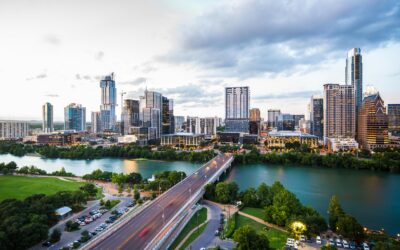
The bitter national debate over local control and state intervention in public education has been handed an undeniable empirical verdict. The Houston Independent School District (HISD)—the largest school system in Texas and the eighth-largest in the United States—has recorded historic, sweeping academic gains across its more than 270 campuses. The achievement data arrives three school years into a highly controversial state takeover that was heavily vilified by local progressive politicians as a “racist, power-grabbing partisan assault.” The data released by the Texas Education Agency (TEA) reveals a total institutional turnaround: the number of high-performing, A- and B-rated campuses across the school system has more than doubled, exploding from 93 to 197 schools since 2023. At The Modern Memo, we analyze the raw test data dismantling the low-expectations narrative, the mechanics of Superintendent Mike Miles’ aggressive New Education System (NES), and why the district’s rapid success has left institutional critics completely uncoupled from reality. The Hard Metrics: Historic Turnaround by the Numbers When the state officially intervened in June 2023, dissolving HISD’s democratically elected school board and firing its superintendent, opponents predicted a total collapse of urban education. Instead, the academic metrics have improved by historic margins. Doubling the Gold Standard: Prior to the state intervention, only 35% of HISD students were privileged enough to attend a top-tier school. Today, 75% of all students are enrolled in an A- or B-rated campus. The sheer count of these high-performing schools surged by 111%, bringing the total to 197 campuses. Eradicating Failure: In 2023, HISD was weighed down by 56 separate F-rated, failing campuses and a total of 121 schools holding a D or F grade. Under the state-appointed leadership, F-rated schools have been completely eliminated from the district. Today, only 7% of schools remain at a D-level, down from 45% before the takeover. STAAR Score Surge: Across elementary, middle, and high schools, students in grades 3 through 8 recorded substantial year-over-year gains in reading and math on the State of Texas Assessments of Academic Readiness (STAAR) tests, effectively narrowing historical performance gaps compared to wealthier suburban state averages. The Reform Engine: How the ‘New Education System’ Fixed the Rot The dramatic upswing in student performance is directly attributed to the unyielding, corporate-style restructuring executed by state-appointed Superintendent Mike Miles, a former U.S. Army Ranger, diplomat, and charter school architect. The NES Model: Miles immediately forced the lowest-performing schools into his New Education System (NES) framework. The model completely abandoned the district’s previous decentralized approach—where individual campus bureaucrats maintained autonomy over failed teaching methods—and replaced it with a rigorous, centrally created, and standardized curriculum. The “Adults First” Staffing Shakeup: Miles ruthlessly targeted institutional inefficiency, executing 177 principal changes and removing hundreds of underperforming teachers. In their place, HISD instituted higher base salaries for proficient educators alongside a rigid merit-pay structure. “We removed some principals and some teachers who were not as effective. As you can see, that strategy worked,” Miles told reporters. “It’s putting kids first, not adults first.” The “Team Center” Innovation: In a move that drew fierce pushback from local unions, Miles repurposed campus libraries into “Team Centers.” Instead of letting classrooms stagnate at the pace of the slowest learner, students who demonstrate mastery on daily core subject lessons are immediately sent to Team Centers to engage in advanced, unconstrained problem-solving and critical thinking exercises, while teachers provide targeted intervention to those lagging behind. Dismantling the Politics of Grievance The undeniable success of the state takeover serves as a severe embarrassment for the local Democratic establishment and progressive activist networks, who spent years using racial grievance to mask their own administrative incompetence. The Racism Smear: When the TEA first announced the intervention—triggered legally by a single high school failing academic standards for seven consecutive years—local leaders immediately weaponized identity politics. Congressional Democrats demanded federal civil rights investigations, labeling the state-backed takeover a “racist” attempt to disenfranchise a district where Black and Hispanic students make up the overwhelming majority of the roughly 180,000-student population. The High-Expectations Reality: The state’s intervention proved that the true disservice to minority students wasn’t the takeover—it was the soft bigotry of low expectations perpetuated by the previous administration. By enforcing uniform standards, raising teacher accountability, and treating urban students as capable of academic excellence, the state-appointed board closed historic achievement gaps faster than any urban district in modern Texas history. The Fragile Trust: While local activist groups continue to hold protests over rigid lesson structures and high teacher turnover, everyday families are quietly moving past the political noise. The district’s internal Family Sentiment Survey revealed that over 90% of respondents across all demographic groups now report a highly favorable perception of their children’s experience under the new system. Final Word The dramatic academic redemption of the Houston Independent School District is the definitive proof that structural accountability, centralized curriculum rigor, and high expectations will always outperform left-wing political rhetoric. When you look past the noise of progressive “racism” allegations and focus entirely on the hard data—the complete eradication of 56 failing schools, the doubling of top-tier A and B campuses to 197, and 75% of minority students now learning in high-performing environments—you gain an unvarnished view of a successful intervention. Quality information replaces the narrative of “state-level disenfranchisement” with the reality of an urgent rescue mission for vulnerable kids. It allows you to see that while local politicians were obsessed with adult issues of control, Superintendent Mike Miles focused on the children. By proving that an urban school system can be transformed in less than three years, Texas has written the ultimate playbook for saving failing public schools nationwide.
The Centennial Firewall: Colorado Outdoorsmen Demand Constitutional Protections to Defeat ‘Ballot-Box Biology’
The national movement to permanently protect outdoor sporting traditions has found its most critical battleground in the Rocky Mountains. Driven by a volatile cycle of anti-hunting ballot initiatives designed to override state wildlife scientists, Colorado outdoorsmen are fighting back with the ultimate legal counter-offensive: demanding a permanent, state-level constitutional amendment safeguarding the right to hunt and fish. At the absolute vanguard of this preemptive legal defense is the International Order of T. Roosevelt (IOTR). Operating as a proactive hunting rights and conservation foundation, the organization has thrown its full weight into the state, mobilizing grassroots momentum to protect the historic North American Model of Wildlife Conservation from political erosion. Action Alert: Defend Your Heritage and Sign the Petition Our outdoor heritage is under active attack by well-funded, out-of-state anti-sporting groups trying to permanently lock us out of public lands, ban traditional hunting, and manipulate wildlife management through unscientific ballot measures. The International Order of T. Roosevelt is leading the charge to fight back, launching massive grassroots campaigns and constitutional ballot initiatives across the country to protect the rights of sportsmen. To bypass activist interference and secure a spot on the upcoming statewide ballot, we need a massive groundswell of support from registered voters. If you believe that wildlife populations should be managed by trained, apex scientists rather than emotional political campaigns, it is time to take a stand. You can join the front lines of this fight by going directly to the link below to sign the official petition, join a volunteer grassroots coalition, or find out how you can fund the fight to protect our right to hunt and fish today: 🎯 Take Action Now: Click Here to Sign the Official Right to Hunt and Fish Petition 🎯 The Colorado Catalyst: Pushing Back Against Proposition 127 The urgency defining Colorado’s constitutional push is not a response to abstract fears; it is a direct reaction to a multi-year, coordinated assault by out-of-state activist groups looking to dismantle the state’s outdoor heritage. The Big Cat Battle: The tipping point arrived following the defeat of Proposition 127 (previously known as Initiative 91). Backed by well-funded, anti-hunting organizations under the banner Cats Aren’t Trophies, the measure sought a total statutory ban on the hunting of mountain lions and bobcats across Colorado, deceptively labeling heavily regulated wildlife management as “trophy hunting.” Defeating Ballot-Box Biology: A broad coalition of rural conservation groups, independent ranchers, and organizations like the IOTR successfully defeated the measure, with 54.7% of Coloradans voting “No.” Opponents argued that managing wildlife through emotional public voting—coined “ballot-box biology”—utterly strips authority from the trained biologists at Colorado Parks and Wildlife (CPW). The Looming Threats: Despite the victory, sportsmen recognize that statutory laws are incredibly vulnerable. Anti-hunting groups have already signaled intentions to iteratively introduce new bans targeting prairie dogs, black bears, archery seasons, and traditional harvesting methods, leaving Colorado’s outdoor traditions exposed to an endless war of attrition. 🔥 Don’t let radical activists rewrite Colorado’s outdoor history. Make your voice heard before it’s too late. 👉 Join the Fight: Protect Colorado’s Wildlife Heritage Now 👈 The Strategy: The Right to Hunt and Fish Constitutional Initiative To establish an unbreachable legal wall, pro-conservation advocates filed the Colorado Right to Hunt and Fish Initiative for the upcoming state ballot. If successful, the measure will add a permanent new section to Article XVIII of the Colorado Constitution. The Supermajority Hurdle: Amending the Centennial State’s constitution is intentionally difficult. Constitutional amendments in Colorado require a 55% supermajority vote from the public to be officially ratified and added to the state constitution. The Legal Scope: The proposed constitutional text specifically protects the right to harvest wildlife utilizing traditional, science-backed methods. Crucially, it leaves intact all necessary federal and state protections for endangered species, nongame animals, and routine CPW regulatory authority—ensuring wildlife management stays strictly in the hands of professionals, not urban voters. The Funding Reality: Who Actually Pays for Colorado’s Wildlife? The core message driving the IOTR’s statewide educational campaign centers on a brutal fiscal reality: the very activists trying to ban hunting contribute virtually nothing to the state’s conservation budget, while hunters single-handedly foot the bill. The $410,000 Direct Hit: Financial modeling from the Common Sense Institute revealed that if anti-hunting bans like Proposition 127 had succeeded, CPW would have faced an immediate, direct drop of $410,000 annually just from lost big-cat permit revenues. The $61 Million Avalanche: The long-term dynamic impact is far worse. Apex predators like mountain lions consume massive numbers of elk and mule deer. An unmanaged predator surge would decimate Colorado’s world-famous elk herds, triggering a catastrophic loss of standard hunting permit sales. Experts project this would slash CPW revenues by up to $6 million annually and drain more than $61.6 million out of the state’s outdoor economic output, devastating rural mountain communities that rely on seasonal hunting tourism. The Pittman-Robertson Engine: Under the North American Model, license sales combined with federal excise taxes on firearms and ammunition fund roughly 75% of CPW’s budget. This capital funds habitat restoration, wildfire mitigation, and the management of both game and non-game species alike. Final Word The mobilization to enshrine the Right to Hunt and Fish in the Colorado Constitution is the definitive proof that the state’s sporting community will no longer play defense against radical environmental activism. When you look past the noise of emotional street-level campaigns and focus on the raw data—the narrow 54% defeat of a radical big-cat ban, a projected $61 million economic hit from unmanaged apex predators, and the strict 55% supermajority required to fortify the state constitution—you gain an unvarnished view of a foundational culture drawing a line in the sand. Quality information replaces the progressive narrative of “humane intervention” with the reality of reckless ecosystem defunding. By stepping into the arena to champion Theodore Roosevelt’s legendary conservation ethic, the International Order of T. Roosevelt is helping Colorado sportsmen guarantee that the wildlife, the wild landscapes, and the outdoor freedoms of the Rocky Mountains will remain managed by…

Beyond the Blade: The Hidden Psychological Hurdle That Will Define the Karmelo Anthony Track Meet Murder Trial
As testimony resumes in the first-degree murder trial of Karmelo Anthony, public interest has completely locked onto the explosive undertones of race and Texas’s unyielding “Stand Your Ground” statutes. The 19-year-old former Frisco Centennial High School student stands accused of the April 2025 stabbing death of 17-year-old Austin Metcalf during a stormy district track meet at David Kuykendall Stadium. Dueling narratives have turned the case into a lightning rod: a Black teenager claiming self-defense against an unarmed peer, tried before a newly selected Collin County jury that contains zero Black panelists. Yet, legal experts warn that the loudest arguments in the media are entirely overshadowing the actual mechanics of the law. According to veteran Texas prosecutors, the true hinge of this trial is an invisible, psychological hurdle that standard physical evidence cannot easily solve. At The Modern Memo, we analyze the raw courtroom metrics as the prosecution rests, the critical insights of legal analysts on jury psychology, and the hidden statutory trap that could seal Anthony’s fate. The Current State of Play: Prosecutors Rest Their Case The trial enters its second week under a mountain of heavy emotional strain. Over the weekend, the state’s prosecution team rested its case after calling 21 separate witnesses to the stand to paint Anthony as a calculated, hot-tempered aggressor. The Brutal Timeline: Jurors were shown harrowing stadium surveillance footage capturing the exact moment the dispute erupted over a seat inside a rival team’s rain tent. After an unarmed Metcalf told Anthony to leave the space, a brief physical push escalated instantly. The Fatal Plunge: The state presented forensic metrics detailing the single, precise knife strike that pierced Metcalf’s chest. Witnesses testified to Metcalf’s agonizing final words—“I have been stabbed”—as he collapsed and bled to death in the arms of his twin brother, Hunter. The “I Did It” Admission: Prosecutors heavily emphasized Anthony’s immediate, unprompted statements to arresting officers on the track. When an officer initially referred to him as an “alleged suspect,” Anthony explicitly shot back: “I am not alleged, I did it.” The Expert View: Evaluating Far More Than the Physical Evidence With the defense team, led by attorney Mike Howard, currently calling witnesses to establish a narrative of “fear and chaos,” the trial has moved past raw forensic facts. Larry Taylor, a prominent former Texas prosecutor and seasoned criminal defense attorney, notes that the case is rapidly shifting from what happened to how 12 individual minds process human emotion. “When it comes down to an issue like this, I’m pretty sure the guys [the jury] are looking at: OK, what was the situation? Was he really in danger? Was he really fearful? Why did he have a knife? Why didn’t he just get up and leave?” Taylor explained. According to Taylor, the physical evidence of the stab wound and the tape of the push are essentially baseline common ground. Instead, the trial’s final trajectory will be shaped by how the jury interprets the invisible subtext of high school athletic culture, teenage impulsive decision-making, and the atmospheric pressure of a highly charged, crowded stadium. The Hidden Hurdle: The Duty to Retreat vs. Provocation While the national media continues to obsess over the racial dynamics of the unsealed case, Taylor highlights that the true legal battleground lies within the dense vocabulary of the Texas Penal Code. The Stand Your Ground Shield: Texas is an explicit Stand Your Ground state, meaning a person who has a legal right to be present has zero statutory obligation to retreat before deploying force. The defense is banking heavily on this, arguing that the moment Metcalf laid hands on Anthony to force him from the tent, Anthony was legally justified in standing his ground against an unfolding assault. The Provocation Trap: This is the hidden hurdle Taylor warns could dismantle the defense. Under Texas law, you completely forfeit your right to claim self-defense if you intentionally provoke a confrontation as an excuse to use force. The Fatal Phrase: Prosecutors possess a devastating piece of data: multiple eyewitnesses confirmed that when first told to move, Anthony reached into his bag and warned, “Touch me and see what happens.” If the jury decides that single phrase was an intentional trap designed to bait an unarmed teenager into a physical reaction, Anthony’s entire Stand Your Ground defense legally vanishes. Final Word The first-degree murder trial of Karmelo Anthony is the definitive proof that the intersection of street-level populism and statutory law is a brutal, unforgiving landscape. When you look past the noise of racial demonstrations outside the courthouse and focus on the data—21 prosecution witnesses resting a case, a single knife blow answered by an immediate confession, and a 12-person panel tasked with parsing the intent behind a five-word verbal warning—you gain a clearer picture of a trial hanging entirely on human psychology. Quality information replaces the emotion of the public gallery with the cold mechanics of a jury charge. As Larry Taylor expertly observed, the physical evidence is clear; the verdict will entirely depend on whether 12 jurors believe a teenager pulled a knife out of genuine, terrifying fear, or whether he brought a weapon to a track meet looking for a reason to use it.