
In a historic and highly polarized structural shift, the Texas State Board of Education voted to mandate specific Bible passages and Christian stories as required reading for more than 5.5 million public school students. The Republican-led, 15-member elected board approved the sweeping measure following months of intense public hearings and fierce debate over the separation of church and state, making the Lone Star State the definitive trailblazer in a nationwide conservative push to re-anchor American public education in Judeo-Christian foundations.
The new curriculum standards—formally adopted into the state’s mandatory Texas Essential Knowledge and Skills (TEKS) framework—will alter English, language arts, and social studies instruction across every grade level from kindergarten through senior year of high school. While critics decry the decision as a blatant, unconstitutional infringement on religious diversity, proponents hail the decision as a long-overdue restoration of a common educational and cultural canon.
At The Modern Memo, we break down the operational data of the new Texas mandated reading list, analyze the precise biblical texts assigned to each grade level, examine the legal precedents shielding the board’s decision, and explore the deep fracturing of the local community.
The Scope of the Change: A Kindergarten-to-Senior Year Mandate
The decision represents a profound shift away from traditional public education structures, where individual school districts, principals, and classroom teachers have historically retained localized control over which novels, stories, and historical documents are assigned to students.
-
The Staggered Rollout: The mandatory reading list is scheduled to take effect at the beginning of the 2030–2031 school year, allowing the Texas Education Agency (TEA) a multi-year buffer window to design specific teacher guidance, finalize textbook printing, and establish instructional standards.
-
The 200-Text Canon: The mandates are the direct result of a 2023 Texas state law that required education officials to draft a unified, statewide mandatory reading list of literary works for each grade level. The final approved list contains roughly 200 entries, blending secular classics of the Western literary canon—such as E.B. White’s Charlotte’s Web, Harper Lee’s To Kill a Mockingbird, and Jane Austen’s Pride and Prejudice—directly with explicit scriptural readings.
-
The Centrality of Texas: Because Texas educates roughly 1 in 10 public school students in the United States, its textbook and curriculum decisions wield massive, outsized leverage over the national publishing market. Textbook companies frequently rewrite their standard editions to comply with Texas guidelines, meaning the Bible-infused frameworks approved in Austin could soon bleed into classrooms across multiple states.
The Fact Sheet: What Students Will Actually Read
To cut through the intense media spin and internet hyperbole surrounding the decision, it is necessary to examine the cold data of the approved curriculum list. The framework adds a minimum of one required biblical passage or religious story to every single grade level.
| Grade Level | Assigned Biblical Text or Story | Approved Translation / Source |
| Kindergarten / 1st | “Noah’s Ark” (Adapted for picture books) | Peter Spier / Simplified Children’s Literature |
| 2nd Grade | “David and Goliath” | The Children’s Book of Heroes |
| 3rd Grade | “Daniel and the Lion’s Den” | Christian Broadcasting Network Adaptation |
| 4th Grade | The Necessity of Humility (Luke 14:7-11) | New International Reader’s Version (NIrV) |
| 5th Grade | The Crossing of the Red Sea (Exodus 3 & 14) | New International Reader’s Version (NIrV) |
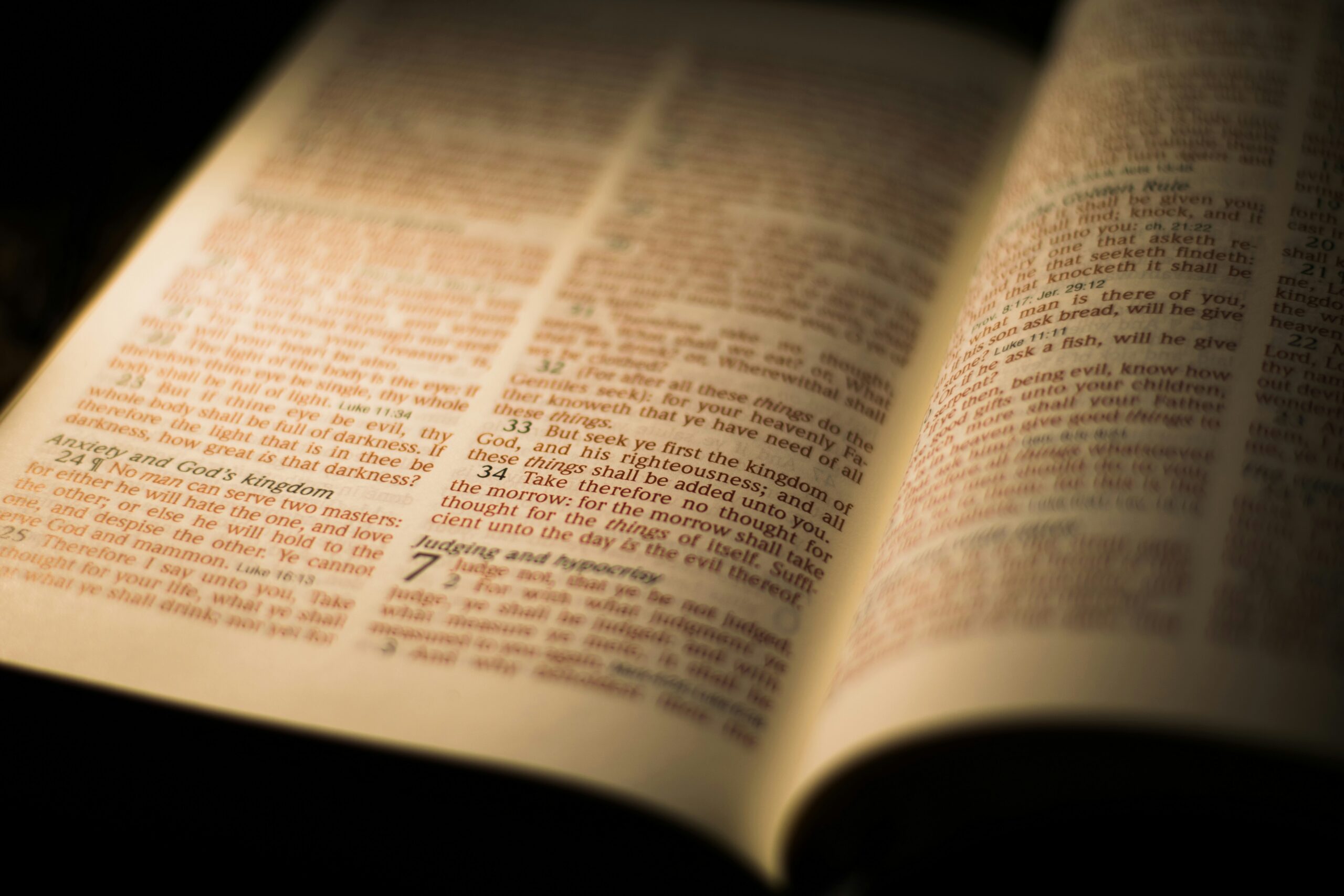
| 6th Grade | “Do Not Be Anxious” (Matthew 6:25-34) | English Standard Version (ESV) |
| 7th Grade | The Shepherd’s Psalm (Psalm 23) | King James Version (KJV) |
| 8th Grade | The Eight Beatitudes (Sermon on the Mount) | King James Version (KJV) |
| High School (9-12) | 1 Corinthians 13 (“The Love Chapter”) & Job | Used as mandatory companion texts for Dickens & Austen |
The data reveals a highly specific, Protestant-centric translation map. The proposal specifically mandates that teachers utilize versions like the English Standard Version (ESV)—wildly popular among conservative evangelicals—and the King James Version (KJV). Catholic-approved translations containing the Apocrypha, Jewish-translated Tanakh alternatives (with the brief exception of a single excerpt from Lamentations), and the sacred texts of non-Christian world religions are completely absent from the mandatory requirements.
The Legal Shield: Navigating the Supreme Court Grid
While civil liberties organizations like the left-leaning Texas Freedom Network and Americans United for Separation of Church and State have threatened immediate litigation, the Texas State Board of Education is operating behind a highly calculated, resilient legal shield.
-
The 1963 Precedent: Legal experts note that while the landmark 1963 Supreme Court case Abington School District v. Schempp banned state-mandated devotional Bible reading and school prayer, the majority opinion explicitly left a wide-open door for academic instruction. The court famously ruled: “It certainly may be said that the Bible is worthy of study for its literary and historic qualities.”
-
The Secular Defense: Texas Education Agency spokesman Jake Kobersky and board proponents are anchoring their entire defense within this specific secular boundary. They argue that students cannot genuinely comprehend the metaphors, allegories, and historical references embedded in Western literature and American civic history without possessing a foundational literacy of the Bible.
-
The Appointed Firewall: Furthermore, the Texas government has aggressively reshaped its legal environment over the last two years. The state has already successfully passed laws requiring the public display of the Ten Commandments in every classroom (a move recently upheld by a divided federal appeals court), permitted schools to hire religious chaplains as counselors, and established designated prayer periods during the schoolday.
A Fractured Community: Cultural Preservation vs. Theological Exclusion
The public comments and testimony delivered during the final voting sessions exposed a deep, unyielding cultural chasm between citizens who view the curriculum as a vital defense of American identity and those who view it as a dangerous escalation of Christian nationalism.
-
The Argument for Cultural Continuity: Board member Brandon Hall, a pastor from Aledo who championed the inclusion of the texts, argued that the proportion of biblical impact on Western civilization justifies its dominance in the curriculum. “America and Texas have been a Christian nation and a Christian state forever,” Hall stated to the assembly. “And the proportion of the impact they’ve had is why they’re included. Of course, there are other faiths that are represented, but they’ve had a minimal impact.” Supporters argue that exposing children to concepts of humility, virtue, and civic responsibility through timeless scriptural lenses is fundamentally good for the citizenry.
-
The Argument for Religious Freedom: Conversely, minority faith leaders and secular educators argue that the mandate creates an environment of exclusion and places public school teachers in an impossible theological position. Rabbi Joshua Fixler testified that the curriculum blurs the line between teaching about religion and actively indoctrinated instruction. “This proposed list provides only Christian religious texts, and it does so in ways that are not age-appropriate,” Fixler warned, pointing out that his own Jewish children would be forced to engage with New Testament passages centered on Christian messages of faith to which his family does not subscribe.
Final Word
The Texas State Board of Education’s mandating of Bible passages is the definitive proof that the conservative movement has successfully captured the administrative apparatus of the public school system to wage a total counter-offensive against secular progressivism. When you look past the intense rhetoric of both sides and focus entirely on the hard data—a mandated K-12 reading list forcing 5 million children to engage with specific Protestant Bible translations by 2030, the explicit demotion of world history and non-Christian religious texts from the core framework, and the utilization of decades-old Supreme Court loopholes to shield the policy from the establishment clause—you gain an unvarnished view of structural power politics.
Quality information replaces the theatrical debate with the reality of an aggressive, top-down cultural alignment. Texas has made its executive calculation: it is no longer content to treat the Bible as an optional historical artifact, choosing instead to convert the public classroom into an active engine for the preservation of Western heritage. While parents retain a statutory right to opt their children out of specific activities that conflict with their beliefs, the message from Austin remains permanent and unyielding: if you want an education in the state of Texas, you will read the text that built the state.
